Jira Cloud Pricing Plans: A Clear Guide for Every Team Size
Not sure which Jira Cloud pricing plans fit your team? Compare costs, limits, and features clearly. Click to choose the right tier.
Choosing among Jira Cloud pricing plans can feel harder than planning the work itself. The names sound simple, yet user limits, billing cycles, automation allowances, storage, support, and advanced controls can change your real monthly cost.
A small team may overpay for enterprise controls it never uses. A growing company may choose a cheaper tier, then hit limits when more projects, integrations, or reporting needs arrive. Those surprises make budgeting difficult and can interrupt your delivery workflow.
But here's the truth: you can compare Jira Cloud tiers clearly when you separate the headline plan from the costs that grow with your team. This guide explains each option, shows practical team-size examples, and helps you choose a sensible starting point.
Jira Cloud Pricing Plans at a Glance
Jira Cloud pricing plans are subscription tiers that charge according to team size, billing cycle, features, usage limits, and administrative requirements. Jira Cloud generally offers Free, Standard, Premium, and Enterprise options.
The right tier depends on more than the advertised price. You should also evaluate automation capacity, storage, service commitments, security controls, analytics, user growth, and the number of connected Atlassian products.
| Plan |
Best fit |
Main considerations |
| Free |
Small teams testing Jira or managing a straightforward workflow |
Limited users, storage, permissions, support, and automation |
| Standard |
Growing teams that need a dependable production workspace |
More capacity, stronger administration, and broader collaboration features |
| Premium |
Organizations managing complex delivery across many teams |
Advanced planning, higher automation capacity, stronger service expectations, and more scale |
| Enterprise |
Large organizations with governance and multi-team administration needs |
Custom commercial terms, enterprise controls, and centralized management |
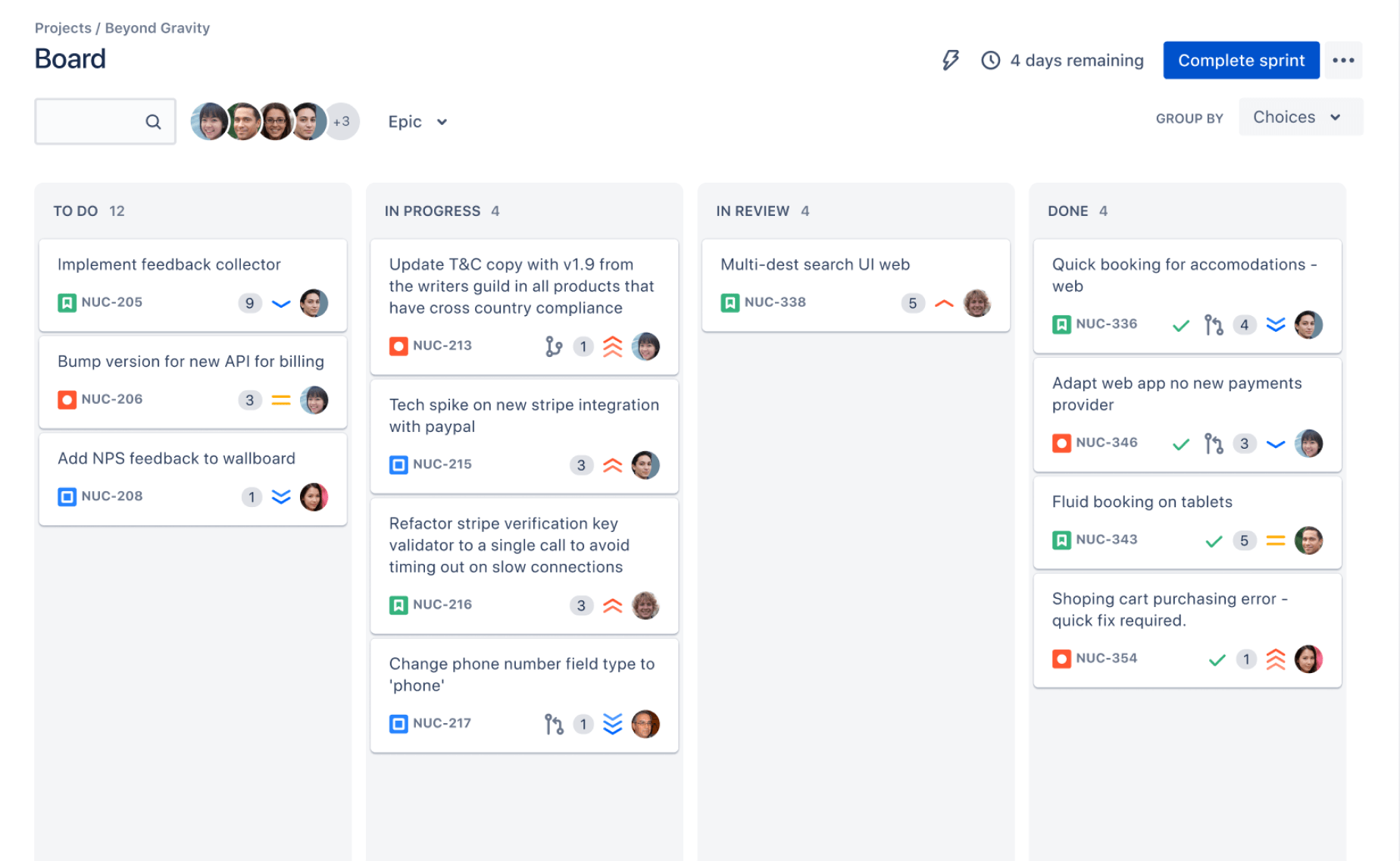
How Jira Cloud billing usually works
Jira Cloud pricing commonly depends on the number of seats assigned to your site. A person with access usually counts as a billable user, even if that person rarely opens a project.
Monthly billing typically adjusts as your seat count changes. Annual billing usually uses a committed user tier, so it can suit stable teams but requires more careful forecasting.
Published prices and limits can change. Treat the Atlassian checkout calculator as the final confirmation before approving a purchase.
Which tier should you examine first?
- Start with Free if you have a small team and a basic issue-tracking workflow.
- Review Standard if you need more users, storage, permissions, or dependable administration.
- Consider Premium when cross-team planning, advanced automation, or higher operational scale matters.
- Ask about Enterprise when centralized governance, multiple sites, and commercial flexibility become important.
What Each Jira Cloud Tier Includes
Free for small teams and early experiments
The Free tier works well when a small group needs task tracking, boards, backlogs, basic reports, and a shared project space. It can support a new product team learning agile practices.
For example, a six-person startup might track feature requests, bugs, and sprint work without paying immediately. The trade-off appears when the team needs more sophisticated permissions, larger capacity, or broader automation.
Free plans often include tighter user, storage, support, and automation limits. Check those boundaries before inviting contractors, executives, or adjacent departments.
Standard for everyday team delivery
Standard is usually the practical middle tier for teams running Jira as a core work system. It offers more room for users and activity, plus stronger administration than Free.
A 35-person software organization might choose Standard because product, engineering, quality assurance, and delivery managers all need access. The team receives more headroom without paying for every advanced planning feature.
Standard can become less attractive when you need complex cross-project planning, strict enterprise governance, or substantially higher automation capacity.
Premium for scale and advanced planning
Premium targets organizations with more complicated delivery patterns. It is useful when several teams coordinate dependencies, releases, and shared priorities across many projects.
Imagine eight engineering squads working on one platform. Premium capabilities may help leaders plan across teams, manage larger workloads, and create more sophisticated automation.
The additional cost makes sense when delays, manual coordination, or limited capacity create a measurable business problem. It may be excessive for one small team with a simple board.
Enterprise for centralized governance
Enterprise is designed for large organizations that need centralized administration, governance, security oversight, and commercial arrangements across a broader Jira environment.
An international company may manage multiple business units, compliance requirements, and several Jira sites. Enterprise becomes relevant when local project flexibility must coexist with organization-wide controls.
Because Enterprise arrangements are usually customized, ask for a quote that reflects your user population, sites, support expectations, and connected Atlassian services.
How Team Size Changes Your Real Cost
Seat count is the first cost driver, but it is not the only one. Your effective expense also depends on inactive accounts, external collaborators, billing commitment, add-ons, and the amount of administration your team requires.
Here's why: a plan that looks affordable for 20 people may become expensive at 200 people. Meanwhile, a premium tier may reduce manual coordination enough to justify its higher subscription.
Small teams: up to around 10 people
A team of five to ten people should begin by testing whether Free covers its workflow. Create representative projects, invite the people who genuinely need access, and test automation before making a long-term decision.
Consider a seven-person product team managing 40 active issues. Free may be sufficient if it needs only backlog management, sprint boards, and basic reporting.
Growing teams: roughly 11 to 100 people
Growth introduces more roles, permission questions, project templates, and reporting requirements. Standard often becomes the first serious comparison because the team needs a stable operating environment.
Count more than developers. Product managers, designers, testers, support specialists, and delivery leaders may all require access. A low estimate can create a painful upgrade later.
Larger organizations: hundreds or thousands of people
At larger scale, administration and governance can matter more than the basic task features. You may need clearer ownership, controlled access, consistent workflows, and coordinated planning.
Premium or Enterprise deserves attention when separate teams depend on shared releases. Calculate the cost of both the subscription and the coordination effort required to operate at scale.
Use a simple forecasting formula
You can estimate the subscription with this formula:
Estimated cost = billable seats × effective per-user rate + add-ons + tax
For monthly billing, recalculate when people join or leave. For annual billing, forecast your likely peak seat count rather than your current headcount alone.
Monthly Versus Annual Billing
Monthly billing offers flexibility. It suits a young company, a temporary project, or a team still deciding whether Jira fits its workflow.
Annual billing can make sense when your headcount is stable and your team wants predictable budgeting. However, a lower effective rate may not help if you pay for seats that remain unused.
When monthly billing is sensible
- Your team is hiring quickly or changing structure.
- You are running a short project with an uncertain end date.
- You are testing Jira with several possible user groups.
- You expect contractors or temporary contributors to join and leave.
When annual billing may work better
- Your team size is predictable for the next year.
- Jira already supports a critical delivery workflow.
- Your finance team values one planned renewal cycle.
- The expected discount outweighs the risk of unused seats.
Before committing, compare the annual payment with twelve months of realistic monthly usage. Include hiring plans, seasonal contractors, and likely team transfers.
Hidden Cost Drivers to Check Before Upgrading
The plan price is only one part of the decision. Extra products, marketplace apps, implementation work, and administration can materially change the total cost.
Connected Atlassian products
Jira may connect with products such as Confluence, Jira Service Management, or collaboration services. Each product can have separate users, tiers, and billing rules.
Map which people need which product. A developer may need Jira, while a wider business audience may need access to knowledge pages without requiring full project permissions.
Marketplace apps and integrations
Teams often add testing, time tracking, planning, reporting, or repository integrations. These apps may charge separately and can scale with the number of users.
For example, three small apps may each seem inexpensive. Together, they can erase the apparent difference between Standard and Premium.
Administration and migration effort
A lower subscription can still cost more if it requires extensive manual work. Estimate time for permission reviews, workflow maintenance, reporting, onboarding, and migration.
If an upgrade removes repetitive administration, include that saved time in your comparison. A finance review should consider operational effort, not only the invoice.
Support and governance needs
As more teams rely on Jira, service expectations rise. A delayed access change or broken workflow can affect several delivery groups at once.
Ask who owns administration, how quickly issues need attention, and whether your organization requires stronger security or governance controls.
A Practical Method for Choosing the Right Tier
You can make the decision in five steps. Start with actual work patterns, then test the limits that could affect your next twelve months.
- Count active and likely users. Include managers, testers, contractors, and occasional contributors who need access.
- List the workflows you need. Record sprint planning, approvals, release tracking, service requests, reporting, and cross-team coordination.
- Identify hard limits. Check user capacity, storage, automation, permissions, support, and advanced planning requirements.
- Price the complete environment. Add connected products, apps, onboarding, administration, taxes, and expected growth.
- Run a representative trial. Test a real project with realistic roles, automation rules, reports, and integrations.
Here's a useful test: ask whether the next tier solves a measurable problem. “It has more features” is weak justification. “It removes six hours of manual coordination each week” is stronger.
Jira Cloud Versus Self-Hosted Project Management
Jira Cloud removes much of the infrastructure work because Atlassian operates the service. You usually gain faster setup, managed updates, and less responsibility for hosting.
Self-hosted software can provide more control over deployment, network access, and internal administration. However, your team must manage upgrades, availability, security, backups, and technical maintenance.
| Consideration |
Jira Cloud |
Self-hosted approach |
| Setup |
Usually faster to start |
Requires environment preparation |
| Maintenance |
Managed by the vendor |
Owned by your technical team |
| Control |
Configured within cloud boundaries |
Greater deployment control |
| Cost pattern |
Recurring subscription |
Licensing plus infrastructure and maintenance |
| Best fit |
Teams prioritizing convenience and rapid access |
Organizations needing restricted deployment control |
The best choice depends on compliance, network restrictions, internal expertise, and the cost of maintaining infrastructure. Do not compare subscription prices without comparing ownership responsibilities.

Value Proposition
ONES.com combines project management and knowledge management in one platform powered by AI through ONES Assistant. ONES Project is a Jira alternative and is sold separately from ONES Wiki.
It may suit teams that want Jira-compatible workflows, native capabilities, and deployment flexibility without assembling many plugins.
Core Capabilities
- Scattered project work → ONES Project centralizes tasks, backlogs, and delivery activity → Teams gain one clearer operational workspace.
- Complex agile processes → Jira-compatible workflows, custom workflows, and custom fields support familiar delivery patterns → Teams can adapt the system without rebuilding every practice.
- Manual sprint coordination → Sprint management keeps planned work visible → Product and engineering teams can review commitments more consistently.
- Limited visibility → Built-in reporting turns project activity into practical progress views → Leaders can identify delays without depending on several separate plugins.
- Repeated administrative work → Automation handles recurring transitions and routine actions → Teams spend less time maintaining issue movement by hand.
- Strict deployment requirements → ONES.com supports Cloud, On-Premise, Private Cloud, and Air-gapped deployments → Organizations can choose an environment that matches network and compliance needs.
- Different behavior across environments → The self-hosted version maintains full feature parity with the cloud version → Teams can choose deployment flexibility without accepting a reduced feature set.
- Growing license concerns → ONES.com offers a Free plan for up to 30 seats → Small teams can evaluate the platform before committing to a larger rollout.
- Separated project knowledge → ONES Wiki provides knowledge management as a Confluence alternative → Teams can connect guidance and delivery practices more naturally.
Application Scenarios
A restricted-network engineering team: A defense supplier may need an air-gapped project environment. ONES Project can support project tracking in an isolated deployment while preserving the same core feature set available in the cloud version.
A growing software company: A 25-person team may need sprint management, custom fields, reporting, and automation. It can begin with a smaller deployment and expand its workflow as more teams join.
A regulated enterprise: A large organization may require private hosting and consistent governance. On-Premise or Private Cloud deployment can give administrators more control over where project operations run.
Common Challenges When Comparing Plans
Challenge: estimating the right seat count
Solution: Separate active contributors from occasional viewers. Then model expected hiring, contractors, and internal transfers for the next renewal period.
Challenge: choosing features you may never use
Solution: Rank requirements as essential, useful, or optional. Upgrade for a specific operational need rather than an impressive feature list.
Challenge: overlooking add-on expenses
Solution: List every connected product and marketplace app. Estimate the total monthly or annual amount after user growth.
Challenge: paying annually with unstable headcount
Solution: Compare the potential savings with the cost of unused seats. Monthly billing may provide better control during rapid change.
Challenge: confusing technical limits with business value
Solution: Translate each limit into a real consequence. For example, insufficient automation may mean extra administration, slower handoffs, and more missed updates.
FAQs About Jira Cloud Plans
Which Jira Cloud tier is best for a small team?
Free is a sensible starting point for a small team with basic backlog, board, sprint, and reporting needs. Test the actual user limit, storage, automation, permissions, and support experience before relying on it for important operations. If your team expects rapid growth or needs more administration, compare Standard early rather than waiting for a limit to interrupt delivery.
Does Jira Cloud charge for every person invited?
Billing generally depends on users with access to the Jira site. The precise treatment can vary by product and commercial arrangement, so review the billing screen before inviting occasional contributors. Keep access groups tidy and remove people who no longer need the service. That simple habit helps prevent unused seats from inflating your subscription.
Is Premium worth the extra cost?
Premium can be worthwhile when several teams coordinate dependencies, releases, and shared priorities. It may also help when higher automation capacity or advanced planning reduces substantial manual work. For one small team with a straightforward workflow, the additional tier may provide little practical value. Measure the time, delays, and coordination problems it would solve.
Should I choose monthly or annual billing?
Choose monthly billing when your headcount, project duration, or team structure is uncertain. Annual billing can suit a stable organization that wants predictable budgeting and expects to use the service throughout the year. Compare both options using realistic seat forecasts, including hiring plans and temporary contributors. A lower annual rate does not help if many seats remain unused.
Can Jira Cloud replace separate reporting or planning tools?
Sometimes. Jira includes reporting and planning capabilities, but your needs may require additional Atlassian products or marketplace apps. Test the workflows your team actually uses, including executive reporting, capacity planning, release coordination, and quality tracking. Calculate the complete environment cost before assuming the base subscription covers every requirement.
Conclusion
Jira Cloud pricing becomes easier to understand when you start with team size, then examine features, limits, billing commitment, connected products, and administration effort.
Free can suit a small team testing a basic workflow. Standard often fits growing delivery groups. Premium deserves attention when cross-team planning and scale matter. Enterprise is relevant when governance and centralized administration dominate the decision.
But here's the truth: the cheapest tier is not always the lowest-cost choice. A plan that creates manual work, blocks collaboration, or requires several paid apps can cost more over time.
Start with a realistic team forecast, test your most demanding workflow, and compare the complete operating environment. If deployment flexibility, native project capabilities, and reduced plugin dependence matter, include ONES.com and ONES Project in that evaluation.