Jira Cloud Service Desk Pricing: A 2026 Cost Planning Guide
How much will jira cloud service desk pricing really cost? Plan agents, features, apps, taxes, and growth accurately—read the 2026 guide now.
Planning a Jira Cloud Service Management budget can feel deceptively simple. You see a per-agent price, multiply it by your support team, and expect the answer to be done. Then automation, customer accounts, premium features, marketplace apps, taxes, and team growth change the total.
That uncertainty makes approvals harder. A small service desk may stay within a free allowance, while a 25-agent team can face a much larger annual commitment after adding reporting, integrations, and specialist workflows.
But here's the truth: good cost planning starts with your operating model, not the headline subscription price. This guide shows you how to estimate Jira Cloud Service Management costs for 2026, compare plan trade-offs, and uncover expenses before they reach your budget.
How to Plan Jira Cloud Service Management Pricing for 2026
Jira Cloud Service Management pricing usually depends on your agent count, selected plan, billing term, optional apps, and usage requirements. Start with the subscription, then add implementation, integrations, administration, and growth costs.
For early budgeting, use the following planning model. Confirm live prices with Atlassian before signing because regional pricing, taxes, packaging, promotions, and plan rules can change.
- Count service agents. Include people who configure queues, respond to requests, manage incidents, approve changes, or work directly inside the service project. Requesters who only submit tickets usually do not count as agents, but verify the current licensing rules.
- Choose the likely plan. Free may suit a small team testing the platform. Standard generally fits everyday service management. Premium is more relevant when you need advanced scale, incident operations, or stronger continuity capabilities. Enterprise usually requires a tailored commercial discussion.
- Calculate the base subscription. Multiply the estimated agent price by the number of billable agents and the number of billing months. Use annual and monthly scenarios because the effective rate can differ.
- Add operational extras. Review marketplace apps, phone or chat integrations, monitoring connections, identity features, migration help, consulting, training, and internal administration time.
- Model growth. Run the calculation for your current team, expected team, and high-growth case. A service desk with 12 agents today may need 20 agents after a new business unit joins.
- Test the workflow. Confirm that your chosen tier supports request types, approvals, automation, asset tracking, reporting, and incident processes before treating the estimate as final.
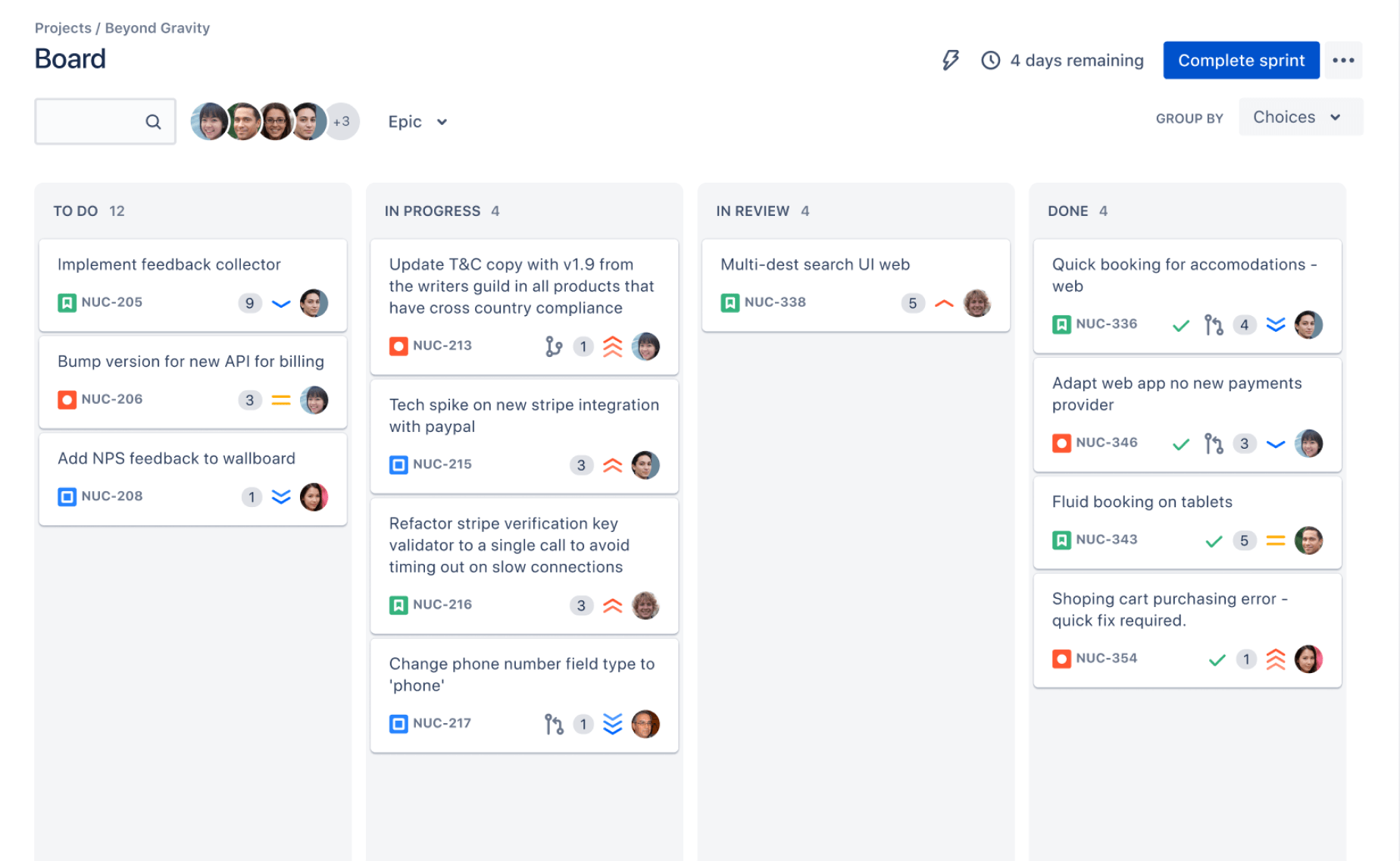
Use planning ranges instead of one fragile number
Atlassian has offered Jira Service Management Cloud tiers such as Free, Standard, Premium, and Enterprise. Public list pricing can change, so treat any planning figure as an estimate rather than a guaranteed 2026 quote.
| Plan |
Useful planning position |
Budget questions |
| Free |
Small teams evaluating basic service workflows |
Do agent limits, automation limits, and feature restrictions fit the pilot? |
| Standard |
Routine service management for growing teams |
Will it support your request volume, integrations, reporting, and administration needs? |
| Premium |
Teams requiring more advanced operations and resilience |
Do higher-tier capabilities reduce outage risk or manual incident work? |
| Enterprise |
Large organizations with complex governance and commercial requirements |
What contract terms, support expectations, security controls, and organization-wide needs apply? |
For example, a 10-agent team should calculate a 10-agent Standard scenario, a Premium scenario, and a growth scenario with 15 agents. That gives stakeholders a range instead of a misleading single figure.
What the Subscription Price Usually Covers
The main subscription typically provides access to the service management application and its included capabilities. The exact feature mix depends on the plan and current commercial terms.
Common areas include request portals, queues, service-level management, knowledge connections, automation, reporting, approvals, and incident workflows. Higher tiers may add capabilities for scale, continuity, or advanced operations.
Agent licensing is the first cost driver
Service management platforms often charge around the people who work requests rather than every person who submits one. That distinction matters when hundreds of employees contact a small support team.
Suppose 300 employees submit requests, but only eight support specialists manage them. Your first calculation may use eight agents, not 300 employees. Still, check whether specialist administrators, occasional responders, and external collaborators need paid access.
Billing term changes the planning picture
Monthly billing offers flexibility when your team changes quickly. Annual billing can make forecasting easier and may provide a different effective rate, depending on the current commercial model.
Compare both options using the same agent count. Then add a hiring schedule. Paying for 20 seats all year can cost more than starting with 12 seats and adding eight later, even if the final team reaches 20.
Customer access is separate from agent capacity
A portal can serve many requesters without requiring each person to become an agent. However, customer permissions, external contacts, email channels, and collaboration features still deserve review.
For example, an internal IT desk may have 15 agents and 4,000 employees. A managed service provider may need different arrangements for multiple customer organizations. The operating model changes the commercial questions.
How to Estimate Your Total Cost of Ownership
The subscription is only one line in a service desk budget. A more realistic estimate includes the people, systems, and effort required to make the platform useful.
Here's why: a lower subscription can become expensive when your team depends on manual routing, repeated configuration, or several paid add-ons.
Build a five-part cost model
- Platform subscription. Estimate agent licenses across monthly and annual billing scenarios.
- Implementation. Include process design, portal setup, request forms, queues, service-level rules, approval paths, and initial reporting.
- Integration. Price connections to identity management, monitoring, chat, email, asset systems, software delivery tools, and finance platforms.
- Administration. Account for ongoing ownership, permission reviews, workflow changes, reporting, and release testing.
- Change and training. Include time for support staff, approvers, and employees who need to adopt the portal.
You can express the estimate with a simple formula:
Annual service desk cost = subscription + add-ons + implementation + administration + training + contingency.
Example: a 12-agent internal service desk
Imagine an IT team with 12 agents, one service owner, two integrations, and a planned knowledge rollout. The base subscription is only the starting point.
- 12 agent subscriptions
- One identity or single sign-on connection
- One monitoring or incident integration
- Initial workflow and portal configuration
- Monthly administration and reporting
- Training for employees and approvers
- A contingency reserve for growth and add-ons
The team should run at least three scenarios: a lean launch, a fully integrated operation, and a growth case. This approach reveals which costs are unavoidable and which are optional.
Which Features Can Push You Into a Higher Tier?
The right plan depends on the work you need to control. A team should not select Premium simply because it sounds safer, yet it should not choose Standard if essential operations require capabilities at a higher level.
Let me explain: compare each tier against a written capability checklist. That prevents a familiar brand name from making the decision for you.
Automation and workflow complexity
Basic routing may be enough for password resets and equipment requests. More complex service desks need conditional approvals, escalation rules, automated notifications, and handoffs between teams.
Count how many manual steps an agent performs today. If every request requires copying details into another system, automation may create more value than a small subscription difference.
Incident and change operations
IT teams handling outages, releases, and emergency changes often need more structured coordination. They may connect monitoring alerts, create incident records, notify stakeholders, and review post-incident actions.
A simple help desk can operate with basic queues. A 24-hour technology operation may need stronger incident practices and continuity planning. Those requirements can justify evaluating a higher tier.
Assets, reporting, and governance
Asset tracking can help connect a request to a laptop, application, service, or owner. Reporting can expose unresolved work, missed service targets, and repeated request categories.
Governance also affects the choice. Consider permission design, audit expectations, data residency, administrator separation, and the number of service projects you expect to run.
Hidden Costs to Include Before Approval
Some expenses appear after implementation because they are attached to the surrounding ecosystem. Plan for them before comparing commercial proposals.
| Potential cost |
Why it appears |
How to control it |
| Marketplace applications |
Teams need specialized reporting, approvals, forms, or time tracking |
List essential functions before buying an app |
| Integration work |
Existing systems require configuration, authentication, or maintenance |
Assign an owner and estimate setup plus ongoing support |
| Migration |
Historical requests, categories, users, and knowledge need cleanup |
Move only information that supports active operations |
| Administration |
Workflows, permissions, queues, and reports change over time |
Reserve recurring capacity for platform ownership |
| Training and adoption |
Employees bypass the portal or submit incomplete requests |
Use clear forms, short guidance, and visible service targets |
| Downtime or productivity impact |
Poorly tested changes interrupt support work |
Test changes in a controlled rollout and keep recovery steps ready |
The most common surprise is ongoing administration. A platform that looks inexpensive at purchase can require substantial effort when every new team wants its own form, queue, automation rule, and report.
How to Compare Plans and Alternatives Fairly
Price comparisons become useful only when the competing options perform the same job. Compare a complete service workflow, not one license number.
Compare like-for-like capabilities
Create a checklist covering intake, triage, service targets, approvals, knowledge, automation, reporting, incident handling, change control, permissions, and integrations.
Then mark each capability as essential, useful, or optional. For example, a password-reset team may rate asset relationships as useful, while a hardware support team may consider them essential.
Measure the work behind each option
Ask how much effort your team needs to configure and maintain each platform. An option that requires five separate add-ons may create more administrative work than an option with broader native functionality.
Use a simple comparison: if one platform saves 10 hours each month in manual triage, multiply those hours by your internal labor rate. That value belongs in the evaluation.
Review exit and growth assumptions
Check how easily you can add agents, change billing terms, export operational information, and adjust service projects. Growth flexibility matters when your support model is still changing.
You might be wondering: should you choose the cheapest tier now and upgrade later? That can work for a pilot, provided you know which limits could interrupt adoption.
Natural Jira Service Management Alternative: ONES.com
ONES.com is a unified platform for project management and knowledge management. It can suit teams that want connected service, project, and knowledge workflows while evaluating the long-term cost of separate tools and add-ons.
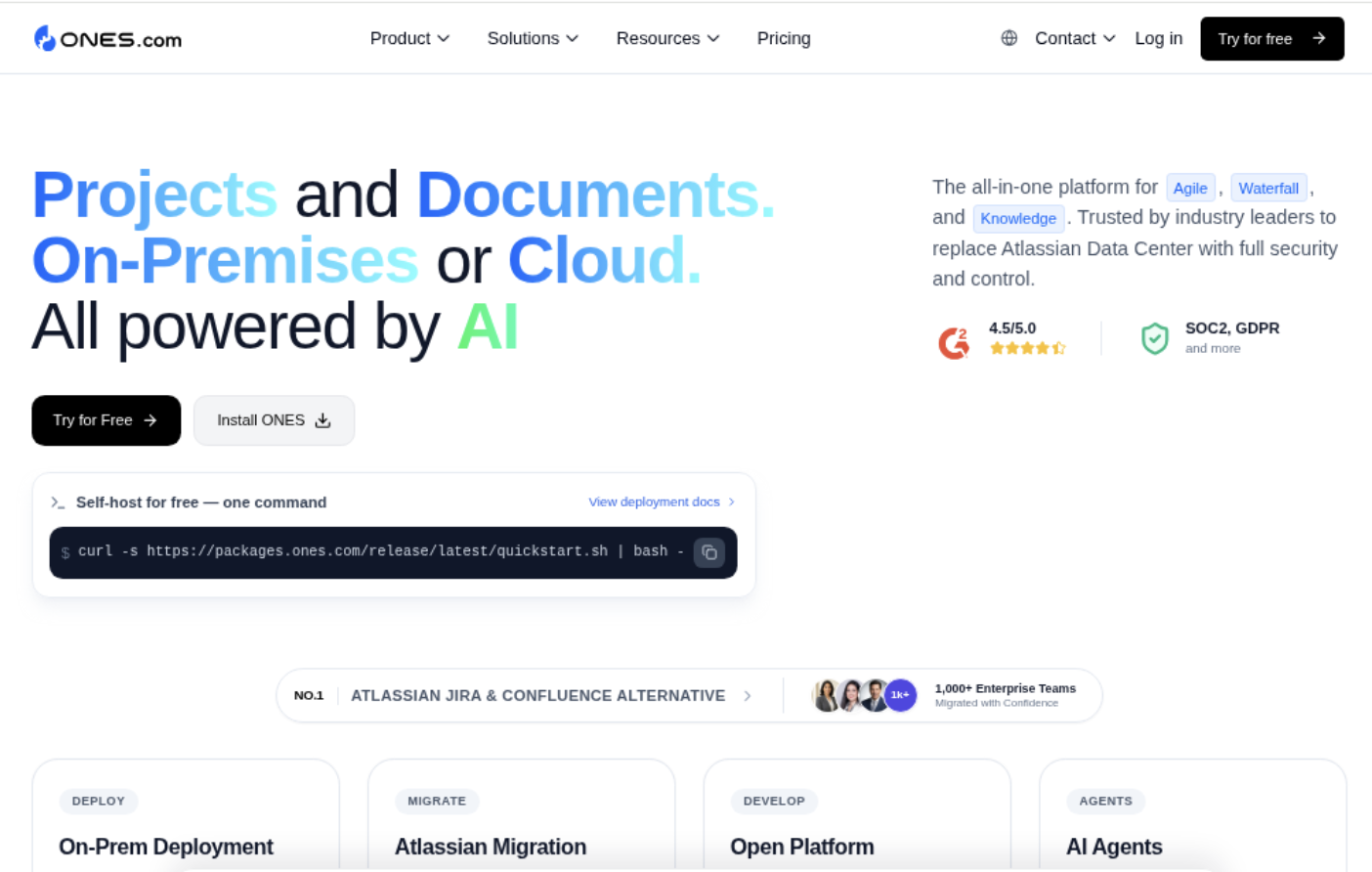
ONES Project is the project management product and a Jira alternative. ONES Wiki is the knowledge management product and a Confluence alternative. They are sold separately, so evaluate the products you actually need.
Value Proposition
ONES.com can reduce tool sprawl when a team needs structured work management and knowledge sharing in one platform family. It also supports cloud and self-hosted deployment models, which can matter for governance and infrastructure planning.
Core Capabilities
- Pain: Separate project and service workflows create handoff gaps. ONES capability: ONES.com connects project management and knowledge management across its platform. Result: Teams can relate operational work to the guidance that supports it.
- Pain: Jira teams often rely on multiple plugins for familiar processes. ONES capability: ONES Project supports Jira-compatible workflows, custom workflows, custom fields, sprint management, automation, and built-in reporting. Result: Teams can evaluate a broader native feature set before adding extensions.
- Pain: Reporting requires manual consolidation. ONES capability: Built-in reporting provides visibility into work progress and operational performance. Result: Managers spend less time assembling status views.
- Pain: Knowledge becomes disconnected from daily work. ONES capability: ONES Wiki provides a knowledge base environment alongside ONES Project. Result: Teams can organize guidance near the work processes that depend on it.
- Pain: Restricted environments limit cloud-only choices. ONES capability: ONES.com supports Cloud, On-Premise, Private Cloud, and Air-gapped deployments. Result: Organizations can align deployment with security and network requirements.
- Pain: Self-hosted products may lag behind hosted editions. ONES capability: ONES.com provides feature parity between cloud and self-hosted versions. Result: Deployment preference does not automatically require accepting a reduced feature set.
- Pain: Early evaluation can be expensive. ONES capability: The free offering supports up to 30 seats. Result: A small team can test fit before planning a broader rollout.
- Pain: Teams need to replace Jira workflows without rebuilding every practice. ONES capability: ONES Project is positioned as a Jira alternative with familiar workflow concepts. Result: Migration planning can focus on process improvements rather than starting from zero.
Application Scenarios
Scenario one: A growing internal technology team. A 20-person technology group can use structured workflows for incidents, changes, and project delivery while maintaining operational guidance in a connected knowledge environment.
Scenario two: A restricted-network organization. A team that cannot place operational work in a public cloud can evaluate On-Premise, Private Cloud, or Air-gapped deployment while retaining feature parity.
Scenario three: A project-heavy support organization. A support group that regularly escalates customer issues into engineering work can connect service activities with project workflows, reporting, and team knowledge.
Common Challenges When Budgeting Service Management
Challenge: confusing agents with requesters
Solution: List every role that responds, administers, approves, or reports inside the service desk. Separate those roles from employees who only raise requests.
Challenge: estimating from today’s team size
Solution: Model current headcount, expected headcount, and a higher-growth case. Add hiring dates so your estimate reflects when capacity changes.
Challenge: overlooking add-on dependency
Solution: Map every required capability to native functionality, an optional application, or internal development. Add recurring maintenance to every external dependency.
Challenge: choosing a tier by reputation
Solution: Translate business requirements into testable workflows. For example, demonstrate an alert-to-incident process, an approval path, and a service-level report before selecting a plan.
Challenge: treating implementation as a one-time task
Solution: Budget for ongoing ownership. Forms, queues, permissions, reports, and automation rules need periodic review as teams and services change.
FAQs About Jira Cloud Service Management Costs
What is the cheapest way to start with Jira Service Management Cloud?
The Free tier is usually the first option for a small team testing basic service workflows. Confirm the current agent allowance and feature limits before planning a production rollout.
For a realistic decision, test your most important request types, queues, automation rules, and reports. A free pilot is useful only if it reflects the work your team will actually perform.
Do customers who submit requests need paid agent licenses?
Usually, people who submit requests through a portal are treated differently from agents who manage service work. However, access rules can vary by activity and product configuration.
Count everyone who responds, administers, approves, or works directly in the service environment. Then verify the current licensing definition before finalizing your estimate.
Is annual billing always cheaper than monthly billing?
Annual billing may provide a different effective rate and more predictable budgeting, but it also commits you to a planned capacity for the billing period.
Compare both options using your expected agent count. If hiring is uncertain, model the cost of adding seats later instead of assuming that a larger annual commitment will automatically save money.
What should I include beyond the advertised subscription?
Include implementation, integrations, marketplace applications, administration, training, migration, reporting, and a growth reserve. These items can materially change the total cost of ownership.
For example, a support team may need an identity integration, monitoring connection, custom reporting, and monthly workflow maintenance. Those efforts belong in the budget even when they are not part of the headline plan price.
When should I evaluate an alternative?
Evaluate alternatives when the required workflow depends on many add-ons, when deployment restrictions matter, or when administration costs are rising faster than the subscription.
Use the same capability checklist for every option. Compare licensing, implementation, integrations, migration, maintenance, reporting, and growth rather than comparing only the monthly agent price.
Conclusion
Planning Jira Cloud Service Management pricing for 2026 requires more than multiplying an agent rate. Start with agent roles, compare plan capabilities, model growth, and include the operational work around the platform.
But here's the truth: the lowest subscription is not always the lowest-cost service desk. Manual administration, add-ons, integrations, and poor adoption can quietly increase the final bill.
Build lean, expected, and growth scenarios. Test essential workflows before committing. If your team needs a Jira alternative, evaluate ONES Project and the wider ONES.com platform against the same requirements, deployment needs, and ownership costs.