Jira Cloud Standard Pricing: A Practical Cost Guide for 2026
Wondering what Jira Cloud Standard pricing really costs? Learn to budget seats, billing, apps, and taxes accurately. Read now to plan smarter.
Jira Cloud Standard pricing can look simple until you add seats, billing terms, apps, taxes, and changing team size. A small team may see one monthly figure, while a growing company faces tier jumps and extra administration costs.
That uncertainty makes budgeting difficult. You may compare the advertised per-user rate with your invoice and wonder why the totals differ. You may also choose annual billing before understanding how many seats you actually need.
Here’s the practical solution: separate the subscription price from your total operating cost. Then calculate active seats, billing cadence, optional apps, automation needs, and likely growth. This guide shows you how to evaluate Jira Cloud Standard pricing for 2026 without relying on a single headline number.
How Jira Cloud Standard Pricing Works
Jira Cloud Standard pricing is the recurring cost of Jira’s Standard cloud plan, calculated mainly by the number of licensed users, billing term, product edition, and optional services attached to the subscription.
For 2026 planning, treat the public Atlassian price as a starting point. Your final amount can change with user count, monthly or annual billing, regional taxes, currency conversion, promotional terms, and connected Marketplace apps.
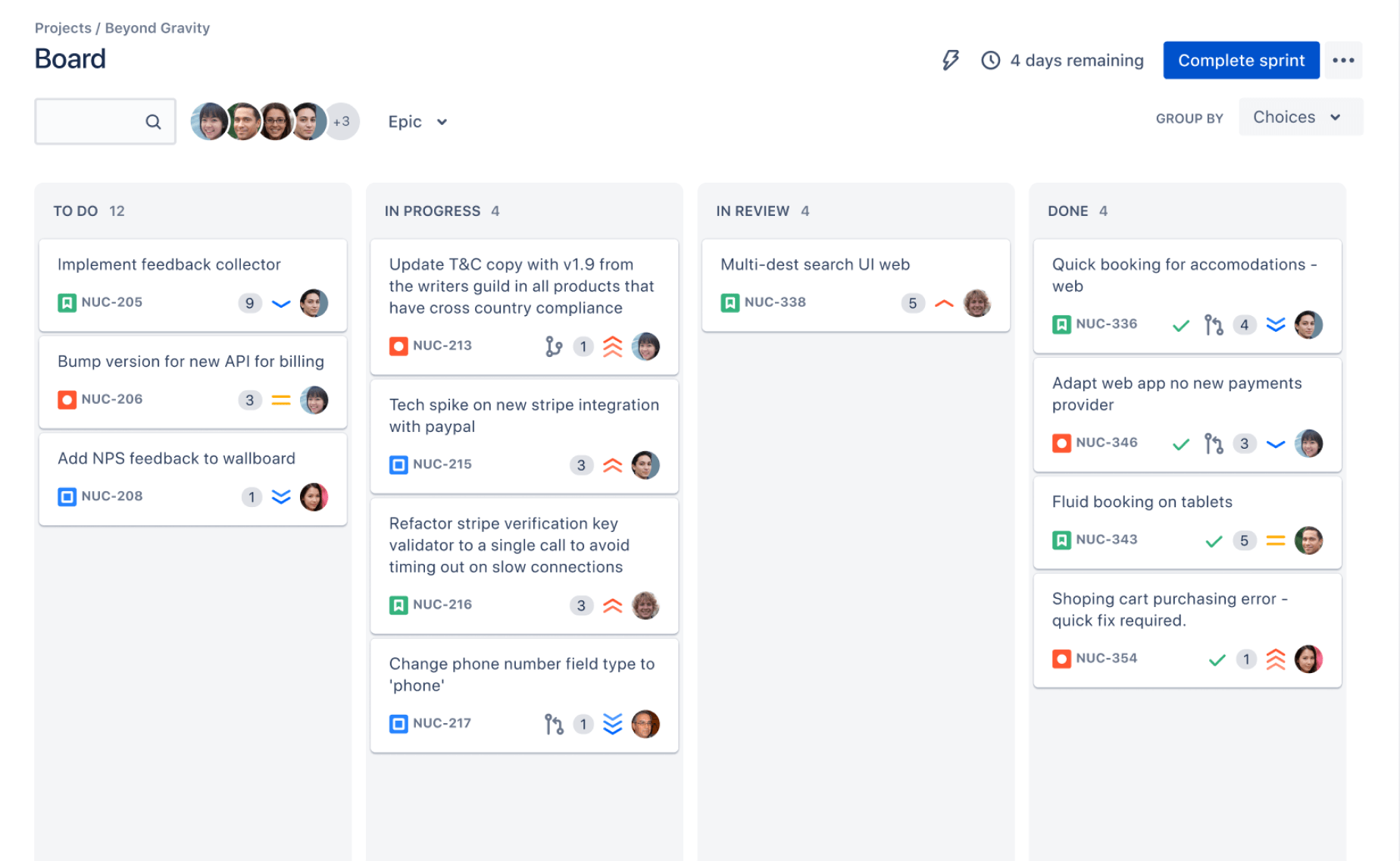
The main pricing variables
Jira Cloud Standard usually follows a tiered per-user model. The rate you see depends on the number of people who need access and the specific Jira product you select.
- Product edition: Jira Software, Jira Work Management, and related Atlassian products may have different pricing structures.
- Licensed seats: The subscription cost rises as more people receive access.
- Billing term: Monthly billing typically offers flexibility, while annual billing usually follows a committed user tier.
- Plan level: Standard sits above Free and below Premium or Enterprise offerings.
- Optional services: Marketplace apps, extra products, and certain support requirements increase the total.
- Taxes and currency: Your checkout total may differ from the displayed regional rate.
Monthly billing versus annual billing
Monthly billing works well when your team size changes frequently. You pay according to the current subscription arrangement and can adjust more often.
Annual billing can suit a stable team that expects consistent usage. However, you should estimate hiring plans before committing to a larger seat tier.
For example, a 42-person team may compare the cost of paying monthly for 42 seats with an annual commitment covering the next pricing tier. The cheaper option depends on Atlassian’s current tier rules and your expected growth.
What Standard usually includes
Jira Standard generally provides the core capabilities needed for software and project teams. These commonly include issue tracking, agile boards, backlogs, sprint planning, reports, dashboards, workflows, and collaboration features.
Standard also typically provides more capacity and administration controls than the Free plan. Exact limits can change, so check the current plan comparison before signing an agreement.
Premium and Enterprise plans may add advanced scale, reliability, administration, or cross-team capabilities. You should compare those features only when Standard creates a practical limitation for your team.
Build a Realistic Jira Cloud Budget
The fastest way to estimate your cost is to calculate the subscription first, then add related expenses. A realistic budget separates predictable license charges from variable usage costs.
Step 1: Confirm the Jira product
Start by identifying the product your team needs. Jira Software is commonly used by development teams, while Jira Work Management may suit broader business workflows.
Do not compare a Jira Software quote with a different Jira edition. The names sound similar, yet the included capabilities and rates can differ.
Step 2: Count active users
Count everyone who needs regular access. Include developers, testers, product managers, designers, delivery leads, administrators, and stakeholders who create or update work.
Separate occasional viewers from people who need full editing rights. Some teams overestimate their requirement because they give every stakeholder a paid seat.
Example: a product group has 12 developers, three testers, two product managers, one designer, and four delivery stakeholders. That makes 22 potential users before reviewing guest or limited-access options.
Step 3: Choose a billing cadence
Compare monthly and annual billing using the same seat count. Monthly pricing may help during a pilot, while annual pricing can simplify procurement for an established team.
Include planned hiring in the comparison. A team expecting 20 new hires may find an apparently cheaper annual tier less attractive after the expansion.
Step 4: Add optional products and apps
List every connected service that will appear on the purchase order. Examples include Confluence, service management products, time tracking, advanced roadmaps, reporting apps, and automation extensions.
Each app can introduce its own price, seat rules, renewal date, and administrator. A low-cost Jira plan can become expensive when several teams install overlapping extensions.
Step 5: Estimate administration and migration effort
Subscription cost is only one part of ownership. Include setup, workflow design, permission reviews, training, migration, integration maintenance, and periodic cleanup.
A practical estimate might include 40 hours for initial configuration, 10 hours for training, and recurring monthly administration. Your internal labor rate turns those hours into a measurable budget item.
Step 6: Add a growth buffer
Use a modest buffer for hiring, contractors, acquisitions, or temporary project teams. A buffer reduces the chance of renegotiating your budget every quarter.
For example, if you currently need 48 seats, model 48, 60, and 75 seats. Comparing three scenarios reveals how sensitive your annual cost is to growth.
Step 7: Verify the current 2026 quote
Before approval, check the live Atlassian pricing page or account quote. Confirm the currency, tax treatment, seat tier, renewal date, discounts, and included functionality.
Pricing pages change. A planning estimate should guide your decision, while the current checkout or sales quote should control the final purchase.
What You Actually Pay Beyond the License
The license is visible, yet the total cost of ownership often comes from surrounding work. A team can pay for a modest subscription and still spend heavily on customization.
Marketplace apps and integrations
Apps can support timesheets, advanced reporting, test management, capacity planning, approvals, or portfolio views. They can also create duplicate functionality.
For example, a team may install one reporting app for executives and another for sprint metrics. Reviewing native Jira dashboards first may reduce unnecessary recurring charges.
Implementation and migration
Moving from another platform involves workflow mapping, permission design, historical work transfer, validation, and training. Those activities require planning even when the cloud subscription is straightforward.
A migration with 2,000 active issues may need more preparation than a new workspace with 200 current issues. Your subscription rate does not reflect that difference.
Administration and governance
Someone must manage projects, schemes, permissions, automations, integrations, and inactive accounts. Without regular review, unused seats and redundant workflows quietly increase costs.
A monthly license review can identify people who changed teams, contractors whose assignments ended, and accounts that no longer need access.
Automation consumption
Automation can reduce manual work, but high-volume rules may encounter plan limits or require careful design. A rule that runs after every update can create more activity than a rule that runs once per status transition.
Review triggers, conditions, and actions before adding more automation. Efficient rules protect both performance and budget predictability.
Jira Cloud Standard Compared With Other Options
Standard is often the middle ground for teams that need more capability than a basic free workspace. The right choice depends on scale, controls, reliability requirements, and administrative complexity.
| Option | May suit you when | Budget consideration |
|---|
| Free plan | You are testing Jira with a very small team | Lower entry cost, with tighter limits and fewer controls |
| Standard plan | You need established project management and collaboration features | Recurring seat cost plus optional apps and administration |
| Premium plan | You need greater scale or advanced operational capabilities | Higher subscription cost, potentially lower reliance on workarounds |
| Enterprise plan | You need organization-wide governance and procurement support | Usually requires a tailored commercial conversation |
| Self-hosted alternative | You require deployment control or restricted-network operation | Infrastructure and maintenance replace some cloud administration |
A free plan may work for a short trial, yet it can become restrictive when permissions, reporting, or collaboration needs expand. Standard often becomes the practical baseline for a growing team.
A self-hosted platform may look more expensive at the beginning. It can make sense when regulatory controls, air-gapped operations, or internal hosting policies outweigh cloud convenience.
How to Reduce Unnecessary Subscription Spend
You can lower total cost without removing capabilities your team genuinely needs. The key is matching access, configuration, and integrations to actual work.
Review seats each month
Check active accounts, recent activity, role changes, and contractor end dates. Remove or downgrade access when appropriate under your organization’s access policy.
Even five unnecessary seats can matter across a full year. The effect becomes larger when several departments share one subscription.
Use native capabilities before buying apps
Jira includes workflows, fields, boards, dashboards, reports, and automation. Test those capabilities against your requirement before adding a Marketplace app.
For example, a simple approval process may need one workflow transition and one notification rule. A dedicated approval app may add cost without improving the outcome.
Standardize project configuration
Reusable workflows and permission patterns reduce administration. They also make onboarding easier because new projects follow familiar conventions.
Keep exceptions for genuine business needs. Excessive customization creates maintenance work and makes future migrations harder.
Model growth before renewal
Review hiring forecasts, temporary contractors, and planned reorganizations before renewal. Compare current seats with likely seats at the next two checkpoints.
That simple forecast can reveal whether annual billing provides value or creates unused capacity.
Jira Cloud Standard Solution: ONES.com
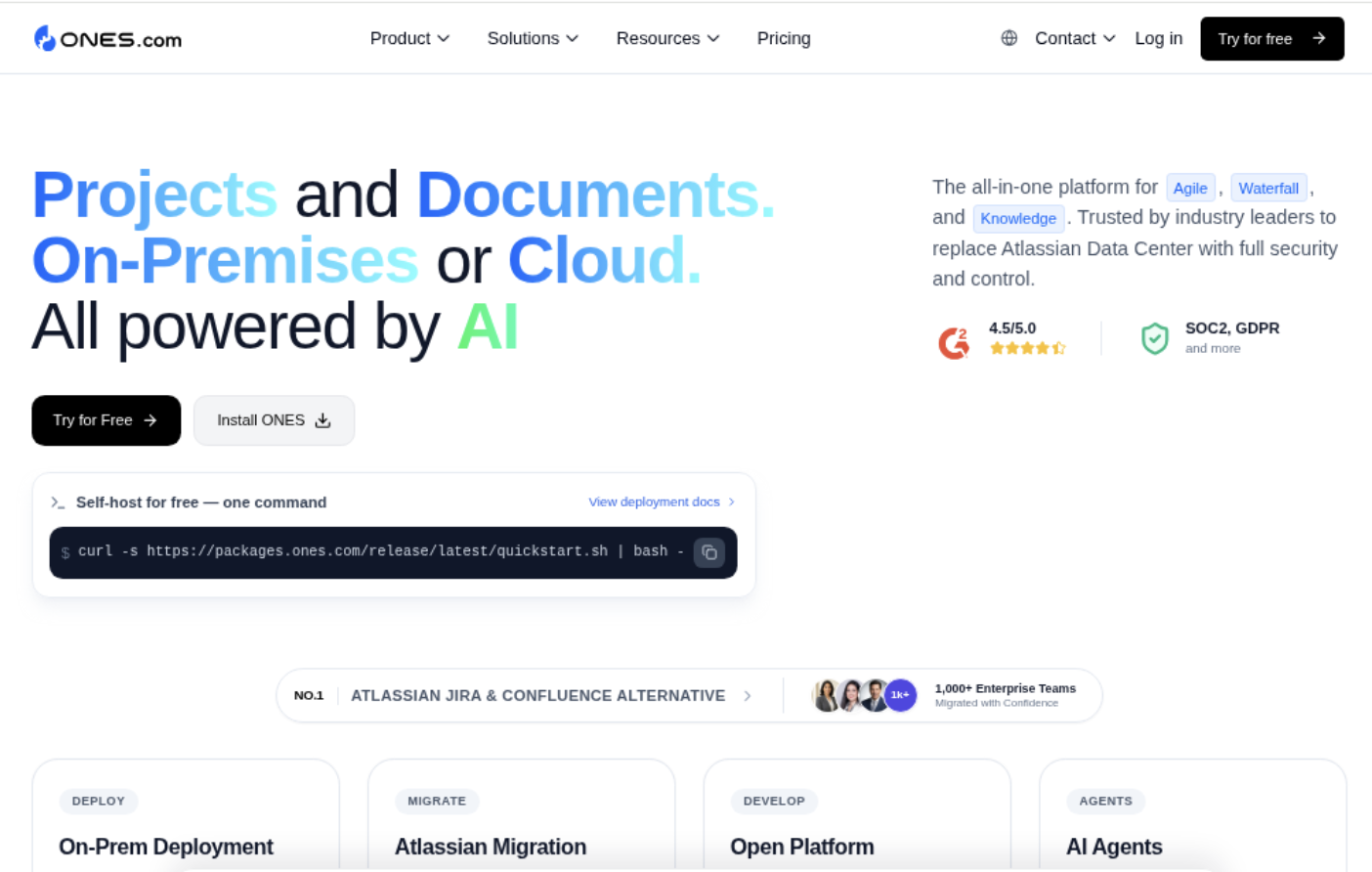
Value Proposition
ONES.com combines project management and knowledge management on one platform, with ONES Project serving as a Jira alternative. It can suit teams that want project workflows, reporting, and shared knowledge with fewer separate systems.
ONES Project and ONES Wiki are sold separately. You can choose the project management product, the knowledge management product, or both according to your operating model.
Core Capabilities
- Scattered work across separate tools → Unified project and knowledge management → Keep delivery work and team guidance within one connected platform through ONES.com.
- Jira migration concerns → Jira-compatible workflows → Preserve familiar issue-based planning patterns while evaluating a Jira alternative.
- Rigid delivery processes → Custom workflows and fields → Adapt statuses, forms, and work attributes to match your team’s approval and delivery stages.
- Limited visibility into progress → Built-in reporting → Give project leads dashboards and reports without depending on as many reporting plugins.
- Manual sprint coordination → Sprint management → Plan iterations, organize backlogs, and track sprint progress in a dedicated project workspace.
- Repetitive administrative actions → Automation → Trigger routine updates and notifications through configurable rules.
- Plugin-heavy deployments → Native feature parity → Reduce reliance on extensions when core workflows, fields, reporting, and sprint planning cover the requirement.
- Restricted hosting requirements → Four deployment choices → Select Cloud, On-Premise, Private Cloud, or Air-gapped deployment according to security and infrastructure needs.
- Uneven capabilities between hosted models → Full feature parity → Use the self-hosted version without giving up the same core feature coverage available in the cloud version.
- Early-stage budget pressure → Free plan for up to 30 seats → Evaluate the platform with a larger starting allowance before committing to a paid rollout.
Application Scenarios
Software team replacing Jira: A 35-person engineering group can map its backlog, sprint, workflow, and reporting practices into ONES Project. The team can then review plugin requirements individually instead of recreating every extension immediately.
Restricted-network product development: An organization with air-gapped infrastructure can deploy ONES Project in an environment that cloud-only tools cannot serve. Project tracking remains available within the organization’s network controls.
Delivery and knowledge alignment: A product team can pair ONES Project with ONES Wiki when runbooks, decisions, requirements, and delivery activity need a shared operating context. The products remain separately purchased, allowing a staged rollout.
Common Challenges When Estimating Cloud Pricing
Challenge: The advertised rate does not match your invoice
Why it happens: Taxes, currency, seat tiers, billing term, discounts, or additional products may affect the final charge.
Practical solution: Reconcile the quote line by line. Confirm the product, seats, billing period, currency, tax, renewal terms, and every additional service.
Challenge: Your team cannot agree on the seat count
Why it happens: Different departments may count employees, active editors, viewers, and contractors differently.
Practical solution: Define access categories. Identify who creates work, who updates work, who only reviews progress, and who needs administrative rights.
Challenge: Apps quietly increase the annual budget
Why it happens: Teams add extensions one problem at a time, then overlook renewal dates and overlapping functions.
Practical solution: Maintain an app register with purpose, owner, cost, renewal date, and replacement options. Review it before each renewal.
Challenge: Annual billing creates unused capacity
Why it happens: A company commits to expected growth that arrives later or changes direction.
Practical solution: Compare current seats with realistic hiring scenarios. Use monthly billing during uncertain expansion periods when the flexibility justifies the difference.
Challenge: Configuration becomes expensive to maintain
Why it happens: Every team creates its own statuses, fields, schemes, and automation rules.
Practical solution: Establish configuration standards. Allow exceptions only when they support a clear business process.
FAQs About Jira Cloud Standard Costs
Is Jira Cloud Standard priced per user?
Jira Cloud Standard generally uses a tiered user-based pricing model. Your cost depends on the product edition, number of licensed users, billing term, and region. Monthly and annual arrangements may calculate seats differently. Check the current Atlassian pricing experience for your region before budgeting, especially when your team sits near a pricing tier boundary.
Is annual billing cheaper than monthly billing?
Annual billing can offer a lower effective rate or simpler procurement for a stable team, though the result depends on current commercial terms. Monthly billing provides more flexibility when headcount changes frequently. Compare both options using expected seats at renewal, not only today’s headcount. Include planned hiring, contractors, and likely project closures.
Does Jira Standard include every feature?
Standard includes core project and issue management capabilities, yet some advanced functions may belong to Premium, Enterprise, or separate products. Marketplace apps can also add specialized features. Review the current plan comparison for automation limits, administration controls, storage, support, and reporting before assuming a capability is included.
What should I include in a Jira budget?
Include the Jira subscription, taxes, optional Atlassian products, Marketplace apps, migration, training, administration, integrations, and renewal changes. You should also model different seat counts. A 50-seat estimate may look precise, while a 50-seat, 65-seat, and 80-seat scenario gives you a more useful planning range.
Can a Jira alternative reduce total cost?
It can, depending on your team’s requirements and deployment needs. Compare more than the subscription rate. Review native capabilities, plugin dependence, migration effort, hosting options, administration time, reporting, and long-term scalability. A platform with broader built-in coverage may reduce extension and maintenance expenses for some teams.
Conclusion
Jira Cloud Standard pricing becomes easier to evaluate when you separate the headline subscription from the complete operating cost. Start with the product edition and active seats, then compare billing terms and growth scenarios.
Next, account for apps, integrations, migration, administration, taxes, and renewal changes. A monthly seat review and annual app audit can prevent avoidable spending.
But here’s the truth: a low per-user rate does not guarantee a low total cost. The best choice balances price, required capabilities, deployment preferences, and the work needed to keep the platform useful.
If Jira’s extension requirements or cloud-only model create friction, evaluate a Jira alternative such as ONES Project. ONES.com gives you another path for project and knowledge management, with cloud and self-hosted deployment options for different operating needs.