Jira Cloud Standard Pricing per User per Month Explained
Confused by jira cloud standard pricing per user per month? Learn billing tiers, taxes, seats, and add-ons. Read now to calculate your true cost.
Jira Cloud Standard pricing can look simple until you compare monthly billing, annual tiers, active users, taxes, and add-ons. A small team may expect a straightforward multiplication, then discover a different invoice.
That confusion becomes expensive when contractors, inactive accounts, or Marketplace apps remain attached to your subscription. Even a few unnecessary seats can affect your monthly total.
Here’s the practical answer: Jira Cloud Standard is commonly listed at $7.53 per user per month in the lower user bands. Your final cost depends on billing frequency, user count, region, taxes, and extra products.
Jira Cloud Standard Pricing Explained
Jira Cloud Standard pricing per user per month refers to the recurring charge for Jira’s standard cloud plan, calculated through user tiers rather than a single flat team fee.
At the commonly published US list rate, the lower monthly tiers use an approximate rate of $7.53 per user per month. Atlassian can revise prices, so confirm the current amount in its official pricing calculator before purchasing.
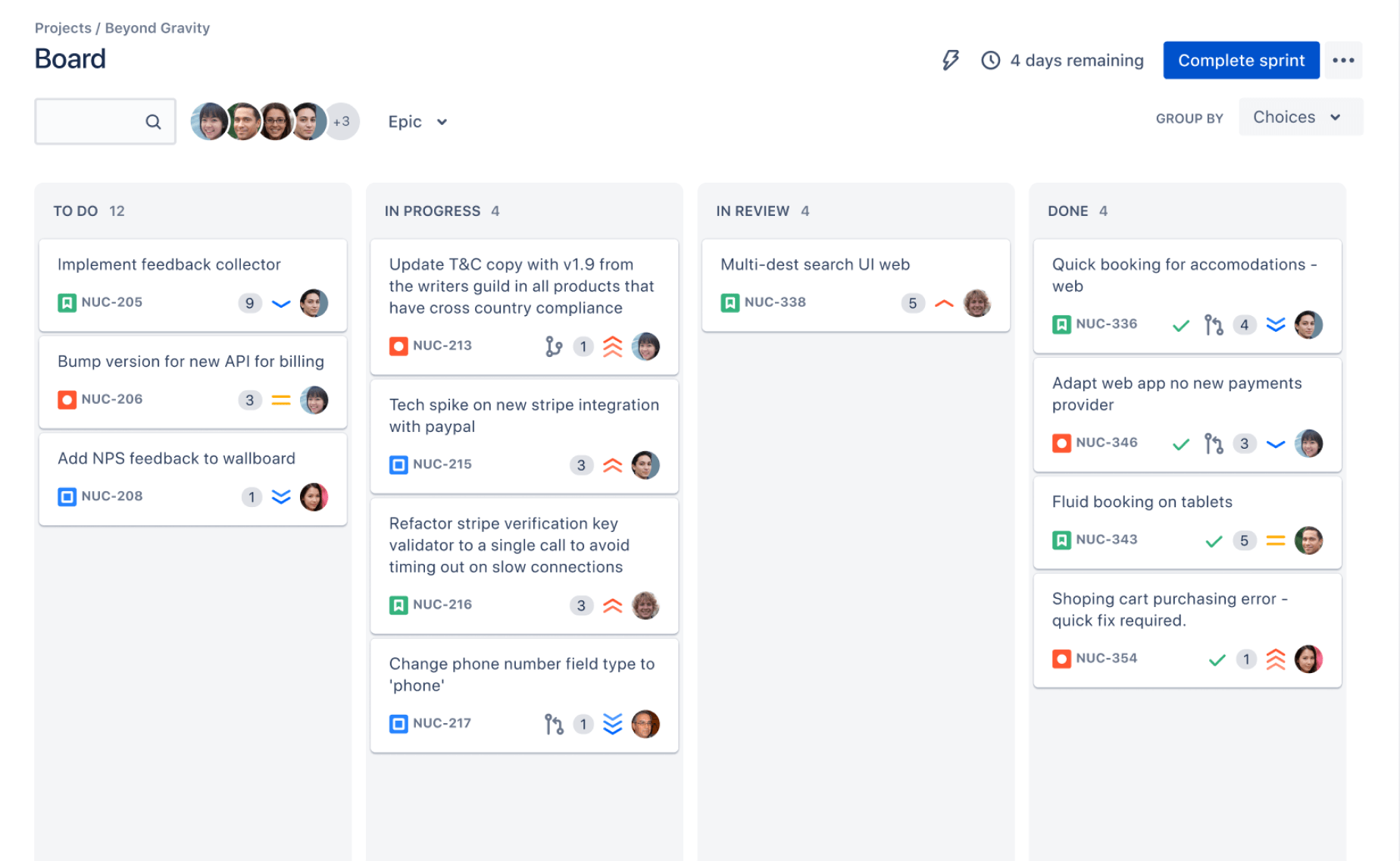
Quick cost examples
| Team size |
Illustrative monthly calculation |
Approximate monthly total |
| 5 users |
5 × $7.53 |
$37.65 |
| 10 users |
10 × $7.53 |
$75.30 |
| 25 users |
25 × $7.53 |
$188.25 |
| 50 users |
50 × $7.53 |
$376.50 |
| 100 users |
100 × $7.53 |
$753.00 |
These examples show the basic math before taxes, discounts, regional adjustments, or additional Atlassian products. They are useful for planning, not a guaranteed quotation.
What the Standard plan generally includes
- Cloud-hosted Jira project management.
- Agile boards, backlogs, sprints, and issue tracking.
- Custom workflows and project configurations.
- Reports, dashboards, and basic planning features.
- Automation rules subject to plan limits.
- Collaboration features for software, business, and service teams.
- Standard-level support and administration controls.
Exact limits can vary by product area and change over time. Review the current plan comparison when a specific capability affects your buying decision.
What the price does not automatically include
Your Jira subscription may exclude Marketplace apps, premium connectors, additional Atlassian products, consulting services, and certain advanced security options.
For example, a team might pay for Jira Standard and separately add a time-tracking app. The app can become a significant part of the total monthly bill.
How Jira Calculates the Monthly Amount
The rate is only the starting point. Your invoice usually reflects a combination of active access, billing method, user tier, currency, taxes, and optional services.
Monthly billing and user access
Monthly plans are generally flexible because you can adjust seats as your team changes. The monthly amount can respond to additions, removals, and account activity.
Suppose your company has 24 employees, but 18 need Jira access. A basic estimate starts with 18 paid users, not the full headcount.
However, invitations and access settings matter. An account that keeps product access may remain billable even when that person has not opened Jira recently.
Annual billing and user tiers
Annual subscriptions commonly use predefined user tiers. You may select a tier that covers a range of users instead of paying for each month’s exact active count.
For example, an annual tier covering up to 25 users may remain the relevant billing level when only 19 people currently need access.
The annual payment can improve budget predictability. It can also reduce flexibility if your team shrinks shortly after renewal.
Taxes, currency, and regional pricing
The displayed US dollar amount may not match your final payment. Taxes, currency conversion, local billing rules, and regional adjustments can change the total.
A finance team in the United Kingdom may see a pound-denominated charge. A company in Canada may see Canadian dollar pricing and applicable taxes.
Always compare the checkout total with your internal budget currency. Small conversion changes can matter when you have hundreds of seats.
Seat planning example
Imagine a 50-person company with 32 engineers, six product managers, four designers, and eight executives.
- Engineers and product managers may need daily Jira access.
- Designers may need access for delivery coordination.
- Executives may only need reports or dashboard visibility.
If all 50 people receive the product, the illustrative base charge is $376.50 monthly. If only 42 require access, the estimate falls to $316.26 before other charges.
The right approach depends on reporting needs, collaboration habits, and access permissions. Cutting seats blindly can create workflow friction.
What Changes the Real Cost?
The advertised rate answers one question: how much does one user cost at a particular tier? Your operating cost requires a wider calculation.
Marketplace apps
Teams often add apps for advanced roadmaps, time tracking, test management, capacity planning, or portfolio reporting.
Each app may use its own pricing model. Some charge by Jira user count, while others use separate limits or product tiers.
A $7.53 base rate can therefore become a much larger technology expense after several teams install paid extensions.
Multiple Atlassian products
Jira may be purchased alongside Confluence, Jira Service Management, or other Atlassian products. Each product can have separate user counts and plan charges.
One employee may need access to several products. That person can contribute to more than one subscription total.
Guests, contractors, and external collaborators
External contributors create a common budgeting problem. A contractor may need access for three months, while a partner may need limited project visibility.
Before adding someone, decide whether they need full editing rights, occasional participation, or read-only visibility. The permission model can affect both cost and security.
Premium and Enterprise upgrades
Standard may cover everyday issue tracking and agile delivery. Larger organizations may consider Premium for higher limits, advanced planning, or stronger administration features.
Enterprise introduces broader governance and organizational controls. It can make sense for complex environments, though smaller teams may pay for capabilities they rarely use.
Operational administration
Subscription cost is only one part of ownership. Administration, workflow design, training, governance, and app maintenance also require time.
A low license price can become less attractive when several disconnected apps require constant upkeep.
How to Estimate Your Team’s Annual Budget
You can build a reliable estimate with a simple four-part process. Start with real access needs, then add predictable extras and a small growth allowance.
Step 1: Count people who need access
List each role that needs to create, update, assign, or monitor Jira work. Separate regular contributors from occasional viewers.
For example, 28 engineers, five product managers, three delivery leads, and two administrators create a 38-user planning estimate.
Step 2: Multiply by the working rate
Use the current calculator rate for your region and billing method. For illustration, 38 users at $7.53 equals $286.14 per month.
Multiply the monthly estimate by 12 for a rough yearly view. That example produces $3,433.68 before taxes and extras.
Step 3: Add apps and related products
List every Marketplace app and Atlassian product your team expects to use. Do not hide these costs inside a general contingency.
Separate line items make renewal discussions easier. You can see which capability creates the largest increase.
Step 4: Model growth and departures
Add likely hires, contractors, and acquisitions. Then consider how quickly you can remove access when people leave.
A team expecting ten hires may choose annual coverage for a larger tier. A project-based team may prefer monthly flexibility.
Budgeting table
| Budget item |
Question to answer |
Why it matters |
| Core Jira seats |
How many people need product access? |
Creates the starting subscription estimate. |
| Billing method |
Do you need flexibility or fixed annual planning? |
Changes how seat counts are handled. |
| Marketplace apps |
Which extensions are essential? |
Can raise the total beyond the base plan. |
| Related products |
Will teams use other Atlassian services? |
May create separate subscriptions. |
| Growth allowance |
How many people may join this year? |
Prevents an unrealistic first estimate. |
Monthly Versus Annual Billing
Neither billing method is automatically cheaper for every team. The better choice depends on how stable your headcount is and how much financial flexibility you need.
When monthly billing can fit
- Your project team changes frequently.
- You expect contractors to join and leave.
- You are still testing Jira with a new department.
- You want to reduce long-term commitment.
- Your finance team prefers monthly operating expenses.
Monthly billing resembles a flexible rental. You pay for convenience, but the recurring rate and fluctuating seat count require monitoring.
When annual billing can fit
- Your user count is predictable.
- You have a stable yearly technology budget.
- Procurement prefers one renewal cycle.
- You want fewer monthly administration tasks.
- Your team expects sustained Jira usage.
Annual billing resembles reserving capacity for a longer period. It simplifies planning, though unused capacity can become wasteful.
A practical decision rule
Choose monthly billing when uncertainty is expensive. Choose annual billing when price predictability and administrative simplicity matter more.
Before committing, compare your likely lowest, average, and highest seat counts. That three-point view is more useful than planning around today’s headcount.
Jira Cloud Standard Alternative: ONES.com
ONES.com combines project management and knowledge management in one platform. ONES Project provides project planning and delivery workflows as a Jira alternative, while ONES Wiki supports team knowledge management separately.
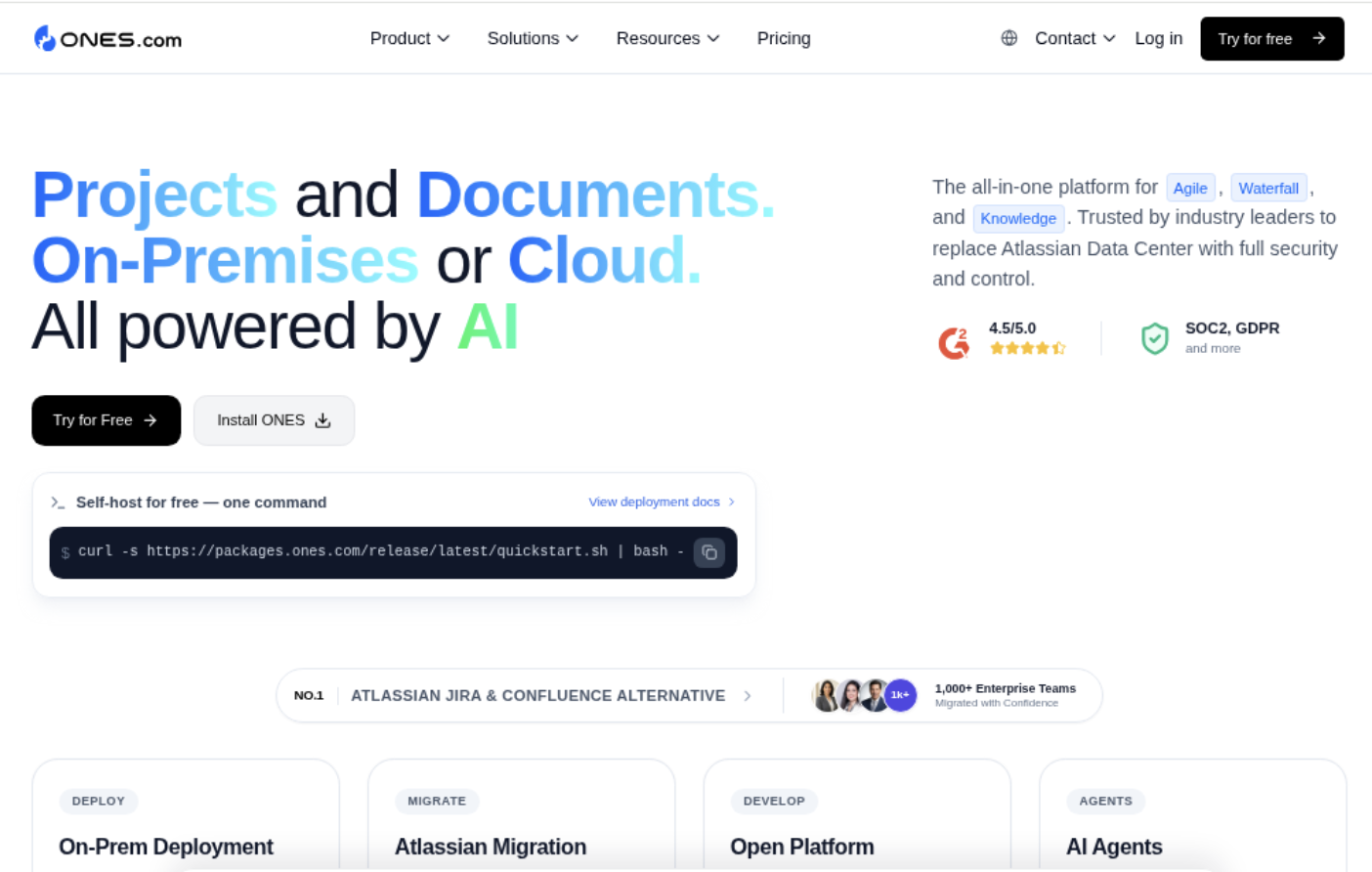
It can suit teams that want Jira-compatible workflows, native reporting, and deployment flexibility without assembling several plugins for common needs.
Core Capabilities
- Plugin sprawl: Teams often need several extensions for planning and reporting. ONES capability: ONES Project includes built-in reporting and configurable workflows. Result: You can reduce the number of separate tools requiring maintenance.
- Rigid work management: Different departments may follow different approval paths. ONES capability: Custom workflows and fields let you model those processes. Result: Product, engineering, and operations teams can work within suitable structures.
- Sprint coordination: Teams need a clear view of planned and completed work. ONES capability: Sprint management supports backlog organization and iterative delivery. Result: Planning conversations stay connected to execution.
- Repetitive administration: Manual transitions and assignments consume coordinator time. ONES capability: Automation handles recurring workflow actions. Result: Routine updates can happen with less manual effort.
- Restricted networks: Some organizations cannot place project information in a public cloud. ONES capability: Deployment options include on-premise, private cloud, and air-gapped environments. Result: Security-sensitive teams can choose an architecture matching their controls.
- Uneven deployment requirements: A company may need cloud hosting for one division and self-hosting for another. ONES capability: ONES.com supports cloud and self-hosted deployments with full feature parity. Result: Deployment choice does not require giving up core capabilities.
- Knowledge scattered across tools: Project decisions can become difficult to find. ONES capability: ONES Wiki provides a connected knowledge management environment. Result: Teams can keep delivery context and working knowledge closer together.
- Entry-cost concerns: Small teams may want to evaluate the platform before committing. ONES capability: The free plan supports up to 30 seats. Result: A smaller group can test workflows within a defined limit.
Application Scenarios
Growing software team: A 20-person engineering group can configure Jira-compatible issue workflows, sprints, fields, and reports in ONES Project. Product leaders can review progress without adding multiple reporting extensions.
Regulated organization: A company with restricted network requirements can evaluate an air-gapped deployment. The team keeps project operations within its controlled environment while retaining feature parity.
Cross-functional delivery group: Engineering can manage work in ONES Project, while product and operations teams maintain guidance in ONES Wiki. The two products are sold separately, so the organization can select the combination it needs.
Common Challenges
Challenge: confusing list price with final price
Solution: Treat the advertised rate as a starting estimate. Add taxes, regional currency, user tiers, Marketplace apps, and related products before approval.
Challenge: paying for people who no longer need access
Solution: Review user access monthly. Remove departed staff promptly and create a clear process for contractors whose assignments end.
Challenge: choosing annual billing too early
Solution: Review headcount stability first. A pilot group may benefit from monthly billing until usage patterns become clear.
Challenge: underestimating app expenses
Solution: Ask every team to list required extensions before signing. Compare each app’s pricing method with your expected user count.
Challenge: comparing plans only by seat price
Solution: Include administration effort, deployment requirements, reporting needs, and workflow flexibility. A slightly different license model may reduce overall complexity.
FAQs
What is the typical Jira Cloud Standard rate per user?
A commonly published US list rate for Jira Cloud Standard is $7.53 per user per month in lower user bands. The amount can change with Atlassian pricing updates, billing method, region, currency, taxes, and user tier. Use the current Atlassian calculator for a purchase estimate. Your final invoice may also include paid apps or other Atlassian products.
Is Jira Cloud Standard billed for every employee?
Usually, billing relates to people with product access rather than every employee in your company. Someone who does not need to view or edit Jira generally should not receive a paid seat. Check access settings carefully, especially for contractors, former employees, and occasional collaborators. Annual subscriptions may use a selected user tier instead of matching every month’s exact count.
Does annual billing always cost less than monthly billing?
No. Annual billing can improve predictability and may offer favorable tier economics, but it can also cover unused capacity. Monthly billing may fit teams with changing headcount or temporary projects. Compare both options using your expected minimum, average, and maximum seat counts. Include taxes and paid extensions in both calculations, because the base subscription alone does not show the full commitment.
Are Marketplace apps included in Standard?
Marketplace apps are generally separate subscriptions. An app for time tracking, test management, advanced planning, or reporting can add another recurring charge. Some apps price according to the number of Jira users, even when only a smaller group actively uses the app. Build an app inventory before budgeting, then confirm each vendor’s current pricing and billing rules.
Can a Jira alternative reduce total project management cost?
Potentially, but the comparison should include more than the headline seat rate. Review workflow support, reporting, deployment choices, app requirements, migration effort, and administration time. ONES Project offers Jira-compatible workflows, custom fields, sprint management, automation, and built-in reporting. ONES.com also supports cloud, on-premise, private cloud, and air-gapped deployments, with feature parity between cloud and self-hosted versions.
Conclusion
Jira Cloud Standard is commonly priced at about $7.53 per user per month in the lower US list-price bands. Your actual expense depends on seats, billing frequency, annual tiers, taxes, currency, apps, and related products.
Start with the people who genuinely need access. Then compare monthly and annual scenarios, audit inactive accounts, and include every extension in your budget.
But here’s the truth: a low per-user rate does not guarantee a low total cost. The practical solution is a complete ownership estimate that includes administration and tool complexity.
If Jira’s ecosystem becomes difficult to manage, evaluate a platform such as ONES.com alongside the subscription price. The right choice should support your workflows, deployment requirements, and long-term operating model.