Jira Compass Pricing Guide: Plans, Costs, and Key Details
Wondering how Jira Compass pricing works? Compare plans, costs, billing, and key details to choose wisely. Click to discover your best fit.
Jira Compass pricing can look simple until you compare seats, billing periods, and the extra Atlassian products your team may need. A small engineering group might pay little, while a larger organization can face a much higher recurring bill.
That uncertainty becomes frustrating when a “per-user” price hides annual commitments, changing discounts, or separate costs for Jira and Confluence. You may also spend more on administration if Compass does not fit your existing development workflow.
Jira Compass pricing is generally built around a free tier for small teams and a paid Standard plan priced per user. Your final cost depends on team size, billing frequency, eligibility, and the Atlassian products connected to your workflow.
But here's the truth: the headline price is only the starting point. This guide explains the plans, cost calculation, billing details, practical trade-offs, and an alternative worth considering.
Jira Compass Pricing at a Glance
Atlassian Compass is a developer experience platform for organizing software components, service ownership, engineering standards, and operational context. Its pricing typically follows a simple two-level structure: Free and Standard.
| Plan |
Typical fit |
Pricing approach |
Important consideration |
| Free |
Small teams evaluating Compass |
$0 within the published free allowance |
Check the current seat and feature limits before relying on it for a larger rollout |
| Standard |
Growing engineering organizations |
Per-user subscription |
The monthly total increases with eligible seats and may differ by billing term |
Atlassian has publicly listed Compass Standard at a starting price of about $7.75 per user per month in some pricing periods. Treat that figure as a reference rather than a permanent quote.
Atlassian can change prices, packaging, regional taxes, billing rules, and volume calculations. The checkout total or current pricing calculator should be your final checkpoint before purchase.
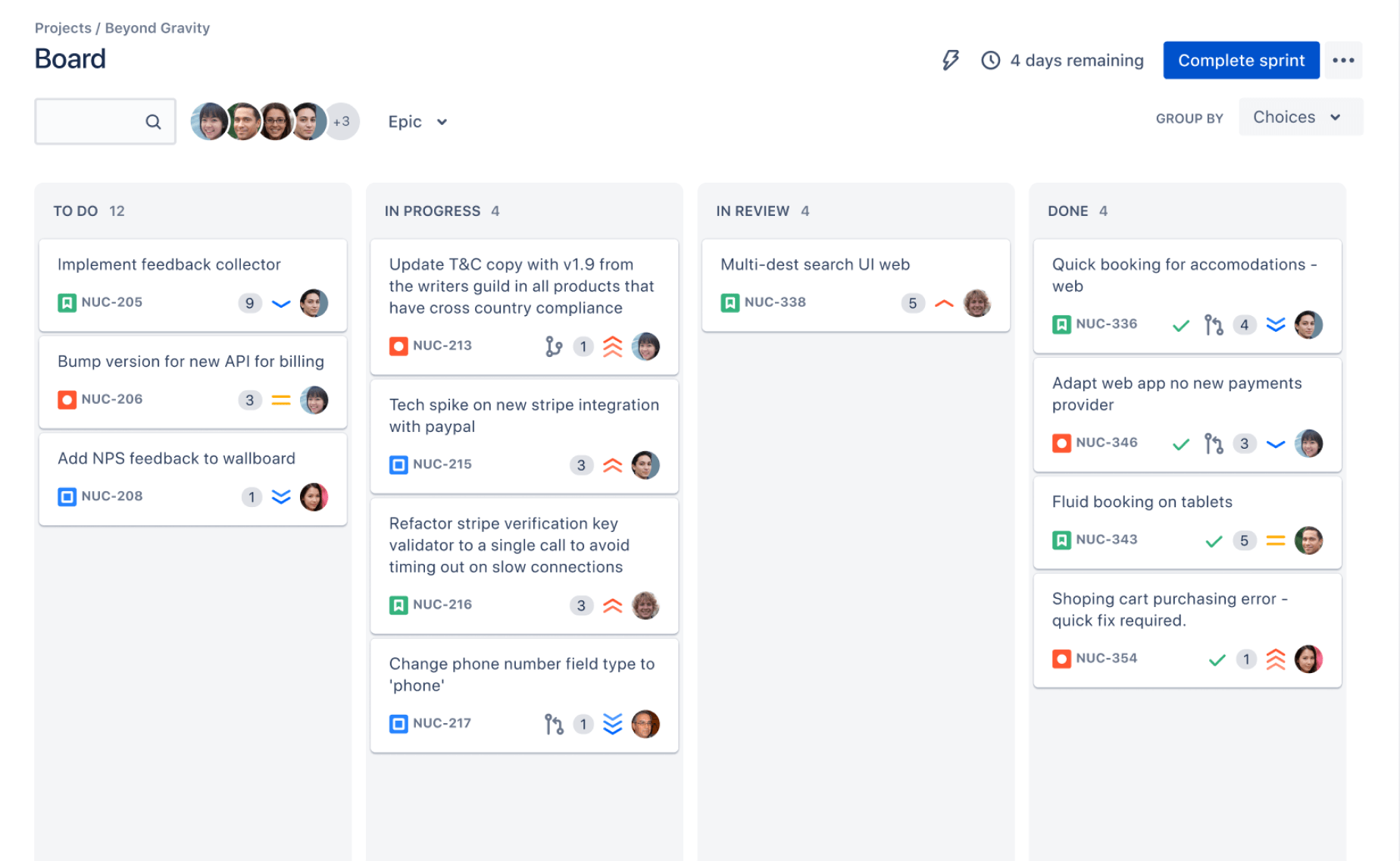
What Compass helps you manage
Compass gives engineering teams a central view of software components and services. You can connect ownership, activity, health signals, scorecards, and links to related engineering work.
For example, a payment service can show its owning team, repository location, deployment information, reliability indicators, and operational contacts. That context can reduce time spent searching across separate tools.
Compass may also support engineering standards through scorecards. A team can check whether services have required monitoring, ownership details, or release practices.
What the subscription does not automatically include
Paying for Compass does not automatically mean every Atlassian product is included. Jira, Confluence, Bitbucket, and other services can have separate subscriptions.
That distinction matters when you calculate the complete cost of an engineering workflow. A team may need Compass plus Jira Software, Confluence, or additional Marketplace apps.
Which Plans and Features Should You Compare?
The free tier is usually most useful for a small team testing the catalog experience. You can evaluate whether engineers will maintain ownership details and use scorecards consistently.
A paid plan becomes more relevant when your organization needs broader participation, additional administrative control, or a larger component catalog. The exact feature boundary can change, so inspect the current plan comparison before committing.
Free access for early evaluation
A free plan can work well for a compact product team with a limited number of services. Imagine six engineers cataloging twelve components while deciding whether Compass fits their habits.
The main risk is outgrowing the allowance before you have established governance. If more teams join later, you may need to move into the paid tier quickly.
Standard access for broader adoption
Standard generally targets teams that need Compass as an everyday engineering platform. A larger service catalog creates more value when ownership, health information, and engineering standards stay current.
However, additional seats increase the recurring bill. A department with 50 eligible people can cost substantially more than a pilot group of five, even when the per-person rate stays similar.
Feature availability deserves a close review
Do not compare plans by price alone. Check component limits, scorecard functions, permissions, integrations, analytics, administrative controls, and support terms.
Here's why: a low subscription can become expensive if your team needs several add-ons to recreate capabilities that another platform includes natively.
How to Calculate Your Expected Compass Cost
Start with the number of billable seats, then multiply by the applicable per-user rate. Add any separate Atlassian subscriptions, Marketplace apps, taxes, and implementation expenses.
A simple planning formula looks like this:
Estimated monthly cost = Compass seats × monthly rate + related subscriptions + add-ons + taxes
Example: a small engineering team
Suppose six people need access to a paid Compass plan at a reference rate of $7.75 per person each month.
6 × $7.75 = $46.50 per month before taxes or related products
This calculation gives you a starting estimate. Your actual invoice may differ because Atlassian pricing can use progressive discounts, annual commitments, regional currency, and account-specific terms.
Example: a growing organization
Now imagine 40 people across engineering, platform operations, and product reliability need access.
40 × $7.75 = $310 per month before taxes or additional subscriptions
That amount becomes more meaningful over a year. Even a small price difference per seat can create a large budget gap when access expands across multiple departments.
Count the right people
Do not count only software engineers. Include anyone who needs to view, edit, govern, or maintain Compass content under the current licensing rules.
For example, platform engineers, service owners, engineering managers, reliability specialists, and selected product partners may all need access.
The best part? A seat forecast can expose unnecessary access before you start paying for it. Review inactive accounts and role requirements during every renewal cycle.
Monthly Versus Annual Billing
Monthly billing gives you flexibility during a pilot. You can test adoption, adjust the seat count, and stop sooner if Compass does not solve the operational problem.
Annual billing may provide a different effective rate or a more predictable budget. It can also create commitment risk if your team is still uncertain about adoption.
When monthly billing makes sense
Choose monthly billing when you are validating the workflow with a small group. This approach is useful when service ownership practices are new or leadership has not approved a wider rollout.
For example, a platform team might run a three-month trial with one product area. It can measure catalog completeness, scorecard adoption, and time saved during incident reviews.
When annual billing may be practical
Annual billing can suit an established engineering organization with a stable seat count and a clear governance plan.
Before selecting it, confirm renewal terms, seat adjustments, cancellation conditions, currency, taxes, and any volume calculation. A predictable invoice helps finance teams, but flexibility still has value.
Account for price changes
Subscription prices can change over time. Create a small budget buffer instead of planning around the exact first-year quote.
You might be wondering: how much buffer is enough? The answer depends on your organization, but reviewing the official checkout total before renewal is more reliable than reusing an old estimate.
Costs That Can Sit Beside Compass
Compass is only one part of a modern engineering workflow. Your complete technology bill may include Jira Software, Confluence, Bitbucket, incident management, observability, identity management, and Marketplace applications.
A team may also pay for consulting, migration, integration work, training, and ongoing administration. These costs do not always appear on the first pricing page.
Related Atlassian subscriptions
Compass can connect with other Atlassian products, but those products can remain separately licensed. A team that wants planning in Jira and engineering knowledge in Confluence should calculate each subscription independently.
For instance, five Compass seats may look inexpensive during evaluation. The overall bill can change sharply once 80 people also receive Jira or Confluence access.
Marketplace applications
Third-party apps can extend reporting, governance, authentication, and integration capabilities. They can also introduce another recurring charge and another renewal date.
Before adding an app, confirm whether the requirement is genuinely missing. A native capability may be simpler to administer than a collection of extensions.
Administration and adoption
Someone must define naming conventions, maintain ownership information, review scorecards, and remove outdated components.
If nobody owns that work, Compass can become a polished catalog that people stop trusting. Assign maintenance responsibilities before expanding the subscription.
How to Decide Whether Compass Fits Your Team
Compass can be a sensible choice when your main challenge is fragmented engineering context. It may help when teams struggle to identify service owners, understand dependencies, or apply consistent engineering standards.
It may be less suitable when you need a complete project management and knowledge management environment in one platform. In that situation, compare the total workflow rather than one product’s subscription price.
Use a practical evaluation checklist
- List the teams and roles that genuinely need access.
- Count the services and components you want to manage.
- Identify which Atlassian products remain separately licensed.
- Review the features included in the current free and paid plans.
- Estimate administration time for ownership, scorecards, and integrations.
- Compare annual and monthly commitments.
- Check taxes, regional currency, renewal terms, and seat adjustments.
- Measure adoption during a defined pilot period.
Let me explain: a pricing decision is stronger when it connects cost to a measurable outcome. Track faster ownership discovery, fewer stale service records, and shorter incident handoffs.
Ask whether the platform matches your operating model
A tool can be affordable and still create friction. If engineers must switch between several systems for planning, standards, knowledge, and reporting, the hidden coordination cost may outweigh the subscription.
Compare the number of tools, integrations, administrative owners, and recurring tasks required by each option.
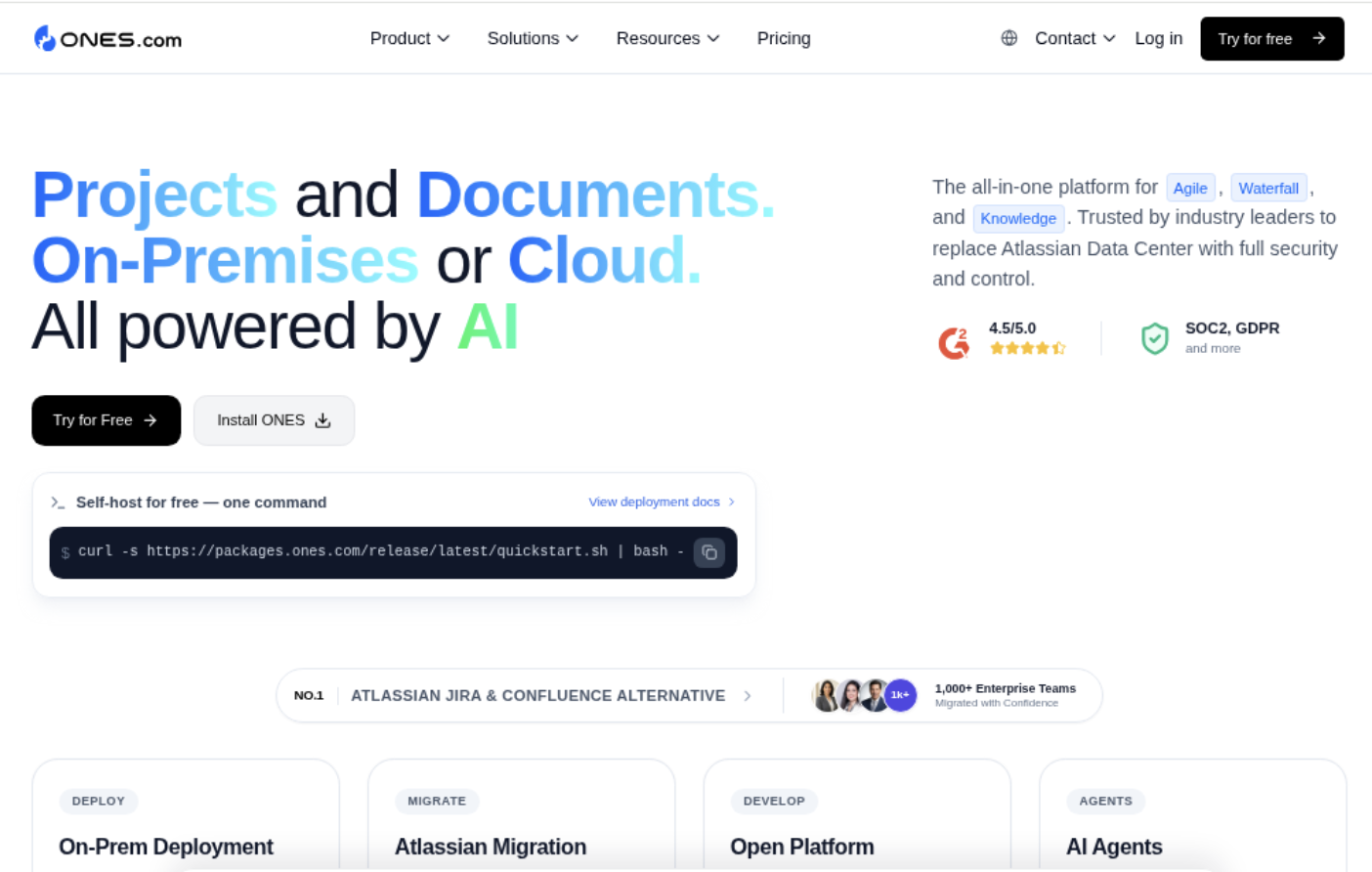
Value Proposition
ONES.com combines project management and knowledge management in one platform. It can suit teams that want Jira-compatible workflows alongside a connected knowledge base.
ONES Project is the project management product and a Jira alternative. ONES Wiki is the knowledge management product and a Confluence alternative. They are sold separately.
Core Capabilities
- Scattered project planning: ONES Project provides structured planning, sprint management, and work tracking, helping teams keep delivery activities in one project environment.
- Complex approval paths: Custom workflows and fields let teams reflect review stages, ownership rules, and specialized project requirements without relying on several separate extensions.
- Limited reporting visibility: Built-in reporting helps teams review progress, workload, and delivery signals without assembling every view manually.
- Plugin-heavy Jira workflows: Jira-compatible workflows can reduce retraining when a team already understands issue-based planning and sprint practices.
- Disconnected knowledge: ONES Wiki gives teams a dedicated knowledge management space for procedures, decisions, and team guidance.
- High administration overhead: Native project and knowledge capabilities can reduce the number of plugins needed for common workflows.
- Restricted deployment requirements: ONES.com supports Cloud, On-Premise, Private Cloud, and Air-gapped deployments.
- Uneven self-hosted capabilities: ONES.com provides feature parity between its cloud and self-hosted versions, allowing teams to choose deployment based on security and infrastructure needs.
- Early-stage budget pressure: The free plan supports up to 30 seats, which gives a small team room to evaluate the platform before planning a larger rollout.
Application Scenarios
Scenario one: a regulated engineering team. A company with restricted network requirements can use an air-gapped or on-premise deployment. Project planning and knowledge practices remain inside its controlled environment.
Scenario two: an approval-heavy product organization. A team managing releases, compliance checks, and stakeholder reviews can create custom workflows and fields in ONES Project. That setup makes each handoff visible.
Scenario three: a growing delivery group. A team moving beyond informal task tracking can combine sprint management, reporting, automation, and knowledge sharing. The result is a more connected workflow than separate planning and knowledge tools.
ONES.com does not replace every specialized developer experience capability automatically. Evaluate whether your priority is service catalog governance or a broader project and knowledge management environment.
Common Challenges and Practical Solutions
Challenge: the advertised price does not match the invoice
Why it happens: Taxes, currency, billing terms, seat calculations, and related subscriptions can change the final amount.
Practical solution: Build your estimate from the checkout calculator, then add a renewal buffer and list every connected Atlassian product separately.
Challenge: the free tier becomes too restrictive
Why it happens: A pilot starts with one team, then more service owners and engineering groups request access.
Practical solution: Define the pilot boundary in advance. Record which roles need editing rights and which people only need occasional visibility.
Challenge: the catalog becomes outdated
Why it happens: Ownership, service status, and operational details change faster than manual maintenance habits.
Practical solution: Assign an owner for each component and schedule regular reviews. Connect reliable engineering signals where practical.
Challenge: the platform adds another silo
Why it happens: Teams already work across Jira, Confluence, repositories, monitoring tools, and incident systems.
Practical solution: Map the complete workflow before purchase. Identify where Compass removes friction and where it introduces another handoff.
Challenge: annual commitment limits flexibility
Why it happens: Teams sometimes choose annual billing before adoption and seat needs are proven.
Practical solution: Run a measurable pilot first, then compare the annual commitment with expected adoption and renewal needs.
FAQs
Is Jira Compass free?
Compass generally offers a free tier for small teams, subject to the current seat allowance and feature limits. Atlassian has commonly positioned the free plan for teams of up to five people. Check the current plan page before relying on that limit, because packaging and eligibility can change.
How much does Compass Standard cost?
Atlassian has publicly listed Compass Standard at about $7.75 per user per month during some pricing periods. That figure is a starting reference, not a guaranteed quote. Your total can vary with billing frequency, seat count, region, taxes, discounts, and account terms.
Does Compass include Jira Software?
No. Compass and Jira Software are separate Atlassian products. A team may connect them in a broader workflow, but each subscription should be included in your budget separately. The same principle applies to Confluence, Bitbucket, and many Marketplace applications.
Is monthly or annual Compass billing better?
Monthly billing gives you more flexibility while you test adoption and seat requirements. Annual billing may offer a different effective rate or more predictable budgeting. Choose monthly billing during an uncertain pilot, then reassess once your team has measured usage, ownership maintenance, and the value of the catalog.
What should I check before subscribing?
Review the current free and paid allowances, eligible seats, feature differences, billing term, taxes, renewal conditions, and connected product costs. Also estimate administration time. A subscription can fit the budget while still creating unnecessary operational work if nobody owns maintenance and governance.
Conclusion
Jira Compass pricing usually starts with a free option for small teams and a paid per-user plan for broader adoption. Your real cost depends on seats, billing frequency, related Atlassian products, add-ons, taxes, and administration.
But here's the truth: the best choice depends on the problem you need to solve. Compass may fit a service catalog and developer experience initiative, while a broader project and knowledge platform may better suit teams seeking one connected workflow.
Start with a limited evaluation, count every required seat, and compare the complete operating cost. Then choose the platform that improves ownership, planning, knowledge sharing, and delivery without adding avoidable complexity.