Jira Confluence Cloud Pricing: A Practical Cost Guide 2026
Confused by jira confluence cloud pricing? Compare plans, seats, add-ons, and billing to budget accurately in 2026. Click to discover.
Jira and Confluence can look affordable when you view each subscription separately. The real cost appears when you combine seats, plan levels, billing terms, add-ons, and growing teams.
That uncertainty makes budgeting difficult. A small team may pay for unused capacity, while a larger company can overlook premium features, storage needs, or annual commitment rules.
But here's the truth: Jira Confluence Cloud pricing is easiest to understand when you calculate each product separately, then combine the costs by seat tier and billing cycle. This guide explains the pricing structure, shows practical examples, and gives you a repeatable way to estimate your total. You will also see where a unified platform such as ONES.com may simplify project and knowledge management costs.
How Jira and Confluence Cloud Pricing Works
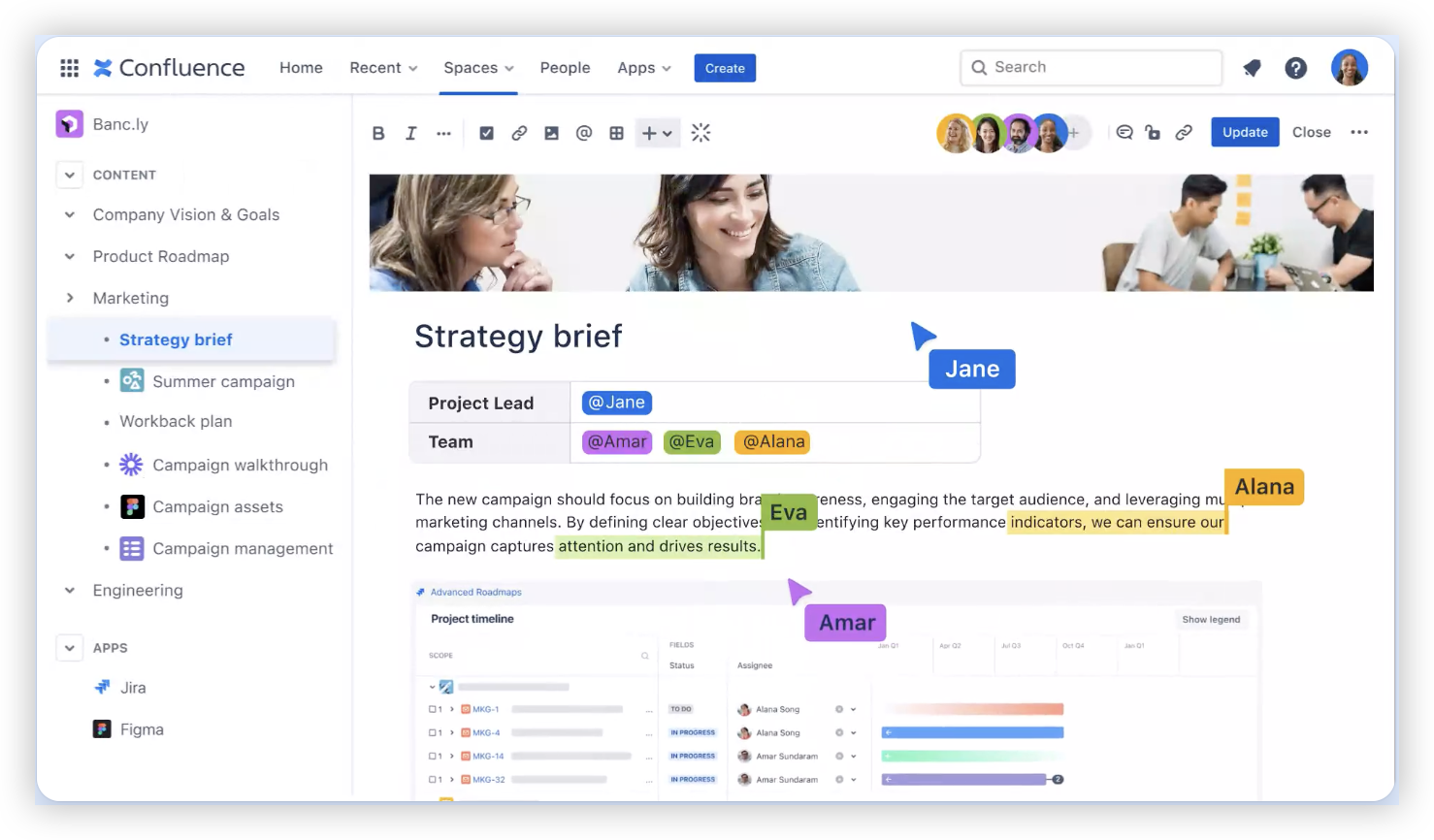
Jira Confluence Cloud pricing is the combined cost of two separate Atlassian Cloud subscriptions: Jira for project and issue management, and Confluence for team knowledge and collaboration.
Each product usually has its own plan, seat count, billing cycle, and feature limits. Your total monthly cost is therefore calculated by adding the Jira subscription to the Confluence subscription.
- Choose a plan for Jira. Common plan levels include Free, Standard, Premium, and Enterprise.
- Choose a plan for Confluence. Confluence also offers different levels with increasing administration, collaboration, security, and capacity features.
- Count the people who need access. Jira and Confluence may have different seat requirements.
- Select monthly or annual billing. Monthly billing generally follows active seat usage, while annual billing is commonly tied to a selected user tier.
- Add optional products and marketplace apps. Service management, advanced roadmaps, automation extensions, and third-party apps can materially change the total.
- Estimate taxes and currency conversion. Your final invoice may vary by billing location, currency, and applicable taxes.
A simple planning formula looks like this:
Estimated total = Jira plan cost + Confluence plan cost + optional products + marketplace apps + taxes
For example, imagine a 40-person company where 35 people need Jira and all 40 need Confluence. You should calculate the products separately rather than multiplying one plan price by 40.
| Cost factor |
What to check |
| Jira seats |
How many people create, assign, review, or track work? |
| Confluence seats |
How many people create, read, or manage knowledge pages? |
| Plan level |
Do you need advanced controls, reporting, automation, or security features? |
| Billing cycle |
Will monthly flexibility or annual predictability suit your team better? |
| Additional products |
Do you need service management, planning, analytics, or collaboration extensions? |
| Apps and taxes |
Will marketplace subscriptions, regional taxes, or currency affect the invoice? |
What Each Cloud Plan Usually Changes
Plan names matter because the price difference often reflects administration and scale features rather than basic task tracking or page creation.
Free plans
Free plans can suit a small team testing Jira and Confluence. They typically include core work tracking and knowledge-sharing functions, with limits around seats, storage, support, permissions, or administration.
A startup with six people might use a free plan while validating its workflow. However, a free tier may become restrictive when you need stronger controls or a larger audience.
Standard plans
Standard plans usually target growing teams. They often raise capacity limits and add more practical administration, support, collaboration, and permission features.
For many small and midsize companies, Standard becomes the planning baseline. It can provide enough room for regular project work without paying for every advanced control.
Premium plans
Premium plans generally add capabilities for scale, performance, advanced planning, automation, analytics, or higher service expectations.
Consider a product organization with several delivery teams. Premium may make sense when cross-team planning and operational visibility save more time than the upgrade costs.
Enterprise plans
Enterprise pricing is usually tailored to larger organizations. It may include advanced security, governance, support, identity management, compliance controls, and commercial terms.
You should request a tailored quote when your company has multiple business units, strict access policies, or complex regional requirements.
Here's why: the cheapest plan is not always the lowest-cost choice. If a missing capability forces you to buy several apps or spend hours on manual administration, the apparent saving can disappear.
How to Build a Practical Cost Estimate
The safest approach is to create three estimates: a minimum case, a likely case, and a growth case. This gives you a range instead of a fragile single number.
Step 1: Separate Jira and Confluence audiences
Start by listing the people who need Jira and the people who need Confluence. A developer may need both, while an executive may only read Confluence pages.
For example, a 60-person company might have 45 Jira seats and 60 Confluence seats. Combining those figures into one 60-seat estimate could overstate the Jira requirement.
Step 2: Choose the lowest suitable plan
Write down the capabilities you actually need. Examples include audit controls, advanced permissions, automation, reporting, higher storage, or centralized administration.
Then compare those requirements with each plan. Avoid upgrading because a feature sounds useful. Tie every upgrade to a clear operational need.
Step 3: Model monthly and annual billing
Monthly billing can help you adjust seat counts as your team changes. Annual billing may offer more predictable budgeting, but you should examine the committed tier carefully.
A seasonal company may prefer monthly flexibility. A stable organization with a known headcount may value annual planning more highly.
Step 4: Include related products
Many teams start with Jira and Confluence, then add service management, planning, analytics, collaboration, or marketplace apps.
List every planned addition separately. A modest monthly app charge can become a significant annual expense when multiplied across a large seat count.
Step 5: Add a growth buffer
Estimate your expected headcount twelve months from now. Then calculate the impact of moving into the next pricing tier or plan level.
A team growing from 45 to 70 people may cross several thresholds. Planning for that change prevents an unexpected budget request later.
| Scenario |
Jira seats |
Confluence seats |
Plan assumption |
Purpose |
| Minimum |
Core project team only |
Core authors and readers |
Lowest suitable plans |
Understand the entry cost |
| Likely |
Current delivery teams |
Most employees |
Plans matching current needs |
Build the operating budget |
| Growth |
Expected future team |
Expected future audience |
Possible next-tier plans |
Prepare for expansion |
Monthly Versus Annual Billing
Billing frequency affects flexibility more than many buyers expect. The right choice depends on how stable your headcount is and how much budget certainty you need.
When monthly billing may fit
Monthly billing can suit a consultancy with changing project teams, a startup hiring rapidly, or a company testing a new workflow.
You can usually adjust the number of active seats more frequently. That flexibility may matter more than a lower effective annual rate.
When annual billing may fit
Annual billing can suit organizations with stable staffing and formal procurement cycles. It makes the yearly commitment easier to forecast.
Before committing, compare the selected tier with your expected hiring plan. Paying for a higher annual tier too early can reduce the value of the commitment.
Questions to ask before committing
- How many seats are active today?
- How many seats will you need after your next hiring cycle?
- Can contractors, guests, or occasional readers use a different access model?
- What happens if your headcount falls?
- Which products renew together, and which renew separately?
- Will taxes or currency conversion change the amount on the invoice?
You might be wondering: should you choose annual billing simply because it looks cheaper? Compare the total commitment with your realistic seat usage. A lower unit cost does not help if half the reserved capacity sits unused.
Hidden Costs That Can Change the Total
The subscription is only one part of the ownership cost. Administration, customization, training, migration, and app management can affect your total budget.
Marketplace applications
Teams often add apps for time tracking, diagrams, capacity planning, test management, reporting, or advanced automation. Each app can introduce another recurring charge.
Review whether an app solves a critical gap or merely adds convenience. Five small subscriptions can cost more than a higher native plan.
Administration and maintenance
Someone must manage permissions, workflows, groups, naming conventions, notifications, and inactive accounts. Larger environments may also need governance reviews.
If administrators spend ten hours each month correcting access or maintaining workarounds, that labor belongs in your total-cost analysis.
Migration and training
Moving from another platform can require workspace design, page cleanup, workflow mapping, onboarding, and internal support.
A realistic budget separates one-time transition work from recurring subscription charges. That distinction makes renewal decisions easier.
Security and compliance requirements
Regulated organizations may need stronger identity controls, audit visibility, retention policies, or administrative oversight. These requirements can influence the plan level and implementation effort.
Define those requirements before comparing prices. Otherwise, you may choose an inexpensive plan and discover later that it cannot support your operating model.
Value Proposition
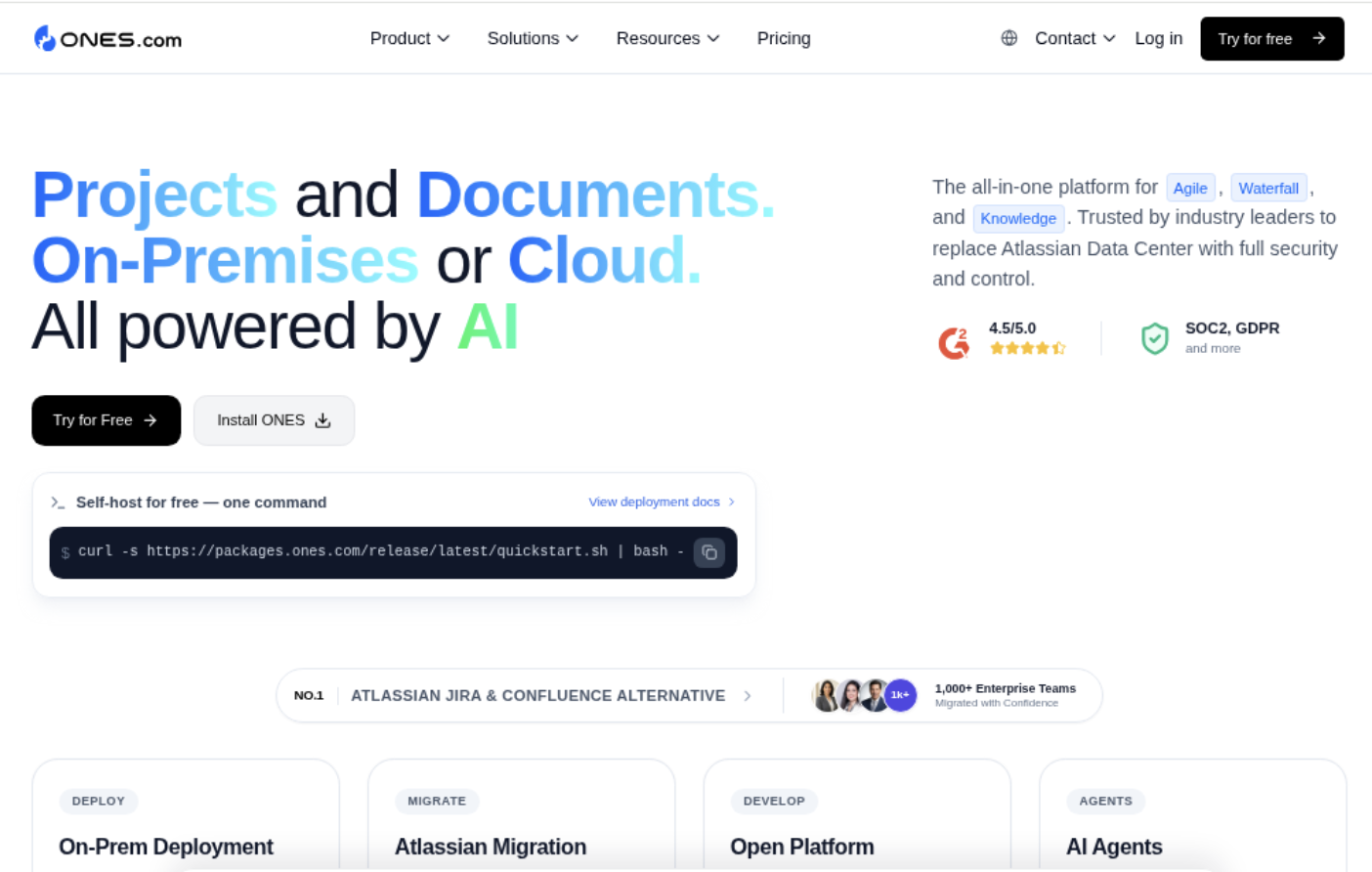
ONES.com combines project management and knowledge management in one platform. It can suit teams comparing Jira and Confluence alternatives while seeking fewer disconnected tools.
ONES Project is the project management product and a Jira alternative. ONES Wiki is the knowledge base product and a Confluence alternative. They are sold separately, so you can select the product that matches your needs.
Core Capabilities
Separate project and knowledge requirements
Pain: Buying separate products can create duplicated administration and disconnected team habits.
ONES capability: ONES.com provides ONES Project and ONES Wiki within a unified platform, while still allowing separate product selection.
Result: You can compare project and knowledge management needs in one environment instead of designing two unrelated operating models.
Jira-compatible workflows
Pain: Replacing an established work-tracking process can create resistance and retraining costs.
ONES capability: ONES Project supports Jira-compatible workflows for teams familiar with issue-based planning and delivery.
Result: Your team can evaluate a Jira alternative without abandoning familiar project structures.
Custom workflows and fields
Pain: Fixed workflows often force teams to manage exceptions manually.
ONES capability: ONES Project supports custom workflows and custom fields for different work types and approval paths.
Result: Product, engineering, marketing, and operations teams can reflect their actual processes more accurately.
Sprint management
Pain: Agile teams need a clear view of planned, active, blocked, and completed work.
ONES capability: Sprint management helps teams organize iterative delivery and review progress during each cycle.
Result: A delivery manager can see whether the current sprint is absorbing too much unplanned work.
Automation
Pain: Repetitive status changes and notifications consume administrator and team time.
ONES capability: Built-in automation can handle recurring workflow actions and reduce manual coordination.
Result: A completed review can trigger the next workflow step without someone updating every item by hand.
Built-in reporting
Pain: Teams often depend on multiple reporting extensions to understand delivery performance.
ONES capability: Built-in reporting provides visibility into project activity and progress without requiring the same level of plugin coverage.
Result: Managers can review delivery trends through a more consistent reporting experience.
Deployment flexibility
Pain: Some organizations cannot place project and knowledge content in a public cloud environment.
ONES capability: ONES.com supports Cloud, On-Premise, Private Cloud, and Air-gapped deployments.
Result: Teams with restricted-network or internal hosting requirements can evaluate an environment that fits their technical constraints.
Feature parity across deployment types
Pain: Self-hosted products sometimes remove capabilities available in hosted editions.
ONES capability: ONES.com maintains full feature parity between its cloud and self-hosted versions.
Result: Your deployment decision can focus on security, infrastructure, and governance rather than sacrificing core functionality.
Entry access for small teams
Pain: A small team may hesitate to test a new platform because the initial commitment feels too high.
ONES capability: ONES.com offers a free option for up to 30 seats.
Result: A small team can validate project and knowledge workflows before planning a broader rollout.
Application Scenarios
Scenario one: growing software team. A 25-person product group uses ONES Project for backlog planning, sprint management, custom fields, and delivery reporting. The team can add ONES Wiki when engineering decisions and product guidance need a shared knowledge home.
Scenario two: restricted-network organization. A company with strict infrastructure controls evaluates an Air-gapped or On-Premise deployment. Its team can retain project workflows and knowledge management without placing the environment on a public cloud.
Scenario three: Jira and Confluence cost review. A department comparing separate subscriptions examines ONES.com as a unified alternative. It compares seat needs, deployment requirements, native features, and plugin reduction rather than looking only at the headline subscription amount.
Common Challenges and Practical Solutions
Challenge: Comparing unequal plans
One vendor's Standard plan may resemble another vendor's Premium plan. Comparing labels alone can produce a misleading result.
Solution: Create a feature checklist covering permissions, automation, reporting, storage, administration, security, and deployment. Compare the capabilities your team actually uses.
Challenge: Counting every employee as a full seat
Some people need to manage work daily, while others only read updates or contribute occasionally. Giving everyone the same access can inflate the estimate.
Solution: Group people by activity: contributors, reviewers, readers, administrators, and occasional collaborators. Then confirm how each product treats those access patterns.
Challenge: Forgetting app subscriptions
A team may approve the core subscriptions first and discover later that reporting, testing, or planning requires extra applications.
Solution: Record every planned app during the first estimate. Mark each one as essential, useful, or optional, and review the list before purchase.
Challenge: Ignoring renewal growth
Hiring, acquisitions, and wider adoption can move you into a higher seat tier. A budget that works this quarter may fail at renewal.
Solution: Run a growth scenario with your expected headcount and at least one higher plan tier. Share that range with finance before signing an annual commitment.
Challenge: Treating migration work as free
Moving workflows, knowledge pages, permissions, and team habits takes time. The subscription price does not capture that effort.
Solution: Estimate setup, testing, training, cleanup, and post-launch support separately. Assign an owner and target date for each activity.
FAQs
Are Jira and Confluence priced as one product?
No. Jira and Confluence are generally separate Cloud subscriptions. You choose a plan and seat count for each product, then add the two amounts together. Some people may need both products, while others may only need one. Your estimate should therefore count Jira access and Confluence access separately rather than assuming every person requires the same package.
Is the free plan enough for a small team?
It can be enough for a small team testing basic project tracking and knowledge sharing. The main question is whether the free limits cover your seat count, storage, administration, permissions, and collaboration needs. If your team needs stronger governance, advanced planning, or more capacity, a paid plan may become more practical before the team becomes large.
Should I choose monthly or annual billing?
Choose monthly billing when your headcount changes frequently or you are still validating the setup. Annual billing can suit a stable team that wants predictable budgeting and expects to use the committed capacity. Compare both options using your current seats, expected growth, and likely turnover. A lower annual unit cost may not help if your reserved capacity remains unused.
What extra costs should I include?
Include optional products, marketplace applications, taxes, currency conversion, administration, migration, training, and support effort. Security or compliance requirements may also push you toward a higher plan. Write each cost separately so you can distinguish recurring charges from one-time implementation work. This makes your estimate easier to explain and revise.
Can an alternative reduce the total cost?
Possibly. An alternative may reduce plugin dependence, simplify administration, or provide project and knowledge capabilities through a more unified environment. Compare the full operating cost rather than the subscription alone. Review features, deployment options, migration effort, support, and the number of separate applications your team would still need.
Conclusion
Jira Confluence Cloud pricing becomes manageable when you separate Jira from Confluence, count the right seats, compare plan capabilities, and include apps, taxes, administration, and growth.
Use minimum, likely, and growth scenarios instead of relying on one optimistic estimate. Then compare monthly and annual billing against your actual staffing pattern.
But here's the truth: the lowest invoice is not always the lowest total cost. A plan that reduces plugins, manual administration, or migration complexity may deliver better value over time. If you are comparing Jira and Confluence with a unified alternative, evaluate ONES.com, ONES Project, and ONES Wiki against the workflows your team must run every day.