Jira Core Pricing Explained: Plans, Costs, and Key Details
Confused by jira core pricing? Compare plans, costs, billing, and key details to budget accurately—read now to choose the right option.
Jira Core pricing can feel confusing because the product name, plan structure, and billing model have changed over time. You may find older articles quoting Jira Core separately, while current pages may place those capabilities under Jira Work Management. That makes it difficult to compare costs or estimate a realistic team budget.
The uncertainty grows when you add monthly versus annual billing, user tiers, taxes, premium features, and optional products. A team of eight can pay very differently from a team of 25, even when both choose the same plan.
But here's the truth: you can understand the cost by separating the product name from the current plan structure. This guide explains the likely plans, pricing logic, hidden cost factors, and a practical way to compare Jira with another project management platform.
Jira Core Pricing: Plans, Costs, and What You Actually Pay
Jira Core pricing refers to the cost of Jira’s general project and work management capabilities, now commonly associated with Jira Work Management. The current structure typically includes Free, Standard, Premium, and Enterprise options.
Jira Core itself is a legacy product name. Atlassian has moved its general business project management experience toward Jira Work Management, so older Jira Core prices may no longer represent the plan you can purchase today.
| Plan |
Typical pricing position |
Best fit |
Main considerations |
| Free |
$0 |
Small teams testing Jira |
Limited users, storage, automation, and administration |
| Standard |
Often begins around $7 per user each month |
Growing teams managing everyday work |
More users, controls, storage, and support than Free |
| Premium |
Often begins around $14 per user each month |
Teams needing advanced planning and scale |
Higher price for additional capacity and premium controls |
| Enterprise |
Custom quote |
Large organizations with complex governance |
Negotiated terms, administration, and organization-wide requirements |
These figures are useful budgeting estimates rather than permanent quotes. Atlassian can change list prices, packaging, billing rules, and regional treatment.
Here's why: the amount on your invoice depends on more than the advertised per-user figure. Your billing cycle, team size, selected products, taxes, and optional services can all change the final total.
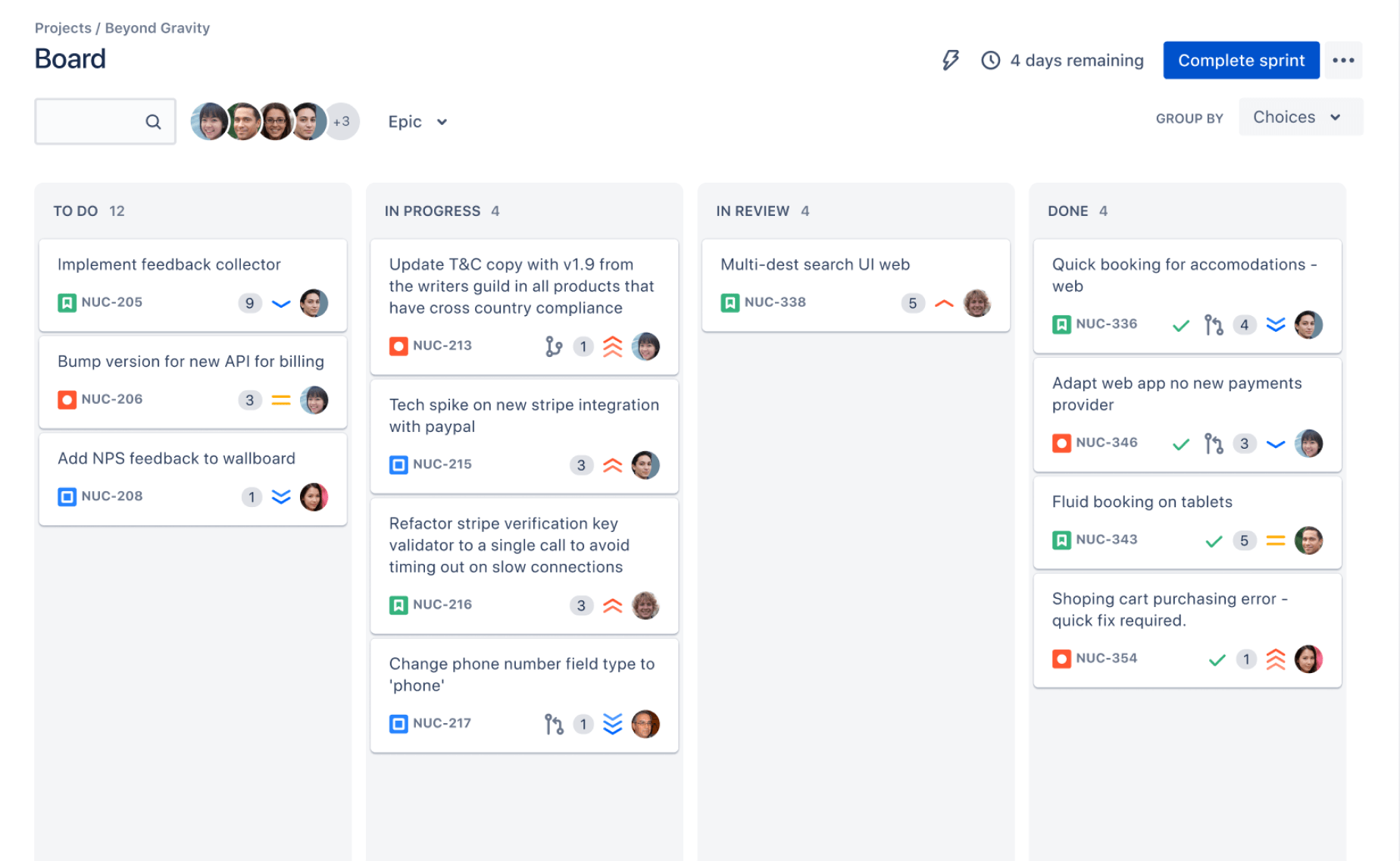
How Jira Work Management Pricing Is Calculated
Jira’s pricing usually follows a per-user subscription model. You select a plan, estimate the number of people who need access, and multiply that count by the applicable per-user rate.
A simple monthly estimate looks like this:
Estimated monthly cost = billable users × monthly price per user
Example: A Small Team
Imagine a team of eight people choosing a plan priced at approximately $7 per user each month.
Eight users × $7 equals roughly $56 per month before taxes or adjustments.
That estimate may change if the plan uses tiered pricing instead of a perfectly linear rate. Some subscriptions charge according to a user band, so adding one person can move the whole account into a higher tier.
Example: A Growing Department
Now imagine 25 people using a plan priced near $7 per user each month.
Twenty-five users × $7 equals roughly $175 per month before taxes and other charges.
If the department needs premium capabilities at approximately $14 per user, the equivalent estimate becomes about $350 per month.
The difference is significant over a year. A team should compare annual totals rather than focusing only on the monthly number.
Monthly and Annual Billing
Monthly billing gives you flexibility. It can suit a pilot project, temporary team, or organization still testing its workflow.
Annual billing can offer more predictable budgeting and may use user tiers differently. However, you usually commit to the selected capacity for the billing period.
You might be wondering: should you choose monthly billing first? A short trial can make sense when adoption is uncertain, but review renewal terms before committing to a longer period.
What Each Jira Plan Usually Includes
The plan names are only the starting point. The practical difference appears in access limits, administration, automation, support, and advanced planning capabilities.
Free Plan
The Free plan is designed for small teams exploring Jira. It can provide enough functionality for basic task tracking, project boards, workflows, and collaboration.
Its limits matter when your team grows. You may encounter restrictions involving user count, storage, automation runs, permissions, reporting, or administrative controls.
For example, a five-person marketing team may manage a campaign comfortably on Free. A 15-person product group with several active projects may reach limits sooner.
Standard Plan
Standard is usually the practical starting point for teams that have outgrown Free. It generally provides greater capacity, broader administration, and more room for everyday project work.
This plan can support structured workflows, custom fields, boards, reporting, and collaboration across several teams.
The main question is whether Standard covers your governance needs. If you need advanced planning, stronger scale controls, or more sophisticated administration, Premium may be more suitable.
Premium Plan
Premium is aimed at organizations with more complex planning and operational requirements. It can be useful when teams coordinate across projects, departments, or business units.
The additional cost may make sense when advanced planning saves manual coordination. For instance, a program manager may gain more value from cross-team visibility than a small independent team would.
The best part? Premium should be evaluated through measurable outcomes. Compare the subscription increase with time saved on status reporting, planning meetings, dependency tracking, and manual updates.
Enterprise Plan
Enterprise pricing is generally negotiated rather than displayed as a simple public rate. It is usually intended for larger organizations with extensive administration, security, compliance, and procurement requirements.
A custom quote can include organization-wide terms, support arrangements, and controls that smaller plans do not emphasize.
Enterprise is rarely the right choice just because a company has many employees. The relevant question is how many people need access and how complex the governance model has become.
Which Costs Can Increase Your Jira Budget?
The subscription price is only one part of the financial picture. Your total cost can rise through related products, implementation work, administration, and user growth.
Additional Atlassian Products
Jira may be connected with other Atlassian products for knowledge sharing, service management, software development, or reporting.
Each product can have its own subscription. A team that begins with work tracking may later add another product for support requests or internal knowledge.
For example, a 20-person operations group may start with Jira and later purchase a separate knowledge platform. The combined monthly cost matters more than Jira’s standalone price.
Marketplace Apps
Jira supports many third-party extensions. An app may improve time tracking, advanced reporting, capacity planning, forms, approvals, or portfolio visibility.
Those additions can solve genuine workflow gaps, but they also create recurring expenses and administration work.
Here's why: a low initial subscription can become expensive after several teams add separate extensions. Review whether native capabilities can handle the process before approving another app.
Implementation and Administration
Jira may require configuration for issue types, workflows, permissions, notifications, boards, reports, and automation rules.
A small team can often handle this work internally. Larger organizations may need a specialist, consultant, or dedicated administrator.
For a fair comparison, include setup time, training, migration, maintenance, and troubleshooting. A platform with a lower license price may still cost more to operate.
User Growth and Access Rules
Subscription costs rise as more people need access. The increase may include occasional contributors, executives, contractors, reviewers, and external collaborators.
Review who truly needs full access. Some people may only need reports or approval visibility, depending on the plan and permission model.
Do not remove access blindly. Restricting the wrong people can create email-based workarounds, which add coordination delays.
Jira Core Versus Jira Work Management
The phrase “Jira Core” can refer to older product pages, historical contracts, or general Jira project management capabilities. Current buying decisions often involve Jira Work Management instead.
That distinction matters when you compare prices. An older article may list Jira Core as a separate product, while a current quote may use a different product name and plan structure.
| Question |
Why it matters |
| Is the quote for Jira Core or Jira Work Management? |
The product name can affect available plans and included capabilities. |
| How many people require paid access? |
User tiers and account size can change the total. |
| Is billing monthly or annual? |
The commitment period and pricing treatment may differ. |
| Are related products included? |
Separate subscriptions can materially increase the budget. |
| Are apps part of the workflow? |
Third-party extensions add recurring costs and maintenance. |
Let me explain: the safest comparison uses the current checkout or quote, not an old article that happens to rank well.
Write down the exact product name, plan, user count, billing term, and add-ons. Then compare the complete annual cost.
A Practical Way to Compare Jira Costs
A useful comparison starts with your team’s workflow. Price alone cannot show whether a platform will reduce administration or create more configuration work.
Step 1: Count Active Participants
List people who create work, update progress, approve tasks, manage projects, or need regular visibility.
Separate full participants from occasional viewers. This gives you a more realistic estimate than counting every employee.
Step 2: List Required Capabilities
Identify the capabilities you need during the next 12 months. Common examples include:
- Task and issue tracking
- Custom workflows
- Approvals
- Automation
- Reports and dashboards
- Cross-team planning
- Permission controls
- Knowledge management
Step 3: Add Operational Costs
Estimate configuration, training, administration, migration, support, and app subscriptions.
A simple annual model can look like this:
Annual ownership cost = subscriptions + add-ons + setup + administration + training
Step 4: Test a Real Workflow
Use a realistic example instead of a generic demonstration. Try a campaign launch, product release, approval chain, or customer escalation.
Track how many manual updates, notifications, status reports, and handoffs the process requires.
Step 5: Compare the Result
Compare the total annual cost with the time your team expects to save. Also consider adoption, reporting quality, control, and future growth.
A platform that costs slightly more may be financially sensible if it eliminates several manual processes.
Value Proposition
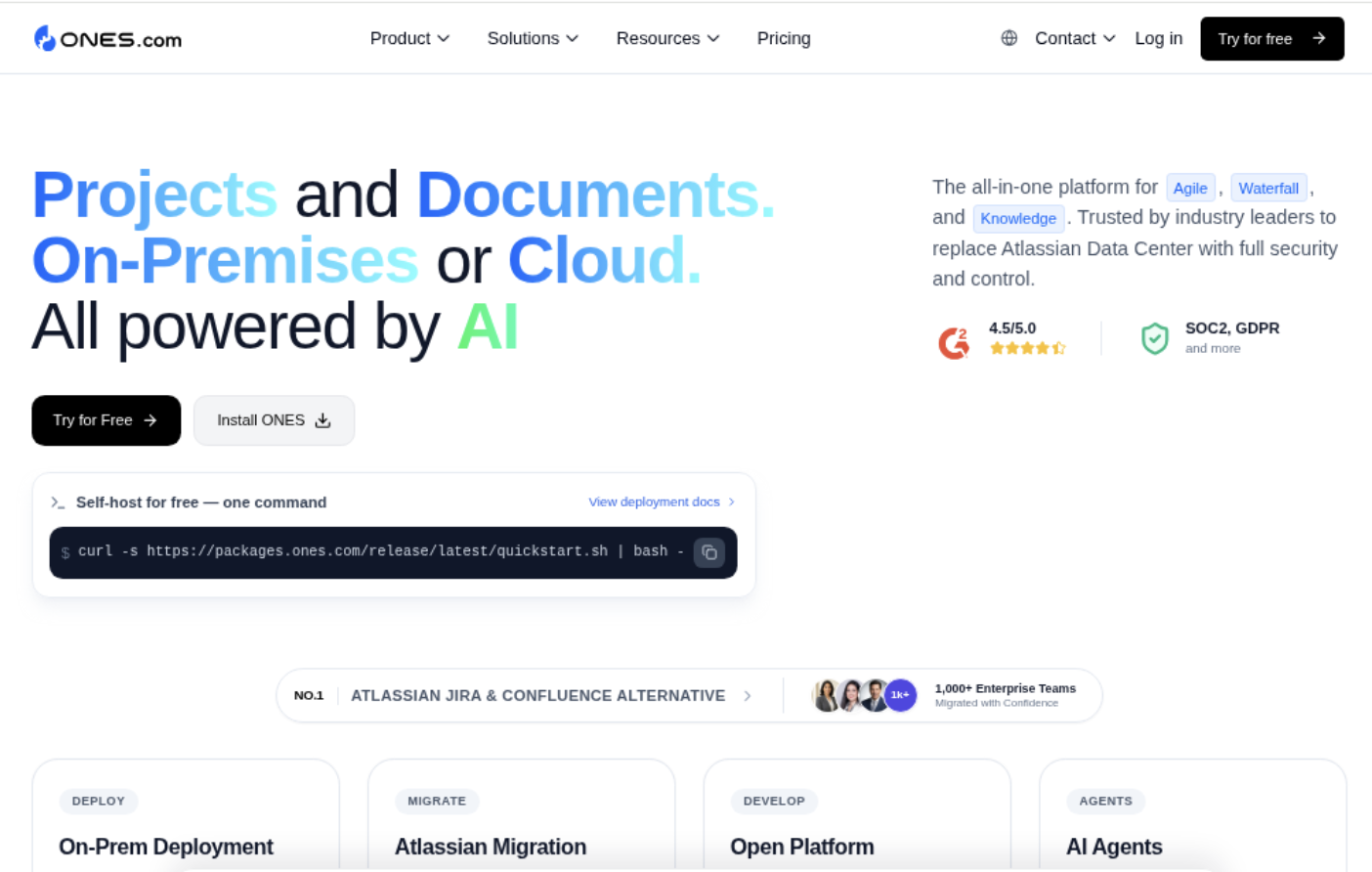
ONES.com combines project management and knowledge management in one platform, with ONES Project focused on project work and ONES Wiki focused on knowledge sharing. ONES Project can serve as a Jira alternative for teams that want native project capabilities with fewer separate plugins.
ONES.com is available in Cloud, On-Premise, Private Cloud, and Air-gapped deployments. The Free plan supports up to 30 seats, and the self-hosted versions maintain feature parity with the cloud version.
Core Capabilities
- Plugin sprawl: Teams that depend on several extensions can use ONES Project’s built-in project management capabilities, reducing the number of separate tools to maintain.
- Workflow complexity: Teams can configure custom workflows for approvals, handoffs, reviews, and operational processes, producing clearer ownership at each stage.
- Inconsistent project fields: Custom fields help teams capture information such as priority, department, risk, release, or approval status in a consistent format.
- Manual progress reporting: Built-in reporting can turn project activity into dashboards and progress views, reducing repeated status preparation.
- Sprint planning needs: Sprint management supports teams working in iterative cycles, helping them organize planned work and review progress.
- Repetitive administration: Automation can handle routine transitions, notifications, assignments, and other predictable actions.
- Deployment restrictions: On-Premise, Private Cloud, and Air-gapped options support organizations that cannot place project information in a public cloud environment.
- Separated project and knowledge work: ONES Project and ONES Wiki can be used together when teams need project tracking and an organized knowledge base.
- Migration concerns: Jira-compatible workflows can make it easier for teams familiar with Jira-style processes to adapt their project operations.
Application Scenarios
Software product team: A product group can manage backlogs, sprints, custom fields, reports, and automation in ONES Project. The team can connect project activity with knowledge maintained in ONES Wiki.
Restricted-network organization: A government contractor or regulated enterprise may choose an air-gapped deployment when network isolation is required. The team can retain project management capabilities without using a public cloud deployment.
Approval-heavy operations team: A finance or operations department can create workflows for requests, reviews, approvals, and completion. Custom fields and automation can make each request easier to track.
Common Challenges When Estimating Jira Costs
Challenge: Using an Old Jira Core Price
Problem: Historical Jira Core pricing may describe a product structure that has changed.
Solution: Confirm whether the current offer is Jira Work Management, identify the exact plan, and check the active billing terms before building a budget.
Challenge: Calculating Only the License Fee
Problem: A license estimate may exclude apps, configuration, training, support, and administration.
Solution: Create a total ownership estimate for the first year and the following renewal year. Separate one-time costs from recurring costs.
Challenge: Ignoring User-Tier Effects
Problem: Adding a few people can move an account into a higher pricing tier.
Solution: Test several user counts, such as 10, 15, 25, and 50. Compare the cost of each tier before inviting occasional contributors.
Challenge: Buying Premium Features Too Early
Problem: Teams sometimes choose a higher plan before proving that they need its advanced capabilities.
Solution: Map each premium feature to a specific workflow problem. If no team can name the time or risk it will reduce, begin with a smaller plan when practical.
Challenge: Underestimating Administration
Problem: Poor configuration can lead to confusing boards, duplicated workflows, excessive notifications, and weak reporting.
Solution: Assign ownership for governance. Review workflows, permissions, automation, and inactive accounts on a regular schedule.
FAQs About Jira Core Costs
Is Jira Core still available as a separate product?
Jira Core is generally treated as a legacy product name. Atlassian has shifted its general business project management offering toward Jira Work Management and broader Jira plans. If you find an older Jira Core price, compare it with the current product page or account quote. Confirm the plan name, included capabilities, user tier, and billing period before relying on the figure.
How much does Jira cost for a small team?
A small team may begin with the Free plan if it fits the user and capability limits. Paid Standard pricing has often started near $7 per user each month, though the exact amount can change. For eight people, that suggests roughly $56 monthly before taxes or adjustments. Check whether tier rules, billing frequency, and related products alter the final amount.
What is the difference between Standard and Premium?
Standard usually suits teams that need dependable project tracking, workflows, reporting, and collaboration. Premium is intended for organizations with more advanced planning, scale, and administration requirements. The right choice depends on your workflow. Compare the additional subscription cost with measurable benefits, such as fewer manual reports, stronger cross-team planning, or better control over complex projects.
Does Jira charge for every person in an organization?
Jira generally charges according to the number of users who need access, rather than every employee automatically. However, the definition of a billable user can depend on the product and plan. Review active accounts, occasional contributors, contractors, and connected products before estimating costs. Removing inactive access can improve account hygiene, but do not restrict people who genuinely need to update or approve work.
Do Jira apps increase the total price?
They can. Marketplace apps often use their own subscription terms and may scale with the number of Jira users. An app can provide valuable reporting, forms, planning, or time tracking, but its recurring charge belongs in your total budget. Review native capabilities first, then add only the extensions that solve a clearly defined workflow problem.
Is an alternative worth considering?
An alternative may be worth evaluating when Jira requires many plugins, extensive administration, or a deployment model that does not fit your organization. Compare workflow compatibility, reporting, automation, security, hosting options, migration effort, and total ownership cost. A lower subscription is useful only if the platform also supports adoption and reduces manual coordination.
Conclusion
Jira Core pricing is best understood through its current successor, Jira Work Management, and the broader Free, Standard, Premium, and Enterprise structure. The visible per-user rate is only the beginning.
Before choosing a plan, calculate active participants, test user tiers, include related products and apps, and estimate administration. Then compare the full annual cost with the time and coordination your team expects to save.
But here's the truth: confusing product names and old price references can create a misleading budget. A current plan check and a realistic workflow test can remove most of that uncertainty.
If Jira’s plugin requirements, hosting model, or administration burden do not fit your team, evaluate alternatives such as ONES.com. The right choice is the platform that supports your actual work without creating unnecessary cost or complexity.