Jira Data Center Pricing: A 2026 Budget Planning Guide
Plan Jira Data Center renewal costs with the 2026 sales restrictions, 2029 end-of-life deadline and ONES self-hosted migration options.
Policy review: September 9, 2026. The dated update below distinguishes announced changes from currently effective rules.
Data Center lifecycle: check eligibility before price
New-customer sales for affected Data Center products ended on March 30, 2026. Existing customers can buy and expand until March 30, 2028. The affected products reach end of life on March 28, 2029 and become read-only. Ordinary renewals cannot extend beyond that deadline. Bitbucket Data Center is exempt; extended maintenance for other products is available only by exception.
A three- or five-year budget crossing March 2029 must include a supported destination and transition costs, rather than extrapolating ordinary Data Center renewals. Jira Server is a separate case: new sales ended February 2, 2021 and support ended February 15, 2024.
For continued customer-managed deployment, evaluate ONES self-hosting, isolated managed cloud or an air-gapped environment against your identity, networking, backup and upgrade requirements. Atlassian Isolated Cloud is also available, but its AI and product support should be checked separately; do not assume complete commercial-Cloud Rovo availability.
Sources: Atlassian Data Center lifecycle; ONES deployment options. Compare renewal and deployment paths.
2026 update: the announced Cloud price change
Verified September 9, 2026. Cloud list prices change on October 13, 2026 PT. The announcement is not an immediate increase to every customer invoice: new or modified quotes and eligible billing events determine when the new rates apply. Existing annual quotes retain their stated validity. Check your quote and renewal terms.
For a fixed example, Jira Cloud Premium at the 500-user annual tier changes from $62,500 to $67,000, an increase of $4,500 per year (7.2%). This excludes Confluence, Apps, usage charges, tax and discounts. Monthly pricing is progressive; annual pricing uses user tiers. Do not multiply a first-tier monthly rate across all users or apply a flat percentage to your whole App stack.
Sources: official current and announced tables; effective dates and quote rules. Check the annual Premium estimate.
Planning a 2026 Jira Data Center budget can feel like estimating the cost of a building before you know its size, location, or security requirements.
A license quote is only one part of the decision. Infrastructure, support, disaster recovery, upgrades, administration, and compliance can change the final annual cost significantly.
But here's the truth: you can create a dependable budget without guessing. Start with your user tier, separate vendor charges from operating costs, and model at least three growth scenarios. This guide shows you how.
Jira Data Center Pricing: What You Are Actually Paying For
Jira Data Center pricing is the annual cost of running Atlassian’s self-managed Jira enterprise deployment, including the subscription tier and the infrastructure, people, security, and operations needed to keep it available.
Unlike a simple per-user cloud subscription, Data Center planning involves several cost layers. Your quote may come from Atlassian, but your total ownership cost also includes internal technical work.
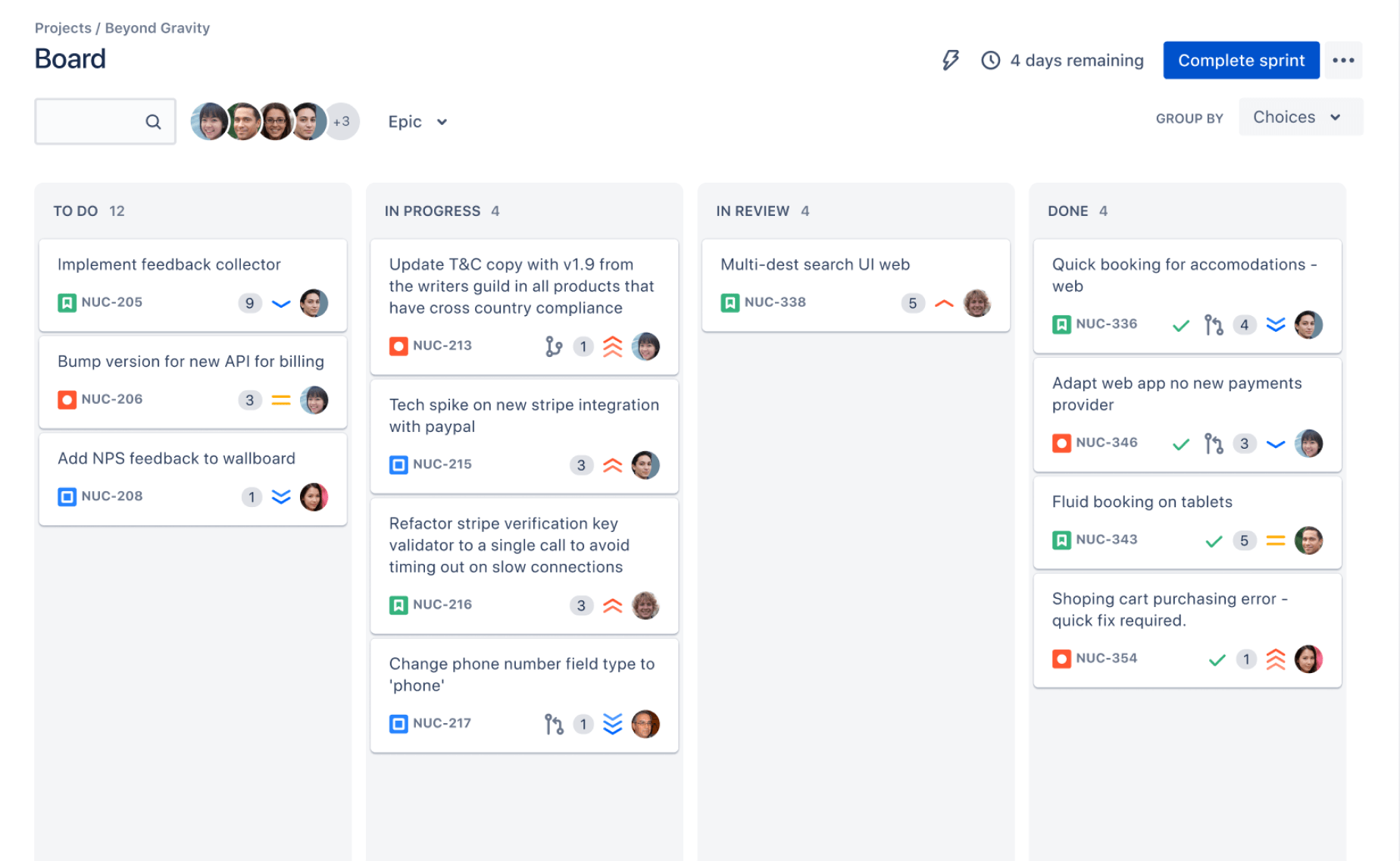
The main pricing components
- Annual Jira subscription: The vendor price usually depends on the licensed user tier and contract terms.
- Support and maintenance: Enterprise support requirements can influence the commercial package and internal staffing plan.
- Infrastructure: You may need compute, storage, networking, load balancing, backup capacity, and monitoring.
- High availability: Multiple application nodes and resilient services help reduce downtime, but they increase operating costs.
- Security and compliance: Identity management, access controls, audit tooling, vulnerability testing, and retention policies may require additional investment.
- Administration: Jira administrators, platform engineers, and service desk staff manage upgrades, permissions, workflows, and incidents.
- Growth capacity: A deployment sized for 1,000 users may become expensive if you need to redesign it after reaching 2,000.
The best part? You can separate these costs before requesting a formal quote. That makes vendor discussions clearer and prevents infrastructure spending from disappearing inside a broad technology budget.
Why the subscription tier matters
Data Center pricing is commonly organized around user bands rather than a small monthly seat adjustment. Moving into a higher tier can create a noticeable annual increase.
For example, a company with 850 active Jira users may need to compare the cost of licensing the next suitable tier against the operational risk of limiting access.
That calculation should include contractors, occasional users, service accounts, and planned hiring. Underestimating demand can create a rushed procurement cycle later.
What the public price may not show
A vendor quote does not necessarily reflect your full operating budget. You might still pay for cloud infrastructure, private hosting, backup services, monitoring, security reviews, and specialist labor.
Think of the license as the entry ticket. The running cost is the complete event budget, including the venue, staff, safety controls, and contingency planning.
How to Build a 2026 Budget Step by Step
- Count every person who needs access. Include employees, contractors, partners, and occasional contributors. Separate active users from accounts that no longer need access.
- Map your current and expected user tiers. Record today’s population, expected hiring, acquisitions, and temporary project demand. Create a low, expected, and high-growth scenario.
- Request a current commercial quote. Ask Atlassian or an authorized partner to confirm the appropriate tier, contract length, support package, renewal treatment, and available discounts.
- List your technical requirements. Include application nodes, database services, storage, networking, backup, monitoring, identity integration, and recovery environments.
- Estimate internal labor. Assign time for administration, patching, upgrades, performance tuning, incident response, security reviews, and workflow governance.
- Calculate migration and modernization work. Include cleanup, testing, app compatibility checks, permission reviews, integration changes, and user training.
- Add a contingency reserve. A reserve can cover growth, unexpected consulting, infrastructure changes, or a delayed upgrade project.
- Review the budget quarterly. Compare licensed users, actual activity, infrastructure consumption, and support incidents with your original assumptions.
Here's why this sequence works: it separates facts you can measure from estimates you need to validate. You know your user count. You may need more evidence before estimating recovery capacity or upgrade effort.
A practical budget equation
Use this planning formula:
Total annual budget = subscription quote + infrastructure + support services + internal labor + security and compliance + recovery capacity + contingency.
Do not treat this as an accounting rule. It is a planning model that helps you avoid focusing on the subscription alone.
Example: three budget scenarios
| Scenario |
Planning assumption |
Budget effect |
| Low growth |
User count remains stable, with routine maintenance |
Primarily renewal, hosting, administration, and support costs |
| Expected growth |
New teams join and integrations increase activity |
Higher subscription tier, capacity planning, and additional administration |
| High growth |
Acquisition, global rollout, or major product expansion |
Potential tier change, stronger recovery design, more nodes, and migration work |
For example, an engineering organization planning to add 300 users should not only multiply its expected user count. It should also assess workflow volume, automation activity, integration traffic, and reporting demand.
Which Costs Should You Include Beyond the License?
Many budget errors happen because teams record the subscription and overlook the operating model. A self-managed platform requires continuing attention after deployment.
Infrastructure and hosting
Your hosting arrangement may include virtual machines, container infrastructure, storage, load balancing, network controls, and separate environments for testing.
Some companies host Jira Data Center in a public cloud. Others use private infrastructure or a managed hosting arrangement. Each option changes the cost pattern.
Public cloud may offer faster capacity changes. Private infrastructure may fit stricter control requirements. Managed hosting can reduce internal workload while adding service charges.
People and administration
A large Jira environment needs more than occasional configuration. Someone must manage access, workflows, custom fields, integrations, upgrades, performance, and support requests.
For example, a company with dozens of teams may need governance to prevent every department from creating duplicate workflows and custom fields.
Without that discipline, administration becomes slower and reporting becomes less consistent. The platform may remain available while its usability declines.
Security, compliance, and resilience
Security costs can include identity integration, privileged access controls, audit reviews, vulnerability testing, endpoint restrictions, and retention management.
Resilience costs may include a secondary environment, backup storage, recovery testing, and a documented restoration procedure.
A backup that has never been tested gives you confidence, but not proof. Include recovery exercises in both the budget and annual operating calendar.
Marketplace apps and integrations
Jira often connects with source control, continuous integration, chat, identity, testing, reporting, and service management systems.
Each app may have its own pricing model, user calculation, upgrade schedule, and compatibility requirements. List them individually instead of hiding them under “Jira tooling.”
How User Growth Changes the 2026 Forecast
User growth affects more than the license band. More people usually create more projects, workflows, automation activity, integrations, permissions, and support demand.
Imagine a product company moving from 700 to 1,100 Jira users. The subscription tier may rise, but the team may also need stronger indexing capacity, additional administration, and expanded onboarding.
Use active users and peak demand
Count active users for the current picture, then model peak demand for the next renewal period. A seasonal rollout may create more pressure than the average monthly count suggests.
A consulting company, for example, may add hundreds of temporary project members during a large customer engagement. Those accounts still affect access planning and administration.
Measure workload growth
Track indicators such as project count, issue volume, automation rules, integration calls, dashboards, and reporting activity.
Two organizations with the same number of licensed users can require very different infrastructure. A development organization with heavy automation may create more platform activity than a smaller team using simple workflows.
Plan for organizational change
Acquisitions and reorganizations often create duplicate projects, inconsistent permissions, and unfamiliar workflows. Reserve funding for consolidation rather than assuming the transition will be administrative.
A careful consolidation plan can reduce long-term complexity. It may also delay the need for additional apps or custom development.
Data Center, Cloud, and Self-Managed Alternatives
The right commercial model depends on your security requirements, internal capabilities, operating geography, and tolerance for platform administration.
| Model |
Typical strength |
Budget consideration |
| Jira Data Center |
Greater control over hosting and deployment operations |
Subscription plus infrastructure, administration, resilience, and upgrade work |
| Jira Cloud |
Less infrastructure management for your team |
Recurring subscription with less self-managed platform overhead |
| Self-hosted alternative |
Potentially different deployment and commercial flexibility |
Migration, training, compatibility, support, and adoption costs |
But here's the truth: a lower subscription quote does not automatically create a lower total cost. Migration risk, training, customization, and lost productivity can change the result.
Compare each option over at least three years. A first-year view may favor one platform, while a renewal, staffing, and migration view may favor another.
Questions for a fair comparison
- How much control does your security team require?
- Can your engineering team operate a resilient platform?
- How quickly must you restore service after an outage?
- Which integrations are essential to daily work?
- How much customization can you maintain safely?
- Would migration interrupt active product delivery?
How to Avoid Common Budgeting Mistakes
Budget planning improves when you challenge the assumptions behind each number. A single estimate can look precise while hiding major uncertainty.
Use ranges instead of false precision
Estimate infrastructure, labor, and migration work as ranges. For example, an upgrade may require a short maintenance window in one environment and extensive testing in another.
Record the reason for the range. Is the uncertainty caused by app compatibility, unclear ownership, unknown usage, or a pending architecture decision?
Separate one-time and recurring costs
Migration, consolidation, training, and initial architecture work may happen once. Hosting, subscriptions, administration, monitoring, and support recur each year.
This distinction helps executives understand why the first year may cost more than later years.
Include renewal timing
Record renewal dates, procurement lead time, approval stages, and any internal security review. Starting late can reduce your negotiating options and create operational pressure.
Validate commercial assumptions
Pricing structures, eligible tiers, support terms, and product policies can change. Confirm current details directly during your 2026 planning cycle rather than relying on an old quote.
Evaluate ONES on matched scope
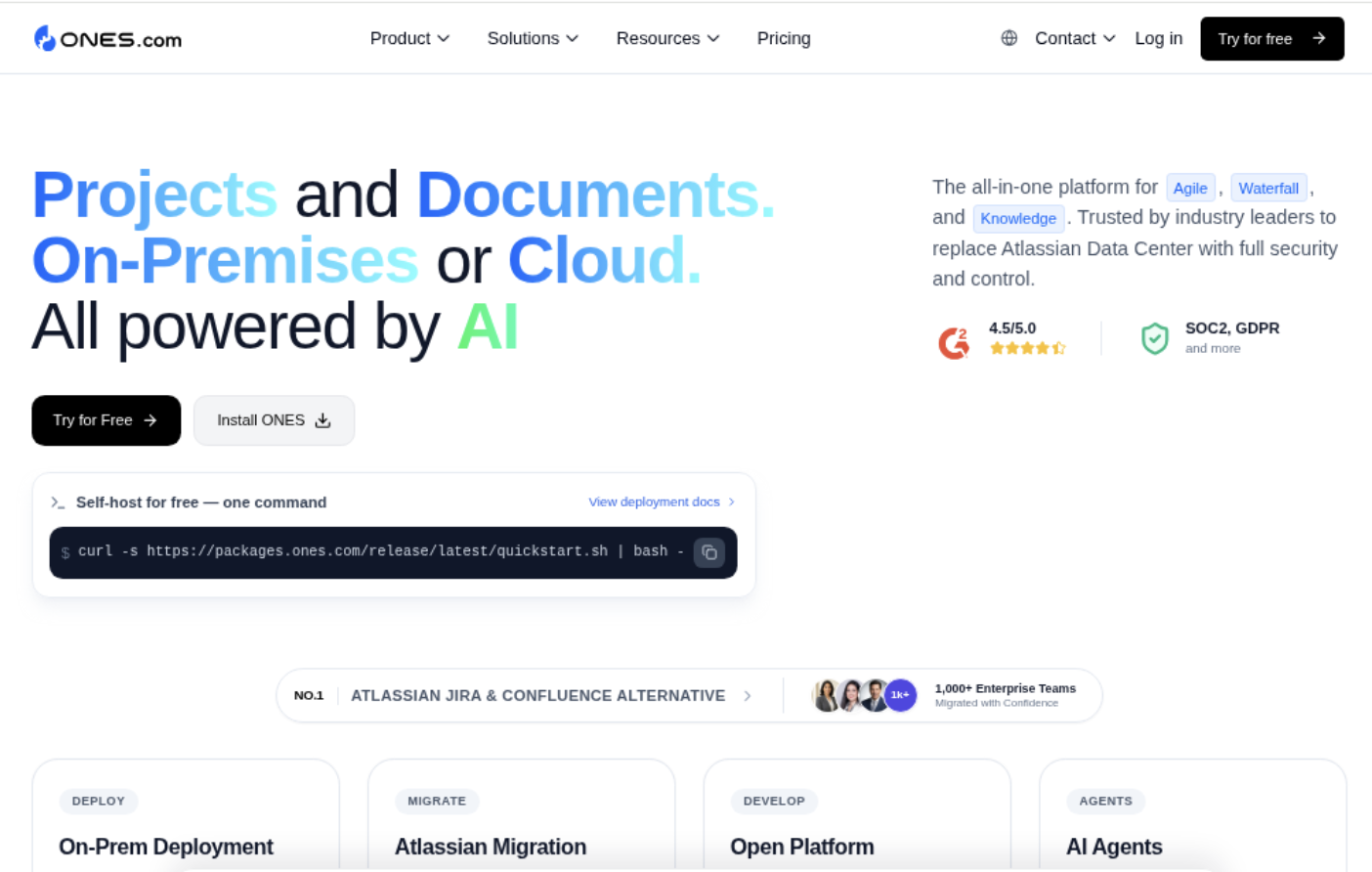
ONES is relevant when your team wants deployment choice and native R&D plus knowledge capabilities. Map the Jira, Confluence, test-management, planning and reporting functions you actually use to the selected ONES plan. Only subtract App costs after validating replacement coverage; keep custom integrations and one-time migration in the comparison. A missing production quote is not a zero-dollar cost.
ONES Cloud Free supports up to 30 users. The self-hosted trial is a separate 20-user, 30-day offer. Production self-hosting requires an appropriate quote. The current Cloud pricing page lists monthly AI credits by plan: 20 for Free, 50 for Standard, 100 for Business and 200 for Enterprise per user. Confirm the action meter, excess usage and deployment-specific AI configuration rather than claiming free or unlimited AI.
A published financial-services case describes 1,000 users, 70,000+ Jira issues and 260 GB of Confluence content migrated to ONES On-Prem in phased waves. Use that case to define your own field, permission, attachment and reconciliation tests; it is not a promise of identical duration or outcomes.
Check ONES plans; evaluate deployment; read the full migration case. Compare the alternatives.
Common Challenges in Budget Planning
Challenge: the licensed population is unclear
Problem: Old accounts, contractors, and occasional contributors make the user count unreliable.
Solution: Reconcile identity records with recent activity, then create a separate estimate for planned hiring and temporary access.
Challenge: infrastructure costs sit in another budget
Problem: The Jira subscription appears affordable because hosting and platform labor are charged to engineering operations.
Solution: Create a shared cost view that includes infrastructure, support, recovery, monitoring, and administration.
Challenge: integrations are treated as free
Problem: Teams forget that connected services can have their own subscriptions, maintenance needs, and compatibility risks.
Solution: Inventory every integration and record its owner, renewal date, business purpose, and replacement plan.
Challenge: growth arrives faster than procurement
Problem: A new division or acquisition pushes the organization toward a higher tier before approval is complete.
Solution: Define trigger points, such as 80% of the current tier, and start commercial discussions before reaching them.
Challenge: recovery requirements are vague
Problem: Teams budget for availability without defining acceptable restoration time or recovery coverage.
Solution: Set recovery objectives, test them regularly, and price the secondary capacity needed to meet them.
FAQs About Budgeting Jira Data Center
Is Jira Data Center priced monthly or annually?
Jira Data Center is generally planned as an annual subscription rather than a simple month-to-month team expense. Your commercial quote may depend on the user tier, contract terms, support arrangement, and other purchasing details. For a 2026 budget, confirm the current offer directly with Atlassian or an authorized partner. Then add hosting, administration, recovery, and security costs to understand the full annual commitment.
What is the biggest cost people overlook?
Internal operating effort is often overlooked. A self-managed deployment needs administration, upgrades, monitoring, access management, troubleshooting, performance work, and security reviews. Infrastructure is another common omission. Even when your company already owns the hosting environment, compute, storage, backup, and network capacity still have an economic cost.
How should I estimate future Jira users?
Start with active accounts, then add approved hiring, expected contractors, acquisitions, and seasonal demand. Build low, expected, and high-growth scenarios. Also examine project count, automation activity, integrations, and reporting needs. A stable user count can still produce higher platform demand when teams create more projects or automate more delivery work.
Should I compare Data Center with Jira Cloud?
Yes. A three-year comparison can reveal whether the control of self-managed hosting justifies the additional infrastructure and operational work. Review security requirements, recovery objectives, staffing, integrations, customization, and migration effort. Cloud may reduce platform administration, while Data Center may better fit organizations with specific hosting or network requirements.
Can I evaluate ONES.com as an alternative?
ONES offers Cloud and self-hosted deployment choices. Validate the selected plan, AI configuration, integrations and required features in a deployment-specific pilot.
Conclusion
A reliable 2026 Jira Data Center budget starts with the subscription tier, then expands to cover the complete operating model.
Count users carefully, model growth, request a current quote, price infrastructure, include internal labor, and reserve capacity for security and recovery. Compare alternatives over several years rather than judging the first invoice alone.
You might be wondering: what should you do first? Build the three-scenario user forecast and list every recurring service around Jira. That gives you a practical foundation for vendor discussions and internal approval.
The problem is uncertainty. The pressure comes from hidden costs and late decisions. The solution is a transparent budget that connects licensing, operations, risk, and growth.