Jira Data Center Pricing: A Practical Cost Planning Guide
Plan Jira Data Center renewal costs with the 2026 sales restrictions, 2029 end-of-life deadline and ONES self-hosted migration options.
Policy review: September 9, 2026. The dated update below distinguishes announced changes from currently effective rules.
Data Center lifecycle: check eligibility before price
New-customer sales for affected Data Center products ended on March 30, 2026. Existing customers can buy and expand until March 30, 2028. The affected products reach end of life on March 28, 2029 and become read-only. Ordinary renewals cannot extend beyond that deadline. Bitbucket Data Center is exempt; extended maintenance for other products is available only by exception.
A three- or five-year budget crossing March 2029 must include a supported destination and transition costs, rather than extrapolating ordinary Data Center renewals. Jira Server is a separate case: new sales ended February 2, 2021 and support ended February 15, 2024.
For continued customer-managed deployment, evaluate ONES self-hosting, isolated managed cloud or an air-gapped environment against your identity, networking, backup and upgrade requirements. Atlassian Isolated Cloud is also available, but its AI and product support should be checked separately; do not assume complete commercial-Cloud Rovo availability.
Sources: Atlassian Data Center lifecycle; ONES deployment options. Compare renewal and deployment paths.
Planning Jira Data Center pricing can feel deceptively simple. You see a license estimate, then discover infrastructure, administration, apps, support, and migration create a much larger bill. A small planning error can affect your budget for years, especially when your team grows or adds multiple environments.
The difficult part is rarely the license alone. You need to understand user tiers, annual billing, marketplace apps, cloud comparisons, hardware, backups, security controls, and internal support time. Miss one category, and your business case may look affordable until implementation begins.
Here's the practical solution: separate the subscription from the total cost of ownership, estimate each cost category, and model at least three growth scenarios. This guide shows you how to build a realistic budget before requesting a quote or approving a migration.
How to Plan Jira Data Center Costs
Jira Data Center pricing is the annual cost of running Jira’s self-managed enterprise deployment, including the subscription tier and the operational expenses required to host, secure, maintain, and support it.
The fastest way to estimate your total budget is to use this formula:
Total annual cost = Data Center subscription + marketplace apps + infrastructure + support labor + security and continuity costs + migration or upgrade work
Use the following steps to create a practical estimate.
- Count every licensed user. Start with people who need Jira access today. Then add expected hires, contractors, service teams, and occasional users. A tier that fits this year may become expensive if growth pushes you into the next band.
- Confirm the deployment requirement. Data Center usually makes sense when you need self-managed hosting, high availability, enterprise controls, or a restricted operating environment. If those requirements do not apply, compare the total with Jira Cloud before committing.
- Request the current subscription quote. Commercial terms can change by user tier, contract length, region, and sales arrangement. Treat an online estimate as an early planning figure, then validate the final amount through an official quote.
- List every app and integration. Workflow extensions, test management, time tracking, asset management, reporting, and identity integrations may carry separate charges. Check whether each app supports Data Center and whether its pricing follows a different user tier.
- Estimate the hosting environment. Include application nodes, load balancing, shared storage, operating systems, monitoring, backups, disaster recovery, network capacity, and staging environments. Cloud infrastructure can still create a significant recurring cost.
- Calculate internal operating effort. A self-managed platform needs administrators, release planning, incident response, access management, performance monitoring, and upgrade testing. Convert the expected hours into an annual labor estimate.
- Model growth and renewal risk. Create a current scenario, a likely-growth scenario, and a high-growth scenario. Include possible user-tier changes, app expansion, infrastructure scaling, and renewal increases.
- Compare alternatives on total ownership. Review Data Center, Jira Cloud, and other project management platforms using the same categories. A license comparison alone can produce a misleading result.
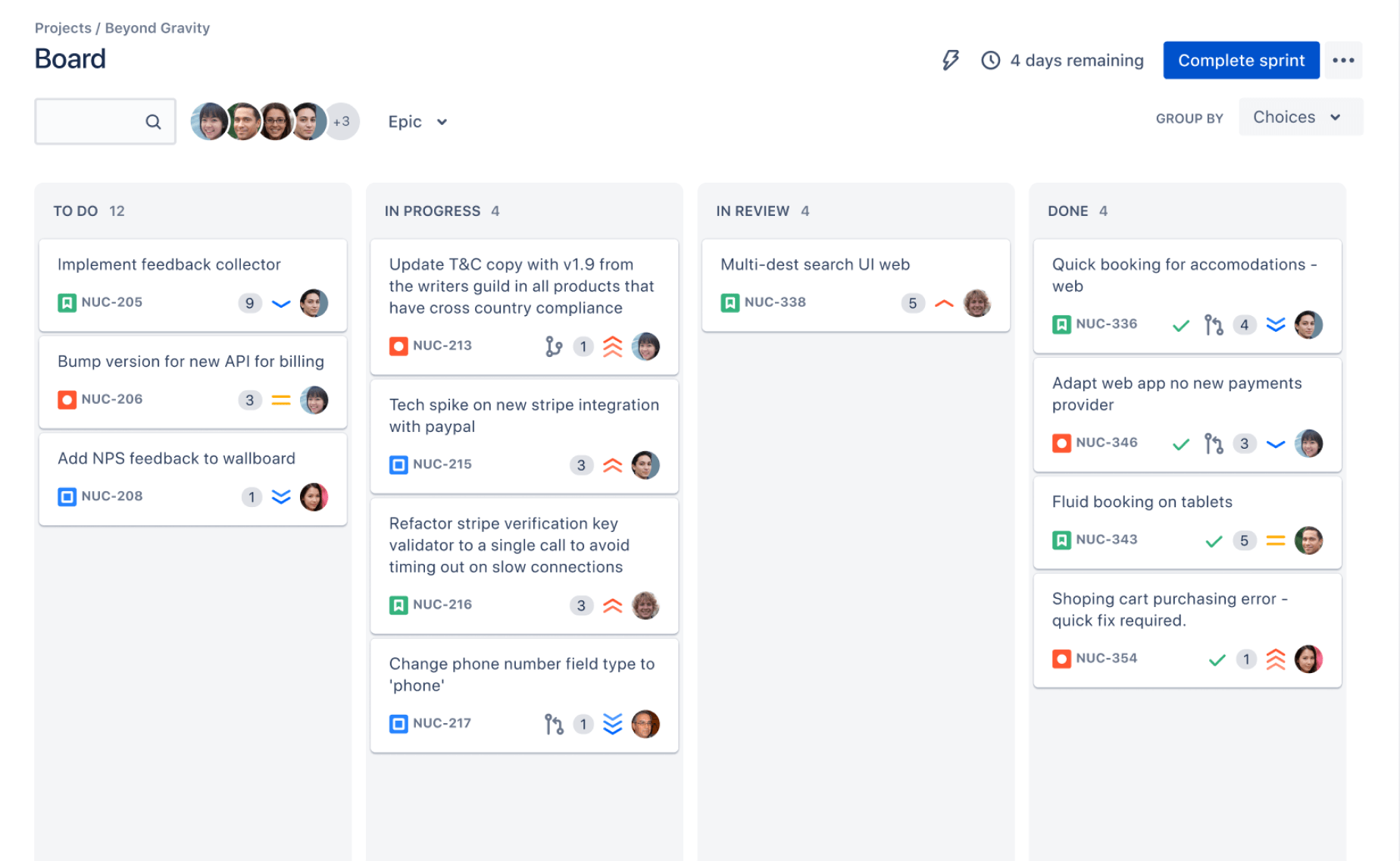
Separate the license from the operating budget
The subscription is the most visible cost, so it often receives the most attention. However, it may represent only one part of the annual budget.
For example, a company might pay for a large user tier and several apps, then run multiple application nodes across production, testing, and recovery environments. Its infrastructure and specialist labor can rival the subscription cost.
Here's why: every self-managed service transfers some responsibility to your team. You gain control over hosting and operations, while taking on more planning and maintenance.
Build three planning scenarios
A single estimate hides risk. Use three scenarios with clear assumptions:
- Current state: today’s licensed users, apps, environments, and support model.
- Expected state: planned hiring, likely adoption, normal infrastructure growth, and approved integrations.
- Expansion state: faster hiring, additional business units, heavier automation, or stronger recovery requirements.
Suppose you have 700 users today and expect 900 next year. Your budget should show the cost of staying near 700, moving toward 900, and crossing the next commercial tier.
What Jira Data Center Pricing Usually Includes
Data Center pricing generally centers on an annual subscription for a defined user tier. The subscription gives your organization access to the platform under the selected commercial agreement.
The exact amount depends on factors such as user count, contract structure, geography, and current commercial terms. Because enterprise pricing can change, use a current quote for approval rather than relying on an old estimate.
User tiers and growth thresholds
Most enterprise software pricing uses bands rather than a simple per-person calculation. That means adding a small number of users can sometimes move your organization into a higher tier.
Imagine a team near the upper edge of its current tier. Hiring 40 people may produce a larger annual increase than expected because the entire subscription moves to the next band.
Track active users, invited users, inactive accounts, and occasional users separately. This helps you understand actual demand and prevent unused access from distorting your forecast.
Annual subscription planning
Data Center is commonly planned as an annual subscription expense. Finance teams should record the renewal date, notice period, billing currency, contract terms, and expected user tier.
Set a renewal review at least 90 days before the contract ends. That gives you time to measure adoption, remove unnecessary apps, test alternatives, and negotiate with complete information.
Support and enterprise services
Support arrangements may vary by contract. Some organizations also budget for consulting, architecture reviews, migration assistance, performance tuning, or specialized incident support.
These services are easy to overlook because they may appear only during implementation or major upgrades. Add a separate one-time budget for transition work and a recurring budget for ongoing assistance.
Additional Costs That Change the Business Case
Two organizations with the same Jira user tier can have very different total costs. The difference usually comes from apps, infrastructure, staffing, and operational controls.
Marketplace apps and integrations
Apps can add major functionality for testing, planning, reporting, service management, time capture, and asset tracking. Each app may use its own tier, contract, upgrade path, and Data Center compatibility rules.
Create an app register with five fields: purpose, owner, user coverage, annual cost, and replacement difficulty. This simple review often identifies tools that serve overlapping needs.
For example, a reporting app may be unnecessary if native dashboards already answer the questions your managers ask. Removing one unused app can reduce renewal work as well as licensing expense.
Infrastructure and hosting
A production deployment may require several application nodes, a load balancer, shared storage, monitoring, backup capacity, and a recovery environment. Your design depends on transaction volume, availability targets, network architecture, and internal standards.
Hosted infrastructure does not remove the need for planning. You still need to estimate compute, storage, traffic, backup retention, recovery testing, and security tooling.
A useful estimate separates fixed and variable costs:
| Cost area |
Typical planning question |
| Application capacity |
How many nodes and how much processing capacity do peak workloads require? |
| Storage |
How much growth, retention, and recovery capacity must you support? |
| Network |
Will remote teams, integrations, or high-volume automation increase traffic? |
| Monitoring |
Which tools will detect latency, errors, node failures, and capacity limits? |
| Recovery |
How quickly must the service return after a major outage? |
People and administration
Self-managed Jira needs more than occasional configuration. Someone must manage permissions, identity integration, workflows, app compatibility, upgrades, backups, performance, and incident response.
Estimate effort by activity instead of guessing one annual percentage. For example, calculate monthly administration, quarterly release testing, annual upgrade planning, and emergency support separately.
The best part? This approach shows where automation or consolidation can reduce labor. It also makes hidden operational work visible to decision-makers.
Data Center Versus Jira Cloud: A Cost Comparison
The right comparison is total ownership over your planning period, often three to five years. Comparing one annual subscription with another produces an incomplete answer.
| Consideration |
Data Center |
Jira Cloud |
| Hosting responsibility |
Your organization or hosting partner plans the environment. |
The vendor operates the core service. |
| Infrastructure control |
Greater control over deployment architecture and restricted environments. |
Less direct infrastructure control, with simpler service operations. |
| Administration effort |
More responsibility for upgrades, monitoring, recovery, and compatibility. |
Less platform maintenance for your internal team. |
| Customization considerations |
Existing workflows and integrations may support a controlled transition. |
Cloud compatibility and limits require careful validation. |
| Availability design |
Your team plans redundancy and recovery processes. |
Service availability is delivered through the cloud service model. |
Cloud may reduce infrastructure work, while Data Center may fit organizations with strict hosting, network, or compliance requirements. Neither option is automatically cheaper for every company.
Here's a useful example: a regulated company with an established operations team may value deployment control enough to justify Data Center. A smaller team with limited administration capacity may place more value on managed operations.
How to Build a Three-Year Cost Model
A three-year model turns a price estimate into a planning tool. It shows renewal exposure, growth effects, one-time migration work, and operational trade-offs.
Use a simple cost structure
Organize the model into these categories:
- Annual Data Center subscription
- Marketplace apps and integrations
- Infrastructure and hosting
- Backup, monitoring, security, and recovery
- Internal administration and support labor
- Implementation, migration, and training
- Contingency for growth and unexpected work
Keep one-time and recurring costs separate. Migration workshops belong in the implementation budget, while administration belongs in annual operations.
Apply growth assumptions
Write down the assumptions behind every number. Include user growth, project volume, app adoption, storage expansion, environment count, and staffing changes.
For instance, assume 15% annual user growth, 10% storage growth, one additional integration, and a second recovery environment in year three. The exact assumptions matter less than making them visible and reviewable.
Measure cost per active user carefully
Cost per user can help compare scenarios, though it should not become the only metric. Divide total annual ownership cost by active users, then review the result alongside utilization and business value.
A platform with a higher cost per user may still be appropriate if it supports essential controls, complex workflows, or a large delivery organization. Conversely, a low apparent cost may hide heavy administrative work.
Common Budgeting Mistakes and Better Approaches
Using an old price estimate
Problem: Enterprise pricing, app terms, and contract structures can change. An estimate created several years ago may no longer describe your renewal.
Better approach: Use historical figures only for trend analysis. Request a current quote before final approval, and record the date and assumptions behind it.
Ignoring apps until renewal
Problem: App costs can become difficult to remove when teams depend on custom fields, reports, or specialized workflows.
Better approach: Review app usage every quarter. Identify owners, measure active use, and test whether native capabilities can cover the requirement.
Leaving labor out of the calculation
Problem: Administration may appear free because existing employees absorb the work. This hides capacity costs and weakens staffing plans.
Better approach: Estimate hours by role and activity. Include platform administration, infrastructure support, security reviews, and release testing.
Planning only for the production environment
Problem: Upgrades and configuration changes need safe testing. Recovery planning also requires additional capacity.
Better approach: Include testing, staging, backup, and recovery environments when estimating hosting and operational effort.
Choosing a tier without modeling growth
Problem: A low initial tier may create an expensive jump after hiring or business expansion.
Better approach: Model the next two likely user thresholds. Compare the cost of growing within the current tier with moving to a larger tier.
Evaluate ONES on matched scope
ONES is relevant when your team wants deployment choice and native R&D plus knowledge capabilities. Map the Jira, Confluence, test-management, planning and reporting functions you actually use to the selected ONES plan. Only subtract App costs after validating replacement coverage; keep custom integrations and one-time migration in the comparison. A missing production quote is not a zero-dollar cost.
ONES Cloud Free supports up to 30 users. The self-hosted trial is a separate 20-user, 30-day offer. Production self-hosting requires an appropriate quote. The current Cloud pricing page lists monthly AI credits by plan: 20 for Free, 50 for Standard, 100 for Business and 200 for Enterprise per user. Confirm the action meter, excess usage and deployment-specific AI configuration rather than claiming free or unlimited AI.
A published financial-services case describes 1,000 users, 70,000+ Jira issues and 260 GB of Confluence content migrated to ONES On-Prem in phased waves. Use that case to define your own field, permission, attachment and reconciliation tests; it is not a promise of identical duration or outcomes.
Check ONES plans; evaluate deployment; read the full migration case. Compare the alternatives.
Common Challenges When Estimating Enterprise Jira Costs
Challenge: Commercial terms are difficult to forecast
Solution: Keep subscription pricing, app pricing, and internal estimates in separate categories. Refresh the commercial figures before each renewal or investment review.
Challenge: User counts are inconsistent
Solution: Reconcile active accounts, invited accounts, contractors, and service identities. Assign an owner to review access monthly or quarterly.
Challenge: Technical requirements arrive late
Solution: Involve infrastructure, security, and recovery teams before approving the platform. Define node capacity, monitoring, backup retention, and recovery targets early.
Challenge: Teams resist reducing unused apps
Solution: Ask each app owner to show its active use, business purpose, and replacement plan. Retain essential capabilities while removing overlapping or abandoned extensions.
Challenge: Cloud and self-managed estimates use different assumptions
Solution: Compare both options over the same period. Include labor, infrastructure, migration, recovery, support, and security work in each scenario.
FAQs About Jira Data Center Costs
Is Jira Data Center priced per user?
Pricing generally follows a user tier rather than a simple one-person calculation. Your organization selects a tier that covers the required access level, and moving into a higher band can change the annual subscription. Count active users, expected hires, contractors, and occasional users before requesting a quote. Also review each marketplace app separately because app tiers may not match the main Jira tier.
Does Jira Data Center include hosting?
Data Center licensing does not remove the need to plan your hosting environment. Your budget may include application nodes, load balancing, storage, monitoring, backups, recovery capacity, operating systems, and network services. You may run the environment in your own facilities or through a hosting provider. Either approach requires clear ownership for performance, security, upgrades, and incident response.
Are Jira marketplace apps included in the subscription?
Marketplace apps generally require separate commercial planning. Common examples include testing, time tracking, reporting, asset management, and specialized workflow extensions. Confirm Data Center compatibility and the app’s user tier before adding it to your estimate. Create an annual app register so you can review purpose, usage, renewal date, and replacement difficulty before the main contract renewal.
How should I compare Data Center with Jira Cloud?
Compare total ownership over three to five years. Include subscriptions, apps, hosting, administration, security, backups, recovery, migration, training, and support. Data Center may suit organizations that need greater deployment control or restricted-network operation. Cloud may reduce infrastructure and upgrade responsibilities. The best choice depends on your technical requirements, staffing model, compliance obligations, and expected growth.
Can another platform lower the total cost?
It can, depending on your workflows, user count, app requirements, hosting needs, and administration model. A meaningful comparison should include migration effort and the cost of changing team habits. Evaluate native capabilities, deployment options, reporting, automation, workflow flexibility, and support requirements. A lower subscription price alone does not guarantee lower ownership cost.
Conclusion
Jira Data Center pricing is only the beginning of your cost plan. A realistic budget combines the annual subscription with apps, infrastructure, administration, security, recovery, migration, and growth.
But here's the truth: the cheapest license tier may not create the lowest total cost. Build current, expected, and expansion scenarios. Review user thresholds, remove unnecessary apps, and compare Data Center with cloud and suitable alternatives using identical assumptions.
If you need a self-managed project management platform with native workflows, reporting, automation, and flexible deployment, include ONES Project in that comparison. The right decision gives you predictable costs and a platform your teams can operate confidently as requirements change.