Jira Discovery Pricing: A Practical Cost Guide for Teams
Wondering about jira discovery pricing? Learn plan tiers, seats, billing, and hidden costs to estimate your team’s true spend. Read now.
Jira Discovery pricing can look simple until you separate creators, contributors, plan tiers, billing terms, and hidden administration effort. A small team may pay nothing, while a larger product organization can see costs rise quickly as more people need permission to build and manage ideas.
That uncertainty creates awkward questions. Should every stakeholder receive a paid seat? Does the free plan support real product discovery? Will a lower subscription cost lead to higher plugin, reporting, or administration work later?
Here’s the practical answer: estimate your cost from the number of creator seats first, then add taxes, billing adjustments, marketplace apps, and internal operating effort. This guide explains the pricing model, shows example budgets, and compares an alternative approach for teams that want product discovery connected to broader project and knowledge management.
Jira Product Discovery Pricing at a Glance
Jira Product Discovery pricing is mainly driven by creator seats, while contributors can often participate without the same paid access. Your total cost depends on the plan, number of creators, billing cycle, regional pricing, and any connected Atlassian products or apps.
| Cost factor |
What to check |
| Plan tier |
Compare free, Standard, and Premium capabilities before calculating seats. |
| Creator seats |
Count people who create, edit, prioritize, and manage product ideas. |
| Contributor access |
Check whether reviewers, voters, and commenters can participate without creator pricing. |
| Billing term |
Monthly billing offers flexibility, while annual billing may change the effective rate. |
| Extra tools |
Include marketplace apps, integrations, reporting tools, and administration time. |
| Related products |
Review costs for Jira, Confluence, or other Atlassian services used alongside discovery. |
Atlassian’s displayed rates can change by region, currency, promotions, and billing arrangement. Treat any quoted figure as a planning estimate and confirm the live checkout total before approval.
For a quick estimate, use this formula:
Estimated subscription cost = paid creator seats × displayed creator rate × billing period
Then add taxes, related products, marketplace apps, and the value of administration time.
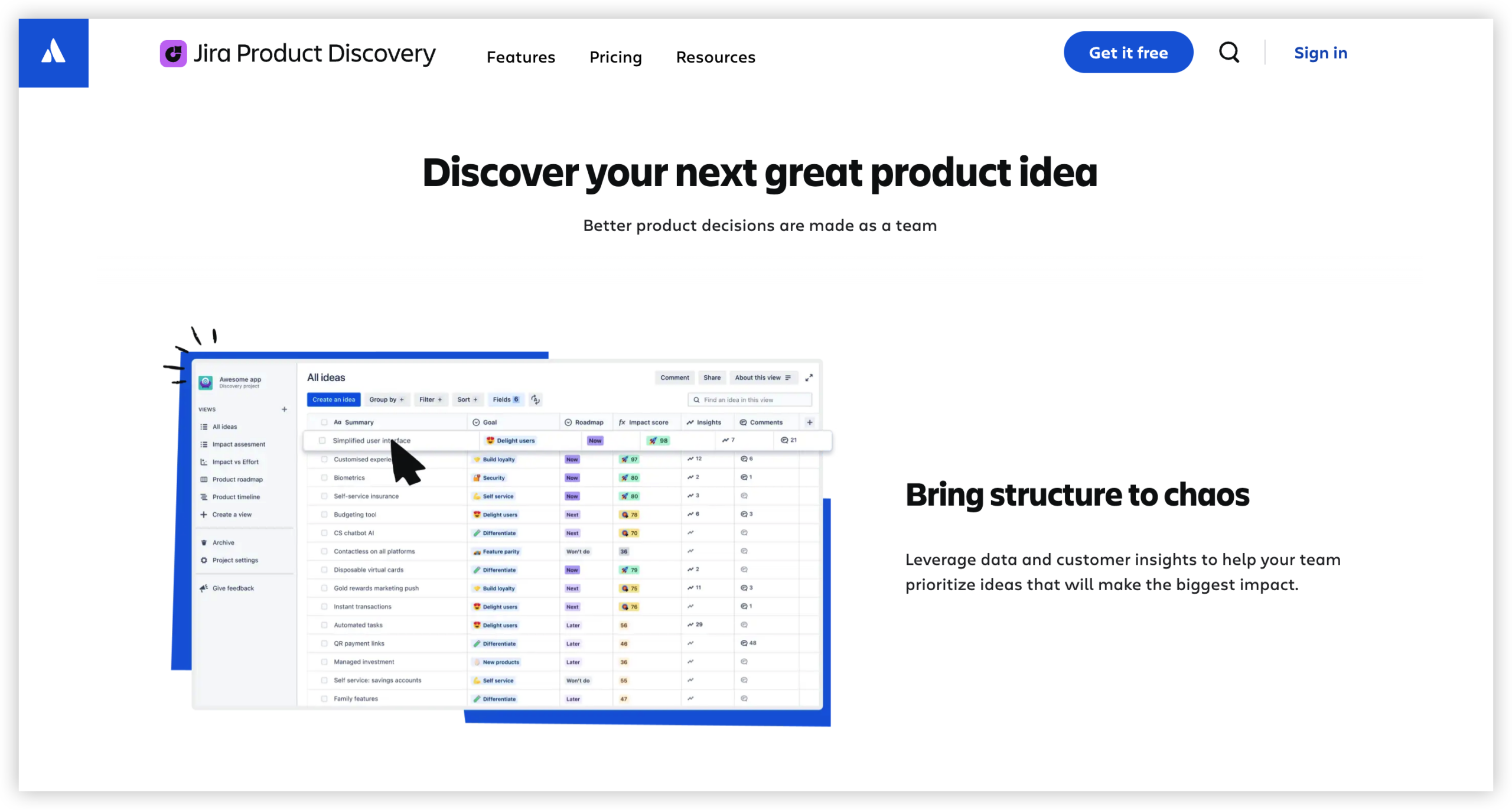
How the seat model affects your budget
Product discovery tools usually distinguish between people who manage the workspace and people who provide feedback. This distinction can significantly change your estimate.
For example, imagine a product team with six product managers, four designers, and two product operations specialists. If all twelve need creator permissions, your paid seat count is twelve.
Now imagine 80 engineers, sales representatives, and customers only need to view ideas, vote, comment, or submit feedback. If they qualify as contributors under the selected plan, they may not increase the creator portion of the bill.
Here’s why: paying for every occasional reviewer can turn a focused discovery workspace into a major recurring expense.
Free, Standard, and Premium considerations
The free tier can suit a small team testing the workflow. It is useful when you need a limited number of creators and basic idea collection before committing to a broader rollout.
A Standard plan generally becomes relevant when your team needs more creators, stronger collaboration controls, or greater capacity. Review the current limits carefully because plan features and allowances may change.
Premium usually deserves attention when you need advanced administration, higher scale, stronger governance, or additional support for a larger organization. The higher subscription can make sense when discovery affects several products and departments.
The best part? You can often control costs by reserving creator access for people who actively shape the roadmap.
How to Calculate Your Real Cost
Start with access roles, then test several growth scenarios. A simple estimate based only on today’s headcount can become inaccurate after a launch, reorganization, or wider stakeholder rollout.
- Count active creators. Include product managers, product owners, portfolio leads, and anyone who edits or maintains ideas.
- Separate contributors from creators. List people who only vote, comment, review, or submit suggestions.
- Choose a billing period. Compare monthly flexibility with the effective annual commitment.
- Review plan requirements. Identify the features your team actually needs, such as permissions, views, reporting, or governance.
- Add connected costs. Include related Atlassian subscriptions, apps, integration work, and administration.
- Model growth. Calculate the bill for your current team, expected team, and largest realistic rollout.
- Check the checkout total. Confirm taxes, currency conversion, promotions, and renewal terms before purchasing.
Example: a small product team
Suppose four product managers need creator access, while 25 colleagues provide feedback. Your starting calculation uses four paid creator seats.
That estimate should include the team’s chosen plan and billing period. It should also account for any Jira or Confluence subscriptions already supporting the workflow.
If one engineer later needs to manage ideas, the seat count may become five. Small changes can matter when your team operates close to a plan threshold.
Example: a growing product organization
Imagine 18 creators across three product groups and 150 contributors across engineering, support, sales, and leadership.
The subscription estimate should begin with 18 creator seats. You then compare the cost of keeping one shared discovery workspace against creating separate spaces with different governance rules.
Separate workspaces may improve ownership, while a shared workspace can reduce duplication. The better choice depends on how often teams reuse ideas, research, and prioritization criteria.
Include operational costs
Subscription pricing is only one part of the budget. Someone must define fields, maintain views, remove duplicates, guide contributors, and connect discovery decisions with delivery planning.
For example, a product operations manager spending six hours each month on administration creates a real internal cost. That effort may be reasonable, though it belongs in your comparison.
Let me explain: a cheaper plan can produce a higher total cost when manual coordination, duplicate reporting, and scattered feedback consume team capacity.
What Can Increase the Total Bill?
Several expenses sit outside the headline creator rate. Reviewing them early helps you avoid a budget that looks accurate on paper and fails during rollout.
Related Atlassian subscriptions
Jira Product Discovery may work alongside Jira Software, Jira Service Management, Confluence, or other Atlassian products. Each service can have separate pricing, user rules, and administration settings.
Map the complete workflow before approval. A product manager may collect an idea in discovery, discuss it in Confluence, and create delivery work in Jira.
If your team needs all three products, compare the combined commercial and administrative cost rather than judging one subscription in isolation.
Marketplace apps and integrations
Teams sometimes add apps for advanced roadmaps, customer feedback, analytics, forms, or portfolio reporting. These additions may improve the workflow, though they can introduce separate contracts and administration.
For example, an integration that synchronizes customer requests with product ideas may remove manual copying. Its recurring price belongs in your total cost calculation.
Review each app’s billing basis. Some charge per user, while others charge by workspace, usage, or connected service.
Implementation and governance
A discovery workspace needs clear rules. Decide who can create ideas, which fields are required, how evidence is evaluated, and when an idea moves into delivery planning.
Without those rules, teams may create several entries for the same request. Product managers then spend time cleaning up the workspace instead of evaluating opportunities.
A short setup workshop can prevent months of inconsistent usage. Include that effort in your adoption plan.
How to Reduce Unnecessary Seat Costs
Cost control starts with permission design. Give each person enough access to complete their role, then review whether that access remains necessary.
Use role-based access
Create a role map with three practical groups:
- Creators: people who build, edit, prioritize, and maintain product discovery content.
- Contributors: people who submit ideas, comment, vote, or review progress.
- Observers: people who only need visibility into priorities and decisions.
This approach prevents a common mistake: assigning expensive permissions to every person who attends a roadmap meeting.
Review inactive creators
Check creator activity at regular intervals. A person who changed roles may still hold a paid seat even though they only read updates now.
Set a review reminder every quarter. Compare the current seat list with actual responsibilities, then remove or reassign access where appropriate.
You might be wondering: what if someone needs creator access occasionally? Define a temporary approval process instead of paying for permanent access to every occasional editor.
Limit workspace duplication
Separate workspaces can help large organizations, though excessive fragmentation creates repeated fields, views, and review routines.
Before creating another workspace, ask whether the team has different ownership, permissions, or prioritization criteria. If the answer is no, a shared structure may be easier to manage.
Jira Product Discovery Alternatives: ONES.com
ONES.com is a unified platform for project management and knowledge management, powered by ONES Assistant. ONES Project is its project management product and can serve as a Jira alternative, while ONES Wiki supports knowledge management as a Confluence alternative.
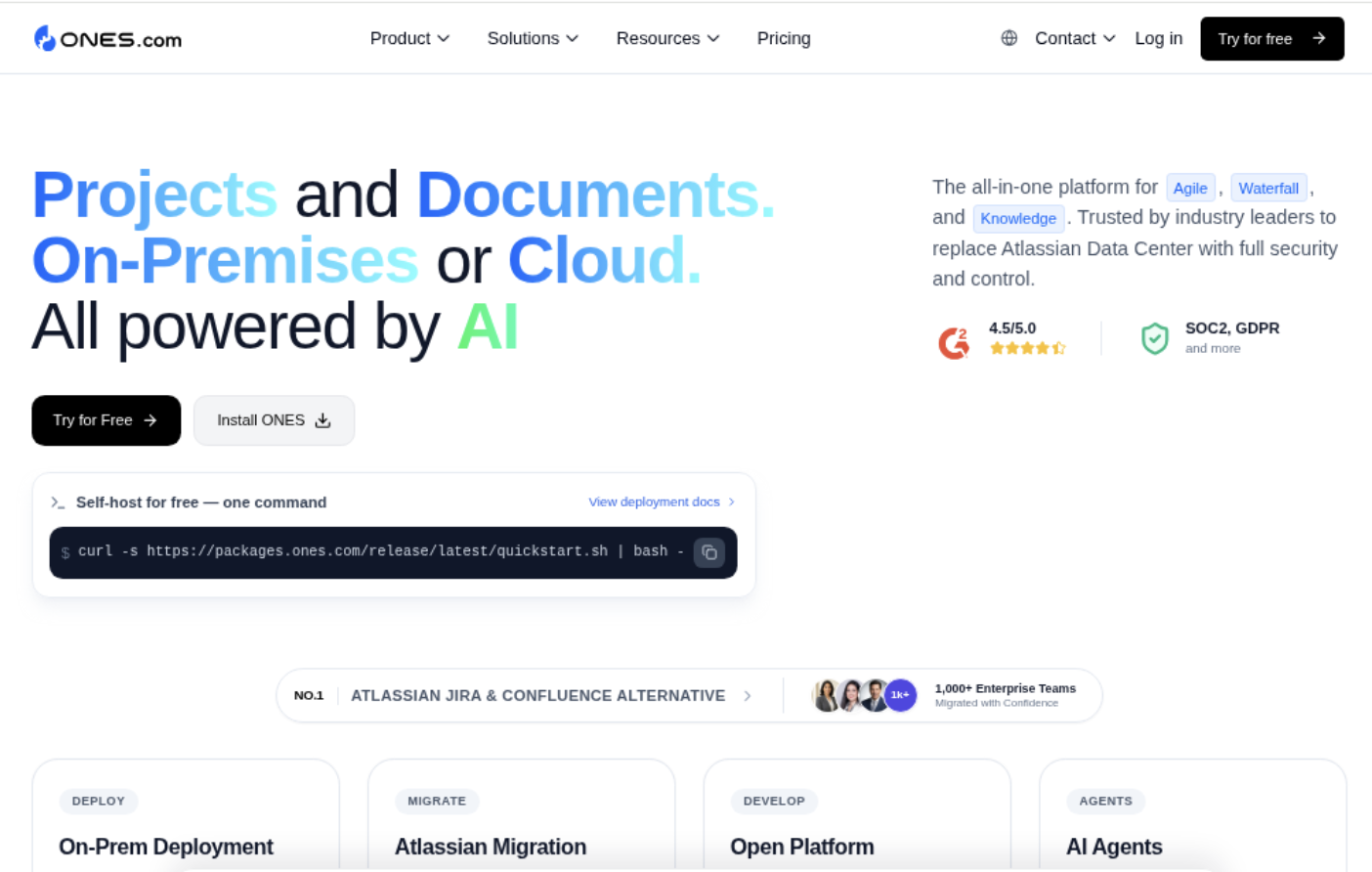
ONES Project and ONES Wiki are sold separately. Teams can choose the product that matches their immediate needs, then evaluate whether a broader setup makes sense later.
Value Proposition
ONES.com can suit teams that want product discovery connected to delivery planning and structured knowledge without relying on many plugins. It supports cloud and self-hosted deployments, including on-premise, private cloud, and air-gapped environments.
Core Capabilities
- Scattered product ideas → structured workspaces → clearer prioritization. Teams can organize ideas, requirements, and decisions in a shared environment instead of managing separate systems.
- Complex Jira workflows → Jira-compatible workflows → easier transition. Teams familiar with Jira-style statuses and approvals can preserve similar working patterns while evaluating a Jira alternative.
- Manual reporting → built-in reporting → faster visibility. Built-in reports help teams review progress and priorities without assembling every view separately.
- Rigid processes → custom workflows and fields → better fit for discovery. Teams can reflect their own review stages, scoring criteria, ownership rules, and decision gates.
- Disconnected sprint planning → native sprint management → closer discovery-to-delivery alignment. Product decisions can connect more directly with planned engineering work.
- Repetitive coordination → automation → fewer routine updates. Automation can handle selected transitions, notifications, assignments, and follow-up actions.
- Plugin sprawl → native feature coverage → simpler administration. Broader native capabilities can reduce the number of separate extensions your team needs to evaluate and maintain.
- Restricted network requirements → self-hosted deployment options → stronger infrastructure control. ONES.com supports Cloud, On-Premise, Private Cloud, and Air-gapped deployments.
- Different cloud and self-hosted capabilities → full feature parity → more deployment flexibility. Teams can select an operating model without giving up core functionality.
Application scenarios
Growing software company: Product managers can manage ideas and prioritization in ONES Project, then connect approved work with sprint planning. Engineering and leadership can review the same workflow with role-appropriate access.
Regulated organization: A team with restricted network requirements can evaluate an air-gapped or on-premise deployment. Product decisions, delivery work, and internal knowledge can remain within the required environment.
Distributed product group: Teams can use custom fields for customer impact, confidence, strategic fit, and effort. Automation can route high-priority ideas for review while built-in reporting supports portfolio conversations.
Pricing and deployment considerations
ONES.com offers a free option for up to 30 seats. Teams can compare Cloud, On-Premise, Private Cloud, and Air-gapped deployments based on security, maintenance, and infrastructure needs.
Compare the complete operating model rather than only the subscription amount. Self-hosting may require infrastructure and technical administration, while cloud deployment may reduce that internal responsibility.
For teams evaluating AI adoption, ONES.com uses a three-layer AI usage model. The basic allowance supports low-barrier trials of core AI features and limited requests.
Assistant Credit provides 3,000 credits per user per month in addition to the basic allowance. This supports stable individual usage for people who rely on AI assistance during regular work.
Extra Credit is a team-shared pool for situations where personal credits are insufficient. It costs USD 10 per 1,000 credits, with a minimum order of 5,000 credits.
This structure supports a gradual move from individual AI experimentation to scalable team adoption. The basic allowance helps teams try the features, Assistant Credit supports regular personal use, and Extra Credit helps sustain high-frequency team usage when personal allowances run short.
Common Challenges When Estimating Discovery Costs
Challenge: counting every participant as a creator
Problem: Stakeholders may need to vote or comment, though they do not manage the discovery workspace.
Solution: Define creator responsibilities before assigning seats. Test contributor access with a small stakeholder group and document what each role can do.
Challenge: using outdated plan assumptions
Problem: Pricing, limits, and feature packaging can change, making an old budget unreliable.
Solution: Recheck the current plan page and checkout estimate before renewal. Keep a dated internal calculation so finance can understand how the estimate was created.
Challenge: ignoring related product costs
Problem: A discovery subscription may appear affordable until Jira, Confluence, apps, and integration work are added.
Solution: Map the complete product workflow. Include every service required to collect feedback, evaluate ideas, approve priorities, and plan delivery.
Challenge: underestimating administration
Problem: Unclear ownership can create duplicate ideas, inconsistent scoring, and unused views.
Solution: Assign a workspace owner, define a review cadence, and provide a short operating guide for contributors.
Challenge: buying for future growth too early
Problem: A large initial rollout can create unnecessary recurring costs before the process is proven.
Solution: Start with the team that owns discovery, measure adoption, and expand access when more stakeholders need active participation.
FAQs About Jira Discovery Pricing
Is Jira Product Discovery free?
Jira Product Discovery has a free tier intended for limited team use. The exact creator limit and included capabilities can change, so confirm the current plan details before making a purchase decision. Free access may work well for a small product team testing idea collection and prioritization. Larger teams may need a paid tier because of creator capacity, governance, or advanced requirements.
Do contributors need paid seats?
Contributors may be able to submit ideas, comment, vote, or review priorities without receiving the same paid creator access. Your cost depends on the permissions and plan rules in effect when you subscribe. Build a role map before estimating the bill. If a contributor must edit fields, manage views, or maintain ideas, check whether that activity requires creator access.
How can I estimate the monthly subscription?
Count the people who actively create and manage discovery content. Multiply that number by the current creator rate and the billing period you are considering. Then add taxes, related Atlassian products, marketplace apps, integrations, and administration effort. Run at least three scenarios: current team size, expected growth, and maximum realistic rollout.
Is annual billing cheaper than monthly billing?
Annual billing may offer a different effective rate or commitment structure, though the result depends on the current commercial terms. Monthly billing can provide more flexibility during a pilot or uncertain rollout. Compare the full annual commitment with twelve monthly payments. Include expected hiring, role changes, and the likelihood of reducing seats before choosing a term.
Should a small team choose the free plan?
A small team can begin with the free plan when it has a limited number of creators and straightforward discovery needs. Before relying on it, check capacity, permissions, collaboration features, and reporting requirements. A free plan is useful for validating the process. It may become restrictive when several product groups need separate ownership or more advanced governance.
When should I compare a Jira alternative?
Compare alternatives when your team needs broader project management, knowledge management, self-hosting, or fewer third-party extensions. Cost should include administration, deployment, migration, reporting, and integration effort. For example, ONES Project may deserve evaluation when Jira-compatible workflows, custom fields, sprint planning, automation, and on-premise deployment matter in the same operating model.
Conclusion
The practical way to estimate Jira Product Discovery pricing is to count creator seats first, separate contributors from creators, and then add related products, apps, taxes, and administration effort.
Start with a small role-based rollout when your process is still developing. Review access quarterly, model future growth, and confirm current rates before signing an annual commitment.
But here’s the truth: the lowest subscription price does not automatically produce the lowest operating cost. A clear workflow, controlled permissions, and sensible platform comparison can prevent unnecessary spending.
If your team needs discovery tied closely to project delivery, reporting, knowledge management, or restricted deployment environments, ONES.com offers another route to evaluate alongside Atlassian’s products.