Jira Download Guide: Steps to Get Started Safely in 2026
Need a safe jira download? Learn which Jira edition fits your needs and how to install it from official sources. Click to get started safely in 2026.
Searching for “Jira download” can lead you to the wrong installer, an outdated edition, or an unofficial website. That creates real risks: malware, unsupported software, failed upgrades, and lost project history. The confusion gets worse because Jira Cloud does not need a traditional desktop installation, while Jira Data Center is designed for self-managed environments. You may also find old guides recommending Jira Server, which Atlassian no longer supports. But here's the truth: getting started safely is mostly about choosing the right Jira deployment, using an official Atlassian channel, and checking your environment before installation. This guide walks you through each step, explains what you actually need to download, and shows how to verify your setup in 2026.
How to Download and Start Using Jira Safely
The safest route depends on the Jira edition you need. Use Jira Cloud through a browser, install the official mobile app from your device’s app store, or download Jira Data Center only when your organization manages its own infrastructure.
- Choose the right Jira deployment. Select Jira Cloud if you want Atlassian to host the service. Choose Jira Data Center if your organization needs self-managed infrastructure, private-network access, or greater control over operations.
- Start at the official Atlassian website. Open Atlassian’s Jira product page or your organization’s verified Atlassian administration area. Avoid search ads, download mirrors, software aggregators, and unfamiliar installers.
- Create or use an Atlassian account. For Jira Cloud, register or sign in, then create a site. For Data Center, use the account connected to your organization’s Atlassian license and support access.
- Check licensing and eligibility. Confirm whether you need a free trial, a paid subscription, or an existing commercial license. Jira Data Center licensing and hosting requirements differ from Jira Cloud plans.
- Review system requirements. Check supported operating systems, Java requirements, memory, storage, network access, reverse-proxy settings, and supported relational database options before installing Data Center.
- Download the correct Data Center package when required. Match the package to your operating system and deployment method. A Linux installation, Windows installation, container deployment, and cloud setup each follow different procedures.
- Verify the download before installation. Check that the web address uses HTTPS, confirm the publisher, compare the package checksum when Atlassian provides one, and scan it with your organization’s security tools.
- Install in a test environment first. Use a separate environment to confirm authentication, email delivery, integrations, permissions, workflows, and performance before inviting a larger team.
- Apply updates and hardening controls. Install supported security updates, limit administrator access, enable multi-factor authentication where available, and review external integrations.
- Create a recovery plan. For self-managed Jira, schedule backups, test restoration, record administrator contacts, and define how you will recover after a failed upgrade or infrastructure outage.
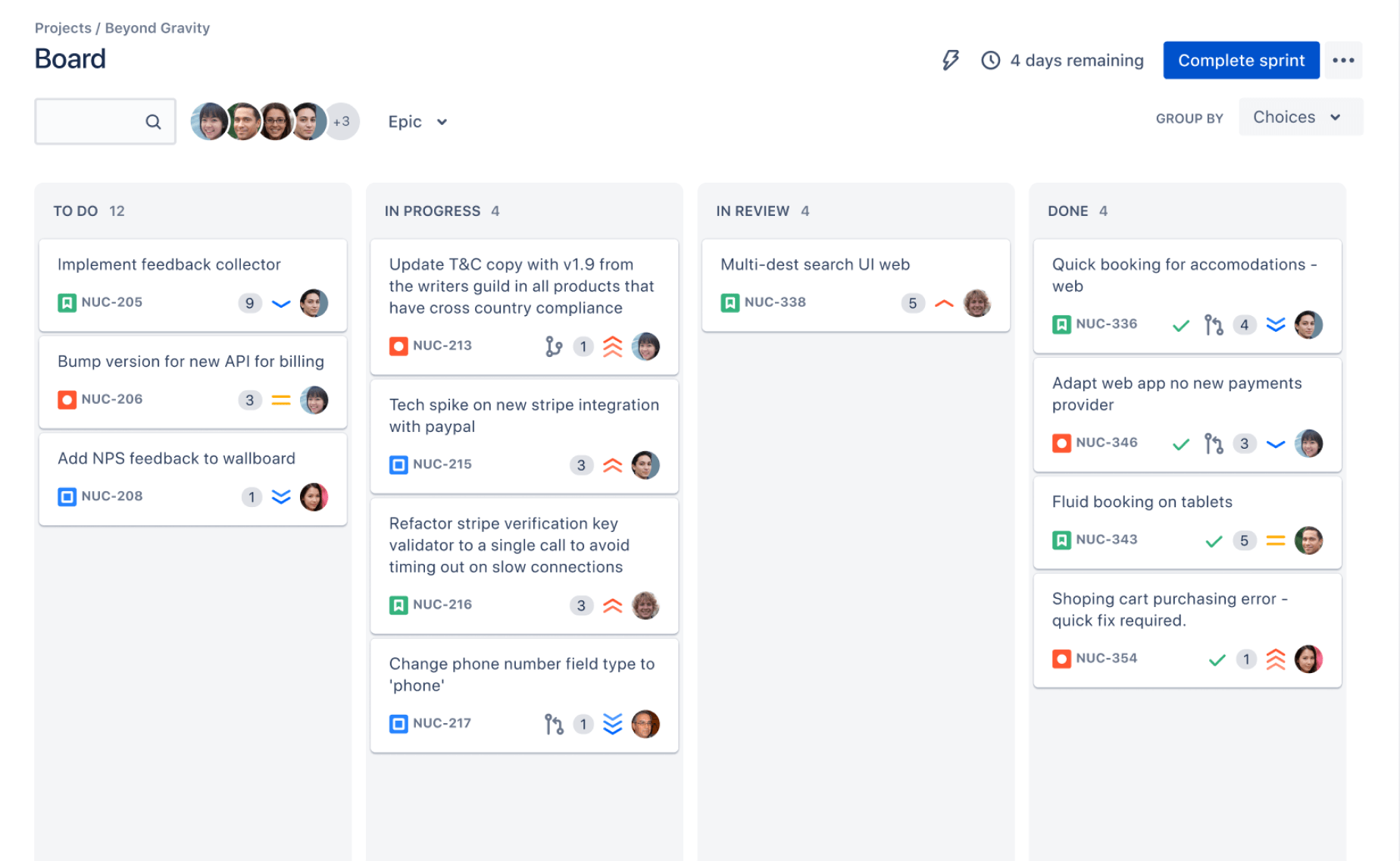
Decide Whether You Need a Download at All
Many people searching for a Jira download actually need access to Jira Cloud. In that case, there is no traditional desktop installer. You open the service in a supported browser, sign in, and use your cloud site.
You might be wondering: what should you install on a phone? Use the official Jira mobile app listed in Apple’s App Store or Google Play. Check the publisher name, review requested permissions, and avoid unofficial APK packages or modified app bundles.
Choose Between Cloud and Data Center
Jira Cloud is hosted by Atlassian. It usually offers the fastest setup because you do not manage application servers, upgrades, operating-system patches, or infrastructure capacity.
Jira Data Center suits organizations that require self-managed deployment. You may need it for network restrictions, internal operational policies, custom infrastructure controls, or a deployment model that keeps Jira inside your environment.
| Requirement | Likely fit |
|---|
| Fast setup with minimal infrastructure work | Jira Cloud |
| Self-managed hosting and internal network control | Jira Data Center |
| Mobile access | Official Jira mobile app |
| Local installation for an unsupported legacy product | Do not proceed without checking Atlassian support status |
Do Not Install Jira Server
Jira Server reached its end of support on February 15, 2024. That means you should not choose old Jira Server installers for a new deployment in 2026.
If an old guide tells you to install Jira Server, treat it as outdated. Review migration options to Jira Cloud or Jira Data Center instead, especially if your organization still operates a legacy environment.
What “Jira Download” Usually Means
The phrase can describe several different actions. Knowing the difference prevents you from downloading software you do not need.
Jira Cloud Access
With Jira Cloud, Atlassian hosts the application. You create or join a Jira site and access it through a browser. Your team can work from supported computers without installing the full Jira application locally.
For example, a small product team can create a cloud site, invite five members, configure a Scrum board, and begin tracking tasks within an afternoon.
Jira Data Center Installation
Jira Data Center is the self-managed edition. An administrator downloads an installation package, prepares the infrastructure, configures a supported relational database, and completes the setup process.
This approach gives your organization more operational control. It also creates more responsibility for capacity planning, patching, monitoring, backup testing, and disaster recovery.
Mobile App Installation
The Jira mobile app supports work away from a desk. It can help you review issues, comment on tasks, receive notifications, and respond to project activity.
Mobile access does not replace choosing the correct Jira deployment. The app connects to your Jira Cloud site or compatible self-managed environment, so your administrator may need to configure access first.
Exporting Jira Content
Sometimes people use “Jira download” when they want to export project information. That is different from installing Jira. Depending on permissions and edition, you may export issue data or reports in supported formats.
Before exporting, check privacy rules and access controls. A report containing customer details or internal planning information should not be sent through an unapproved channel.
How to Check a Jira Download Before Installing
Safety checks take minutes and can prevent a serious security incident. Treat every installer as untrusted until you verify where it came from and whether it matches the expected release.
Confirm the Website
Look for HTTPS and a legitimate Atlassian web address. Be cautious with pages that imitate branding, use unusual domains, pressure you to disable security tools, or offer “cracked” editions.
Search results can contain misleading advertisements. Navigate to Atlassian directly when possible instead of clicking the first download button you see.
Check the Publisher and Package
Review the publisher information shown by your operating system. The package name should match the expected Jira product and release. Avoid installers with random names, unexpected bundled applications, or urgent pop-up instructions.
For Data Center, compare the release with Atlassian’s supported version information. An older package may lack important security fixes or compatibility improvements.
Compare Checksums When Available
A checksum helps you confirm that the package matches the copy Atlassian published. Generate the checksum on your computer, then compare it with the value shown in the official release area.
A mismatch does not prove malicious activity by itself. The package may have been corrupted during transfer. Download it again through the official channel and contact your administrator if the problem continues.
Scan Before Running
Use your organization’s endpoint protection and malware scanning process. Do not disable protection simply because an installer displays a warning.
If your security team uses application allowlisting, request approval before installation. That creates a clear record of what entered your environment and who approved it.
Preparing a Safe Jira Data Center Installation
Self-managed Jira needs more planning than a cloud sign-up. The application is only one part of the deployment; the surrounding infrastructure determines reliability.
Plan Capacity
Estimate the number of users, projects, issues, automation rules, integrations, and expected activity. A team with 20 occasional users has very different needs from an enterprise running thousands of active workflows.
Start with Atlassian’s current sizing guidance, then validate the design through testing. Monitor processor use, memory, storage performance, response times, and request volume after launch.
Prepare Authentication
Decide whether people will sign in locally or through an identity provider. Single sign-on can simplify access management, while directory integration can reduce manual account administration.
Define administrator roles carefully. Give people only the permissions needed for their responsibilities, and review privileged access regularly.
Plan Backups and Recovery
A backup is useful only when restoration works. Schedule backups for Jira application settings and the connected relational database, then test restoration in a separate environment.
Keep recovery instructions clear. Someone responding to an outage should know the backup location, restoration order, escalation path, and validation checks.
Protect Integrations
Jira often connects with source-control services, messaging platforms, identity providers, testing systems, and reporting tools. Each connection can create another access path.
Review tokens, permissions, webhook endpoints, and service accounts. Remove integrations that no longer support an active business process.
First-Day Jira Setup Checklist
After installation or cloud activation, focus on a small working process. A simple setup gives you useful feedback before you build complex workflows.
- Create one project with a clear owner.
- Choose Scrum, Kanban, or another project template that matches the team’s work.
- Define issue types that people genuinely understand.
- Set statuses that reflect real progress, such as To Do, In Progress, Review, and Done.
- Assign project roles before inviting a large group.
- Configure notifications so important changes reach the right people.
- Create one dashboard for delivery progress and unresolved work.
- Test a complete task from creation through completion.
- Invite a small pilot group before organization-wide rollout.
- Record the decisions that future administrators will need.
For example, a marketing team may need campaigns, approvals, and deadlines. A software team may need sprints, code reviews, and release tracking. Use the smallest workflow that accurately reflects the work.
The best part? You can improve the process after seeing real behavior. If everyone creates custom statuses during the first week, your original workflow may be too restrictive.
Common Problems After Getting Jira
The Installer Does Not Start
Check operating-system compatibility, administrator permissions, security controls, and available storage. On a self-managed deployment, confirm that required services and supported runtime components are installed.
Do not download random replacement installers. Use the official release area and ask an administrator to inspect system logs.
The Team Cannot Sign In
Review invitations, identity-provider settings, domain restrictions, group membership, and clock synchronization. A small time difference can interfere with authentication tokens in some environments.
Test with one administrator account and one standard account. That comparison can show whether the problem affects the whole site or a specific role.
Jira Feels Slow
In Jira Cloud, inspect service notices, browser performance, network conditions, and unusually heavy project configurations. In Data Center, examine infrastructure metrics, indexing activity, database performance, and integration traffic.
Large dashboards and excessive automation can create avoidable load. Remove unused gadgets and review rules that trigger repeatedly.
An Upgrade Breaks an Integration
Check whether the connected application supports your Jira release. Review authentication tokens, API changes, webhook delivery, and marketplace app compatibility before upgrading production.
Run upgrades in a test environment first. Keep a rollback or recovery plan for every significant change.
Jira Download Alternative: ONES.com
ONES.com is a unified project management and knowledge management platform powered by ONES Assistant. ONES Project provides project management capabilities and can serve as a Jira alternative, while ONES Wiki supports knowledge management as a Confluence alternative.
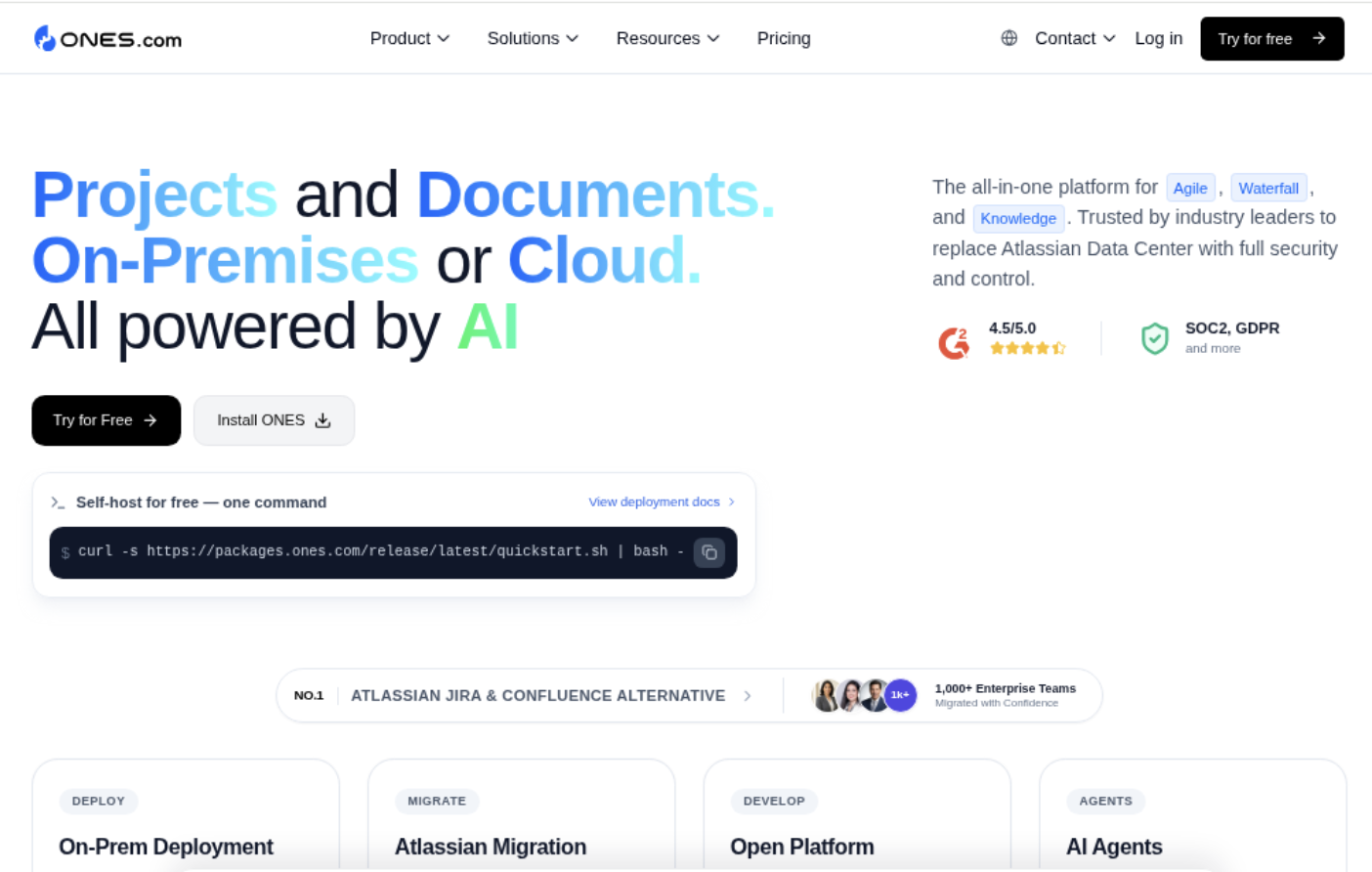
ONES Project and ONES Wiki are sold separately. ONES.com offers cloud, on-premise, private cloud, and air-gapped deployments, with full feature parity between cloud and self-hosted versions. A free plan supports up to 30 seats.
Core Capabilities
1. You need a Jira-style project workflow
ONES capability: ONES Project supports Jira-compatible workflows, sprint management, custom fields, and configurable project processes.
Result: Your team can preserve familiar delivery patterns while evaluating another platform.
2. You rely on too many plugins
ONES capability: Built-in reporting, automation, workflow controls, and project management functions reduce the need to assemble every capability through separate extensions.
Result: Administrators can manage fewer moving parts and review a more consistent system configuration.
3. You need self-hosted deployment
ONES capability: ONES.com supports on-premise, private cloud, and air-gapped deployment options.
Result: Teams with restricted networks or internal hosting requirements can evaluate a deployment that fits those operational constraints.
4. You want the same capabilities across deployment models
ONES capability: ONES.com maintains full feature parity between its cloud and self-hosted versions.
Result: Your team can compare hosting models without automatically giving up core platform functions.
5. Project reporting takes too much manual work
ONES capability: Built-in reporting helps teams track progress, workload, sprint outcomes, and delivery information within the project environment.
Result: Project leads can spend less time assembling status updates from separate systems.
6. Your workflow does not match a standard template
ONES capability: Custom workflows and custom fields let administrators reflect approval stages, ownership rules, risk categories, or specialized delivery steps.
Result: Teams can model their actual process instead of forcing every project into the same structure.
7. You need connected project and knowledge management
ONES capability: ONES.com brings project management and knowledge management into one platform, with ONES Project and ONES Wiki available as separate products.
Result: Teams can connect planning activity with operating guidance, technical explanations, and team knowledge.
8. You are evaluating AI-assisted work
ONES capability: ONES Assistant provides AI-powered support inside the platform, with a three-layer usage model.
Result: Individuals can try core AI features, maintain regular personal usage, and extend capacity for team-scale adoption when needed.
Application Scenarios
A software team moving away from a self-managed Jira environment could evaluate ONES Project on-premise or in an air-gapped environment. It could reproduce sprint planning, custom workflows, reporting, and automation during a controlled pilot.
A product organization could use ONES Project for delivery planning and ONES Wiki for product decisions, technical guidance, and recurring procedures. Keeping these activities in one platform can reduce context switching.
A distributed team could begin with cloud deployment, then assess private cloud or on-premise options if operational requirements change. Because the platform maintains feature parity across those models, the evaluation can focus on hosting priorities rather than missing functions.
Common Challenges and Practical Solutions
Challenge: You download the wrong edition
Solution: Decide whether you need cloud access, mobile access, or a self-managed Data Center installation before visiting a download page. Write down the reason for the deployment and who will administer it.
Challenge: You install an outdated product
Solution: Check Atlassian’s current support information before installing anything. Do not use Jira Server for a new deployment, even if an old tutorial still appears in search results.
Challenge: Your infrastructure cannot support the plan
Solution: Review capacity, operating-system compatibility, network paths, authentication, storage, and supported relational database options before installation. Test under realistic activity rather than relying only on a successful setup screen.
Challenge: A secure download becomes an insecure deployment
Solution: Protect administrator accounts, enable multi-factor authentication where available, restrict network access, patch regularly, and audit integrations. Installation safety is only the first control.
Challenge: The team adopts Jira without a clear process
Solution: Start with one project, a small set of statuses, clear ownership, and a short pilot. Gather feedback after real work passes through the workflow, then refine the configuration.
FAQs
Is there a Jira desktop app I can download?
Jira Cloud is generally accessed through a supported web browser rather than a traditional desktop installer. You can install the official mobile app from your device’s approved app store. If you need a locally managed Jira environment, review Jira Data Center requirements instead of searching for an unofficial desktop edition.
Where should I get Jira installation software?
Use Atlassian’s official website and your organization’s verified Atlassian administration area. Avoid third-party download mirrors, modified packages, old forum attachments, and installers that ask you to disable security controls. Confirm the product edition, release status, publisher details, and system requirements before installation.
Can I still download Jira Server?
Jira Server reached end of support on February 15, 2024. You should not select it for a new deployment in 2026. If you operate Jira Server already, review migration paths to Jira Cloud or Jira Data Center and plan the transition around compatibility, security, licensing, and recovery requirements.
Do I need Jira Data Center?
You may need Jira Data Center when your organization requires self-managed hosting, private network access, specific infrastructure controls, or an operational model outside Atlassian-hosted cloud services. It also requires more administration, including capacity planning, patching, monitoring, backup testing, and integration maintenance.
How can I tell whether a Jira download is safe?
Start with an official Atlassian web address and HTTPS. Check the publisher, product edition, release status, and package name. Compare a published checksum when available, scan the package with approved security tools, and test the installation in a controlled environment. Never trust a download simply because its page uses familiar branding.
What should I do before inviting my whole team?
Run a pilot with a small group. Test sign-in, permissions, notifications, workflows, reports, integrations, and recovery procedures. Define who owns administration and support. Once the pilot succeeds, invite more people gradually and explain how issues should be created, updated, reviewed, and completed.
Conclusion
Getting Jira safely in 2026 starts with choosing the correct deployment. Use Jira Cloud when you want hosted access, the official mobile app for phone-based work, and Jira Data Center for a supported self-managed installation.
But here's the truth: downloading an installer is only one part of a secure rollout. Verify the official channel, avoid Jira Server, test the environment, protect administrator access, and prepare recovery procedures before production use.
If Jira’s deployment model, plugin requirements, or infrastructure demands do not fit your team, evaluate a Jira alternative such as ONES Project. The right choice is the platform that supports your workflow, security expectations, hosting requirements, and long-term administration plan.