Jira Free Pricing Explained: Limits, Features, and Costs
Wondering if Jira Free pricing fits your team? Explore limits, features, and hidden costs to choose wisely. Click to discover before upgrading.
Jira Free pricing looks simple: you pay nothing, create a workspace, and start managing work. Then the limits appear. Your team may hit the 10-person cap, automation may stop sooner than expected, and storage can become a concern as attachments grow.
That uncertainty makes planning difficult. A free plan can work beautifully for a small team, yet become restrictive when you add contractors, multiple projects, integrations, or stricter reporting needs. Upgrading without understanding the limits can also create avoidable costs.
But here’s the good news: you can evaluate Jira Free clearly by looking at its seats, features, automation, storage, support, and upgrade triggers. This guide explains what the free plan includes, where it falls short, what paid Jira may cost, and how to choose your next step.
Jira Free Pricing: What You Get at No Cost
Jira Free pricing means you can use Jira Cloud without a recurring subscription fee for a small team, generally up to 10 people. The plan includes essential project planning, issue tracking, boards, backlog management, reporting, and limited automation.
The free tier is designed for small teams that need a structured way to plan work and track progress. You can create projects, assign issues, manage statuses, and view work through Scrum or Kanban boards.
Here’s why the free plan attracts so many teams: it gives you a practical project management foundation before you commit to a paid tier. You can test Jira with real work rather than relying on a trial period alone.
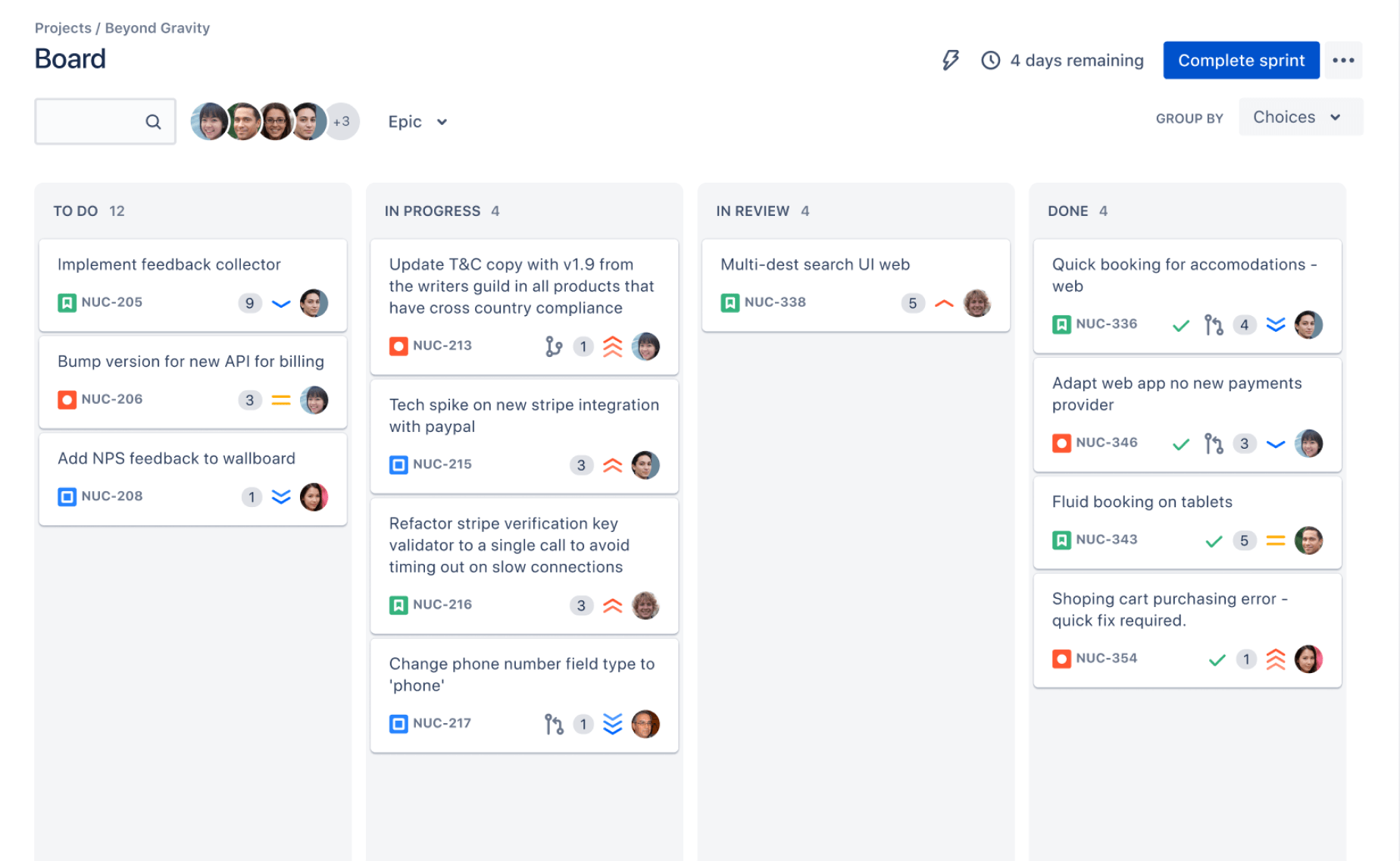
Key features included in the free plan
- Up to 10 people on a single site
- Unlimited projects, issues, and forms within the plan’s service limits
- Scrum and Kanban boards
- Backlogs and sprint planning
- Customizable issue types and workflows
- Basic reports and dashboards
- Roadmap planning capabilities
- Limited automation rule runs
- Cloud hosting and maintenance handled by Atlassian
- Community-based support rather than full premium support
Features can change as Atlassian updates Jira Cloud plans. Always check the current plan details before making a purchasing decision.
What the free plan does not mean
Free does not mean every Jira capability is available without limits. The plan controls how many people can access your site, how much storage you receive, how much automation can run, and what support options you have.
For example, a five-person software team may comfortably run several projects. A 12-person product organization cannot keep everyone on the free tier because the seat limit becomes the first barrier.
Jira Free Limits You Should Check First
The most important limits are seats, storage, automation, permissions, and support. These limits affect different teams in different ways, so your current project size matters more than the headline price.
1. The 10-person seat limit
Jira Free generally supports up to 10 people on one site. That count can include developers, product managers, designers, testers, project leads, and other people who need access.
Consider a small product team with eight employees and three contractors. Even if contractors only need occasional access, the team may exceed the free limit.
You can remove inactive accounts, but that only helps when the issue is unused access. It does not solve a genuinely growing team.
2. The 2 GB storage allowance
The free plan commonly includes 2 GB of storage for attachments and related project content. That may sound generous until you attach design exports, screenshots, videos, logs, and large test packages.
A team that mostly links to external storage may stay well below the limit. A quality assurance team attaching screen recordings to many issues can reach it much sooner.
Storage pressure often develops quietly. You may not notice the problem until someone cannot attach a useful troubleshooting item.
3. Limited automation runs
Jira Free includes automation, but the monthly allowance is limited. A commonly cited allowance is 100 rule runs per month, although Atlassian may adjust plan limits over time.
One automation run can update an issue, send a notification, change a status, or assign work. A rule that triggers frequently can consume the allowance quickly.
For example, a rule that runs whenever an issue changes status may use hundreds of runs during an active sprint. A smaller rule that updates a field once per completed task may last much longer.
4. Restricted administration and support
Free plans usually provide essential administration features, but advanced controls may require a paid tier. Larger teams often need more detailed permission management, audit capabilities, or centralized administration.
Support also differs. Free customers typically rely on community assistance and self-service guidance. Paid plans may provide stronger service commitments and additional support options.
5. App and integration considerations
Jira connects with many popular tools, but third-party apps can introduce separate subscriptions, limits, or setup requirements. A free Jira site does not automatically make every connected service free.
Imagine connecting time tracking, advanced reporting, test management, and release planning apps. The Jira subscription may remain free while the surrounding tools create a larger monthly bill.
Jira Free Features in Practical Use
The free plan works best when your workflow is clear and your team does not need extensive customization. You can create a backlog, prioritize issues, plan a sprint, move work across a board, and review progress with reports.
Backlogs and sprint planning
A Scrum team can create product backlog items, rank them, estimate effort, and move selected work into a sprint. At the end of the sprint, the team can review completed and unfinished work.
For instance, a mobile app team might track login improvements, payment bugs, and notification changes in one backlog. The sprint board then shows what is ready, in progress, under review, and complete.
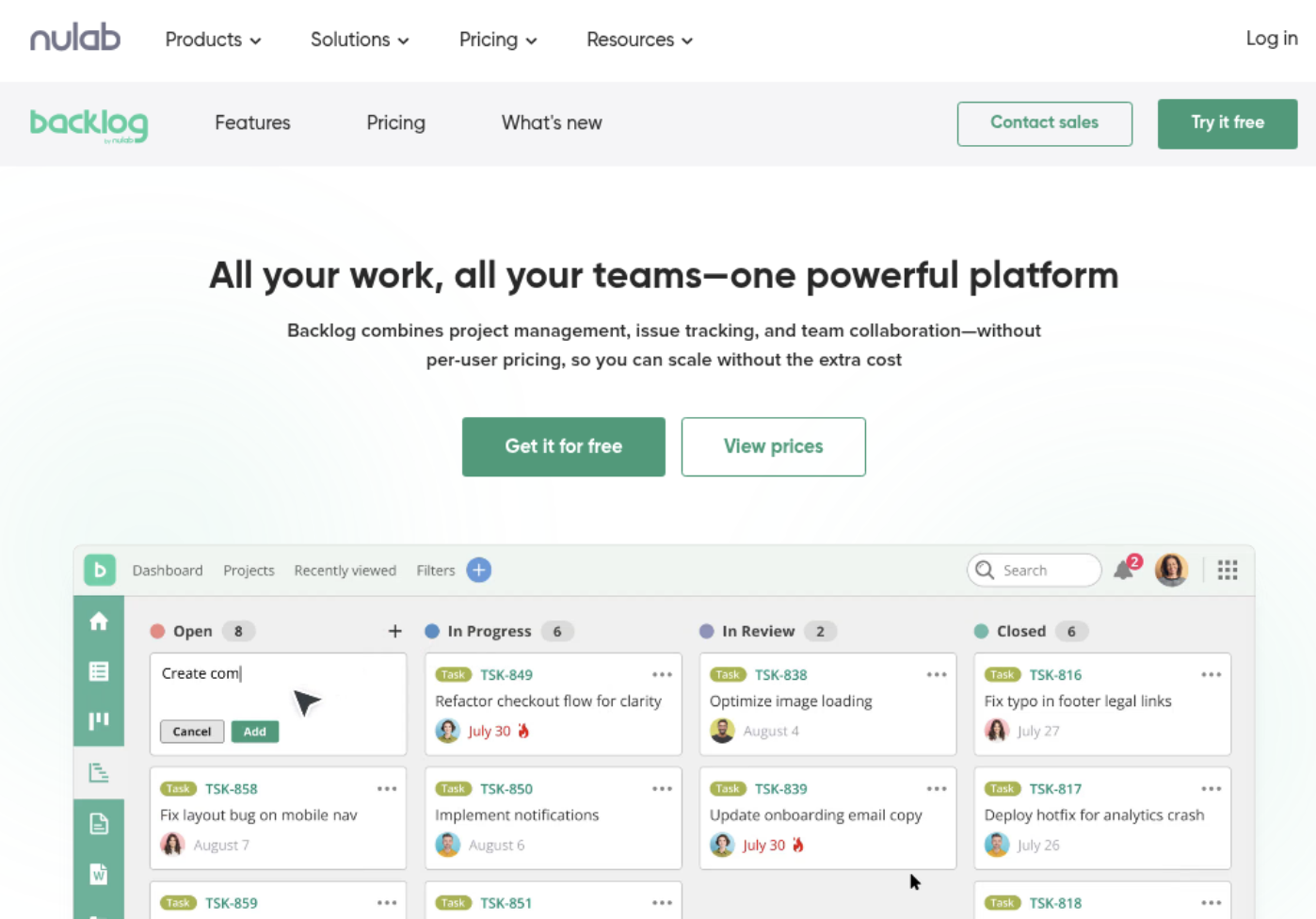
Kanban boards and continuous delivery
Kanban teams can visualize work without fixed sprints. Cards move through statuses such as To Do, In Progress, Code Review, Testing, and Done.
This setup is useful for support teams, maintenance groups, and internal service teams. It makes bottlenecks easier to spot because too many cards can collect in one stage.
Reports and dashboards
Jira Free includes core reporting features that help you review sprint progress, issue breakdowns, and team activity. These reports are useful for routine planning and retrospectives.
However, advanced portfolio reporting may require more configuration or a paid plan. If executives need highly customized views across many teams, the free tier may feel limited.
Workflows and custom fields
You can adapt Jira to match a team’s process by adjusting statuses, issue types, and selected fields. A software team might use Bug, Story, Task, and Epic issue types.
Keep customization controlled. A simple workflow is easier to maintain than one with twelve statuses and separate rules for every exception.
Where Jira Free Starts to Feel Restrictive
Jira Free usually becomes difficult for one of three reasons: the team grows, the workflow becomes more complex, or the organization needs stronger governance.
Team growth changes the calculation
A startup with seven people may fit comfortably today. After hiring four more people, the free plan no longer covers the whole team.
That creates a choice: remove access for some people, create separate sites, or upgrade. Separate sites may reduce visibility because related work no longer appears in one shared workspace.
Automation demand rises with process maturity
Early teams often use Jira manually. As the process matures, they add rules for assignment, notifications, due dates, labels, and transitions.
That progress is helpful, but each additional rule consumes part of the monthly allowance. Teams with frequent issue changes can reach the ceiling quickly.
Governance becomes more important
Small teams can often manage access informally. Larger organizations need clearer controls over who can view, edit, approve, or administer work.
Suppose a company has separate engineering, finance, customer support, and partner projects. More detailed permissions may become necessary even when the number of people remains modest.
Third-party apps add indirect costs
Jira may be free while essential extensions are not. A team may need better test coverage, time tracking, dependency mapping, or executive reporting.
Before choosing the free plan, list every capability your team needs. Then identify which ones Jira includes and which ones require an additional subscription.
How Jira Paid Plans Affect Your Total Cost
Jira’s paid plans typically expand capacity and administration as your team grows. The exact amount depends on the plan, number of seats, billing cycle, region, and current Atlassian pricing.
The practical comparison is more useful than looking at the subscription alone. Ask what each tier changes in your daily work.
| Cost area |
What to examine |
| Seats |
How many people need regular access now and within the next year? |
| Storage |
Will attachments, recordings, and exports exceed the free allowance? |
| Automation |
How many rules run each month, and how important are they? |
| Administration |
Do you need advanced permissions, audit controls, or centralized management? |
| Support |
Would faster assistance reduce operational risk? |
| Connected apps |
Will extensions create a separate monthly cost? |
Free versus paid: a simple example
Imagine a 15-person engineering team. Jira Free cannot cover everyone on one site, so the team needs a paid option or a different workflow arrangement.
Now imagine a six-person team using 150 automation runs each month. The seat count fits, but automation does not. A paid tier may be worthwhile if those rules prevent missed handoffs.
The best part? You can measure these pressures before upgrading. Track active accounts, monthly automation activity, storage growth, and the number of manual steps your team repeats.
How to Decide Whether Jira Free Is Enough
Use Jira Free when your team is small, your workflow is reasonably simple, and your automation and storage needs remain modest.
Consider a paid plan when the limits interfere with delivery, visibility, security, or collaboration. The right decision depends on the cost of the restriction, not only the subscription price.
A practical evaluation checklist
- Count every person who needs access.
- Separate active accounts from inactive accounts.
- Estimate attachment growth over the next six months.
- Review how many automation rules run each month.
- List every external app your team relies on.
- Identify permission or administration requirements.
- Decide whether community support is sufficient.
- Estimate the cost of manual work caused by plan limits.
Questions to ask before upgrading
You might be wondering: should you upgrade as soon as you reach one limit? Not necessarily.
If storage is the only issue, you may reduce large attachments or link to an approved storage service. If the seat limit blocks collaboration, upgrading may be more direct.
Ask whether the restriction is temporary, predictable, or central to your workflow. A temporary project may need a short-term adjustment. A growing product team should plan for sustainable capacity.
Natural Topic Solution: ONES.com
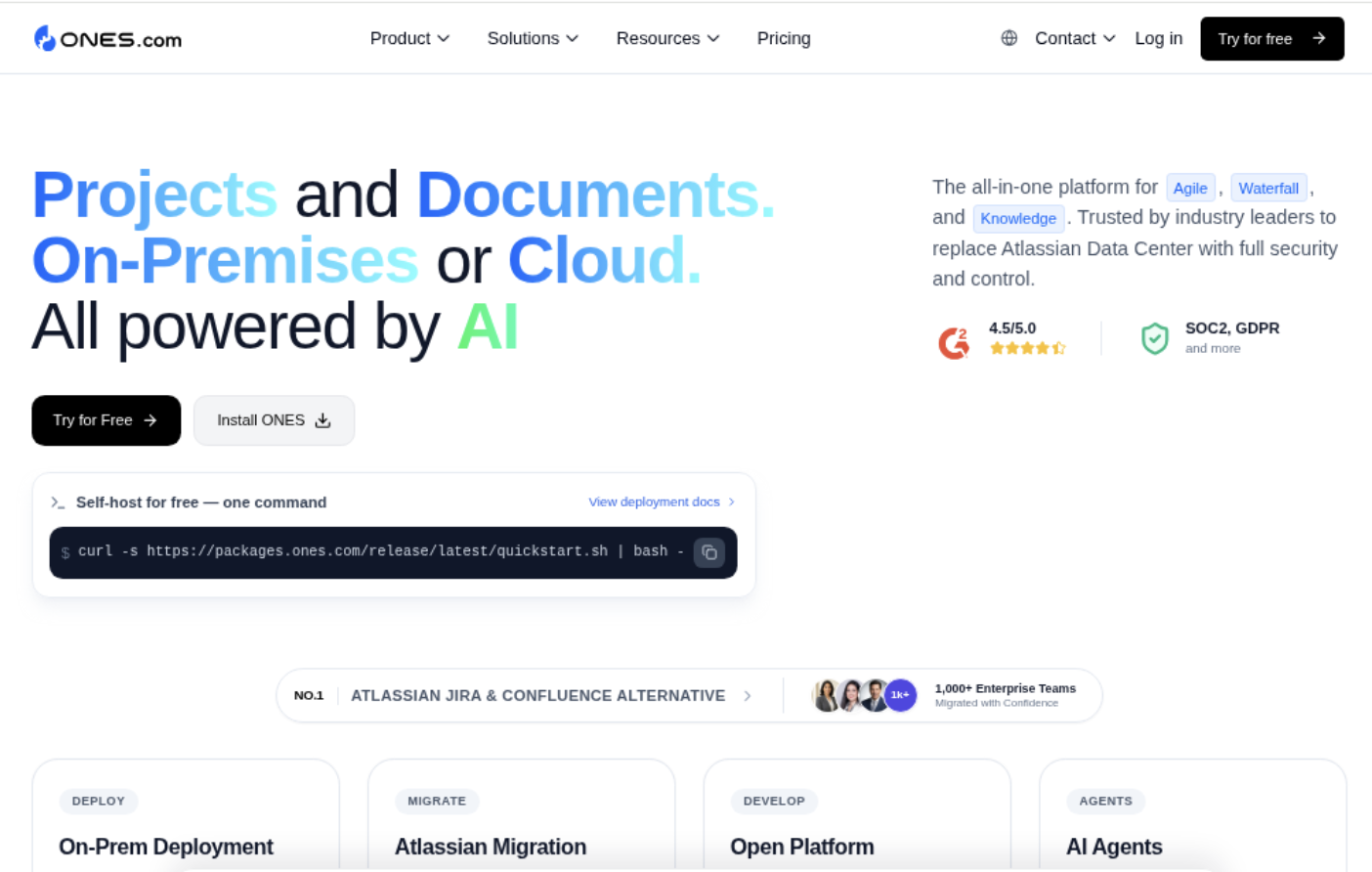
Value Proposition
ONES.com combines project management and knowledge management in one platform. ONES Project provides a Jira alternative for teams that want structured planning, workflows, reporting, and self-hosted deployment options.
The platform is available in Cloud, On-Premise, Private Cloud, and Air-gapped deployments. A free plan supports up to 30 seats, which can give a growing team more room than a 10-person free tier.
Core Capabilities
Small-team access limits
Pain: A team can outgrow a 10-person free plan quickly.
ONES capability: ONES.com offers a free plan for up to 30 seats.
Result: You can keep a larger project group in one workspace before evaluating a paid plan.
Separate project and knowledge tools
Pain: Teams often switch between a project tracker and a knowledge base.
ONES capability: ONES.com includes ONES Project and ONES Wiki, with each product sold separately.
Result: You can choose project management, knowledge management, or both according to your operating needs.
Limited workflow flexibility
Pain: A basic workflow may not reflect your approval, testing, or release process.
ONES capability: ONES Project supports custom workflows, fields, issue structures, and Jira-compatible workflows.
Result: You can model practical processes without forcing every team into the same status sequence.
Manual reporting
Pain: Managers spend time assembling progress views across projects.
ONES capability: Built-in reporting helps teams review delivery progress and project activity.
Result: You can reduce manual reporting work and maintain clearer project visibility.
Restricted automation
Pain: Limited automation runs can leave routine updates and handoffs manual.
ONES capability: ONES Project includes automation for recurring project actions.
Result: You can reduce repetitive status changes, notifications, and assignments.
Complex sprint management
Pain: Teams need a clear way to plan, run, and review sprints.
ONES capability: ONES Project supports sprint management alongside backlog and board workflows.
Result: You can organize iterative delivery in a familiar agile structure.
Plugin dependence
Pain: A project platform may require several extensions for routine capabilities.
ONES capability: ONES Project provides native project management functions, reporting, workflows, custom fields, and automation.
Result: You may reduce the number of plugins needed for core project operations.
Deployment restrictions
Pain: Some organizations cannot place project information in a public cloud environment.
ONES capability: ONES.com supports Cloud, On-Premise, Private Cloud, and Air-gapped deployments.
Result: You can align deployment with internal security, compliance, and network requirements.
Cloud and self-hosted feature gaps
Pain: Self-hosted platforms sometimes provide fewer capabilities than their cloud versions.
ONES capability: ONES.com maintains feature parity between its cloud and self-hosted versions.
Result: You can select a deployment model without accepting a separate feature set.
Application Scenarios
Growing software team: A 20-person engineering group may need more than a 10-seat free plan while still wanting backlog management, sprints, custom workflows, and reporting in one platform.
Restricted-network organization: A government contractor or regulated company may need an air-gapped project environment. ONES.com provides an air-gapped deployment option for that type of setting.
Multi-team product organization: Product, engineering, and quality teams can use shared project workflows while adding ONES Wiki separately for planning guidance, technical knowledge, and team procedures.
Common Challenges With a Free Project Plan
Challenge: Your team reaches the seat limit
Solution: Review active access first. Remove people who no longer participate, then compare the cost of upgrading with the cost of splitting work across separate spaces.
Challenge: Automation stops during an important sprint
Solution: Identify high-frequency rules and consolidate overlapping actions. Reserve automation for steps that prevent errors or protect delivery deadlines.
Challenge: Attachments consume storage quickly
Solution: Set an attachment policy. Keep essential screenshots and troubleshooting evidence in the project tracker, while storing large media in an approved shared location.
Challenge: Extra apps make the free plan expensive
Solution: Calculate the complete operating cost. Include Jira, connected services, administration time, training, and manual work before comparing alternatives.
Challenge: The workflow becomes difficult to maintain
Solution: Simplify statuses and define ownership for workflow changes. A smaller number of clear transitions usually creates better reporting and faster adoption.
FAQs About Jira Free Pricing
Is Jira Free genuinely free?
Yes, Jira offers a free Cloud plan with no recurring subscription charge within its stated limits. You still need to manage seat capacity, storage, automation, and connected app costs. The free plan is most suitable for small teams with straightforward project needs. Atlassian may change plan details, so review current terms before making a long-term decision.
How many people can use Jira Free?
Jira Free generally supports up to 10 people on one site. Count everyone who needs access, including contractors, testers, managers, and occasional contributors. If your team grows beyond that limit, you may need a paid plan or a different arrangement. Removing inactive accounts can help when unused access causes the problem.
Does Jira Free include Scrum and Kanban?
Yes, Jira Free includes core Scrum and Kanban capabilities. You can create backlogs, organize boards, plan sprints, assign issues, and review progress. The plan works well for teams adopting agile practices. More advanced administration, reporting, capacity planning, or connected capabilities may require a paid tier or additional service.
What is the biggest Jira Free limitation?
There is no single limitation for every team. Small teams often notice the 10-person seat cap first. Teams with many attachments may encounter the 2 GB storage allowance, while highly automated teams may reach the monthly rule-run limit. Review your team size, attachment habits, automation activity, and administration needs together.
Should a startup begin with Jira Free?
A startup can begin with Jira Free if the team has 10 or fewer people and needs core backlog, board, sprint, and issue tracking capabilities. Before committing, estimate hiring plans and integration needs. If the team expects rapid growth, select workflows that can transition smoothly to a paid plan without major restructuring.
Is ONES.com a Jira alternative?
Yes. ONES Project is a Jira alternative with project management features such as Jira-compatible workflows, sprint management, automation, custom fields, and built-in reporting. ONES.com also supports cloud and self-hosted deployment models, including On-Premise, Private Cloud, and Air-gapped options. ONES Wiki is available separately for knowledge management.
Conclusion
Jira Free pricing is attractive because it removes the subscription barrier for small teams. You receive core issue tracking, Scrum and Kanban boards, sprint planning, reports, workflows, and limited automation.
But here’s the truth: the plan remains practical only when your team fits its capacity and workflow limits. Track seats, storage, automation activity, connected apps, and administration needs before those limits disrupt delivery.
If your team is growing or needs different deployment choices, compare the full operating picture with alternatives such as ONES Project. The right platform should support your current workflow while leaving you a sensible path for future growth.