Jira Goals Pricing Explained: Plans, Features, and Costs
Confused by jira goals pricing? Compare plans, features, user bands, and total costs to choose wisely. Click to discover the right option.
Jira Goals pricing can feel confusing because “Goals” may refer to different Atlassian capabilities, plans, or connected products. You may find a feature inside Jira, then discover that your team’s cost depends on the parent subscription.
That uncertainty creates expensive mistakes. A team might compare one seat price while overlooking user bands, annual billing, premium requirements, or a separate product such as Jira Product Discovery.
But here’s the truth: Jira Goals usually does not have one universal standalone price. Your total cost depends on which goals capability you need, how many people need access, and which Atlassian plan supports it.
This guide explains the pricing structure, plan differences, hidden cost drivers, and practical alternatives. You’ll also see how to calculate a realistic monthly budget before committing.
Jira Goals Pricing: The Short Answer
Jira Goals pricing depends on the Atlassian product and plan connected to your goals workflow. In many cases, goals are included within a Jira subscription rather than sold as a separate add-on.
For a simple team setup, you may pay for Jira Cloud seats. More advanced planning may require Jira Premium, Jira Product Discovery, or another Atlassian product with its own billing rules.
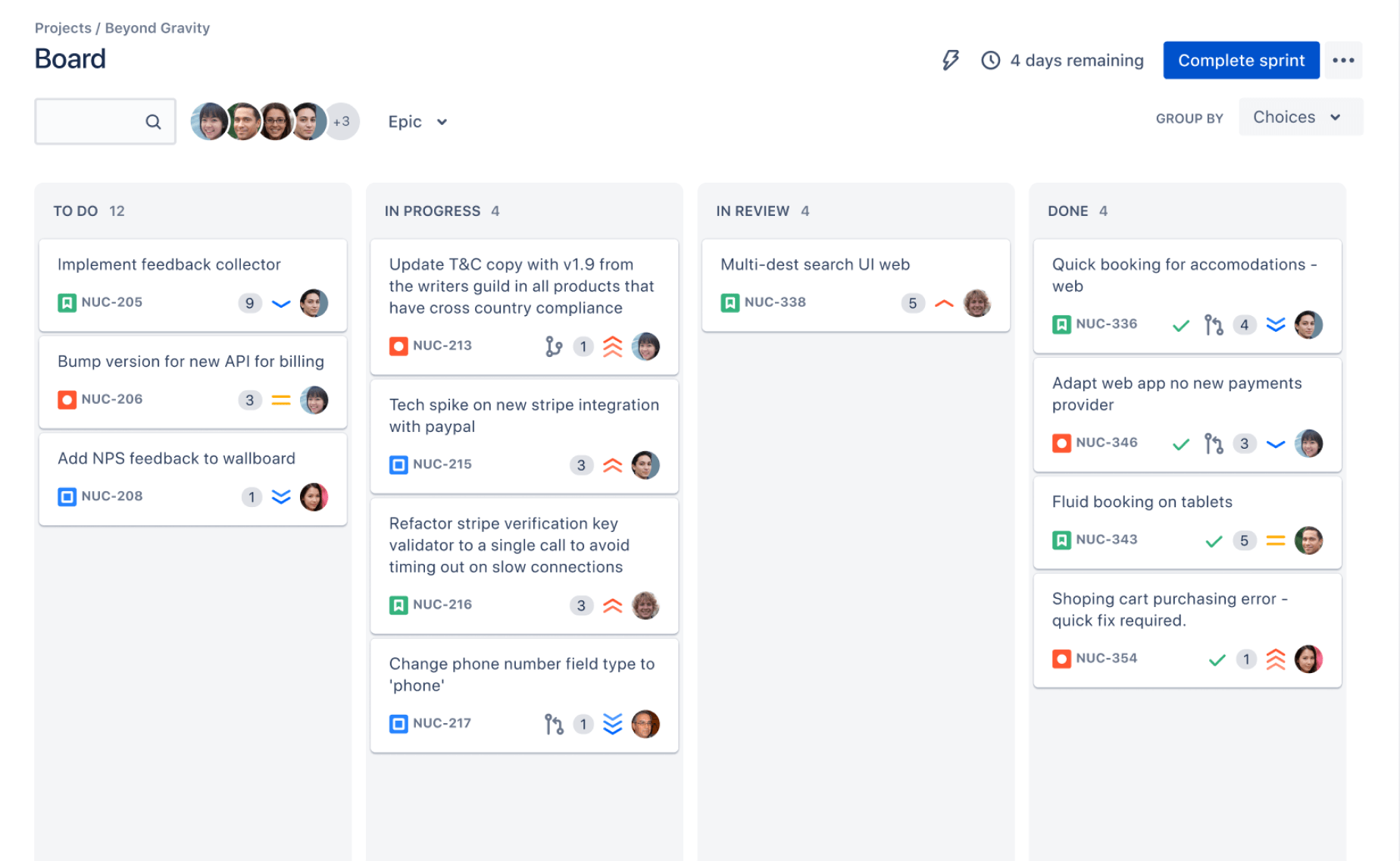
What “Jira Goals” Can Mean
People use the term “Jira Goals” for several related experiences:
- Goals inside Jira: objectives connected to projects, plans, initiatives, or delivery work.
- Advanced planning: portfolio-level planning features that may require a higher Jira tier.
- Jira Product Discovery: a separate product for prioritizing ideas, opportunities, and product outcomes.
- Atlassian-wide goal tracking: planning features connected with other Atlassian products.
These options can look similar during research. Their prices, limits, and eligible users may differ.
Typical Jira Cloud Plan Structure
| Plan area |
What you generally receive |
Pricing implication |
| Free |
Basic Jira project and issue tracking for small teams |
No subscription fee within the published limits |
| Standard |
Higher capacity, broader administration, and expanded collaboration |
Per-user pricing usually applies |
| Premium |
Advanced planning, larger scale, and additional controls |
Higher per-user pricing than Standard |
| Enterprise |
Large-scale administration, governance, and commercial arrangements |
Custom quotation is common |
Published prices can change by region, billing cycle, currency, and team size. Treat any displayed rate as a planning estimate until you confirm it in Atlassian’s pricing calculator.
How Jira Goals Costs Are Calculated
Your bill normally comes from several decisions rather than one “Goals” price. Use this sequence to estimate the real amount.
- Identify the product. Confirm whether your team needs Jira, Jira Product Discovery, Advanced Roadmaps, or a broader planning capability.
- Choose the required plan. Check whether your desired goals view, hierarchy, reporting, or permissions requires Standard or Premium.
- Count billable seats. Separate people who create or manage goals from people who only view progress.
- Choose monthly or annual billing. Annual contracts can use different calculations and payment schedules.
- Add connected products. Jira Product Discovery and other Atlassian tools may create a separate subscription.
- Check limits and administration needs. Storage, automation, permissions, support, and governance can influence your plan decision.
- Calculate the full monthly equivalent. Divide annual charges by twelve when comparing them with monthly plans.
A Simple Cost Formula
Use this formula before comparing plans:
Estimated monthly cost = product subscription + additional product subscriptions + optional services
For example, imagine a 25-person team. Ten people manage work daily, five leaders monitor objectives, and ten colleagues need occasional visibility.
If every person needs a paid Jira seat, calculate 25 seats. If only some people need a separate product, calculate that subscription independently.
Why Seat Count Requires Care
Atlassian pricing often uses user bands rather than a perfectly linear price for every individual seat. A team with 11 people may enter a different band than a team with 10.
That difference matters when you compare a low per-user headline rate with your actual bill. Always test your precise team size in the pricing calculator.
Which Plan Do You Need for Goal Tracking?
The best plan depends on the complexity of your planning process. A small team tracking a few objectives needs less capability than an organization coordinating multiple portfolios.
Free Plan: Good for Early Evaluation
A free Jira plan can work when you want to test basic project tracking and connect a small number of objectives with delivery work.
It may suit a startup team with one product area, limited permissions, and a small number of collaborators.
Capacity and administration limits become important as the team grows. You may also lack advanced planning capabilities required for cross-team roadmaps.
Standard Plan: Suitable for Routine Team Planning
Standard is often the practical starting point for teams that need regular Jira work management with broader capacity.
It can support workflows such as:
- Creating initiatives or objectives for a product group.
- Connecting work items with larger outcomes.
- Reviewing progress during monthly planning meetings.
- Managing permissions across several projects.
Standard may be enough when leaders need visibility and delivery teams need consistent execution. It may fall short when you need advanced cross-project planning.
Premium Plan: Better for Complex Planning
Premium becomes more relevant when teams coordinate dependencies, multiple projects, or long-range plans.
For example, an organization launching a new platform may connect engineering, security, marketing, and customer operations. Each group can own work while leadership tracks shared outcomes.
The additional cost can make sense when advanced planning reduces manual coordination. It may be unnecessary if your team only needs a simple objective list.
Enterprise: For Governance at Scale
Enterprise pricing is usually appropriate for large organizations with complex administration, security, support, and procurement requirements.
You may need a commercial discussion when several business units share one environment. The final agreement can depend on users, security requirements, support expectations, and contract terms.
Jira Goals Versus Jira Product Discovery
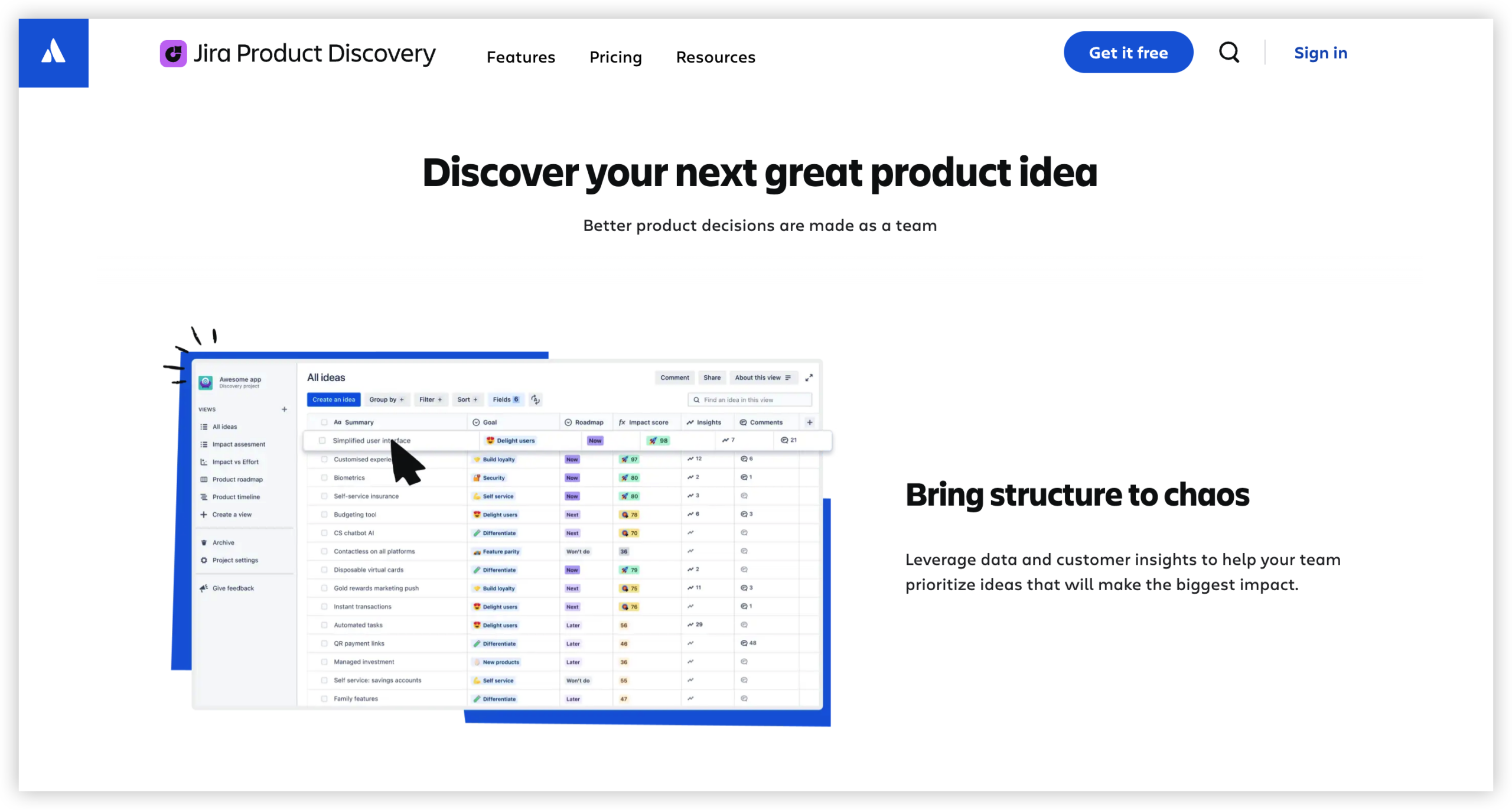
Jira and Jira Product Discovery solve related problems, but they are not interchangeable. Jira focuses heavily on planning and delivering work. Jira Product Discovery focuses on deciding what deserves attention.
| Need |
More suitable direction |
Why it matters |
| Track tickets and delivery tasks |
Jira |
Teams can manage workflows, sprints, assignments, and progress. |
| Prioritize product opportunities |
Jira Product Discovery |
Product teams can organize ideas and compare potential outcomes. |
| Coordinate multiple delivery teams |
Jira with advanced planning |
Leaders can connect work across projects and dependencies. |
| Connect business outcomes with execution |
Jira plus appropriate planning features |
Teams can review whether delivery supports strategic priorities. |
Jira Product Discovery commonly has its own plan structure and creator-based pricing model. Some collaborators may have different access rules than people who create and manage ideas.
Here’s why this distinction matters: buying the wrong product can leave you paying for capabilities your team rarely uses.
Features That Influence the Total Cost
Price is only one part of the decision. The right plan should support the way your team actually works.
Goal Hierarchies
A basic hierarchy might connect company objectives to team initiatives and individual work items. A complex hierarchy may include themes, portfolios, programs, projects, and tasks.
More layers increase planning value, but they also demand stronger configuration and governance.
Cross-Project Planning
If every goal belongs to one project, basic Jira planning may be enough. If one goal spans six projects, cross-project visibility becomes much more important.
For example, a “reduce checkout failures” objective might involve application development, infrastructure, analytics, and customer support.
Reporting and Progress Reviews
Some teams need simple status updates. Others need dashboards, progress indicators, dependency views, and executive reporting.
Choose the lowest plan that gives decision-makers reliable visibility. Otherwise, teams often recreate reports manually in separate tools.
Permissions and Governance
Small teams can manage access with simple project roles. Larger organizations may need tighter controls across departments, regions, and confidential initiatives.
Governance requirements can push you toward a higher plan even when the goal feature itself appears simple.
Automation and Integrations
Automation can update statuses, notify owners, and connect delivery events with planning reviews. Integrations can reduce repeated entry across products.
However, each integration adds maintenance work. Include administration time in your cost assessment.
Hidden Costs to Include in Your Estimate
A subscription invoice rarely captures the entire cost of a goals program. Planning quality also depends on configuration, adoption, and ongoing maintenance.
Setup and Migration
Someone must design goal levels, naming rules, ownership fields, status definitions, and review cycles.
A team migrating from scattered planning practices may spend several workshops creating a consistent structure.
Administration
Administrators maintain permissions, workflows, custom fields, integrations, and reporting views. The workload grows as more teams customize their areas.
One administrator spending four hours each week represents a recurring operating cost, even if the subscription seems affordable.
Training and Adoption
People need to understand when they should create a goal, who owns it, how progress is measured, and when it should be closed.
Without those rules, a team may create dozens of vague objectives. The platform then becomes a collection of labels rather than a planning system.
Unused Seats
Review active access regularly. Former employees, contractors, and occasional collaborators can increase your bill without adding planning value.
A quarterly access review can reveal seats that should be removed or assigned a different access level.
A Practical Way to Compare Jira Goals Plans
The best comparison starts with your planning requirements, not the feature list. Write down what your team must accomplish during a normal planning cycle.
Build a Requirement Checklist
- How many people create or edit goals?
- How many people only view progress?
- Do goals span multiple projects?
- Do you need dependencies and capacity planning?
- Which reports do executives expect?
- Do teams need custom workflows or fields?
- What security and access controls are mandatory?
- How much administration can your team support?
Compare Three Realistic Scenarios
Use a small, medium, and large scenario instead of comparing only your current headcount.
| Scenario |
Example team |
Planning requirement |
| Small |
Eight-person product team |
Basic objectives, sprint delivery, and monthly reviews |
| Medium |
Forty-person department |
Several projects, shared outcomes, and leadership reporting |
| Large |
Two hundred-person organization |
Portfolio planning, governance, dependencies, and formal support |
Then test each scenario against monthly pricing, annual pricing, administration effort, and likely growth.
Run a Small Pilot
Choose one active initiative and connect its objective, milestones, delivery work, and review process.
After two planning cycles, ask whether people updated progress consistently. If they did not, more features may not solve the underlying process problem.
Jira Goals Alternative: ONES.com
ONES.com combines project management and knowledge management in one platform. ONES Project provides project management capabilities, while ONES Wiki supports knowledge management. They are sold separately.

Value Proposition
If your team wants goals, delivery workflows, reporting, and shared knowledge with fewer disconnected plugins, ONES.com provides a unified environment to evaluate.
It can also suit organizations that need self-hosted deployment options, including on-premise, private cloud, or air-gapped environments.
Core Capabilities
- Scattered project and goal tracking → ONES Project: Connect planning and delivery work in a Jira-compatible workflow, helping teams follow progress in one workspace.
- Manual progress reporting → Built-in reporting: Use reporting views to reduce repeated status collection and give managers clearer delivery visibility.
- Rigid workflow structures → Custom workflows and fields: Adapt statuses, fields, and approval paths to match your operating process.
- Unclear sprint execution → Sprint management: Plan iterations, assign work, and review completed items with a consistent delivery rhythm.
- Repetitive administrative work → Automation: Automate routine transitions, notifications, and task actions, reducing avoidable coordination.
- Plugin-heavy Jira environments → Native platform capabilities: Use native functionality where possible, which can reduce dependence on multiple extensions.
- Cloud-only restrictions → Flexible deployment: Choose Cloud, On-Premise, Private Cloud, or Air-gapped deployment according to operational needs.
- Uneven hosted and self-managed features → Feature parity: Maintain the same core feature experience across cloud and self-hosted versions.
- Separate knowledge and project contexts → ONES Wiki: Keep team knowledge connected with project work when your organization licenses both products.
- High initial evaluation cost → Free access for 30 seats: Start with a small team evaluation before planning a broader rollout.
Application Scenarios
Scenario one: A regulated engineering team. The team cannot place sensitive project work in a public cloud environment. An air-gapped deployment gives it a way to manage workflows inside restricted infrastructure.
Scenario two: A growing product organization. Product, engineering, and operations need shared reporting without maintaining several plugins. ONES Project can centralize work management and provide configurable workflows.
Scenario three: A distributed delivery team. Teams need project tracking and internal knowledge in connected environments. ONES Project and ONES Wiki can address those needs when both subscriptions fit the organization.
Common Challenges When Evaluating Goal Pricing
Challenge: You Cannot Identify the Correct Atlassian Product
Solution: Write the required outcome in plain language first. Decide whether you need delivery tracking, product discovery, portfolio planning, or all three.
Challenge: The Advertised Per-User Rate Does Not Match Your Bill
Solution: Check user bands, billing frequency, currency, taxes, and every connected product. Calculate your exact seat count rather than multiplying a headline rate.
Challenge: A Higher Plan Adds Features You Will Not Use
Solution: Map each premium capability to a real process. If no team meeting, report, or workflow depends on it, delay the upgrade.
Challenge: Goal Tracking Becomes Administrative Overhead
Solution: Define a small goal hierarchy, assign one owner, and review progress on a fixed schedule. Avoid creating an objective for every task.
Challenge: Costs Increase as the Team Grows
Solution: Model expected headcount for the next twelve months. Include contractors, occasional collaborators, and new departments in your forecast.
FAQs
Is Jira Goals a separate paid product?
Usually, the phrase refers to goals or planning capabilities connected with a Jira subscription. It is not always a separate product with one universal price. Your cost depends on the specific Atlassian experience, plan, and number of billable seats. Confirm the exact capability in your Jira environment before comparing subscription options.
Does Jira Free include goal tracking?
A free Jira plan may support basic project and work tracking within its published limits. The exact goal capabilities available to you can depend on the feature and product involved. Advanced planning, larger teams, permissions, or cross-project visibility may require a paid tier. Test your intended workflow before treating the free plan as a permanent solution.
Do I need Jira Product Discovery for goals?
You may need Jira Product Discovery when your primary problem is deciding which product opportunities deserve investment. Jira is generally more focused on delivery work, workflows, and project execution. Some teams use both products because discovery and delivery answer different questions. Choose Jira Product Discovery only when opportunity prioritization is a core requirement.
How can I estimate my monthly cost?
Start with the product, plan, and exact number of seats. Then check whether annual billing, user bands, taxes, or connected products change the amount. Add administration, training, and integration effort for a realistic budget. Run the final team size through Atlassian’s current pricing calculator before approval.
Is an alternative worth considering?
An alternative may be worthwhile when your team needs flexible deployment, fewer plugins, custom workflows, or unified project and knowledge management. Compare the complete operating model rather than only the subscription price. Migration effort, training, reporting, security, and administration can outweigh a small difference in seat cost.
Conclusion
Jira Goals pricing is best understood as a product-and-plan question. First identify the exact goals capability, then check the Jira tier, seat count, billing cycle, and connected subscriptions.
But here’s the truth: the cheapest plan is not always the lowest-cost choice. A poor fit can create manual reporting, plugin maintenance, confusing workflows, and wasted seats.
Use a requirement checklist, model realistic team sizes, and run a focused pilot. If Jira’s structure or deployment model does not fit your needs, evaluate ONES.com as a Jira alternative with project management, reporting, custom workflows, automation, and multiple deployment options.