Jira Help Desk: A Practical Setup Guide for Support Teams
Need a better support queue? This Jira help desk setup guide shows how to organize requests, workflows, queues, and SLAs. Click to discover.
A support queue can become chaotic quickly. Requests arrive by email, chat, phone, and hallway conversations, while agents struggle to see ownership, urgency, and progress.
When nothing follows a consistent path, customers wait longer and important issues disappear beneath routine questions. Managers also lack a clear view of response times, recurring problems, and team workload.
But here's the truth: Jira can support a structured help desk when you configure the right request types, queues, workflows, permissions, and service targets. This guide shows you how to set up Jira for support teams, avoid common mistakes, and create a smoother experience for everyone involved.
How to Set Up a Jira Help Desk
A practical Jira help desk setup needs five foundations: a clear intake channel, useful request categories, ownership rules, service targets, and reporting. Follow these steps in order so each configuration supports the next one.
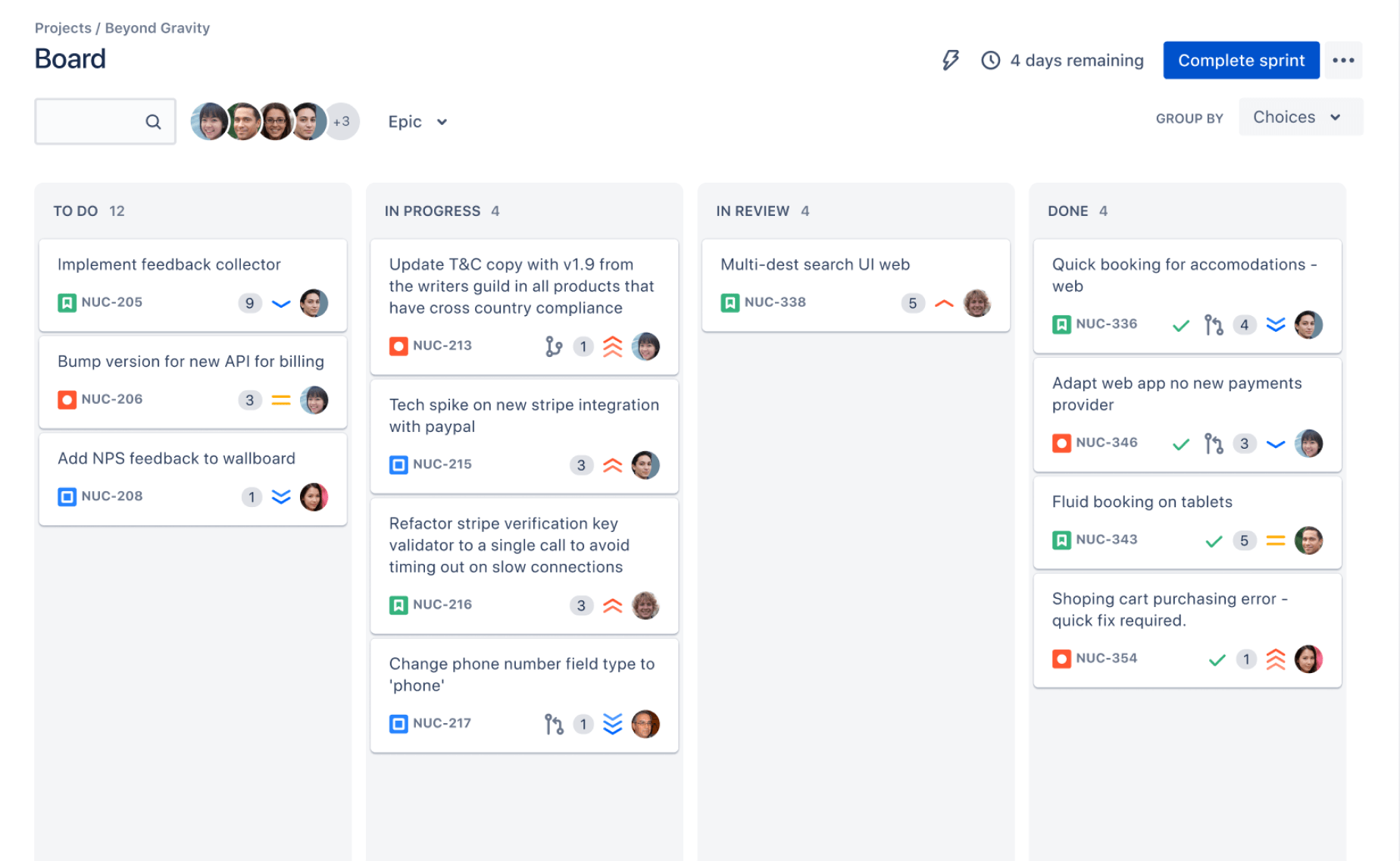
1. Define the support service before configuring Jira
Start by deciding what your team will support. A narrow service boundary keeps the queue manageable and helps people choose the right request type.
For example, an internal IT team might handle account access, laptop problems, software requests, and security incidents. A customer support team might handle billing questions, product defects, account changes, and feature requests.
Write down three decisions:
- Who can submit a request?
- Which teams handle each request category?
- What should happen when a request falls outside the service?
Here's why: unclear boundaries create misrouted tickets. If every question enters one general queue, agents spend time sorting instead of solving.
2. Choose the right Jira service project type
Create a Jira Service Management project rather than treating a regular Jira software project as a support queue. Service projects provide request portals, queues, service-level targets, customer communication, and support-oriented workflows.
Select a project template that resembles your work. An IT service template may include incident and service request patterns, while a customer service template may focus on product questions and account issues.
Keep the first version simple. You can add specialized request types after you understand real request volume. Starting with twenty categories often creates confusion before your team has enough experience to justify them.
3. Build request types around customer language
Request types are the options people see when they ask for help. Use plain language that describes the outcome they need.
Helpful examples include:
- “I cannot sign in”
- “I need access to an application”
- “A device is not working”
- “I want to report a product problem”
- “I have a billing question”
Avoid internal labels such as “IAM escalation” or “P2 operational event” unless your audience already understands them. The request type can use friendly wording while the internal workflow assigns a more technical classification.
Limit each form to the fields needed for the first investigation. Asking for every possible detail increases abandonment and produces incomplete answers anyway.
4. Configure the request portal and email channel
The portal should guide people toward the right request type without making them search through a long menu. Group related choices under headings such as Access, Hardware, Software, Product Support, and Billing.
Enable email intake if your team already receives support requests there. Decide whether replies should create new tickets, add comments to existing tickets, or route through an email address dedicated to a service.
Test the experience as someone who has never seen the configuration. Submit a request from the portal, reply by email, add an attachment, and check whether every message reaches the correct ticket.
The best part? Small tests expose confusing labels before hundreds of requests reach the queue.
5. Design a workflow for each major request family
A workflow shows what happens between request creation and resolution. Keep the first version easy to understand:
- Open
- Triaged
- In progress
- Waiting for requester
- Resolved
- Closed
You may need additional states for approvals, vendor work, security review, or change management. Add them only when they represent a real handoff or decision.
For example, an access request may move from Open to Approval required, then to In progress after a manager approves it. A product defect may move from Triaged to Engineering review before resolution.
Let me explain: a workflow is useful only when each status tells the next person what to do. If “In progress” can mean investigation, waiting for a vendor, or pending approval, reporting becomes difficult.
6. Create queues that reflect daily work
Queues are working views for agents and team leads. Build them around action, urgency, and ownership rather than every possible combination of fields.
A practical set might include:
- Unassigned requests
- High-priority incidents
- Requests due today
- Waiting for requester
- Escalated product issues
- Recently resolved requests
Give each queue a clear purpose and owner. If five queues show nearly identical tickets, agents will not know where to begin.
7. Add automation for repeatable decisions
Automation can assign, notify, prioritize, transition, and close requests when the conditions are predictable.
Useful examples include:
- Assigning access requests to the identity team
- Adding a high-priority flag when a critical service is affected
- Notifying a team lead when a service target is close to breach
- Moving a request to Waiting for requester after a response is sent
- Closing a resolved request after a defined period without a reply
Keep an audit trail for automated actions. If a ticket changes unexpectedly, an agent should be able to understand which rule acted on it.
8. Set service targets that match actual capacity
Service-level targets should reflect urgency and team capacity. A target that looks impressive but cannot be met creates distrust.
For example, you might set:
- Critical outage: first response within 15 minutes
- High-impact incident: first response within one hour
- Standard request: first response within four business hours
- Low-priority question: first response within one business day
Separate response targets from resolution targets. You may acknowledge a request quickly while needing several days to complete it.
9. Configure roles, permissions, and escalation paths
Give each person only the access needed for their role. Agents need to work requests, team leads need queue and reporting visibility, and administrators need configuration control.
Define who can:
- Change priority
- Approve access
- Move a request into an incident process
- View sensitive customer details
- Close or reopen a request
You might be wondering: why define escalation paths so early? Because urgent requests are stressful. If nobody knows who owns the next decision, the ticket can wait while people search for the right contact.
10. Test the complete journey before launch
Run realistic scenarios from start to finish. Test a simple question, a high-impact incident, an approval request, a request that needs more information, and a ticket that should be escalated.
For each scenario, check:
- Whether the requester sees the right form
- Whether the request reaches the correct queue
- Whether the right agent or team receives ownership
- Whether notifications arrive at the right moments
- Whether service targets pause or continue correctly
- Whether the final resolution message is understandable
Invite two or three people outside the support team to test the portal. They will notice unclear terms that specialists often overlook.
What a Strong Jira Service Desk Structure Includes
A reliable support environment connects intake, classification, assignment, communication, and measurement. Each part should help the next person act without asking the requester to repeat information.
Simple intake with enough context
A good form captures the details needed for triage without overwhelming the person asking for help. A login issue may need an affected application, error message, business impact, and preferred contact method.
Conditional fields can keep forms concise. For example, show device details only when someone selects “Hardware problem.” This reduces irrelevant questions and improves completion rates.
Consistent categorization
Categories help you find patterns over time. Use a small set of meaningful values for service, request type, priority, and affected area.
Do not create a separate category for every product variation. If your team supports twelve applications, group them by service family when the same team and workflow handle them.
Visible ownership
Every active request should have a clear owner or assigned team. A shared queue without ownership creates duplicate work and delayed replies.
Use team assignment for triage, then assign an individual when investigation begins. That approach gives managers a workload view while preserving personal accountability.
Useful customer communication
Automated messages should explain what happened and what comes next. “Your ticket was updated” is less helpful than “The access team is reviewing your request and will contact you after approval.”
Use internal comments for team coordination and public replies for requester communication. Train agents to check the comment visibility before sending.
How to Manage Priorities and Escalations
Priority should describe business impact, urgency, or both. A request marked urgent because someone wants a quick answer can hide a genuine outage.
Use an impact-and-urgency model
Impact measures how many people or services are affected. Urgency measures how quickly the situation needs attention.
| Impact | Urgency | Typical priority |
|---|
| Many teams cannot work | Immediate | Critical |
| One department is blocked | High | High |
| One person has a workaround | Normal | Medium |
| General question or minor request | Low | Low |
Share examples with your team. A payment outage affecting every customer is critical. A single user asking how to change a profile setting is usually low priority.
Create escalation triggers
Escalate when a clear condition occurs, such as a service target nearing breach, multiple related reports, a security concern, or a blocked business process.
For instance, three similar tickets within thirty minutes may indicate a wider incident. Automation can alert an incident lead while agents continue gathering details.
Escalation should transfer responsibility, not merely send another notification. Name the next owner and specify the decision required.
Reporting and Continuous Improvement
Reports should help you make decisions. A long list of counts is less valuable than a small set of measures connected to action.
Track the measures that reveal bottlenecks
Start with first-response time, resolution time, reopened requests, service-target breaches, backlog age, and request volume by category.
Suppose resolution time rises while first-response time stays steady. That pattern suggests investigation or approval delays rather than an intake problem.
Compare trends by request type. If access requests take twice as long as general questions, review approvals, required fields, and team capacity for that category.
Review recurring requests
Repeated questions often point to a missing help article, unclear product behavior, or a broken process. Choose the top recurring request each month and address its cause.
For example, if many people ask how to connect to a virtual private network, publish a short guide with screenshots and troubleshooting steps. Then measure whether related tickets decline.
Hold a regular queue review
A weekly review can cover aging requests, blocked work, repeated escalations, and automation errors. Keep the meeting focused on decisions.
- Which request needs a new owner?
- Which category causes confusion?
- Which automation rule needs adjustment?
- Which help article needs improvement?
Monthly reviews can examine broader patterns, including staffing, service targets, and demand by department.
Common Jira Help Desk Configuration Mistakes
Many support teams encounter the same problems during setup. Recognizing them early saves rework.
Too many request types
A long portal menu makes classification harder. Start with the most common requests, then add categories when real demand shows a meaningful difference in routing or workflow.
Overcomplicated workflows
Every extra status creates another choice for agents and another condition for reports. If two statuses lead to the same action, combine them.
Automation without safeguards
A rule that closes every resolved request after two days may harm a customer who needs more time. Add exceptions for high-impact, reopened, or regulated requests.
Unclear ownership
Assigning everything to a broad team can make the queue look organized while nobody feels responsible. Use team ownership during triage and individual ownership during active work.
Ignoring the requester experience
Support teams sometimes optimize internal views while leaving the portal confusing. Test every form from the requester’s perspective, including confirmation messages and follow-up emails.
Jira Help Desk Solution: ONES.com
ONES.com is a unified platform for project management and knowledge management. For support teams seeking an alternative to Jira Service Management, ONES Project provides Jira-compatible workflows, service-oriented work management, and deployment flexibility.
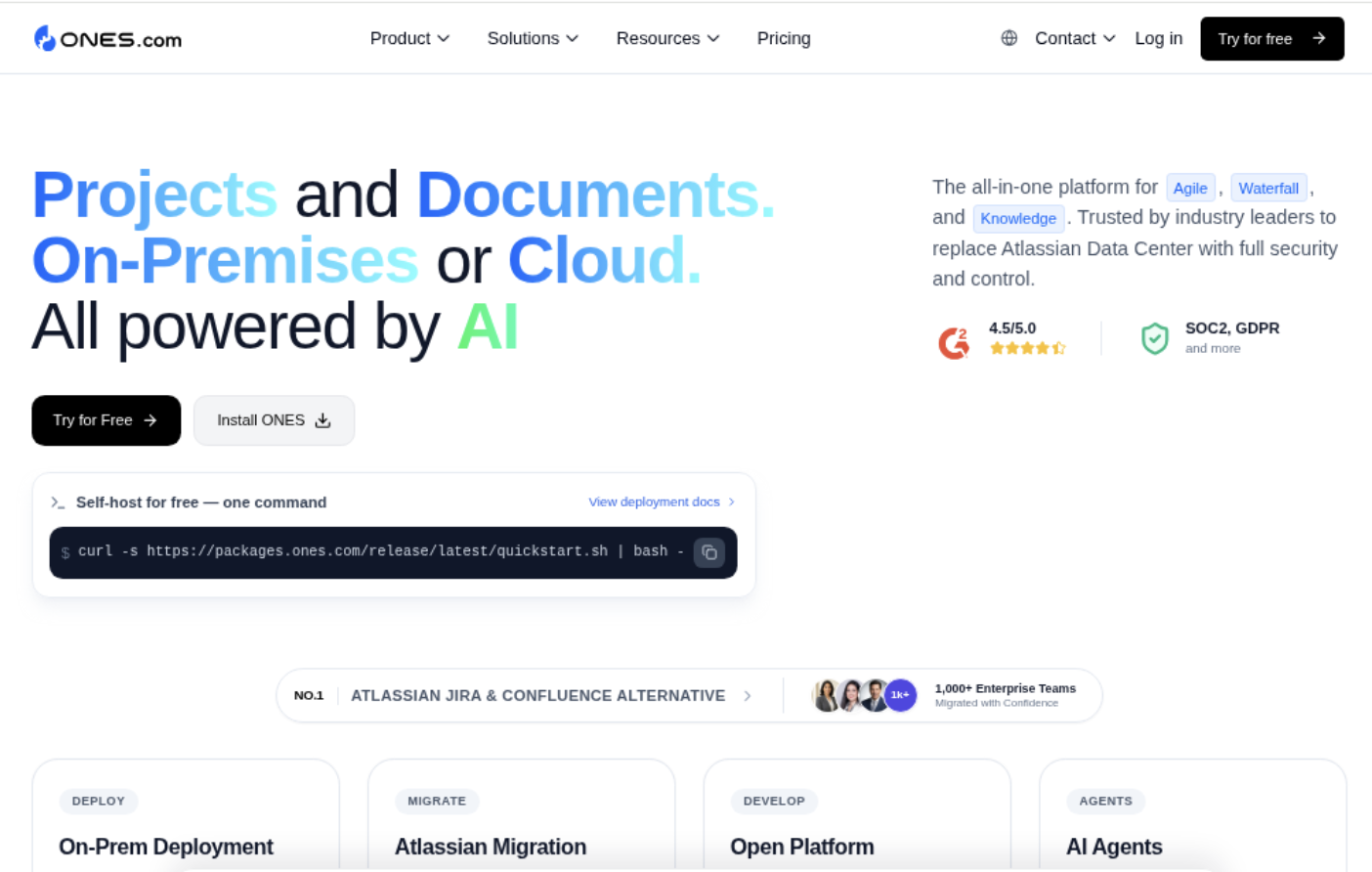
The value is straightforward: you can connect support work with project delivery and internal knowledge while reducing the need to stitch together multiple plugins.
Core Capabilities
- Scattered support work → ONES Project centralizes requests, tasks, ownership, and progress → agents gain one operational view of active work.
- Rigid workflows → Custom workflows and fields reflect different request types → access requests, incidents, and product issues can follow appropriate paths.
- Manual status chasing → Automation handles repeatable assignments, transitions, and notifications → agents spend less time on routine coordination.
- Limited delivery visibility → Sprint management connects support improvements with planned project work → recurring issues can move into structured development cycles.
- Plugin-heavy reporting → Built-in reporting shows workload, progress, and service patterns → managers can review performance without assembling separate reporting tools.
- Inconsistent Jira processes → Jira-compatible workflows reduce the learning curve for familiar teams → people can preserve useful working habits while moving to another platform.
- Knowledge separated from support activity → ONES Wiki provides a connected knowledge management space → agents can maintain help content alongside operational work.
- Deployment restrictions → Cloud, On-Premise, Private Cloud, and Air-gapped options support different environments → teams can select an operating model that matches security requirements.
- Growth concerns → The free plan supports up to 30 seats → smaller teams can test the working model before expanding.
Application Scenarios
Internal IT support: An IT team can create request types for access, equipment, software, and incidents. ONES Project can route each category, track approvals, and connect recurring problems to improvement work.
Customer-facing product support: A support team can record customer issues, prioritize high-impact defects, and hand engineering work into a planned sprint. The support team retains visibility without managing separate status lists.
Restricted environments: A team with strict network requirements can use an On-Premise, Private Cloud, or Air-gapped deployment. Full feature parity between cloud and self-hosted versions helps preserve the same operating model across environments.
Common Challenges and Practical Solutions
Challenge: Requests arrive through too many channels
Solution: Keep one central queue while allowing practical intake methods such as a portal and dedicated email. Explain which channel is best for urgent incidents and which is suitable for routine requests.
Challenge: Agents classify requests differently
Solution: Publish short classification examples. Review borderline cases during team meetings and adjust request labels when the same confusion appears repeatedly.
Challenge: Service targets are missed
Solution: Check whether the problem comes from volume, assignment delay, approval waiting time, or unrealistic targets. Address the bottleneck instead of simply lowering the target.
Challenge: Customers receive vague updates
Solution: Give agents response templates with space for specific details. Every update should explain the current status, the next action, and when the next update should arrive.
Challenge: Reports do not lead to improvement
Solution: Connect each metric to an owner and a decision. If backlog age rises, define who reviews aging requests and what action follows the review.
FAQs
Is Jira suitable for a small help desk?
Yes. Jira Service Management can work well for a small team when you keep request types, workflows, and queues focused. Start with the most common support needs instead of reproducing every possible scenario. A team of five may need only six request types and three main queues. Expand the configuration after reviewing real request patterns.
What is the difference between Jira and Jira Service Management?
Jira is commonly associated with project and software work, while Jira Service Management adds service-oriented capabilities. These include customer portals, request types, queues, service-level targets, and support communication. If you are building a help desk, use the service management product so the requester experience and operational controls match support work.
How many request types should a new support project have?
There is no universal number, but a focused starting point is usually better than a detailed catalog. Begin with categories that route to different teams, require different information, or follow different workflows. If two request types receive the same treatment, combine them until demand proves a distinction is useful.
Should every support request have a service-level target?
Every request should have an expected response, but the target can vary by priority. Critical incidents may need minute-level response targets, while general questions may use business-day targets. Define both response and resolution expectations where appropriate, and exclude waiting periods only when your policy clearly explains the reason.
How can I prevent the help desk from becoming too complicated?
Review every field, status, automation rule, and queue by asking one question: does this help someone make a faster or better decision? Remove items that add reporting noise without changing action. Test the portal regularly with people outside the support team. Their confusion often reveals unnecessary complexity.
Can a help desk connect support work with product development?
Yes. A support ticket can identify a defect, improvement, or recurring customer need that belongs in product planning. Define a handoff process so the development team receives context, priority, and impact without forcing support agents to duplicate work. Project management platforms such as ONES Project can connect these workflows in one environment.
Conclusion
A successful Jira help desk begins with a clear service boundary, simple request types, practical workflows, useful queues, realistic service targets, and visible ownership.
Then improve it through testing and review. Measure response time, resolution time, backlog age, escalations, and repeated questions. Each pattern should lead to a concrete change, such as a better help article, a new automation rule, or a clearer escalation path.
But here's the truth: configuration alone cannot fix an unclear support process. Define how your team works first, then make Jira reinforce that process. If your team needs a Jira alternative with project management, knowledge management, custom workflows, reporting, and flexible deployment options, ONES.com is another platform worth evaluating.