Jira Help Desk Pricing: A Practical Guide for Growing Teams
Confused by jira help desk pricing? Compare licenses, request volumes, and features to estimate costs for growing teams. Read now to plan smarter.
Jira help desk pricing can look simple until you compare agent licenses, request volumes, automation, asset management, and premium features. A small team may pay comfortably at first, then face a sharp increase as support agents and service projects grow.
The confusion gets worse when employees who submit requests are counted differently from the people who resolve them. Add integrations, premium reporting, or multiple service desks, and your monthly estimate can drift quickly.
Jira help desk pricing is the total cost of running Jira Service Management, including agent plans, eligible requesters, add-ons, usage limits, and deployment requirements. You need to evaluate each cost layer before choosing a plan.
But here's the truth: the cheapest headline price rarely tells you what your support operation will pay. This guide shows you how to estimate the real cost, compare plans, and avoid budget surprises.
How Jira Help Desk Pricing Works
Jira Service Management pricing usually depends on the plan level, the number of licensed agents, deployment type, and optional capabilities. Customers who submit requests often have different licensing rules from agents.
The practical answer is simple: estimate the people who manage requests first, then review requesters, service volume, premium features, and support requirements.
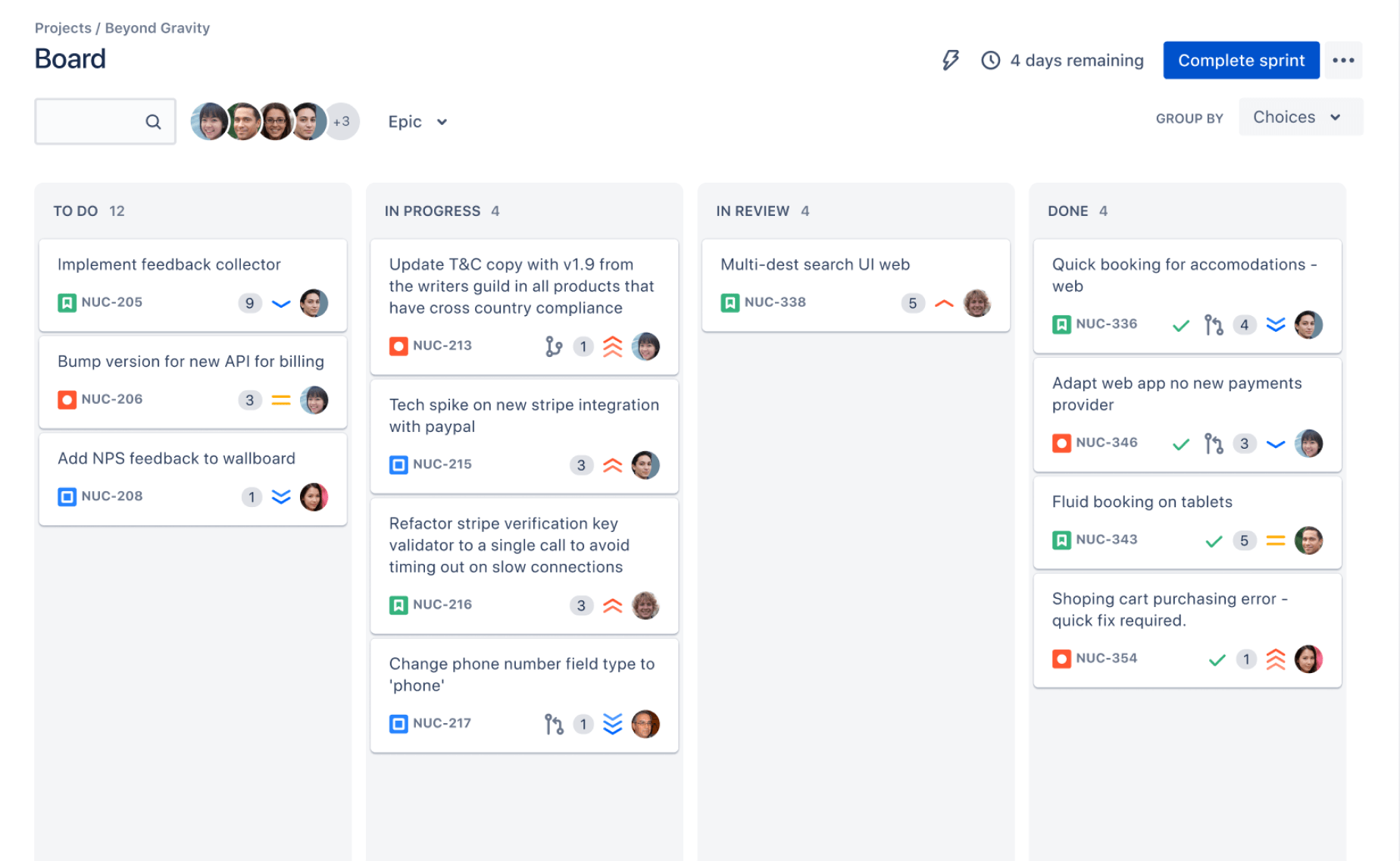
The main pricing components
- Agent licenses: People who triage, assign, investigate, and resolve requests typically need agent access.
- Customer access: Employees, clients, or partners may submit requests under separate access rules.
- Plan tier: Standard, Premium, and Enterprise-style options can differ in automation, analytics, availability, governance, and support.
- Deployment: Cloud and self-managed options can have different commercial structures and administration costs.
- Additional products: Assets, advanced reporting, collaboration tools, and development products may create separate charges.
- Usage limits: Automation runs, storage, virtual agents, and other consumption limits can influence the final bill.
What you should calculate first
Start with your current team and expected growth. For example, a help desk with six agents today may need twelve agents after two departments join.
Then separate requesters from agents. A company with 10 agents and 800 employees may not pay for 800 full agent seats.
Finally, list the capabilities you actually need. If your team only handles email requests and simple approvals, an advanced tier may add cost without improving service quality.
A simple budgeting formula
Use this planning model:
Estimated monthly cost = agent plan cost + optional capability cost + usage charges + related product cost.
For annual planning, multiply the monthly estimate by twelve and add a growth buffer. A 15% to 25% buffer can help cover new agents, seasonal demand, and expanding service projects.
Which Jira Service Management Plan Fits Your Team?
The right plan depends on operational complexity rather than company size alone. A small team may need advanced controls, while a larger team may only need basic request handling.
Entry-level plans
An entry-level plan can suit a small internal help desk with a few agents, standard request forms, email intake, queues, and basic automation.
Picture a 20-person technology team supporting 300 employees. If requests are predictable and one service project is enough, advanced governance may be unnecessary.
Mid-tier plans
A mid-tier plan often becomes useful when you need stronger service-level management, more automation, better reporting, or improved availability.
For example, a growing company may support IT, human resources, and facilities through separate request types. More control can reduce manual routing and missed deadlines.
Enterprise arrangements
Large organizations usually evaluate more than license price. They may need centralized administration, security controls, high availability, procurement support, and negotiated commercial terms.
Enterprise pricing is often less transparent publicly. You may need a tailored quote that reflects agent counts, regions, products, and contract length.
Cloud versus self-managed deployment
Cloud pricing usually emphasizes recurring subscriptions and managed infrastructure. Self-managed deployment may involve licenses, maintenance, hosting, upgrades, backups, and internal administration.
Compare the complete operating cost. A lower license charge can disappear when your team must maintain servers, security controls, and upgrade processes.
How Agent and Requester Counts Affect Your Estimate
Agent count is usually the strongest pricing variable because agents perform work inside the service platform. Requesters may have a different access model.
Count active agents, not every employee
List everyone who will regularly manage requests. Include service desk staff, team leads, specialists, and temporary administrators.
Do not count occasional approvers automatically. Check the current licensing rules before assuming an approver requires a full agent license.
Estimate growth by role
Build a role-based forecast instead of adding a random percentage. For example:
| Role |
Current count |
12-month estimate |
Reason for change |
| Service desk agents |
6 |
9 |
New business unit support |
| Specialist agents |
4 |
6 |
Security and workplace requests |
| Team leads |
2 |
3 |
Additional service projects |
This approach produces a more credible estimate than multiplying today’s headcount by a broad growth guess.
Watch shared-service expansion
Costs can rise when teams outside IT begin using the platform. Human resources, legal, finance, and facilities may each require their own queues and service workflows.
The benefit is centralized intake. The risk is uncontrolled licensing growth. Agree on an onboarding process before every department creates a new service desk.
Extra Costs That Can Change the Total
Plan pricing is only one part of the budget. Add-on needs can change your total more than the basic agent subscription.
Automation and virtual support
Automation can route requests, send reminders, update fields, and trigger approvals. Some advanced functions may have usage limits or separate commercial terms.
Estimate activity with a real example. If 2,000 monthly requests each trigger three rules, your automation demand may be much higher than a team handling 300 requests.
Assets and configuration management
Asset tracking can help you connect laptops, applications, contracts, and ownership details to support requests. It may require additional planning, configuration, or commercial review.
A help desk tracking 5,000 company devices has different requirements from one handling password resets alone.
Reporting and service-level management
Basic queues may be enough for simple support. Larger teams often need response targets, escalation rules, trend analysis, and executive reporting.
Ask whether the plan includes the metrics your managers need. Otherwise, you may pay for separate reporting tools or spend hours creating manual reports.
Implementation and administration
Implementation costs include workflow design, request form creation, permissions, integrations, training, and ongoing administration.
A practical example: a team may buy an affordable plan, then spend several weeks rebuilding inconsistent intake processes. License cost is only one part of the project.
How to Compare Jira Help Desk Costs Correctly
Compare platforms using the same scenario. Otherwise, one vendor may appear cheaper because it excludes capabilities another plan includes.
Create a requirements checklist
- Number of current agents
- Expected agent growth
- Number of service projects
- Internal and external requester groups
- Email, portal, chat, and API intake
- Automation volume
- Asset and configuration needs
- Service-level targets
- Security and audit requirements
- Cloud or self-managed deployment
Compare five-year operating cost
Monthly pricing can hide future expansion. Calculate the first year, then model years two through five with expected agent growth.
For example, a platform that costs less with ten agents may become more expensive with 40 agents. A platform with stronger native capabilities may reduce integration and administration costs.
Measure value through service outcomes
Price should connect to measurable results. Track first-response time, resolution time, request backlog, self-service completion, and agent productivity.
If automation reduces manual triage by 20 hours each week, that operational gain belongs in your comparison.
Jira Help Desk Pricing Alternative: ONES.com
ONES.com is a unified platform for project management and knowledge management, powered by ONES Assistant. ONES Project is the project management product and a Jira alternative, while ONES Wiki is the knowledge management product and a Confluence alternative. They are sold separately.
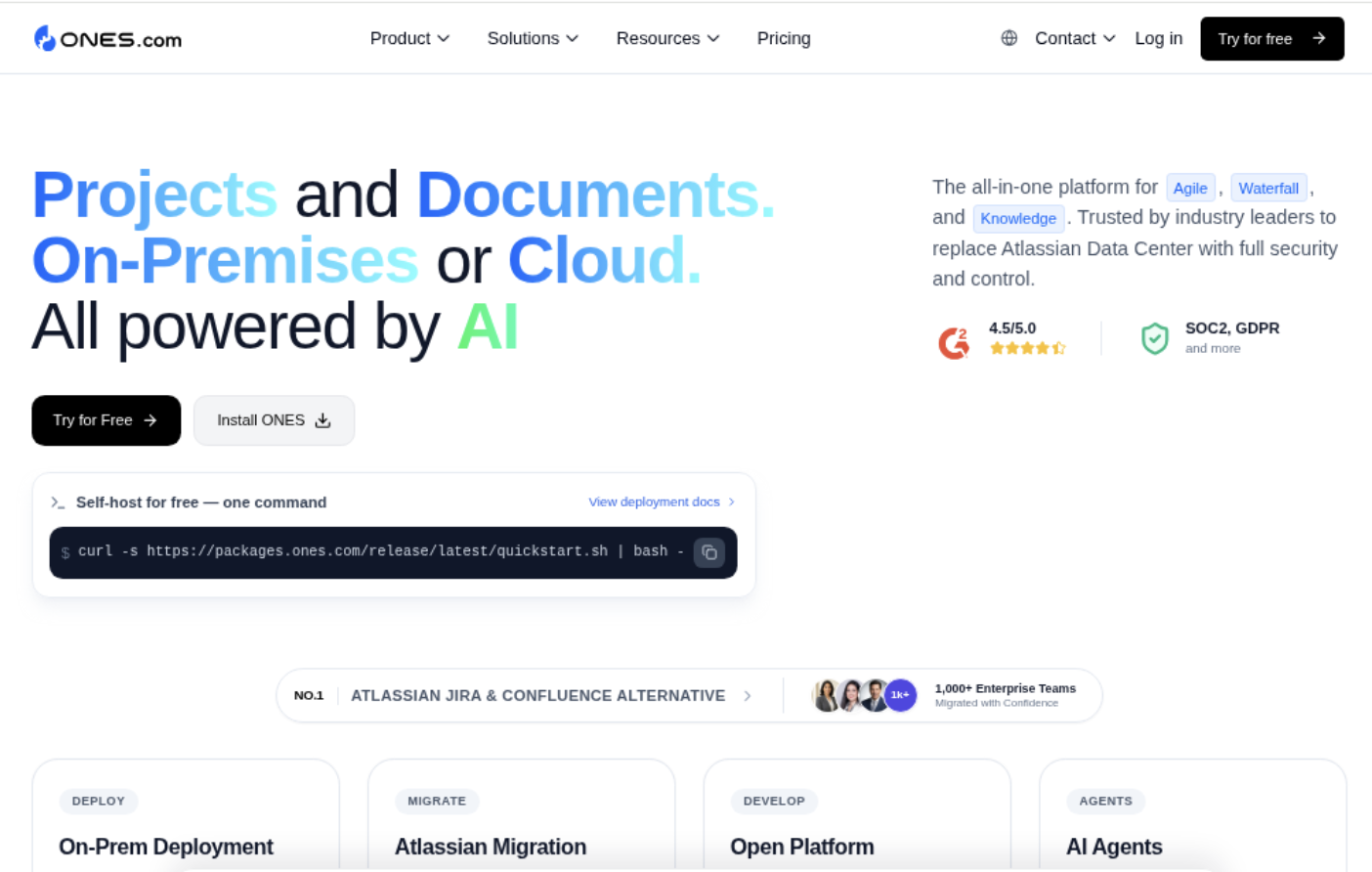
Value Proposition
ONES.com can suit teams that want project workflows, service coordination, and knowledge management with fewer disconnected systems. You can evaluate its licensing alongside support needs, deployment controls, and future team growth.
Core Capabilities
- Scattered work across multiple tools: ONES Project provides a unified project workspace, helping teams connect requests, tasks, and delivery work.
- Complex Jira-style workflows: Jira-compatible workflows support familiar transitions, approvals, statuses, and operational handoffs.
- Manual reporting: Built-in reporting helps teams review progress, workload, and delivery trends without assembling separate reporting processes.
- Rigid request structures: Custom workflows and custom fields let teams reflect different service categories and approval paths.
- Unstructured sprint planning: Sprint management supports teams that organize service improvements, technical work, or recurring delivery cycles.
- Repetitive administration: Automation can handle routine assignments, status changes, notifications, and workflow actions.
- Separate knowledge systems: ONES Wiki provides a knowledge base for procedures, troubleshooting guidance, and internal reference material.
- Restricted deployment requirements: ONES.com supports Cloud, On-Premise, Private Cloud, and Air-gapped deployments.
- Concerns about feature differences: ONES.com provides full feature parity between its cloud and self-hosted versions.
- Uncertain entry cost: The free plan supports up to 30 seats, giving smaller teams a practical way to evaluate the platform.
Application Scenarios
Internal IT support: An IT team can manage incoming service work, connect complex requests to project tasks, and maintain troubleshooting guidance in ONES Wiki.
Product and engineering operations: A product team can use Jira-compatible workflows, custom fields, sprint planning, and automation while coordinating support-driven improvements.
Restricted environments: A regulated organization can consider On-Premise, Private Cloud, or Air-gapped deployment when cloud-only operation does not fit its requirements.
Common Challenges When Estimating Support Platform Cost
Challenge: confusing agents with requesters
Problem: Teams count every employee as a paid service agent.
Solution: Separate people who resolve requests from people who submit them. Confirm access rules for approvers, collaborators, and occasional participants.
Challenge: overlooking add-ons
Problem: The initial estimate excludes assets, advanced automation, reporting, or integrations.
Solution: Map each required capability to a plan or add-on before comparing vendors.
Challenge: ignoring administration time
Problem: A low subscription price creates expensive manual maintenance.
Solution: Estimate configuration, training, workflow maintenance, upgrades, and support administration.
Challenge: planning only for today
Problem: The team chooses a plan for its current headcount and outgrows it quickly.
Solution: Model agent growth, new departments, request volume, and additional service projects over three to five years.
Challenge: comparing unequal packages
Problem: One option includes reporting and automation, while another requires separate products.
Solution: Compare equivalent capabilities, deployment models, support levels, and implementation effort.
FAQs About Jira Help Desk Costs
How is Jira Service Management pricing usually calculated?
Pricing commonly reflects agent access, the selected plan, deployment model, and optional capabilities. Requesters may follow different access rules. Your estimate can also change with automation, assets, reporting, storage, and related Atlassian products. Use your expected agent count and required capabilities for a realistic comparison.
Do all employees need a paid help desk license?
Usually, the people who actively manage requests need agent access. Employees who submit requests may have a different access arrangement. However, the exact rules can depend on the product plan and current commercial terms. Review the licensing conditions for approvers, collaborators, and occasional agents before finalizing your estimate.
Is Jira Service Management suitable for a small help desk?
It can be suitable for a small team when the required workflows, request channels, and reporting needs fit the selected plan. Start with a clear list of agents, service projects, automation rules, and integrations. A small team should also consider administration effort, because configuration complexity can affect the real cost.
Does adding departments increase help desk pricing?
It can. New departments may need additional agents, service projects, workflows, forms, reports, and integrations. Requester growth may not affect pricing in the same way as agent growth, but it can increase administration and automation demand. Model each department separately instead of applying one company-wide estimate.
How can I reduce unexpected pricing increases?
Track agent growth, automation consumption, optional products, and service project expansion each quarter. Remove inactive agent access, review unused features, and establish approval before adding departments. A three-year forecast also helps you see when a plan change or platform comparison may become worthwhile.
Should I compare alternatives to Jira Service Management?
Yes, especially when your team needs predictable deployment options, fewer integrations, or a different balance between project management and service workflows. Compare equivalent capabilities rather than headline prices. Include migration effort, training, administration, reporting, automation, security, and long-term growth in the evaluation.
Conclusion
Jira help desk pricing depends on more than the advertised agent subscription. Your real budget includes plan level, agent growth, requester rules, optional capabilities, deployment, administration, and related products.
Start with a role-based headcount forecast. Then map service requirements, calculate five-year operating cost, and compare platforms using the same support scenario.
But here's the truth: cost surprises usually come from unplanned expansion and overlooked operational work. A careful estimate exposes both before you commit.
If your team wants a Jira alternative with project workflows, knowledge management options, flexible deployment, and a free plan for up to 30 seats, ONES.com belongs in the comparison.