Jira Helpdesk Pricing: Cost Planning Guide for Teams (2026)
Unsure about Jira helpdesk pricing? Learn to forecast licenses, growth, add-ons, and hidden costs. Read now to plan your 2026 budget.
Jira helpdesk pricing can look simple until you add agents, request volume, automation, premium features, and implementation work. A plan that fits five agents may become expensive when your support team grows to 25.
That uncertainty makes budgeting difficult. You may compare the monthly subscription and still miss costs for integrations, reporting, migration, training, and administration. A low entry price can create a high total cost when your service desk needs more capacity.
But here's the truth: you can plan the budget accurately by separating license costs from operational costs. This guide explains the pricing structure, shows how to estimate your real monthly spend, and compares Jira Service Management with a practical alternative for teams that need predictable growth.
Jira Helpdesk Pricing: What You Pay For
Jira helpdesk pricing is usually based on service agents, plan level, billing term, and optional features. Customers who submit requests generally do not consume agent seats, while staff who manage, assign, and resolve requests usually do.
At a high level, Jira Service Management typically offers Free, Standard, Premium, and Enterprise options. Exact rates, limits, and included features can change, so treat published prices as a planning reference rather than a permanent quote.
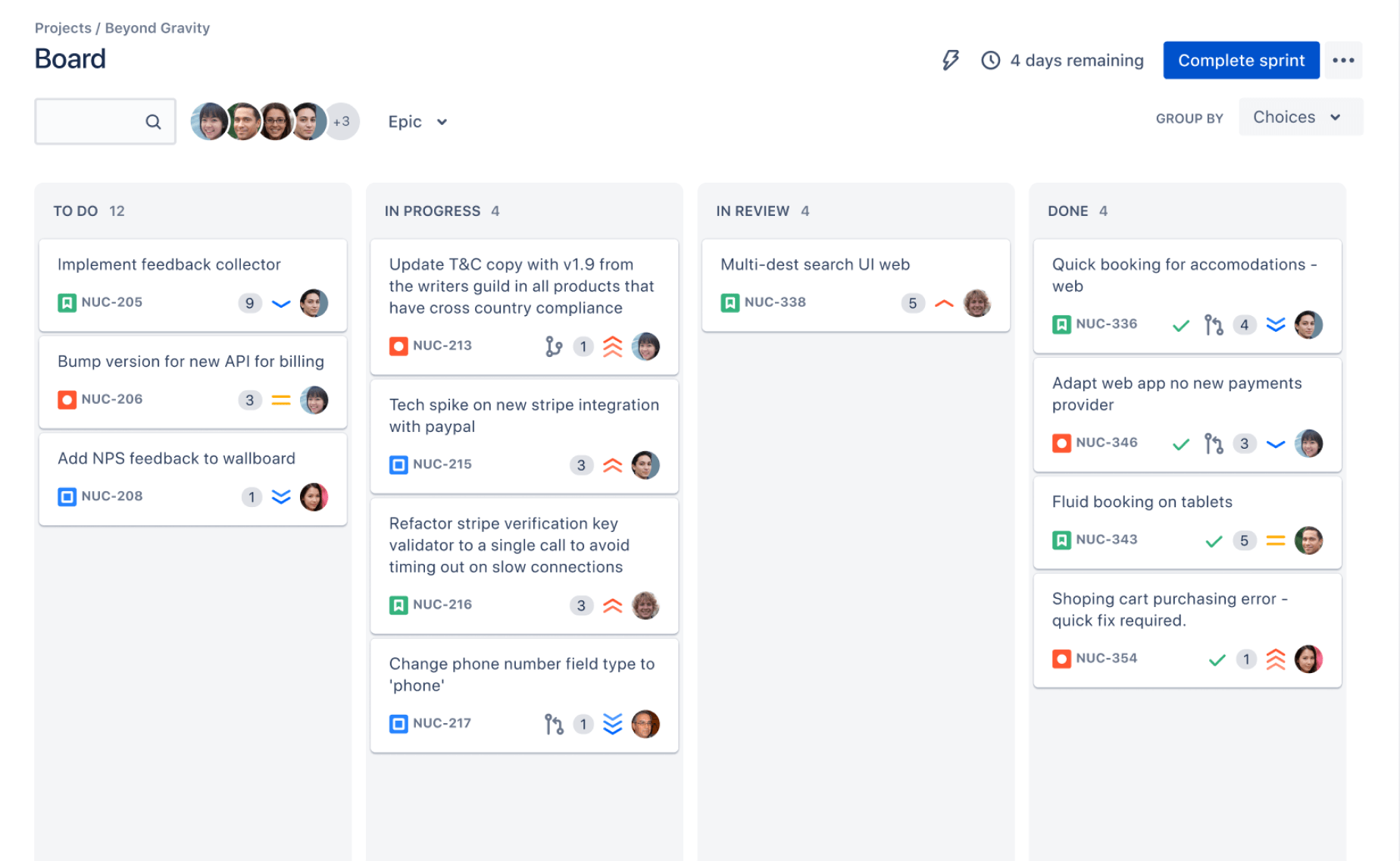
How the main plans differ
| Plan level |
Best fit |
Typical planning considerations |
| Free |
Small teams testing a basic helpdesk |
Limited agents, storage, automation, and administrative controls |
| Standard |
Growing internal or customer-facing support teams |
More agents, broader service management features, and stronger collaboration |
| Premium |
Organizations needing scale, advanced operations, and higher resilience |
Higher cost, advanced capabilities, and more capacity for complex service workflows |
| Enterprise |
Large organizations with governance and commercial requirements |
Custom pricing, contract terms, security reviews, and enterprise support |
The most important distinction is between requesters and agents. A company may have 2,000 employees submitting IT requests but only 12 people handling them. The subscription calculation usually focuses on those 12 agents.
Pricing variables that affect the final bill
- Agent count: More service desk staff generally means a larger subscription.
- Billing term: Monthly billing offers flexibility, while annual contracts may have different rates and commitments.
- Plan level: Premium capabilities can raise the cost substantially over a standard setup.
- Product mix: Jira Service Management may be paired with Jira, Confluence, or other Atlassian products.
- Automation usage: Rules, virtual agents, and workflow actions may have usage limits or separate considerations.
- Marketplace apps: Reporting, asset management, time tracking, and approval extensions can add recurring fees.
- Deployment model: Cloud and self-managed arrangements have different licensing and administration implications.
How to Calculate Your Total Helpdesk Cost
Start with a simple formula:
Total monthly cost = subscription fees + add-ons + implementation cost + administration cost + training cost.
This approach prevents a common mistake: treating the monthly license as the entire helpdesk budget.
Step 1: Count the right people
List everyone who will triage, assign, investigate, approve, or close requests. Include occasional agents, team leads, and backup staff.
For example, imagine an organization with eight IT agents, four HR agents, and three facilities agents. The planning number is 15 agents, even if only eight people work in the helpdesk every day.
Step 2: Choose the required plan level
Write down the capabilities your team genuinely needs. These may include service-level agreements, approval flows, asset tracking, audit controls, advanced reporting, or higher availability.
Then compare those requirements against each plan. Paying for Premium only makes sense when its additional capabilities solve a measurable operational problem.
Step 3: Estimate add-on expenses
Review every integration and extension your team expects to use. Common examples include monitoring connectors, identity management, asset discovery, chat tools, email services, and analytics platforms.
A service desk with a $500 monthly subscription can easily cost much more after several paid extensions. Record each add-on separately so you can see what is essential.
Step 4: Add implementation and migration work
Implementation may involve request types, queues, workflows, permissions, notification rules, knowledge articles, and reporting dashboards.
If an administrator spends 80 hours configuring the platform at an internal rate of $50 per hour, the initial setup represents $4,000 in labor. That cost matters even when no consultant is hired.
Step 5: Model growth
Calculate the budget at your current size, then repeat it for 12 and 24 months. Use realistic hiring assumptions rather than the smallest possible team.
A helpdesk growing from 10 to 20 agents can cross a pricing threshold or require a higher plan. Modeling that change early gives you time to negotiate, redesign processes, or compare another platform.
Step 6: Calculate cost per resolved request
Divide the monthly operating cost by the number of resolved requests. If your total monthly cost is $3,000 and the team resolves 1,200 requests, the operating cost is $2.50 per request.
This metric helps you compare plans based on productivity. A more expensive plan may be reasonable if automation reduces repetitive work and increases resolution capacity.
What Is Included in a Jira Helpdesk Budget?
Subscription fees are only one part of the financial picture. A realistic budget should include the people, services, and controls needed to keep the helpdesk reliable.
Licensing and user access
Agent licensing is usually the largest predictable expense. Keep a monthly count of active agents and remove unused access during regular reviews.
Do not confuse employee headcount with agent headcount. A self-service portal can support a large employee population without giving every employee an agent license.
Configuration and administration
Someone must maintain queues, request forms, permissions, service-level targets, notifications, and workflow rules. This work continues after launch.
A platform that saves money on licensing may still cost more if it requires constant manual administration. Measure both subscription expense and staff time.
Integrations and extensions
Integrations connect the helpdesk with identity providers, monitoring tools, email, chat, asset management, and business systems. Each connection can introduce licensing, maintenance, and troubleshooting work.
For example, an approval extension may simplify purchasing requests while creating another renewal, access, and support obligation. Include those responsibilities in the budget.
Training and adoption
Agents need training on queues, internal notes, escalation rules, and service-level expectations. Requesters need clear guidance about choosing the right portal category.
Poor adoption creates duplicate requests and unnecessary email conversations. A small training investment can reduce that waste.
Governance and compliance
Regulated teams may need audit reviews, access recertification, retention controls, and formal change management. These requirements can affect the plan level and administration workload.
Include security reviews before signing a long-term agreement. Late compliance discoveries often create unplanned costs.
Cloud, Self-Managed, and Enterprise Cost Differences
Cloud pricing is generally easier to start because infrastructure maintenance sits outside your internal IT workload. You pay a recurring subscription and configure the service online.
Self-managed deployment can provide more control over hosting, network access, and upgrade timing. It may also require servers, backups, monitoring, patching, and specialist administration.
Cloud cost planning
Cloud budgeting works well when you want predictable recurring spending. However, you should still estimate agent growth, add-ons, usage limits, and data retention.
For example, a remote support team may prefer cloud access for quick deployment. A regulated engineering group may need tighter control over network boundaries and operational changes.
Self-managed cost planning
Self-managed pricing requires a broader calculation. Add hosting, storage, backup, disaster recovery, upgrades, security monitoring, and staff time.
The subscription may appear lower in one comparison, while the internal operating cost is higher. Compare the complete service, not only the license line.
Enterprise agreement planning
Large organizations may negotiate custom commercial terms. The final agreement can depend on agent volume, support requirements, security conditions, deployment choices, and contract length.
Prepare a clear usage forecast before negotiations. Include current agents, expected growth, departments, integrations, and service availability requirements.
Ways to Control Helpdesk Costs
The best savings usually come from better design rather than simply choosing the cheapest tier. A well-structured helpdesk reduces manual work and limits unnecessary access.
Reduce avoidable agent seats
Review access every quarter. Remove former employees, temporary accounts, and people who only need request visibility.
If a manager approves requests occasionally, consider whether a dedicated agent license is necessary. Your permission model should match actual responsibilities.
Build a useful self-service portal
Use clear categories such as “password reset,” “new equipment,” and “software access.” Each category should ask only for information needed to begin resolution.
When employees find answers or submit complete requests, agents spend less time clarifying basic details.
Automate repetitive routing
Automation can assign requests by category, location, urgency, or department. It can also send reminders when a service-level target is approaching.
Start with high-volume work. Automating 500 password requests produces more value than automating a rare request that appears twice a month.
Limit paid extensions
Before purchasing an app, confirm whether the native platform already handles the requirement. Then estimate the annual cost and maintenance effort.
Several small subscriptions can become a major expense. Keep an inventory of every extension, owner, renewal date, and business purpose.
Track service desk economics
Monitor agent utilization, first response time, resolution time, reopen rate, self-service success, and cost per request.
These measures show whether a higher plan improves outcomes. They also reveal when a process problem is being mistaken for a licensing problem.
Jira Helpdesk Pricing Alternative: ONES.com
ONES.com is a unified platform for project management and knowledge management, powered by ONES Assistant. ONES Project is the project management product and a Jira alternative, while ONES Wiki is the knowledge base product and a Confluence alternative. They are sold separately.
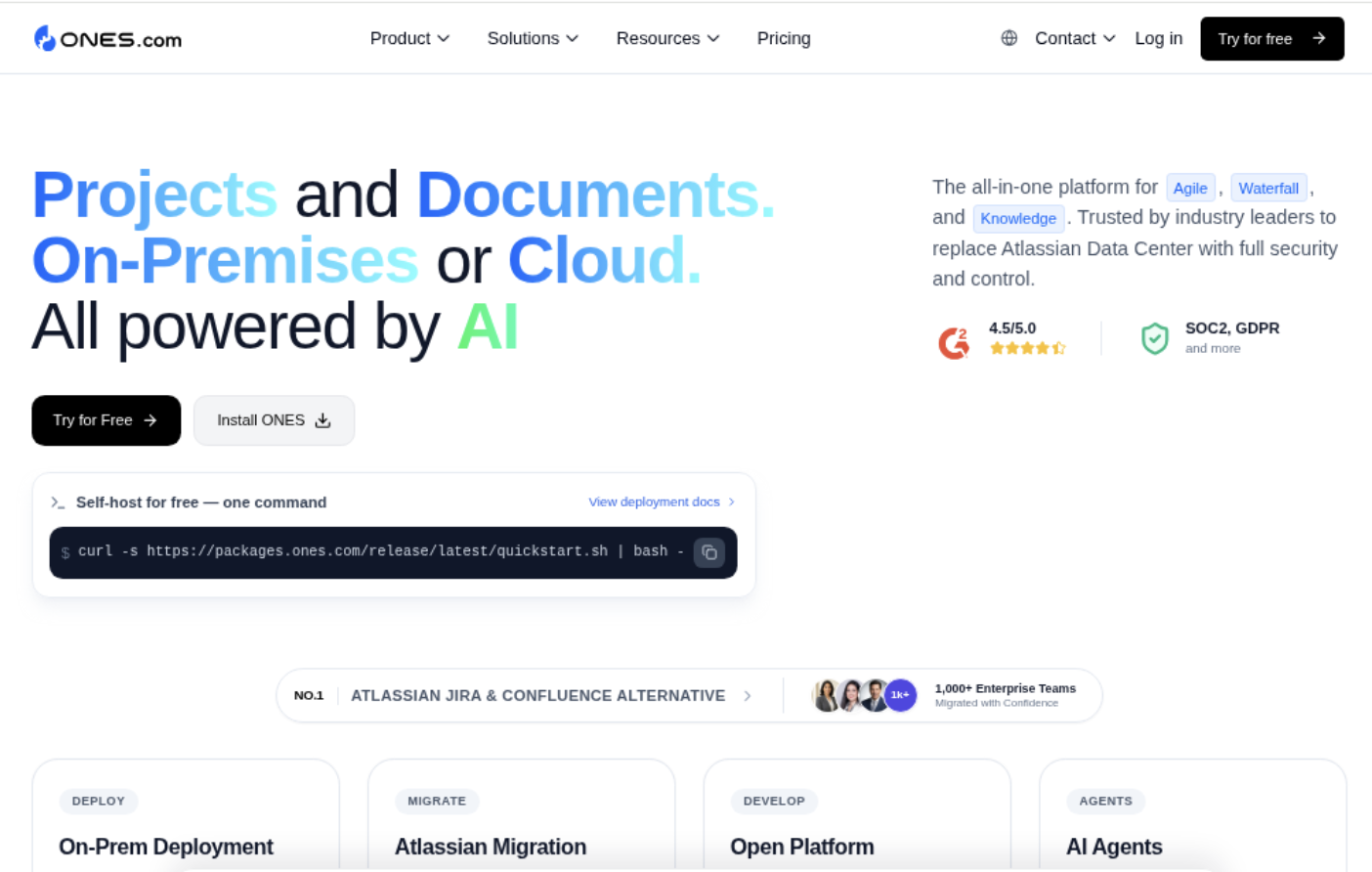
For teams comparing helpdesk-related work management costs, ONES.com can be relevant when service requests connect closely with engineering projects, operational tasks, and internal knowledge. It supports Cloud, On-Premise, Private Cloud, and Air-gapped deployments, with full feature parity between cloud and self-hosted versions.
Value Proposition
ONES.com can help teams consolidate project work, knowledge, and service-related processes while reducing dependence on multiple plugins. A free plan supports up to 30 seats, making it suitable for early evaluation and smaller teams.
Core Capabilities
- Scattered request handling → ONES Project workflows → Teams can manage incoming work through structured, Jira-compatible workflows instead of disconnected conversations.
- Limited visibility → built-in reporting → Managers can review progress, workload, and delivery trends without assembling separate reporting tools.
- Rigid request processes → custom workflows and fields → Each department can capture the information needed for its process while keeping work consistent.
- Manual sprint coordination → sprint management → Engineering and operations teams can connect support requests with planned delivery work.
- Repetitive routing and updates → automation → Rules can reduce routine assignment, status changes, and notifications.
- Too many plugins → native capabilities → Teams may reduce plugin dependency when reporting, workflows, fields, and sprint features are available within the platform.
- Restricted network requirements → air-gapped deployment → Organizations with isolated environments can run the platform without relying on ordinary internet access.
- Hosting control concerns → on-premise and private cloud options → IT teams can select a deployment model that matches governance and infrastructure requirements.
Application Scenarios
Internal IT and engineering: An employee reports a failed application login. IT triages the request, while a linked engineering task tracks a permanent fix. The knowledge base can then provide a reusable resolution article.
Product operations: A support team identifies a recurring customer issue and routes it into a sprint. Product managers can connect the operational request with delivery planning and monitor the result through reporting.
Restricted environments: A defense or industrial organization needs project and knowledge management inside an isolated network. An air-gapped deployment can support that operating model while preserving core functionality.
Common Challenges When Planning the Budget
Challenge: Using the advertised entry price
Problem: The lowest tier may not include the controls, automation, or capacity your team needs.
Solution: Price the plan against real requirements and include every expected agent, extension, and operational cost.
Challenge: Forgetting occasional agents
Problem: A staff member who handles escalations once a week may still need agent permissions.
Solution: Map responsibilities by workflow. Count anyone who performs agent actions, even if support is not their primary job.
Challenge: Underestimating administration
Problem: Workflows, permissions, reports, and integrations need ongoing care.
Solution: Assign an owner and estimate monthly maintenance hours. Include that labor in your total cost.
Challenge: Adding too many extensions
Problem: Teams purchase separate apps for reporting, approvals, time tracking, and asset management without reviewing overlap.
Solution: Review native capabilities first. Approve an extension only when its benefit exceeds its subscription and maintenance cost.
Challenge: Ignoring growth thresholds
Problem: Hiring, acquisitions, or departmental expansion can change the pricing tier unexpectedly.
Solution: Build 12-month and 24-month scenarios. Recheck the forecast before renewing a long-term agreement.
FAQs About Helpdesk Costs
Is Jira Service Management free?
Jira Service Management generally offers a Free plan for small teams, but it includes limits on agents, automation, storage, and administrative capabilities. Free access may work for a small internal helpdesk or a trial. Before relying on it, check whether your request volume, workflow complexity, reporting needs, and team size fit the current limits.
Do people who submit tickets need paid licenses?
Usually, people who submit requests through a portal are requesters rather than agents. The paid count generally focuses on staff who manage queues, change statuses, assign work, add internal notes, or resolve requests. Confirm the current licensing rules for your configuration, especially when users need elevated permissions or access to multiple products.
What is the biggest hidden helpdesk expense?
Administration is often the expense teams overlook. Someone must maintain request types, workflows, permissions, integrations, reports, and service-level targets. Add-on subscriptions can also grow quietly over time. Estimate the hours required each month, then add renewal costs and training to create a more realistic budget.
Should I choose monthly or annual billing?
Monthly billing gives you flexibility while requirements are uncertain. Annual billing may suit a stable team with a clear growth forecast and a longer commitment horizon. Compare the effective rate, cancellation terms, expected hiring, and renewal conditions. A lower annual rate may not help if your organization will change platforms soon.
When should I compare a Jira alternative?
Compare alternatives when your plugin costs keep rising, administration is consuming too much time, or your project and support workflows need closer integration. Also review alternatives when deployment requirements include on-premise, private cloud, or air-gapped operation. The right comparison should include workflow fit, migration effort, reporting, security, and total operating cost.
Conclusion
Planning Jira helpdesk pricing requires more than multiplying an agent count by a monthly rate. You also need to account for plan features, add-ons, implementation, administration, training, deployment, and future growth.
But here's the truth: the cheapest subscription is not always the cheapest helpdesk. A clear self-service portal, focused automation, disciplined access reviews, and careful extension management can reduce the total cost considerably.
Start with your current agent count, model realistic growth, and calculate cost per resolved request. Then compare Jira Service Management with platforms such as ONES.com when you need connected project management, knowledge management, native workflows, or flexible deployment options.