Jira in Project Management: A Practical Guide for Teams
Is Jira just a task tracker? Learn how Jira in project management clarifies priorities, dependencies, and ownership for smoother delivery. Read now!
Many teams adopt Jira for tickets, then discover that project management involves far more than moving cards across a board. Priorities shift, dependencies get missed, sprint reports take time, and stakeholders ask for updates in five different places.
That friction grows quickly. A product team may finish every sprint goal while still losing time to unclear ownership, scattered decisions, and approvals hidden in chat. Without a practical operating method, Jira can become a busy task tracker rather than a system for delivering work.
Here’s the solution: treat Jira as a project management workflow. Set up a clear hierarchy, choose the right board, define ownership, connect work to goals, and review progress regularly. This guide explains how Jira fits into project management and how you can use it effectively.
Jira in Project Management: Meaning and Core Features
Jira in project management means using Jira to plan, assign, track, prioritize, and report on project work across a team. It organizes tasks into issues, connects related work, and gives teams a shared view of progress.
Jira began as a tool for software teams, especially those using Agile methods. Today, teams can adapt it for product launches, marketing campaigns, service operations, business initiatives, and cross-functional programs.
Here’s why: a project usually contains many small actions, decisions, risks, and dependencies. Jira gives those moving parts a consistent structure.
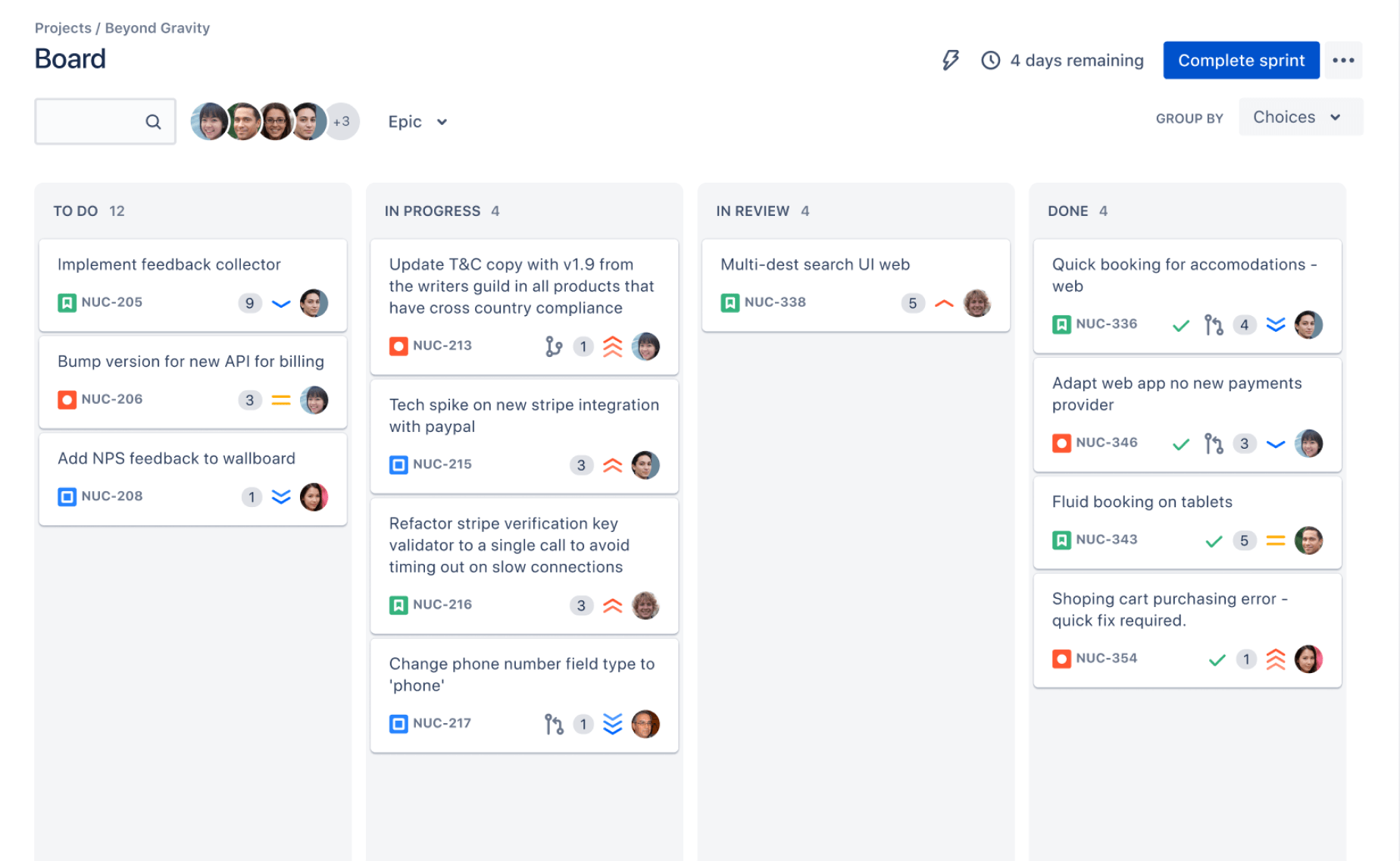
The Main Building Blocks
- Projects: A project groups related work under a shared team, workflow, and permission model.
- Issues: An issue represents a task, bug, story, request, risk, or another unit of work.
- Boards: A board displays work visually through columns, cards, filters, and progress states.
- Backlogs: A backlog holds upcoming work so the team can prioritize before scheduling it.
- Sprints: A sprint is a fixed work period used by Scrum teams to plan and deliver a selected group of issues.
- Epics: An epic groups related work under a larger product or project outcome.
- Reports: Reports help you review delivery speed, workload, scope movement, and sprint performance.
- Workflows: A workflow defines how an issue moves from creation to completion.
How Jira Supports Project Delivery
Jira connects planning with execution. A project manager can turn a broad outcome into epics, break epics into stories or tasks, assign owners, and monitor progress through each stage.
For example, imagine a website relaunch. One epic could cover the new checkout experience. Its related issues might include design approval, payment testing, copy review, analytics setup, and release coordination.
Each issue can include an owner, due date, priority, acceptance criteria, comments, attachments, linked work, and status history. This gives the team a practical trail of decisions and progress.
How to Use Jira for Project Management
Jira works best when you configure it around the way your team delivers work. Start with the project outcome, then build only the structure needed to control execution.
1. Define the Project Outcome
Write a clear outcome before creating dozens of issues. A useful outcome explains what should change, who benefits, and how the team will recognize completion.
For example, “Launch the mobile checkout flow for existing customers by September 30” is more useful than “Improve mobile shopping.”
A clear outcome helps you reject unrelated requests. It also gives stakeholders a reference point when priorities compete.
2. Choose a Suitable Project Template
Select a template that matches the work. Scrum suits teams delivering in planned iterations. Kanban suits continuous work with changing priorities. A simplified task project may suit administrative or operational initiatives.
You can adjust the setup later, but the starting model should reflect the team’s rhythm. A support team forced into short sprints may spend more time planning than resolving requests.
3. Create a Work Breakdown
Break the outcome into manageable levels:
- Create an epic for each major result or workstream.
- Add stories, tasks, or requests that contribute to each epic.
- Split large issues when one person cannot complete them within a reasonable planning period.
- Link dependencies when one activity must happen before another.
A good issue is small enough to understand, valuable enough to prioritize, and clear enough for someone else to act on.
4. Design the Workflow
Keep the workflow easy to follow. A basic workflow might include To do, In progress, Review, and Done.
Add stages only when they support a real control. For example, a regulated release may need testing, approval, and deployment stages. A small internal task may need only three statuses.
Too many statuses create false precision. When team members cannot tell which status applies, the board stops reflecting reality.
5. Prioritize the Backlog
Use a visible ranking method. You might consider customer value, urgency, risk reduction, revenue impact, effort, or dependency order.
Suppose a low-effort accessibility fix affects many customers, while a large visual enhancement affects a smaller audience. A transparent priority discussion may place the accessibility work first.
Review the backlog regularly. Old priorities become misleading when customer needs, deadlines, or delivery constraints change.
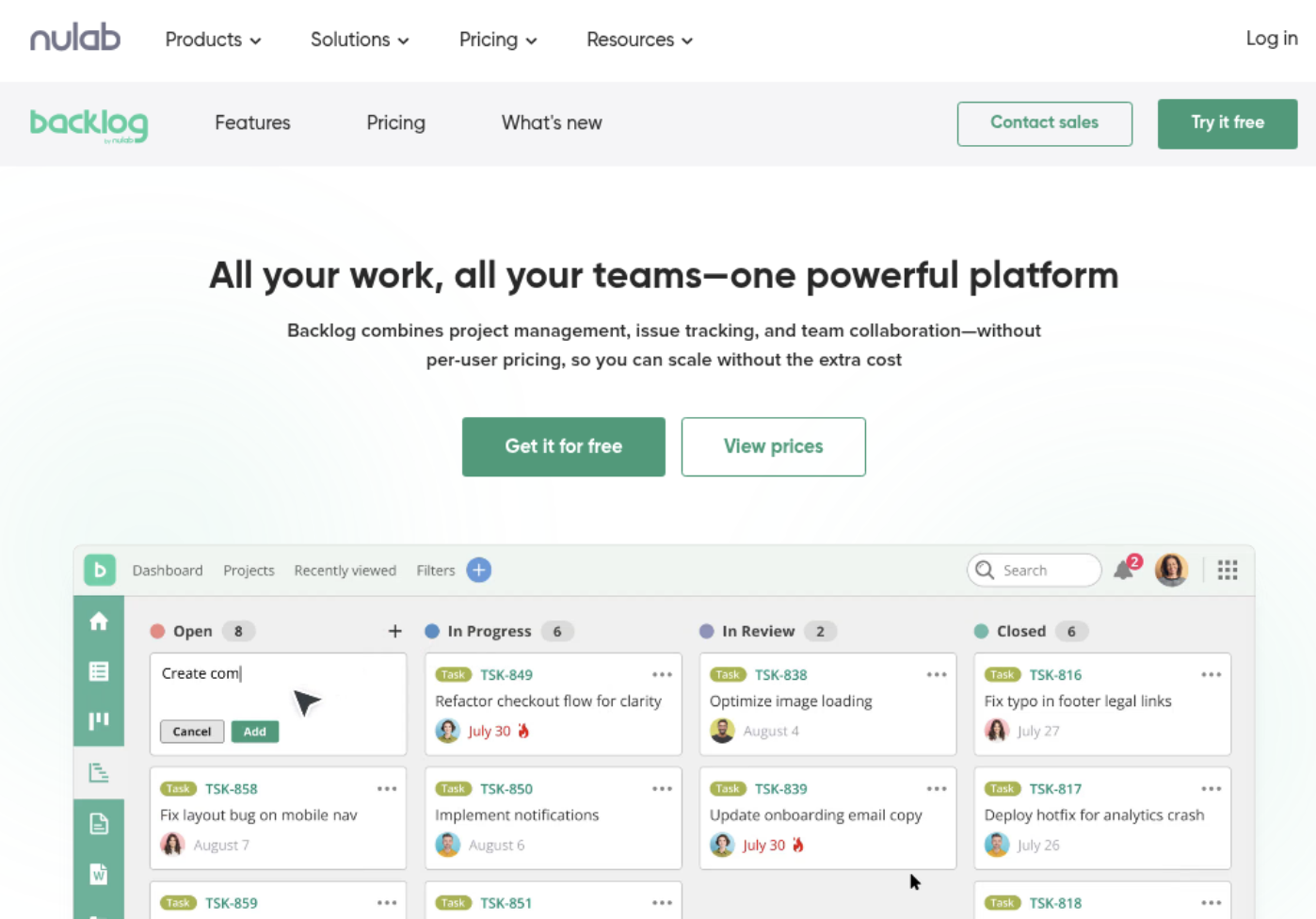
6. Plan Work Around Capacity
During planning, compare the proposed workload with actual team capacity. Account for meetings, leave, support duties, reviews, and specialist bottlenecks.
If a team has 40 available hours but recurring support consumes 12, planning 40 hours of project work creates predictable overload. Jira can show the planned work, but the team still needs an honest capacity conversation.
7. Track Progress During Delivery
Use the board during daily coordination. Look for blocked issues, aging work, unclear ownership, and tasks that remain active without visible movement.
For example, three issues sitting in review may reveal a testing bottleneck. The answer could involve reassignment, earlier review, or a smaller batch of work.
8. Review Results and Improve the Workflow
At the end of a sprint or milestone, compare the plan with actual delivery. Discuss completed work, unfinished work, unexpected requests, and recurring delays.
Then make one or two practical adjustments. You might refine acceptance criteria, change the workflow, limit work in progress, or improve backlog preparation.
Which Jira Views Help Project Teams Most?
Different views answer different management questions. A board shows movement, a backlog shows future choices, and a report reveals patterns over time.
| View or feature | Useful question | Example use |
|---|
| Board | What is happening right now? | Find blocked work and overloaded stages. |
| Backlog | What should we do next? | Rank upcoming requests before planning. |
| Timeline | How does work fit across dates? | Review milestones and dependencies. |
| Sprint view | What did we commit to? | Compare planned work with completed work. |
| Dashboard | What needs attention? | Combine progress, workload, and risks. |
| Reports | What pattern is emerging? | Review cycle time, scope movement, or delivery trends. |
Use Boards for Daily Coordination
A board is most useful when it reflects the team’s real process. If a card remains in “In progress” for two weeks, the team may need a smaller task or an additional review stage.
Keep the board readable. Use labels and components for meaningful categories, then avoid creating a separate field for every minor distinction.
Use Timelines for Dependencies
Timeline views help you understand how work fits together. Consider a product launch that requires legal review before public release. A delay in legal review may affect several downstream activities.
Visual dependency planning makes these relationships easier to discuss during status meetings. It also helps you identify milestones that have no realistic supporting work.
Use Dashboards for Stakeholder Updates
A dashboard can bring together progress indicators, overdue work, risks, and recent activity. This reduces the need to build a different update for every meeting.
Keep stakeholder dashboards focused. A page with twenty gadgets may look comprehensive, yet it can hide the two metrics that matter most.
Jira Project Management Workflows That Scale
Good workflows make responsibility visible. Each issue should show who owns the next action, what completion means, and what could prevent progress.
Scrum Workflow
A Scrum team typically maintains a product backlog, plans a sprint, completes selected work, and reviews the result. Jira supports this cycle with backlog ranking, sprint planning, sprint boards, and delivery reports.
For example, a two-week sprint may include eight product issues and three technical improvements. The team can track progress throughout the sprint and discuss unfinished work during the review.
Kanban Workflow
Kanban suits teams that receive work continuously. Instead of committing to a fixed sprint scope, the team manages flow and limits simultaneous work.
A customer operations team might use columns for incoming, triage, active, waiting, and resolved requests. A work-in-progress limit can prevent every item from becoming active at once.
Cross-Functional Workflow
Large initiatives often move through several groups. Marketing, design, engineering, legal, and operations may each own different pieces of the same outcome.
Use clear ownership, linked issues, shared milestones, and agreed handoff rules. A team should know when work is ready for review and who must respond.
Approval-heavy work needs explicit gates. A campaign, release, or policy change may require review from several people before completion.
Define the approval condition inside the issue. Include the responsible approver, required evidence, deadline, and next step after approval. This prevents a vague “waiting for approval” status from hiding a stalled decision.
Common Jira Mistakes That Reduce Project Control
Jira rarely fails because a team lacks features. Problems usually appear when the setup becomes harder to maintain than the work itself.
Creating Too Many Custom Fields
Custom fields can capture useful information, but each field adds maintenance and training needs. If team members skip fields or enter inconsistent values, reports become unreliable.
Start with essential fields such as owner, priority, status, target date, and acceptance criteria. Add another field only when it supports a recurring decision.
Using Statuses as Labels
Status describes where work is in a process. A label describes what the work concerns. Mixing those roles creates confusion.
For example, “Security,” “Mobile,” and “High Risk” are usually labels or categories. “In review” and “Ready to release” describe workflow stages.
Leaving Issues Too Large
A large issue can remain active for weeks without giving the team useful progress information. Break it into deliverable pieces.
Instead of “Build customer portal,” create separate work for account access, profile editing, notification preferences, usage history, and acceptance testing.
Ignoring Blocked Work
A blocked issue should be visible and actively managed. Add a clear explanation, identify the blocker’s owner, and agree on the next review point.
If blocked work disappears into a general status column, the project can look healthy while its critical path is deteriorating.
Measuring Activity Instead of Outcomes
Counting completed tickets can encourage small, low-value tasks. Pair delivery measures with outcome measures such as adoption, defect reduction, customer completion rate, or release readiness.
For instance, closing 100 tasks does not prove that a new checkout experience works. A successful purchase rate provides a stronger signal.
Practical Metrics for Jira-Based Project Management
Metrics should help you make decisions. Choose a small set that exposes delays, risk, capacity pressure, and progress toward the outcome.
Cycle Time
Cycle time measures how long work takes after the team starts it. Rising cycle time may indicate larger issues, interruptions, unclear requirements, or review delays.
Throughput
Throughput shows how many issues the team completes during a period. Review it alongside issue size because ten small fixes do not equal ten large features.
Work in Progress
Work in progress shows how much active work is competing for attention. High levels often create context switching and longer completion times.
Scope Change
Scope change tracks work added, removed, or redefined during delivery. A sudden increase may indicate weak planning, changing priorities, or an unclear outcome.
Blocked Time
Blocked time measures how long issues wait for a decision, dependency, review, or specialist. It helps you find delays that ordinary completion counts can hide.
The best part? You do not need every metric at once. Start with one delivery measure, one flow measure, and one outcome measure. Review them together during a regular project conversation.
ONES.com is a unified platform for project management and knowledge management, powered by AI through ONES Assistant. ONES Project is its project management product and can serve as a Jira alternative for teams that want planning, workflows, reporting, and controlled deployment in one environment.
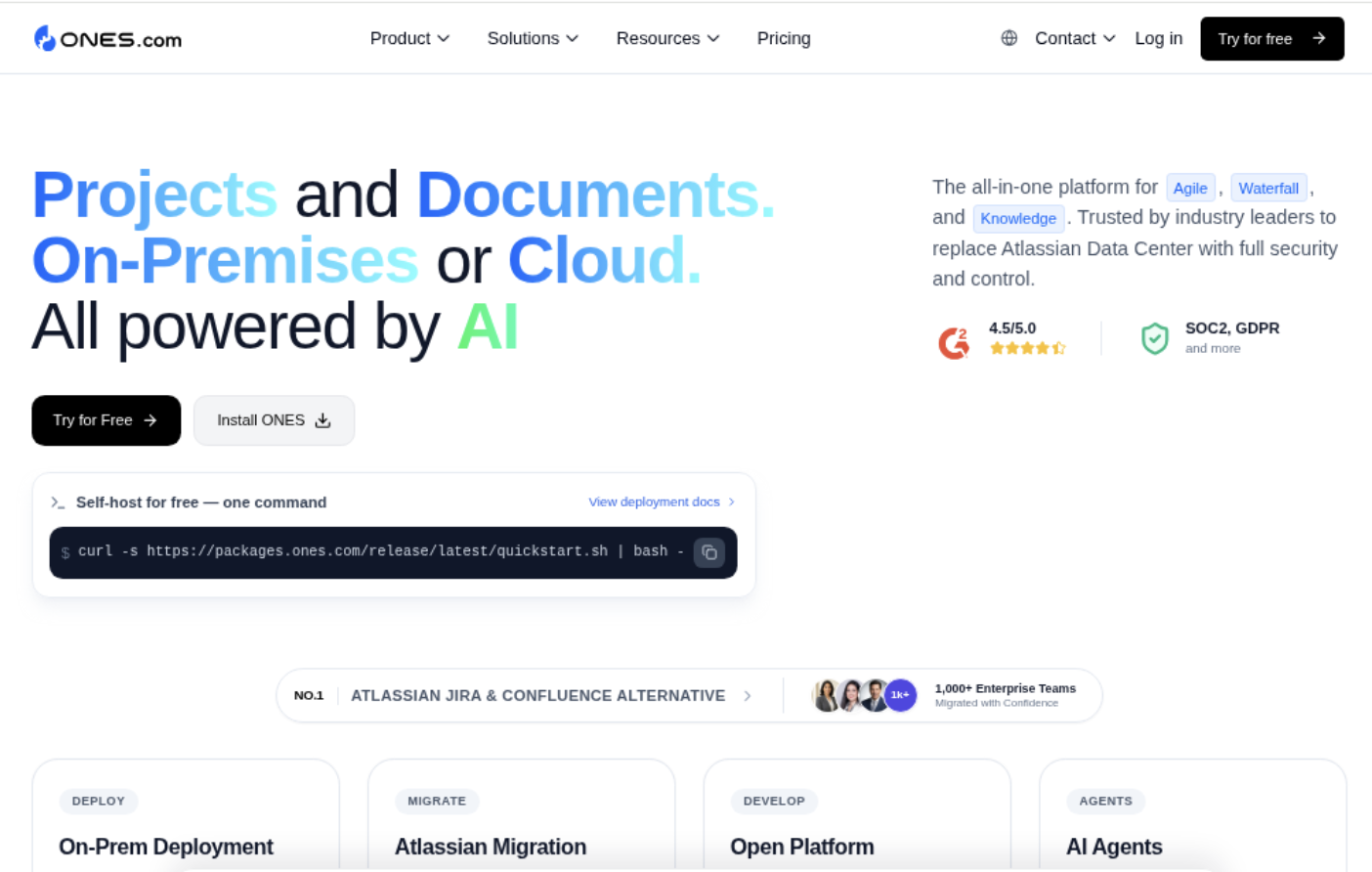
The platform is available separately through ONES Project and ONES Wiki. You can choose the project management product when your immediate need is delivery coordination, or combine products when project work and team knowledge need a closer connection.
Core Capabilities
1. Reduce fragmented project tracking with Jira-compatible workflows
When a team already understands Jira-style work items and statuses, changing systems can feel disruptive. ONES Project supports Jira-compatible workflows, helping teams preserve familiar planning patterns while moving into a different platform. The result is a shorter adjustment period for project managers and contributors.
2. Replace scattered reporting with built-in reporting
Manual status updates can consume hours every week. ONES Project includes built-in reporting so teams can review delivery progress, workload, and trends inside the project environment. This gives managers a more consistent view for planning discussions and stakeholder updates.
3. Handle specialized processes with custom workflows and fields
Standard workflows may not fit approval-heavy, regulated, or cross-functional work. Custom workflows and fields let you represent the decisions your team actually makes. The result is clearer responsibility, more useful filtering, and fewer workarounds.
4. Manage iterative delivery with sprint planning
Teams using Scrum need a practical way to select work, set sprint goals, and review progress. ONES Project supports sprint management for planned iterations. Project leads can connect sprint work with broader outcomes and identify unfinished items before the next planning cycle.
5. Reduce repetitive administration through automation
Repeated actions such as assigning reviewers, updating fields, or notifying owners can slow delivery. Automation handles defined routine events and helps keep workflows consistent. Your team can spend more attention on decisions that require judgment.
6. Support reporting without relying on multiple plugins
Adding plugins for every reporting or workflow need increases administration and creates integration points to maintain. ONES Project provides native capabilities across project tracking, reporting, workflows, and fields. That can simplify the operating environment for teams seeking feature parity with self-hosted flexibility.
7. Match deployment to security requirements
Some organizations need tighter control over where project information runs. ONES.com supports Cloud, On-Premise, Private Cloud, and Air-gapped deployments. Teams can select an operating model that fits their security, connectivity, and infrastructure requirements.
8. Maintain consistent capabilities across deployment options
Self-hosted systems can sometimes require feature compromises. ONES.com provides full feature parity between its cloud and self-hosted versions. This gives teams more flexibility when deployment conditions change.
Application Scenarios
Product development: A product team can organize epics, sprint work, defects, dependencies, and release reporting in one project environment. Custom fields can capture product area, risk, or acceptance criteria.
Restricted-network delivery: An organization working in a disconnected or tightly controlled environment can use an air-gapped deployment. The team can retain structured project workflows without depending on a public cloud connection.
Cross-functional business initiatives: Marketing, operations, finance, and engineering can coordinate milestones through shared workflows. ONES Wiki can support related knowledge management when the team needs project decisions and working guidance connected to delivery.
Common Challenges and Practical Solutions
Challenge: The Board Becomes Overcrowded
Solution: Separate active work from future work. Use backlog views for upcoming priorities, archive completed items when appropriate, and apply filters for team-specific views.
Challenge: Stakeholders Want Different Reports
Solution: Agree on a small reporting set. Create one operational view for the delivery team and one outcome-focused view for leadership. Each audience receives relevant information without creating several manual updates.
Challenge: Team Members Update Issues Inconsistently
Solution: Define a lightweight working agreement. State when an issue moves status, what the assignee must update, and how blocked work should be marked. Demonstrate the process during planning and review meetings.
Challenge: Priorities Change Mid-Project
Solution: Record the reason for major changes and show the impact on dates, capacity, and other work. A visible trade-off helps stakeholders understand what the team is postponing.
Challenge: Work Is Finished, Yet the Outcome Is Unclear
Solution: Connect issues to a measurable result. After delivery, review whether the change improved the intended customer, operational, or business metric.
FAQs About Jira for Project Management
Is Jira suitable for project management outside software development?
Yes. Jira can support marketing campaigns, business operations, service requests, research initiatives, and product launches. The key is choosing an appropriate workflow and issue structure. A marketing team might track campaign planning, creative review, legal approval, launch preparation, and performance analysis. You may need to simplify software-specific terminology so the setup feels natural to nontechnical teams.
What is the difference between a Jira project and a Jira board?
A Jira project is a broader container for related work, configuration, permissions, and reporting. A board is a visual view of selected issues. One project can support several boards, such as a team board, leadership board, or release-focused board. This separation lets you organize work centrally while giving different groups views that match their responsibilities.
Should I use Scrum or Kanban in Jira?
Choose Scrum when the team plans work in fixed iterations and reviews progress against sprint goals. Choose Kanban when requests arrive continuously and priorities change frequently. A product team building a planned release may use Scrum, while an operations team handling incoming requests may benefit from Kanban. The right choice depends on work patterns, capacity, and decision speed.
How much detail should a Jira issue contain?
An issue should contain enough context for the assignee to understand the purpose, expected result, owner, priority, and completion condition. Include acceptance criteria when quality or approval matters. Avoid turning every issue into a long explanation that nobody reads. For a checkout test, specify the scenario, expected behavior, environment, and evidence required for completion.
Can Jira replace project management meetings?
Jira can reduce status-reporting meetings, but it cannot replace every conversation. Teams still need discussions for trade-offs, risks, unclear requirements, and decisions involving several people. Use the board to prepare those conversations. A short meeting focused on three blocked issues is more useful than a long meeting where everyone reads status updates aloud.
Conclusion
Jira in project management works when the platform reflects a clear delivery method. Define the outcome, build a practical work breakdown, choose a suitable workflow, prioritize openly, and use reports to improve decisions.
But here’s the truth: a crowded board does not equal project control. Control comes from visible ownership, manageable work, clear dependencies, and regular review.
Start with a simple setup and improve it as your team learns. If you need a Jira alternative with Jira-compatible workflows, native reporting, custom controls, automation, and cloud or self-hosted deployment options, ONES.com can support that transition through ONES Project.