Jira Issue Types Explained: A Practical Guide for Teams
Not sure which jira issue types to use? Learn how to choose the right types for clearer workflows, planning, and reporting. Click to discover!
Jira issue types look simple until a team creates too many, uses them inconsistently, or treats every piece of work as a Story. Then reports become confusing, boards lose meaning, and important work slips through the cracks. A bug may sit beside a feature request, while a task hides the real project goal. The problem grows when new team members guess which type to choose. But here's the truth: issue types are the foundation of a useful Jira workflow. Once you understand what each type represents and when to use it, planning becomes clearer and reporting becomes more reliable. This guide explains the main Jira issue types, shows how they relate, and gives you practical rules for choosing the right one.
What Jira Issue Types Mean
Jira issue types are categories that describe the kind of work a team needs to track. They help you separate planned product work, technical tasks, defects, larger goals, and smaller pieces of delivery.
Each type can have its own workflow, fields, screen layout, priority rules, and reporting behavior. For example, a Bug may require reproduction steps, while a Story may need user acceptance criteria.
Here's why: the issue type influences how people understand the work before they even read the summary. A clear type gives context immediately.
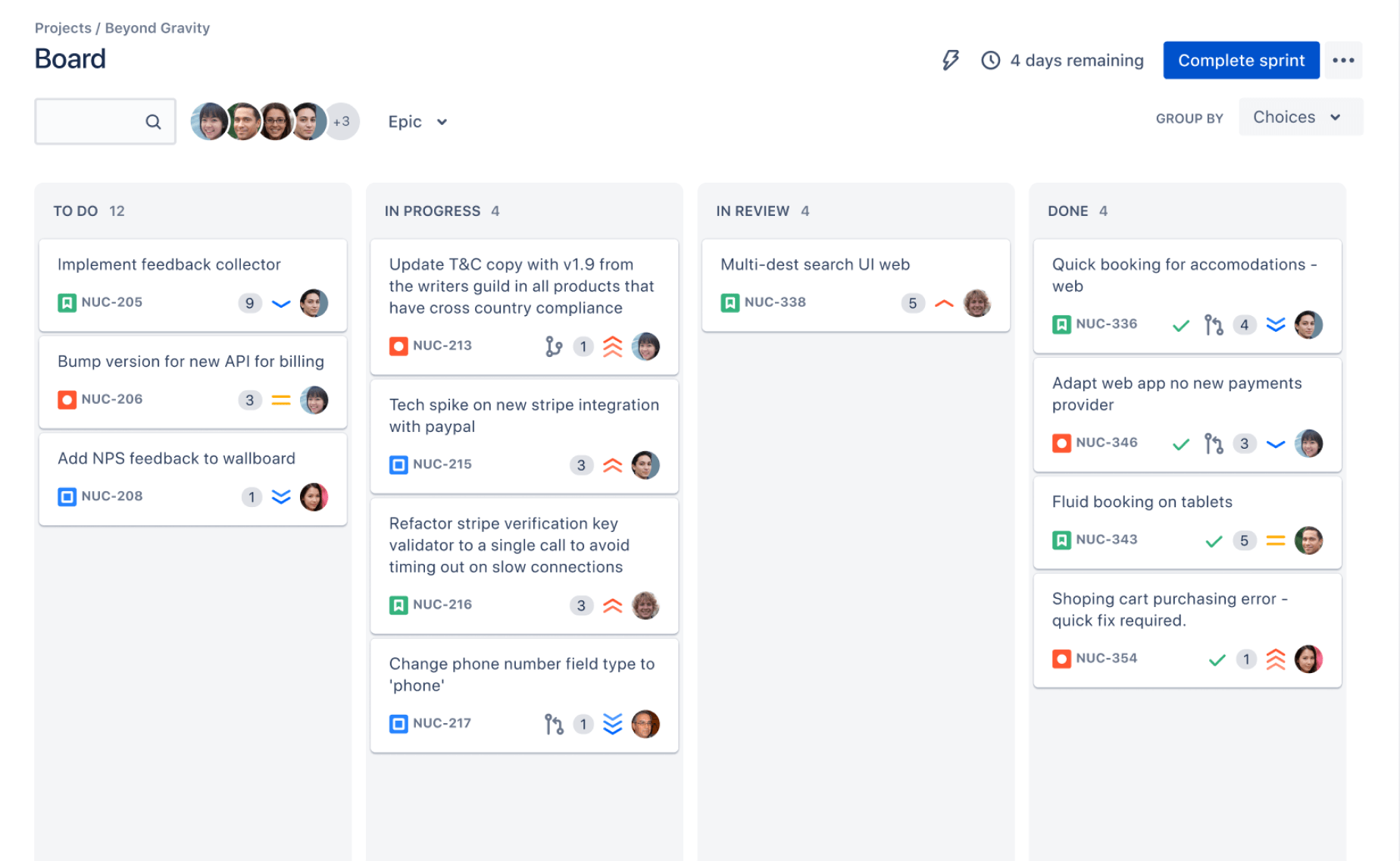
The Main Jira Issue Types
| Issue type |
Best used for |
| Epic |
A large outcome or body of work that contains several related issues |
| Story |
A user-centered product requirement or capability |
| Task |
A defined piece of work that does not need user-story wording |
| Bug |
An error, defect, or unexpected behavior that needs correction |
| Sub-task |
A smaller activity that belongs to a parent issue |
Epic
An Epic represents a broad goal that usually takes multiple issues to complete. For example, “Improve checkout performance” could include database optimization, front-end changes, monitoring, and load testing.
Use an Epic when the work needs a visible container for planning and progress tracking. An Epic should describe an outcome, rather than a single coding activity.
Story
A Story usually describes a product need from a user or customer perspective. A typical example is, “As a shopper, I want to save my payment method so checkout takes less time.”
Stories work well when the team needs to discuss user value, acceptance criteria, and a testable result. They are common in Scrum and other iterative delivery methods.
Task
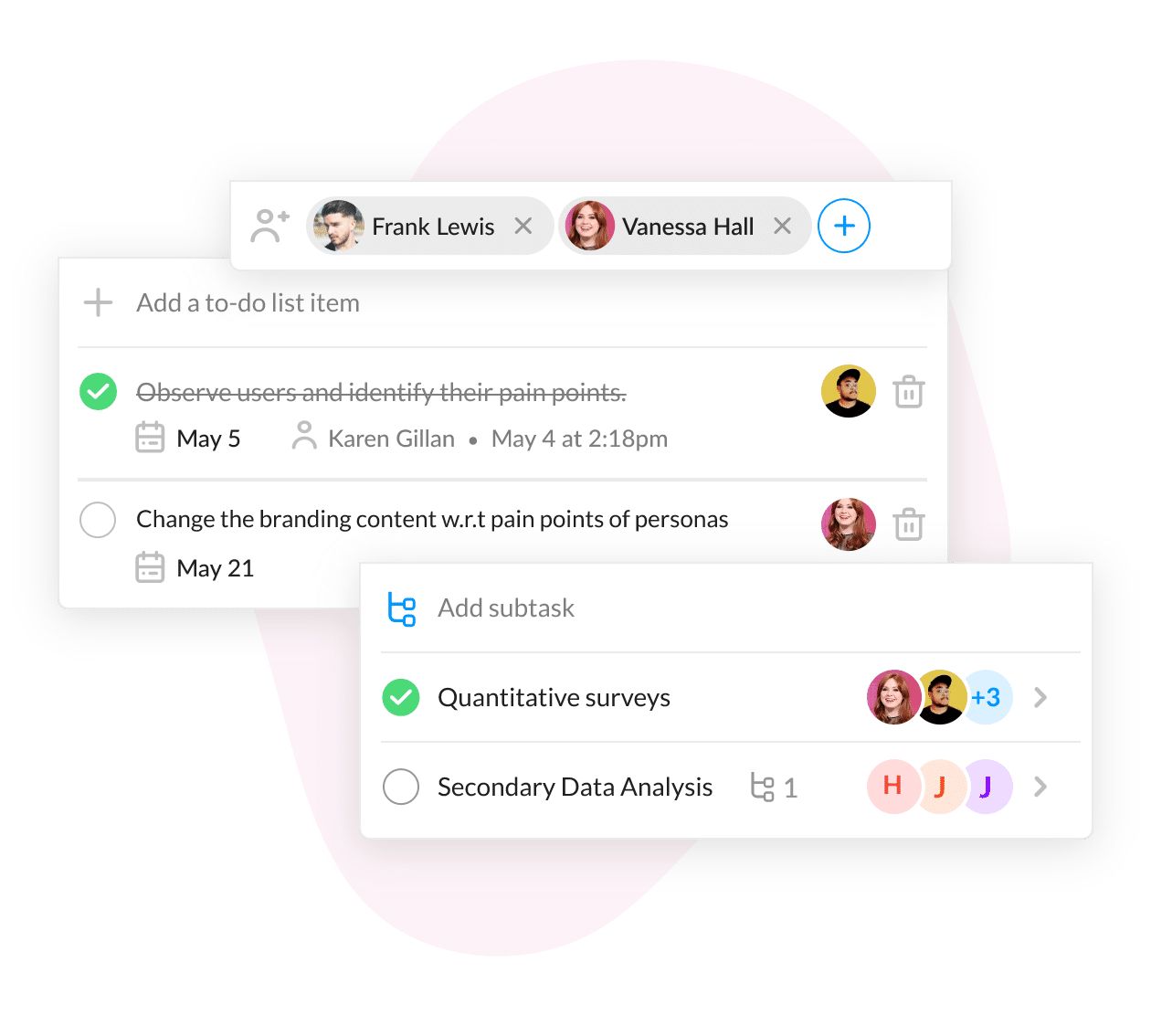
A Task represents a specific piece of work that may support a product goal without being written as a user need. Updating deployment settings, reviewing technical documentation, or configuring a test environment can fit this type.
Choose a Task when the work is clear and actionable, but user-story language would feel forced or distracting.
Bug
A Bug records behavior that does not work as expected. A strong Bug description usually includes the observed result, expected result, reproduction steps, environment details, and supporting evidence.
For example, “The checkout button freezes after a customer applies a discount code” gives the team a specific problem to investigate.
Sub-task
A Sub-task breaks a parent issue into smaller activities. A Story about exporting reports might include Sub-tasks for the interface, API work, permissions, and testing.
Use Sub-tasks when the smaller activities need separate ownership or status tracking. Keep the parent issue focused on the outcome that ties the work together.
Other Types You May See
Jira configurations may include additional types such as Change, Service Request, Improvement, New Feature, or Support Request. Their availability depends on the Jira product, project template, and administrator settings.
Some teams also create custom types. Customization can help when the default categories do not reflect your operating model, though every new type adds training and maintenance work.
How the Issue Hierarchy Works
A common Jira hierarchy moves from a broad goal toward smaller pieces of work:
- Epic: the large outcome or initiative.
- Story or Task: the deliverable or activity that advances the outcome.
- Sub-task: a focused piece of work assigned within that deliverable.
For example, an Epic called “Launch mobile payments” could contain Stories for wallet setup and payment confirmation. A Story could then contain Sub-tasks for interface design, service integration, and quality assurance.
Let me explain: hierarchy creates a line of sight between strategy and execution. A manager can review Epic progress, while an engineer can focus on a Sub-task without losing the larger context.
Epic Versus Story
An Epic is too large for one normal delivery cycle when it contains many related outcomes. A Story should be small enough to discuss, build, test, and accept within the team’s planning rhythm.
Consider a music application. “Redesign the listening experience” is likely an Epic. “Let listeners filter playlists by mood” may be a Story within it.
Story Versus Task
A Story emphasizes value for a user or customer. A Task emphasizes work that someone must complete. Both can be valid delivery items, yet they answer different questions.
Use a Story when acceptance depends on a user-facing result. Use a Task for activities such as updating a library, reviewing access permissions, or preparing a release checklist.
Task Versus Sub-task
A Task can stand on its own in a backlog. A Sub-task belongs to a parent issue and normally cannot represent the wider goal by itself.
“Configure monitoring alerts” could be a Task. If it belongs specifically to “Release the new payment service,” it may become a Sub-task under that parent item.
How to Choose the Right Category
Start with the result the work should produce. Ask, “Is this a broad outcome, a customer capability, a standalone activity, a defect, or a smaller step?” The answer usually points to the correct type.
- Identify the purpose. Decide whether the work adds value, fixes existing behavior, supports delivery, or organizes a larger effort.
- Check the expected size. If the item contains several meaningful outcomes, consider an Epic. If it is a focused deliverable, consider a Story or Task.
- Look for an existing parent. A small activity may belong as a Sub-task instead of becoming a separate backlog item.
- Review the required details. A Bug may need reproduction steps, while a Story may need acceptance criteria.
- Apply the team rule. Use the shared team convention even when another category seems technically possible.
- Split unclear work. If one issue combines a defect, a new feature, and operational work, separate them when ownership or reporting would benefit.
You might be wondering: what if two types seem suitable? Choose the type that makes prioritization, ownership, and reporting easiest for the people who will use the issue.
A Simple Decision Example
Imagine that a customer cannot reset a password. The issue is a Bug because an existing function fails.
Now imagine the team wants to add passwordless login. That is likely a Story because it introduces a customer capability.
If the initiative includes mobile support, email links, security review, and analytics, the larger effort may become an Epic. A technical activity such as configuring authentication logs may be a Task.
Why Consistent Types Improve Planning
Consistent issue types make your backlog easier to scan. A product manager can find customer-facing work, an engineer can locate technical activities, and a support lead can isolate defects without reading every summary.
The benefit becomes clearer in reporting. If a team mixes Bugs, Stories, and Tasks under vague labels, a chart may show activity without explaining what kind of activity occurred.
The best part? A small naming decision can improve several workflows at once. Clear types support prioritization, sprint planning, ownership, estimation, and release conversations.
Planning Becomes More Predictable
Suppose a sprint contains five Stories, three Bugs, and four technical Tasks. The team can discuss customer value, product risk, and maintenance work separately.
If all twelve items are simply called “work,” the sprint may appear balanced while hidden support obligations consume most of the team’s time.
Reports Become More Useful
Issue types give reports meaningful categories. You can compare defect volume with planned product work, review how many Stories belong to an Epic, or track technical Tasks that repeatedly carry over.
These patterns can reveal causes. A rising Bug count may suggest regression risk, while many oversized Stories may indicate weak refinement or unclear scope.
Ownership Gets Clearer
A Bug may require engineering investigation and quality verification. A Story may need product acceptance. A Task may belong to an operations specialist.
Clear categories do not replace ownership rules, but they give your team a faster starting point when assigning work.
Common Configuration Mistakes
Jira gives teams flexibility, yet flexibility can create confusion when every group invents its own interpretation.
Creating Too Many Custom Types
A team may create separate types for research, design, analysis, review, and preparation. Over time, people struggle to remember the distinctions.
Before adding a type, check whether a label, component, custom field, or workflow status would solve the actual problem. Create a new category only when it changes behavior or reporting in a useful way.
Using Epics as Ordinary Tasks
An Epic should organize related work. When a team uses Epics for small activities, hierarchy loses meaning and progress views become harder to interpret.
Reserve Epics for outcomes that need multiple related issues. A single configuration change usually belongs as a Task or Sub-task.
Turning Every Request Into a Story
Story language is helpful for customer capabilities, yet it can make technical or operational work awkward. “As a server, I want updated certificates” rarely improves understanding.
Use a Task when the work is operational or technical. Precision matters more than following a template mechanically.
Leaving Bugs Without Reproduction Details
A Bug summary alone rarely gives an engineer enough information. Include the steps, expected result, actual result, affected environment, and urgency.
For example, “Mobile Safari, logged-in users, after applying a coupon” narrows investigation far more than “Checkout broken.”
Practical Jira Issue Type Governance
Good governance does not require a large committee. A short team agreement can prevent most classification problems.
- Define each issue type in one or two plain-language sentences.
- Show one realistic example for every type.
- State when a type should not be used.
- Review custom types twice a year.
- Teach new team members through real backlog examples.
- Track recurring confusion during planning and refinement.
A useful agreement might say: “Use a Story for a testable customer capability, a Task for standalone technical work, a Bug for broken existing behavior, and a Sub-task for work owned within a parent issue.”
Review the agreement when your delivery model changes. A service team, software product team, and internal platform team may need different rules.
Jira Issue Management Solution: ONES.com
Value Proposition
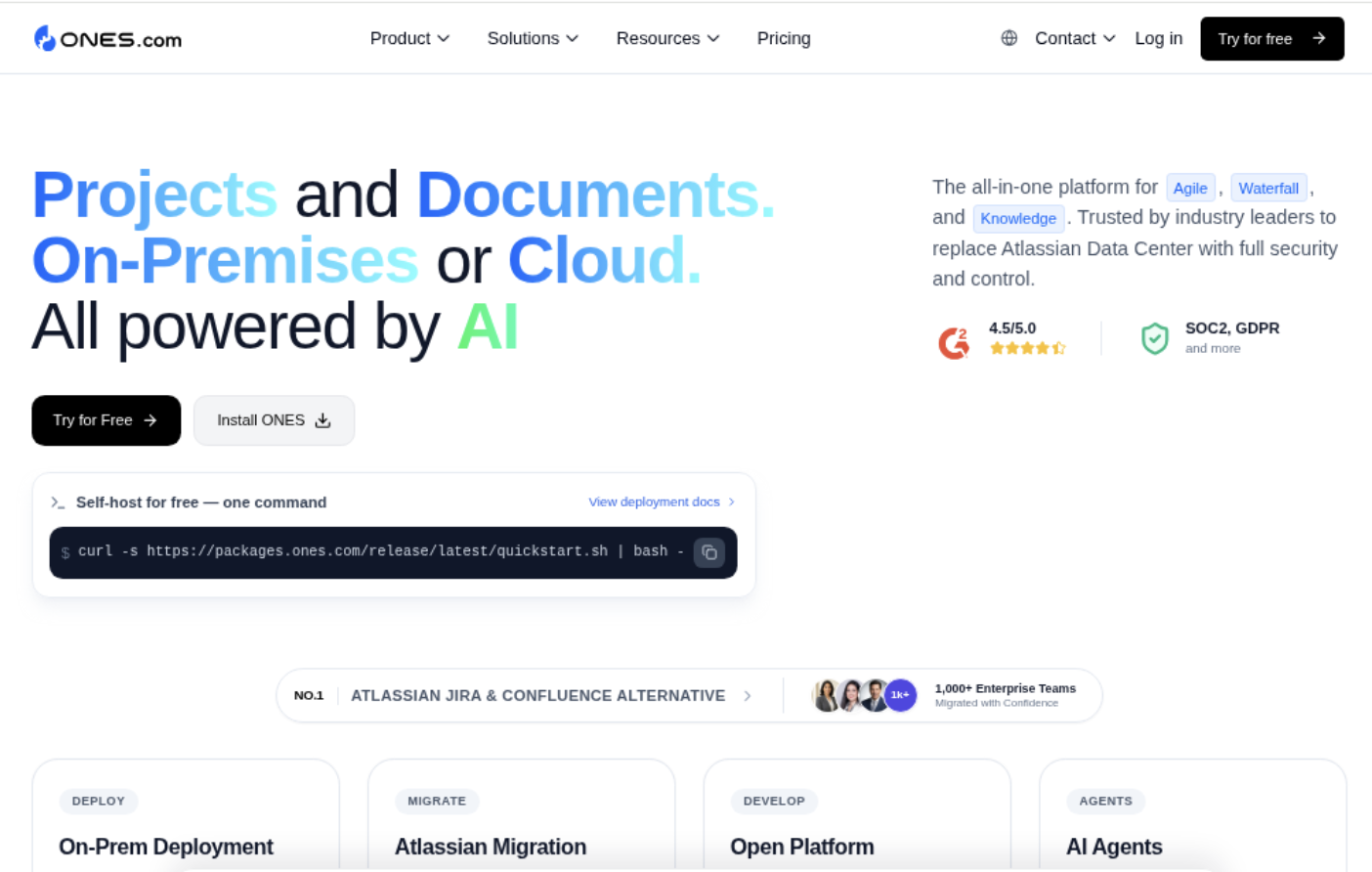
ONES.com combines project management and knowledge management in one platform. ONES Project provides Jira-compatible workflows for teams that want structured issue tracking with fewer disconnected tools.
It can suit teams that need custom issue handling, self-hosted deployment, reporting, and project context in one working environment. ONES Project is sold separately from ONES Wiki.
Core Capabilities
Issue classification feels inconsistent → Configurable issue types and workflows → Teams can define clearer rules for Epics, Stories, Tasks, Bugs, and Sub-tasks.
When people interpret categories differently, ONES Project supports custom workflows and fields. The result is a more consistent path from issue creation to completion.
Backlog structure is difficult to maintain → Jira-compatible project workflows → Teams can preserve familiar planning patterns while organizing work in a Jira alternative.
This reduces disruption for teams that already understand backlog refinement, sprint planning, statuses, and issue hierarchy.
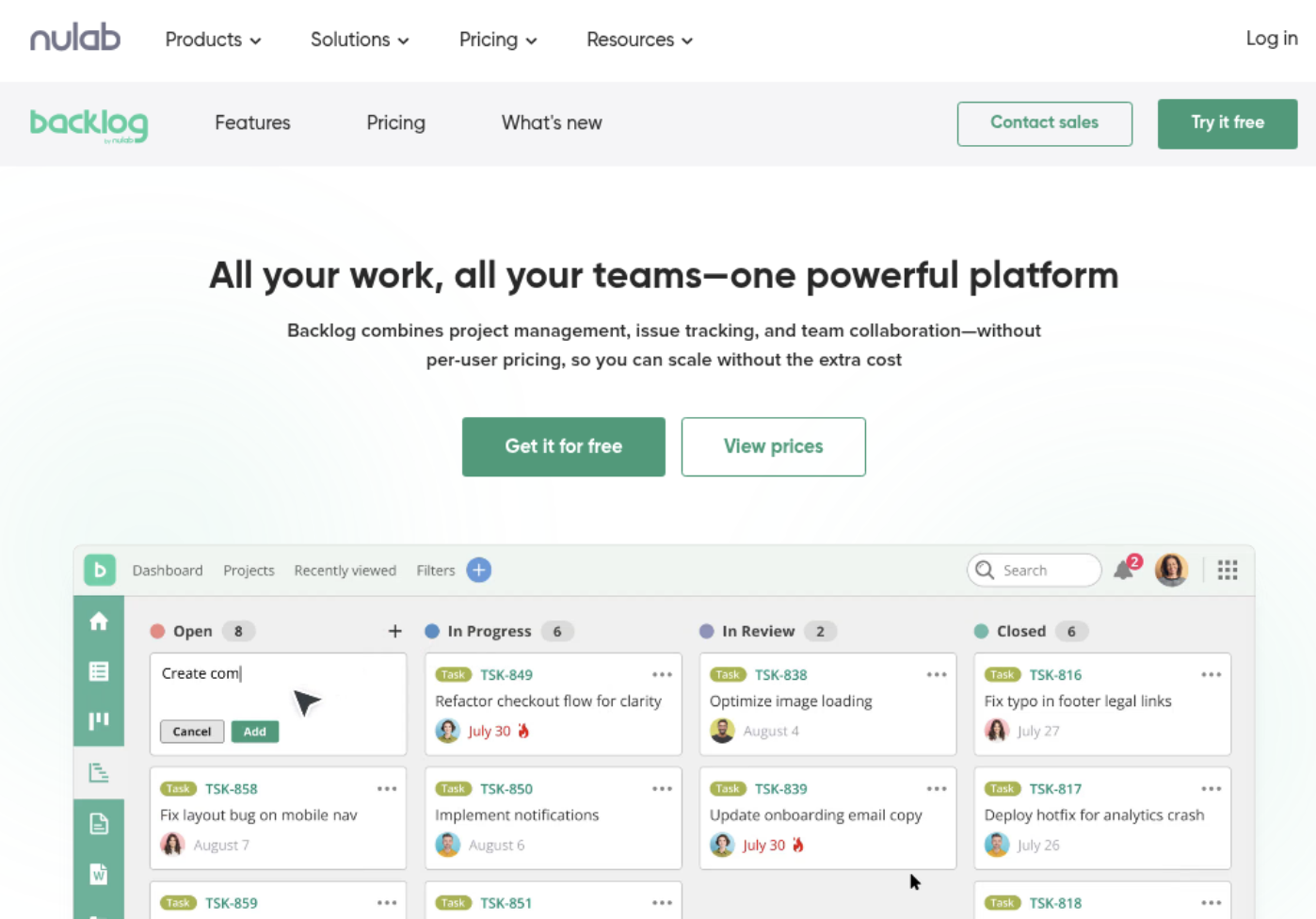
Reports lack useful context → Built-in reporting → Managers can review progress, workload, sprint outcomes, and issue trends without assembling separate reporting processes.
For example, a team can examine whether Bugs are increasing while an Epic approaches release.
Important details are scattered across fields → Custom fields and workflow rules → Teams can capture the details needed for different issue types.
A Bug can include reproduction information, while a Story can include acceptance criteria and business value.
Too many manual handoffs slow delivery → Automation → Repetitive transitions and notifications can follow defined rules.
This helps reduce missed updates when an issue moves from development to review or testing.
Sprint planning does not reflect actual capacity → Sprint management → Teams can plan, monitor, and adjust sprint work in one project workspace.
That makes it easier to identify unfinished work before the sprint closes.
Self-hosting creates feature gaps → Full feature parity between cloud and self-hosted versions → Teams can select Cloud, On-Premise, Private Cloud, or Air-gapped deployment without giving up core capabilities.
This matters for organizations with strict security, compliance, or network requirements.
Separate knowledge and project spaces create friction → ONES.com platform connection → Teams can connect project activity with knowledge management through ONES.com.
ONES Wiki is available as a separate knowledge-base product and serves teams looking for a Confluence alternative.
Application Scenarios
Product development team
A product team can use Epics for major outcomes, Stories for customer capabilities, Bugs for defects, and Sub-tasks for implementation work. Built-in reporting then helps compare planned delivery with defect correction.
Regulated organization
An organization with restricted network requirements can choose an On-Premise, Private Cloud, or Air-gapped deployment. The team can keep structured project workflows while meeting local infrastructure requirements.
Distributed engineering group
A distributed team can use custom fields for ownership, priority, risk, and acceptance details. Automation can notify the right group when an issue reaches review or testing.
Common Challenges
Challenge: Team members choose types by habit
Solution: Create a short decision guide with examples. During refinement, correct ambiguous items before they enter a sprint.
Challenge: The backlog contains oversized Stories
Solution: Ask whether the item contains several testable outcomes. If it does, create an Epic and split the work into smaller Stories.
Challenge: Technical work disappears behind product work
Solution: Use Tasks for meaningful technical activities and review them during planning. Add a label or component when you need another reporting dimension.
Challenge: Bug reports lack enough detail
Solution: Add a Bug template with reproduction steps, expected behavior, actual behavior, environment, severity, and relevant evidence.
Challenge: Custom types multiply over time
Solution: Review usage regularly. Merge types that produce the same workflow, fields, and reports.
FAQs
What is the difference between an Epic and a Story in Jira?
An Epic represents a broad outcome containing several related issues. A Story usually represents one customer-facing capability or testable requirement. For example, “Improve account security” could be an Epic, while “Allow customers to enable two-factor authentication” could be a Story inside it.
Should technical work be a Story or a Task?
Use a Story when the work delivers a clear user or customer capability. Use a Task when it is a standalone technical or operational activity, such as updating a service configuration or reviewing system permissions. The most useful choice is the one that makes ownership and reporting clear.
When should I create a Sub-task?
Create a Sub-task when a smaller activity belongs to a specific parent issue and needs separate ownership or progress tracking. For example, a Story about report exports might contain Sub-tasks for interface changes, service work, permissions, and testing.
Can Jira issue types have different workflows?
Yes. Jira can associate different workflows with different issue types, depending on the project and configuration. A Bug may move through investigation, correction, verification, and closure, while a Task may use a shorter path.
How many custom issue types should a team create?
Create only the types that produce a meaningful difference in workflow, fields, permissions, or reporting. If a category does not change how the team manages work, a label, component, or custom field may be simpler.
Conclusion
Jira issue types give your team a shared language for planning and delivery. Epics organize broad outcomes, Stories describe customer value, Tasks track standalone work, Bugs capture broken behavior, and Sub-tasks divide parent issues into manageable activities.
But here's the truth: the labels matter less than the rules behind them. Define each category, use realistic examples, review oversized work, and keep custom types under control.
When your team needs Jira-compatible workflows, structured reporting, flexible deployment, and connected project management, ONES.com offers another path through ONES Project. Start with a simple issue-type agreement, then improve the configuration as your work becomes clearer.