Jira JSM Pricing Explained: Plans, Costs, and Key Limits
Wondering about jira jsm pricing? Compare plans, costs, agent limits, and key features to budget confidently. Read now to choose the right plan.
Jira Service Management can look inexpensive at first, then become harder to budget as agent seats, premium features, and connected products enter the picture.
That uncertainty creates real problems. A help desk may fit the free plan today, yet need advanced incident response, asset tracking, or more agents after a small team expansion.
But here's the truth: Jira Service Management pricing depends mainly on your plan, agent count, billing term, and required features. This guide explains the plans, cost drivers, important limits, and practical ways to compare your options before committing.
Jira Service Management Pricing: Plans and Cost Structure
Jira Service Management pricing is Atlassian’s tiered cost model for its service management platform. The main cloud editions are Free, Standard, Premium, and Enterprise.
Your final cost usually depends on the number of licensed agents, your billing frequency, and whether you need advanced capabilities. Customers who submit requests generally do not consume agent seats.

Free plan
The Free plan is designed for small teams testing service management or handling a limited internal support operation.
- Up to three agents
- Unlimited customer access for request submission
- Core request, queue, portal, and knowledge features
- Basic automation and service management functionality
- Community-based support rather than the highest support tier
The free edition can work for a small IT team with a simple portal. It becomes restrictive when several support specialists need independent agent access.
Standard plan
Standard is typically the practical starting point for growing service desks. It supports more agents and adds broader operational controls than the free edition.
- Expanded agent capacity
- More storage than the free tier
- Service level agreement management
- Broader automation and reporting options
- Standard support and administration controls
A ten-person IT support group, for example, may find Standard suitable when it needs queues, SLAs, approvals, and structured request handling.
Premium plan
Premium targets organizations with more demanding service operations, stronger availability expectations, or larger workflows.
- Advanced incident and major incident management
- Higher operational limits
- More extensive automation capacity
- Enhanced service reliability features
- Advanced tools for scaling service teams
Premium can make sense when a service outage affects revenue, customer commitments, or multiple business units. The higher subscription cost may be easier to justify than separate incident tools.
Enterprise plan
Enterprise is intended for larger organizations that need centralized governance, complex administration, and commercial terms negotiated with Atlassian.
- Custom pricing
- Organization-wide administration
- Advanced security and governance options
- Enterprise support arrangements
- Capacity for multiple service teams and business units
Enterprise pricing is usually quote-based. Your estimate may depend on users, products, support expectations, security requirements, and contract length.
Cloud billing versus self-managed deployment
Jira Service Management Cloud uses a recurring subscription. You pay for hosted access, platform maintenance, and the selected plan.
Self-managed deployment follows a different commercial model. You must consider licenses, infrastructure, upgrades, backups, maintenance, and internal administration.
Cloud often offers simpler budgeting. Self-managed deployment may provide more control, yet its total cost includes technical work that a subscription invoice does not show.
What Actually Determines Your Monthly Cost?
The plan name is only one part of the calculation. You should estimate your cost using the people who work requests, the features they need, and the connected services your team will operate.
Agent seats are the main cost driver
An agent is someone who works on requests, changes ticket status, adds internal notes, manages queues, or performs service tasks.
A customer is someone who submits or follows a request. Customers generally do not require paid agent seats, which helps organizations support a large employee population.
For example, 500 employees may use an internal portal while only eight IT specialists need agent access. The relevant seat count is eight, not 500.
Billing frequency can change the effective rate
Monthly billing gives you flexibility when your team size is uncertain. Annual billing may offer a lower effective rate or more predictable budgeting, depending on Atlassian’s current commercial terms.
Before choosing annual billing, estimate likely hiring, contractor access, and department expansion. A lower annual rate can lose its advantage if you pay for unused seats for most of the year.
Additional Atlassian products may affect the total
Jira Service Management may connect with Jira Software, Confluence, Opsgenie capabilities, or other Atlassian services. Each product can have its own plan and billing rules.
For instance, a service desk may need Confluence for knowledge articles and Jira Software for engineering escalation. The service management subscription is only one line in the technology budget.
Marketplace apps can increase the real cost
Teams often add apps for time tracking, advanced reporting, asset discovery, forms, approvals, or integrations.
These extensions can solve specific gaps. They can also create extra subscription fees, separate renewal dates, security reviews, and administration work.
Here's why: a low base price can become expensive after several essential add-ons are included.
Key Limits to Check Before Selecting a Plan
Pricing comparisons become more useful when you examine limits alongside features. A plan that looks suitable may fail because of a hidden capacity constraint.
Agent and customer limits
Check how many agents your team needs today and how many it may need within twelve months. Include service desk leads, backup staff, occasional responders, and regional support teams.
Customers usually have broader access, but customer permissions and portal behavior can still vary by configuration. Test the request experience before rollout.
Automation limits
Automation can assign requests, send reminders, close inactive tickets, and escalate breached SLAs. Plans may differ in monthly automation executions or rule capacity.
A simple rule that assigns ten tickets per day consumes little capacity. A rule that evaluates every update across thousands of tickets can consume much more.
Storage and attachment capacity
Service teams store screenshots, logs, exported reports, and other attachments during request handling. Storage limits matter when users frequently attach diagnostic material.
Estimate growth from your current ticket volume. A team handling 1,000 requests monthly may need more capacity than a team processing 100 requests, even with the same agent count.
Assets and configuration limits
Asset management can help you track laptops, applications, servers, contracts, and ownership relationships. Check object limits, attribute limits, discovery options, and available automation.
A small equipment register may fit comfortably. A global organization with thousands of devices and complex relationships should review the relevant plan boundaries carefully.
Incident and service reliability features
Advanced incident management often matters more than ordinary ticket volume. Review on-call scheduling, alert handling, incident roles, stakeholder updates, post-incident reviews, and status communication.
You might be wondering: do you need Premium for every support team? Usually, no. The answer depends on how costly downtime is and how much incident coordination you require.
Support, security, and administration
Review support response expectations, audit capabilities, identity controls, data residency options, user provisioning, and administrative reporting.
These features may not change daily ticket handling. They can matter greatly during an audit, security investigation, or organization-wide rollout.
How to Estimate Your Real Service Desk Cost
Use a simple four-part estimate before you compare plans. This gives you a more realistic figure than looking at the advertised entry price.
- Count active agents. Include everyone who resolves, routes, approves, or supervises requests.
- Separate customers from agents. Employees submitting requests normally do not need agent seats.
- List required capabilities. Mark SLAs, assets, incident response, automation, reporting, approvals, and integrations.
- Add related subscriptions. Include connected Atlassian products, Marketplace apps, implementation work, and administration time.
Example: a small internal IT team
Imagine an internal IT team with six agents and 400 employees. It needs a portal, queues, approvals, SLAs, and basic automation.
The team should compare Standard first, then confirm whether its required automation and reporting levels fit within the plan. It should also price any knowledge management product used alongside the service desk.
Example: a global operations team
Now consider 35 agents across three regions. The team needs asset tracking, major incident coordination, advanced reporting, and stronger governance.
Premium or Enterprise may be more appropriate. The team should evaluate not only subscription cost, but also response expectations, administrative complexity, and the cost of downtime.
Example: a customer support portal
A company may have 20 agents serving 20,000 customers. Customer volume does not automatically create 20,000 paid seats.
The important questions are how many agents work requests, how much automation runs, how many integrations are required, and whether service operations need advanced incident features.
Cloud, Data Center, and Total Ownership Considerations
Cloud pricing is easier to forecast because hosting, maintenance, and platform upgrades are included in the subscription structure.
Self-managed deployment can suit organizations with strict infrastructure requirements. However, you must account for hosting, monitoring, backup design, upgrades, availability engineering, and specialized administration.
The cheaper invoice is not always the cheaper operation. A self-managed environment may require several technical hours every month, while cloud administration may require fewer infrastructure resources.
| Cost area |
Cloud service |
Self-managed deployment |
| Platform subscription |
Recurring plan fee |
License or subscription fee |
| Infrastructure |
Generally included |
Provided and maintained by your organization |
| Upgrades |
Managed by the vendor |
Planned and executed internally |
| Availability |
Covered by the hosted service model |
Designed and operated by your technical team |
| Administration |
Configuration and governance |
Configuration, governance, infrastructure, and operations |
Jira Service Management Alternative: ONES.com
ONES.com provides a unified platform for project management and knowledge management. ONES Project is its project management product and can serve as a Jira alternative for teams that want service-related work connected to broader delivery workflows.

ONES Project and ONES Wiki are sold separately. The platform supports Cloud, On-Premise, Private Cloud, and Air-gapped deployments, with feature parity between cloud and self-hosted versions.
Value Proposition
ONES.com can suit teams that want project work, structured knowledge, and service operations within a more connected environment. A free plan supports up to 30 seats, which gives small teams room to evaluate the workflow before making a larger commitment.
Core Capabilities
- Disconnected project and service work: Teams often lose context between requests and delivery tasks. ONES Project connects Jira-compatible workflows with project execution, helping teams track follow-up work in one environment.
- Plugin dependency: Many teams add several extensions to cover reporting or workflow gaps. Built-in reporting and custom workflows can reduce the need for separate tools.
- Inflexible process design: Different service groups need different approval paths. Custom workflows and custom fields let administrators reflect those operating rules.
- Unclear delivery progress: Support leaders may struggle to see whether escalated work is moving forward. Sprint management provides a clearer view of planned and active work.
- Manual repetitive actions: Reassignments, notifications, and status changes consume administrative time. Automation can handle repeatable workflow actions.
- Restricted network requirements: Some organizations cannot place operational systems in a public cloud. Air-gapped and on-premise deployments support restricted-network environments.
- Separate knowledge and delivery context: Teams may search in one place and execute work in another. ONES Wiki can provide a connected knowledge management option when purchased separately.
- Deployment inconsistency: Teams may worry that self-hosting means losing important capabilities. ONES.com maintains feature parity between cloud and self-hosted versions.
Application scenarios
Internal IT service teams: An IT group can organize requests, route technical work, and connect escalations with structured project workflows. Custom fields can capture system ownership, urgency, and business impact.
Regulated or restricted environments: A team operating inside an air-gapped network can use an on-premise deployment while retaining access to comparable platform capabilities.
Growing delivery organizations: A company that needs project tracking and knowledge management can evaluate ONES Project and ONES Wiki separately, choosing only the products relevant to its operating model.
Common Challenges When Comparing Service Desk Plans
Challenge: confusing agents with customers
Problem: A large employee population can make the service desk appear more expensive than it is.
Solution: Count people who actively resolve requests. Treat request submitters separately, then verify portal and customer permission rules.
Challenge: focusing only on the advertised entry price
Problem: The lowest plan may lack automation, incident response, reporting, or asset capabilities your team needs.
Solution: Create a must-have list before comparing plans. Price the lowest edition that supports those requirements without critical workarounds.
Challenge: overlooking connected products
Problem: Knowledge management, development tracking, monitoring, and Marketplace apps can add significant recurring costs.
Solution: Build a complete service stack estimate. Include every subscription that must operate for the workflow to succeed.
Challenge: underestimating administration
Problem: Complex queues, automation rules, permissions, and integrations require ongoing care.
Solution: Estimate administrator time alongside licensing. A slightly higher plan may lower maintenance work if it includes capabilities you would otherwise assemble manually.
Challenge: treating limits as future problems
Problem: A plan can fit current volume yet fail after hiring, acquisition, or service expansion.
Solution: Forecast twelve months of agents, requests, attachments, automation, assets, and integrations before signing an annual agreement.
FAQs
Do Jira Service Management customers need paid seats?
Customers who submit or follow requests generally do not need paid agent seats. Paid access is primarily connected to people who work on requests, manage queues, add internal notes, or administer service workflows. Confirm the current permissions for your configuration, especially when customers need elevated access or specialized portal capabilities.
Which Jira Service Management plan is best for a small team?
The Free plan can suit a very small team with up to three agents and basic service needs. Standard is usually more practical once you need additional agents, stronger workflow controls, SLAs, reporting, or broader automation. Compare your required capabilities first, then select the lowest plan that supports them without fragile workarounds.
Is Premium worth the extra cost?
Premium may be worthwhile when your organization depends on advanced incident management, higher operational capacity, or stronger reliability features. It may be unnecessary for a small internal help desk handling routine requests. Compare the subscription increase with the financial impact of prolonged outages, slow escalation, and manual incident coordination.
Does Jira Service Management pricing include Confluence?
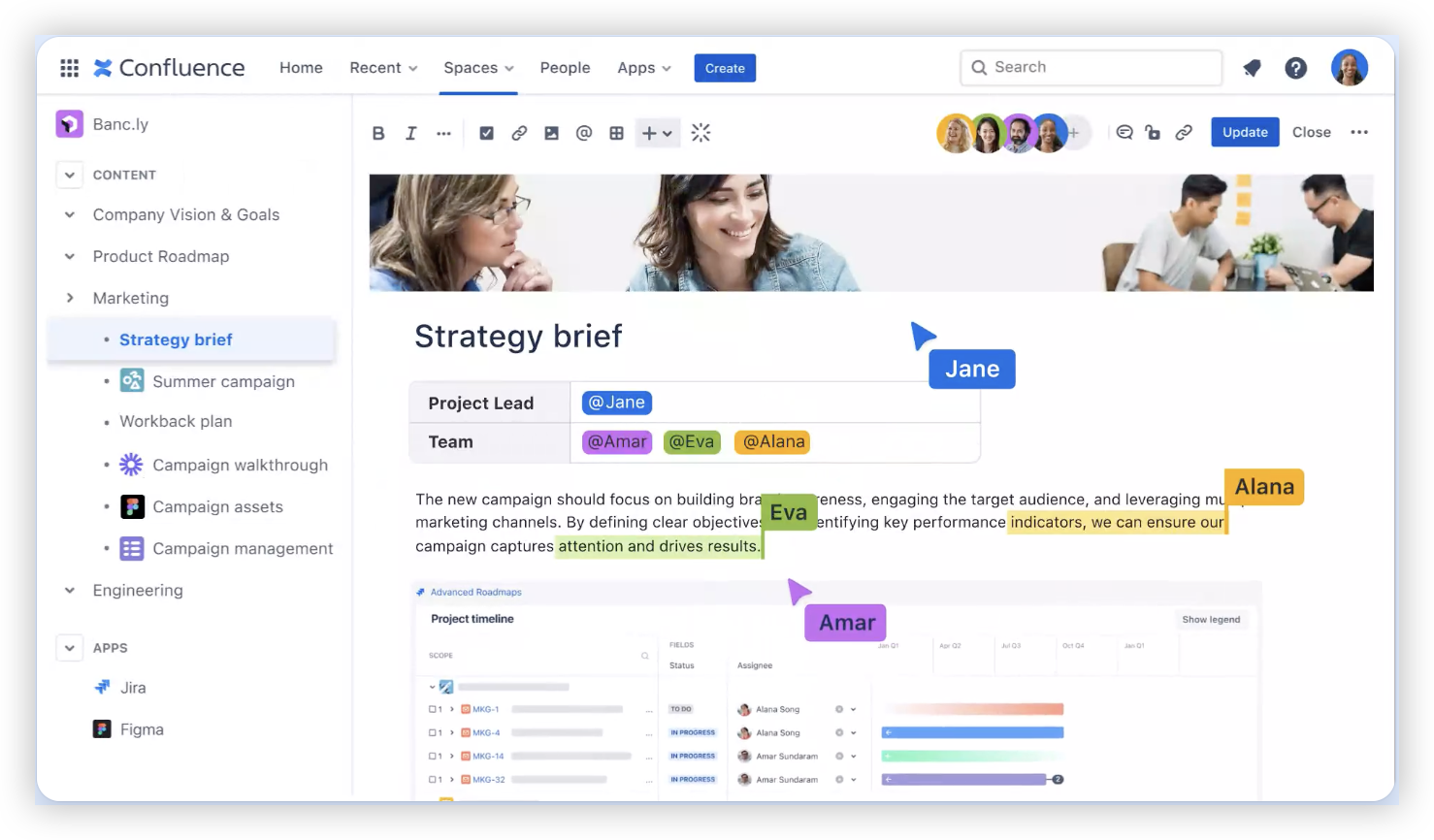
Do not assume that every connected Atlassian product is included in one service management subscription. Confluence can support knowledge articles and self-service content, but its commercial terms may be separate. Include it in your total estimate if your portal depends on a connected knowledge experience.
Should I choose monthly or annual billing?
Monthly billing can reduce commitment while your team size and service scope are changing. Annual billing may improve budget predictability and may offer a different effective rate. Model expected hiring, seasonal demand, contractors, and department expansion before choosing. Unused seats can reduce the benefit of a long commitment.
Can an alternative platform lower the total cost?
Possibly, especially when your current setup requires several paid extensions or separate systems for projects, knowledge, and workflows. Compare the complete operating cost rather than the headline subscription. Include migration, training, integrations, administration, and deployment requirements before deciding whether an alternative provides better value.
Conclusion
Jira Service Management pricing is shaped by more than a plan label. Agent seats, automation, assets, incident capabilities, storage, connected products, and deployment choices all affect the final cost.
Start with your required workflows, separate agents from customers, and check limits before comparing monthly or annual commitments. Then include Marketplace apps, administration, and infrastructure in the calculation.
The best part? A clear twelve-month estimate turns an uncertain purchase into a manageable decision.
If the current setup feels fragmented, evaluate whether a Jira alternative such as ONES Project, alongside ONES Wiki when needed, can connect project, knowledge, and operational work with fewer moving parts.