Jira Kanban Board: 7 Setup Tips for Faster Team Delivery
Is your jira kanban board slowing delivery? Discover 7 setup tips to clear bottlenecks, focus work, and help your team ship faster. Click to learn now.
A Kanban board can make work visible within minutes, yet many Jira teams still struggle with slow delivery, crowded columns, and forgotten tickets. When every request looks urgent, your team loses focus. Work waits for reviews, blocked tasks stay hidden, and new priorities interrupt progress before anything reaches completion.
But here's the truth: a Jira Kanban board becomes useful only when its workflow reflects how your team actually delivers work. A few deliberate setup choices can reduce confusion, expose bottlenecks, and help people finish more consistently. This guide walks you through seven practical setup tips, with examples you can apply to software, marketing, operations, or support projects.
7 Jira Kanban Board Setup Tips for Faster Delivery
The fastest improvements usually come from simplifying the workflow, limiting active work, and making stalled items visible. Use these seven tips to create a board your team can manage every day.
-
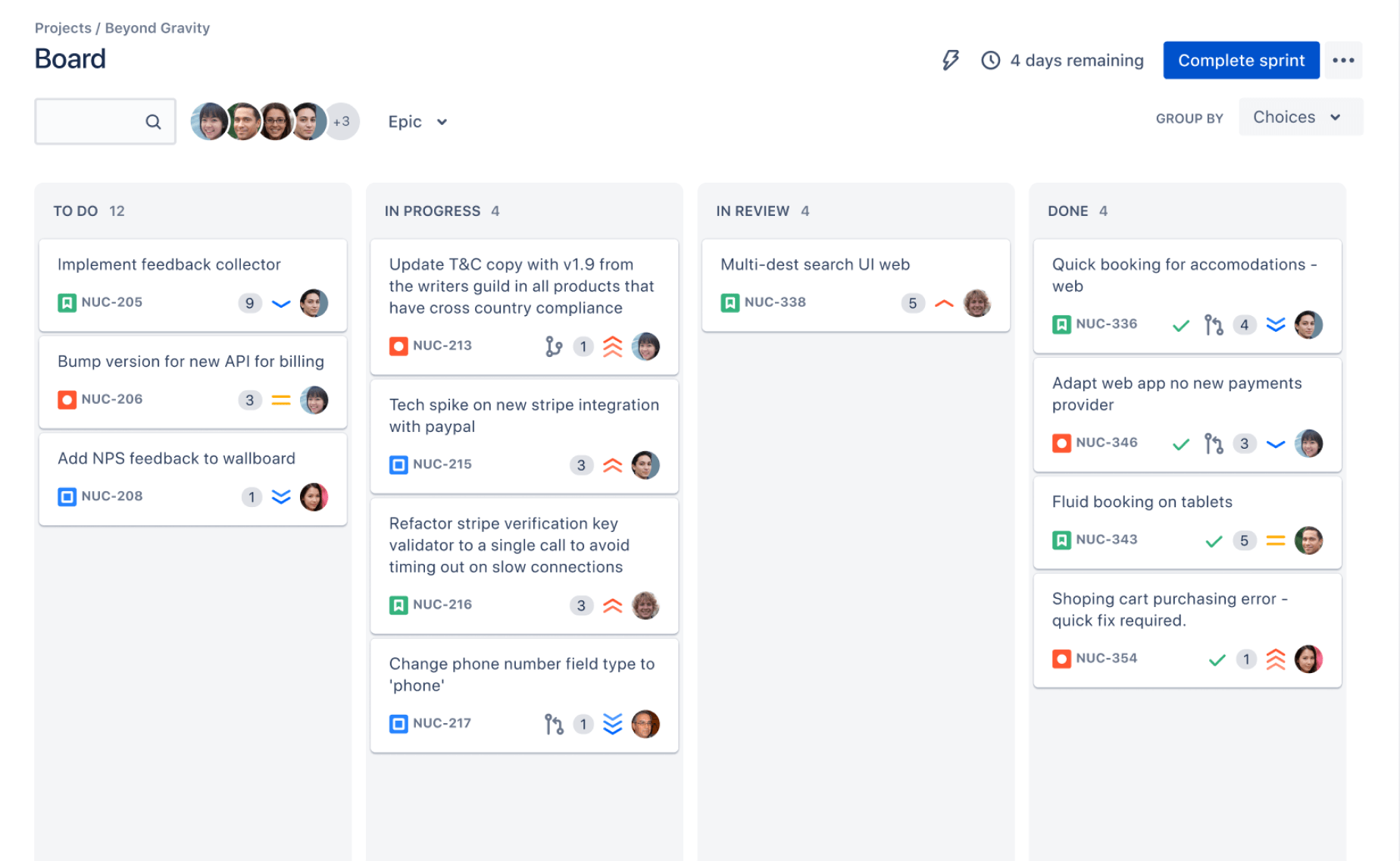
Map the Real Workflow Before Creating Columns
Start with the stages work passes through today. A practical workflow might include Backlog, Ready, In Progress, Review, Blocked, and Done.
Here's why: columns should represent meaningful decisions or states. If your team has separate design, development, testing, and approval stages, hiding them inside one “In Progress” column makes delays difficult to spot.
For example, a product team may discover that most tickets wait in review for two days. Giving review its own column makes that queue visible and encourages earlier collaboration.
-
Keep Columns Focused and Easy to Read
A board with twelve columns may reflect every internal handoff, but it often becomes difficult to scan. Begin with the fewest columns that clearly explain where work stands.
Try grouping minor activities into a broader stage. “Development” can include coding and local verification when separating those activities would add clutter without improving decisions.
The best part? A focused board helps you answer three questions quickly: What is ready, what is active, and what needs attention?
-
Set Work-in-Progress Limits
Work-in-progress limits control how many items can occupy a stage at once. They encourage your team to finish existing work before starting additional tasks.
Suppose four engineers can review code comfortably, but eight tickets regularly pile up in review. A limit of four creates a clear signal. The team can help reviewers instead of pulling another ticket into development.
Choose limits from observed capacity rather than guesswork. Start with a modest number, watch where queues form, and adjust during a regular team discussion.
-
Make Blocked Work Impossible to Miss
Blocked tasks create delivery risk because they appear active while making no progress. Use a clear blocked status, label, flag, or visual convention that your team recognizes immediately.
Let me explain: a blocked item should answer three questions without a meeting. What is stopping it? Who can help? When should someone check again?
For example, a ticket waiting for an external approval could carry a “blocked” flag and a comment naming the approver. That small habit prevents the task from disappearing in the middle of the board.
-
Define Clear Entry and Exit Rules
Write short criteria for moving work between stages. These rules reduce arguments and keep unfinished work from appearing complete.
- Ready: the goal, owner, acceptance conditions, and priority are clear.
- In Progress: someone is actively working on the task.
- Review: the implementation is ready for review and includes enough context.
- Done: required checks are complete and the agreed result is available.
You might be wondering: how detailed should these rules be? Keep them short enough to remember. If a rule needs a long explanation, the workflow may need simplification.
-
Use Swimlanes for Meaningful Priority Differences
Swimlanes separate work horizontally so your team can see different classes of service. Common examples include standard work, urgent defects, expedites, and improvements.
Use them sparingly. If every category receives special treatment, the board stops communicating priority. An expedite lane should be reserved for genuinely time-sensitive work, such as a production incident affecting customers.
A simple policy can protect focus: allow only one expedite item at a time, and require a named owner to explain why it bypassed normal ordering.
-
Review Flow Metrics and Improve the System
A board shows activity, but delivery improves when you examine flow. Track cycle time, throughput, aging work, and blocked duration.
For instance, if tasks usually finish in five days but a growing number remain open for fifteen days, your team has an aging-work problem. If review time keeps increasing, you may need more reviewer capacity or smaller tickets.
Run a short review every week or two. Ask what stayed stuck, where queues grew, and which policy needs adjustment. Treat the board as a working system that evolves with your team.
How to Choose the Right Board Structure
Your board should match the type of work moving through it. A software maintenance team may need a blocked lane and a production-support swimlane. A marketing team may need stages for briefing, creation, approval, and publishing.
Here's why: the same layout can produce different results across teams. A design group may need a dedicated approval stage, while an infrastructure group may benefit from a change-window stage.
| Team situation |
Useful board design |
| Continuous product work |
Backlog, Ready, In Progress, Review, Done |
| Approval-heavy work |
Ready, Production, Internal Review, Client Review, Approved, Done |
| Support and incident work |
New, Triage, Investigating, Waiting, Resolving, Closed |
| Mixed-priority work |
Standard and Expedite swimlanes with explicit entry rules |
Start with the workflow you can explain in one minute. Add a stage only when it reveals a decision, queue, or risk that your team needs to manage.
Using Jira Features Without Overcomplicating the Board
Jira offers powerful configuration options, including custom workflows, fields, automation, filters, reports, and permissions. The challenge is choosing features that reduce effort instead of adding administration.
Use Automation for Repetitive Transitions
Automation can assign a reviewer when work enters review, add a label when a priority changes, or notify an owner after a task remains untouched.
Start with one repetitive problem. If people frequently forget to assign reviewers, automate that step before creating several unrelated rules.
Keep Custom Fields Purposeful
Every field should support a decision. Useful fields may include priority, service area, release, risk, or customer impact.
Remove fields that people ignore. A crowded task view increases completion time and encourages inconsistent updates.
Create Filters Around Team Questions
Useful filters answer practical questions, such as:
- Which items have exceeded the team’s normal cycle time?
- Which tasks are blocked today?
- Which high-priority items have no owner?
- Which work has remained in review for more than two days?
These views help people act on the board instead of merely looking at it.
How Work-in-Progress Limits Improve Delivery
WIP limits work because they expose the cost of multitasking. When someone starts a new ticket before finishing the current one, attention becomes divided and queues grow elsewhere.
Consider a three-stage workflow with limits of four items in development, two in review, and three in testing. If review reaches two items, developers have a reason to help clear the queue. The constraint changes team behavior.
The goal is not to keep every person busy every minute. The goal is to move valuable work to completion with fewer interruptions.
Signs Your Limits Need Adjustment
- Work regularly waits because a limit is too restrictive.
- Several items remain active without meaningful progress.
- The team bypasses limits instead of discussing the constraint.
- One specialist becomes a permanent bottleneck.
Adjust one limit at a time. Then observe the effect for several delivery cycles before making another change.
Board Policies That Keep Work Moving
A board needs operating policies, not just columns. Agree on how work enters the system, who can change priority, when an item becomes urgent, and what “done” means.
For example, you might require a short description, acceptance conditions, an owner, and a priority before work enters the Ready column. That policy prevents incomplete requests from consuming delivery capacity.
Use Aging Indicators
An aging indicator highlights tasks that have remained active longer than expected. Set a review threshold from your usual cycle time. If most tasks finish within six days, review any item still active on day seven.
Protect the Pull System
In a Kanban workflow, people pull new work when they have capacity. Managers and stakeholders should understand this rule before adding urgent requests.
A visible expedite policy helps. Require a trade-off whenever urgent work enters, such as pausing another item or explaining the customer impact.
When to Rework a Jira Kanban Board
Your board may need redesign when people stop trusting it. Warning signs include stale statuses, frequent manual corrections, unclear ownership, and meetings that exist only to explain the board.
But here's the truth: rebuilding everything at once can create fresh confusion. First identify the biggest source of delay, such as oversized tickets, unclear approval rules, or excessive active work.
Then make one controlled change. For example, split a broad “In Progress” stage into “Build” and “Review,” introduce a review limit, and inspect the result after two weeks.
A healthy board should help your team coordinate during a brief daily conversation. If it requires a long explanation every morning, simplify its design.
Jira Kanban Board Solution: ONES.com
Value Proposition
ONES.com combines project management and knowledge management in one platform, with ONES Project supporting Jira-compatible project workflows. It can help teams reduce plugin dependence while keeping work, reporting, and team guidance connected.
ONES Project is available separately from ONES Wiki. You can choose the project management product, the knowledge management product, or both for a connected workspace.
Core Capabilities
- Scattered project work → ONES Project: Manage tasks, boards, sprints, and delivery activity in one project environment. The result is a clearer view of ownership and progress.
- Complex handoffs → Custom workflows: Configure statuses and transitions around your actual process. The result is a board that reflects approval, review, testing, or release steps.
- Inconsistent task information → Custom fields: Capture priority, risk, service area, release, or other team-specific details. The result is more consistent planning and filtering.
- Manual progress tracking → Built-in reporting: Review delivery trends and team performance without relying on separate reporting tools. The result is faster conversations about bottlenecks.
- Too many extensions → Native feature coverage: Use workflow management, sprint planning, automation, and reporting within the platform. The result is fewer disconnected plugins to maintain.
- Restricted deployment requirements → Four deployment choices: Select Cloud, On-Premise, Private Cloud, or Air-gapped deployment. The result is more flexibility for security and infrastructure requirements.
- Migration concerns → Jira-compatible workflows: Preserve familiar ways of planning and moving work. The result is a shorter adjustment period for teams already using Jira-style processes.
- Disconnected team guidance → ONES Wiki: Connect project activity with knowledge pages when you use the separately sold knowledge management product. The result is easier access to policies, procedures, and delivery guidance.
Application Scenarios
Software maintenance team: A support group can create lanes for standard fixes, urgent incidents, and planned improvements. WIP limits keep investigation work from overwhelming testing and release capacity.
Enterprise engineering team: A team with strict infrastructure controls can use an On-Premise, Private Cloud, or Air-gapped deployment. It can retain workflow and reporting capabilities while meeting its environment requirements.
Growing product organization: Product, engineering, and operations teams can use custom fields and reports to view work by product area, release, or risk. ONES Wiki can provide connected guidance when both products are adopted.
Common Challenges and Practical Solutions
Challenge: Every Ticket Looks Urgent
Solution: Define priority criteria and create a limited expedite lane. Require a clear impact statement before urgent work skips the normal queue.
Challenge: The Board Contains Too Many Active Items
Solution: Add WIP limits and review aging items. Ask the team to finish, pause, or remove stale work before pulling new tasks.
Challenge: Statuses Do Not Match Reality
Solution: Interview the people doing the work and map the actual handoffs. Rename or add stages only when they reveal a meaningful state.
Challenge: Blocked Work Remains Hidden
Solution: Establish a visible blocked convention, assign a follow-up owner, and review blocked duration during the daily conversation.
Challenge: Reports Create Activity Without Insight
Solution: Focus on a few flow measures, such as cycle time, throughput, aging work, and blocked duration. Use each measure to support a decision.
FAQs
What columns should a Jira Kanban board have?
Start with Backlog, Ready, In Progress, Review, and Done. Add Testing, Approval, or Blocked when those stages represent meaningful queues or decisions. Your columns should match the team’s real workflow rather than copy another team’s layout. If people cannot explain what moves an item from one column to the next, simplify the workflow or clarify its policies.
How many tasks should be in progress on a Kanban board?
Use a WIP limit that reflects team capacity and review it regularly. A small team may begin with two or three active items per major stage. The right number depends on task size, specialist availability, and review time. If work waits frequently, adjust the limit after examining the bottleneck instead of raising every limit automatically.
Should blocked work have its own Jira column?
A dedicated Blocked column can help when stalled work is common and requires quick attention. For teams with occasional blockers, a flag, label, or visual marker may keep the board simpler. Whichever approach you choose, record the blocker, the person who can help, and the next follow-up point. Visibility matters more than the exact design.
How often should a team review its Kanban workflow?
Hold a short flow review every one or two weeks, then make a larger adjustment when delivery patterns change. Look for aging tasks, growing queues, repeated blockers, and frequent policy exceptions. Avoid changing several workflow rules at once because you will struggle to identify which change helped. Small experiments usually produce clearer learning.
Can a Kanban board support urgent work?
Yes, when urgent work follows an explicit policy. Create an expedite lane, limit how many items can use it, and require a reason for bypassing normal priority. Agree on the trade-off before pulling the task. For example, pausing a lower-priority item protects capacity and makes the cost of urgency visible to stakeholders.
Conclusion
A faster Kanban workflow begins with a board that mirrors real work. Keep the columns focused, limit active tasks, highlight blockers, define movement rules, and review flow metrics regularly.
The problem is rarely a lack of configuration options. The bigger risk is a board that hides queues and encourages multitasking. Start with one visible bottleneck, test one improvement, and let delivery evidence guide the next adjustment.
Whether you refine Jira or evaluate a Jira alternative such as ONES Project, the same principle applies: make work clear, protect focus, and help your team finish what it starts.