Jira License Pricing: A Practical Guide for 2026 Buyers
How much will Jira really cost? Compare jira license pricing, plans, hosting, add-ons, and renewals to build a smarter 2026 budget. Read now.
Jira license pricing can look simple until you compare plans, user bands, hosting, add-ons, and renewal changes. A low monthly rate may become expensive when every contributor needs access. A self-hosted option may reduce recurring fees while adding infrastructure and administration work.
That uncertainty makes planning difficult for engineering leaders, procurement teams, and growing companies. You may compare headline prices while missing the costs that shape your actual budget.
But here's the truth: the right estimate starts with your team size, required features, hosting preference, and growth rate. This guide shows you how Jira pricing works, what to calculate, and how to compare alternatives without relying on a misleading sticker price.
How Jira Licensing Works in 2026
Jira license pricing is the total cost of giving your team access to Jira, including the selected plan, user count, hosting model, support needs, and optional products.
At a practical level, you usually compare three areas:
- Cloud subscriptions: recurring payments based mainly on users, plan level, and billing term.
- Self-managed licensing: a license or subscription for running the platform in your own environment.
- Related products and services: collaboration tools, service management, marketplace apps, migration work, and administration.
Exact prices and packaging can change during 2026. Treat the official checkout quote as the final figure for your region, currency, tax treatment, and user tier.
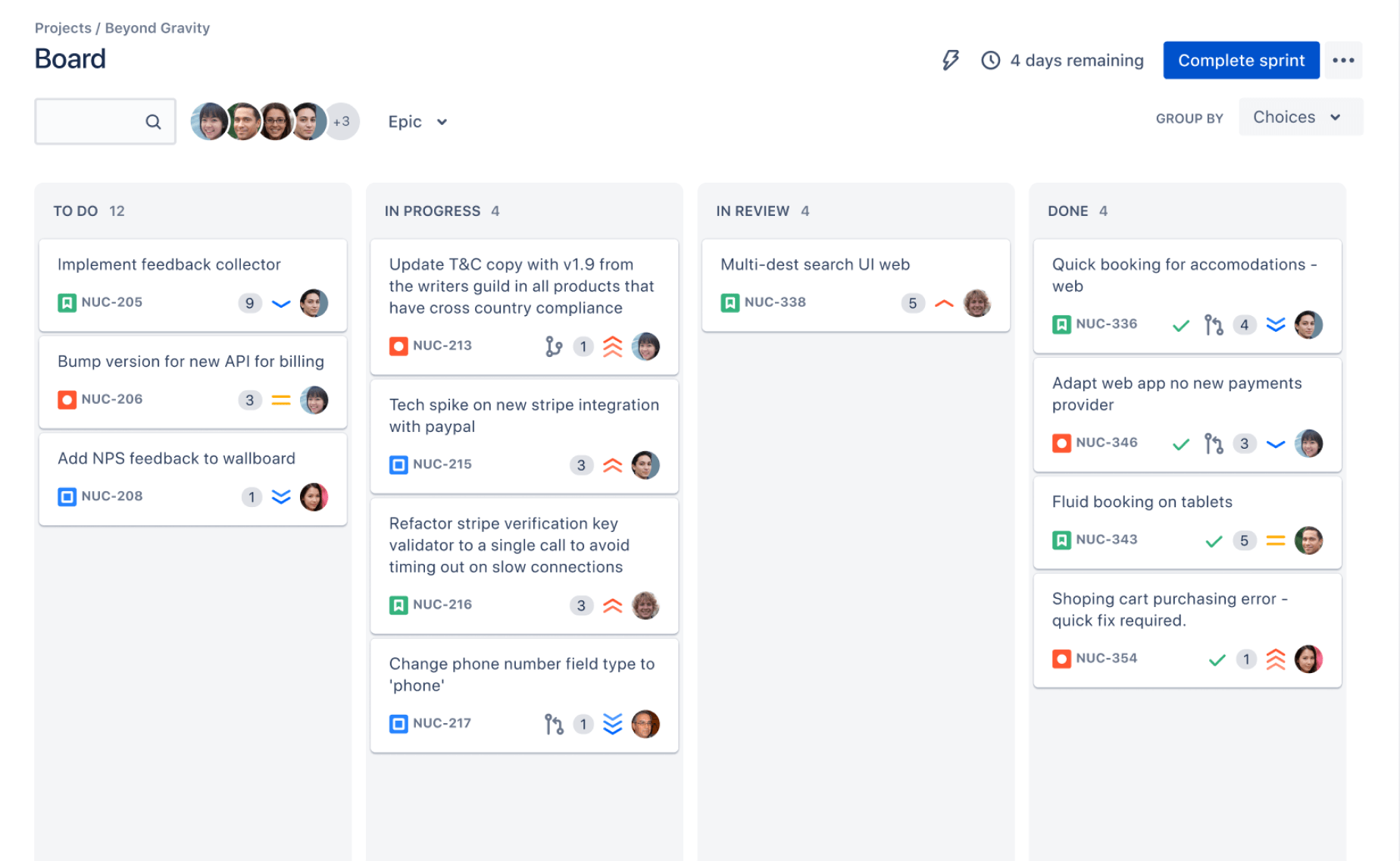
Cloud pricing
Cloud pricing is usually the easiest model to start. You select a plan, choose a user tier, and pay on a monthly or annual schedule.
Monthly billing offers flexibility when your headcount changes. Annual billing can simplify procurement and may offer a different effective rate, depending on the plan.
For example, a 45-person team may pay less than a 50-person team if pricing uses user bands. That makes your active-seat policy important.
Self-managed pricing
Self-managed Jira gives your organization more control over hosting, access, upgrades, and operational policies. It also transfers more responsibility to your internal team.
Your budget may include infrastructure, backups, monitoring, security reviews, upgrade testing, and administration. These costs sit beside the license rather than inside the headline price.
A self-managed option can suit regulated teams or companies with restricted-network requirements. It requires a clear ownership model before purchase.
What changes the total
Your final cost depends on more than the number of people listed in an account.
- Plan tier and feature requirements
- Billable users and occasional contributors
- Monthly or annual billing
- Cloud, self-managed, or private hosting
- Marketplace applications and integrations
- Premium support or administrative services
- Migration, training, and implementation effort
- Expected headcount growth during the contract
Here's why: two teams with the same headcount can receive very different quotes. One may need advanced controls and several integrations, while the other needs only core issue tracking.
What You Should Include in a Jira Cost Estimate
Start with a one-year estimate. Then create a three-year view if your organization expects stable usage or signs annual agreements.
1. Count real users by role
Separate engineers, product managers, designers, testers, executives, contractors, and occasional collaborators.
Ask what each group must do. Someone who creates, edits, assigns, or reports on work may need a paid seat. Someone who only receives occasional updates may have different access requirements.
For example, a 70-person department may include 40 regular contributors, 15 reviewers, 10 contractors, and five leaders. Confirm access rules for each group before choosing a tier.
2. Identify the required plan level
List the controls your team actually needs. Consider permissions, audit features, automation limits, reporting, administration, support, and security requirements.
Then separate essential capabilities from convenient extras. This prevents a team from paying for a higher tier because of one rarely used feature.
3. Add connected products
Jira may be only one part of your collaboration setup. You might also need service management, team communication, knowledge management, or advanced planning capabilities.
Calculate each product separately. A combined ecosystem can improve coordination, but its subscription total may exceed the initial Jira estimate.
4. Price integrations and apps
Marketplace applications often charge separately. Their pricing may follow users, instances, usage limits, or a different billing model.
Review every integration that supports testing, deployment, reporting, time tracking, portfolio planning, or security. A small app fee can become significant across several teams.
5. Include implementation work
Migration, workflow design, permission setup, training, and governance all require time. Internal staff may handle this work, or you may hire an external specialist.
For a small team, two weeks of configuration may be manageable. For a large organization, years of project history and dozens of workflows can make preparation a major cost.
6. Model growth
Estimate your likely headcount at renewal, not only your current headcount. Include new teams, acquisitions, contractors, and temporary project staff.
A simple planning formula is:
Estimated annual total = subscription fees + add-ons + services + internal administration + infrastructure, where applicable.
The formula is simple. The assumptions require careful review.
Cloud Versus Self-Managed: Which Cost Model Fits?
Cloud and self-managed deployments can support similar work, but their cost patterns differ.
| Cost area |
Cloud approach |
Self-managed approach |
| Initial setup |
Usually faster, with less infrastructure planning |
Requires environment preparation and technical ownership |
| Recurring payment |
Subscription based on plan and user tier |
License or subscription plus operational expenses |
| Infrastructure |
Generally included in the service |
Paid and managed by your organization or provider |
| Upgrades |
Usually handled by the service provider |
Planned, tested, and performed by your team |
| Customization |
Controlled by the available cloud capabilities |
More control, with greater administration responsibility |
| Restricted environments |
May not fit every network policy |
Can suit private or isolated operating requirements |
The cheaper-looking option is not always cheaper over three years. Cloud reduces infrastructure work, while self-managed deployment may better fit strict control requirements.
Let me explain: compare the total operating effort, not only the license line. If two administrators spend half their time maintaining a platform, that labor belongs in your comparison.
When cloud is a strong fit
Cloud often works well for teams that want quick deployment, predictable administration, and fewer infrastructure responsibilities.
A 25-person product team may prefer cloud because its technical staff can focus on releases instead of upgrades and server monitoring.
When self-managed deployment makes sense
Self-managed deployment may fit organizations with private-network requirements, internal hosting standards, or specialized security controls.
It also suits companies that already operate mature platform engineering practices. Those teams may have the skills and systems needed to manage availability and upgrades efficiently.
How User Tiers Affect Your Budget
User bands create a common pricing surprise. You may pay for a tier that exceeds your current headcount because the next lower band cannot support your team.
For instance, a team with 101 active contributors may enter a higher band than a team with 99. The difference matters when you forecast annual cost.
Use active-seat governance
Review accounts regularly. Remove former employees, identify inactive contractors, and clarify whether occasional reviewers need full access.
Create an ownership rule for access requests. A team lead can approve new seats, while an administrator reviews unused accounts each month.
Separate contributors from observers
Not everyone who needs visibility needs the same permissions. Ask whether each person must edit work, manage workflows, create reports, or only view progress.
This distinction can prevent unnecessary upgrades. It also improves security because people receive access that matches their responsibilities.
Plan for temporary staff
Contractors and project specialists can push you into a higher tier for a short period. Estimate how long they need access and whether their accounts can be removed promptly.
For a six-month implementation, model the temporary seats separately. Do not assume a one-month increase will disappear automatically.
A Practical Comparison Method for 2026 Buyers
You can compare Jira licensing with a five-column purchasing worksheet:
| Question |
Why it matters |
| How many people need access? |
Determines the likely user tier and seat exposure. |
| Which features are essential? |
Prevents unnecessary movement to a higher plan. |
| Which products and apps are required? |
Reveals costs outside the core subscription. |
| Who manages the platform? |
Shows administration and support effort. |
| How will the team grow? |
Prepares you for renewal and tier changes. |
Next, request a quote using the same assumptions for every option. Keep user count, contract period, integrations, and hosting requirements consistent.
The best part? A consistent comparison exposes trade-offs quickly. You can see whether a lower subscription creates higher administration work.
Compare three scenarios
- Lean scenario: current contributors, essential capabilities, and no major growth.
- Expected scenario: planned hiring, normal app usage, and standard administration.
- Expansion scenario: new teams, higher automation demand, extra integrations, and additional governance.
Use the expected scenario for your purchasing recommendation. Keep the other two for budget risk planning.
Ask these questions before signing
- How are users counted?
- What happens when your team crosses a pricing band?
- Can you reduce seats at renewal?
- Which support services are included?
- Are required apps priced separately?
- What migration assistance is available?
- How do annual price changes work?
- Which hosting options meet your security requirements?
Jira License Pricing Alternative: ONES.com
ONES.com combines project management and knowledge management on one platform. ONES Project provides project and issue management, while ONES Wiki supports team knowledge management.
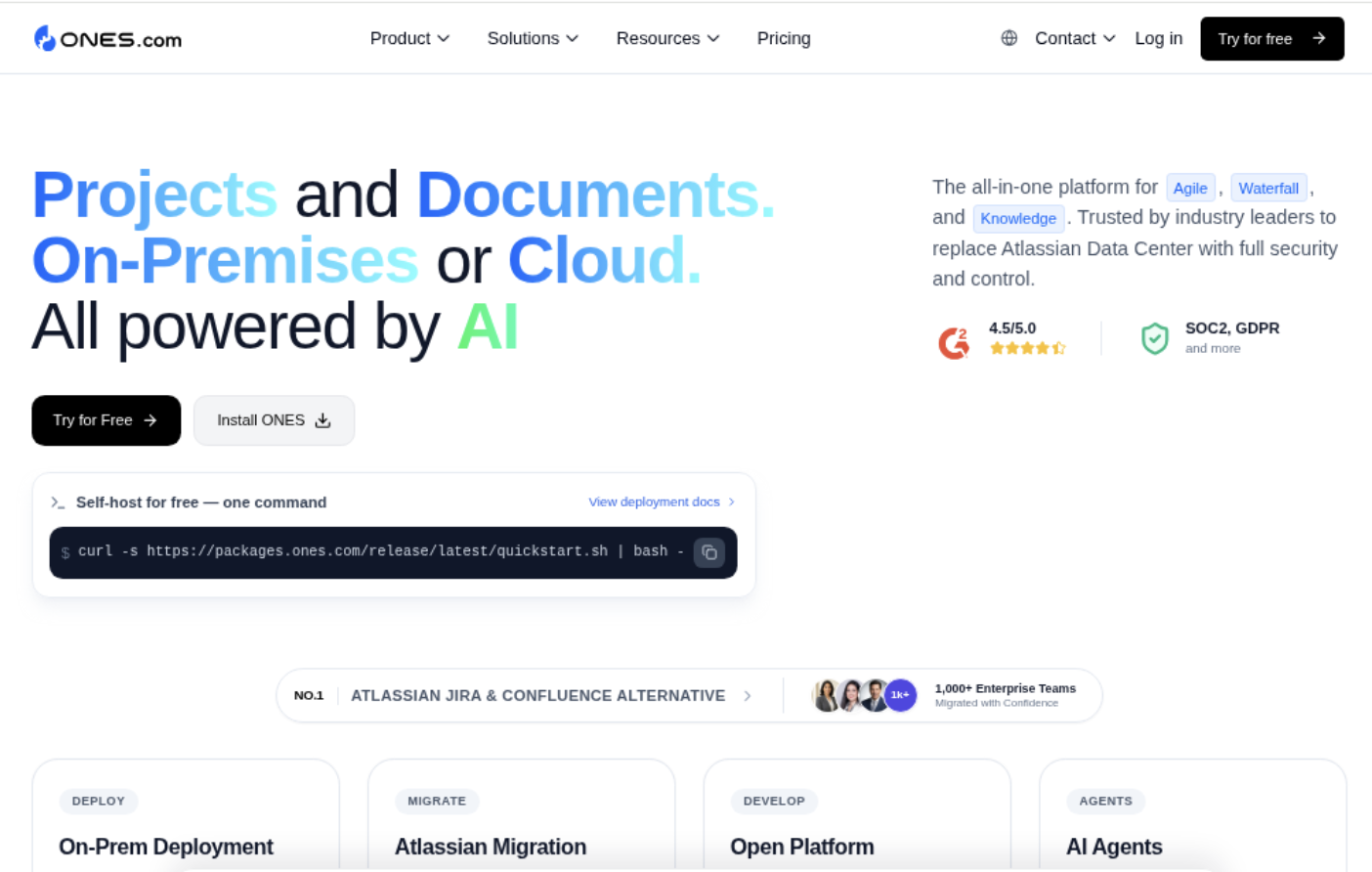
You can purchase ONES Project and ONES Wiki separately. This structure lets you match the subscription to the capabilities your team needs instead of adopting every product at once.
Value Proposition
ONES.com can suit teams comparing a Jira alternative with a unified project and knowledge workspace. It supports cloud, on-premise, private cloud, and air-gapped deployments.
A free plan supports up to 30 seats. The self-hosted versions maintain feature parity with the cloud version, which helps teams choose deployment based on operational requirements.
Core Capabilities
- Fragmented project and knowledge work → ONES Project and ONES Wiki → keep delivery work and team guidance connected within one platform.
- Jira-compatible workflows → configurable workflows in ONES Project → help teams preserve familiar approval and delivery patterns during evaluation.
- Limited reporting → built-in reporting → gives managers visibility into progress, workload, and project trends without depending on several add-ons.
- Rigid process fields → custom workflows and fields → allow teams to reflect different work types, approval stages, and ownership rules.
- Manual sprint coordination → sprint management → supports planning, execution, and review within a structured agile cycle.
- Repetitive administration → automation → reduces routine status changes, assignments, and notifications.
- Restricted network requirements → air-gapped deployment → gives qualifying teams an option for isolated operating environments.
- Separate hosting needs → cloud, on-premise, or private cloud deployment → lets procurement and security teams evaluate the environment alongside subscription cost.
- Too many plugins → native capabilities → may reduce reliance on separate extensions for common project controls and reporting needs.
Application Scenarios
Growing software team: A 20-person engineering group can begin with the free 30-seat allowance, then assess paid capacity as more contributors join.
The team can configure sprint workflows, custom fields, automation, and reporting without designing its process around several separate extensions.
Regulated organization: A company with restricted network policies can evaluate an on-premise, private cloud, or air-gapped deployment. Its security team can review the operating model before selecting a subscription path.
Cross-functional delivery group: Product, engineering, and operations teams can use ONES Project for delivery work. They can add ONES Wiki separately when shared knowledge management becomes a priority.
When comparing costs, include seats, deployment, administration, migration, and required capabilities. A lower app count can matter as much as the base subscription.
Common Challenges When Estimating License Cost
Challenge: confusing list price with total cost
Solution: Add apps, services, internal administration, infrastructure, training, and renewal assumptions to the estimate.
A subscription quote answers one question. Your finance team needs the cost of operating the full solution.
Challenge: counting every employee as a full contributor
Solution: Map access by responsibility. Confirm who edits work, who manages projects, and who only needs visibility.
This approach can improve both budget control and permission design.
Challenge: ignoring growth until renewal
Solution: Create an expected and expansion scenario. Include hiring plans, acquisitions, contractors, and new project groups.
Then ask how a higher user tier changes your annual commitment.
Challenge: underestimating self-managed operations
Solution: Assign realistic labor costs for upgrades, backups, monitoring, security reviews, and incident response.
Self-managed hosting can be appropriate, but it should never be treated as maintenance-free.
Challenge: selecting features before defining outcomes
Solution: Write down the work you need to improve. For example, shorten approval time, improve release visibility, or reduce manual reporting.
Then connect each outcome to a required capability. This keeps the buying decision practical.
FAQs About Jira Licensing Costs
Does Jira charge per user?
Jira generally uses user-based pricing for its cloud plans, with costs affected by the selected plan and user tier. The precise calculation can vary by product and billing arrangement.
Review how occasional contributors, contractors, and inactive accounts are treated. Confirm the current rules in your quote before finalizing a budget.
Is annual billing cheaper than monthly billing?
Annual and monthly billing can produce different effective costs, but the result depends on the plan, user tier, promotions, and contract terms.
Annual billing may simplify procurement and provide more predictable budgeting. Monthly billing may suit teams with uncertain headcount or frequent changes.
Do Jira apps cost extra?
Many marketplace applications have separate charges. Their pricing may depend on users, product tier, usage, or deployment type.
List every required app before comparing plans. Include integration maintenance and renewal timing in your estimate.
Is self-managed Jira always less expensive?
No. Self-managed deployment may reduce or restructure subscription costs, but your organization takes on infrastructure and operational responsibilities.
It can make sense when you already have suitable hosting, security controls, and technical staff. Compare the full three-year operating cost rather than the license alone.
How should a small team compare Jira with an alternative?
Start with the number of active contributors, required workflows, reporting needs, deployment restrictions, and expected growth.
Then compare the total cost of the capabilities you will actually use. A lower price is useful only when the platform supports your essential work without costly additions.
Conclusion
Jira license pricing becomes easier to evaluate when you separate seats, plan features, connected products, apps, hosting, administration, and growth.
Use a one-year estimate for immediate budgeting. Add a three-year view when deployment, migration, or annual commitments affect the decision.
But here's the truth: the wrong estimate can create the same problem as an expensive license. You may underbudget the platform, or pay for capabilities your team never uses.
Define access by role, compare cloud with self-managed operations, and test lean, expected, and expansion scenarios. Then evaluate Jira and alternatives using the same assumptions.
That process gives you a clearer buying decision for 2026 and helps your team choose a project management environment that fits both its work and its operating model.