Jira MCP Server: A Practical Setup Guide for 2026 Users
Setting up a jira mcp server in 2026? Learn secure authentication, permissions, and testing for reliable AI workflows. Read the practical guide now.
Connecting Jira to an AI assistant sounds simple until authentication fails, permissions become unclear, or the assistant edits the wrong issue. A poorly configured Jira MCP server can expose sensitive project context, create duplicate tickets, or produce unreliable answers. The problem gets worse when your team mixes Jira Cloud, Data Center, different AI clients, and several authentication methods.
But here's the truth: most setup failures come from a few predictable gaps. You need the right MCP server, a secure connection, carefully scoped Jira permissions, and a test plan that checks real workflows. This guide walks you through each step for 2026, with practical examples for reading issues, creating tickets, searching projects, and controlling write actions safely.
How to Set Up a Jira MCP Server
A Jira MCP server connects an AI application to Jira through the Model Context Protocol. It translates requests such as “show my open bugs” into authorized Jira API actions, then returns structured results to the assistant.
You can use an MCP server with Jira Cloud or Jira Data Center, depending on the server implementation and its supported authentication methods. Your setup should include four elements: an MCP-compatible client, a Jira MCP server, Jira credentials, and a controlled project environment for testing.
- Choose the correct Jira environment. Confirm whether your team uses Jira Cloud, Jira Data Center, or a private deployment. Check that the MCP server supports your Jira version, API endpoints, and authentication method.
- Choose an MCP client. Use an AI desktop application, coding assistant, internal agent, or another client that supports MCP servers. Review its transport support, such as local standard input/output or remote HTTP connections.
- Install or access the MCP server. Follow the server maintainer’s installation process. Some servers run locally through a package manager, while others run as a hosted service. Pin a reviewed version and record its release details for future maintenance.
- Create a dedicated Jira identity. Avoid connecting the server with a personal administrator account. Create a service account with only the project permissions required for its tasks.
- Configure authentication. Jira Cloud commonly uses an account email with an API token. Jira Data Center may use personal access tokens, OAuth, or an organization-approved authentication method. Store credentials in environment variables or a protected secret manager.
- Register the server in your MCP client. Add the server command or remote endpoint to the client’s MCP configuration. Include only the required environment variables and connection settings.
- Start with read-only permissions. Test issue search, project listing, issue details, comments, and sprint information before enabling ticket creation or updates.
- Test one controlled project. Use a sandbox project or a small internal project. Try a few predictable requests, such as finding unresolved bugs assigned to you.
- Review the tool permissions. Identify which MCP tools can read issues, create tickets, edit fields, add comments, transition workflows, or manage attachments. Disable unnecessary tools where possible.
- Enable write actions gradually. Allow one write operation at a time. Start with creating a test issue, then verify its fields, project, assignee, labels, and workflow status.
- Add monitoring and rollback procedures. Track MCP activity through Jira audit logs, server logs, and client activity records. Define how you will revoke tokens, disable the server, and reverse unwanted changes.
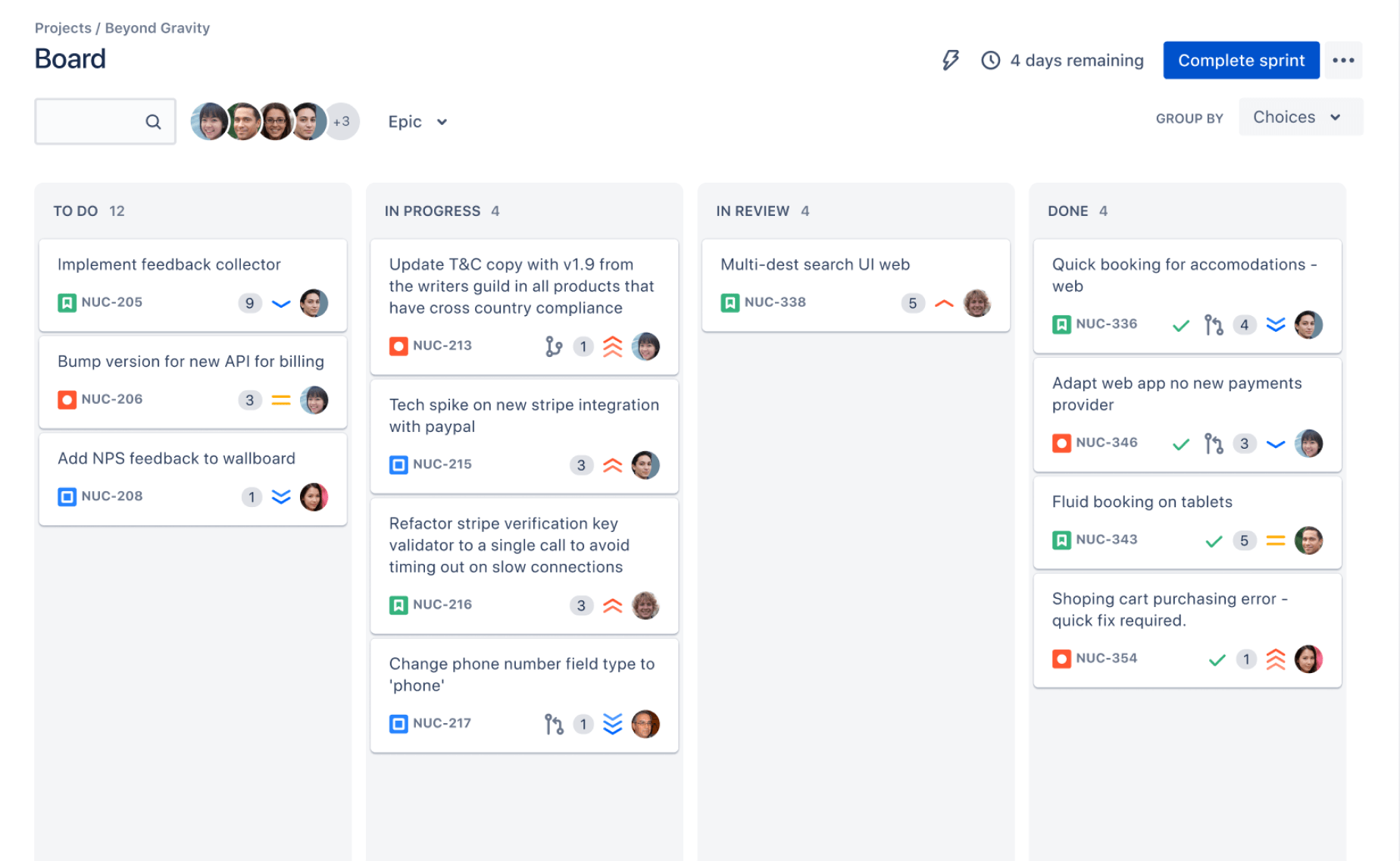
Example local configuration pattern
A local MCP client usually launches the server as a process. The exact syntax varies, so treat this pattern as a planning example rather than a universal command.
{
  "mcpServers": {
    "jira": {
      "command": "your-mcp-server-command",
      "args": ["--transport", "stdio"],
      "env": {
        "JIRA_URL": "https://your-company.atlassian.net",
        "JIRA_EMAIL": "service-account@example.com",
        "JIRA_API_TOKEN": "stored-in-your-secret-manager"
      }
    }
  }
}
Never paste a live token into a shared chat, public repository, or team wiki. Replace exposed credentials immediately and review recent Jira activity after any accidental disclosure.
Example remote configuration pattern
A hosted MCP server may expose an HTTP endpoint. In that case, your client may need an endpoint URL, an authentication header, and transport settings approved by your security team.
{
  "mcpServers": {
    "jira-remote": {
      "url": "https://mcp.example.com/jira",
      "headers": {
        "Authorization": "Bearer your-short-lived-token"
      }
    }
  }
}
Remote connections need extra protection. Use TLS, short-lived credentials, network restrictions, request logging, and an explicit policy for where Jira content may travel.
Run a practical smoke test
Start with a harmless request that tests identity and project visibility. For example, ask the assistant to list projects that the service account can access.
Next, search for one known issue key and ask for its summary, status, priority, and assignee. Compare the answer with Jira manually. Then test a narrow query for unresolved issues assigned to one person.
Only after those checks should you try a write action. Ask the assistant to create a clearly labeled test ticket, inspect the result in Jira, and delete or close it according to your team’s policy.
What a Jira MCP Server Actually Does
MCP provides a standard way for an AI application to discover and call external capabilities. A Jira MCP server exposes selected Jira actions as tools that the assistant can use during a conversation.
For example, a server might expose tools for searching issues, retrieving issue details, listing projects, reading comments, creating tickets, updating fields, or transitioning workflow states. The available tools depend on the implementation and its permission model.
Request and response flow
Imagine asking, “Which high-priority bugs have remained unresolved for more than seven days?” The assistant interprets your request, creates a Jira query, sends it through the MCP server, and receives matching issues.
The assistant then summarizes the results. It does not automatically gain every Jira permission. The server still acts through its configured credentials, Jira access rules, and available tool definitions.
Read tools and write tools
Read tools retrieve information without changing Jira. Typical examples include issue search, issue detail lookup, project listing, sprint retrieval, and comment history.
Write tools create or modify records. Examples include creating an issue, editing a description, adding a comment, changing an assignee, updating a priority, and moving an issue through a workflow.
That distinction matters. A read-only assistant can help you investigate a release backlog with limited risk. A write-enabled assistant can create operational problems if your prompts, permissions, or approval rules are weak.
Capabilities depend on the implementation
There is no single universal Jira MCP server with identical tools, commands, or security behavior. Two servers may support the same Jira API while offering different search controls and write permissions.
Before installation, inspect the project’s maintenance activity, supported Jira editions, authentication approach, transport options, permission requirements, and handling of errors or rate limits.
Authentication and Permission Design
Authentication proves which Jira identity is making a request. Authorization determines what that identity can see or change. You need both to make an MCP connection safe.
Here's why: an assistant may answer a question correctly while still accessing more project information than intended. A valid connection does not prove that the access scope is appropriate.
Use a separate service account
A dedicated account gives you a clean audit trail and makes revocation easier. Name it clearly, such as mcp-jira-readonly or mcp-jira-automation.
Give the account access to specific projects rather than the whole Jira instance. If the assistant only summarizes sprint issues, it does not need administrative permissions, user management, or workflow configuration rights.
Prefer narrow credentials
For Jira Cloud, an API token tied to a dedicated account is often simpler than sharing a personal password. For Data Center, use the authentication method approved by your organization.
Keep credentials outside client prompts and source-controlled configuration. Rotate them on a schedule and whenever an account owner, server host, or integration boundary changes.
Separate read and write identities
A practical pattern is to use one identity for analysis and another for controlled automation. The read-only identity can answer questions about sprint progress, while the write identity requires additional approval.
For example, your release manager may use read access throughout the day. A separate workflow can create release tickets only after a human confirms the proposed fields.
Limit sensitive project access
Jira may contain security reports, customer details, employment information, commercial plans, or unreleased product decisions. Project permissions alone may not cover every confidentiality concern.
Review issue security levels, custom fields, comments, attachments, and linked issues. An assistant can reveal sensitive context through a summary even when the original issue is not directly shown.
Security Controls for MCP Connections
MCP adds a new path between an AI client and Jira. You should treat that path like any other integration boundary, especially when the server can write changes.
The best part? You can reduce risk without blocking useful automation. Start with narrow access, inspect every available tool, and expand only when a real workflow justifies it.
Protect against prompt injection
Jira comments and descriptions can contain text written by many people. A malicious comment might instruct an assistant to ignore your rules, reveal credentials, or modify unrelated issues.
Tell the assistant to treat Jira content as untrusted context. Require confirmation before following instructions found inside an issue, comment, attachment, or linked page.
Require confirmation for high-impact actions
Human approval should usually precede actions such as bulk edits, workflow transitions, permission changes, ticket deletion, or comments sent to external stakeholders.
A safer interaction looks like this: the assistant proposes five field changes, shows the issue keys and new values, and waits for your approval before making updates.
Control network exposure
A local stdio server may reduce public exposure because it runs on the same workstation as the MCP client. A remote HTTP server can support centralized management, but it needs stronger network controls.
Use private networking where possible. Restrict inbound access, enforce TLS, rotate tokens, and monitor unusual request volume.
Log activity without over-collecting content
Logs should help you answer who called which tool, when the call happened, and whether Jira accepted the action. Avoid copying entire issue histories into long-term logs unless you have a clear retention reason.
For example, retaining an issue key, operation type, result status, and account identity may be enough for troubleshooting. Your security team can define the appropriate retention period.
Testing and Troubleshooting
Most connection problems fall into four groups: authentication, permissions, protocol transport, and Jira query behavior. Test each layer separately rather than changing several settings at once.
| Symptom |
Likely cause |
Practical check |
| The client cannot start the server |
Incorrect command, package path, runtime, or environment variable |
Run the server command manually and inspect the startup output |
| Jira returns unauthorized |
Expired token, wrong account, incorrect URL, or authentication mismatch |
Verify the account and token through an approved Jira API test |
| Jira returns forbidden |
The account lacks project, issue, field, or workflow permission |
Compare the requested action with the account’s Jira permission scheme |
| Search results are incomplete |
Jira Query Language error, project restriction, pagination, or issue security |
Run the same query directly in Jira and compare visible results |
| Write action affects the wrong issue |
Ambiguous natural-language matching or weak confirmation rules |
Require an exact issue key before every update |
| Requests time out |
Network restrictions, rate limits, large responses, or server errors |
Reduce query scope and inspect server and Jira response timings |
Use exact issue keys
“Update the login bug” is ambiguous when several projects contain similar issues. “Update PROJ-1842” is much safer because the target is explicit.
For bulk work, ask the assistant to show the complete issue list first. Confirm the list before allowing changes.
Keep responses small
Large Jira responses increase latency and make summaries harder to verify. Ask for specific fields, limit the number of issues, and use date ranges for historical searches.
Instead of asking for every detail in a project, request issue key, summary, status, priority, assignee, and updated date. You can retrieve individual details afterward.
Test failure behavior
A good integration should fail safely. Test expired credentials, inaccessible projects, invalid issue keys, unsupported fields, rate limits, and interrupted connections.
Check whether the server reports the failure clearly or silently claims success. Silent success is especially dangerous for ticket creation and workflow transitions.
Practical Jira MCP Workflows
Once the connection works, start with repeatable workflows. A clear workflow gives the assistant boundaries and makes its results easier to review.
Daily backlog review
Ask for unresolved issues assigned to your team, grouped by priority and sorted by recent activity. Then request a short list of tickets without updates for more than five business days.
Verify the result against Jira before sharing it in a planning meeting. Search restrictions or issue security rules may make the assistant’s view different from a project administrator’s view.
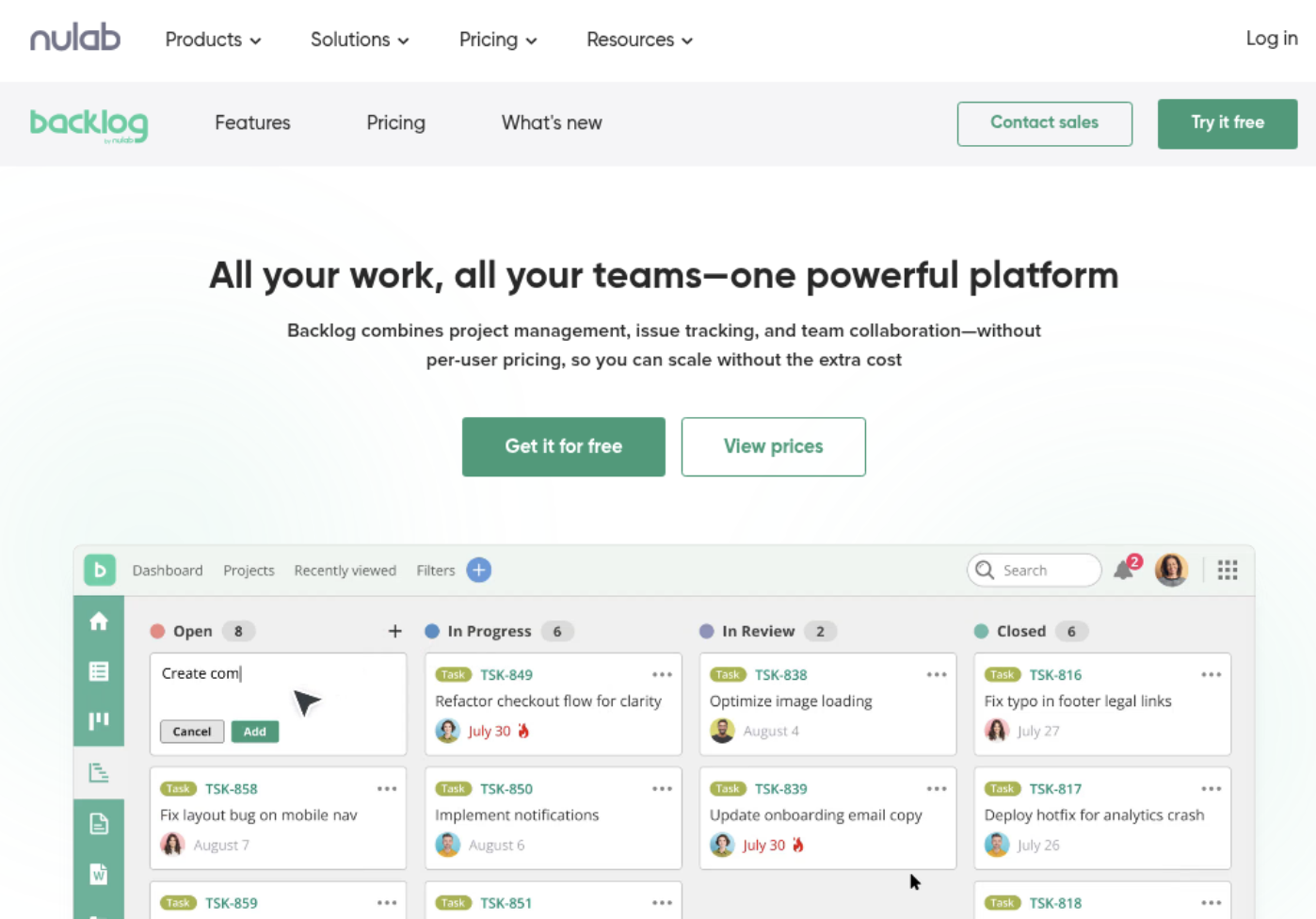
Sprint risk review
Ask the assistant to list incomplete sprint issues, identify blocked items, and summarize recent comments. Require issue keys beside every claim.
This creates a useful review pattern: the assistant finds signals, while you confirm whether a ticket is genuinely blocked or simply waiting for clarification.
Bug triage
Give the assistant a defined project, component, priority range, and time window. Ask it to group similar bug summaries and flag missing reproduction details.
Keep final severity decisions with the responsible team. Similar wording does not always mean duplicate behavior, and automated grouping can miss technical differences.
Ticket creation from meeting notes
You can ask an assistant to propose Jira tickets from approved meeting content. Require a preview containing summary, description, project, issue type, priority, labels, and acceptance criteria.
After review, create one test ticket or a small batch. Avoid bulk creation until you have verified field mapping and workflow behavior.
Natural Jira MCP Server Solution: ONES.com
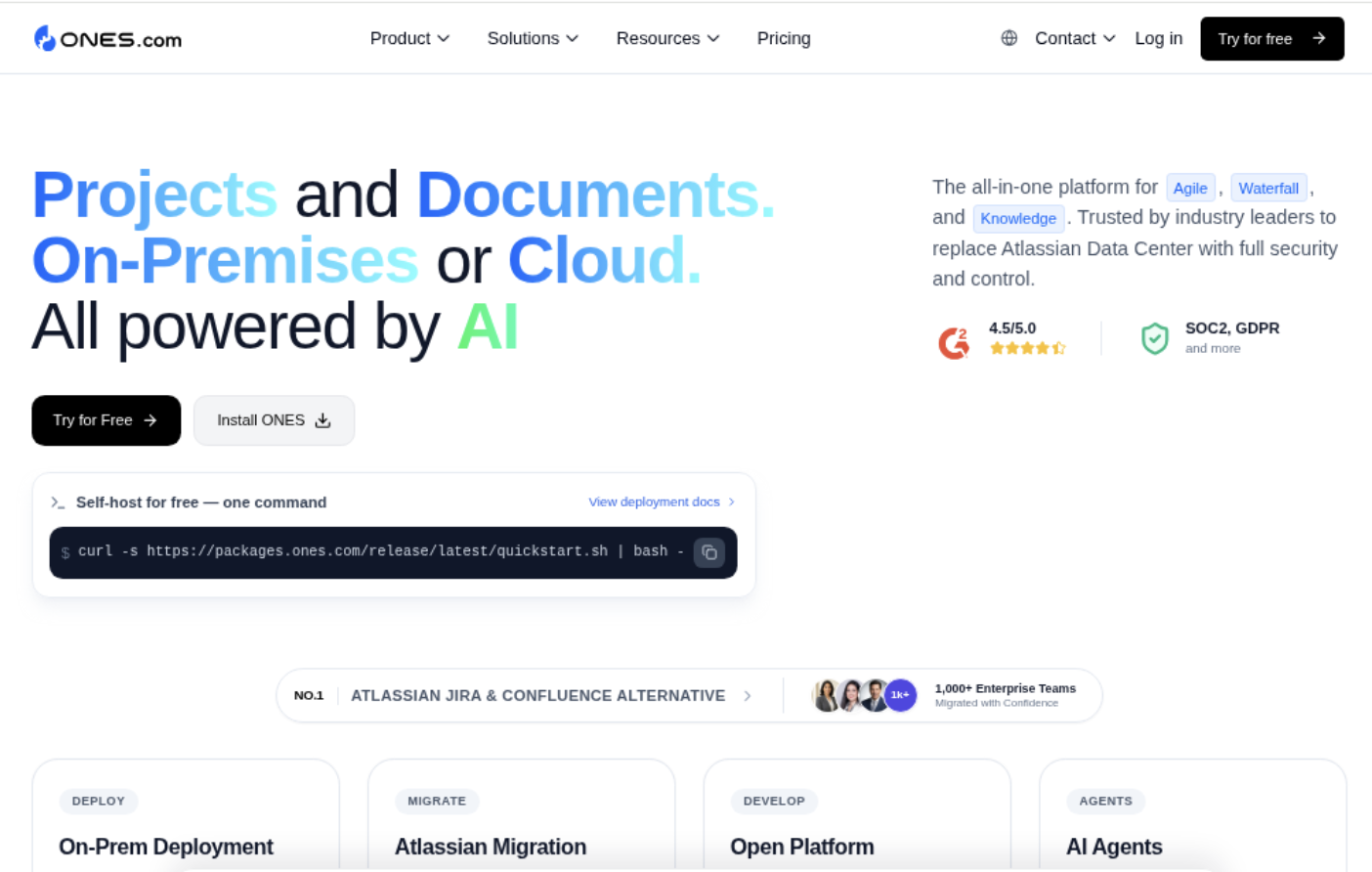
Value Proposition
ONES.com combines project management and knowledge management in one platform, with ONES Project for project work and ONES Wiki for team knowledge. If your team is exploring a Jira alternative because context is scattered across several systems, this integrated approach can reduce handoffs.
ONES Project is sold separately from ONES Wiki. ONES.com supports cloud, on-premise, private cloud, and air-gapped deployments, with full feature parity between cloud and self-hosted versions.
Core Capabilities
Scattered planning context → unified project workspace → fewer handoffs
When plans, issues, and team knowledge live in separate places, an assistant needs more connections to answer a simple status question. ONES.com brings project work and knowledge management into one platform, helping teams keep related context closer together.
Jira migration concerns → Jira-compatible workflows → familiar delivery practices
Teams moving away from Jira may worry about rebuilding issue types, statuses, and approvals. ONES Project supports Jira-compatible workflows, so established project practices can be represented without redesigning every process from scratch.
Plugin sprawl → native reporting and automation → fewer integration dependencies
Separate plugins can create maintenance overhead and inconsistent permissions. ONES Project includes built-in reporting, automation, custom workflows, and custom fields, giving teams more functionality within the core platform.
Complex sprint coordination → sprint management → clearer iteration planning
When sprint work depends on manual status checks, planning meetings become longer. Sprint management capabilities help teams organize iteration scope, monitor progress, and identify unfinished work.
Restricted network requirements → on-premise, private cloud, or air-gapped deployment → greater deployment control
Some engineering teams cannot place project information in a public cloud. ONES.com supports on-premise, private cloud, and air-gapped deployment options for environments with stricter network requirements.
High licensing barriers → free plan for up to 30 seats → lower-risk evaluation
A small team can evaluate the platform without immediately purchasing a large rollout. The free plan supports up to 30 seats, giving you room to test workflows with a real project group.
Separate knowledge and delivery tools → ONES Wiki plus ONES Project → connected team practices
Project decisions often lose context when planning and knowledge tools are disconnected. Using ONES Wiki for knowledge management alongside ONES Project can help teams connect decisions, requirements, and delivery work.
Deployment inconsistency → feature parity across hosting models → more flexible operations
Some self-hosted products omit features available in cloud editions. ONES.com maintains full feature parity between cloud and self-hosted versions, allowing your deployment choice to follow operational requirements.
Application Scenarios
Regulated engineering team: A team working in a restricted network can evaluate an air-gapped ONES.com deployment. Project tracking remains available without requiring a public-cloud Jira environment.
Growing product organization: A product group can use ONES Project for backlogs, sprints, custom fields, reporting, and automation while using ONES Wiki for requirements and internal knowledge.
Jira replacement assessment: A team frustrated by plugin maintenance can compare its current Jira workflows with ONES Project’s native capabilities, then test one delivery team before planning a wider migration.
Common Challenges
Challenge: The assistant sees too much Jira content
Solution: Use a dedicated account with project-level access, issue security restrictions, and only the MCP tools needed for the workflow. Review comments and attachments as carefully as structured fields.
Challenge: The assistant changes issues without enough review
Solution: Begin with read-only access. Add confirmation for every write action, require exact issue keys, and display proposed field changes before execution.
Challenge: Search results appear incomplete
Solution: Compare the assistant’s query with the same Jira Query Language search in Jira. Check pagination, project permissions, issue security, date filters, and custom field behavior.
Challenge: The server becomes difficult to maintain
Solution: Pin versions, record configuration changes, monitor error rates, and assign an owner. Review the server after Jira upgrades, authentication changes, and MCP client updates.
Challenge: Natural-language requests remain ambiguous
Solution: Create prompt patterns that specify project, issue key, fields, date range, and permitted action. Ask the assistant to state its interpretation before it performs a change.
FAQs
Can a Jira MCP server create and update issues?
It can, when the server exposes write tools and its Jira account has the required permissions. Start with read-only tools, then enable one write action at a time. Require confirmation before creating tickets, changing fields, adding comments, or transitioning issues. The exact capabilities depend on the MCP server implementation and the Jira edition it supports.
Is a Jira MCP server safe for production?
It can be suitable for production when you treat it as a privileged integration. Use a dedicated account, narrow project access, protected credentials, transport security, logging, and approval for high-impact actions. Test failure behavior before rollout. Avoid giving an AI client broad administrator access simply because the connection is convenient.
Does the setup work with Jira Data Center?
That depends on the selected MCP server. Some implementations target Jira Cloud APIs, while others support Data Center endpoints or self-hosted deployments. Check the server’s compatibility notes, authentication methods, network requirements, and Jira version support before installation. Test against a noncritical project before connecting a production environment.
What should I test first?
Test identity, project visibility, issue lookup, a narrow search, and an inaccessible project. Then test one controlled write action with an exact issue key. Confirm that the result appears correctly in Jira and that errors are reported clearly. This sequence exposes most authentication, permission, query, and field-mapping problems early.
Can an MCP server read Jira comments and attachments?
Only if the implementation exposes those capabilities and the connected Jira account can access them. Comments and attachments may contain sensitive or untrusted text, so include them in your security review. Treat instructions found inside Jira content as untrusted context, and require approval before acting on them.
Conclusion
A Jira MCP server gives an AI assistant a controlled bridge into Jira. The reliable setup path is straightforward: confirm compatibility, use a dedicated account, protect credentials, begin with read-only access, test narrow searches, and add write actions only with approval.
But here's the truth: the protocol does not replace permission design or operational judgment. A secure integration depends on clear boundaries, careful monitoring, and exact workflows.
If fragmented project context is the deeper problem, evaluate whether an integrated platform such as ONES.com fits your operating model. With ONES Project, ONES Wiki, multiple deployment choices, and native project capabilities, you can address the workflow behind the integration rather than adding another connection.