Jira on the Cloud: A Practical Setup Guide for Teams in 2026
Moving to Jira on the cloud? Learn a practical 2026 setup for cleaner workflows, permissions, and collaboration. Read now to get started.
Moving your team to Jira on the cloud can simplify collaboration, improve visibility, and reduce maintenance work. It can also create confusion if you begin without a clear plan.
Projects may inherit messy workflows, unclear permissions, overloaded notifications, and fields nobody understands. A rushed setup can make everyday work slower, even when the platform itself is capable.
But here's the truth: a successful cloud setup depends less on switching environments and more on designing a practical operating model. You need the right project structure, workflows, roles, automations, and adoption plan.
This guide walks you through the process step by step. You will learn how to prepare your team, configure Jira Cloud, manage security, launch smoothly, and improve the system throughout 2026.
How to Set Up Jira Cloud for Your Team
Jira on the cloud is Jira hosted and maintained by Atlassian, so your team accesses project work through a web browser while Atlassian manages much of the underlying infrastructure.
A reliable setup follows six practical steps:
- Define your working model. Decide how your team plans, tracks, reviews, and completes work.
- Choose the right project structure. Separate work by product, department, service, or delivery stream.
- Configure issue types and fields. Keep the information people need while removing unnecessary complexity.
- Design workflows and permissions. Make status changes, ownership, approvals, and access easy to understand.
- Add automation and reporting. Remove repetitive administration and create useful views for different roles.
- Launch gradually and improve. Start with a controlled rollout, collect feedback, and refine the configuration.
Here's why: Jira Cloud works best when the system reflects how your team already makes decisions. Configuration should support the work rather than force every team into the same process.
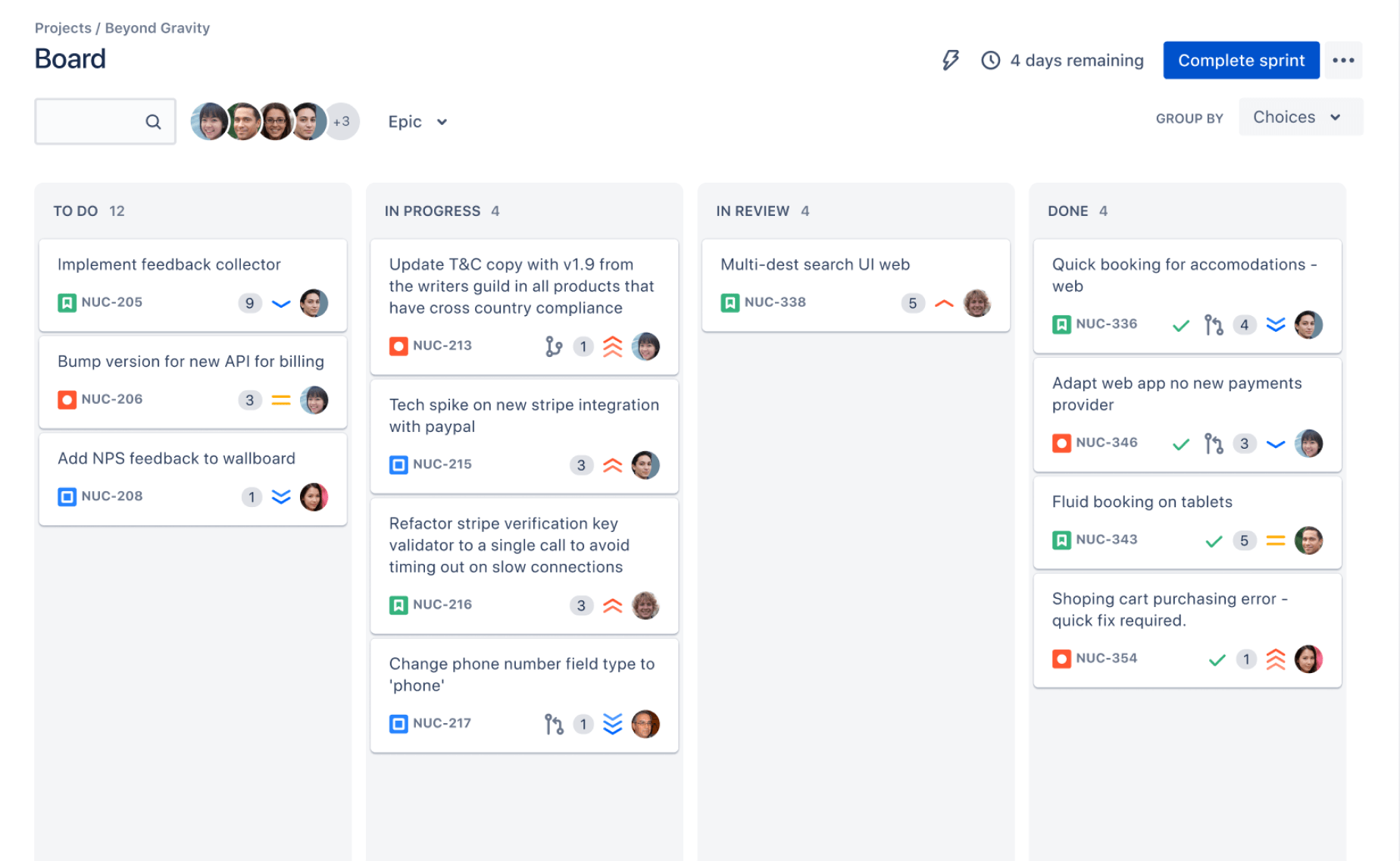
1. Plan the Cloud Environment Before You Configure It
Start by describing how work moves through your team today. For example, a software team might receive a feature request, refine it, schedule it, build it, test it, and release it.
That simple sequence helps you identify the statuses, responsibilities, and approvals Jira needs. It also shows which steps create delays.
Set Clear Objectives
Choose two or three outcomes for the setup. Useful objectives include:
- Give product managers a reliable view of delivery progress.
- Help engineers understand priorities without searching through multiple systems.
- Reduce manual status updates during weekly meetings.
- Create a consistent process for urgent support work.
- Improve reporting for cycle time, workload, and blocked work.
A vague goal such as “use Jira better” will not guide configuration decisions. A measurable goal such as “show every active initiative, owner, target date, and delivery status” gives you a clear test.
Choose a Suitable Project Model
Jira Cloud commonly supports team-managed and company-managed project approaches. The right choice depends on how much control and standardization you need.
| Project approach |
Best fit |
| Team-managed |
A small team that needs faster setup and local control over its process. |
| Company-managed |
An organization that needs shared workflows, permissions, schemes, and reporting standards. |
A startup with one product squad may prefer a lightweight team-managed project. A larger organization with several engineering groups may need company-managed projects for consistent governance.
You might be wondering: should every department receive a separate project? Usually, no. Create a separate project when the team needs a different workflow, permission model, reporting boundary, or work ownership structure.
Map People to Responsibilities
Define who owns the platform, who administers projects, and who manages day-to-day work. A practical responsibility model may include:
- Platform administrator: manages global settings, access, integrations, and security.
- Project administrator: manages project configuration and local workflows.
- Product owner: prioritizes work and clarifies acceptance criteria.
- Delivery lead: monitors progress, dependencies, and blockers.
- Contributor: creates, updates, and completes assigned work.
- Stakeholder: views progress and provides feedback where appropriate.
Writing down these responsibilities prevents a common problem: everyone assumes someone else will maintain the system.
2. Configure Projects, Work Types, and Fields
After planning, configure only the information your team will actively use. Every extra field adds friction during creation, editing, searching, and reporting.
Create a Simple Project Structure
Organize work around meaningful boundaries. For example, a software company could create projects for:
- Mobile application development
- Web platform development
- Customer support operations
- Internal technology services
A project should have a clear owner and purpose. If people cannot explain why a project exists, it probably needs consolidation or retirement.
Use Work Types That Match Real Work
Common work types include epics, stories, tasks, bugs, and subtasks. Each should answer a different planning question.
- Epic: Which larger outcome contains related work?
- Story: What user or business need should the team deliver?
- Task: What specific piece of work needs completion?
- Bug: What existing behavior needs correction?
- Subtask: Which smaller activity supports a larger item?
For example, “Improve checkout reliability” could be an epic. “Show a clear payment error message” could be a story. “Add automated coverage for declined cards” could be a task or subtask.
Design Fields Around Decisions
Keep a field when it helps someone make a decision, assign work, measure progress, or find an item later. Remove it when it only records information nobody uses.
Useful fields may include priority, product area, target release, severity, customer impact, and responsible team. Avoid creating separate fields for similar concepts, such as “team,” “delivery group,” and “assigned group,” unless they have distinct purposes.
Here’s a practical test: ask three people to explain what a field means and how they use it. If their answers differ, rename the field or remove it.
Write Better Work Items
A clear work item usually includes a concise title, context, expected result, acceptance criteria, and relevant links. For a bug, include reproduction steps, expected behavior, actual behavior, and impact.
For example, “Checkout fails” is difficult to prioritize. “Payment confirmation disappears after a successful card charge” gives the team a clearer starting point.
3. Build Workflows That Reflect Team Decisions
A workflow should show how work changes from an idea into a completed result. It should not represent every conversation, handoff, or private activity.
Start With Meaningful Statuses
A practical development workflow might include:
- Backlog
- Selected for development
- In progress
- In review
- In testing
- Ready for release
- Done
Each status should have a clear meaning. “In progress” should not mean “someone has thought about it.” It should mean active work is underway.
Too many statuses create false precision. If your team cannot explain the difference between two statuses, combine them.
Make Transitions Useful
Transitions can require fields, trigger automation, or assign responsibility. For instance, moving a bug into testing might require a test environment, reproduction steps, and a responsible tester.
Keep required information limited. If people must complete ten fields before moving an item forward, they may enter low-quality values simply to bypass the barrier.
Separate Workflow From Approval
Approval may be part of the process, but it does not always need its own complicated status. A transition condition, approval step, or custom field may provide enough control.
Consider a marketing technology change. The work could remain in “Ready for release” while an authorized reviewer approves the change. The team gains control without adding several confusing statuses.
Support Agile and Service Work Carefully
Scrum teams often plan in sprints, refine a backlog, and review completed work. Kanban teams may focus on continuous flow and work-in-progress limits. Service teams may need queues, priorities, response targets, and escalation paths.
Do not force a sprint model onto a support team simply because another department uses it. The workflow should match the work pattern.
4. Set Permissions, Security, and Notifications
Cloud access makes collaboration easier, but it also increases the importance of thoughtful governance. People should see what they need without receiving access to every project.
Use Groups and Roles
Assign access through groups and project roles rather than granting permissions individually whenever possible. This makes staff changes easier to manage.
For example, you might create groups for engineering contributors, product managers, service agents, project administrators, and external partners. Then map those groups to suitable project roles.
Protect Sensitive Work
Some work may involve customer details, security investigations, commercial negotiations, or personnel matters. Use project permissions, issue security, and restricted fields where appropriate.
Access should follow a simple principle: people receive enough visibility to perform their role, while sensitive details remain limited to authorized colleagues.
Control Notifications
Too many alerts encourage people to ignore all alerts. Start with essential events, such as assignment, mentions, status changes, and comments on owned work.
For example, a product manager may need notifications for priority changes and blocked items. A developer may need updates for assigned work and review requests. A senior leader may need dashboards instead of every individual event.
The best part? Notification design can improve trust quickly. When people know which alerts matter, they are more likely to respond.
Connect Identity and Security Controls
For larger teams, consider single sign-on, multi-factor authentication, lifecycle controls, and regular access reviews. These controls reduce the risk of forgotten accounts and excessive permissions.
Review access after reorganizations, contractor changes, and project closures. A quarterly review may be enough for a small organization, while regulated teams may need more frequent checks.
5. Add Automation, Reports, and Dashboards
Automation is most valuable when it removes repetitive coordination. It should make the process easier without hiding important decisions.
Useful Automation Examples
- Assign new bugs to the correct triage group based on product area.
- Set a due date when work enters a service queue.
- Notify a reviewer when an item reaches review status.
- Close inactive items after a defined review process.
- Update a parent item when all related work is complete.
- Flag high-priority work that remains blocked for several days.
Begin with one or two rules that solve visible pain. Track whether they reduce manual activity or simply create more notifications.
Build Reports for Decisions
A report should answer a question. Examples include:
- Which work is blocked right now?
- How long does work usually take from start to completion?
- How much planned work remains in the current sprint?
- Which priorities consume the most capacity?
- Where do items spend the most time waiting?
A dashboard with twenty charts may look impressive, but a small set of trusted views is usually more useful.
Create Role-Based Dashboards
Different people need different levels of detail. A developer may need assigned work, review requests, and blockers. A delivery manager may need throughput, aging work, and dependencies. An executive may need high-level progress and major risks.
Use filters, boards, and dashboards to present the right level of information. This prevents reporting meetings from becoming manual status collection sessions.
6. Launch Gradually and Improve the Setup
A staged rollout gives you space to fix confusing settings before they affect the entire organization.
Run a Pilot
Choose one representative team with real work and a cooperative delivery lead. Avoid selecting only the easiest team. Your pilot should reveal practical problems.
Measure the time needed to create work, update status, find priorities, and produce a progress view. Ask people where they hesitate or create workarounds.
Prepare a Short Operating Guide
Explain how your team should:
- Create and prioritize work.
- Choose the correct work type.
- Move items through statuses.
- Record acceptance criteria.
- Handle urgent requests.
- Close or reopen completed work.
- Request changes to the project configuration.
Keep the guidance close to everyday work. A short page with examples is easier to use than a long policy that nobody opens.
Review Adoption and Quality
After launch, inspect practical indicators. Look for unassigned work, stale items, repeated status reversals, abandoned projects, and dashboards nobody views.
Run a monthly improvement session during the first quarter. Later, move to quarterly reviews unless the environment changes rapidly.
Jira Cloud Setup Alternatives: ONES.com
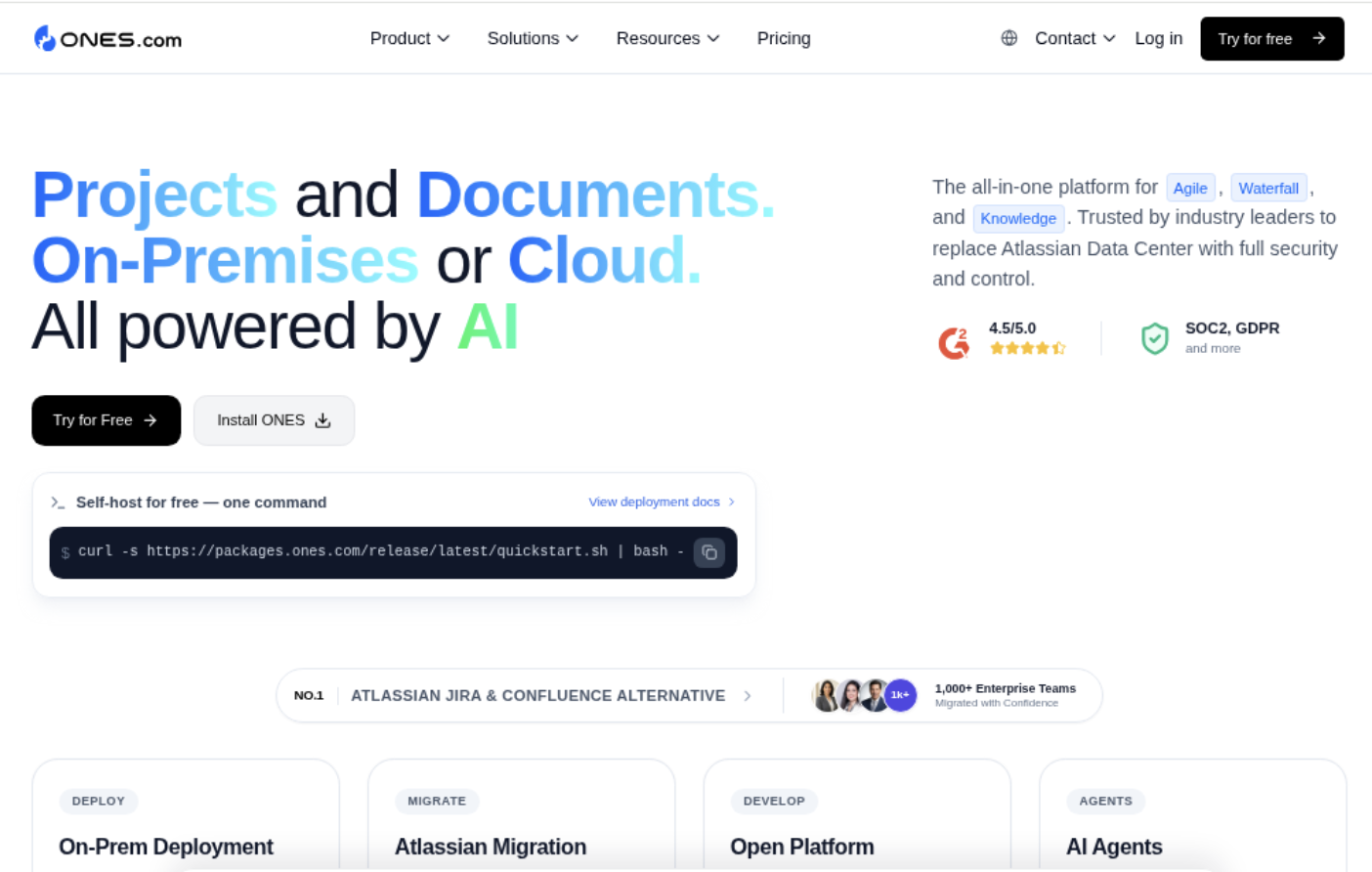
Value Proposition
ONES.com combines project management and knowledge management in one platform, with ONES Project supporting project and delivery work and ONES Wiki supporting team knowledge. Each product is sold separately.
It can suit teams seeking a Jira alternative with cloud and self-hosted deployment choices, native workflow capabilities, and fewer add-ons to maintain.
Core Capabilities
Disconnected planning across tools → Unified project and knowledge work → Teams can connect delivery activity with the guidance needed to complete it.
Complex work tracking → ONES Project supports Jira-compatible workflows → Teams can preserve familiar planning patterns while moving into another environment.
Limited deployment flexibility → Cloud, on-premise, private cloud, and air-gapped options → Organizations can select an environment that matches operational and security requirements.
Different behavior across hosting models → Full feature parity between cloud and self-hosted versions → Teams can change deployment approaches without giving up core capabilities.
Too many plugins for everyday planning → Built-in reporting, custom workflows, and custom fields → Administrators can handle common needs within the platform.
Manual sprint administration → Sprint management and automation → Delivery leads can reduce repetitive updates and keep planning more consistent.
Unclear project knowledge → ONES Wiki provides a connected knowledge base → Teams can keep working guidance and project context easier to find.
High entry cost for small teams → A free plan supports up to 30 seats → Smaller teams can test the platform before making a broader commitment.
Fragmented AI-supported work → ONES Assistant adds AI capabilities within the platform → Teams can explore assistance within their project and knowledge workflows.
Application Scenarios
Software development team: A development group can use ONES Project for backlog planning, sprint management, custom workflows, reporting, and automation. Its Jira-compatible approach may reduce retraining for people familiar with Jira.
Restricted-network organization: A company with strict network requirements can evaluate private cloud, on-premise, or air-gapped deployment. This supports controlled access while retaining the core capabilities available in the cloud version.
Product and operations group: A team can manage initiatives in ONES Project and maintain operating guidance in ONES Wiki. For example, a release task can connect with testing procedures and support instructions.
Common Challenges and Practical Solutions
Challenge: The project contains too many fields
Solution: Review every field and ask whether it supports a decision, workflow step, report, or search. Remove unused fields and combine overlapping concepts.
Challenge: People create work in inconsistent ways
Solution: Define a small set of work types, provide examples, and add templates for recurring requests. Review poor examples during team planning rather than correcting them silently.
Challenge: Dashboards show activity but not progress
Solution: Replace vanity metrics with decision-focused views. Track blocked work, aging items, cycle time, delivery risk, and priority movement.
Challenge: Automation creates confusion
Solution: Add one rule at a time, explain its purpose, and monitor its results. Disable rules that create duplicate alerts or change ownership unexpectedly.
Challenge: Cloud adoption feels like extra administration
Solution: Reduce manual status reporting, simplify workflows, and provide short training using real team scenarios. Adoption improves when the system saves time during the first week.
FAQs
Is Jira Cloud suitable for a small team?
Yes. A small team can benefit from browser-based access, automatic platform maintenance, shared boards, and flexible workflows. Start with one project, a few work types, and a short workflow. Avoid copying a large organization’s configuration before your team has established stable working habits.
Should I create one project for the whole company?
Usually, one project is too broad. Separate projects when teams need different permissions, workflows, ownership, or reporting boundaries. However, creating a project for every small initiative can make navigation difficult. Use the fewest projects that preserve clarity and control.
How many statuses should a workflow have?
Use enough statuses to show meaningful changes in responsibility or decision state. A small delivery team may need five to seven statuses. A regulated process may need more. If two statuses look identical to contributors, combine them or clarify their purpose.
Can Jira Cloud support both Scrum and Kanban?
Yes. Scrum teams can plan sprints and manage backlogs, while Kanban teams can track continuous flow and work-in-progress limits. The important decision is choosing the approach that matches the team’s work. A support queue and a product development team may need different boards and policies.
How should I manage Jira Cloud permissions?
Use groups and project roles wherever possible. Give people the minimum access required for their responsibilities, restrict sensitive work, and review access regularly. Include access checks in onboarding, role changes, contractor offboarding, and project closure activities.
When should I consider a Jira alternative?
Consider an alternative when your team needs a different deployment model, wants fewer add-ons, requires connected project and knowledge management, or finds the current configuration too difficult to maintain. Compare workflow support, reporting, migration effort, access controls, hosting options, and long-term administration before switching.
Conclusion
Setting up Jira Cloud successfully starts with your team’s working model, not with a collection of settings. Define the work, choose sensible project boundaries, keep fields focused, and create workflows that reflect real decisions.
Then add permissions, notifications, automation, reports, and dashboards gradually. A pilot rollout helps you identify confusion before it becomes a company-wide habit.
But here's the truth: a cloud platform only creates value when people can understand and trust it. Remove unnecessary steps, explain the rules, and review the setup regularly.
If Atlassian’s approach does not match your deployment, workflow, or knowledge-management needs, evaluate alternatives such as ONES.com. The right platform should make delivery clearer while keeping administration manageable.