Jira Online Pricing: A Practical Guide to Plans and Costs
Confused by jira online pricing? Compare plans, user costs, and hidden fees to budget with confidence. Read now to choose the right plan.
Jira can look inexpensive at first glance, especially when you see a free plan and a low per-user rate. Then the real questions appear: Which tier includes the controls your team needs? How do monthly and annual commitments differ? What happens when your team grows, adds apps, or requires advanced security?
Those details can turn a simple subscription into a difficult budgeting exercise. A small team may pay little today, while a larger organization faces higher user costs, premium features, and additional administration work.
But here's the truth: you can estimate Jira spending clearly when you separate plan fees, user counts, billing terms, and optional services. This guide explains Jira online pricing in plain English, shows what each plan is designed for, and helps you compare the total cost with practical alternatives.
Jira Online Pricing at a Glance
Jira online pricing is the recurring cost of using Jira Cloud, usually determined by your plan, billable users, billing schedule, and optional Atlassian services.
Jira Cloud generally offers four commercial levels: Free, Standard, Premium, and Enterprise. Free suits small teams, Standard covers everyday project work, Premium adds advanced planning and reliability features, and Enterprise targets large organizations with complex governance needs.
Approximate list pricing for paid Cloud plans often starts near these levels:
| Plan |
Typical fit |
Approximate starting price |
Main cost factor |
| Free |
Small teams testing Jira |
$0 |
Limited users and administration features |
| Standard |
Growing teams managing active projects |
About $7.53 per user monthly |
Number of billable users and billing term |
| Premium |
Organizations needing advanced planning and scale |
About $13.53 per user monthly |
User count, premium capabilities, and billing term |
| Enterprise |
Large organizations with centralized governance |
Custom quote |
Organization size, requirements, and contract scope |
Prices can change by region, currency, billing term, and Atlassian’s current commercial policies. Treat the figures above as budgeting guidance, then verify the amount shown for your team before purchasing.
Here's why: the advertised per-user rate rarely tells the whole story. A 20-person team, a 200-person team, and a 2,000-person organization can experience very different costs even when they choose the same plan.
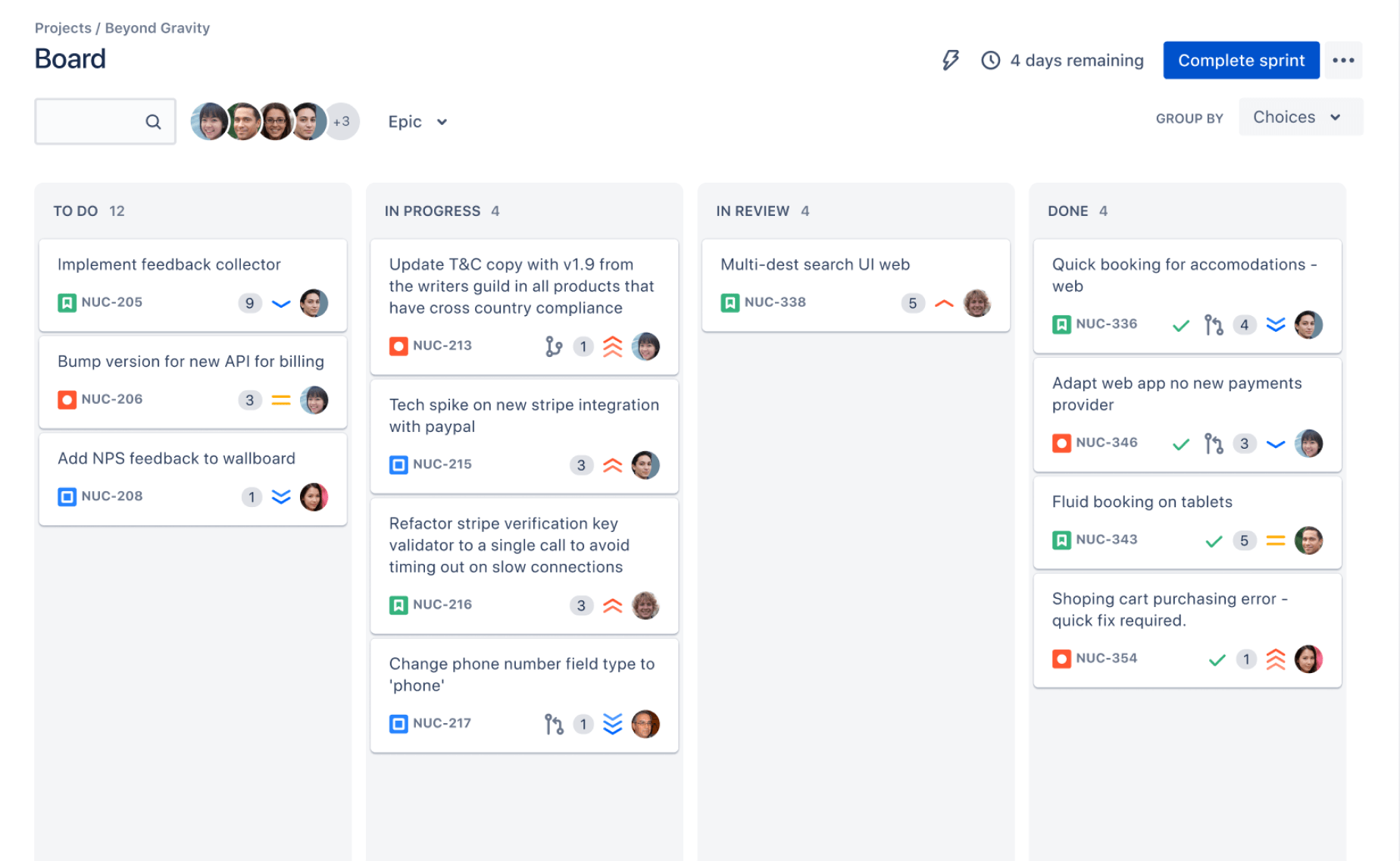
How Jira Cloud Plans Work
Free plan
The Free plan is designed for small teams that need basic issue tracking, project boards, and simple collaboration. It can be useful for testing Jira before making a financial commitment.
For example, a six-person software team could use the Free plan to manage bugs, sprint tasks, and a simple backlog. The team may outgrow it when it needs broader permissions, more storage, advanced audit controls, or stronger administrative oversight.
Standard plan
Standard is usually the practical starting point for professional teams. It supports everyday project management while adding more capacity and administrative control than the Free plan.
A product team might choose Standard to coordinate releases, manage multiple projects, and invite contributors across engineering, design, and operations. The monthly cost rises with every billable account, so inactive accounts deserve regular review.
Premium plan
Premium is aimed at teams that need advanced planning, greater scale, and stronger operational controls. Its value depends on whether your organization will actively use those capabilities.
Consider a company coordinating several product lines. Premium may help leaders connect high-level plans with team delivery work, manage dependencies, and gain more confidence in service availability.
Enterprise plan
Enterprise pricing is negotiated rather than displayed as one universal per-user rate. It usually fits organizations that need centralized administration, stronger governance, and commercial arrangements across multiple teams or departments.
You might consider Enterprise when separate projects need consistent policies, reporting, access controls, or procurement management. A small team will rarely need this level of commercial complexity.
What Determines Your Total Jira Cost?
User count and billing model
The most visible cost driver is the number of billable users. A team with 25 paid accounts pays less than a department with 150 accounts on the same plan.
Monthly billing usually gives you flexibility because the commitment follows current usage. Annual billing can offer a clearer budget and may use a tiered annual amount rather than twelve identical monthly invoices.
Before choosing a term, count more than full-time employees. Include contractors, managers who need dashboards, support staff, and occasional contributors with edit access.
Plan upgrades and feature requirements
Teams often upgrade because of one specific capability. That may include advanced roadmaps, stronger permissions, higher limits, automation capacity, or organization-wide administration.
Make a short requirement list before comparing plans. If your only need is backlog tracking, Premium may add expense without improving your daily workflow.
Marketplace apps and connected services
Jira’s core subscription may not cover every function your team wants. Time tracking, advanced reporting, testing workflows, service management, and specialized planning may require separate apps or products.
For example, a team could start with a low Jira rate and later add three paid extensions. The combined monthly bill may exceed the original Jira subscription by a wide margin.
Support, administration, and migration effort
Subscription fees are only part of the financial picture. Your team may also spend time configuring workflows, training new members, cleaning old projects, and maintaining integrations.
A low subscription can become expensive when administrators spend several hours each week repairing complicated workflows. A simpler setup may produce better value even when its license price looks higher.
Monthly Versus Annual Jira Billing
Monthly billing works well when your team size changes often. You can add or remove seats with less long-term commitment, which helps startups, temporary programs, and seasonal teams manage uncertainty.
Annual billing suits organizations with predictable headcount and a stable budget cycle. It can make procurement easier because finance teams receive one planned commitment instead of recurring monthly changes.
The best choice depends on your growth pattern. A 12-person agency hiring rapidly may prefer flexibility, while a 100-person internal engineering department may value annual predictability.
Here's a simple comparison:
| Billing approach |
Advantages |
Potential drawback |
| Monthly |
Flexible user changes and lower commitment |
Less predictable monthly spending |
| Annual |
Easier budgeting and procurement planning |
Less flexible if headcount falls |
Calculate both options using your expected average user count. Comparing only the first month can produce a misleading result when your team will grow during the year.
How to Estimate Your Jira Budget
You can create a useful estimate in five steps. The goal is to connect the plan with actual usage rather than choosing a tier from the headline price alone.
- Count active accounts. Separate people who need editing access from people who only need occasional visibility.
- List required capabilities. Write down permissions, planning, automation, reporting, security, and support requirements.
- Choose the lowest suitable tier. Avoid paying for premium functions your team will not use within the next year.
- Add related services. Include Marketplace apps, connected products, migration work, training, and administration time.
- Model growth. Estimate the cost at your current headcount and at the headcount you expect six or twelve months later.
For example, imagine a 40-person team that needs Standard. At roughly $7.53 per user each month, the base estimate is about $301.20 monthly before taxes, regional adjustments, add-ons, or changes to the displayed rate.
If the team expects to reach 60 users, the comparable estimate becomes about $451.80 monthly. That difference matters when you plan an annual budget.
The best part? You do not need a complicated financial model. A simple scenario with current users, expected users, plan cost, and add-ons can reveal most of the important decisions.
Ways to Keep Jira Spending Under Control
Review inactive accounts
Run a regular access review and remove accounts that no longer need paid permissions. Former contractors and transferred employees can quietly inflate the bill.
Set a monthly ownership check for project administrators. Ask each owner to confirm who still needs access and why.
Limit unnecessary app subscriptions
Every additional app should solve a defined problem. If two extensions produce similar reports, keep the one your team actually uses.
Track adoption for each paid app. Low usage may indicate that training, configuration, or cancellation deserves attention.
Standardize workflows
Highly customized workflows can increase maintenance work and training time. Start with a clear workflow that matches how your team already delivers work.
For instance, a simple sequence such as To Do, In Progress, Review, and Done may serve a product team better than twelve statuses with overlapping meanings.
Compare total ownership cost
Compare subscription fees, administration time, integration costs, and migration risk. A tool with a lower license rate may require more customization to meet everyday needs.
Use a one-year view rather than comparing only monthly sticker prices. That approach gives finance and project leaders a more realistic basis for approval.
Jira Online Pricing Solution: ONES.com
Value Proposition
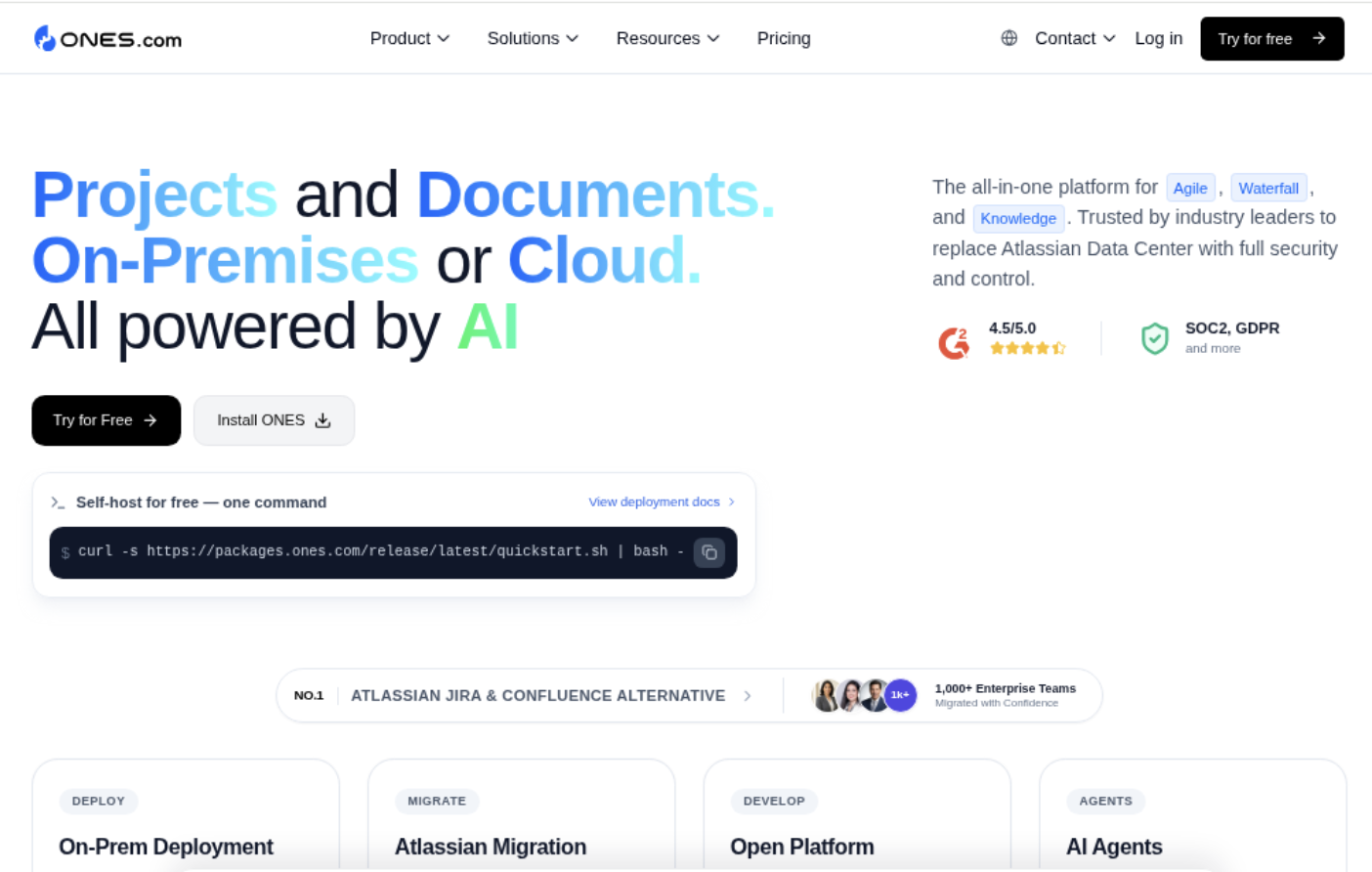
ONES.com combines project management and knowledge management in one platform powered by ONES Assistant. ONES Project is a Jira alternative for project teams, while ONES Wiki is a Confluence alternative for structured team knowledge.
You can purchase ONES Project and ONES Wiki separately. ONES.com also offers a free plan for up to 30 seats and supports Cloud, On-Premise, Private Cloud, and Air-gapped deployments.
Core Capabilities
- Separate project and knowledge tools. Teams often manage work in one place and team knowledge elsewhere. ONES Project and ONES Wiki let you choose the products that match your needs, reducing unnecessary platform commitment.
- Jira-compatible workflows. Teams concerned about process disruption can use familiar project patterns. The result is a shorter adjustment period for teams moving from Jira.
- Custom workflows and fields. Fixed processes can force teams into manual workarounds. Custom workflows and fields let you reflect approval stages, product areas, ownership, and delivery rules.
- Sprint management. Teams can plan iterations, organize backlog work, and monitor progress in a single project environment. That helps connect daily tasks with sprint goals.
- Built-in reporting. Separate reporting tools can create extra administration. Built-in reports give teams a clearer view of progress, workload, and delivery trends.
- Automation. Repetitive transitions and notifications consume attention. Automation can handle routine actions and leave people more time for planning and delivery.
- Deployment flexibility. Some organizations cannot place project information in a public Cloud environment. On-Premise, Private Cloud, and Air-gapped options support restricted-network requirements.
- Native feature parity. Teams often lose capabilities when moving between hosted and self-managed editions. ONES.com maintains full feature parity between its Cloud and self-hosted versions.
- Unified platform option. Teams that need project and knowledge management can connect those activities through one platform. That reduces the need to maintain separate operating habits across departments.
Application Scenarios
Growing software team: A 25-person engineering group can use ONES Project for backlog planning, sprints, custom fields, and release reporting. Product decisions and team guidance can live in ONES Wiki when the team needs a connected knowledge environment.
Restricted-network organization: A regulated engineering department may need an air-gapped deployment. ONES.com supports that environment while preserving the same core feature set available in its hosted version.
Jira migration program: A company that already relies on Jira-compatible workflows can evaluate ONES Project when plugin reduction, self-hosting, or deployment control becomes important. The team can compare migration effort against its current subscription and administration burden.
Common Challenges When Comparing Jira Costs
Challenge: The displayed rate becomes outdated
Cloud prices and plan limits can change. A quote saved several months ago may no longer match the amount shown at checkout.
Solution: Recheck the current regional price, user tier, taxes, billing term, and included capabilities immediately before approval.
Challenge: The team counts employees instead of paid accounts
Project tools often include contractors, consultants, executives, and occasional contributors. Ignoring those groups can make the estimate too low.
Solution: Map access by role. Mark who edits work, who comments, and who only needs occasional visibility.
Challenge: Add-ons appear after the plan decision
A team may select a plan first and discover later that reporting, testing, or time tracking requires another subscription.
Solution: Create a capability checklist before choosing the tier. Price each required app alongside the core plan.
Challenge: Administration costs remain invisible
Complex workflows and integrations can require ongoing maintenance. Those hours may never appear on the invoice, yet they still affect the project budget.
Solution: Estimate setup, training, access reviews, workflow maintenance, and support time as part of total ownership cost.
FAQs About Jira Cloud Costs
Is Jira Cloud free for small teams?
Jira Cloud offers a Free plan for small teams, subject to its current user limits and feature restrictions. It can support basic issue tracking, boards, and collaboration. Review the included limits before committing to it for a production workflow. You may need Standard or Premium when your team requires broader administration, advanced planning, greater capacity, or more sophisticated controls.
What is the difference between Standard and Premium?
Standard generally covers everyday project management for growing teams. Premium adds advanced capabilities for organizations that need greater planning depth, scale, or operational control. The right choice depends on your workflow rather than team size alone. A large team with simple requirements may manage well on Standard, while a smaller team with complex coordination needs may benefit from Premium.
Does Jira charge for every person in a project?
Jira pricing commonly depends on billable accounts within the relevant product and plan. The exact treatment can vary by product, role, and current commercial terms. Include employees, contractors, administrators, and other people who need access when estimating cost. Check the account and billing rules shown during purchase so your calculation matches the plan you select.
Is annual billing cheaper than monthly billing?
Annual and monthly billing can produce different effective costs, but the result depends on your user tier, region, currency, and current pricing structure. Annual billing provides a longer commitment and more predictable planning. Monthly billing offers greater flexibility when headcount changes. Calculate both options using your expected average users and include any add-ons in each comparison.
How can I reduce Jira spending?
Start with an access review, remove inactive accounts, and cancel unused apps. Then simplify workflows that require excessive administration. Compare Standard and Premium against your actual requirements rather than choosing the highest tier automatically. Finally, model expected growth because adding users can change your effective cost more than a small plan difference.
Should I compare Jira with another project platform?
Yes, especially when your team needs self-hosting, air-gapped deployment, fewer plugins, or a connected knowledge environment. Compare workflow compatibility, reporting, automation, administration, migration effort, and deployment options alongside licensing. A practical comparison should measure how each platform affects daily delivery and total ownership cost over a full year.
Conclusion
Jira online pricing becomes easier to understand when you separate four factors: plan tier, billable users, billing term, and additional services. Free can work for small teams, Standard often suits everyday project work, Premium supports more advanced needs, and Enterprise requires a tailored commercial discussion.
Before approving a subscription, count real account needs, review add-ons, estimate growth, and include administration time. Then compare the one-year cost with alternatives such as ONES.com when deployment flexibility, native capabilities, or a Jira alternative matters.
But here's the truth: the cheapest visible rate is not always the lowest practical cost. A clear requirements checklist and a realistic growth estimate can help you choose a plan that remains useful after the first invoice.