Jira Permissions by Role: A Practical Access Control Guide
Unsure how jira permissions by role work? Learn to balance access, security, and workflows—read now to build safer Jira projects.
Jira permissions can quietly determine whether a project stays organized or turns into an access-control headache. Give someone too much access, and important settings may change without review. Give someone too little, and everyday work stops at unnecessary approval barriers.
The difficult part is that Jira permissions do not rely on one simple role list. Project roles, permission schemes, issue security, global permissions, and team responsibilities all interact. A single mistake can expose sensitive work or prevent a developer from updating an issue.
But here's the truth: you can make Jira access predictable by mapping each responsibility to the smallest permission set required. This guide shows you how Jira permissions by role work, how to design a practical access model, and how to troubleshoot common access problems.
How Jira Permissions by Role Work
Jira permissions by role define what each person can view, create, edit, transition, administer, or manage within Jira. Jira usually applies access through global permissions, project permission schemes, project roles, issue security levels, and workflow conditions.
A role describes responsibility. A permission describes an allowed action. For example, “Developer” may be a project role, while “Edit Issues” is a permission assigned to that role.
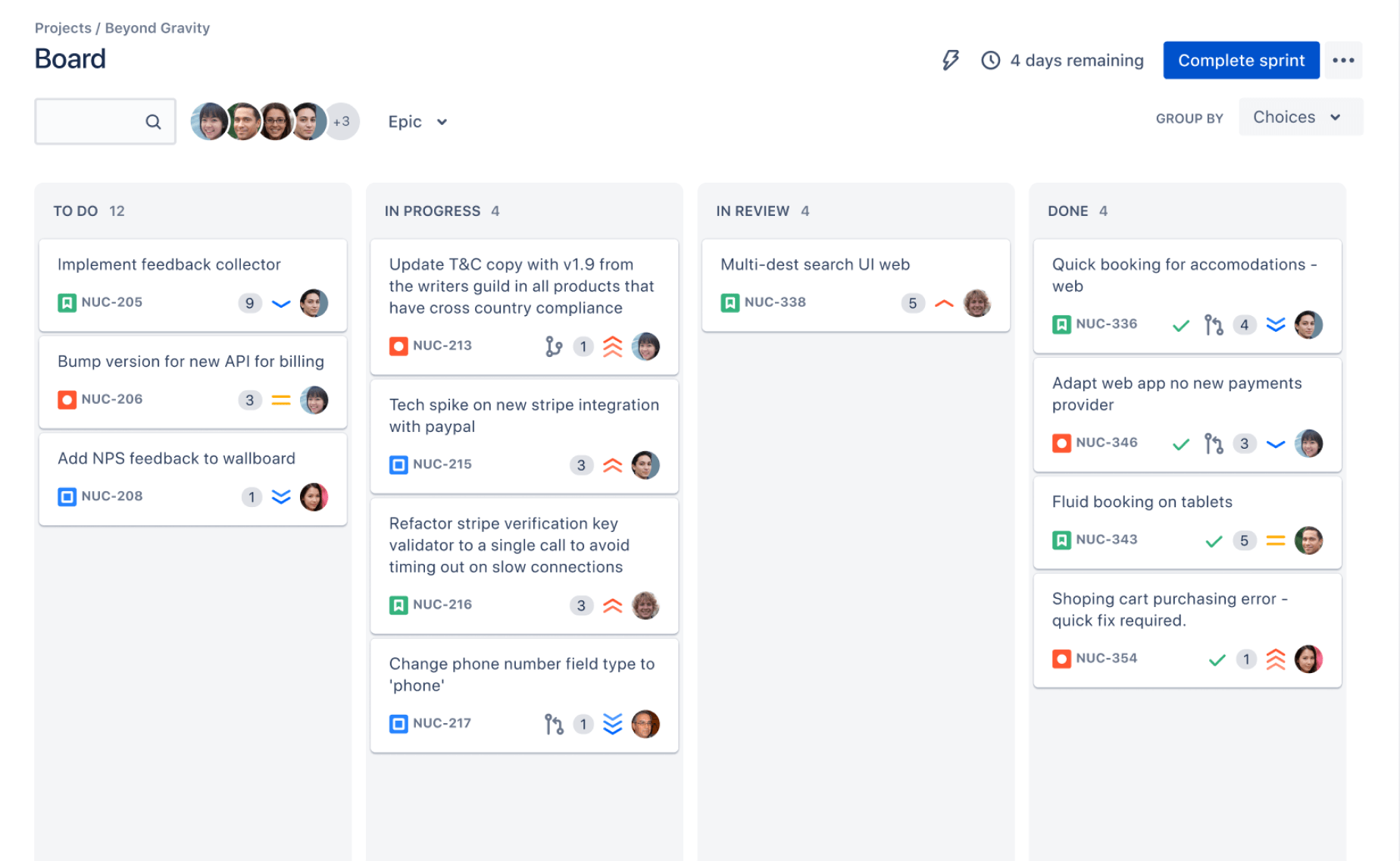
The five access layers you need to understand
Jira access becomes easier to manage when you separate the main layers. Each layer answers a different question about what someone can do.
- Global permissions: Can this person access Jira, create shared dashboards, or administer the platform?
- Project roles: What responsibility does this person have in a particular project?
- Permission schemes: Which actions are available to each project role, group, or account?
- Issue security: Which individual issues can this person see?
- Workflow controls: Can this person perform a specific transition or move an issue into a particular status?
For example, someone might have access to a project but still be unable to view a confidential issue. Another person may view an issue but lack permission to transition it.
Common Jira project roles and typical access
| Role |
Typical responsibilities |
Common permissions |
| Project administrator |
Maintains project settings, roles, versions, components, and workflows |
Administer projects, manage versions, manage components, configure project settings |
| Product owner |
Owns priorities, requirements, acceptance decisions, and backlog direction |
Browse issues, create issues, edit issues, rank backlog, manage sprints, transition issues |
| Developer |
Builds, tests, reviews, and updates assigned work |
Browse issues, create issues, edit issues, add comments, attach content, transition issues |
| QA specialist |
Validates completed work and records defects or test outcomes |
Browse issues, create issues, edit issues, comment, transition issues, link issues |
| Reporter |
Raises requests, defects, or product concerns |
Browse permitted issues, create issues, add comments, view issue history |
| Stakeholder |
Reviews progress without changing delivery work |
Browse issues, view dashboards, add limited comments where appropriate |
Why role names do not control access by themselves
Jira does not grant access simply because someone is called a developer or manager. A role must connect to permissions through a permission scheme.
Imagine a person added to the “Developer” role. If that role lacks “Edit Issues,” the person cannot change descriptions, estimates, or fields. If the role has “Administer Projects,” the person may have far more control than intended.
Let me explain: the role is the label, while the permission scheme is the rule that gives the label practical power.
Build a Practical Role-Based Access Model
The safest approach is to start with responsibilities, then assign permissions. Avoid beginning with every available Jira permission and trying to distribute them afterward.
Step 1: List the work each role must perform
Write down the actions each role needs during a normal working week. Keep the list specific and observable.
- A developer needs to update estimates and transition implementation work.
- A tester needs to create defects and move issues into testing.
- A product owner needs to rank backlog items and manage sprint scope.
- A stakeholder needs progress visibility but no editing rights.
This approach prevents vague requests such as “give the team full access.” It also gives you a clear test for every permission.
Step 2: Separate project access from issue visibility
Project access answers whether someone can enter and work in a project. Issue security answers whether that person can see a particular issue.
For example, an HR technology project may contain general enhancement work and restricted employee-relations issues. A person can belong to the project while only seeing issues assigned to their department.
You might be wondering: why not create a separate project for every sensitivity level? Sometimes that works, but too many projects can create duplicated workflows, reports, and administration.
Step 3: Assign permissions to roles instead of individuals
Direct permission grants may solve a quick problem, but they become difficult to audit as the team grows. Role-based assignment gives you a repeatable structure.
Assign the “Browse Projects” permission to the appropriate project role. Then add work permissions such as creating, editing, commenting, linking, and transitioning issues.
Use individual exceptions only when the business reason is clear. Record the reason and set a review date for temporary access.
Step 4: Apply the principle of least privilege
Least privilege means each person receives only the access needed for their responsibilities. It does not mean making work unnecessarily difficult.
For example, a stakeholder may need to view a dashboard and comment on an issue. That person usually does not need permission to edit workflow schemes, delete issues, or manage versions.
The best part? Least privilege reduces both accidental changes and the amount of access you need to investigate later.
Step 5: Test each role with real scenarios
Test access using realistic tasks rather than checking permission names in isolation.
- Sign in with a test account assigned to the role.
- Open a normal issue and try the expected actions.
- Open a restricted issue and confirm visibility behaves correctly.
- Attempt an action the role should not perform.
- Check whether the error message explains the missing access clearly.
A role that looks correct on paper may still fail because of issue security, workflow conditions, group membership, or project access settings.
Key Jira Permissions to Review
Jira includes many permissions, but several have an outsized effect on daily work and administrative risk. Review these first when designing or troubleshooting access.
Browse Projects
“Browse Projects” controls whether someone can access project content. Without it, many other project permissions have little practical value.
Grant it to people who need project visibility. For public-facing or cross-functional projects, consider whether every account should see every issue.
Create Issues
“Create Issues” controls whether someone can raise work items. Developers, testers, service agents, and product owners often need it.
Restrict it when a project requires formal intake. For instance, an operations project may allow requests through a service portal while limiting direct issue creation inside the project.
Edit Issues
“Edit Issues” allows changes to fields such as summary, description, priority, labels, estimates, and assignments, depending on the project setup.
Give this access to people responsible for maintaining work details. Consider narrower workflow rules when certain fields should change only during specific stages.
Transition Issues
“Transition Issues” allows someone to move work through a workflow. It does not automatically mean the person can edit every field.
This distinction is useful in quality-controlled processes. A tester may transition an issue to “Ready for Release” while only a release manager can move it to “Released.”
Assign Issues
“Assign Issues” controls whether someone can change the person responsible for work. You may also need permission to assign issues to particular accounts or project roles.
In a small team, the project owner may handle assignments. In a larger team, team leads may manage allocation while contributors update their own progress.
Manage Sprints
“Manage Sprints” can include starting, completing, editing, and moving sprint work. This permission deserves careful review because sprint changes affect planning reports and team commitments.
Most teams assign sprint management to product owners, Scrum Masters, or delivery leads rather than every contributor.
Administer Projects
Project administration can affect settings, roles, versions, components, screens, and other project behavior. Keep this permission limited.
A project administrator may be trusted to maintain delivery settings without receiving global Jira administration rights. That separation reduces the impact of an incorrect change.
Delete Issues
Issue deletion is usually more sensitive than editing. Deleted work may disappear from reports, history views, and audit investigations.
Many teams restrict deletion to project administrators or platform administrators. Consider whether archiving, closing, or marking work as invalid can meet the business need instead.
How Permission Schemes, Roles, and Groups Interact
Jira access often comes from several paths at once. A person may receive a permission through a project role, group membership, or direct account assignment.
That can create confusing results. Removing someone from one role may not remove access if a group still grants the same permission.
A simple access path example
Suppose the “Edit Issues” permission is granted to:
- The Developers project role
- The Product Owners project role
- A company-wide group called “Jira Editors”
A person in any one of those paths can edit issues. Removing the person from Developers will not work if they remain in Jira Editors.
Here's why: Jira evaluates the available permission paths, rather than selecting one preferred role and ignoring the others.
Use groups for broad membership and roles for project responsibility
Groups work well for broad access, such as all employees who may enter Jira. Project roles work better for project-specific responsibility.
For example, an engineering group may contain many developers, but a particular person may be a project lead in one project and a contributor in another.
This separation makes onboarding easier. Add someone to the right group, then place them in the required project role without rebuilding the permission scheme.
Watch for access accumulation
Access accumulation happens when someone gains permissions over time but rarely loses old ones. A person may move from QA to product management and keep both sets of access.
Schedule periodic reviews around team changes, project closures, and major workflow updates. Compare current responsibilities with actual role membership.
Common Permission Design Mistakes
Most access problems come from understandable shortcuts. The trouble starts when a temporary solution becomes the permanent structure.
Giving everyone project administration
Broad administration can feel efficient in a small project. However, it allows many people to change settings that affect every contributor.
Use a small administrator group and create a clear request path for configuration changes. This keeps routine work moving while protecting the project structure.
Relying on one permission scheme for every project
A shared scheme reduces maintenance, but projects often have different confidentiality, workflow, and reporting requirements.
A product development project may need sprint controls. A legal operations project may need strict issue visibility and limited editing.
Start with a common baseline, then create separate schemes when the business risk justifies the extra administration.
Ignoring workflow conditions
A person may have “Transition Issues” but still be unable to perform a transition because a workflow condition restricts it.
Check the transition rules, validators, and post-functions when permission settings look correct. Access behavior often depends on the complete workflow path.
Using issue security as a replacement for project structure
Issue security is useful for sensitive work, but complicated security levels can become difficult to maintain.
If an entire team needs a separate process, a separate project may be clearer. If only occasional issues need restricted visibility, issue security may be the better fit.
Changing access without testing
A permission update can affect many projects when schemes are shared. Test changes in a controlled project or during a planned maintenance window.
Keep a short change record that explains what changed, why it changed, and who approved it. This makes later troubleshooting much faster.
Jira Permissions by Role Solution: ONES.com
Value Proposition
ONES.com combines project management and knowledge management in one platform. ONES Project can support structured delivery workflows, role-based access, and controlled collaboration as a Jira alternative.
You can choose Cloud, On-Premise, Private Cloud, or Air-gapped deployment, with full feature parity between the cloud and self-hosted versions.
Core Capabilities
- Scattered project controls → Custom workflows and fields → You can align permissions with the exact stages, responsibilities, and information your team manages.
- Overly broad access → Role-based project administration → You can separate contributors, reviewers, project leads, and administrators more clearly.
- Complex sprint coordination → Sprint management → Product owners and delivery leads can plan, start, monitor, and complete sprints within a structured workflow.
- Manual status updates → Automation → Repetitive actions can follow defined rules, reducing the need for people to perform every administrative step.
- Limited delivery visibility → Built-in reporting → Teams can review progress, workload, and delivery trends without assembling separate reporting processes.
- Plugin-heavy Jira environments → Native feature coverage → Common project management capabilities are available within the platform, which can reduce dependence on additional extensions.
- Restricted network requirements → On-Premise, Private Cloud, and Air-gapped deployment → Organizations with strict infrastructure rules can choose a deployment model that fits their environment.
- Jira workflow familiarity → Jira-compatible workflows → Teams moving from Jira can preserve familiar planning and delivery patterns while evaluating another platform.
Application Scenarios
Software delivery team: A product owner can manage backlog priorities and sprint planning, while developers update implementation work and testers control validation transitions. Project administration stays with a smaller platform group.
Regulated engineering organization: A team can use an on-premise or air-gapped deployment when network restrictions apply. Access rules can separate design work, quality review, and release approval.
Growing multi-project company: Shared role patterns can provide a consistent starting point, while custom fields and workflows support different project requirements. Reporting helps leadership review delivery without giving broad administrative access.
Common Challenges and Practical Solutions
Challenge: A person cannot see a project
Likely cause: The person lacks project access or the Browse Projects permission.
Solution: Confirm account status, group membership, project role assignment, and the permission scheme. Check whether an application access requirement also applies.
Challenge: A person can view an issue but cannot edit it
Likely cause: The role has Browse Projects but lacks Edit Issues, or a workflow rule limits the change.
Solution: Review permission paths first. Then inspect issue status, field rules, workflow conditions, and any locked fields.
Challenge: A contributor can change too much
Likely cause: The person receives access through an additional group or role.
Solution: Trace every permission path, remove unnecessary memberships, and test the account again. Avoid solving the problem by adding unrelated restrictions that may block legitimate work.
Challenge: Restricted issues remain visible
Likely cause: Issue security levels include a broad group or role, or the person has an alternate visibility path.
Solution: Review the issue security scheme and check each included role, group, reporter, assignee, and project lead condition.
Challenge: Permission changes affect several projects
Likely cause: Multiple projects share one permission scheme.
Solution: Identify every connected project before editing the scheme. Create a dedicated scheme when one project has materially different access requirements.
FAQs
What is the difference between a Jira role and a Jira permission?
A Jira role describes a responsibility within a project, such as developer, product owner, or administrator. A permission describes an action, such as browsing a project, creating an issue, or managing a sprint. The permission scheme connects those two elements. A person gains practical access when their role, group, or account is granted the relevant permission.
Can one person have several Jira project roles?
Yes. A person can hold several roles in one project, such as developer and component lead. Jira combines the permissions granted through those roles. Review combined access carefully, especially when one role includes administration, deletion, sprint management, or confidential issue visibility.
Why can someone view an issue but not edit it?
Viewing and editing are separate permissions. The person may have Browse Projects but lack Edit Issues. A workflow condition, field rule, issue status, or security setting may also restrict editing. Check the permission helper and then inspect the workflow and field configuration for the specific issue.
Should I assign permissions to groups or project roles?
Use groups for broad organizational access and project roles for project-specific responsibilities. For example, a company-wide group may allow Jira entry, while the Developers role grants editing rights in one project. This approach adapts better when someone changes projects or responsibilities.
How often should Jira permissions be reviewed?
Review access at least quarterly for important projects, and immediately after team changes, reorganizations, or workflow updates. High-sensitivity projects may need monthly reviews. Focus on administrator access, issue security, deletion rights, sprint management, and people who changed roles but retained old memberships.
Conclusion
Jira permissions by role work best when you connect each responsibility to the smallest practical set of actions. Start with real work scenarios, separate project access from issue visibility, and assign permissions through maintainable roles and groups.
But here's the truth: access control is an operating process, not a one-time setup. Test every role, review accumulated access, and inspect workflow conditions when behavior seems inconsistent.
If Jira administration has become difficult to maintain, ONES.com offers a Jira alternative with structured project management, custom workflows, reporting, automation, and deployment choices for restricted environments. The goal remains the same: give every person the access they need, without turning every project into an administrative risk.