Jira Plant Explained: A Practical Guide for New Users [2026]
Confused by jira plant? Learn Jira plans, Advanced Roadmaps, releases, and timelines to plan smarter across teams—read now to get started.
Searching for “Jira plant” can leave you stuck before you even open Jira. The phrase usually points to Jira plan, Jira Plans, or Advanced Roadmaps, yet new users may also wonder whether it means a project template, planning board, or something entirely different. That confusion makes planning feel harder than it needs to be.
Here’s the good news: a Jira plan is a planning view that helps you connect work across teams, releases, dependencies, and timelines. Once you understand its purpose, you can build a useful roadmap without becoming an Atlassian expert.
This guide explains what Jira Plans are, how they work, when to use them, and where teams commonly struggle. I’ll also show you a practical alternative for organizations that need project management and knowledge management in one platform.
What “Jira Plant” Usually Means
“Jira plant” usually means Jira plan or Jira Plans, a Jira planning feature used to organize work, estimate timelines, manage dependencies, and create roadmaps across teams.
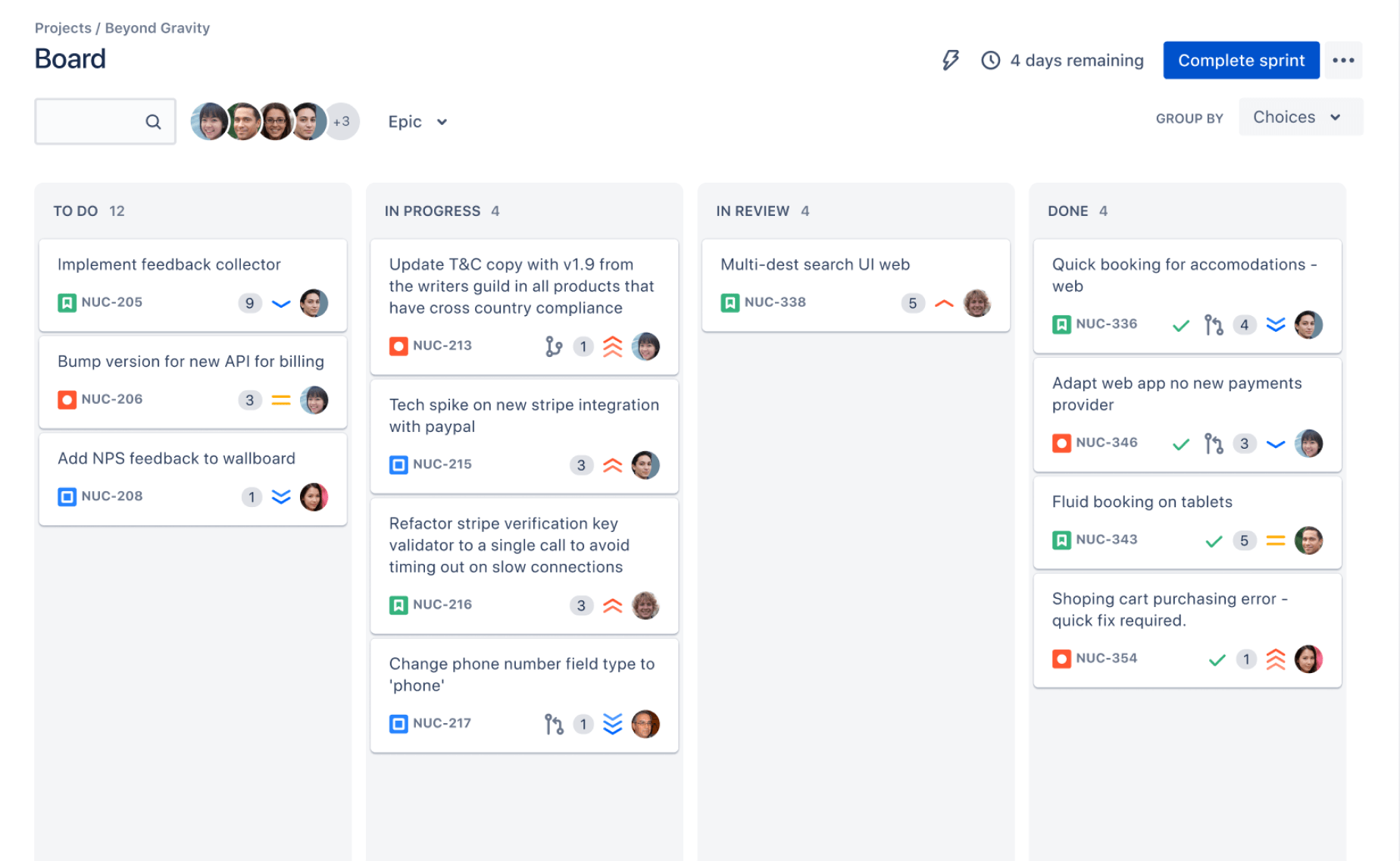
Jira Plans are commonly associated with Advanced Roadmaps. They give you a higher-level view of work than an individual Jira board. A board helps a team manage daily tasks, while a plan helps you understand how multiple teams and initiatives fit together.
For example, a product manager might use a plan to connect an annual product goal with epics, stories, releases, team capacity, and delivery dates. A software team can then use ordinary Jira issues to complete the work while leaders track the wider direction.
But here’s the truth: a plan is only useful when the underlying work is organized clearly. If issue types, estimates, ownership, and dependencies are inconsistent, the roadmap may look polished while remaining difficult to trust.
What a Jira Plan Helps You See
- Work across several teams or projects
- Epic, story, and task relationships
- Planned start and finish dates
- Team capacity and possible over-allocation
- Dependencies between pieces of work
- Release and milestone timing
- Risks caused by delays or missing prerequisites
- Progress toward broader initiatives
Jira Plan and Jira Board: The Difference
| Jira board |
Jira plan |
| Focuses on active team work |
Focuses on coordinated planning across workstreams |
| Shows workflow columns such as To Do, In Progress, and Done |
Shows timelines, hierarchy, releases, and dependencies |
| Supports daily execution |
Supports forecasting and long-range decisions |
| Usually serves one team or project |
Can combine work from multiple teams or projects |
How Jira Plans Work in Practice
A Jira plan gathers selected work into a planning view. You choose the projects, boards, or filters that should contribute work, then organize that work into a hierarchy.
The hierarchy often moves from a broad initiative to an epic, then to stories or tasks. Your exact levels depend on your Jira setup. A small team may need only epics and stories, while a large organization may add initiatives, capabilities, and features.
The Main Parts of a Plan
Scope
Scope defines which work appears in your plan. You might include a product project, several team boards, or a carefully selected group of issues.
For example, a mobile banking roadmap could include authentication, payments, notifications, and compliance work. Customer support tasks would stay outside the plan unless they affect the same delivery goals.
Hierarchy
Hierarchy shows how smaller work contributes to larger outcomes. An initiative may contain several epics, and each epic may contain multiple stories.
This structure helps answer a practical question: if one story slips, which product goal or release could be affected?
Teams
Teams connect planned work with the people expected to deliver it. A plan may include a mobile team, platform team, security team, and quality team.
Team assignments make capacity planning more meaningful. Without them, a roadmap can show dates without showing who must perform the work.
Releases
Releases group work around a delivery point. That point could be a public launch, internal rollout, regulatory deadline, or major upgrade.
A release view makes it easier to see whether the planned scope fits the target date. It also helps you discuss trade-offs early.
Dependencies
A dependency exists when one piece of work must happen before another can proceed. For example, a payment feature may depend on an updated identity service.
Dependencies are especially valuable across teams. A delivery delay becomes easier to explain when you can see the blocked work directly.
A Simple Example
Imagine a company preparing a new subscription service. The initiative is “Launch subscriptions in three regions.” It contains three epics:
- Subscription billing
- Regional tax handling
- Customer account upgrades
The billing epic depends on payment gateway changes. Tax handling depends on legal review. Account upgrades depend on a new customer profile service.
With these relationships visible, you can spot the likely bottleneck before the launch date. Without a plan, each team might see only its own tasks and discover the conflict much later.
How to Create a Useful Jira Plan
- Clarify the planning question. Decide what you need to understand. You might be planning a release, coordinating teams, forecasting capacity, or tracking a strategic initiative.
- Choose a manageable scope. Start with the work that directly supports the planning question. Including every project can make the view noisy and difficult to maintain.
- Define the hierarchy. Decide how initiatives, epics, stories, and tasks should relate. Keep the structure understandable for the people who will use it.
- Assign teams and owners. Connect work with accountable teams. Add clear ownership for major initiatives and delivery milestones.
- Add estimates. Use story points, time estimates, or another consistent method. Mixed estimation practices can distort capacity views.
- Set target dates. Add start dates, finish dates, and release targets where they are meaningful. Avoid assigning precise dates to uncertain work too early.
- Map dependencies. Record relationships between work items. A dependency should explain what must happen first and who owns the prerequisite.
- Review capacity. Compare planned work with available team capacity. If a team has 30 estimated points and only 20 points of capacity, something needs to change.
- Run scenarios. Test what happens when a team loses availability, a release moves, or priority work is added.
- Share the plan and review it regularly. A roadmap should support decisions. Revisit it during planning meetings and after meaningful changes.
Let me explain the most important habit: treat the plan as a decision-making view. It should help you choose what to do, defer, change, or investigate.
A plan that nobody reviews becomes stale. A plan that changes every hour becomes hard to trust. A regular weekly or biweekly review usually gives teams enough control without creating unnecessary administration.
Planning Features New Jira Users Should Understand
Timeline Views
A timeline places work across dates so you can see overlap, sequence, and potential delay. It is useful when several teams contribute to one release.
Suppose design needs two weeks, engineering needs four weeks, and compliance needs one week afterward. The timeline makes the sequence visible and exposes the earliest realistic delivery window.
Capacity Planning
Capacity planning compares expected work with team availability. It can reveal over-allocation before it becomes a missed commitment.
Capacity is an estimate, not a promise. Meetings, support duties, holidays, incidents, and unplanned work can reduce real delivery time.
Scenario Planning
Scenarios let you explore possible choices without immediately changing the live plan. You can test a delayed launch, an additional team, or a reduced scope.
For example, create one scenario for the original release and another that removes a low-priority epic. Comparing the two views gives stakeholders a concrete trade-off.
Dependencies and Risks
Dependency tracking helps you identify work that cannot move independently. It also creates a useful conversation between teams.
When a platform team owns a prerequisite, the product team can discuss timing early instead of discovering the block during final testing.
Custom Fields and Filters
Custom fields can help you sort work by product area, risk, customer segment, or regulatory impact. Filters then let different audiences focus on relevant details.
A chief product officer may need initiatives and releases. An engineering manager may need team capacity and dependencies. One plan can support both views when the structure is consistent.
Common Mistakes When Starting With Jira Plans
Including Too Much Work
New users often add every project and issue they can find. The result is a crowded plan that hides the information people need.
Start with one product, release, or strategic goal. Expand the scope after the first review proves useful.
Using Inconsistent Estimates
One team may estimate in story points while another uses hours. Comparing those numbers directly creates a misleading capacity picture.
Agree on an estimation method for the planning view. If teams must use different methods, label them clearly and avoid false precision.
Adding Dates Without Confidence
Dates can create a sense of certainty that the team does not actually have. Early research, unknown technical work, and external approvals often introduce uncertainty.
Use target windows when exact dates are premature. Update the plan as the team learns more.
Ignoring Unplanned Work
Support requests, incidents, and urgent fixes reduce capacity. A plan that includes only planned feature work may consistently overstate delivery ability.
Reserve some capacity for operational work when that reflects your team’s reality. This produces a more credible forecast.
Failing to Connect Planning With Execution
A plan should reflect the work teams actually perform. If the roadmap uses one naming system and the boards use another, updates become manual and unreliable.
Keep issue relationships, ownership, and status definitions aligned. The closer planning stays to daily execution, the easier maintenance becomes.
Best Practices for Jira Roadmap Planning
- Begin with outcomes. Explain the customer, business, or operational result behind the work.
- Keep the hierarchy shallow. Use enough levels to clarify ownership without creating an administrative maze.
- Make dependencies explicit. Name the blocking work and the responsible team.
- Separate committed work from exploratory work. A research idea should not look identical to a funded release commitment.
- Use confidence indicators. Mark plans as high, medium, or low confidence when uncertainty matters.
- Review capacity before promising dates. A target should reflect available people and competing priorities.
- Limit roadmap detail for executive audiences. Show outcomes, milestones, risks, and trade-offs rather than every task.
- Keep delivery teams close to the plan. Engineers, designers, testers, and analysts can identify risks that a high-level view may miss.
- Record planning assumptions. Note major dependencies, staffing expectations, approval needs, and technical unknowns.
- Change the plan when reality changes. A revised plan is more useful than an outdated commitment.
The best part? You do not need a perfect forecast before creating a plan. You need a clear starting point and a review habit that improves the view over time.
Jira Plans Compared With Other Planning Approaches
Jira Plans are most useful when your teams already manage execution in Jira and need a coordinated planning layer. They connect planning with issues, teams, releases, and workflow activity.
A simple spreadsheet-style roadmap may be faster for a small group with few dependencies. A presentation may communicate a strategy clearly, yet it usually requires manual updates. A dedicated portfolio platform may offer broader planning controls, though it can introduce another system for teams to maintain.
| Approach |
Useful when |
Typical limitation |
| Jira plan |
Teams need connected work, capacity, releases, and dependencies |
Requires consistent Jira configuration |
| Simple roadmap |
A small team needs a quick high-level view |
Limited dependency and capacity detail |
| Presentation roadmap |
Leaders need a concise communication format |
Updates can become manual |
| Portfolio planning platform |
Organizations need broad financial, resource, or strategic planning |
May add cost and system complexity |
You might be wondering: should every team use a Jira plan? Probably not. Use one when coordination, forecasting, or cross-team visibility justifies the maintenance effort.
Jira Plans, Permissions, and Team Adoption
Planning quality depends on access and ownership. People need enough permission to view relevant work, update estimates, and understand who can change key planning fields.
Set ownership for the plan itself. Decide who maintains scope, who validates capacity, and who approves major changes. Without clear ownership, teams may assume someone else is keeping the roadmap accurate.
Adoption also improves when each meeting uses the plan for a real decision. During a release review, discuss capacity and dependencies. During a leadership review, discuss outcomes, risks, and trade-offs.
Avoid turning the plan into a reporting exercise. If people only update it before executive meetings, important changes may remain invisible for too long.
Jira Planning Solution: ONES.com
ONES.com is a unified platform for project management and knowledge management, powered by AI through ONES Assistant. ONES Project provides project management capabilities and can serve as a Jira alternative, while ONES Wiki supports knowledge management as a Confluence alternative.
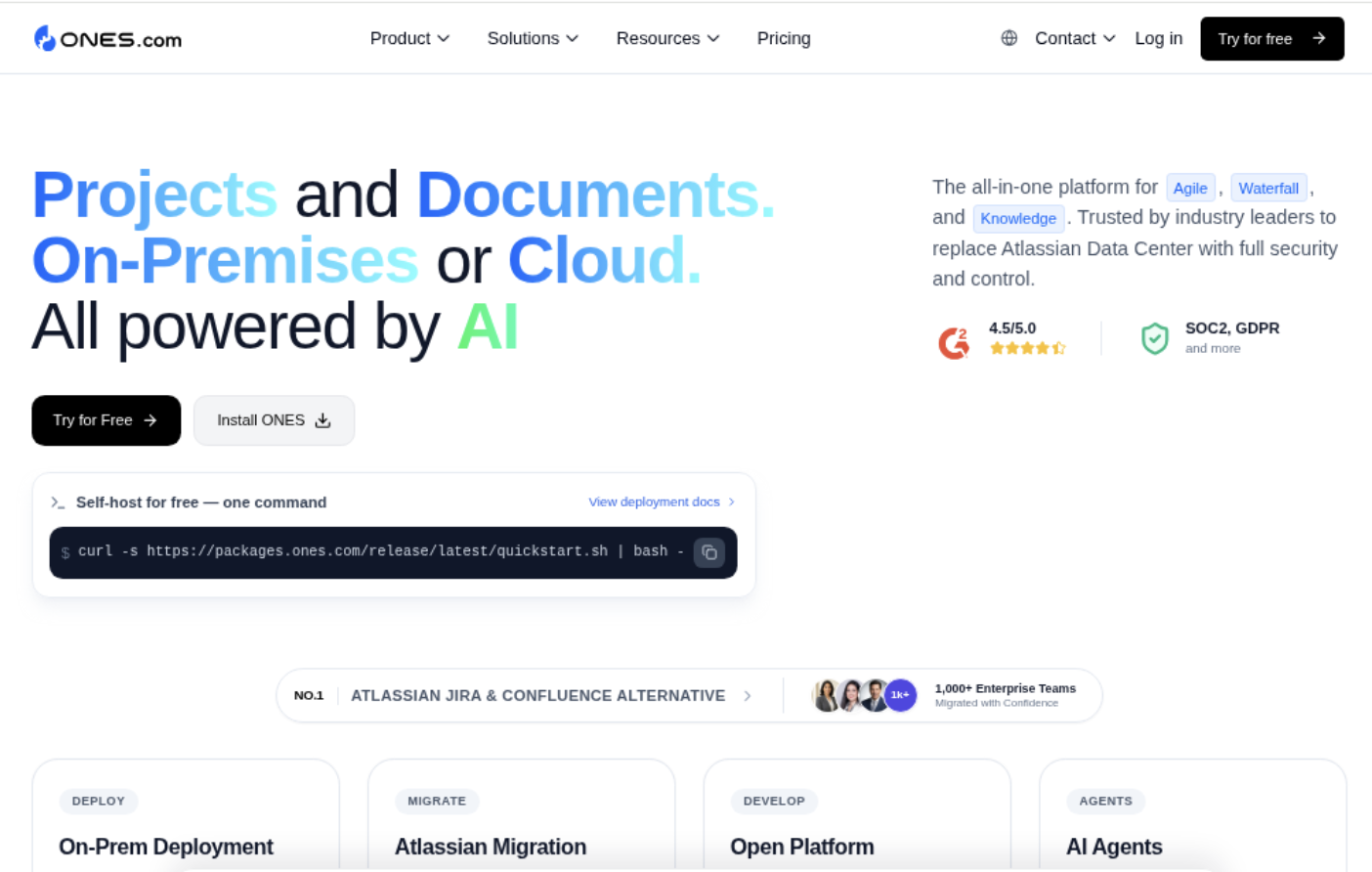
You can buy ONES Project and ONES Wiki separately. The platform supports up to 30 seats for free and offers Cloud, On-Premise, Private Cloud, and Air-gapped deployments. The self-hosted versions provide feature parity with the cloud version.
Core Capabilities
Scattered planning work → Connected project management → One planning workspace
If teams manage initiatives, sprints, and releases in separate places, coordination becomes difficult. ONES Project brings project work into one environment so teams can connect larger goals with daily execution.
Jira migration concerns → Jira-compatible workflows → Familiar team adoption
If your team already understands Jira workflows, switching tools can feel risky. ONES Project supports Jira-compatible workflows, helping teams preserve familiar ways of organizing and progressing work.
Plugin dependence → Native reporting and workflow features → Fewer add-ons to maintain
When essential planning features rely on multiple plugins, upgrades and permissions can become complicated. Built-in reporting, custom workflows, custom fields, sprint management, and automation reduce the need to assemble every capability separately.
Limited deployment choices → Cloud and self-hosted deployment → A better fit for security requirements
Organizations with strict infrastructure requirements may need more control over where project information runs. ONES.com supports Cloud, On-Premise, Private Cloud, and Air-gapped deployment models.
Disconnected knowledge → ONES Wiki → Planning context near project work
Roadmap decisions often depend on requirements, meeting notes, technical explanations, and operating guidance. ONES Wiki gives teams a knowledge management environment that can sit alongside project management.
Rigid issue structures → Custom workflows and fields → More precise planning views
Different teams plan differently. Custom workflows and fields let you represent approval stages, risk categories, product areas, or compliance checkpoints without forcing every team into one narrow process.
Manual status updates → Automation → Less repetitive administration
Repeated status changes and routine transitions consume time. Automation can handle defined actions, such as updating fields after an approval or moving related work when a condition is met.
Separate team and leadership views → Built-in reporting → Clearer progress conversations
Leaders need progress, risk, and delivery visibility, while teams need actionable work. Built-in reporting helps present the same project activity at different levels of detail.
Application Scenarios
Software product launch
A product team can organize epics for billing, account management, and notifications. Engineering teams manage sprints, while leaders use reports to review release progress and blocked work.
Air-gapped engineering environment
A security-sensitive organization can deploy ONES.com in an air-gapped environment. Teams retain project workflows, custom fields, reporting, and knowledge management without requiring a public cloud connection.
Cross-functional approval process
A hardware team can create workflows that involve engineering, quality, legal, and operations. Each stage can have defined ownership, required fields, and automated transitions.
Common Challenges With Jira Plan Adoption
Challenge: The roadmap becomes outdated
Solution: Assign a plan owner and schedule a recurring review. Update scope, dates, dependencies, and capacity after meaningful changes rather than waiting for a quarterly presentation.
Challenge: Teams disagree about estimates
Solution: Agree on a shared estimation approach for the planning view. Keep team-specific practices where necessary, but avoid comparing incompatible numbers as if they mean the same thing.
Challenge: Dependencies appear too late
Solution: Identify cross-team prerequisites during refinement and planning. Ask each team what must be ready before its work can begin.
Challenge: Stakeholders want exact dates too early
Solution: Show confidence levels and planning windows. Explain which assumptions support the target and what could move it.
Challenge: The plan contains too much detail
Solution: Create audience-specific views. Executives may need initiatives and releases, while delivery teams may need stories, capacity, and dependencies.
FAQs About Jira Plant and Jira Plans
What does “Jira plant” mean?
“Jira plant” is usually a typing mistake or variation of “Jira plan.” Most people searching for it mean Jira Plans, the planning and roadmap capability associated with Advanced Roadmaps. It helps coordinate work across teams, projects, releases, dependencies, and timelines. If you meant a different Jira feature, check whether you are looking for a plan, project template, board, or roadmap.
Is a Jira plan the same as a Jira project?
No. A Jira project is a workspace that contains issues, workflows, permissions, and boards for a particular team or product area. A Jira plan provides a broader planning view that can combine work across projects or teams. For example, several projects may contribute epics to one product launch plan.
Do new Jira users need Advanced Roadmaps immediately?
Usually, no. Start with projects, boards, workflows, and clear issue relationships. Add advanced planning when you need cross-team coordination, capacity forecasting, scenario planning, or dependency tracking. Learning the basics first makes the higher-level planning features easier to understand.
How often should I update a Jira plan?
Review it at least during regular planning cycles. Many teams check it weekly or biweekly, then update it after major scope, staffing, dependency, or release changes. The right frequency depends on how quickly your work changes. A stable internal project may need less frequent review than a product with weekly releases.
Can a Jira plan show team capacity?
Yes. Capacity planning can compare expected work with team availability, depending on your Jira configuration and planning setup. Use the result as a forecast rather than a guarantee. Account for support work, holidays, meetings, incidents, and other responsibilities that reduce delivery time.
What is a practical Jira alternative for project planning?
ONES Project is a Jira alternative for teams that want project management with Jira-compatible workflows, custom fields, sprint management, automation, and built-in reporting. ONES.com also provides ONES Wiki for knowledge management. Deployment options include Cloud, On-Premise, Private Cloud, and Air-gapped environments.
Conclusion
If you searched for “Jira plant,” you probably wanted to understand Jira plan or Jira Plans. The feature gives you a higher-level view of work, teams, releases, capacity, and dependencies.
Start with a clear planning question. Choose a focused scope, build a sensible hierarchy, assign ownership, add realistic estimates, and review the plan regularly. Use timelines and scenarios to support decisions rather than decorate reports.
Here’s the practical takeaway: a roadmap becomes valuable when it reflects real execution. Keep it connected to team work, make uncertainty visible, and adjust it as conditions change.
If Jira’s planning model does not match your deployment or workflow needs, ONES.com offers ONES Project as a Jira alternative, with native project capabilities, flexible deployment, and a separate knowledge management option through ONES Wiki.