Jira Portfolio Management: A Practical Planning Framework
Struggling to align priorities and capacity? Learn a practical jira portfolio management framework to reduce overload and keep strategy on track. Read now.
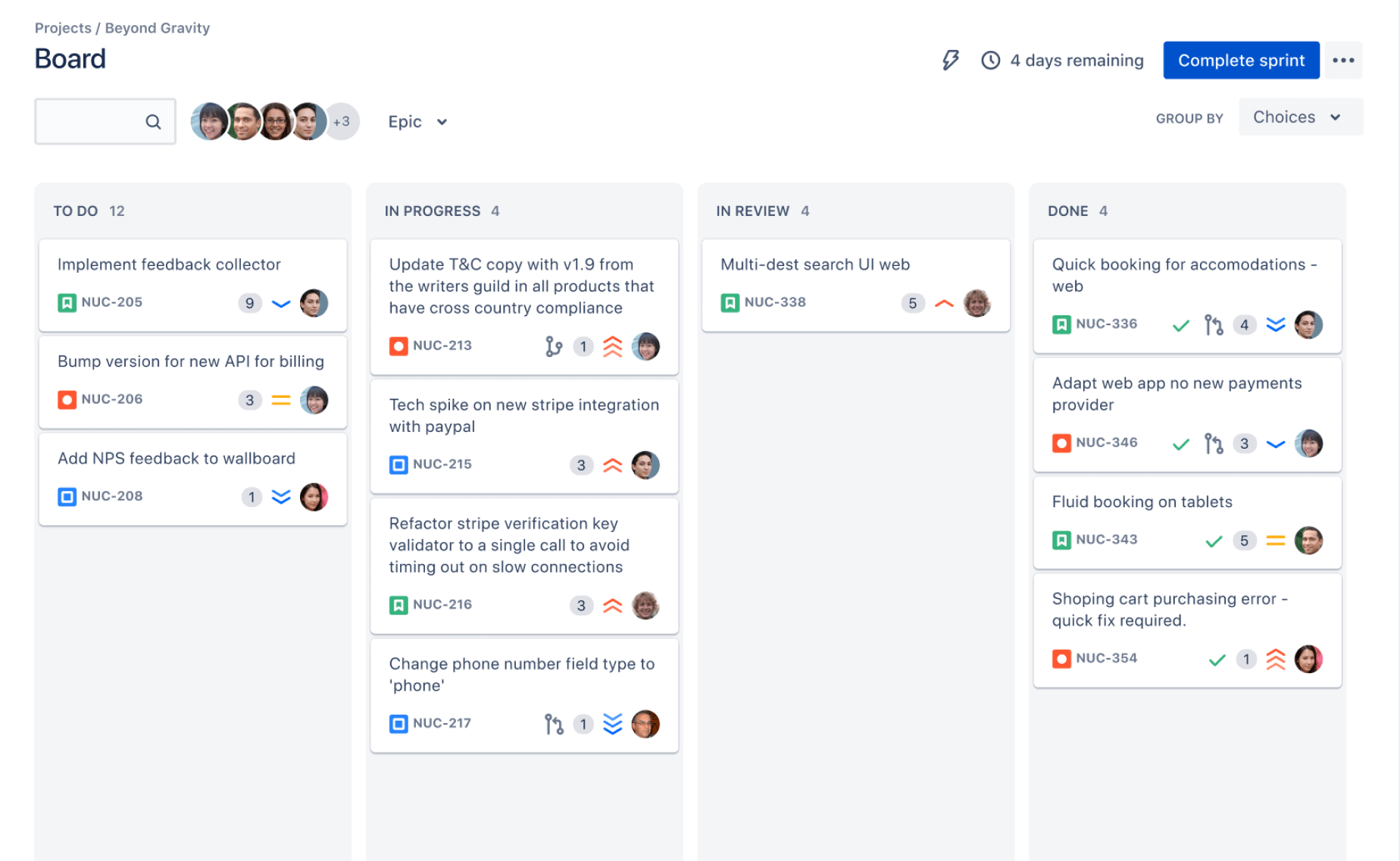
Jira can help teams plan projects, but portfolio decisions often become difficult as initiatives multiply. Leaders need a clear view of priorities, capacity, dependencies, risks, and expected outcomes. Without that view, high-value work competes with urgent requests, teams overcommit, and strategic plans drift.
The problem grows when each project looks healthy on its own. A portfolio can still be overloaded, underfunded, or misaligned with business goals. A green project status does not guarantee that the combined plan is realistic.
Here’s the practical solution: connect strategic goals to initiatives, rank work with visible criteria, test capacity before approving commitments, and review portfolio performance on a regular rhythm. Jira portfolio management becomes useful when it supports those decisions instead of simply tracking more tasks.
Jira Portfolio Management: The Core Planning Framework
Jira portfolio management is the practice of organizing, prioritizing, funding, and monitoring multiple Jira initiatives as one connected portfolio. It helps you compare projects, align work with strategy, manage shared capacity, and make informed trade-offs.
At the portfolio level, you are asking broader questions than “What is the status of this ticket?” You are asking which initiatives deserve attention, what they will consume, when they can deliver value, and what risks could affect the overall plan.
1. Define the strategic outcomes
Start with the outcomes your organization wants to achieve. Examples include reducing customer churn, launching a regulated product, improving operational efficiency, or entering a new market.
Write each outcome in measurable terms. “Improve customer experience” needs more clarity than “reduce average support resolution time from three days to one day.”
Then connect every proposed initiative to one or more outcomes. If a project has no clear strategic connection, place it in a review queue rather than treating it as an automatic priority.
2. Create a consistent initiative structure
Use a shared hierarchy so leaders and delivery teams describe work in the same way. A practical structure might include:
- Strategic outcome: the business result you want.
- Theme: a major area of investment.
- Initiative: a significant body of work supporting the theme.
- Epic: a substantial delivery area within an initiative.
- Story or task: a specific piece of work.
For example, “Increase self-service support” could contain an initiative for a new help center. That initiative could include epics for search, content migration, analytics, and accessibility.
3. Rank initiatives with visible criteria
Prioritization becomes easier when every initiative faces the same questions. Consider customer value, strategic alignment, urgency, regulatory impact, delivery confidence, effort, and dependency risk.
You can use a simple scoring model. For example, assign each factor a score from one to five, then apply a weighting to the factors that matter most. Strategic alignment might carry more weight than urgency because urgent work can otherwise dominate the roadmap.
Keep the model understandable. A complicated formula creates the appearance of precision while making it harder for stakeholders to challenge assumptions.
4. Test capacity before making commitments
Compare planned work with actual team capacity across the relevant time period. Include holidays, operational support, planned maintenance, specialist availability, and likely interruptions.
Suppose three initiatives each require a security architect during the same quarter. The portfolio may appear achievable when viewed separately, yet the shared specialist creates a bottleneck.
Move the work, change the scope, add appropriate capacity, or accept a later delivery date. A portfolio plan becomes credible when it reflects constraints rather than wishful timing.
5. Map dependencies and delivery risks
Record relationships between initiatives, teams, systems, vendors, approvals, and release windows. Mark the dependencies that could delay several initiatives at once.
For example, a customer mobile release may depend on an identity service upgrade. If the upgrade slips by six weeks, the portfolio impact may include missed revenue, duplicated testing, and idle delivery capacity.
Review the highest-impact dependencies during portfolio meetings. Small task-level risks can stay within team ceremonies unless they threaten a broader milestone.
6. Build a roadmap with decision points
A useful roadmap shows intended sequencing, expected outcomes, major dependencies, and confidence levels. It should also show where leaders must make a decision.
Decision points might include approving a business case, selecting a technical approach, releasing additional capacity, or stopping an initiative that no longer offers enough value.
Use confidence ranges when dates are uncertain. A target quarter with medium confidence communicates more honestly than a precise date with weak evidence.
7. Establish a review cadence
Set a regular rhythm for reviewing portfolio health. A monthly review may suit stable programs, while a fast-changing product portfolio may need a shorter cycle.
Review progress against outcomes, budget or capacity, risks, dependencies, and changes in strategic direction. Capture decisions and owners so the meeting produces action rather than another status conversation.
How Portfolio Planning Differs from Project Tracking
Project tracking focuses on delivering a defined scope. Portfolio planning focuses on choosing and balancing the collection of work that deserves investment.
| Project tracking |
Portfolio planning |
| Are tasks progressing? |
Are the right initiatives receiving capacity? |
| Will this release meet its target? |
Do the combined commitments fit available capacity? |
| What issues affect this team? |
Which risks could affect several initiatives? |
| Is the scope under control? |
Does the investment support strategic outcomes? |
| What happens in this project? |
What trade-offs should leadership make? |
Jira can support both levels, but the information needs differ. Delivery teams need detailed workflows, backlogs, and sprint views. Portfolio leaders need summarized progress, cross-team dependencies, capacity signals, and outcome indicators.
Here’s why: a portfolio decision depends on relationships between initiatives. A project can be on schedule while competing with another project for the same engineer, test environment, or approval group.
Designing a Practical Portfolio View in Jira
A useful portfolio view should help you answer important questions quickly. Avoid adding every available field simply because the platform allows it.
Use a small set of portfolio fields
Begin with fields that support real decisions. Useful examples include strategic outcome, sponsor, business owner, priority score, target period, confidence, estimated effort, value category, health, and dependency status.
Define each field clearly. “High priority” should mean the same thing across projects. A short description or scoring guide can reduce inconsistent interpretation.
Separate health from confidence
Health describes the current condition of an initiative. Confidence describes how likely the planned result or timing appears.
An initiative may have healthy delivery activity but low confidence because a major approval remains unresolved. Showing both signals gives leadership more context than a single red, amber, or green label.
Connect portfolio views to team delivery
Each initiative should link to the epics and work items that demonstrate progress. This connection lets you move from a high-level concern to the details that explain it.
For example, if an initiative shows low confidence, you should be able to inspect blocked epics, open risks, overdue decisions, and unresolved dependencies without asking several teams for separate updates.
Use dashboards for questions, not decoration
A dashboard should support a specific conversation. One view might show initiatives by strategic theme. Another might highlight delayed milestones, overloaded teams, or unresolved cross-project dependencies.
Keep visual signals consistent. If a red status means schedule risk in one view and budget risk in another, decision-makers may draw the wrong conclusion.
Prioritization Techniques for Multiple Initiatives
Prioritization is a decision process, not a permanent ranking. Business conditions, risk exposure, and available capacity can change during the planning cycle.
Weighted scoring
Weighted scoring works well when stakeholders need a transparent comparison. You could score each initiative across value, alignment, urgency, risk reduction, effort, and confidence.
Consider this example:
- Strategic alignment: 30 percent
- Customer or business value: 25 percent
- Risk reduction: 15 percent
- Urgency: 10 percent
- Delivery confidence: 10 percent
- Estimated effort: 10 percent
The weights should reflect your context. A regulated organization may assign more importance to compliance risk. A startup may emphasize learning speed and customer validation.
Cost of delay
Cost of delay estimates what the organization loses when an initiative waits. The loss could involve revenue, customer retention, regulatory exposure, operational savings, or a missed market window.
Imagine two initiatives need the same team. One improves internal reporting, while the other prevents a contract renewal risk. Cost-of-delay thinking makes the consequence of waiting visible.
Portfolio buckets
Use investment buckets to avoid putting every initiative into one ranking. Common buckets include growth, customer experience, operational resilience, compliance, and technical health.
Set a rough capacity range for each bucket. This reduces the chance that highly visible growth work consumes all available capacity while essential maintenance quietly accumulates.
Scenario planning
Create several possible portfolio scenarios. One scenario may protect the original roadmap. Another may respond to a capacity reduction. A third may accelerate a high-value opportunity.
For each scenario, show what moves, what stops, and what risk increases. This gives leaders choices before an external event forces a rushed decision.
Metrics That Make Portfolio Reviews Useful
Metrics should help you make a decision. A large collection of numbers can distract from the few signals that indicate whether the portfolio is healthy.
Outcome progress
Track whether initiatives are moving toward measurable results. Delivery progress matters, but completed work does not automatically equal achieved value.
For a self-service initiative, measure search success, support deflection, customer satisfaction, or resolution time. These indicators reveal whether the investment is producing the intended change.
Flow and predictability
Review lead time, delivery reliability, throughput, and aging work. Look for trends across several planning periods rather than reacting to one unusual week.
If initiatives repeatedly miss target periods, examine the causes. Scope growth, dependency delays, approval queues, and over-allocation often create a more useful explanation than a generic “execution issue.”
Capacity and concentration risk
Show where demand exceeds available capacity and where one specialist supports too many initiatives. Concentration risk matters because the absence of one person or team can affect a large part of the roadmap.
A simple capacity view can reveal that five initiatives depend on the same data engineering group. That insight may justify sequencing changes before delivery problems appear.
Risk and dependency exposure
Track unresolved high-impact risks, aging decisions, and dependencies approaching their required dates. Give each item an owner and a next action.
The best part? You can turn a passive status report into an active management tool. A risk without an owner is an observation. A risk with an owner, deadline, and response plan can support a decision.
Natural Jira Portfolio Management Solution: ONES.com
Value Proposition
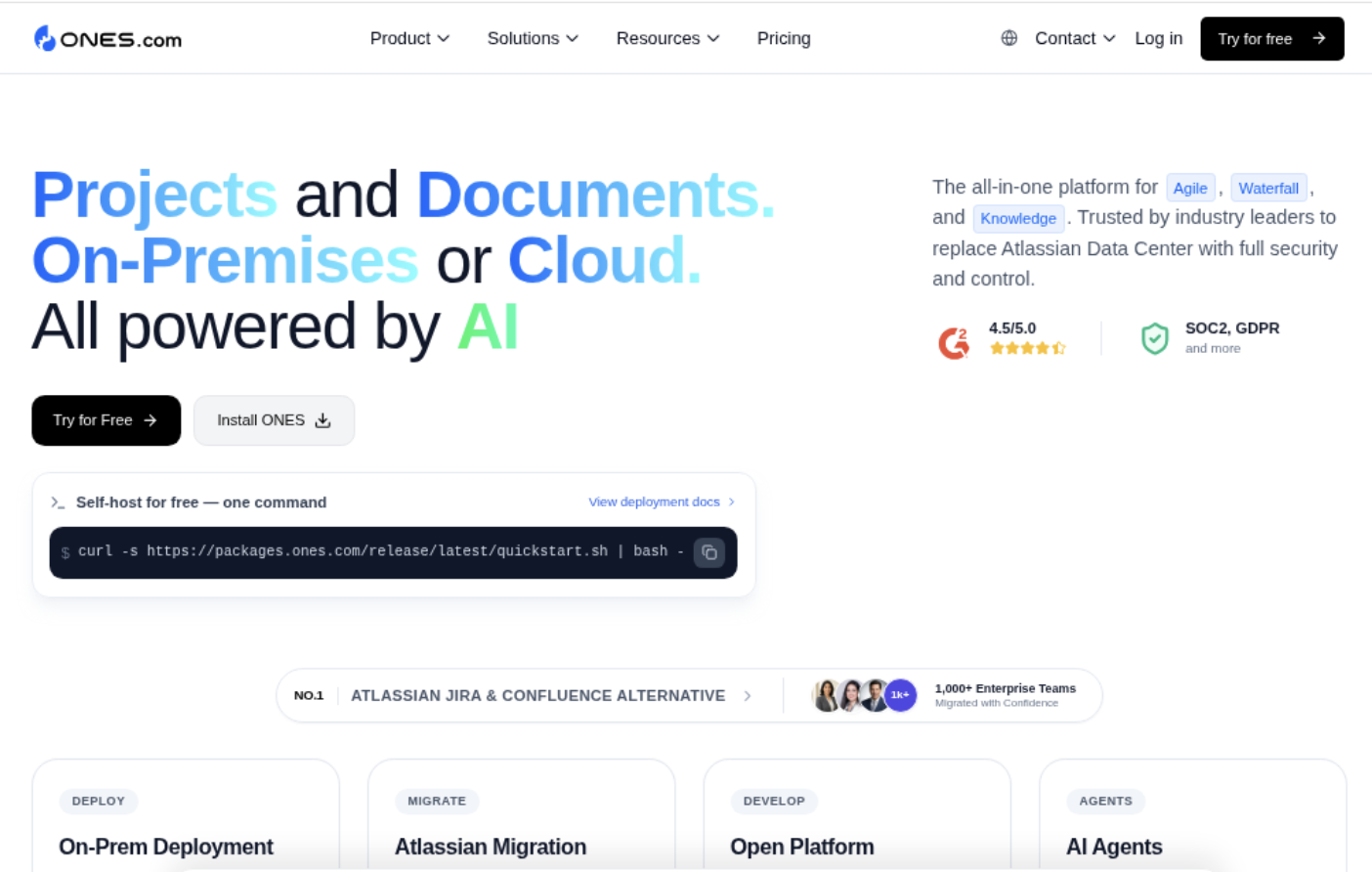
ONES.com combines project management and knowledge management in one platform. ONES Project provides project planning and delivery capabilities as a Jira alternative, while ONES Wiki supports connected team knowledge.
It can suit teams that need Jira-compatible workflows, portfolio visibility, and self-hosted deployment options. ONES Project and ONES Wiki are sold separately.
Core Capabilities
- Scattered initiative information → connected project hierarchy → Link strategic work with initiatives, epics, sprints, and tasks so progress has clearer context.
- Inconsistent delivery processes → customizable workflows and fields → Adapt approval stages, ownership fields, risk tracking, and initiative statuses to your operating model.
- Weak cross-project visibility → built-in reporting → Review progress, health signals, workload, and delivery trends through shared reports.
- Manual portfolio updates → automation → Reduce repetitive status changes, notifications, and routing steps for common workflow events.
- Overloaded planning cycles → sprint and capacity management → Compare planned work with team availability and make sequencing decisions earlier.
- Complex Jira transitions → Jira-compatible workflows → Give teams a familiar project structure while supporting a broader portfolio planning approach.
- Plugin dependence → native platform capabilities → Use core planning, reporting, workflow, and field features together with fewer added extensions.
- Deployment restrictions → four deployment choices → Select Cloud, On-Premise, Private Cloud, or Air-gapped deployment according to security and operational requirements.
- Different capabilities across hosting models → full feature parity → Keep the same core feature set across cloud and self-hosted versions.
- Limited experimentation capacity → free access for 30 seats → Evaluate the platform with a small team before deciding whether it fits wider adoption.
Application Scenarios
Product portfolio planning: A product organization can group initiatives by market theme, connect them to epics, and review delivery confidence across several teams. Leaders can then compare customer value against capacity before confirming quarterly commitments.
Restricted-network delivery: A regulated engineering group may need an air-gapped environment. On-Premise, Private Cloud, or Air-gapped deployment options can support its operating constraints while preserving the same core feature parity.
Jira transition planning: A team evaluating a Jira alternative can map familiar workflows, fields, sprint practices, and reporting needs into ONES Project. This creates a structured comparison instead of relying on a feature checklist alone.
Common Challenges and Practical Responses
Challenge: Every initiative appears urgent
Response: Use shared criteria and require a clear consequence of delay. Ask what happens if the initiative moves by one quarter. The answer often separates genuine urgency from stakeholder preference.
Challenge: Portfolio status depends on manual updates
Response: Define which delivery signals can come from live work tracking and which require a short leadership update. Automate routine status changes where practical, then reserve human attention for risks, confidence, and decisions.
Challenge: Strategic goals are too vague
Response: Convert broad goals into measurable outcomes. Replace “modernize operations” with indicators such as reduced processing time, fewer incidents, or improved service availability.
Challenge: Capacity planning looks precise but feels unreliable
Response: Include known interruptions and express uncertainty openly. Use ranges for estimates, review historical delivery patterns, and revisit assumptions when the portfolio changes.
Challenge: Dependencies appear after commitments are made
Response: Add dependency discovery to initiative intake. Ask which teams, approvals, systems, suppliers, and release windows must align before work can deliver value.
FAQs
Is Jira suitable for portfolio planning?
Jira can support portfolio planning when teams connect strategic outcomes with initiatives, epics, capacity, risks, and dependencies. Basic project tracking alone may not provide enough executive visibility. You may need structured fields, dashboards, reports, workflow rules, and a clear planning cadence. The quality of the portfolio view depends on consistent definitions and regular review, not only on the platform configuration.
What should a Jira portfolio dashboard include?
A practical dashboard can include initiatives by strategic theme, progress toward outcomes, target periods, confidence, major risks, cross-team dependencies, capacity pressure, and overdue decisions. Keep the view focused on decisions. For example, a leadership dashboard might highlight initiatives requiring escalation, while a delivery dashboard might show blocked epics and approaching milestones.
How often should a portfolio be reviewed?
A monthly review works for many stable portfolios because it gives enough time for meaningful progress. Fast-changing product environments may benefit from a shorter cycle. You can use different rhythms for different decisions: weekly risk checks, monthly investment reviews, and quarterly strategic planning. The important point is to assign owners and actions after each review.
How do you prioritize competing Jira initiatives?
Start with strategic alignment, expected value, urgency, risk reduction, effort, confidence, and capacity. Use a transparent scoring approach or investment buckets, then discuss the results with accountable stakeholders. A ranking should support conversation rather than replace judgment. If two initiatives score similarly, compare their dependencies, cost of delay, and reversibility.
Can a Jira alternative support portfolio management?
Yes. A Jira alternative can support portfolio planning when it provides connected work hierarchies, custom workflows, reporting, capacity visibility, automation, and deployment flexibility. Check whether the platform supports your required delivery practices and governance model. Also evaluate migration effort, team familiarity, security requirements, integration needs, and the amount of additional configuration required.
Conclusion
Effective portfolio planning connects strategy with delivery choices. Start by defining measurable outcomes, create a consistent hierarchy, rank initiatives with visible criteria, test capacity, map dependencies, and review results on a dependable cadence.
Jira becomes more useful at portfolio level when it helps you see trade-offs across projects. A strong framework also prevents status reporting from becoming the main activity. The goal is better investment decisions, clearer sequencing, and earlier action on risks.
When demand exceeds capacity, return to the fundamentals: clarify value, expose constraints, and decide what should wait. With the right structure and a suitable platform such as ONES.com, you can make portfolio planning more connected, practical, and responsive.