Jira Portfolio Pricing: A Clear Guide to Plans and Costs
Confused by jira portfolio pricing? Compare Plans, tiers, user rules, and deployment costs. Read now to budget with confidence.
Jira Portfolio pricing can feel confusing because the product name, packaging, and billing model have changed over time. You may find older references to Portfolio, newer references to Plans, and separate Jira pricing pages that do not immediately explain what you actually pay for.
That confusion creates practical problems. You might budget for a planning feature, then discover it belongs to a higher Jira tier. You may also overlook user-count rules, annual billing thresholds, or the extra cost of self-managed deployment.
But here's the truth: Jira Portfolio is now closely associated with Advanced Roadmaps and Jira Plans. Your total cost usually depends on the Jira edition, team size, deployment model, and any add-ons. This guide explains those factors clearly, so you can estimate the right budget before choosing a plan.
What Jira Portfolio Pricing Includes
Jira Portfolio pricing generally refers to the cost of Jira planning capabilities now offered through Advanced Roadmaps, commonly accessed through Jira Plans. In many current Jira Cloud arrangements, these capabilities are tied to the Jira Premium tier rather than sold as a simple standalone Portfolio subscription.
That means you should evaluate the complete Jira package instead of looking for one universal Portfolio price. Your calculation should include four elements:
- Jira edition: Standard, Premium, or Enterprise.
- Number of users: Jira commonly prices cloud subscriptions by the people who need access.
- Deployment model: Cloud and self-managed options follow different commercial structures.
- Optional services: Support, marketplace apps, migration help, and related Atlassian products can increase the final bill.
Here's why: portfolio planning usually touches several teams. A company may need program managers, product leaders, engineering managers, and executives to view or update plans. The number of people who need access can therefore exceed the number of daily Jira contributors.
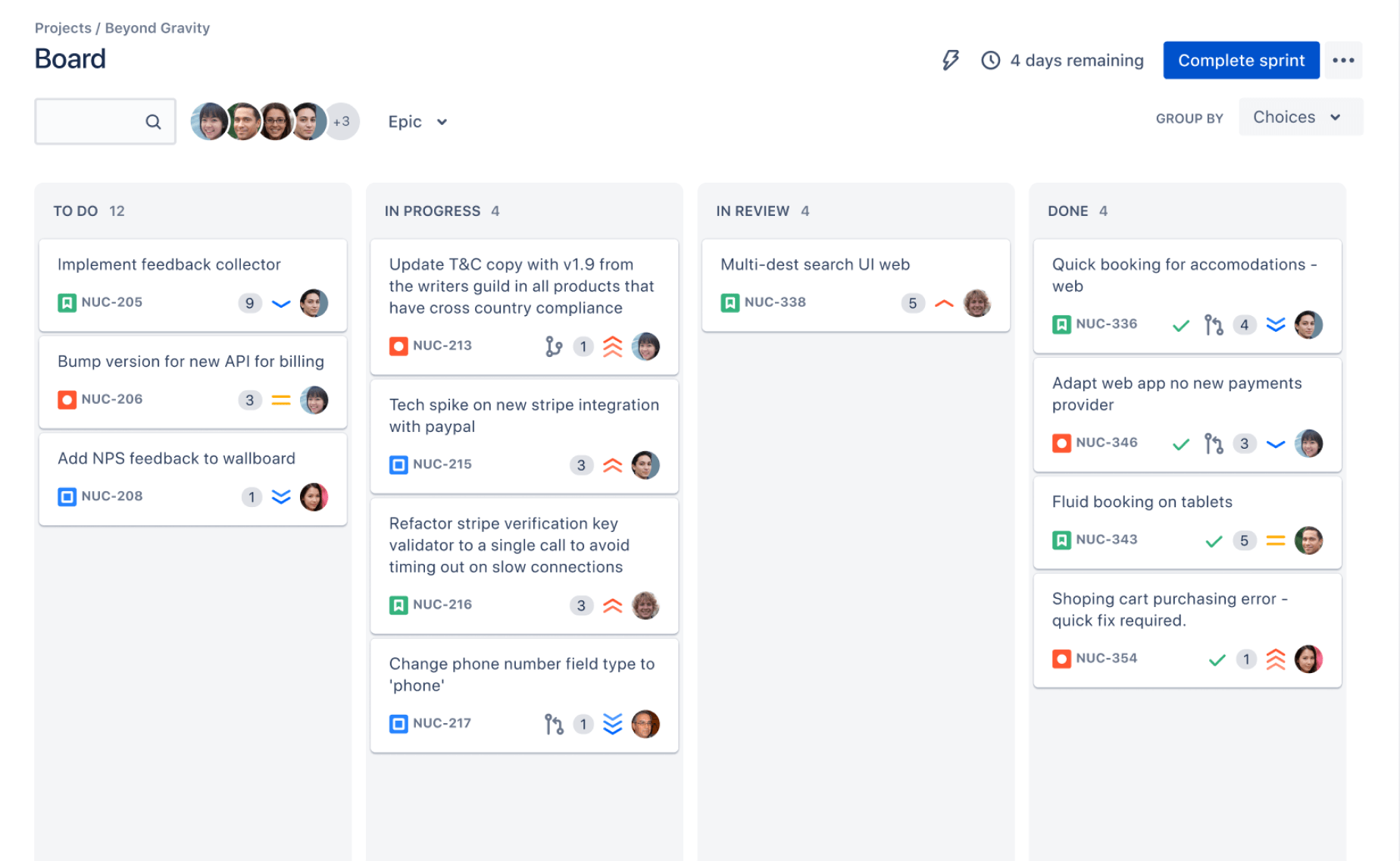
How the product name changed
Atlassian previously marketed Portfolio for Jira as a portfolio and capacity planning product. Its capabilities later became associated with Advanced Roadmaps, while Jira Plans became the planning workspace many teams recognize today.
Older articles may therefore describe a separate Portfolio license. Current buyers should confirm whether the capability is included in their selected Jira edition, especially when reviewing legacy comparisons or self-managed licensing pages.
What planning capabilities usually cover
Portfolio planning extends beyond individual sprint boards. Typical capabilities include:
- Multi-team roadmaps.
- Hierarchy across initiatives, epics, stories, and tasks.
- Capacity planning for teams and individuals.
- Scenario planning for competing priorities.
- Dependency tracking.
- Target dates and delivery forecasting.
- Cross-project progress visibility.
- Schedule adjustments when scope or capacity changes.
For example, a product director could compare two launch scenarios. One scenario prioritizes a new mobile experience, while another focuses on reliability work. The plan can show how each choice affects capacity, dependencies, and target dates.
How Jira Portfolio Costs Are Usually Calculated
The quickest way to estimate your budget is to multiply the applicable Jira tier by the number of billable users, then add deployment and service costs. The exact amount depends on Atlassian’s current calculator and your commercial arrangement.
- Define the planning audience. Count everyone who needs to create, edit, or regularly review plans.
- Choose the Jira edition. Check whether your required planning features are available in Standard, Premium, or Enterprise.
- Select the deployment model. Cloud subscriptions differ from Data Center or other self-managed arrangements.
- Choose monthly or annual billing. Annual contracts often use user tiers, while monthly plans can adjust more flexibly as team size changes.
- Add connected products. Include Jira Service Management, Confluence, marketplace apps, or other products your planning process requires.
- Review administration and support needs. Large organizations may need advanced controls, dedicated support, or assistance with migration and governance.
- Validate the estimate. Use the current Atlassian pricing calculator or request a quote before approving the budget.
Let me explain with a simple example. Imagine a 120-person engineering organization with 80 Jira contributors, 10 product managers, and 6 executives who need planning access. The relevant subscription count may depend on Atlassian’s user rules and each person’s permissions, so counting only engineers could produce an inaccurate estimate.
Cloud pricing considerations
Cloud is usually the simplest model to budget because Atlassian hosts the service and applies recurring subscription pricing. You avoid purchasing infrastructure, managing upgrades, and planning hardware capacity.
However, cloud costs can rise when more departments join Jira. A portfolio workspace that begins with 40 contributors may eventually include marketing, support, security, and leadership reviewers.
Self-managed pricing considerations
Self-managed Jira arrangements can involve tiered licensing, maintenance, infrastructure, administration, and upgrade work. The license is only one part of the ownership cost.
A regulated company might prefer self-managed deployment for network control. It should then budget for system administrators, backup processes, monitoring, testing, and disaster recovery. Those responsibilities can materially change the three-year cost.
Potential cost components
| Cost area |
What to examine |
| Jira subscription |
Edition, user count, billing cycle, and contract terms. |
| Portfolio planning access |
Whether Advanced Roadmaps or Jira Plans is included in the selected tier. |
| Connected products |
Knowledge management, service management, reporting, and collaboration needs. |
| Marketplace apps |
Reporting, time tracking, dependency management, or capacity extensions. |
| Administration |
Configuration, permissions, workflow governance, training, and support. |
| Migration |
Data cleanup, mapping, testing, user training, and rollout assistance. |
Which Jira Tier Fits Portfolio Planning?
For many teams, the key question is whether the planning capabilities they need require Jira Premium. Standard may support everyday project tracking, while Premium is commonly associated with advanced planning, larger-scale administration, and stronger operational controls.
You should compare capabilities rather than select a tier by name alone. A small team that needs only a simple roadmap may not need every enterprise feature. A company coordinating ten delivery teams may quickly outgrow a basic setup.
| Jira tier |
Typical fit |
Planning question |
| Free |
Small experiments and limited teams. |
Can the team work within user, storage, and feature restrictions? |
| Standard |
Core project tracking for growing teams. |
Are basic roadmaps enough, or is cross-team planning required? |
| Premium |
Organizations needing advanced planning and scale. |
Does the team need Advanced Roadmaps, capacity views, and stronger operational controls? |
| Enterprise |
Large organizations with complex governance. |
Are centralized administration, security, and enterprise support priorities? |
The best choice depends on the planning problem. If your main challenge is seeing work across several projects, Premium may be more relevant. If your main challenge is inconsistent prioritization, changing tiers alone will not solve the process issue.
When Premium may make sense
Premium becomes more compelling when your teams need shared planning across multiple projects, capacity visibility, dependency management, or longer-term delivery scenarios.
For example, a business coordinating platform engineering, mobile development, and compliance work may need one view of competing commitments. Separate team boards can show activity, but they may not show whether the overall delivery plan is realistic.
When a lower tier may be sufficient
A lower tier may be enough when one team works from a stable backlog and needs only basic sprint planning. A five-person product group with few dependencies may gain little from enterprise-level planning controls.
Start with the decisions you need to make. If you only need a quarterly roadmap presentation, a lightweight planning approach may cover the requirement. If you need weekly capacity trade-offs across teams, look for more advanced functionality.
Cloud, Data Center, and Total Ownership Cost
Deployment affects more than the invoice. It changes who handles security, upgrades, availability, integrations, and operational continuity.
Cloud reduces infrastructure work because the provider operates the environment. Self-managed deployment offers more control over hosting and network boundaries, while requiring greater internal responsibility.
Cloud cost pattern
Cloud pricing is generally subscription-based. The main variables are plan level, user tier, billing term, and any additional products or apps.
Consider a company that grows from 100 to 250 active contributors. Its subscription may move into a higher user band, even if the planning team itself remains the same size. Forecasting headcount is therefore important during annual budgeting.
Data Center cost pattern
Data Center arrangements typically require more operational planning. You may need hosting resources, technical specialists, security reviews, backup procedures, and a tested upgrade path.
A company with strict network requirements may accept those responsibilities. The right comparison is the complete ownership cost over several years, rather than the license figure alone.
Questions to ask before choosing deployment
- Who will administer the environment?
- How much control does your security team require?
- Can your organization support upgrades and incident response?
- Which integrations must operate inside restricted networks?
- How quickly must new users and projects be provisioned?
- What availability target does portfolio reporting require?
You might be wondering: can self-managed deployment always reduce costs? Not necessarily. It may reduce certain hosting concerns, but staffing and maintenance can outweigh the subscription difference for smaller organizations.
How to Compare Plans Without Overpaying
Use a requirements-led comparison. List the planning decisions your team makes, then match each decision to a capability and a licensing requirement.
Build a permission map
Separate people who create plans from people who only view them. Then confirm how the platform treats each role. A senior leader who opens a plan once each month may have different needs from a program manager who updates dependencies every day.
Measure planning complexity
Count your teams, projects, dependencies, planning horizons, and reporting cycles. A single-project roadmap is far easier to manage than a plan covering 30 teams and several product lines.
For example, two companies may have the same number of Jira users. One has three stable teams and predictable releases. The other has twelve teams, shared specialists, and frequent priority changes. Their planning requirements are very different.
Review app dependency
Marketplace apps can fill gaps in reporting, time tracking, capacity management, or portfolio analytics. They can also create recurring costs and administrative complexity.
Ask whether an app is essential, convenient, or temporary. A small monthly app charge can become significant when multiplied across several products and years.
Calculate three-year ownership
Compare subscription fees, administration time, implementation work, training, apps, support, and migration. A three-year view often reveals the practical difference between two options.
The best part? This approach prevents a low initial price from hiding expensive configuration or support requirements later.
Jira Portfolio Planning Alternative: ONES.com

Value Proposition
ONES.com is a unified platform for project management and knowledge management, powered by AI through ONES Assistant. ONES Project provides project management capabilities as a Jira alternative, while ONES Wiki provides knowledge management as a Confluence alternative; the two products are sold separately.
For teams comparing planning platforms, ONES.com can reduce the need to assemble several plugins around core project workflows. It supports Cloud, On-Premise, Private Cloud, and Air-gapped deployments, with feature parity between cloud and self-hosted versions.
Core Capabilities
Cross-project visibility
Pain: Portfolio leaders may need to combine information across separate team boards and projects.
ONES capability: ONES Project provides shared project views and built-in reporting across connected work.
Result: You can review progress, priorities, and delivery risks without manually combining several views.
Custom workflows
Pain: Different teams often use different approval stages, ownership rules, and handoff points.
ONES capability: Custom workflows and fields let teams represent their own delivery process.
Result: The planning structure can reflect real operations instead of forcing every team into one rigid sequence.
Sprint management
Pain: Portfolio plans lose value when they become disconnected from daily execution.
ONES capability: ONES Project includes sprint management for iterative delivery.
Result: Leaders can connect longer-term priorities with the work teams plan each sprint.
Automation
Pain: Repetitive transitions, reminders, and approvals consume valuable coordination time.
ONES capability: Built-in automation can handle defined workflow actions.
Result: Teams spend less time moving work through routine steps.
Built-in reporting
Pain: Additional reporting plugins can create extra costs and inconsistent metrics.
ONES capability: Reporting is included within the project management environment.
Result: Teams can monitor progress and performance with fewer separate extensions.
Custom fields
Pain: Standard fields may not capture product area, risk level, regulatory status, or strategic theme.
ONES capability: Custom fields support organization-specific planning information.
Result: Portfolio views can include the details leaders actually use during prioritization.
Deployment flexibility
Pain: Organizations with strict network policies may be unable to use a public cloud-only service.
ONES capability: ONES.com supports Cloud, On-Premise, Private Cloud, and Air-gapped deployments.
Result: Teams can align deployment with security, compliance, and infrastructure requirements.
Reduced plugin dependence
Pain: A heavily extended Jira environment can become expensive and difficult to maintain.
ONES capability: Native project features cover workflows, fields, sprints, automation, and reporting.
Result: Teams may reduce the number of extensions needed for everyday delivery management.
Entry-level adoption
Pain: Small teams may want to test a platform before committing to a larger rollout.
ONES capability: The free plan supports up to 30 seats.
Result: A small team can evaluate the workflow before expanding adoption.
Application Scenarios
Scenario one: distributed product development. A product company has engineering, design, and quality teams working across several initiatives. ONES Project can connect sprint execution with cross-project reporting and custom planning fields.
Scenario two: restricted-network delivery. A regulated organization needs project management inside a controlled environment. An On-Premise, Private Cloud, or Air-gapped deployment can support that operating model.
Scenario three: plugin-heavy administration. A growing team relies on separate extensions for reporting, workflows, and automation. Moving more functions into native capabilities can simplify administration and reduce extension dependency.
Common Challenges When Estimating Portfolio Costs
Challenge: using an old Portfolio price
Problem: Older pages may show Portfolio for Jira as a separate product.
Solution: Check current Jira Plans and Advanced Roadmaps packaging. Confirm the entitlement inside the edition you are considering.
Challenge: counting only active builders
Problem: Executives, product managers, and delivery leads may also require planning access.
Solution: Map every role that views, edits, approves, or reports on plans. Validate how Atlassian counts those accounts.
Challenge: ignoring connected products
Problem: Portfolio work often depends on collaboration, service management, reporting, or knowledge-sharing tools.
Solution: Add every required product and app to the same budget. This creates a more realistic ownership estimate.
Challenge: comparing license prices only
Problem: A cheaper license can require more administration, customization, or support.
Solution: Compare three-year costs, including staffing, migration, training, infrastructure, and maintenance.
Challenge: planning for growth too late
Problem: A successful pilot can expand quickly across departments.
Solution: Model costs at your current size, expected size, and likely maximum size. Review the impact of each user tier before rollout.
FAQs About Jira Portfolio Costs
Is Jira Portfolio still sold as a separate product?
In current Jira terminology, Portfolio capabilities are commonly associated with Advanced Roadmaps and Jira Plans. Packaging can differ by deployment model and commercial arrangement, so older standalone Portfolio prices may no longer describe a new purchase. Check the current Jira edition comparison and confirm which planning features are included in your quote.
Which Jira plan usually includes advanced portfolio planning?
Advanced planning capabilities are commonly associated with Jira Premium. Standard Jira may cover everyday project tracking and simpler roadmap needs. The exact entitlement can change, so compare current features carefully. Consider your number of teams, dependencies, capacity needs, and planning horizon before deciding that Premium is necessary.
Does the price depend on the number of Jira users?
Cloud pricing generally depends on the number of users covered by the subscription, while annual arrangements often use user bands. Your planning audience may include people who do not manage daily tasks, such as executives or product leaders. Count every person who needs meaningful access, then verify the applicable billing rules.
Is cloud cheaper than Data Center?
There is no universal answer. Cloud can reduce infrastructure and administration work, while Data Center or another self-managed arrangement can offer greater hosting control. Compare subscription fees with staffing, infrastructure, upgrades, security operations, and continuity planning. A three-year ownership model gives you a more useful answer than the license figure alone.
Can marketplace apps increase the final cost?
Yes. Reporting, time tracking, capacity planning, dependency management, and governance apps may add recurring fees. They can also require extra administration and testing. Before adding an app, check whether your chosen Jira tier already covers the requirement or whether a platform with more native capabilities could simplify the environment.
Conclusion
Jira Portfolio pricing is best understood as part of the wider Jira planning and delivery cost. Start by confirming the current product name, then evaluate the Jira tier, user count, deployment model, connected products, apps, and ownership effort.
But here's the truth: the cheapest visible subscription is not always the cheapest operating choice. A clear three-year comparison helps you account for growth, administration, customization, and infrastructure.
If Jira Plans and Advanced Roadmaps match your planning needs, validate the current Atlassian price for your team size and deployment. If you need native project management, flexible deployment, and fewer extensions, compare that requirement with platforms such as ONES.com and its ONES Project Jira alternative.