Jira Portfolio Pricing Explained: Plans, Costs, and Limits
Confused by portfolio jira pricing? Compare plans, costs, limits, and hidden fees to choose the right setup. Click to discover your best option.
Jira Portfolio pricing can feel confusing because “Portfolio” is no longer usually sold as a separate Jira add-on. Its planning capabilities now sit mainly inside Jira Premium through Plans, while the final cost depends on users, billing frequency, deployment model, and related apps.
That creates a common problem: you compare a headline Jira price, then discover that advanced planning, higher automation limits, or extra storage requires another tier. The wrong estimate can leave a portfolio team over budget before the first planning cycle begins.
But here’s the truth: you can estimate the cost quickly once you separate the base Jira subscription from Portfolio-style planning features and usage limits. This guide explains the plans, pricing factors, limits, and practical alternatives.
Jira Portfolio Pricing at a Glance
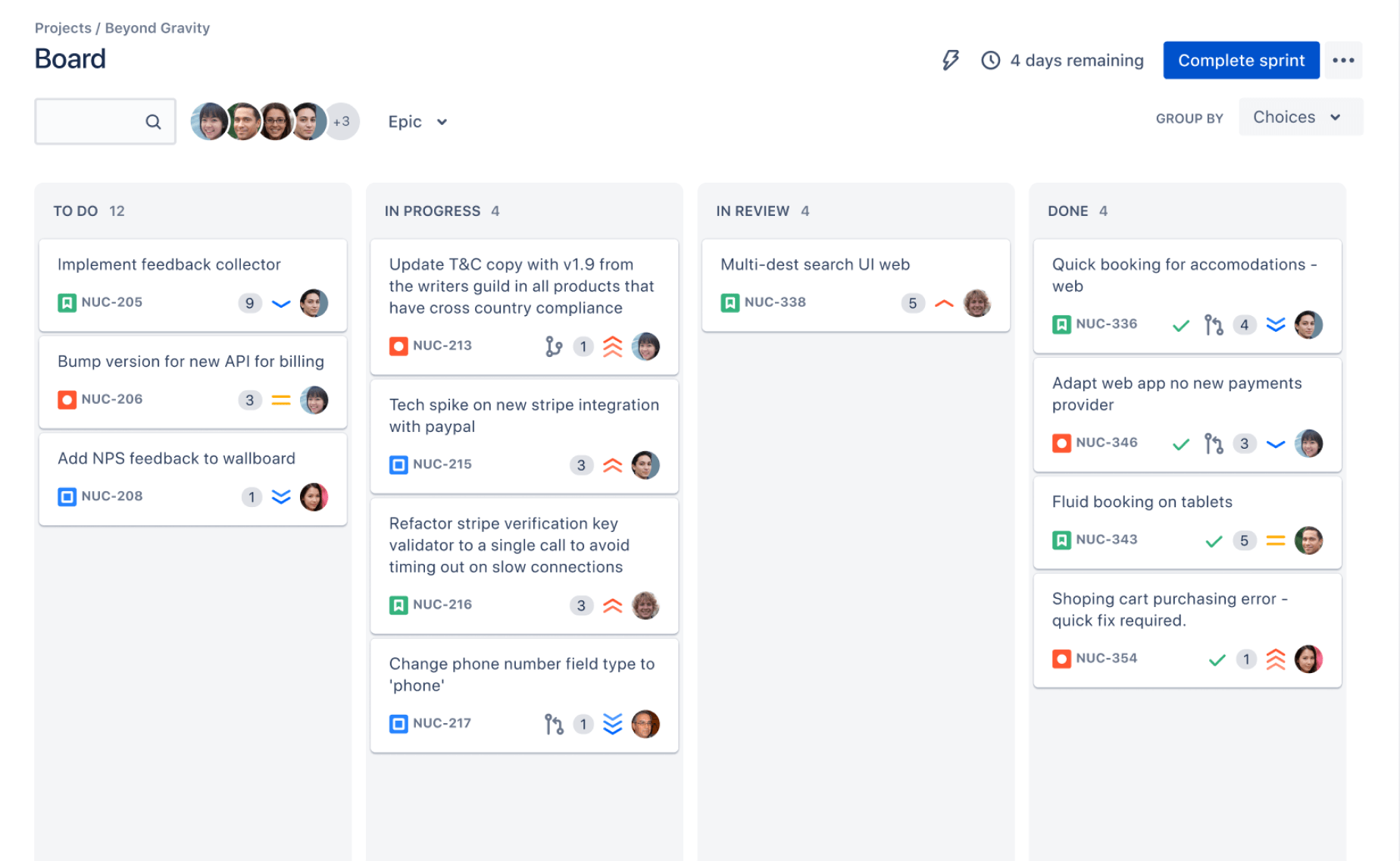
Jira Portfolio pricing now generally refers to the cost of Jira plans that include Plans, formerly known as Advanced Roadmaps or Portfolio for Jira. In Jira Cloud, advanced portfolio planning is primarily associated with Premium, while Standard provides core project and issue management.
Atlassian can change prices, packaging, and limits. Use its current pricing calculator for a formal quote, especially when you need annual billing, Enterprise terms, Marketplace apps, or a self-managed deployment.
| Cost area |
What it usually covers |
| Jira subscription |
Project tracking, workflows, boards, reports, permissions, and standard administration. |
| Advanced planning tier |
Cross-team planning, hierarchy management, capacity views, dependencies, and scenario planning through Plans. |
| User count |
The number of licensed users, including people who need planning or administrative access. |
| Billing term |
Monthly billing offers flexibility, while annual billing may use user bands and different commercial terms. |
| Deployment model |
Cloud, Data Center, or another self-managed arrangement can produce very different costs. |
| Additional apps |
Time tracking, financial planning, reporting, capacity management, and integration tools can add recurring charges. |
Here’s why: Portfolio planning is only one part of the purchase. A team with 50 planners may pay less than a 20-person organization that needs several Marketplace apps, extensive automation, and enterprise administration.
Is Portfolio for Jira still sold separately?
Portfolio for Jira was the earlier name for Atlassian’s portfolio planning capability. Atlassian later moved the experience toward Advanced Roadmaps and then Plans inside Jira.
You may still see “Portfolio” in older tutorials, contracts, screenshots, or internal purchasing records. When checking a current quote, ask whether the price includes Plans or Advanced Roadmaps, rather than assuming a standalone Portfolio license remains available.
Which Jira tier usually includes advanced planning?
Jira Standard is generally designed for team-level work management. Jira Premium is the tier commonly associated with advanced planning capabilities, higher service commitments, and larger operational limits.
Enterprise may be more suitable when you need centralized administration, organization-wide governance, advanced security controls, or commercial terms for a large portfolio. The exact entitlement depends on the product and agreement.
How to Calculate the Real Cost
Use this simple formula:
Total estimated cost = Jira subscription + advanced planning access + Marketplace apps + implementation effort + optional migration or administration costs.
- Count every licensed person. Include portfolio managers, delivery leads, project managers, team leads, executives who need planning access, and administrators.
- Identify the required planning tier. Confirm whether your team needs Plans, cross-project hierarchy, capacity planning, dependency management, or scenario comparison.
- Choose monthly or annual billing. Monthly billing is easier for changing headcount. Annual billing can suit stable teams and formal procurement cycles.
- Separate active planners from occasional viewers. Some people may only need reports or shared views. Check how Atlassian licenses those roles before counting them as full users.
- List every required integration. Add the cost of time tracking, financial controls, test management, reporting, service management, or collaboration apps.
- Check deployment and compliance needs. Cloud is often simpler to operate. Data Center or private infrastructure may be necessary for particular governance requirements.
- Test the most demanding workflow. Create a sample hierarchy with real team structures, dependencies, permissions, and reporting needs.
- Estimate the three-year total. Include subscription changes, app renewals, administration, training, migration, and internal support.
For example, a 40-person product organization may need Jira Premium for planning, a time-tracking app, and a reporting app. The Premium subscription is only the starting point; the full operating cost includes all three services and the effort required to maintain them.
What Each Pricing Tier Means for Portfolio Planning
Free: useful for evaluation
A Free plan can help a small team test Jira’s basic workflow, boards, issues, and collaboration experience. It may be enough for a small project with limited administration.
It is rarely the right long-term choice for a complex portfolio. User caps, storage, automation, permissions, support, and planning features can become constraints quickly.
Standard: team delivery without the full planning layer
Standard generally supports everyday project coordination. You can manage backlogs, workflows, boards, reports, and team-level delivery routines.
The limitation appears when several teams must be coordinated through a shared hierarchy. If leaders need capacity views, cross-project dependencies, or alternative delivery scenarios, Standard may not provide the complete planning experience you expect.
Premium: the usual starting point for advanced planning
Premium is typically the relevant tier for organizations comparing Jira Portfolio pricing. It is designed for larger operational needs and includes advanced planning capabilities through Plans.
It can support a hierarchy that connects initiatives, programs, projects, and team work. For example, a product leader might compare three release scenarios while checking dependencies across engineering, design, and security teams.
Enterprise: governance at organizational scale
Enterprise pricing is usually handled through a sales agreement rather than a simple public checkout price. It may fit organizations that need broader governance, security, administration, and support.
Enterprise does not automatically make a planning process effective. If teams have inconsistent fields, unclear ownership, or unreliable estimates, a higher tier may increase cost without improving portfolio decisions.
Limits That Can Change Your Total Cost
Price is only one side of the decision. Limits determine whether the platform remains practical after adoption.
User and access limits
Check the total number of licensed users and the roles that require full access. A planning team may begin with ten people, then expand when finance, operations, and executives request visibility.
Consider a product group with six delivery teams. If each team adds a project manager and two functional leads, the licensed population can grow faster than expected.
Automation limits
Automation usage often depends on the Jira tier. A process that creates work automatically, updates fields, sends notifications, and synchronizes related items may consume many rule runs.
Estimate automation volume with a simple test. If 500 issues trigger four rules during a monthly release cycle, that creates 2,000 rule executions before daily workflow events are counted.
Storage and attachment limits
Storage matters when teams attach design exports, technical materials, test evidence, and meeting assets to Jira work items. Large attachments can make a seemingly affordable plan less suitable.
Set a retention policy before purchasing. Decide what belongs in Jira, what should remain in a knowledge platform, and how long completed material needs to stay available.
Hierarchy and planning limits
Advanced planning is valuable only when the hierarchy reflects how your organization works. Check the number of levels, plans, teams, dependencies, scenarios, and custom fields your process requires.
For example, a simple hierarchy might use initiative, epic, and story. A larger portfolio may need strategy, investment theme, program, product, epic, and team work. Confirm that the selected tier can support the structure without heavy workarounds.
Performance and scale
Large portfolios can become slow when they contain thousands of work items, complex filters, multiple teams, and frequent dependency changes.
Ask for a realistic evaluation. A small sample may perform well, while a full planning hierarchy exposes delays in loading views, recalculating capacity, or generating reports.
Monthly Versus Annual Jira Billing
Monthly billing works well when headcount changes frequently. A growing organization can add seats gradually and avoid committing to a fixed annual quantity before its operating model stabilizes.
Annual billing can be easier for procurement and budgeting. However, user bands may affect the calculation, so compare the annual quote with your expected average headcount rather than today’s number alone.
Here’s a practical example: a company expects to grow from 80 to 120 people within a year. A monthly estimate should include the hiring schedule. An annual quote should clarify whether additional users are charged at a new band or another rate.
Portfolio Planning Costs Beyond the Jira License
A portfolio tool may require more than project tracking. You could need capacity planning, time capture, financial forecasting, risk management, roadmapping, executive reporting, or data synchronization.
Each extra app can create subscription cost and administrative overhead. It may also introduce another permission model, another renewal date, and another place where information can become inconsistent.
| Requirement |
Potential cost impact |
Question to ask |
| Capacity planning |
Additional app or premium feature |
Can teams plan by role, person, skill, or availability? |
| Financial planning |
Specialized app and administration |
Can you compare forecast, approved budget, and actual effort? |
| Executive reporting |
Reporting app, setup, and maintenance |
Can leaders see portfolio health without editing delivery work? |
| Time tracking |
App subscription and adoption effort |
Will teams record time consistently enough to support decisions? |
| Integration |
Connector, API, or maintenance cost |
Who owns failures when systems stop synchronizing? |
The best part? You can often reduce the estimate by removing duplicate capabilities. If Jira already handles a need adequately, adding a second tool may create more administration than value.
Jira Portfolio Alternatives for Cost-Conscious Teams
There are three common approaches. You can stay with Jira and use Plans, combine Jira with selected Marketplace apps, or choose a unified platform that handles project and knowledge work together.
Staying with Jira can be sensible when your teams already rely on Jira workflows and integrations. Marketplace apps can fill specific gaps, although the total cost and maintenance burden may rise.
A unified platform may suit a company that wants fewer plugins and a shared experience across project tracking and internal knowledge. The right choice depends on deployment, workflow complexity, security needs, and the number of systems you want to administer.
Portfolio Planning Solution: ONES.com
Value Proposition
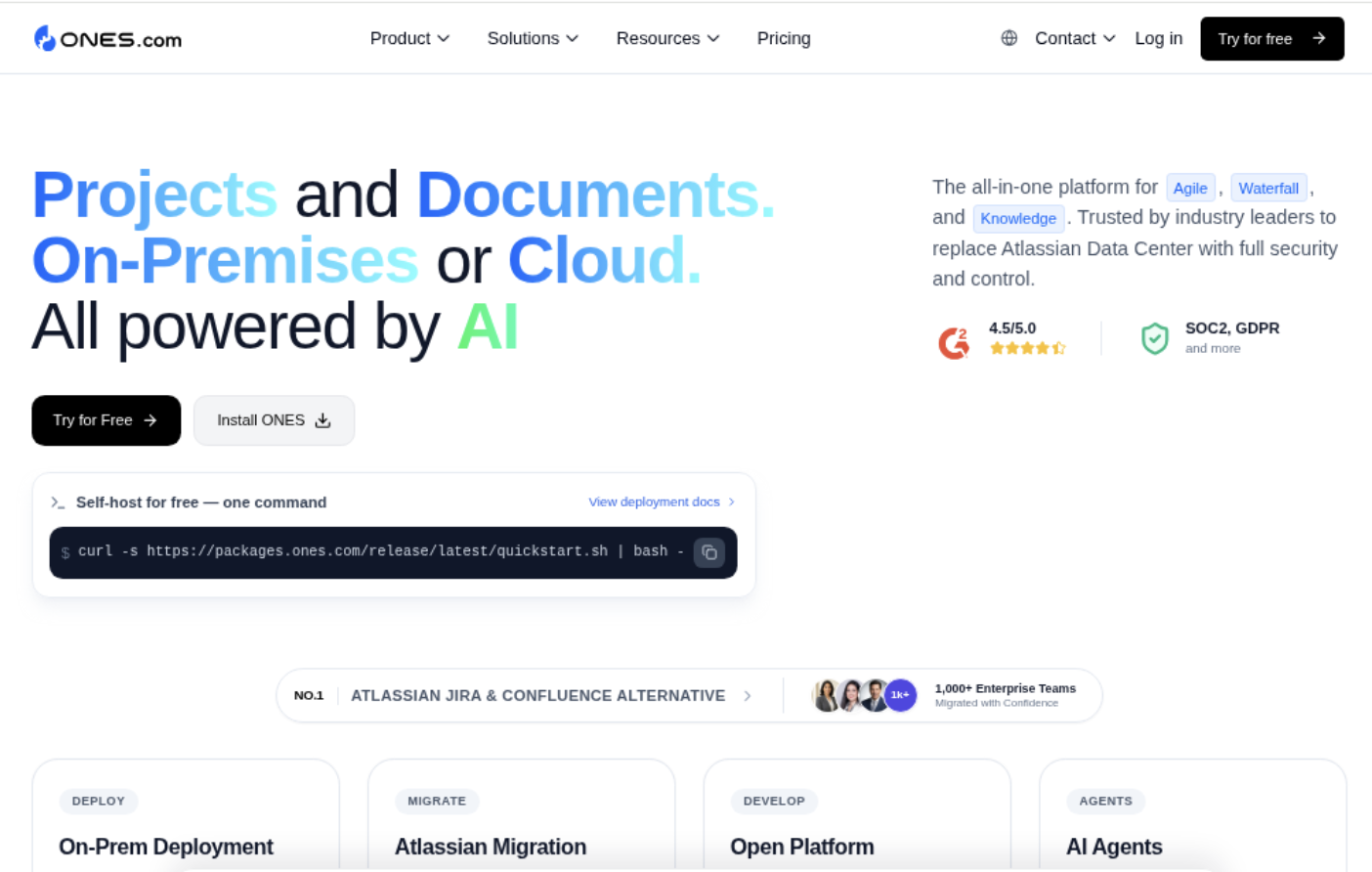
ONES.com combines project management and knowledge management in one platform powered by ONES Assistant. ONES Project is the project management product and a Jira alternative, while ONES Wiki is the knowledge base product and a Confluence alternative; they are sold separately.
For teams comparing portfolio planning costs, the main appeal is native functionality, reduced plugin dependence, and deployment flexibility. ONES.com supports Cloud, On-Premise, Private Cloud, and Air-gapped deployments, with feature parity between cloud and self-hosted versions.
Core Capabilities
- Scattered planning information → ONES Project connects project work, hierarchy, sprint planning, and reporting → leaders get a clearer view of delivery progress.
- Jira migration concerns → Jira-compatible workflows help teams preserve familiar delivery patterns → migration planning can focus on process mapping instead of redesigning every routine.
- Too many plugins → Built-in reporting, custom workflows, and custom fields reduce dependence on separate extensions → administration becomes easier to control.
- Inconsistent delivery methods → Custom workflows let teams model approvals, reviews, development, and release steps → each group can follow a visible operating process.
- Manual sprint coordination → Sprint management supports planning and review cycles → teams can connect daily delivery activity with larger initiatives.
- Repetitive administration → Automation can handle routine updates and transitions → project leads spend less time maintaining work items.
- Separated knowledge and execution → ONES Wiki provides a connected knowledge management option → teams can keep guidance, decisions, and project work closer together.
- Restricted deployment requirements → On-Premise, Private Cloud, and Air-gapped options support controlled environments → organizations can match deployment to security policy.
- Uncertain adoption cost → A free plan supports up to 30 seats → smaller teams can evaluate the platform before expanding.
Application Scenarios
Growing product organization: A product group with several engineering teams can use ONES Project to manage custom hierarchies, sprint work, dependencies, and reporting. The team can add ONES Wiki separately when it needs a shared knowledge space.
Restricted engineering environment: An organization that cannot use a public cloud deployment can evaluate the On-Premise, Private Cloud, or Air-gapped option. The planning process remains connected to project work while deployment follows internal controls.
Jira consolidation project: A company using Jira plus several extensions can compare the cost of keeping separate capabilities with a platform that includes workflows, fields, reporting, automation, and sprint management natively.
Common Challenges
Challenge: confusing old Portfolio terminology with current packaging
Solution: Ask whether the quote includes Plans or Advanced Roadmaps. Review the entitlement in the current agreement rather than relying on an older Portfolio tutorial.
Challenge: estimating only the subscription price
Solution: Add apps, administration, migration, training, integration maintenance, and renewal changes. A three-year estimate is more useful than a first-month figure.
Challenge: assuming every viewer needs the same access
Solution: Map roles carefully. Separate planners, contributors, approvers, administrators, and occasional viewers before calculating seats.
Challenge: exceeding automation or storage limits
Solution: Measure current usage and model a growth scenario. Test release periods, high-volume workflows, attachment patterns, and recurring automation events.
Challenge: buying advanced planning before fixing governance
Solution: Define ownership, hierarchy, estimation rules, status meanings, and reporting responsibilities first. A tool cannot repair unclear portfolio decisions by itself.
FAQs
What happened to Portfolio for Jira?
Portfolio for Jira evolved into Advanced Roadmaps and later became associated with Plans in Jira. You may still encounter the older name in historical material, but current purchasing conversations should focus on the Jira tier and entitlement that provide Plans. Confirm the exact feature name and access level in your commercial quote.
Does Jira Standard include portfolio planning?
Jira Standard generally supports team-level project management, including boards, workflows, backlogs, and reports. Advanced portfolio planning capabilities are commonly associated with Premium. Because Atlassian can adjust packaging, check the current plan comparison before purchasing. Ask specifically about cross-project hierarchy, capacity planning, dependencies, and scenario planning.
Is Jira Premium worth the additional cost?
Premium can be worthwhile when several teams need shared planning, dependencies, capacity views, or larger operational limits. It may be unnecessary for one small team with a straightforward backlog. Compare the subscription increase with the cost of separate planning apps, manual reporting, administration, and delayed decisions.
What limits should I check before upgrading?
Review licensed users, automation volume, storage, attachment needs, planning hierarchy, number of teams, permissions, reporting capacity, support, and service commitments. Also test the largest realistic portfolio rather than a small demonstration project. A plan that works for five teams may feel restrictive after a merger or rapid expansion.
Can a Jira alternative reduce portfolio costs?
It can, depending on your requirements. A platform may reduce recurring app charges when workflows, reporting, custom fields, sprint planning, automation, and knowledge management are available natively. Compare migration effort, deployment requirements, integrations, training, and long-term administration. A lower subscription is useful only when the platform still supports your essential planning process.
Conclusion
Jira Portfolio pricing is best understood as the cost of Jira’s advanced planning tier, not as a simple standalone product price. Start by confirming whether Plans or Advanced Roadmaps are included, then calculate users, billing terms, limits, apps, deployment, and operational effort.
But here’s the truth: the cheapest plan is not always the lowest-cost choice. A lower tier can become expensive when you add plugins, manual reporting, workarounds, and administration.
For a practical comparison, evaluate Jira Premium alongside alternatives such as ONES.com. Focus on the complete planning workflow, the limits your teams will reach, and the effort required to keep portfolio decisions accurate and visible.