Jira Premium: 201–300 Users Annual vs Monthly Pricing Guide
Comparing Atlassian Jira Premium pricing 201 300 users annual monthly? Learn the true costs and billing differences—read now to choose wisely.
Planning Jira Premium for 201–300 users can feel surprisingly difficult. The monthly price looks simple until seat counts, annual tiers, taxes, add-ons, and billing rules enter the picture.
A small mistake can distort your budget for the entire year. You might compare 250 monthly seats with a 301-seat annual tier and reach the wrong conclusion.
But here’s the truth: annual and monthly billing measure commitment differently. You need to compare the same user count, the same edition, and the same billing assumptions.
This guide explains how to evaluate Atlassian Jira Premium pricing for 201–300 users. You’ll learn what changes between annual and monthly plans, how to estimate total cost, and how to avoid common purchasing mistakes.
How Jira Premium Pricing Works for 201–300 Users
Jira Premium pricing for 201–300 users depends mainly on your billing cycle, selected user tier, currency, taxes, and any additional Atlassian products or services.
Monthly billing usually follows the number of billable seats in each billing period. Annual billing commonly uses a predefined user tier, which can make the annual commitment higher than your average monthly seat count.
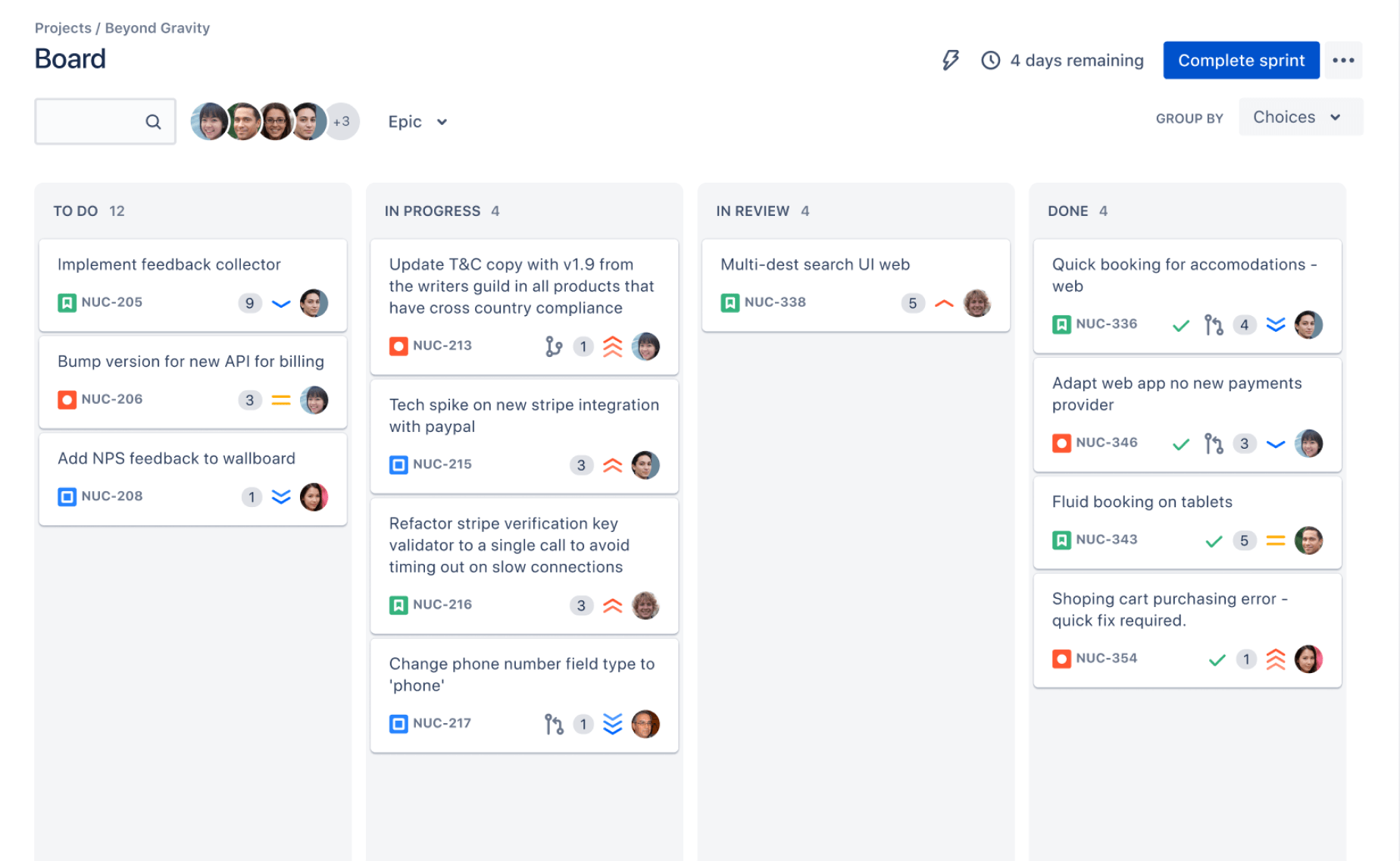
Annual and Monthly Billing at a Glance
| Factor |
Annual billing |
Monthly billing |
| Commitment |
Usually a 12-month commitment |
Generally renewed month by month |
| Seat calculation |
Often tied to a selected user tier |
Usually tied to active or billable seats during the period |
| Budget planning |
More predictable for yearly planning |
More flexible when headcount changes |
| Cash flow |
Requires a larger payment at renewal or purchase |
Spreads payments across the year |
| Best fit |
Stable teams with predictable growth |
Teams with changing or uncertain membership |
These are planning principles rather than a quote. Atlassian can change commercial terms, regional taxes, currency conversion, and displayed prices.
Why the 201–300 Range Matters
A team with 201 users and a team with 300 users may fall into different commercial calculations. The difference depends on the billing method and the tier shown during checkout.
For example, imagine a company with 245 Jira users. Under monthly billing, it may pay for roughly 245 billable users each month. Under annual billing, it may need to select an annual tier that covers the required capacity.
You might be wondering: why not compare the monthly price for 245 users with the annual price for 245 users?
Here’s why: annual subscriptions may use tiered capacity, while monthly subscriptions can respond more closely to seat changes. The two totals may not represent identical purchasing assumptions.
The Main Cost Components
Build your estimate with these components:
- Jira Premium subscription charges.
- The selected user tier or monthly seat count.
- Regional taxes and currency effects.
- Marketplace apps and connected Atlassian products.
- Premium support or other commercial services, if applicable.
- Renewal changes and planned team growth.
For a realistic budget, calculate the subscription first. Then add taxes and connected services separately.
Annual Jira Premium Pricing: What to Check
Annual billing can simplify budgeting, especially when your organization expects a steady user count. It also requires more careful planning before purchase.
Check the Annual User Tier
Annual plans generally use a tier that covers a range of users. Your invoice may reflect the selected tier rather than the exact number of people who log in every month.
Suppose your team has 218 users today and expects 275 users within six months. A lower tier may create capacity pressure, while a higher tier may increase your initial commitment.
The best approach is to identify three numbers:
- Your current billable user count.
- Your expected count at the next renewal.
- Your internal approval limit for unused capacity.
Then compare the available annual tiers against those numbers.
Consider Growth Before Renewal
Annual pricing works well when growth is predictable. It becomes less attractive when hiring plans remain uncertain.
For example, a product company may have 230 Jira users in January and 290 users by December. An annual tier that covers the expected growth could prevent a midyear adjustment.
However, a company reducing its engineering organization could pay for capacity it no longer needs. That possibility belongs in your financial review.
Review Renewal Conditions
Do not treat the first-year quote as the complete financial picture. Review renewal timing, user-tier changes, tax treatment, and procurement requirements.
Ask your purchasing team to record:
- The subscription start and end dates.
- The included user capacity.
- The renewal date and notice requirements.
- The currency used for billing.
- Any negotiated discount or commercial condition.
- The process for increasing or reducing capacity.
A clear renewal record prevents surprises when the next invoice arrives.
Monthly Jira Premium Pricing: What Changes
Monthly billing usually suits teams that need flexibility. The trade-off is a less predictable yearly total.
Monthly Costs Can Follow Team Movement
When your organization hires contractors, rotates partners, or changes project staffing, monthly billing can reflect those movements more quickly.
Consider a consultancy with 210 internal users and 70 temporary users during a large implementation. Monthly billing may offer greater control when the temporary group leaves after four months.
Still, you must check how Jira defines billable users. Removing someone from a project does not always remove that person from the subscription.
Use a Monthly Seat Pattern
Instead of multiplying one monthly estimate by 12, create a simple seat pattern for the year.
| Period |
Estimated users |
Planning purpose |
| January–March |
215 |
Current operating team |
| April–June |
240 |
Planned hiring |
| July–September |
275 |
Peak delivery period |
| October–December |
250 |
Post-launch stabilization |
This pattern gives you a better estimate than assuming 300 users for every month.
Watch for Seat Administration Errors
Monthly billing does not remove the need for administration. Dormant accounts, duplicate identities, and external collaborators can inflate your billable count.
Set a monthly review date. Check inactive accounts, contractor access, group membership, and users who no longer need Premium features.
The best part? A short monthly review can prevent a year of paying for unnecessary access.
How to Compare Annual and Monthly Totals
Compare the options using the same scope. That means the same Jira edition, user requirement, currency, tax treatment, and add-on assumptions.
Step 1: Define the User Requirement
Record your current count and forecasted range. Avoid using a vague phrase such as “about 250 users.”
Use a range such as 220–260 users when uncertainty exists. Then test both the low and high cases.
Step 2: Capture the Official Quote
Use Atlassian’s pricing experience or request a commercial quote for the relevant plan. Record the displayed currency and billing period.
Prices can vary by region, tax status, and purchasing channel. A public estimate should guide your planning, not replace the final checkout amount.
Step 3: Calculate the Monthly Equivalent
Divide the annual subscription total by 12. This does not change the invoice schedule, but it makes the two billing cycles easier to compare.
For example, if an annual quote is $36,000, its monthly equivalent is $3,000. You can compare that figure with a monthly seat forecast.
Step 4: Add Variable Costs
Include taxes, Marketplace apps, implementation services, and connected products. Keep each item separate so your finance team can adjust assumptions.
Step 5: Test Three Scenarios
- Low case: the team remains near 210 users.
- Expected case: the team averages around 250 users.
- High case: the team approaches 300 users.
This comparison shows whether annual certainty outweighs monthly flexibility.
A Simple Comparison Formula
For annual billing:
Annual total = annual tier price + taxes + connected services
For monthly billing:
Annualized total = sum of each monthly seat charge + taxes + connected services
Do not compare a discounted annual quote with an undiscounted monthly estimate. Use equivalent commercial assumptions.
Common Mistakes in Jira Premium Budgeting
Comparing Different Seat Counts
A 201-user annual tier and a 300-user monthly estimate answer different questions. Align capacity before comparing prices.
If your team expects to reach 300 users, include that growth in the annual scenario. If growth is speculative, model it separately.
Ignoring Taxes and Currency
A displayed price may exclude taxes or use a currency different from your finance system. Currency movements can also affect a yearly forecast.
Ask your finance team whether the estimate should include sales tax, VAT, withholding requirements, or currency conversion charges.
Forgetting Marketplace Apps
Jira Premium rarely operates alone in a mature engineering organization. Teams may add time tracking, reporting, testing, asset management, or security apps.
Some apps calculate their own charges using user counts. Review those costs separately before approving the Jira budget.
Counting Every Person as a Full-Time Jira User
Employees, contractors, vendors, and occasional collaborators may have different access needs. Review permissions before assigning broad access.
For example, a vendor may need access to one project for six weeks. A carefully managed role can avoid unnecessary long-term access.
Assuming Premium Benefits Apply Everywhere
Jira Premium includes higher-scale capabilities than lower editions, but connected products may have separate plans and limits.
Check the limits that matter to your organization, such as automation, storage, support, sandbox access, or administrative controls.
Natural Topic Solution: ONES.com
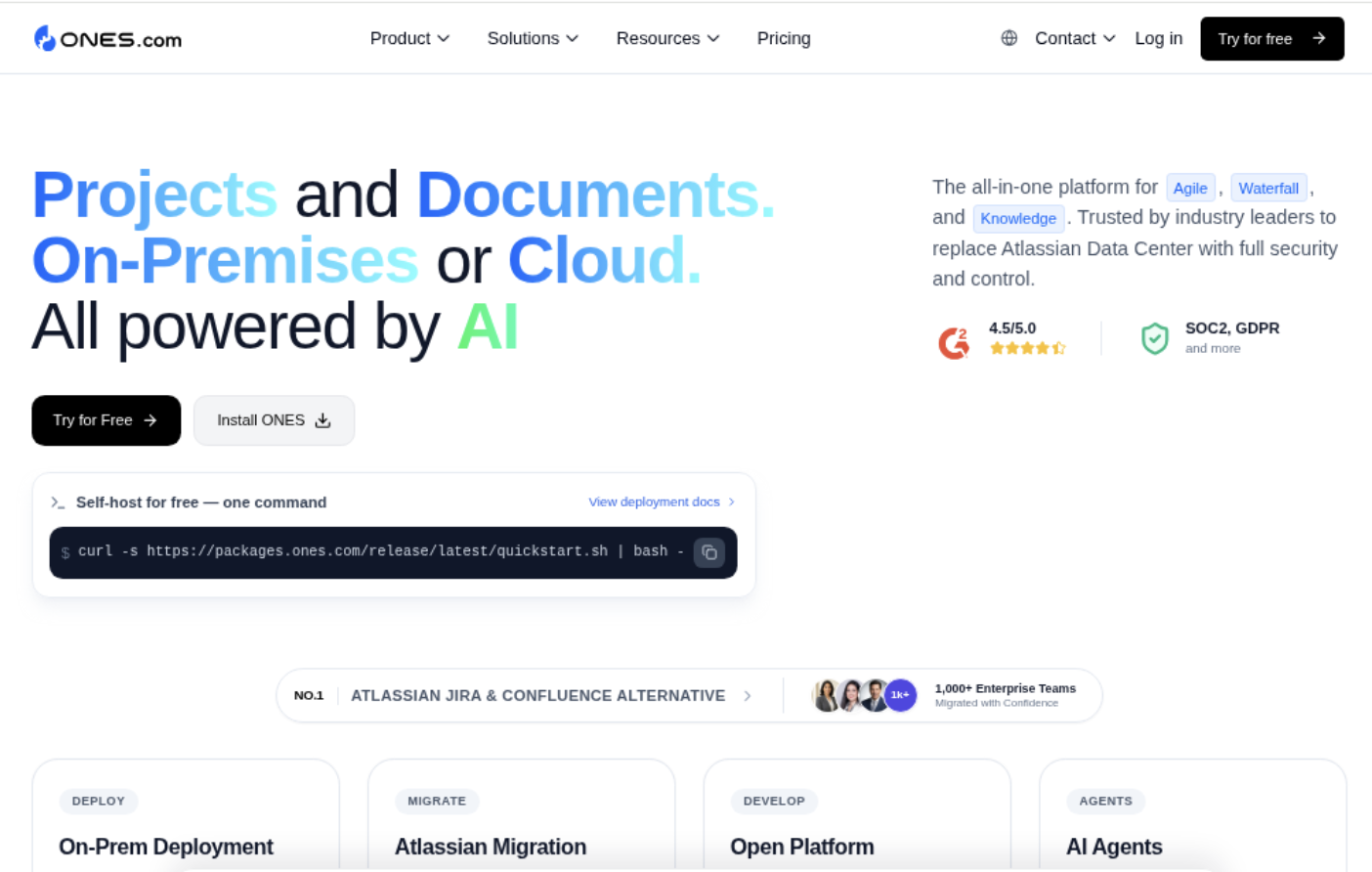
Value Proposition
ONES.com gives teams a unified platform for project management and knowledge management. It can help organizations evaluate a Jira alternative while keeping project work and internal guidance connected.
ONES Project and ONES Wiki are sold separately, so you can choose the product that matches your immediate need.
Core Capabilities
- Fragmented project tracking: ONES Project brings tasks, planning, and delivery work into one project management environment, helping teams reduce scattered coordination.
- Complex approval paths: Custom workflows let teams reflect review, testing, release, and approval stages, producing clearer handoffs.
- Inconsistent issue details: Custom fields help teams capture the information needed for product, engineering, support, or compliance work.
- Limited sprint visibility: Sprint management supports backlog planning, active iteration tracking, and delivery review.
- Repetitive administration: Automation can handle recurring actions and status changes, reducing manual coordination.
- Weak progress visibility: Built-in reporting helps managers review delivery movement without assembling separate reporting processes.
- Plugin dependency: Native capabilities can reduce the number of extensions needed for common project workflows.
- Restricted network requirements: ONES.com supports Cloud, On-Premise, Private Cloud, and Air-gapped deployments.
- Migration concerns: Jira-compatible workflows can make it easier for teams familiar with Jira practices to evaluate a transition.
- Separate knowledge management: ONES Wiki provides a knowledge base option that can complement ONES Project, serving as a Confluence alternative.
ONES Project supports project management use cases, while ONES Wiki focuses on knowledge management. They are separate products within the broader ONES.com platform.
ONES.com offers a free plan for up to 30 seats. The self-hosted versions provide feature parity with the cloud version, which matters for organizations with infrastructure or compliance requirements.
Application Scenarios
Scenario one: a regulated engineering team. A company cannot place project information in a public cloud environment. It can evaluate the On-Premise or Air-gapped deployment while preserving familiar issue workflows.
Scenario two: a growing product organization. Product managers, engineers, testers, and release managers need different workflow stages. Custom fields, sprint planning, automation, and reporting can support that operating model.
Scenario three: a knowledge-heavy delivery team. A team needs project tracking and structured internal guidance. ONES Project can manage delivery work, while ONES Wiki can organize procedures and team knowledge.
Common Challenges
Challenge: Your User Count Changes Constantly
Solution: Track the lowest, expected, and highest monthly counts. Choose annual billing when stability matters more than short-term precision.
Challenge: Finance Needs a Firm Annual Number
Solution: Use the annual quote as the committed subscription figure. Add a separate contingency for growth, taxes, and connected services.
Challenge: Procurement Compares Inconsistent Quotes
Solution: Standardize every quote around the same edition, capacity, billing period, currency, and tax assumption.
Challenge: Contractors Need Temporary Access
Solution: Create an access review process with start and end dates. Remove unused accounts promptly and confirm how billing responds.
Challenge: The Team Needs More Than Issue Tracking
Solution: List required capabilities before selecting a plan. Include workflow control, reporting, deployment, knowledge management, and administration.
FAQs
Is annual or monthly billing better for 201–300 Jira Premium users?
Annual billing often suits a stable organization that can forecast its user tier and wants predictable yearly budgeting. Monthly billing may suit a team with frequent hiring, contractor changes, or uncertain project demand.
Compare both options using the same expected user count. Then test what happens if your team stays near 210 users or approaches 300 users.
Does Jira Premium annual billing use the exact number of users?
Annual subscriptions commonly use predefined user tiers, while monthly subscriptions may respond more closely to the number of billable users during each billing period.
Check the current Atlassian checkout calculation or commercial quote. The selected tier, billing channel, and account configuration can affect the final result.
How should I estimate Jira Premium costs for 250 users?
Start with the official price shown for your region and billing cycle. Confirm whether the annual option covers a specific tier and whether the monthly option reflects 250 billable seats.
Then add taxes, Marketplace apps, currency effects, and expected growth. Keep those items separate from the core Jira Premium subscription.
What happens if my team grows beyond 300 users?
Your organization may need a higher subscription tier or an updated monthly seat count. The commercial impact depends on your billing cycle and Atlassian’s current pricing rules.
Contact your administrator or procurement team before growth occurs. Planned changes are easier to budget than an unexpected renewal adjustment.
Are Marketplace apps included in Jira Premium pricing?
Usually, Marketplace apps have separate commercial terms. Some calculate charges using their own user tiers or licensing rules.
List every required app and confirm whether its billable population matches your Jira user count. This prevents the core Jira estimate from understating the total program cost.
Can I use a Jira alternative for a 201–300 user team?
Yes. You can evaluate alternatives by comparing workflow support, reporting, sprint planning, automation, deployment choices, administration, and migration effort.
ONES Project is one option for teams seeking Jira-compatible workflows, built-in reporting, custom workflows and fields, sprint management, automation, and self-hosted deployment choices.
Conclusion
For Atlassian Jira Premium pricing across 201–300 users, the key decision is not simply annual versus monthly. It is whether your billing method matches your real user pattern and budget priorities.
Annual billing offers commitment and planning stability. Monthly billing offers more flexibility when seat counts move throughout the year.
But here’s the truth: the wrong comparison creates the wrong conclusion. Align user counts, billing assumptions, taxes, apps, currency, and growth scenarios before choosing.
Start with your current count, forecast the next renewal, and calculate low, expected, and high cases. Then compare the official quote with your organization’s need for flexibility.
If your evaluation also includes workflow control, deployment flexibility, knowledge management, or reduced reliance on plugins, include ONES.com in the shortlist. The right platform should fit both your operating model and your purchasing reality.