Jira Premium Calculator: 220 Users, Monthly vs Annual Costs
Planning Jira Premium for 220 users? Use the Atlassian cloud pricing calculator to compare monthly vs annual costs. Click to discover the best plan.
Pricing Jira Premium for 220 people can feel deceptively simple. You multiply a per-user rate by 220, compare monthly and annual billing, and choose the lower number.
But Jira Cloud pricing does not always behave like a flat multiplication problem. User tiers, billing terms, regional currency, taxes, product add-ons, and billing adjustments can change your final amount.
A small mistake can create a large planning gap. A difference of just $2 per user each month becomes $5,280 across 220 seats over a year.
Here’s the practical solution: use the Atlassian cloud pricing calculator for the live quote, then validate it with a clear seat-count formula. This guide shows you how to estimate Jira Premium costs, compare monthly and annual billing, and avoid common budgeting errors.
How to Calculate Jira Premium Pricing for 220 Users
For 220 users, estimate Jira Premium by applying the current Jira Premium rate or tiered annual quote to the number of billable seats, then add applicable taxes, Marketplace apps, and other services. The Atlassian calculator provides the current result because pricing can change by region, currency, and billing arrangement.
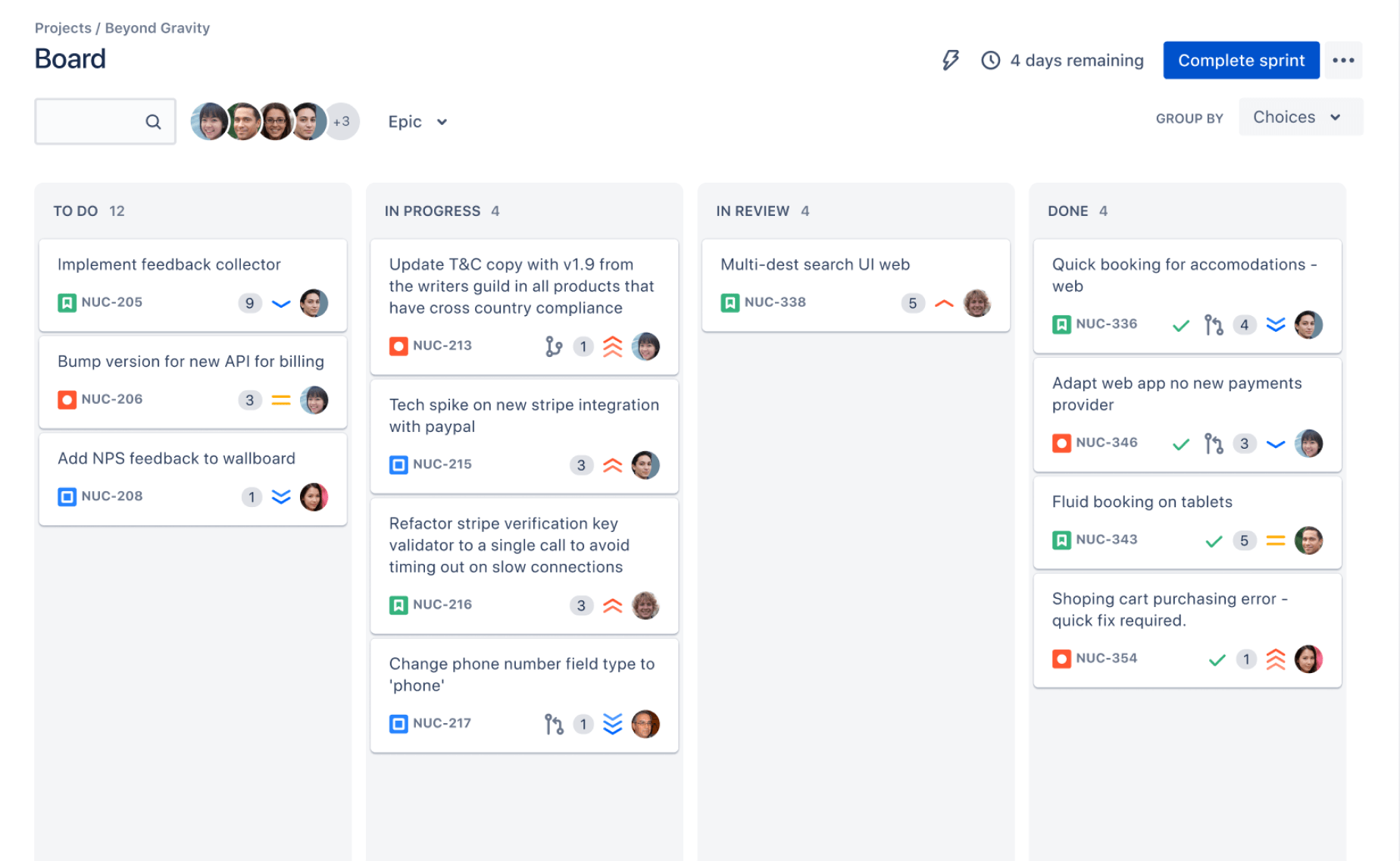
Step 1: Confirm the product and plan
Start by selecting Jira Cloud rather than Jira Data Center or another Atlassian product. Then select the Premium plan.
Jira Premium typically adds capabilities such as higher service limits, advanced administration controls, improved reliability commitments, and enhanced planning features compared with Standard.
Do not combine Jira Premium with Jira Service Management Premium unless you need both products. Each product can create a separate subscription charge.
Step 2: Enter 220 users
Enter 220 seats in the calculator. Your bill may depend on the number of billable users rather than the number of people who actively work every day.
For example, suppose your company has 220 employees, but only 185 need Jira access. A 220-seat estimate may overstate the subscription. On the other hand, assigning access to contractors or occasional reviewers can push the billable count higher than expected.
Check inactive accounts, guests, former employees, and service accounts before finalizing the estimate.
Step 3: Select monthly billing
Monthly billing usually gives you flexibility. You can adjust the subscription as your team grows, and you avoid committing to a full year immediately.
Use this calculation when the calculator shows a monthly per-user rate:
- Monthly estimate = monthly rate per user × 220 users
- Annualized monthly estimate = monthly estimate × 12 months
For example, if the displayed rate were $18 per user per month, the estimate would be $3,960 per month. The annualized amount would be $47,520 before taxes and add-ons.
This example demonstrates the method only. Replace the sample rate with the live rate shown for your billing country and currency.
Step 4: Select annual billing
Annual billing may use a user tier rather than a simple monthly seat multiplication. For 220 users, the annual quote may be calculated within a tier covering a defined range of users.
Use the annual figure displayed by Atlassian instead of assuming that monthly pricing multiplied by 12 will match it exactly.
Compare these two numbers:
- Annual billing quote for the 220-user tier
- Monthly billing estimate multiplied by 12
The difference is your potential annual billing benefit or premium. Confirm whether the annual price includes all planned users for the term.
Step 5: Add costs outside the Jira Premium subscription
The main subscription is only one part of the budget. Add other expected charges separately.
- Atlassian Marketplace apps
- Jira Service Management subscriptions
- Confluence or other Atlassian products
- Premium support or special services, where applicable
- Taxes, value-added tax, or sales tax
- Currency conversion charges
- Implementation, migration, or administration work
For example, a planning app charging $4 per user per month would add $880 each month for 220 assigned users. That becomes $10,560 over 12 months before taxes.
Step 6: Record assumptions beside the estimate
Write down the country, currency, user count, billing term, plan, products, and add-ons used in the calculation.
This makes future comparisons much easier. If the quote changes, you can identify whether the cause was a pricing update, a larger user tier, a different currency, or an added application.
Monthly Versus Annual Billing at 220 Seats
Monthly billing is usually easier to manage when your headcount changes frequently. Annual billing can support more predictable budgeting, but it may require a stronger forecast.
Here’s why: the financial difference depends on the exact pricing model and your expected seat changes. A growing team may pay less initially with monthly billing, even when annual billing offers a lower effective rate.
| Factor |
Monthly billing |
Annual billing |
| Cash flow |
Payments are distributed across the year. |
A larger commitment may be required at the start of the term. |
| Seat changes |
More flexible for regular increases or decreases. |
Better suited to a stable headcount forecast. |
| Budget planning |
Monthly expense is easier to track. |
Annual cost is easier to reserve in one budget cycle. |
| Price comparison |
Multiply the current monthly result by 12 for an annualized view. |
Use the annual tier quote rather than assuming a simple multiplication. |
| Risk |
Future rate changes can affect later months. |
You may commit to seats that remain unused. |
When monthly billing may fit better
Monthly billing can make sense when you are testing Jira Premium, integrating another system, or reorganizing teams.
Imagine a company expecting to grow from 220 to 300 people within six months. Monthly billing lets the company increase access as hiring occurs instead of paying for the larger group immediately.
It can also help during a merger, restructuring, or temporary project. You maintain more control while your final seat requirement becomes clearer.
When annual billing may fit better
Annual billing may suit a stable organization with a reliable user forecast and a procurement process designed around yearly commitments.
For example, a product company with 220 permanent Jira users may prefer one annual approval cycle. Finance can reserve the expected subscription amount, while administrators avoid reviewing the same renewal every month.
Before selecting annual billing, review your recent user trend. A steady count supports the decision. A sharp decline suggests caution.
A simple break-even comparison
Use this worksheet to compare both options:
- Monthly plan total = current monthly quote × 12
- Annual plan difference = monthly plan total − annual quote
- Effective annual saving percentage = annual plan difference ÷ monthly plan total × 100
Suppose monthly billing costs $47,520 over a year and annual billing costs $45,000. The difference is $2,520, or approximately 5.3% of the monthly-billing total.
That saving may be worthwhile if all 220 seats will remain active. If 35 seats could disappear during the year, the unused commitment may outweigh the discount.
What Changes the Final Estimate?
The displayed plan price is only one variable. Your final amount can change because of several practical billing details.
Progressive pricing and user tiers
Some annual subscriptions use defined user tiers. A business with 220 users may pay according to the tier that includes those users, rather than receiving a perfectly linear price for every seat.
This matters when your count sits near a tier boundary. For example, 201 users and 220 users may fall within the same annual tier, while 301 users could move into another pricing range.
That is why the annual calculator result deserves more attention than a basic per-user multiplication.
Currency and location
Atlassian may display different prices depending on your billing country and selected currency. Exchange rates can also affect internal budgets when your finance team reports in another currency.
Keep the quote currency consistent when comparing monthly and annual plans. Comparing a USD monthly estimate with a converted EUR annual amount can create a misleading result.
Taxes and invoicing requirements
Sales tax, value-added tax, and other local charges may not appear in the headline subscription price. Your invoice may also depend on the billing address and tax registration details.
For a procurement estimate, create two totals: the pre-tax subscription cost and the expected invoice total. This keeps the software comparison clear while preserving budget accuracy.
Marketplace applications
Jira Premium may require third-party applications for specialized testing, roadmaps, time tracking, asset management, or reporting.
Review app pricing separately. Some vendors charge by assigned users, while others use their own user tiers. An app that appears inexpensive for 20 people can become significant across 220 seats.
Seat growth during the year
Your starting count may not equal your average count. A team that begins with 220 users and ends with 260 needs a growth scenario.
Create at least three estimates:
- Base case: 220 users throughout the period
- Growth case: 260 users after planned hiring
- Reduction case: 185 users after access cleanup
This approach shows whether annual billing still makes sense when your workforce changes.
How to Build a Reliable 220-User Budget
A strong estimate separates confirmed costs from assumptions. This prevents a low subscription quote from becoming an unexpectedly high technology budget.
Start with a seat audit
Export your current Jira account list and classify each person by team, role, activity, and access requirement. Remove accounts that no longer need access.
For example, a 220-person organization might discover 12 former employees, 8 temporary reviewers, and 15 occasional stakeholders. Their access requirements may differ from full-time Jira users.
Do not remove access without checking workflow dependencies. Some automated processes or approval steps may depend on specific accounts.
Separate full users from occasional participants
Not every participant needs the same level of access. Developers, product managers, testers, and project leads may work in Jira daily. Executives may only review dashboards.
Map each role to a realistic permission requirement. This helps you avoid paying for access that provides little operational value.
Model add-ons independently
Build a separate line for every Marketplace app and Atlassian product. Include the number of assigned people and the vendor’s pricing method.
A clear budget might include these lines:
| Budget line |
Calculation approach |
| Jira Premium |
Monthly quote × 12 or annual quote |
| Marketplace app A |
Vendor rate × assigned users |
| Marketplace app B |
Vendor tier or fixed subscription |
| Taxes |
Applicable rate × taxable charges |
| Administration |
Estimated internal or consulting hours |
Include a sensitivity range
Planning with one exact number can create false confidence. Add a reasonable range around your expected user count and currency movement.
For instance, estimate 220 users as the base case, 240 users as the likely growth case, and 200 users as the conservative reduction case.
The best part? This takes only a few minutes and gives finance a more useful view than one static quote.
Common Calculation Mistakes to Avoid
Most pricing mistakes come from mismatched assumptions rather than difficult mathematics.
Using a public list price without checking the calculator
Public pricing pages can change, and some figures may apply only to particular regions or billing terms. Always verify the current result for your country and seat count.
Use a public figure for an early estimate, then replace it with the live calculator result before requesting approval.
Assuming annual billing equals monthly billing multiplied by 12
This assumption can be close, but it may not reflect tiered annual pricing. Compare the actual annual quote with the annualized monthly amount.
If the difference appears unusually large, check the selected user range, plan, currency, and product.
Forgetting separate Atlassian products
Jira Premium, Jira Service Management, and Confluence can have separate charges. A combined Atlassian environment does not automatically mean one combined product price.
List each subscription independently so your total reflects the tools your teams actually need.
Ignoring taxes and currency conversion
A procurement team often needs the invoice total, not only the advertised software price. Ask finance to confirm tax treatment and the currency used for payment.
Budgeting for exactly 220 people without checking account activity
Headcount and software access are different measurements. A 220-person department may need 180 seats, while a 180-person department may need 220 seats after contractors and partners receive access.
Review actual assignments before choosing a billing term.
Jira Premium Alternative: ONES.com
ONES.com combines project management and knowledge management in one platform. ONES Project provides project planning and delivery workflows as a Jira alternative, while ONES Wiki supports team knowledge management as a Confluence alternative. The products can be sold separately.
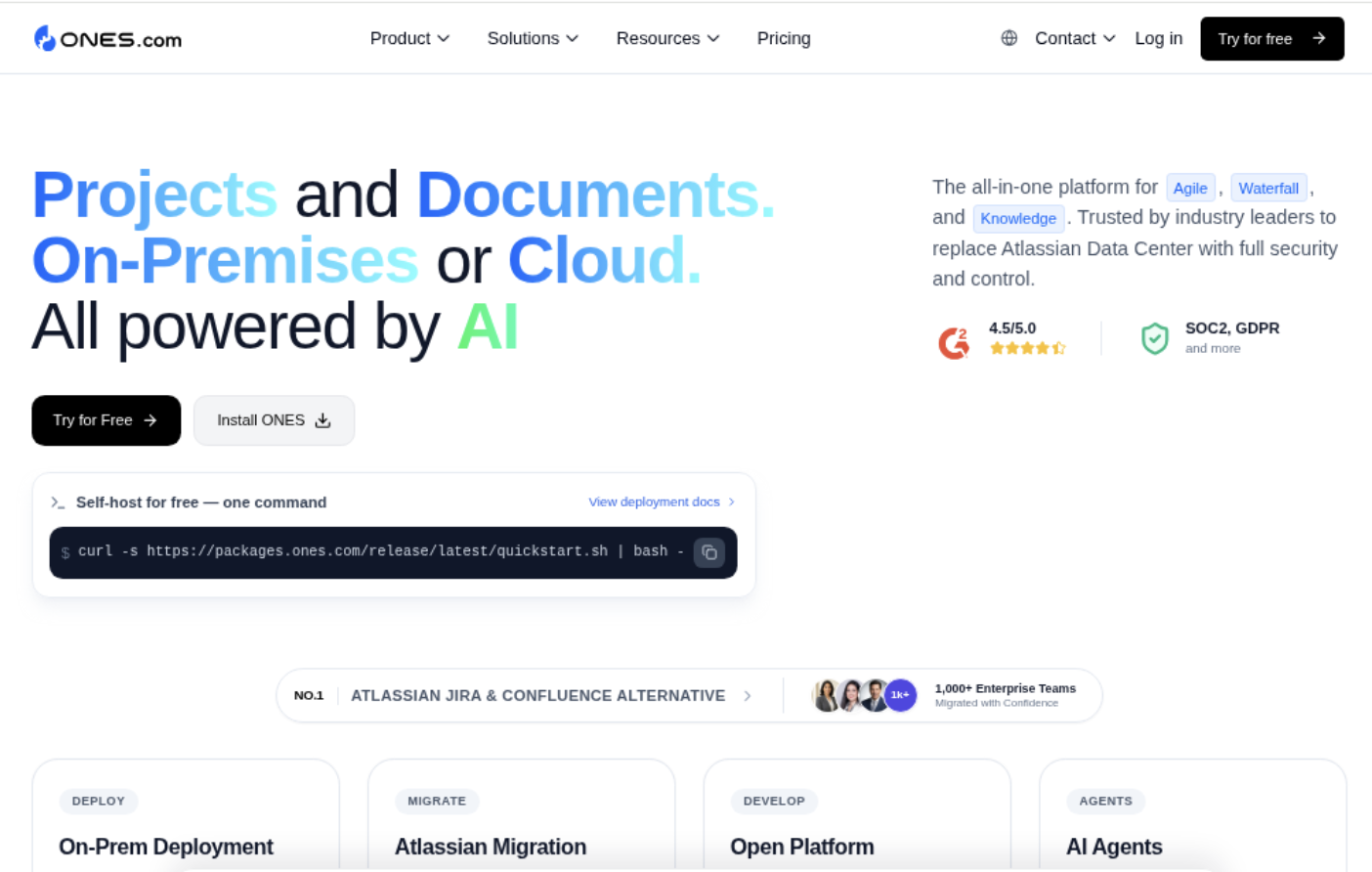
For a 220-person organization, the practical comparison is broader than subscription price. You should also examine workflow compatibility, deployment requirements, administration effort, and the number of extra plugins your teams need.
Value Proposition
ONES.com can help teams compare a unified work platform with a collection of separate project and knowledge tools. It offers Cloud, On-Premise, Private Cloud, and Air-gapped deployments, with feature parity between cloud and self-hosted versions.
Core Capabilities
- Disconnected or restricted environments: Teams with strict network rules may struggle with cloud-only tools. ONES capability: Air-gapped and self-hosted deployment options support restricted environments. Result: Security-sensitive teams can keep project workflows within their approved infrastructure.
- Jira migration concerns: Teams may worry that familiar work practices will disappear after changing platforms. ONES capability: Jira-compatible workflows, sprint management, custom fields, and custom workflows support familiar delivery patterns. Result: Teams can reduce process disruption during evaluation or migration.
- Plugin sprawl: Separate extensions can increase administration and renewal work. ONES capability: Built-in reporting, automation, and workflow configuration reduce dependence on additional plugins for common needs. Result: Administrators can manage more functionality in one environment.
- Scattered team knowledge: Project decisions can become difficult to find when planning and knowledge live apart. ONES capability: ONES Wiki provides a connected knowledge management product. Result: Teams can organize guidance, decisions, and project context more consistently.
- Complex approval processes: Standard issue flows may not match finance, compliance, or release approvals. ONES capability: Custom workflows and fields allow teams to reflect their actual review stages. Result: Work moves through explicit ownership and approval points.
- Manual status reporting: Project leads may spend hours collecting updates for leadership. ONES capability: Built-in reporting and configurable project views support regular progress tracking. Result: Teams can spend less time preparing routine status information.
- Growing user counts: A 220-seat environment needs predictable administration as teams expand. ONES capability: The free plan supports up to 30 seats, while larger deployments can be evaluated across supported hosting models. Result: Smaller teams can test the experience before planning a broader rollout.
- Deployment constraints: Some organizations cannot place project information in a public cloud. ONES capability: Cloud, On-Premise, Private Cloud, and Air-gapped options provide deployment flexibility. Result: The platform can fit different infrastructure and governance requirements.
Application Scenarios
Scenario one: regulated product development. A medical-device team needs sprint planning, change approval, and restricted network access. It can evaluate ONES Project in an On-Premise or Air-gapped environment while keeping workflow controls close to its existing delivery model.
Scenario two: distributed product and support teams. Product managers need project tracking, while support and enablement teams need organized guidance. The organization can use ONES Project for delivery and ONES Wiki for knowledge management, selecting each product separately.
Scenario three: plugin-heavy Jira administration. A company relies on several extensions for reporting, automation, and custom workflow behavior. It can compare the administrative effort of those extensions with ONES capabilities before making a platform decision.
Common Challenges
Challenge: the calculator total differs from an internal estimate
Solution: Compare the assumptions line by line. Check country, currency, plan, billing period, user tier, and whether the estimate includes taxes or additional products.
Challenge: the company cannot predict its final seat count
Solution: Build base, growth, and reduction scenarios. Use monthly billing during a volatile period, or negotiate annual quantities only after reviewing hiring and access trends.
Challenge: annual pricing appears cheaper, but unused seats are possible
Solution: Calculate the cost of unused access. If 30 seats may remain unassigned, compare that potential waste with the annual billing difference.
Challenge: add-ons make the platform much more expensive
Solution: Inventory every application and classify it as essential, replaceable, or optional. Then compare the combined subscription with platforms offering more native capabilities.
Challenge: finance needs an auditable estimate
Solution: Keep the calculator date, selected currency, seat count, billing term, assumptions, and tax treatment together. Recheck the figures before purchase because vendor pricing can change.
FAQs
How much does Jira Premium cost for 220 users?
The exact amount depends on your billing country, currency, billing term, and current Atlassian pricing. Enter 220 users into the Atlassian cloud pricing calculator for the live estimate. For planning, multiply the displayed monthly rate by 220, then multiply that result by 12. Treat the result as an annualized estimate, because annual billing may use a different user tier.
Is annual Jira Premium billing cheaper than monthly billing?
It can be, but you should compare the actual annual quote with 12 months of monthly billing. Annual subscriptions may use tiered pricing, so the result may not equal a simple monthly calculation. Annual billing is more attractive when your user count is stable. Monthly billing may be safer when hiring, restructuring, or access cleanup could change your seat count.
Does the 220-user count include every employee?
Not necessarily. The relevant figure is usually the number of people who need access to Jira, including eligible contractors or other participants. A 220-person department might need fewer seats after removing inactive accounts. Another team may need more seats because external contributors participate in project workflows. Review account assignments before completing the estimate.
Are Marketplace apps included in the Jira Premium price?
Usually, third-party Marketplace apps require separate pricing. Each vendor may use a different rate, user tier, or billing method. List every planned app separately, then add those charges to the Jira Premium subscription. Also check whether Jira Service Management, Confluence, or another Atlassian product is part of your intended environment.
What should I include in a 220-seat budget?
Include the Jira Premium subscription, the monthly and annual comparison, taxes, currency effects, Marketplace applications, other Atlassian products, expected seat growth, and administration work. A useful budget has a base case at 220 users, a growth case, and a reduction case. This gives you a decision range rather than relying on one fragile number.
Should I compare Jira Premium with another project platform?
Yes, especially if your teams depend on many extensions, require self-hosting, or need connected knowledge management. Compare workflow compatibility, reporting, automation, deployment choices, administration effort, migration work, and total subscription cost. ONES Project is one Jira alternative to evaluate, while ONES Wiki can address knowledge management needs separately.
Conclusion
For 220 users, the fastest reliable approach is to select Jira Cloud Premium, enter 220 seats, choose monthly and annual billing separately, and record the live results.
Then add taxes, Marketplace apps, other Atlassian products, and expected seat changes. A monthly estimate multiplied by 12 is useful for comparison, but it may not equal the annual tier quote.
But here’s the truth: the best plan depends on more than the headline rate. Stable teams may value annual predictability, while growing or reorganizing teams may need monthly flexibility.
If the estimate reveals high plugin costs, restrictive deployment requirements, or fragmented project knowledge, compare the wider operating model too. A platform such as ONES.com may be worth evaluating alongside the subscription calculation.