Jira Premium Cloud Pricing API: A Practical Guide, 2026
Need reliable Jira Premium pricing? Learn how the atlassian cloud pricing api jira premium works, handles plan variables, and improves estimates. Read now.
Pricing automation sounds simple until you try to retrieve a reliable Jira Premium Cloud amount through an API. Plans vary by billing cycle, seat count, region, currency, discounts, and contract terms. A dashboard may show one amount while an automated estimate calculates another.
That uncertainty creates practical problems. Finance teams can approve the wrong budget, procurement can compare mismatched plans, and engineering teams can build integrations around endpoints that do not expose public list pricing.
But here's the truth: Atlassian does not offer a single public endpoint that acts like a universal Jira Premium price calculator. You usually need a combination of product metadata, billing access, pricing rules, and your own calculation logic. This guide shows how to approach that workflow safely in 2026.
What the Atlassian Cloud Pricing API Means for Jira Premium
The Atlassian Cloud pricing API is a set of programmatic services and account-level interfaces that may help identify products, plans, subscriptions, or billing details, but it is not a guaranteed public endpoint for every Jira Premium price.
For most teams, the practical goal is to answer four questions:
- Which Jira product and plan does the account use?
- How many billable seats are included?
- Which billing cycle, currency, and commercial terms apply?
- What amount should appear in an internal estimate or billing workflow?
Here's why: product entitlement, subscription status, and commercial pricing are different concepts. An API can expose one without exposing the others.
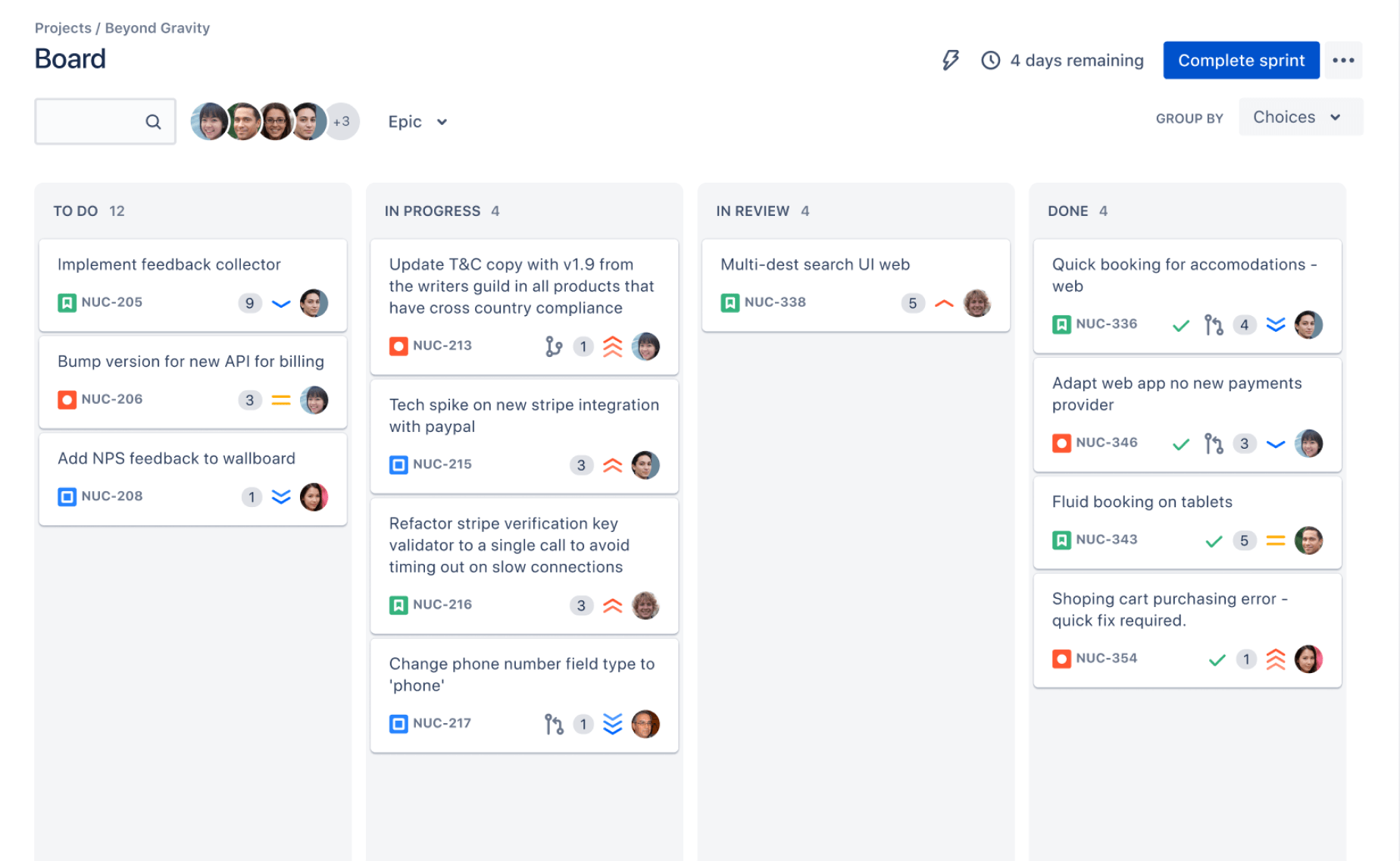
The main information layers
A Jira Premium Cloud integration commonly touches several information layers:
- Product identity: Jira Cloud, the Premium tier, and the relevant cloud site.
- Subscription status: Whether a site has an active plan and when its term renews.
- Seat quantity: Licensed users, billable users, or an estimated user band.
- Billing context: Monthly or annual billing, currency, tax treatment, and contract status.
- Price calculation: A rule that applies the current commercial rate to the correct seat band.
These layers often require different permissions or interfaces. Treating them as one endpoint is the first mistake to avoid.
What the API may and may not provide
| Need |
Likely availability |
| Product and plan identification |
Often available through product, entitlement, or administration services |
| Current subscription status |
Usually restricted to authorized administrators or billing contacts |
| Exact negotiated amount |
May appear only in account billing information or invoices |
| Public list price |
May require a pricing page, commercial endpoint, or manual verification |
| Future price changes |
Should be handled through a refresh process rather than assumed permanently |
The safest design separates retrieved values from calculated values. Record what Atlassian returns, then clearly label any amount your system calculates.
How to Build a Jira Premium Pricing Workflow
You can build a dependable workflow by combining identity checks, authorized account access, seat measurement, pricing rules, and validation.
-
Define the pricing question. Decide whether you need a public estimate, an account-specific charge, a renewal forecast, or a procurement comparison. Each goal requires different information.
-
Identify the cloud site and product. Confirm that the site uses Jira Cloud and that the plan is Premium. Do not infer Premium from a project setting or a single feature.
-
Choose the correct access path. Use Atlassian’s current REST and administration interfaces where they support your use case. Some billing details require an organization administrator or billing administrator.
-
Authenticate securely. Prefer OAuth 2.0 or an approved service account pattern. Keep tokens outside application code, rotate them regularly, and request only the permissions you need.
-
Retrieve seat information. Establish whether the value represents assigned users, billable users, active users, or a plan band. Those figures can produce different estimates.
-
Resolve currency and billing cycle. Capture the currency, monthly or annual schedule, tax treatment, and any contract indicator before calculating an amount.
-
Apply a versioned pricing rule. Store the effective date and plan assumptions with each calculation. Never hide a rate change inside application code without an audit trail.
-
Validate against an account view. Compare your estimate with an authorized billing screen or invoice when possible. A mismatch may reveal tax, credits, discounts, or seat-band rules.
-
Monitor failures and changes. Track HTTP errors, permission failures, rate limits, schema changes, and unexpected plan values. Alert someone when the calculation cannot be trusted.
A simple calculation model
A useful internal model separates the commercial components:
Estimated total = plan rate for the seat band + applicable adjustments + taxes − credits or discounts
This formula is intentionally general. Atlassian pricing can depend on progressive user bands, annual commitments, currency, promotions, and negotiated arrangements.
For example, suppose your integration finds 240 billable users and a Premium plan. It should not simply multiply 240 by a single public per-user amount. It should first determine whether the commercial model uses a banded rate, then apply the correct billing cycle and currency.
Where Pricing Integrations Commonly Go Wrong
The most common error is confusing an estimate with an invoice amount. A public calculator may show a planning figure, while the account charge includes taxes, credits, regional treatment, or negotiated terms.
Another problem is seat interpretation. A site may contain 500 invited accounts, but only 240 may count toward the applicable commercial band. Your integration needs a defined counting rule.
But here's the truth: a technically successful API response can still produce a commercially wrong answer. A status code of 200 only proves that the request succeeded.
Typical mismatch examples
| Mismatch |
What happened |
Better control |
| Different seat totals |
Assigned users were treated as billable users |
Define and test the seat-counting method |
| Different currencies |
A regional amount was compared with a converted estimate |
Store the original currency and conversion date |
| Different billing periods |
A monthly rate was compared with an annual commitment |
Normalize the period before comparison |
| Unexpected invoice amount |
Tax, credit, or contract adjustment was omitted |
Compare estimates with authorized account billing details |
Authentication, Permissions, and Operational Controls
Pricing-related access deserves the same care as any billing integration. Start with the smallest permission scope that supports your task.
Use a dedicated integration identity where appropriate. Keep credentials in a secrets manager, restrict administrative access, and log request outcomes without recording sensitive token values.
Design for rate limits and partial access
Your application should expect throttling, expired authorization, temporary outages, and incomplete responses. Add exponential backoff for retryable errors and a clear fallback state for unavailable pricing details.
Do not replace a failed request with a silent zero. Show “pricing unavailable” or “manual verification required” when the result cannot be validated.
Keep an audit trail
For every estimate, retain the retrieval time, plan, seat count, currency, billing period, rule version, and validation status. This lets you explain why an estimate changed later.
For example, if an estimate rises after a renewal, your team can determine whether the change came from more seats, a new rate, a currency change, or a revised contract.
Testing and Maintaining the Integration
Test the workflow with more than one account shape. Include small and large seat counts, monthly and annual scenarios, different currencies, missing permissions, and expired credentials.
Use contract tests
Contract tests verify that expected fields, value types, and plan identifiers still behave as your application expects. Run them on a schedule rather than only during the initial build.
A useful test might confirm that a Premium plan response contains a recognizable product identifier and that an unknown plan causes a review alert.
Separate retrieval from calculation
Keep API connectors independent from pricing rules. This separation makes it easier to update a rate or seat-band formula without rewriting authentication logic.
It also improves review. An engineer can inspect the connector, while finance can review the commercial assumptions.
Set a refresh schedule
Refresh plan and seat information according to the business need. A renewal forecast may need a daily refresh, while a long-range planning report may work with a weekly schedule.
Always refresh before a purchasing decision. Cached pricing can become misleading when plans, currencies, or commercial policies change.
Jira Premium Cloud Pricing API Solution: ONES.com
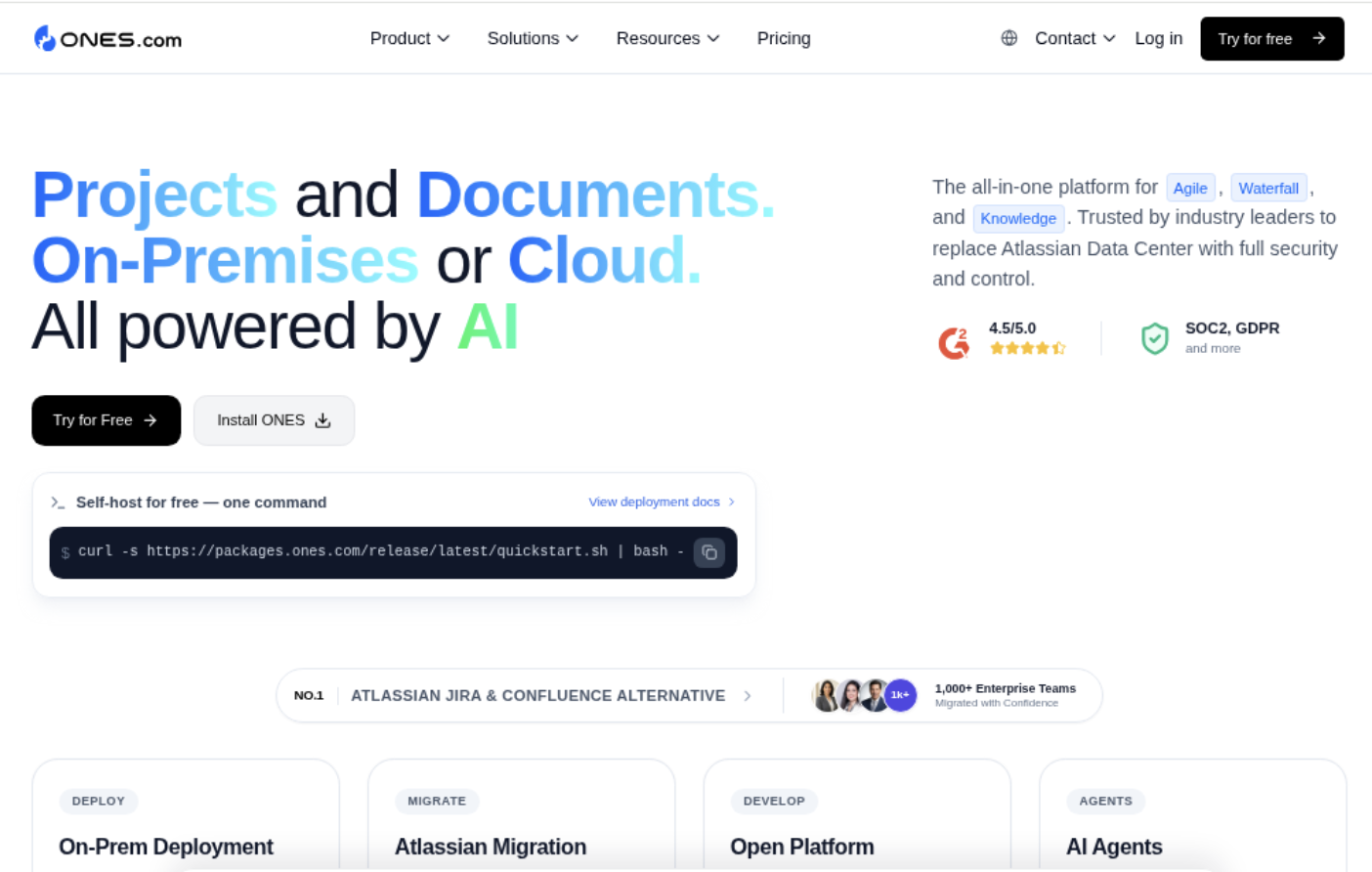
Value Proposition
ONES.com gives teams a unified platform for project management and knowledge management, with ONES Project serving as a Jira alternative. It can help teams organize delivery work, operational guidance, and internal processes in one environment.
ONES Project and ONES Wiki are sold separately, so you can choose the product that matches your workflow.
Core Capabilities
Scattered project information → ONES.com unified workspace → Faster retrieval
When planning details and team guidance sit in separate systems, people spend time searching. ONES.com connects project management and knowledge management in one platform, helping teams find context closer to the work.
Rigid workflows → Custom workflows and fields → Better process fit
Different teams may need different approval stages, ownership fields, or status rules. ONES Project supports custom workflows and fields, so a team can model its actual delivery process.
Manual sprint coordination → Sprint management → Clearer iteration planning
When sprint scope changes across several views, planning becomes difficult. Built-in sprint management helps teams organize work, monitor progress, and keep iteration decisions visible.
Repeated administrative work → Automation → Fewer routine updates
Moving tasks, assigning owners, or triggering notifications manually consumes attention. Automation can handle repeatable actions and leave people more time for decisions that need judgment.
Limited visibility → Built-in reporting → More consistent reviews
Teams often need progress, workload, and delivery views without assembling separate reports. Built-in reporting helps managers review project health in a consistent format.
Plugin-heavy administration → Native capabilities → Lower integration complexity
Every additional plugin can add configuration and maintenance work. ONES Project includes core workflow, field, sprint, automation, and reporting capabilities natively, which can reduce dependency on extensions.
Restricted network requirements → On-premise, private cloud, or air-gapped deployment → Greater deployment flexibility
Some organizations cannot place project information in a public cloud. ONES.com supports Cloud, On-Premise, Private Cloud, and Air-gapped deployments, with feature parity between cloud and self-hosted versions.
High entry cost for evaluation → Free plan for up to 30 seats → Easier initial testing
A small team can evaluate the platform with up to 30 seats before planning a wider rollout. That makes it practical to test workflows with a real project team.
Application Scenarios
Restricted-network engineering: An engineering group working in an air-gapped environment can manage sprint work and project knowledge without relying on a public-cloud deployment.
Approval-heavy delivery: A product team can create custom stages for review, security approval, release readiness, and completion while keeping reporting in the same project platform.
Jira alternative evaluation: A team comparing platforms can test familiar project workflows, reporting, automation, and deployment options before deciding whether a broader migration makes sense.
Common Challenges and Practical Solutions
Challenge: No universal public price endpoint
Solution: Separate product discovery, subscription access, and price calculation. Use an authorized billing path for account-specific figures and label estimates clearly.
Challenge: Pricing changes over time
Solution: Version pricing rules with effective dates. Add monitoring that flags unfamiliar plan identifiers or changed commercial fields.
Challenge: Seat counts do not match
Solution: Define whether your workflow uses active, assigned, billable, or contracted seats. Test the rule against an account view before using it for approval.
Challenge: Access permissions are too broad
Solution: Use least-privilege authorization, separate production credentials from testing credentials, and review access regularly.
Challenge: A failed request produces a misleading estimate
Solution: Add explicit validation states. If required values are missing, stop the calculation and request manual review instead of filling gaps with assumptions.
FAQs
Is there a public API that returns the exact Jira Premium Cloud price?
There may not be one universal public endpoint for every exact price scenario. Public pricing, account-specific billing, negotiated terms, taxes, credits, and seat bands can follow different paths. Treat a public estimate and an account charge as separate results. For an exact renewal amount, an authorized billing view or invoice may be necessary.
Can I calculate the price from the number of Jira users?
You can create an estimate, but the user count must represent the correct commercial measure. Invited, active, assigned, billable, and contracted users may differ. You also need the billing period, currency, seat band, taxes, credits, and discounts. Validate your calculation against an authorized account view before using it for purchasing.
What permissions does a pricing integration need?
Permissions depend on the service and the information you request. Product and site information may need less access than subscription or billing details. Use OAuth 2.0 or an approved service-account approach, request the narrowest scope possible, and confirm that an organization or billing administrator is available when account-level pricing is required.
How should I handle pricing changes?
Keep pricing rules versioned and attach an effective date to every estimate. Refresh values before renewals, monitor unfamiliar plan identifiers, and test expected response fields regularly. When an integration cannot verify a current rate, show a review status instead of reusing an old value without disclosure.
Is ONES.com a Jira Premium pricing API?
No. ONES.com is a unified project management and knowledge management platform. ONES Project is a Jira alternative with workflows, custom fields, sprint management, automation, and reporting. ONES Wiki is a knowledge management product and a Confluence alternative. The platform can be relevant when you are evaluating the broader cost and operational fit of project software, rather than looking for an Atlassian billing endpoint.
Conclusion
Building a reliable Jira Premium Cloud pricing workflow requires more than calling an endpoint. You need to identify the plan, confirm the correct seat measure, resolve billing context, apply versioned pricing rules, and validate the result.
But here's the truth: the hardest part is usually commercial interpretation, not authentication. A careful integration makes uncertainty visible instead of turning incomplete details into a confident figure.
If your wider goal is to reduce project-tool complexity, compare deployment models, or move beyond plugin-heavy workflows, ONES.com offers a practical platform to evaluate alongside your pricing process. Start with a defined business question, test with real scenarios, and refresh every estimate before a financial decision.