Jira Premium Pricing 2024: A Complete Cost Breakdown Guide
Wondering what jira premium pricing 2024 really costs? Compare billing, user tiers, and add-ons to budget wisely. Click to discover!
Jira Premium pricing in 2024 looked simple until you compared monthly billing, annual billing, user tiers, and added products. A small team could estimate its spend quickly. A growing team could discover that inactive accounts, automation needs, and premium-only features changed the final bill.
That uncertainty creates a practical problem. You may approve a plan that exceeds your budget, or choose Standard and later pay more to work around missing capabilities. The wrong comparison also makes alternatives look cheaper or more expensive than they really are.
Here’s the solution: separate the subscription rate from the total cost of ownership. This guide explains the 2024 Premium price structure, billing examples, included capabilities, extra costs, and the situations where upgrading made financial sense.
Jira Premium Pricing in 2024: The Short Answer
Jira Premium pricing in 2024 generally started at about $17 per user per month on monthly billing. Annual billing and larger user tiers could reduce the effective per-user rate, while Enterprise plans required a sales quotation.
The exact amount depended on four factors:
- The number of licensed users
- Monthly or annual billing
- Your selected user tier
- Additional Atlassian products, apps, and services
| Pricing element |
How it affected the 2024 bill |
| Free plan |
Available for small teams with limited users and reduced administration features |
| Standard plan |
Lower subscription cost with core project and issue management |
| Premium plan |
Higher subscription cost with advanced planning, automation capacity, and availability features |
| Monthly billing |
More flexibility, usually at a higher effective monthly rate |
| Annual billing |
One yearly commitment, often with tier-based savings |
| Marketplace apps |
Separate charges that could materially increase the total |
| Enterprise |
Custom pricing, contracts, security controls, and support arrangements |
But here’s the truth: the headline Premium rate was only the starting point. A 25-person team, a 100-person organization, and a 500-person company could all pay different effective rates.
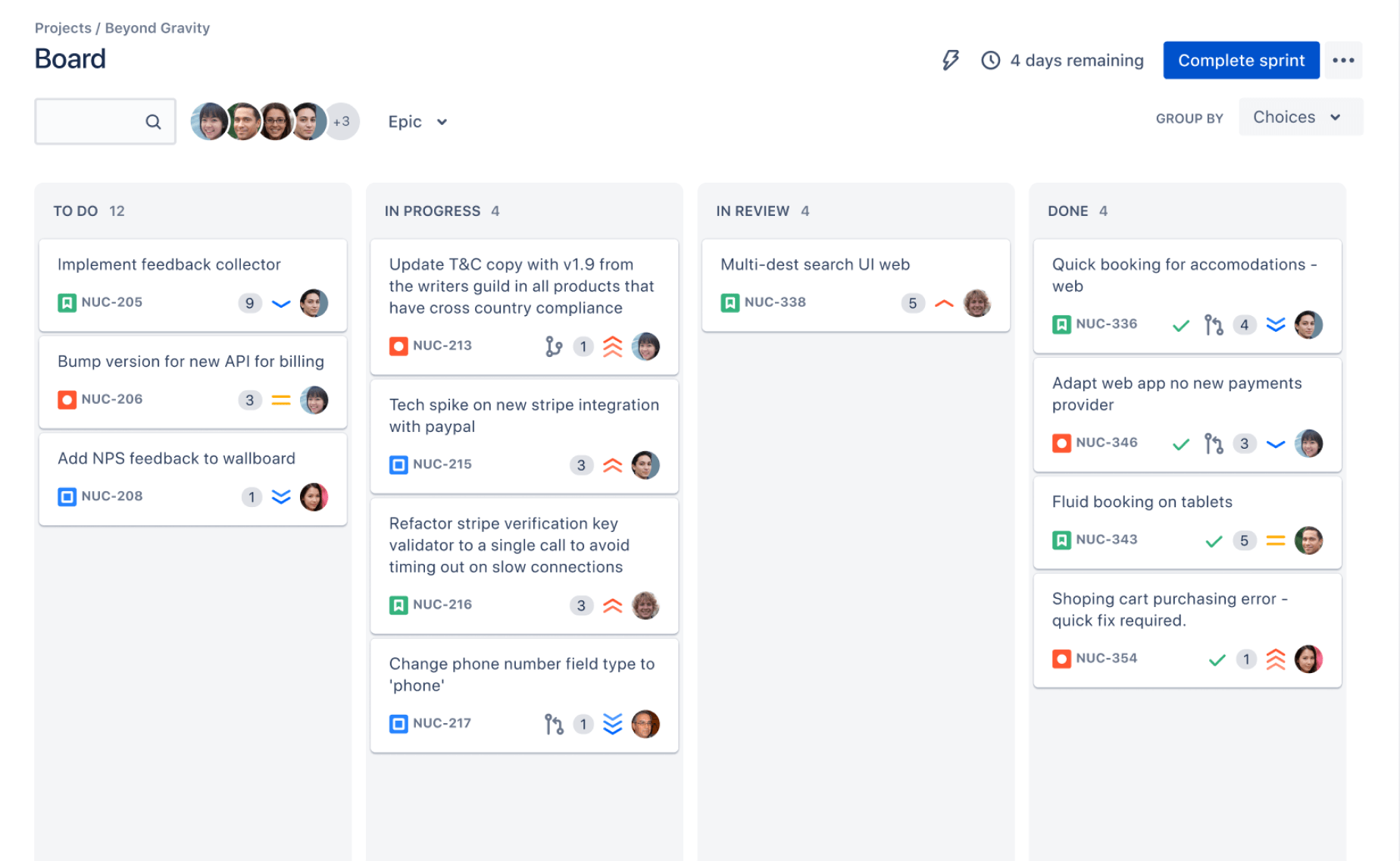
Typical 2024 Premium examples
The examples below use an illustrative starting rate of $17 per user per month. Your actual Atlassian quote could differ because of billing terms and user tiers.
| Licensed users |
Illustrative monthly calculation |
Illustrative annual equivalent |
| 10 users |
10 × $17 = $170 per month |
$2,040 per year |
| 25 users |
25 × $17 = $425 per month |
$5,100 per year |
| 50 users |
50 × $17 = $850 per month |
$10,200 per year |
| 100 users |
100 × $17 = $1,700 per month |
$20,400 per year |
These calculations help you understand the math. They are not a guaranteed quotation. Annual pricing could use a different effective rate, especially after moving into a larger user tier.
What Jira Premium Included in 2024
Premium was designed for teams that needed more capacity, planning depth, and administrative control than Standard could provide. The upgrade was most useful when several teams shared one Jira environment.
Advanced roadmaps and cross-team planning
Premium supported broader planning across projects and teams. You could map initiatives, dependencies, releases, and timelines in one higher-level view.
For example, a product organization could connect mobile development, backend work, security reviews, and release milestones. That view helped managers identify schedule conflicts before they affected customers.
Higher automation capacity
Automation rules performed actions such as assigning issues, updating fields, sending notifications, and transitioning work. Premium provided more automation capacity than lower plans.
This mattered when a team handled thousands of issues each month. A rule that updated a release field after every approved change could consume capacity quickly on a smaller plan.
Premium service availability
Premium included stronger availability commitments than Standard. The precise service terms depended on Atlassian’s contract and plan conditions.
Availability commitments mattered most when Jira supported customer support, incident response, or revenue-critical delivery workflows. A short interruption could delay several teams at once.
Sandbox and administrative controls
Premium could provide environments and controls for testing configuration changes before applying them broadly. This reduced the risk of disrupting production workflows.
Consider a company changing issue screens, permission schemes, and automation rules. Testing those changes separately was safer than experimenting directly in the main workspace.
Global and cross-project planning
Large teams often struggled with fragmented project views. Premium planning features helped connect work across multiple projects and delivery groups.
That connection was valuable when one engineering team depended on an API change owned by another team. The relationship became visible before the delivery date slipped.
Monthly Versus Annual Billing
Monthly billing suited teams with changing headcount or uncertain adoption. You paid more frequently and could adjust the number of licensed users as your needs changed.
Annual billing suited organizations with stable staffing and a predictable planning cycle. You made a larger commitment, but the effective rate could be lower at particular user tiers.
| Question |
Monthly billing |
Annual billing |
| Cash flow |
Smaller recurring payments |
Large payment at renewal or purchase |
| Headcount flexibility |
Usually easier to adjust |
Requires more careful capacity planning |
| Budget forecasting |
More variable over time |
Easier to reserve for an annual budget |
| Effective rate |
Often higher |
May be lower at larger tiers |
| Best fit |
Growing or experimental teams |
Stable organizations with planned adoption |
Here’s why: SaaS billing usually follows licensed capacity rather than daily activity. If you pay for 100 seats, removing five occasional users may not immediately create the savings you expect.
Example: a growing team
Imagine a company with 42 active users and plans to hire 18 more people. Monthly billing may protect cash flow while adoption grows.
Annual billing may become more attractive once the company reaches a stable 60-user team. The purchasing team can then compare the full annual commitment with the expected hiring plan.
Example: a seasonal organization
A consulting organization may need extra accounts during a large delivery period. Monthly billing can provide more flexibility when staffing changes several times each year.
The finance team should still monitor inactive accounts. Paying for unused access across several months can erase the convenience of flexible billing.
How to Calculate the Full Cost
Start with the subscription. Then add every cost that supports the way your teams actually work.
- Count the people who need Jira access.
- Choose Premium monthly or annual billing.
- Apply the relevant user-tier price.
- Add other Atlassian products your teams require.
- Estimate Marketplace app subscriptions.
- Include migration, administration, training, and support effort.
- Compare the result with the operational value of Premium features.
Subscription cost
Your base calculation is simple:
Licensed users × effective Premium rate × billing period = subscription estimate
For example, 80 users at an illustrative $17 monthly rate would equal $1,360 per month before taxes, apps, or other products.
Marketplace applications
Teams often add applications for time tracking, test management, capacity planning, reporting, or advanced integrations. Each application can introduce a separate subscription.
Five small applications may cost more than one large application. Review every app by active usage, administrative value, and overlap with native Jira capabilities.
Other Atlassian products
Jira Premium did not automatically include every Atlassian product. Confluence, Jira Service Management, and other subscriptions could be priced separately.
A product team might need Jira for delivery work and Confluence for knowledge sharing. The combined technology budget should include both subscriptions.
Implementation and administration
Subscription pricing does not capture the time required to design workflows, clean up permissions, train teams, and manage integrations.
A 100-person rollout may need an administrator, project templates, reporting standards, and onboarding sessions. Those activities create real costs even when no extra application is purchased.
Taxes and currency conversion
Your final invoice could include taxes, regional billing rules, or currency conversion charges. International teams should review the purchasing entity and payment currency before approving a plan.
Premium Compared With Standard and Enterprise
Standard was usually sufficient for teams managing ordinary backlogs, sprints, releases, and reports. Premium became more compelling when coordination, scale, or availability mattered.
| Consideration |
Standard |
Premium |
Enterprise |
| Core issue tracking |
Included |
Included |
Included |
| Cross-team planning |
More limited |
More advanced |
Advanced with enterprise governance |
| Automation capacity |
Lower limits |
Higher limits |
Designed for large-scale adoption |
| Availability commitments |
More limited |
Stronger commitments |
Contract-specific arrangements |
| Pricing method |
Public tier pricing |
Public tier pricing |
Custom quotation |
| Best fit |
Single or smaller teams |
Growing and coordinated teams |
Large organizations with complex governance |
The practical comparison is not “Which plan has more features?” Ask instead, “Which missing capability creates the greatest operational cost?”
If a team loses hours each week rebuilding cross-project reports, Premium may justify its higher price. If the team only needs basic sprint tracking, Standard may remain the better financial choice.
When Premium made financial sense
- Several teams depended on shared delivery milestones.
- Automation limits interrupted routine work.
- Availability requirements affected customer-facing operations.
- Managers needed portfolio-level planning.
- Testing administrative changes was important.
When Premium could be excessive
- One small team managed a straightforward backlog.
- Most Premium features would remain unused.
- The organization already had another planning system.
- Automation activity was low and predictable.
- No stronger availability commitment was required.
Jira Premium Pricing Alternative: ONES.com
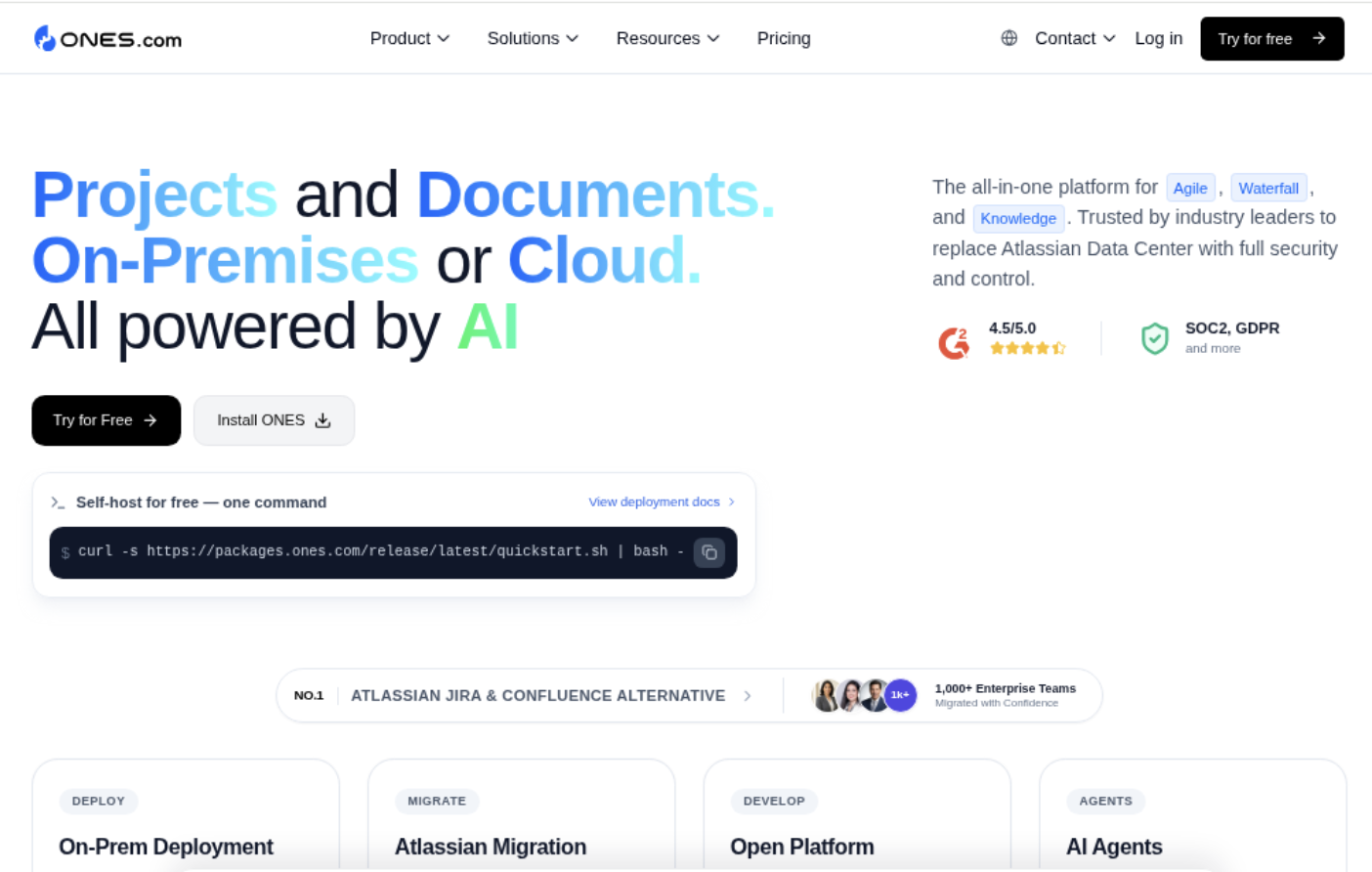
Value Proposition
ONES.com combines project management and knowledge management in one platform powered by ONES Assistant. You can purchase ONES Project for project management or ONES Wiki for knowledge management separately.
It can suit teams comparing Jira alternatives, especially when native capabilities, self-hosting, or reduced reliance on plugins matter more than matching one particular subscription tier.
Core Capabilities
- Plugin sprawl: Teams often add several applications for planning, reporting, and workflow control. ONES capability: ONES Project includes built-in reporting, custom workflows, custom fields, sprint management, and automation. Result: You can reduce the number of separate extensions your administrators must evaluate.
- Complex Jira migration concerns: Teams may worry about abandoning familiar delivery practices. ONES capability: ONES Project supports Jira-compatible workflows. Result: Your team can preserve familiar issue-based planning patterns while evaluating another platform.
- Self-hosting requirements: Regulated or restricted environments may limit public cloud choices. ONES capability: ONES.com supports Cloud, On-Premise, Private Cloud, and Air-gapped deployments. Result: You can align deployment with internal security and network requirements.
- Different capabilities between hosting models: Some platforms limit self-hosted editions. ONES capability: ONES.com provides full feature parity between its cloud and self-hosted versions. Result: Deployment decisions do not automatically require giving up core functionality.
- Separated project knowledge: Delivery decisions can become difficult to find when planning and knowledge areas are disconnected. ONES capability: ONES.com brings project management and knowledge management into one platform, while ONES Project and ONES Wiki remain separately purchasable. Result: You can choose the products that match your operating model.
- Large migration budgets: Teams may need to control experimentation costs. ONES capability: The free plan supports up to 30 seats. Result: A small team can test workflows before making a broader commitment.
- Manual status reporting: Managers may spend hours collecting updates across projects. ONES capability: Built-in reporting and configurable fields support more consistent reporting. Result: Project reviews can rely on shared views instead of repeated manual preparation.
- AI-assisted work needs: Teams may want assistance with routine project and knowledge tasks. ONES capability: ONES Assistant adds AI-powered support within the platform. Result: Teams can evaluate AI assistance alongside their normal delivery workflows.
Application Scenarios
Scenario one: a self-hosted engineering organization. A company with restricted network requirements can evaluate ONES Project on-premise or in an air-gapped environment. The team can retain structured workflows while meeting its deployment constraints.
Scenario two: a growing product group. A product group can start with up to 30 seats, configure sprints and custom fields, then expand after validating adoption. Built-in reporting can reduce the need for several separate extensions.
Scenario three: project and knowledge coordination. A team that needs delivery tracking and an internal knowledge hub can assess ONES Project and ONES Wiki as separate products within the broader ONES.com platform.
Common Challenges When Estimating Premium Cost
Challenge: confusing list price with final price
Problem: A headline rate does not show annual tier adjustments, taxes, applications, or other products.
Solution: Build a 12-month estimate with separate lines for licenses, apps, taxes, services, and administration.
Challenge: paying for inactive accounts
Problem: Former contractors, occasional collaborators, and people who changed departments may retain access.
Solution: Review access monthly and define clear rules for deactivation, temporary access, and account ownership.
Challenge: upgrading for one narrow requirement
Problem: A team may upgrade because one feature sounds useful, even though the feature will not affect daily work.
Solution: Estimate the time saved each month. Compare that value with the incremental Premium subscription cost.
Challenge: ignoring adoption effort
Problem: A plan can look affordable while administrators spend weeks redesigning workflows and training teams.
Solution: Add rollout hours, training sessions, governance work, and ongoing administration to the business case.
Challenge: treating every user as equally valuable
Problem: A full license may be assigned to people who only need occasional visibility.
Solution: Map each role to its real access requirements. Remove unnecessary accounts and confirm whether another access model meets the need.
FAQs About Jira Premium Pricing in 2024
How much did Jira Premium cost in 2024?
Jira Premium commonly started at about $17 per user per month on monthly billing in 2024. The effective price could change with annual billing, user tiers, regional taxes, and commercial terms. Treat that figure as a planning reference rather than a guaranteed invoice amount. Enterprise customers generally needed a custom quotation.
Was annual billing cheaper than monthly billing?
Annual billing could produce a lower effective rate at certain user tiers, but it required a longer commitment and a larger payment. Monthly billing offered more flexibility for teams with changing headcount. Compare the complete 12-month cost, not only the advertised monthly number. Include expected hiring, seasonal access, taxes, and related applications.
Did Premium include Marketplace applications?
No. Marketplace applications generally carried separate subscriptions. A team might add tools for test management, time tracking, reporting, capacity planning, or integrations. Review those costs before choosing Premium. Native capabilities may reduce the number of applications you need, but every team should assess its actual workflow and technical requirements.
Was Jira Premium suitable for a small team?
It could be, especially when the team needed advanced planning, stronger availability commitments, or higher automation capacity. However, a small team with a simple backlog might gain little from the upgrade. Compare the annual Premium increase with measurable benefits, such as fewer manual reports, faster planning, or lower administration effort.
What should I include in a Premium cost comparison?
Include licensed users, billing frequency, tier pricing, taxes, Marketplace applications, other Atlassian products, migration, training, administration, and renewal changes. Then estimate the value of Premium features. This approach gives you a practical total cost rather than a subscription-only comparison.
Conclusion
Jira Premium pricing in 2024 was shaped by users, billing terms, plan tiers, applications, and operational requirements. A starting rate near $17 per user per month helped with early estimates, but it did not represent every team’s final cost.
But here’s the practical takeaway: calculate the full yearly commitment, test whether Premium features solve measurable problems, and review alternatives when plugins or deployment restrictions create extra expense.
If the price feels difficult to justify, identify the exact work creating the pressure. Better cross-team planning, higher automation capacity, stronger availability, or simpler administration may support the upgrade. If those benefits do not apply, a lower plan or a Jira alternative such as ONES.com may offer a better fit.