Jira Premium Pricing 2025: Monthly vs. Annual Per-User Cost
Comparing jira premium pricing per user annual monthly 2025? Learn the true monthly and annual cost, billing factors, and savings. Click to discover!
Jira Premium pricing can look simple until you compare monthly billing with an annual commitment. A number such as $17 per user per month may seem easy to multiply, yet tiered billing, seat changes, taxes, and billing terms can alter your real total.
That uncertainty creates a common budgeting problem. You may estimate one amount, receive a different invoice, then discover that occasional users, contractors, or new hires affect the calculation. A small pricing mistake can become expensive across a large engineering or product team.
But here's the truth: you can estimate Jira Premium costs quickly when you separate the published rate, billing frequency, user tier, and actual seat count. This guide explains the 2025 monthly and annual models, shows practical examples, and introduces a Jira alternative for teams that need predictable project management costs.
Jira Premium Pricing per User: The 2025 Overview
Jira Premium pricing in 2025 is commonly advertised at about $17 per user per month for monthly billing, with annual billing priced through user tiers and typically calculated at approximately $17 per user per month when the annual commitment covers a comparable seat level. Your final amount can change because Atlassian uses tiered pricing, regional currency rules, taxes, promotions, and account-specific billing calculations.
Premium includes capabilities designed for larger teams that need advanced planning, higher automation allowances, cross-team visibility, and stronger service commitments than the Standard plan. The exact feature package may change, so check the live Atlassian checkout before approving a purchase.
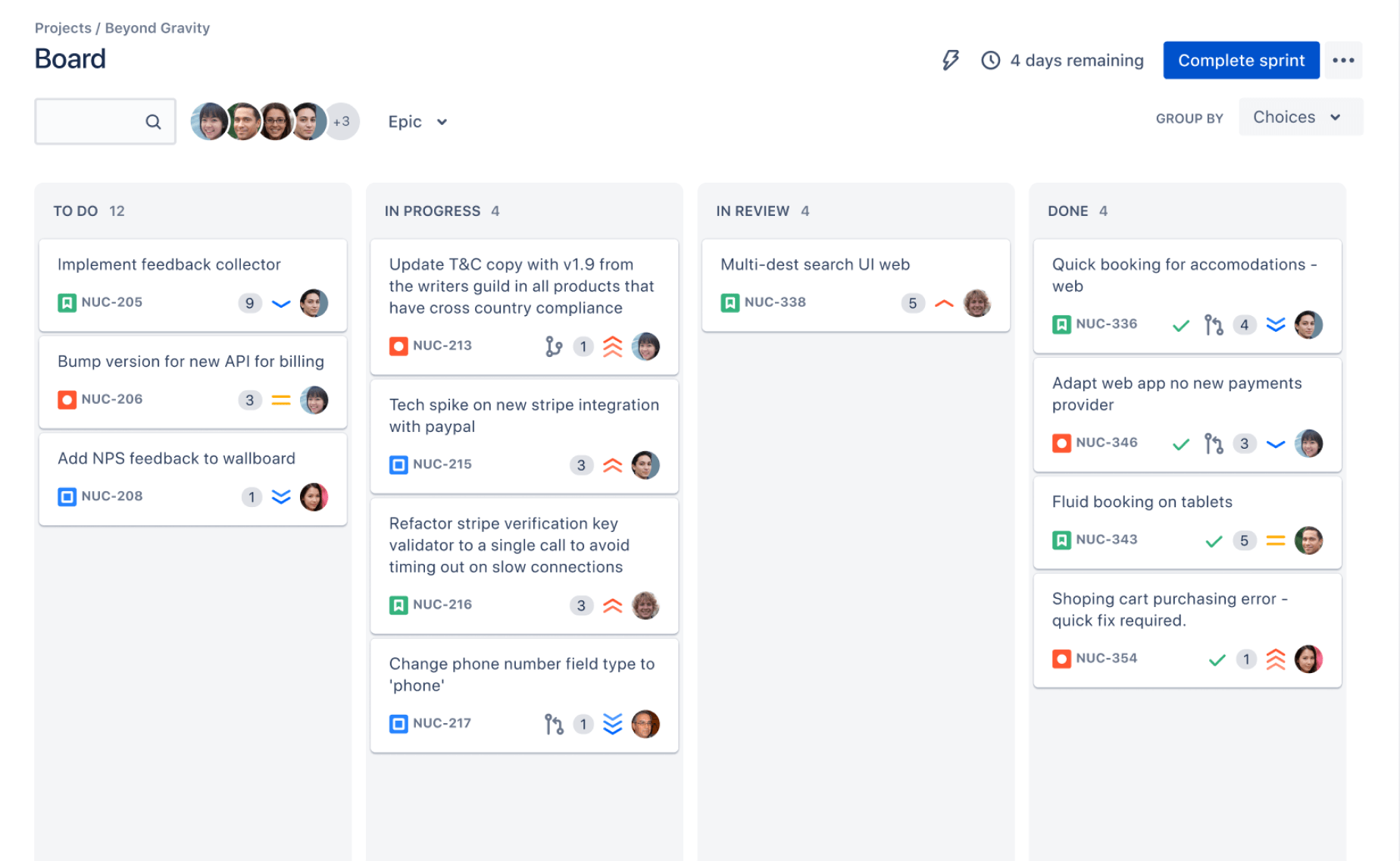
Quick monthly and annual estimate
| Team size | Monthly estimate at $17 per user | Annualized estimate | Simple calculation |
|---|
| 10 users | $170 per month | $2,040 per year | 10 × $17 × 12 |
| 25 users | $425 per month | $5,100 per year | 25 × $17 × 12 |
| 50 users | $850 per month | $10,200 per year | 50 × $17 × 12 |
| 100 users | $1,700 per month | $20,400 per year | 100 × $17 × 12 |
These figures are planning estimates, not guaranteed invoices. Atlassian may apply progressive user tiers, annual quotes, taxes, currency conversion, or special commercial terms.
Here's why: the phrase “per user” does not always mean every seat has the same effective price. SaaS vendors often apply a tier calculation, where additional users move the account into a different pricing band.
How Monthly Jira Premium Billing Works
Monthly billing gives you flexibility. You pay each month based on the account’s billable user count or the applicable billing method for your subscription.
Monthly pricing example
Imagine a product team with 25 paid users. At an estimated $17 per user per month, the basic calculation is:
- 25 users × $17 = $425 per month
- $425 × 12 months = $5,100 per year
This approach works well for early-stage teams with uncertain growth. If you expect to add five people next month and remove three contractors later, monthly billing can reduce the risk of paying for unused capacity.
What can change the monthly bill?
Your invoice may differ when the active user count changes. A new engineer, temporary designer, or external collaborator may become billable after receiving access.
Taxes and currency conversion can also affect the final amount. A company paying in euros, pounds, or another currency should treat the USD estimate as a budgeting reference rather than a final commitment.
Monthly billing can cost more over time when the published annual option offers a discount. The trade-off is flexibility versus longer-term price efficiency.
How Annual Jira Premium Pricing Works
Annual billing is designed for teams that can commit to a defined user tier for a longer period. Instead of treating every month as a separate purchase, you generally commit to a yearly quantity or tier.
Annual pricing example
Suppose your company expects to maintain 50 Premium users for the entire year. Using the same planning rate:
- 50 users × $17 per month = $850 monthly equivalent
- $850 × 12 months = $10,200 annual equivalent
The actual annual quote may not equal that multiplication. Annual subscriptions often use tiered quantities, and Atlassian may calculate the charge using a specific user band.
When annual billing makes sense
Annual billing usually suits a stable team with approved software spending. It can also simplify procurement because finance handles one larger commitment instead of twelve recurring charges.
The downside is reduced flexibility. If you budget for 100 users but average only 70, you may pay for capacity you do not use during the commitment period.
You might be wondering: what if the team grows after buying an annual plan? Additional users may be added through an adjustment or a new charge. Review the commercial terms before assuming new seats are covered automatically.
Monthly vs. Annual Cost: The Comparison That Matters
| Consideration | Monthly billing | Annual billing |
|---|
| Cash flow | Smaller recurring payments | Larger planned commitment |
| Team changes | Usually easier to adjust | May require tier or quantity changes |
| Budget planning | Flexible but less predictable | More predictable after approval |
| Best fit | Growing or changing teams | Stable teams with clear headcount |
| Calculation risk | Seat changes affect future bills | Overestimating seats can waste budget |
The best option depends on how predictable your team is. A 12-person startup hiring rapidly may value flexibility more than a possible annual discount. A 200-person enterprise with fixed departments may prefer an annual commitment.
Let me explain with a simple comparison. Team A has 30 steady employees and expects minimal change. Team B has 20 employees plus 15 rotating contractors. Annual billing may suit Team A, while monthly billing gives Team B better control.
What Premium Features Add to the Cost Conversation?
Pricing matters only when the plan solves a real operational need. Premium is generally aimed at organizations that need more room for automation, planning, scale, and administration.
Advanced planning and cross-team visibility
Large initiatives can involve several product squads, dependencies, and release dates. Premium capabilities can help leaders view work across teams instead of checking separate project areas manually.
For example, a platform migration may involve security, infrastructure, mobile, and customer experience teams. Cross-team planning helps expose a blocked dependency before it delays a release.
Higher automation capacity
Automation can handle repetitive actions such as assigning work, updating statuses, or notifying owners. More capacity matters when dozens of workflows run every day.
A support escalation might automatically create engineering work, assign a priority, and alert a service owner. Without enough automation capacity, teams may need manual intervention.
Reliability and administrative controls
Organizations often evaluate Premium for stronger service commitments and administrative capabilities. These benefits matter when project tracking supports revenue-generating releases or regulated operations.
Still, a higher plan does not automatically improve poor workflow design. Define the process first, then confirm whether Premium features support it.
How to Calculate Your Real Jira Premium Budget
- Count people who need access. Include employees, contractors, and occasional collaborators who require a paid seat.
- Separate regular and temporary access. A contractor working for two months may affect a monthly plan differently than an annual commitment.
- Choose a billing period. Compare twelve monthly estimates with the annual quote rather than comparing only one monthly payment.
- Check the user tier. Ask whether the price applies uniformly or uses a progressive calculation across seat bands.
- Add taxes and currency effects. Your accounting total may exceed the displayed USD planning figure.
- Model hiring changes. Create low, expected, and high headcount scenarios for the next year.
- Include adjacent costs. Marketplace apps, migration work, administration, training, and integrations can exceed the plan difference.
- Confirm the checkout total. Use the live billing screen or a formal quote before final approval.
A practical budget model
| Scenario | Seats | Monthly planning rate | Annualized estimate |
|---|
| Lean team | 25 | $425 | $5,100 |
| Expected growth | 50 | $850 | $10,200 |
| Expansion case | 100 | $1,700 | $20,400 |
Use the expected-growth scenario for normal planning and the expansion case for approval limits. This avoids rebuilding the budget every time the team hires someone.
Common Pricing Mistakes to Avoid
Using the advertised rate as the final invoice
A headline rate is useful for comparison, but it may not reflect tiers, tax, currency, or account-specific terms. Treat it as an estimate until the billing screen confirms the amount.
Multiplying the monthly amount by twelve without checking annual terms
That calculation gives you a useful baseline. It does not prove that monthly and annual subscriptions use identical rules.
Annual billing may apply a different quantity band or commercial adjustment. Always compare the actual annual quote with the twelve-month monthly total.
Counting only full-time employees
External specialists often need access to issues, boards, comments, and reports. Leaving them out can produce an inaccurate estimate.
Ignoring app and administration costs
A Premium plan may require fewer workarounds, yet your organization may still need integrations or specialist administration. Include those expenses in the total ownership estimate.
Jira Premium Pricing Alternative: ONES.com
ONES.com is a unified platform for project management and knowledge management, powered by ONES Assistant. ONES Project is the project management product and a Jira alternative, while ONES Wiki is the knowledge management product and a Confluence alternative. They are sold separately.
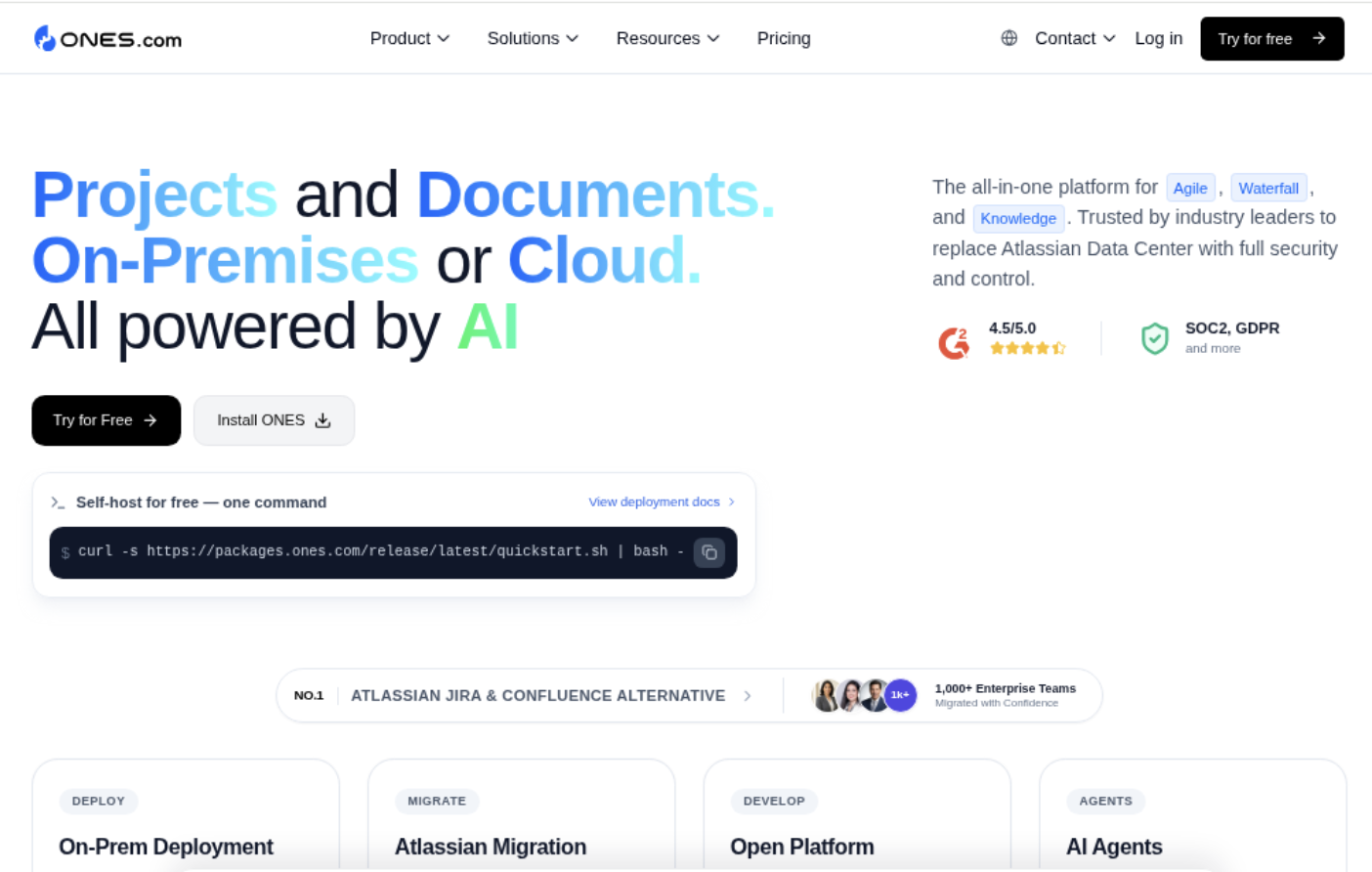
The platform may suit teams comparing subscription costs, deployment choices, and administrative complexity alongside Jira Premium. It offers a free plan for up to 30 seats and supports Cloud, On-Premise, Private Cloud, and Air-gapped deployments.
Core Capabilities
- Scattered project tracking → ONES Project combines planning, execution, and reporting → Teams gain one consistent workspace for active work.
- Jira migration concerns → Jira-compatible workflows reduce process disruption → Teams can preserve familiar delivery patterns while evaluating a Jira alternative.
- Too many plugins → Built-in reporting, automation, custom workflows, and custom fields reduce add-on dependence → Administrators can manage more functions natively.
- Unclear sprint progress → Sprint management gives teams a structured delivery rhythm → Product owners can review scope, progress, and unfinished work in one place.
- Changing deployment requirements → Cloud, On-Premise, Private Cloud, and Air-gapped options support different environments → Security and infrastructure teams gain more deployment choice.
- Feature differences between hosted and self-managed products → ONES maintains feature parity between its cloud and self-hosted versions → Teams can select an environment without giving up core capabilities.
- Disconnected project knowledge → ONES Wiki provides a separate knowledge management experience → Teams can organize guidance, decisions, and technical references near their work.
- Complex approval paths → Custom workflows and fields reflect real governance steps → Teams can model reviews without forcing every request into one generic process.
Application Scenarios
Growing software company: A 40-person product organization can use ONES Project for backlogs, sprints, releases, and reporting. Its team can evaluate whether native capabilities reduce the need for several add-ons.
Restricted environment: A security-sensitive engineering group may need an air-gapped deployment. ONES supports that deployment model while maintaining feature parity with its cloud and self-hosted versions.
Enterprise delivery office: A large organization can use custom workflows, fields, automation, and reporting for different departments. That structure helps teams standardize governance while preserving department-specific steps.
The right comparison is not only “What is the monthly price?” Ask how many capabilities you need, how your team deploys software, and how much administration your current setup requires.
Common Challenges When Estimating Premium Costs
Challenge: Your seat count changes every month
Solution: Track minimum, expected, and peak headcount. Compare the flexibility of monthly billing with the potential savings of committing to an annual tier.
Challenge: Annual pricing looks unclear
Solution: Request an annual quote showing the included quantity, effective per-user rate, renewal terms, and treatment of added seats.
Challenge: You cannot separate plan cost from add-on cost
Solution: List the base subscription, marketplace apps, integrations, training, administration, and migration work separately. This produces a more realistic ownership view.
Challenge: Different teams need different access levels
Solution: Review who needs full project access and who only needs limited collaboration. Remove inactive accounts and establish a regular access review.
Challenge: The plan includes features your team will not use
Solution: Map Premium features to specific workflows. If advanced planning or higher automation capacity solves no current problem, compare lower plans or alternatives.
FAQs
What is the estimated Jira Premium price per user in 2025?
A common 2025 planning figure is about $17 per user per month for Jira Premium. For example, 25 users produce an estimate of $425 monthly, or $5,100 when annualized. Your final amount may differ because of tiered pricing, taxes, currency, promotions, and account-specific terms. Confirm the current total through Atlassian’s billing flow before purchasing.
Is annual Jira Premium billing cheaper than monthly billing?
It can be, but you should compare the actual annual quote with twelve monthly payments. Annual pricing may use user tiers or commercial terms that do not match a simple multiplication. Annual billing can improve budget predictability and may offer better effective value for stable teams. Monthly billing may be safer when hiring plans or contractor access change frequently.
Does Jira charge every person who views a project?
Billing depends on the access level and subscription rules that apply to your Jira setup. People who can create, edit, or actively manage work generally need the appropriate paid access. Guests, collaborators, and external participants may follow different rules. Review the current Atlassian licensing definitions instead of assuming that every viewer is treated identically.
What should I include in a Jira Premium budget?
Include the subscription estimate, taxes, currency conversion, additional apps, integrations, administration, training, migration, and expected seat growth. Also model temporary contractors and inactive accounts. A team with 50 employees may need a budget for more than 50 seats if outside specialists participate in delivery. Reviewing access monthly can prevent unnecessary recurring charges.
Is ONES.com a Jira alternative?
ONES Project is a Jira alternative with Jira-compatible workflows, sprint management, automation, custom workflows, custom fields, and built-in reporting. ONES.com also provides ONES Wiki as a separate knowledge management product. Teams can choose Cloud, On-Premise, Private Cloud, or Air-gapped deployment, and the free plan supports up to 30 seats.
How should I compare Jira Premium with another platform?
Compare more than the advertised per-user amount. Review billing rules, user tiers, deployment options, workflow flexibility, reporting, automation, integrations, migration effort, and administration. Then test a realistic scenario, such as a 50-person team with contractors and two delivery departments. The platform with the lowest headline price may not have the lowest overall operating cost.
Conclusion
Jira Premium pricing in 2025 is best treated as a planning range rather than one universal invoice. A useful starting estimate is about $17 per user per month, but annual terms, seat tiers, taxes, currency, and account changes can alter the total.
But here's the practical solution: count real access needs, model several headcount scenarios, compare twelve monthly payments with the annual quote, and include the surrounding administration and app costs.
If Jira Premium feels too complex, too restrictive, or poorly aligned with your deployment needs, evaluate a Jira alternative such as ONES Project. The right choice should support your workflows, reporting, security requirements, and team growth while keeping the cost model understandable.