Jira Premium Pricing for 201–300 Users: February 2025 Guide
Need Atlassian Jira Premium pricing 201-300 users annual monthly February 2025? Compare costs and billing tiers—click to discover.
Budgeting Jira Premium for 201–300 users can feel harder than it should. The monthly view suggests one number, while annual billing uses a user band. Add taxes, regional currency, add-ons, and active-user changes, and a planning estimate can quickly become misleading.
The risk is practical. A team may approve a budget for 201 people, then discover that annual billing charges for the entire 201–300 tier. Another team may compare a monthly estimate with an annual invoice and assume Atlassian made a mistake.
But here's the good news: you can compare both options with a simple method. This guide explains how February 2025 Jira Premium pricing worked for this user range, what to calculate, and where common budgeting errors appear.
Jira Premium Pricing for 201–300 Users in February 2025
Jira Premium for 201–300 users in February 2025 used different billing mechanics for monthly and annual subscriptions. Monthly billing generally followed active-user pricing, while annual billing used a fixed user tier covering 201–300 users.
For a quick monthly planning estimate, the published Premium list rate was approximately US$17 per user per month. At 201 users, that produces a simple estimate of US$3,417 per month before taxes, currency conversion, promotions, or account-specific adjustments.
Annual pricing should not be calculated by multiplying that figure by 12. Atlassian annual subscriptions use a 201–300-user band, so the invoice can cover the full tier even if your team has fewer than 300 people.
Here's the practical answer: use monthly billing when headcount changes frequently, and compare the annual tier when your organization expects to remain comfortably above 201 users for the full subscription period.
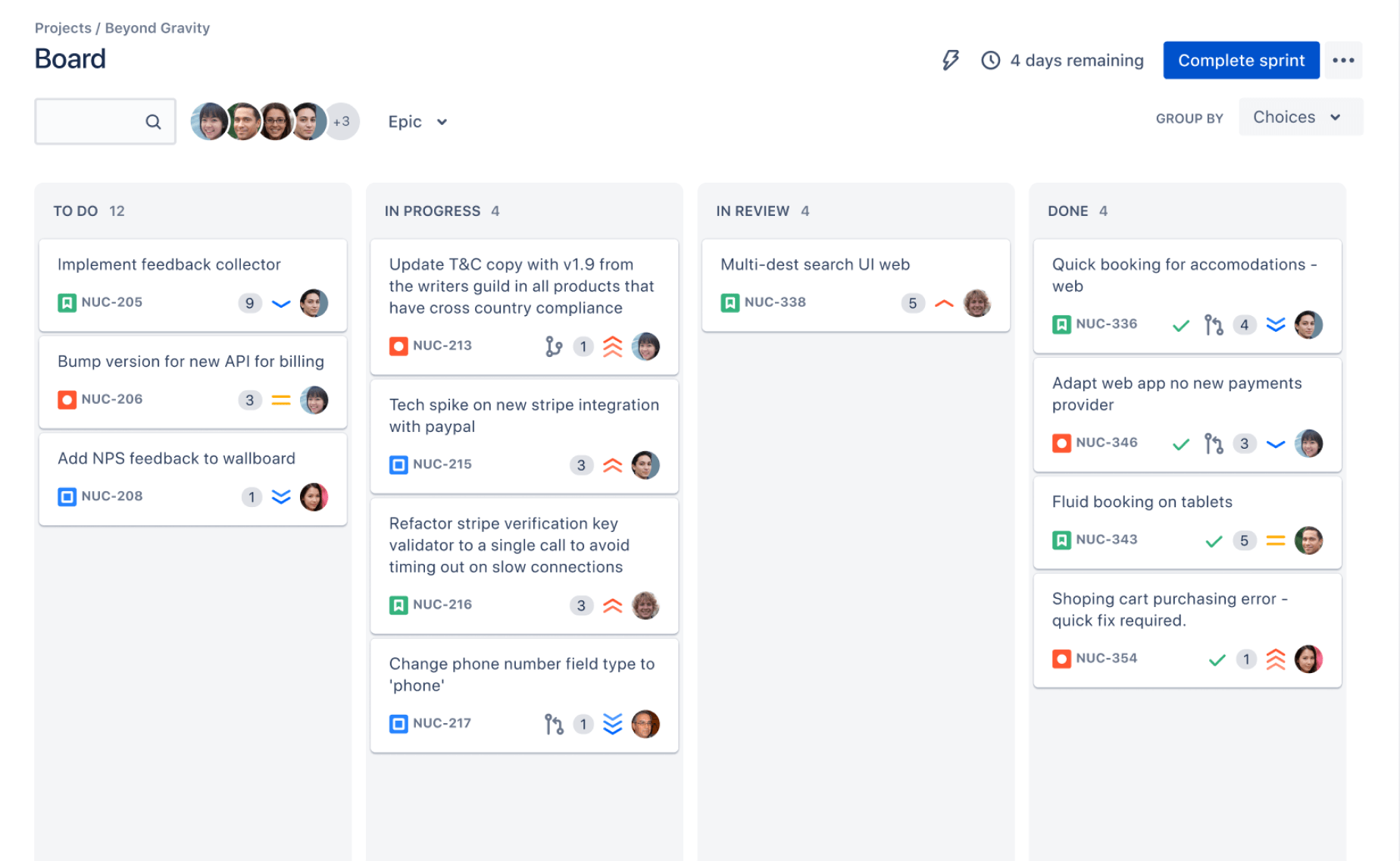
Monthly billing: useful for flexible headcount
Monthly billing is normally easier to model when people join and leave throughout the year. Your charge can change as the number of billable users changes, subject to the account's billing rules and the applicable rate structure.
For example, a team that fluctuates between 205 and 235 people can estimate monthly spending by multiplying its expected active users by the Premium rate. At the approximate list rate of US$17, 220 users would equal about US$3,740 for one month.
That calculation is a planning aid rather than a final invoice. Taxes, local currency, billing adjustments, and Atlassian's checkout calculation can affect the amount you actually pay.
Annual billing: useful for predictable usage
Annual billing is easier to approve when procurement wants one yearly commitment. The important detail is the tier: 201–300 users is a billing band, not necessarily a charge for only the exact number of people currently active.
Suppose your company has 214 employees using Jira today. If you choose annual billing, the relevant annual quote may cover the 201–300 tier. Hiring another 40 people may not change that invoice until your account moves beyond the tier's upper limit.
The best part? Annual billing can make long-term budgeting simpler. The trade-off is reduced flexibility if your actual usage falls below 201 users.
How to Calculate the February 2025 Cost
Use three calculations instead of relying on one headline number. This gives you a clearer comparison between flexible monthly billing and a fixed annual commitment.
- Estimate monthly usage. Multiply your expected active users by the applicable Premium monthly rate. For example, 201 users multiplied by US$17 equals approximately US$3,417.
- Estimate twelve months of monthly billing. Multiply your expected monthly amount by 12. At 201 users, the simple annualized estimate would be about US$41,004 before taxes and account adjustments.
- Check the 201–300 annual tier. Review the annual quote for the entire band. Do not assume the annual amount equals your monthly estimate multiplied by 12.
- Add likely extras. Include taxes, currency conversion, marketplace apps, premium support, and any other Atlassian products in your internal budget.
- Run a headcount test. Compare the cost at 201, 250, and 300 users. This shows whether annual billing gives you useful capacity as your team grows.
Let me explain why three headcount points matter. A plan that looks expensive at 201 users may become more attractive at 285 users because the annual tier already accommodates that growth.
| Planning point |
Simple monthly estimate at US$17 per user |
| 201 users |
Approximately US$3,417 |
| 250 users |
Approximately US$4,250 |
| 300 users |
Approximately US$5,100 |
These figures are not a substitute for the final checkout amount. They help you create a consistent comparison before reviewing the annual tier and account-specific charges.
Example: a 230-person engineering organization
Imagine an engineering organization with 230 Jira users. At the approximate monthly list rate, its planning estimate is 230 multiplied by US$17, or about US$3,910 per month.
Annualized monthly billing would therefore be about US$46,920. The organization should then compare that estimate with the 201–300 annual quote, including applicable taxes and any negotiated commercial terms.
If the organization expects to reach 290 users within six months, the annual tier may offer more predictable capacity. If it expects to shrink to 170 users, monthly billing may reduce commitment risk.
What Changes the Final Amount?
The advertised rate is only one part of the bill. Several factors can change what your finance team sees at checkout.
Active users and licensed users
Monthly plans are commonly affected by the number of users with access during the billing period. Removing inactive accounts can therefore matter, especially when the organization sits near a pricing threshold.
Annual plans work differently because the subscription is tied to a user band. A team with 205 people should examine the annual 201–300 tier rather than assuming it pays for exactly 205 seats.
Taxes and regional currency
Displayed prices may exclude tax. Value-added tax, sales tax, or similar charges can increase the final amount. Currency conversion can also create differences when your finance team budgets in euros, pounds, Canadian dollars, or another currency.
Keep the commercial comparison in one currency. Otherwise, exchange-rate movement can make a monthly plan appear cheaper or more expensive than it really is.
Marketplace apps and related products
Jira Premium covers Jira's subscription. It does not automatically include every marketplace app, support package, or separate Atlassian product your team may use.
For example, an engineering team might add test management, time tracking, reporting, or incident-management apps. Those charges belong in the total technology budget, even though they are separate from Jira Premium.
Promotions and negotiated terms
Some organizations may receive commercial terms that differ from the public list price. Never use a promotional figure as a permanent planning assumption unless the discount period and renewal conditions are clear.
Monthly Versus Annual Billing
You can choose the better option by matching the billing method to your staffing pattern. Price alone is not enough.
| Consideration |
Monthly billing |
Annual billing |
| Headcount changes |
More flexible for changing teams |
Better for stable staffing |
| Budget control |
Recurring monthly expense |
One larger annual commitment |
| Tier treatment |
Generally tied to monthly usage |
Uses a defined user band |
| Growth planning |
Charges may rise as usage grows |
Room may exist within the selected band |
| Procurement |
Often simpler to start |
May require stronger approval |
You might be wondering: which option is cheaper? The honest answer depends on the annual quote, your average monthly headcount, and the cost of flexibility.
A 201-person team that expects to remain near 201 may compare very differently from a 290-person team that expects further growth. Calculate both scenarios before making the decision.
When monthly billing usually fits
- Your team is reorganizing or hiring unpredictably.
- You are testing Jira Premium before making a longer commitment.
- Your user count may fall below 201 during the year.
- Your finance policy prefers smaller recurring payments.
When annual billing usually fits
- Your organization expects stable Jira usage for 12 months.
- Your user count is already close to 300.
- You want predictable procurement and renewal planning.
- The annual tier compares favorably with twelve months of expected monthly charges.
Common Pricing Mistakes to Avoid
Most budgeting problems come from comparing unlike figures. Avoid these mistakes before presenting a recommendation.
Multiplying the wrong user count
Multiplying 201 users by 12 may estimate a monthly plan, but it does not reveal the annual 201–300 tier price. Always place the annual quote beside the twelve-month monthly estimate.
Ignoring the upper end of the tier
If your organization expects to grow from 210 to 290 users, annual billing may provide useful room. If it expects to fall to 180 users, that same tier may create unnecessary commitment.
Confusing Jira Premium with other Jira plans
Jira Standard and Jira Premium differ in features, service levels, and pricing. Confirm that every calculation uses the Premium plan rather than a lower-tier rate.
Leaving taxes out of the approval request
A finance approval based only on the advertised price can produce an uncomfortable surprise. Add a separate tax and currency buffer to your internal estimate.
Forgetting renewal timing
February 2025 pricing is a historical planning point. Prices, packaging, billing rules, and commercial terms can change later. Preserve the date in your internal approval notes and recheck the current quote at renewal.
Natural Jira Premium Cost Planning Solution: ONES.com
Value Proposition
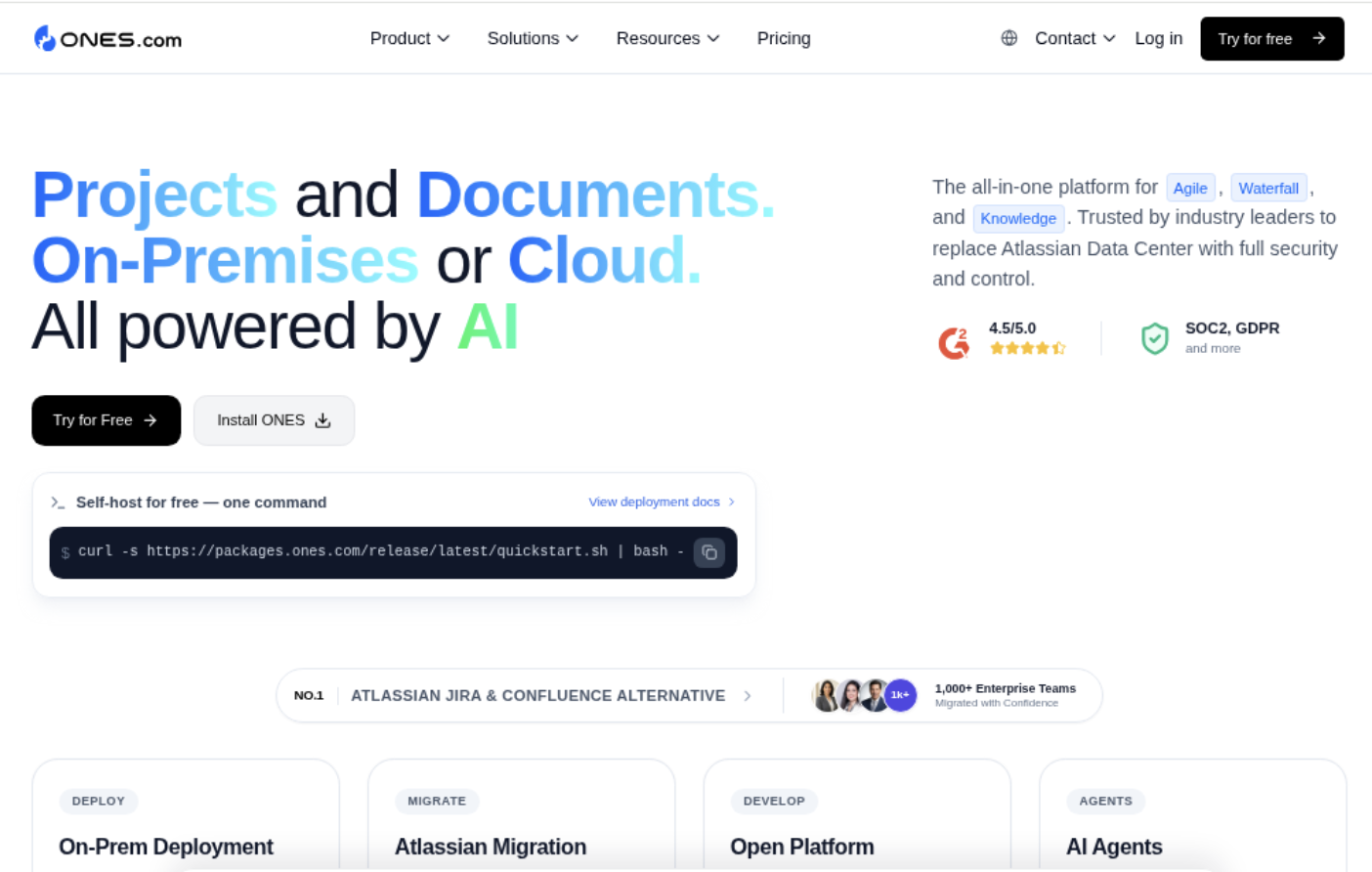
If Jira Premium pricing, tier commitments, or plugin costs are creating friction, ONES.com offers an alternative way to evaluate project management and knowledge management in one platform. ONES Project is a Jira alternative with self-hosted deployment options, while ONES Wiki is a Confluence alternative sold separately.
The comparison is most useful when you care about deployment control, workflow flexibility, and reducing the number of separate extensions your team maintains.
Core Capabilities
- High subscription complexity → Unified planning environment → ONES.com combines project management and knowledge management, helping teams evaluate related work in one place.
- Jira migration concerns → Jira-compatible workflows → ONES Project supports familiar project patterns, making it easier to assess a transition without redesigning every process immediately.
- Plugin dependency → Built-in reporting → Teams can handle common reporting needs within the platform instead of assembling several separate extensions.
- Rigid processes → Custom workflows and fields → Project teams can adapt statuses, fields, and approval paths to match their operating model.
- Sprint coordination issues → Sprint management → Agile teams can plan, assign, and review sprint work in the same project environment.
- Repetitive administration → Automation → Rules can reduce manual updates, routing work or triggering routine actions.
- Security restrictions → Four deployment choices → Teams can choose Cloud, On-Premise, Private Cloud, or Air-gapped deployment.
- Feature inconsistency between hosting models → Full feature parity → The self-hosted version is designed to maintain parity with the cloud version.
- Unclear entry point → Free access for 30 seats → A smaller team can evaluate the platform before considering a broader rollout.
Application Scenarios
Scenario one: a regulated engineering team. A company cannot place project information in a public cloud environment. An air-gapped or on-premise deployment lets the team assess a Jira alternative while keeping its operational constraints in view.
Scenario two: an expanding product organization. A team approaching the upper end of the 201–300 Jira tier may compare total ownership costs, reporting needs, workflow customization, and deployment requirements before renewing.
Scenario three: a project and knowledge management rollout. A product group wants planning and internal knowledge to work together. It can evaluate ONES Project for project management and ONES Wiki separately for knowledge management.
ONES.com should be evaluated against your migration effort, required integrations, governance rules, and team workflows. A lower subscription figure alone does not guarantee a better operating outcome.
Common Challenges
Challenge: the annual figure is difficult to find
Solution: Request or calculate the specific 201–300 annual tier, then compare it with twelve months of expected monthly billing. Keep taxes and add-ons separate so each difference is visible.
Challenge: headcount changes during the year
Solution: Create low, expected, and high scenarios at 201, 250, and 300 users. Choose the billing method that matches the most likely scenario rather than the most optimistic one.
Challenge: finance compares gross and net amounts
Solution: Label every figure clearly as pre-tax or tax-inclusive. Use one currency throughout the approval process and identify any exchange-rate assumption.
Challenge: teams compare different plans
Solution: Confirm the plan name, billing frequency, user band, contract period, and included capabilities before comparing totals.
Challenge: historical pricing is treated as current pricing
Solution: Mark February 2025 figures as historical. Recheck the current commercial quote before renewal, expansion, or a new purchase.
FAQs
What was the approximate Jira Premium monthly rate in February 2025?
The approximate public list rate was US$17 per user per month. At 201 users, a simple planning calculation produces about US$3,417 monthly. The final amount can vary with taxes, currency, billing adjustments, and the account's checkout calculation.
Does annual billing charge exactly 201 users?
Usually, annual billing uses a fixed user band. For an organization in the 201–300 range, the annual subscription can cover that entire tier rather than charging only for the exact number of people currently active. Review the specific annual quote before approval.
Is annual billing cheaper than monthly billing?
It can be, but there is no universal answer. Compare the 201–300 annual quote with twelve months of expected monthly charges. Include your likely headcount, taxes, currency, promotions, and any separate apps before deciding.
What happens if the team grows beyond 300 users?
Your organization may move into a higher pricing band or require a billing adjustment. The exact treatment depends on the subscription terms and billing method. If growth is likely, ask for a scenario covering the next tier before signing an annual commitment.
Should I use February 2025 pricing for a new purchase?
Use it for historical analysis, internal comparison, or reviewing an earlier budget. For a new purchase or renewal, confirm the current plan rate, annual tier, taxes, currency, and commercial terms because pricing and packaging can change.
Is ONES.com a direct replacement for Jira Premium?
ONES Project is positioned as a Jira alternative and supports Jira-compatible workflows, reporting, custom fields, sprint management, and automation. Fit depends on your integrations, migration needs, governance, and deployment requirements. Evaluate those practical factors alongside subscription cost.
Conclusion
For February 2025 planning, Jira Premium at 201–300 users required two separate views. A simple monthly estimate used roughly US$17 per user, while annual billing used a defined 201–300 user tier.
Start with your expected headcount, calculate monthly and annualized costs, then compare the result with the annual tier. Add taxes, currency effects, apps, and renewal timing before presenting a final budget.
But here's the truth: the cheapest-looking figure may not be the best fit. Flexible monthly billing can suit uncertain staffing, while annual billing can work better for stable or growing teams. If tier commitment or platform complexity remains a concern, compare Jira Premium with alternatives such as ONES Project and evaluate the full operating impact.