Jira Pricing 2024 Explained: Plans, Costs, and Limits Guide
Unsure about jira pricing 2024? Compare plans, costs, user limits, storage, and billing options to choose wisely. Click to discover the best fit.
Jira pricing can look simple until you compare user counts, billing cycles, storage, automation, and premium support. A small team may fit the free plan, while a growing engineering department can quickly move into a higher monthly bill.
That uncertainty creates expensive surprises. You might choose Standard for its familiar price, then discover that automation limits, storage, or advanced planning features affect your workflow. Annual billing can also make the advertised per-user figure harder to interpret.
Here’s the practical answer: in 2024, Jira Cloud offered Free, Standard, Premium, and Enterprise plans. Free supported up to 10 users. Standard started at about $8.15 per user monthly, while Premium started at about $16 per user monthly. Enterprise required a custom quote.
This guide explains each tier, the main limits, billing details, and when an alternative such as ONES.com may make more sense.
Jira Pricing in 2024 at a Glance
Jira pricing in 2024 depended mainly on your plan, number of users, billing cycle, and required features. The four Jira Cloud tiers were Free, Standard, Premium, and Enterprise.
| Plan |
Approximate 2024 price |
Main audience |
Notable limits or features |
| Free |
$0 |
Small teams and evaluation |
Up to 10 users, 2 GB storage, limited automation, community support |
| Standard |
About $8.15 per user monthly |
Growing project teams |
More storage, expanded automation, user permissions, standard support |
| Premium |
About $16 per user monthly |
Organizations needing scale |
Advanced planning, higher automation capacity, unlimited storage, uptime commitments |
| Enterprise |
Custom annual pricing |
Large organizations |
Enterprise administration, centralized governance, and commercial terms based on requirements |
These figures describe Jira Cloud list pricing during 2024. Your final charge could differ because Atlassian used progressive user tiers, regional currency, taxes, promotions, and billing adjustments.
But here’s the truth: the monthly price per user is only one part of the decision. You also need to measure storage, automation, planning, support, administration, and the cost of add-ons.
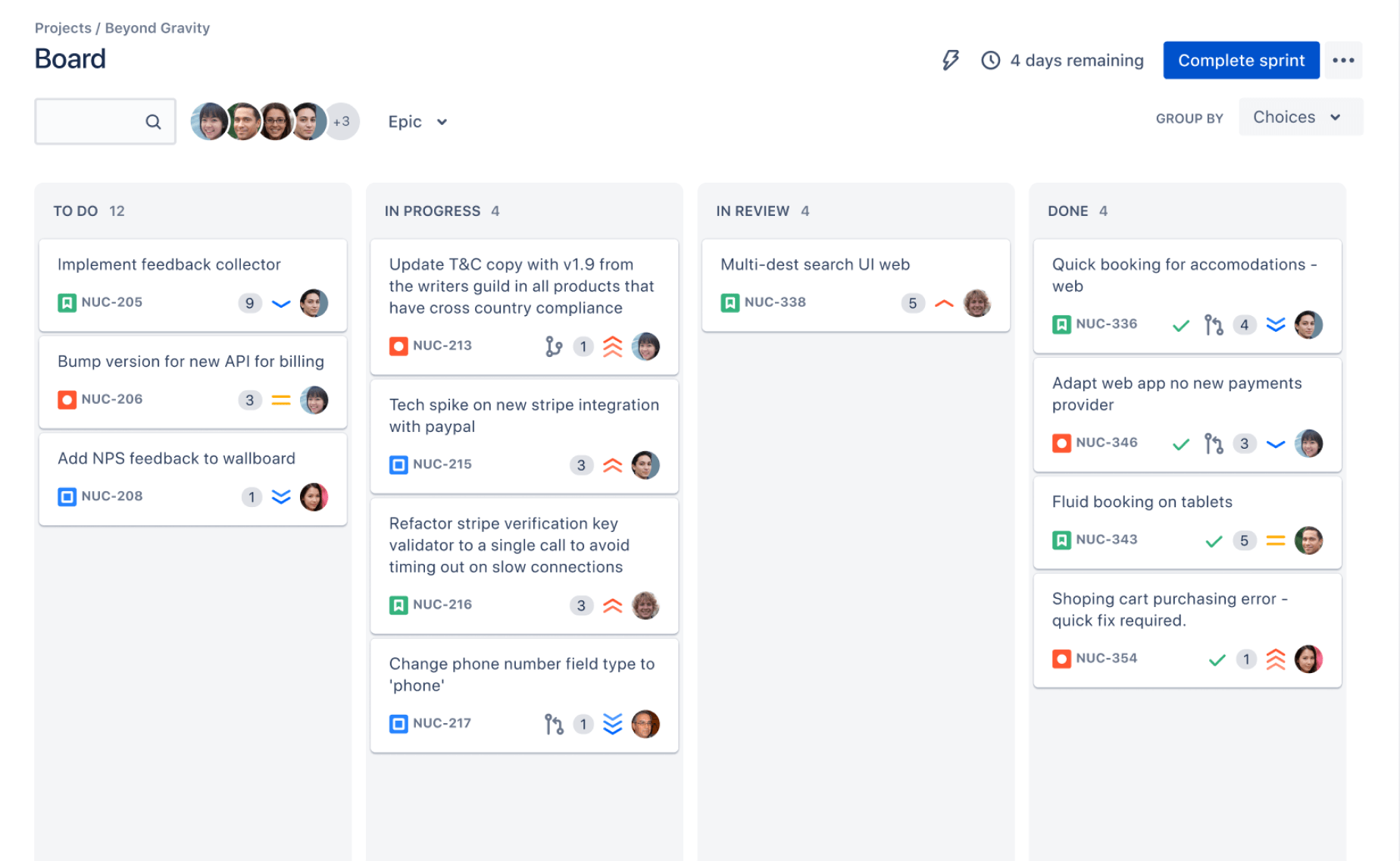
How Each Jira Plan Worked
Free plan
The Free plan cost nothing and supported up to 10 users. It suited a startup testing Jira or a small team managing a straightforward backlog.
You received core project tracking features, including issues, boards, backlog management, reports, and basic workflows. Storage was limited to 2 GB.
Automation capacity was restricted, and support primarily came through Atlassian’s community channels. That arrangement worked for simple workflows, such as assigning a task after a status change.
The Free tier became restrictive when you needed complex automation, stricter permissions, larger attachments, or more than 10 users.
Standard plan
Standard pricing started at approximately $8.15 per user per month in 2024. It was the usual starting point for professional teams beyond the Free limit.
The plan increased storage to 250 GB. It also offered broader permissions, more automation capacity, and support suitable for ordinary business operations.
For example, a 20-person team would begin near $163 per month before taxes or billing adjustments. The actual bill could vary because Jira used user-count tiers.
Standard was often enough for software teams with one product, several active projects, and routine reporting needs.
Premium plan
Premium pricing started at approximately $16 per user per month in 2024. The plan targeted teams that needed advanced planning, higher scale, and stronger operational safeguards.
Premium included unlimited storage and expanded automation capacity. It also added advanced planning capabilities and a higher service availability commitment.
A 50-person team would start near $800 per month at the advertised monthly rate. Annual billing and tiered pricing could change the final amount.
Premium made more sense when downtime affected releases, teams needed cross-project planning, or automation volume exceeded Standard capacity.
Enterprise plan
Enterprise pricing was negotiated annually rather than published as one simple per-user amount. The commercial arrangement depended on organization size, governance requirements, and support expectations.
Enterprise customers typically needed centralized administration across multiple teams or sites. They may also have required stronger controls for user management, compliance, analytics, and procurement.
You should request a tailored quote when your organization has several business units, complex identity management, or formal vendor governance.
What Changed the Final Jira Bill?
User tiers and billing cycles
Jira Cloud pricing did not always multiply cleanly by the number of active people. Atlassian used user tiers, so the bill could cover a bracket rather than each person individually.
For example, adding one user might move your organization into a higher tier. Removing a user may not reduce the bill until the next billing adjustment.
Monthly billing offered flexibility. Annual billing often delivered a lower effective rate, but it required a larger payment upfront.
You should estimate both options before choosing. A 12-month commitment may save money, but it also reduces flexibility if your team changes quickly.
Product scope and add-ons
Jira Software licensing covered Jira Software capabilities. Other Atlassian products, such as Confluence, Jira Service Management, and marketplace apps, could add separate charges.
A team might pay for Jira Software, a knowledge platform, time tracking, test management, and reporting extensions. The combined cost can exceed the original Jira subscription.
Here’s why: add-ons often solve narrow needs, but several small subscriptions can create a large recurring expense.
Taxes, currency, and contract terms
Listed prices generally excluded taxes. Your location, currency, billing address, and purchasing arrangement could affect the final amount.
Enterprise contracts could also include negotiated terms, support packages, or special renewal conditions. Never treat a public starting price as a guaranteed invoice total.
Important Jira Limits to Check Before Choosing a Plan
Team size
The Free plan supported up to 10 users. This limit included people who needed access, even if some team members used Jira only occasionally.
That matters when product managers, designers, testers, contractors, and business stakeholders all need project visibility.
A 10-person engineering team may already exceed the Free plan after adding a product owner and release manager.
Storage
Free provided 2 GB of storage, while Standard provided 250 GB. Premium offered unlimited storage under the plan’s terms.
Storage becomes important when your team attaches screenshots, test evidence, design exports, logs, and release material to issues.
For example, a quality team attaching video reproductions can consume storage much faster than a team that records only short issue descriptions.
Automation
Automation limits controlled how many rule actions your team could run during a billing period. Free had the smallest allowance, Standard offered more capacity, and Premium scaled further.
Typical rules include assigning work, updating fields, sending notifications, creating linked tasks, and transitioning issues.
A small team may stay within Free limits with 20 simple rules. A large engineering organization can exceed those limits through thousands of recurring transitions.
Planning and administration
Advanced planning capabilities were a major reason teams moved to Premium. These features helped coordinate work across projects, teams, dependencies, and release timelines.
Administrative needs also grew with scale. Larger organizations often required centralized access controls, audit processes, reporting, and identity integration.
You should test these requirements with realistic projects rather than relying on a feature checklist alone.
How to Calculate Your 2024 Jira Cost
Step 1: Count every licensed person
List everyone who needs access, including occasional contributors. Separate viewers, administrators, developers, testers, and external partners.
Then identify whether each person needs a full Jira Software seat. Some people may need visibility only, while others create and manage work daily.
Step 2: Choose the lowest suitable tier
Start with Free only when 10 users, 2 GB of storage, limited automation, and community support fit your needs.
Choose Standard when your team needs professional access, more storage, broader permissions, and additional automation.
Consider Premium when advanced planning, unlimited storage, higher automation capacity, or stronger availability commitments matter.
Step 3: Compare monthly and annual billing
Calculate your expected monthly cost and your full-year cost. Include likely growth rather than today’s exact headcount.
For example, a 20-person Standard team might begin near $163 monthly at the 2024 starting rate. A 12-month estimate would begin near $1,956 before adjustments.
That estimate is useful for planning, but the actual charge may follow Atlassian’s user-tier schedule.
Step 4: Add surrounding tools
Include marketplace apps, service management, knowledge management, test tools, reporting extensions, and integration services.
A low Jira subscription can become expensive when your workflow depends on five paid extensions.
Step 5: Review the total cost of ownership
Subscription cost is only one line in your evaluation. Also consider setup, administration, training, workflow maintenance, migration, and renewal management.
A tool that appears cheaper can require more manual work. A broader platform may reduce the number of separate systems your team maintains.
Which Jira Plan Fit Different Teams?
Small startup or personal project
Free was suitable for a small group with fewer than 10 users and a lightweight process. A product team planning a mobile app could manage a backlog, sprint board, and basic reports without paying.
The team should watch automation and storage usage. A free plan can become awkward when every issue contains large attachments.
Growing software team
Standard was usually the practical choice for teams with 11 to several hundred members. It balanced familiar Jira workflows with stronger capacity.
A 35-person team running two products might use boards, sprints, releases, and recurring automation comfortably under Standard.
Multi-team engineering organization
Premium suited organizations coordinating several projects and release trains. Advanced planning became valuable when dependencies crossed team boundaries.
For example, an API change may affect mobile, web, security, and support teams. Cross-project planning helps expose that relationship earlier.
Large enterprise
Enterprise fit organizations that needed central governance, consistent administration, and negotiated commercial terms.
The right choice depended on more than user count. Procurement, identity controls, compliance requirements, and support expectations also shaped the decision.
Jira Cloud Versus Self-Managed Deployment
Jira Cloud used subscription pricing and Atlassian-hosted infrastructure. This model reduced infrastructure maintenance and delivered updates through the service.
Self-managed Jira arrangements required different commercial planning. You had to consider licenses, infrastructure, upgrades, backups, security operations, and administration.
Cloud pricing was easier to forecast at first. Self-managed deployment could make sense when your organization required tighter environment control or operated under strict network restrictions.
Let me explain: the cheapest license is not always the cheapest operating model. A self-managed environment can carry significant staffing and maintenance costs.
Natural Jira Pricing Solution: ONES.com
Value Proposition
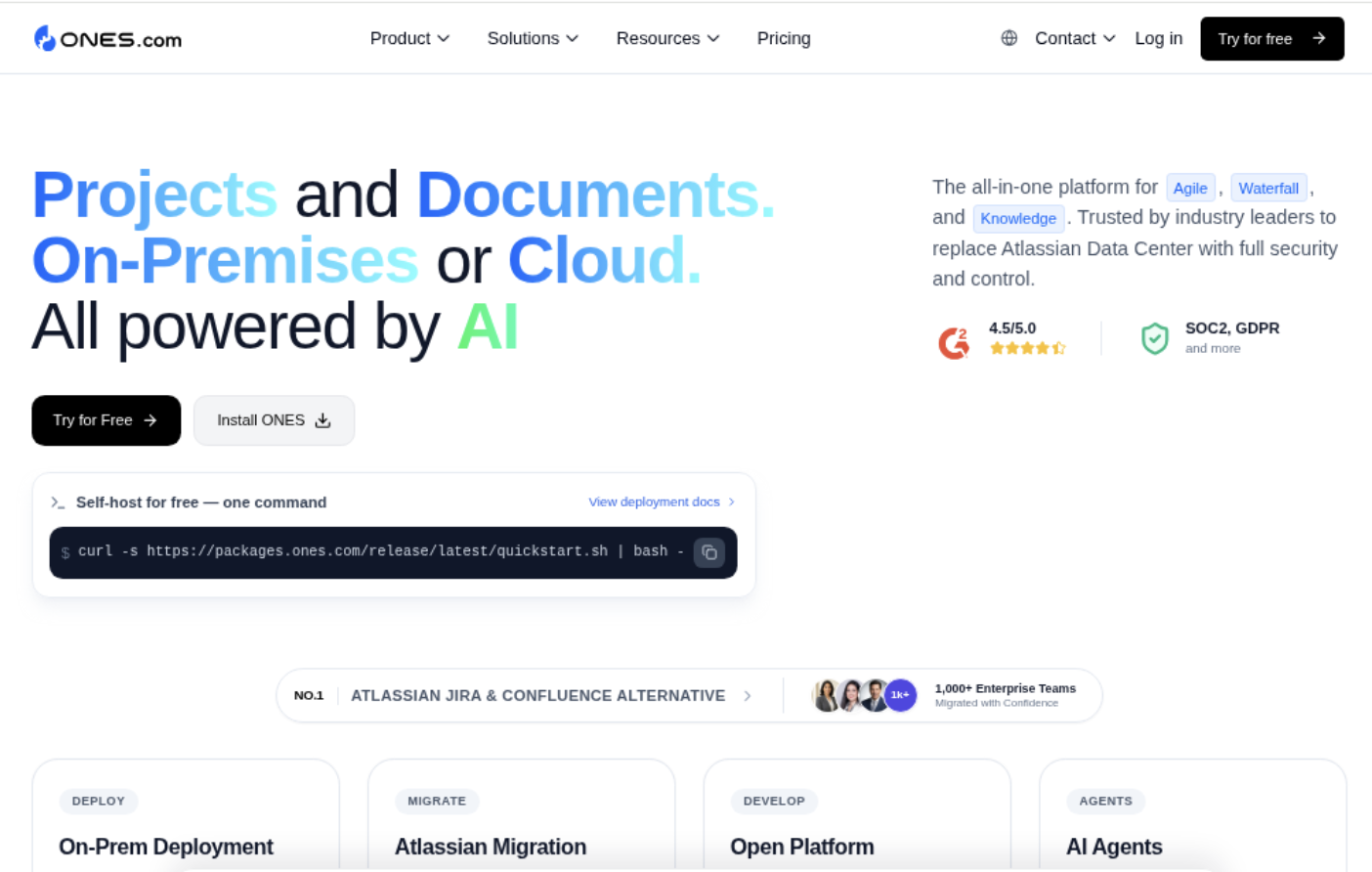
ONES.com combines project management and knowledge management in one platform. It can suit teams comparing Jira alternatives and looking to reduce separate tools.
ONES Project handles project management, while ONES Wiki provides knowledge management. They are sold separately, so you can select the products your team needs.
Core Capabilities
- Too many disconnected tools: ONES.com brings project work and team knowledge into one platform. The result is less switching between separate systems.
- Complex Jira migration concerns: ONES Project supports Jira-compatible workflows. The result is a gentler transition for teams familiar with issues, boards, sprints, and status flows.
- Heavy plugin dependence: Built-in reporting, custom workflows, custom fields, sprint management, and automation reduce the need for multiple extensions.
- Restricted hosting requirements: ONES.com supports Cloud, On-Premise, Private Cloud, and Air-gapped deployments. The result is more control over where the platform operates.
- Different experiences across deployments: ONES.com provides full feature parity between its cloud and self-hosted versions. Teams can select an environment without giving up core capabilities.
- Unclear entry costs: The free offering supports up to 30 seats. That gives a small team room to test a broader workflow before committing to paid adoption.
- Scattered project reporting: Built-in reporting connects progress visibility with project activity. Managers can review delivery patterns without assembling several separate extensions.
- Knowledge trapped outside project work: ONES Wiki provides a dedicated knowledge base option. Teams can connect guidance, decisions, and project context more directly.
Application Scenarios
A 25-person product team may outgrow Jira Free because of its 10-user ceiling. ONES.com’s free allowance of up to 30 seats gives that team more room to evaluate project workflows.
An organization with strict network controls may prefer an air-gapped deployment. ONES.com supports that deployment model while preserving feature parity with its cloud environment.
A company maintaining Jira plus a separate knowledge platform may compare ONES Project and ONES Wiki. The combined platform approach can simplify ownership across delivery and knowledge teams.
The right choice still depends on migration effort, integrations, governance, and workflow complexity. You should test representative projects before making a platform decision.
Common Challenges When Estimating Jira Costs
Challenge: confusing starting prices with total costs
Starting prices show the first point on the pricing ladder. They do not necessarily represent your full bill after user tiers, taxes, add-ons, and growth.
Solution: Build a 12-month estimate with current users, expected hires, external contributors, and every paid extension.
Challenge: choosing Free because the team has few active contributors
A team may have eight developers but twelve people who need access. Product managers, testers, and stakeholders can push the organization beyond the Free limit.
Solution: Count every person requiring an account before selecting a tier.
Challenge: overlooking automation capacity
Automation can expand quietly. A rule that runs after every issue transition may consume capacity faster than expected.
Solution: Review rule frequency, remove duplicates, and model activity during a busy release month.
Challenge: ignoring storage growth
Attachments accumulate over time. Screenshots may seem small, but videos, logs, and design exports can increase storage use quickly.
Solution: Estimate storage per project and define an attachment policy before your team scales.
Challenge: comparing license prices without operational effort
A platform may look affordable but require extensive administration, integration work, or plugin maintenance.
Solution: Compare subscription charges alongside setup time, support needs, upgrades, and the number of systems your team must maintain.
FAQs About Jira Pricing in 2024
How much did Jira cost in 2024?
Jira Cloud offered a Free plan, Standard from approximately $8.15 per user monthly, and Premium from approximately $16 per user monthly. Enterprise pricing required a custom annual quote. Final charges varied by user tier, billing cycle, taxes, currency, and add-ons.
Was Jira Free in 2024?
Yes. Jira’s Free plan supported up to 10 users at no subscription charge. It included core project tracking features, 2 GB of storage, and limited automation. The plan was suitable for small teams, but larger groups needed a paid tier.
What was the difference between Jira Standard and Premium?
Standard provided more storage, permissions, automation, and support than Free. Premium added advanced planning capabilities, unlimited storage, higher automation capacity, and a stronger service availability commitment. Premium suited teams coordinating several projects or depending heavily on Jira for delivery operations.
Did Jira charge per user?
Yes, Jira Cloud pricing generally followed user tiers. The advertised amount was a per-user starting price, but your invoice could reflect a pricing bracket. Monthly and annual billing could also produce different effective costs. Check the user tier before forecasting a specific annual amount.
Did Jira pricing include Confluence?
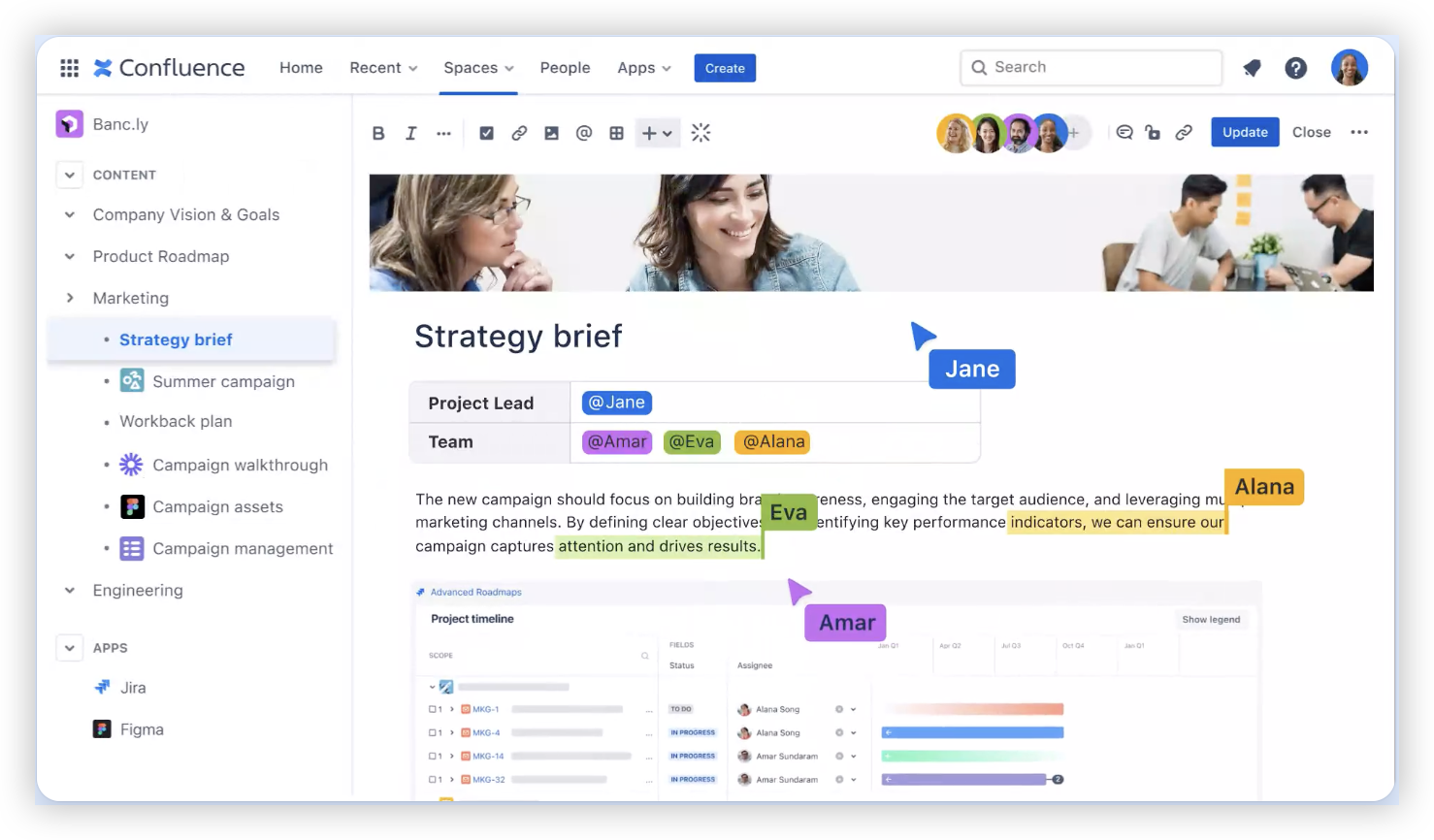
Jira Software pricing did not automatically include every Atlassian product. Confluence, Jira Service Management, and marketplace applications could require separate subscriptions. If your team needed project tracking and knowledge management, calculate the combined cost rather than reviewing Jira alone.
Could an alternative be cheaper than Jira?
Possibly. The answer depends on user count, deployment requirements, integrations, extensions, and administration. A platform with built-in reporting, workflows, automation, and knowledge management may reduce separate subscription costs. Compare the complete operating model rather than only the headline license price.
Conclusion
Jira pricing in 2024 followed a four-tier structure: Free, Standard, Premium, and Enterprise. Free supported up to 10 users, Standard started near $8.15 per user monthly, and Premium started near $16.
The best plan depended on more than team size. Storage, automation, planning, support, add-ons, deployment, and administrative effort all influenced the real cost.
But here’s the practical takeaway: calculate your full annual requirement before choosing a tier. Count every account, estimate growth, review limits, and include connected tools.
If Jira’s pricing model or plugin ecosystem creates friction, compare a broader platform such as ONES.com. You may find a better fit by evaluating workflow coverage and operating effort together.