Jira Pricing 2025: A Complete Cost Planning Guide for Teams
Wondering about jira pricing 2025? Compare plans, team sizes, add-ons, and hidden costs to plan your true budget. Click to discover the best fit.
Jira pricing can look simple until you add team size, billing frequency, premium features, marketplace apps, and administration time. A plan that seems affordable for ten people may become expensive when your team reaches fifty.
That uncertainty creates real planning problems. You may choose a higher tier for one advanced feature, pay for unused seats, or discover that essential reporting requires another subscription. Those costs can quietly exceed the headline plan price.
But here's the truth: the cheapest Jira plan is rarely the same as the lowest total cost. You need to evaluate licensing, add-ons, implementation, maintenance, and growth together.
This guide shows you how to assess Jira pricing in 2025, estimate your real monthly spend, compare plans, and build a practical budget before committing.
How Jira Pricing Works in 2025
Jira pricing in 2025 depends mainly on your product edition, team size, billing term, hosting model, and optional apps. The core editions typically include Free, Standard, Premium, and Enterprise, while exact rates and included limits can change.
For a reliable estimate, start with the official Atlassian pricing calculator for your region. Then add every related service your team needs, including time tracking, advanced reporting, service management, storage, automation, and marketplace applications.
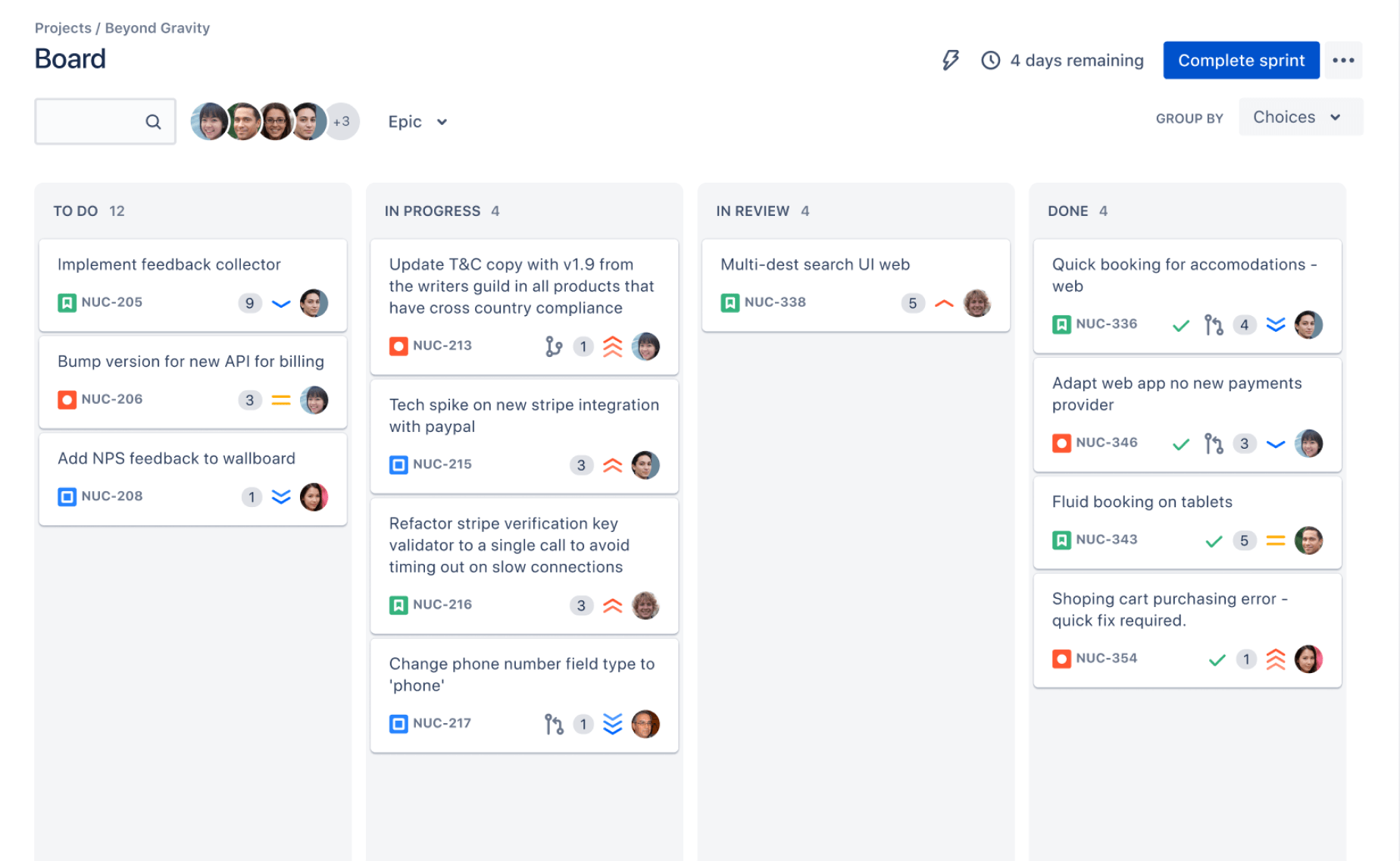
1. Choose the Jira edition that matches your workflow
Each Jira tier targets a different operating environment. A small team with a basic backlog has different needs from a distributed engineering organization managing several products.
- Free: Useful for small teams testing Jira or running a straightforward project with limited administration needs.
- Standard: A practical choice for growing teams that need more collaboration capacity, administrative controls, and working room.
- Premium: Designed for teams that need advanced planning, greater scale, stronger service expectations, or higher automation capacity.
- Enterprise: Intended for large organizations requiring centralized governance, broader administration, and enterprise-level purchasing arrangements.
The right tier depends on the capability that creates the strongest business requirement. For example, choosing Premium only because of one planning feature may cost more than evaluating a separate workflow approach.
2. Calculate the billable team size
Jira pricing usually rises as the number of licensed people increases. However, the calculation may not match the number of employees in your company.
Count the people who need regular access. Include product managers, engineers, designers, testers, project leads, support specialists, and contractors who actively work inside Jira.
Then separate occasional viewers from daily contributors. Someone who only checks project progress may need a different access arrangement, depending on the product and plan rules.
| Team category |
People to consider |
| Core contributors |
People who create, update, assign, or complete work |
| Project stakeholders |
Managers, clients, and leaders who review progress |
| Specialist contributors |
Designers, testers, analysts, and technical writers |
| External collaborators |
Contractors, vendors, and partner teams |
| Administrators |
People managing permissions, workflows, automation, and reporting |
3. Compare monthly and annual billing
Monthly billing provides flexibility. It can suit a pilot project, a temporary team, or an organization still deciding whether Jira fits its workflow.
Annual billing may offer a lower effective rate or more predictable budgeting. It also creates a commitment, so review your expected team growth before selecting it.
For example, a team with 45 active contributors may expect to reach 70 people within six months. A lower annual rate may be attractive, but the projected seat increase could change the total commitment.
4. Add the costs outside the core subscription
Your Jira subscription is only one part of the budget. Many teams also pay for related products and extensions.
- Jira Service Management for service desks and internal requests
- Confluence for knowledge management and team information
- Advanced planning or portfolio capabilities
- Time tracking and capacity planning applications
- Test management extensions
- Reporting and analytics applications
- Automation, integration, or synchronization tools
- Specialized security and administration services
Here’s why: an app that costs a small amount per month can become a major expense when its pricing follows your full Jira seat count.
What Your Jira Budget Should Include
A realistic budget includes more than the displayed subscription price. I recommend separating direct licensing from operational costs, because each category behaves differently as your team grows.
Direct subscription costs
Direct costs include the selected Jira tier, licensed seats, billing term, and any additional Atlassian products. These are usually the easiest costs to identify.
However, check whether each product uses the same seat count. Your Jira team, service desk team, and knowledge management team may not have identical access requirements.
Marketplace and integration costs
Marketplace applications can improve Jira quickly. A testing extension may help your quality team, while a reporting app may help executives monitor delivery.
The risk appears when every department adds a separate tool. Five applications at modest monthly rates can create a larger recurring bill than expected.
Create an app register with the product name, purpose, licensed population, renewal date, owner, and cancellation criteria. That simple review makes unnecessary subscriptions easier to find.
Implementation and migration costs
Moving from another work management platform requires planning. Someone must design workflows, configure permissions, migrate important history, test integrations, and train each team.
A small team may handle this internally. A complex organization may need an Atlassian specialist, especially when several departments share projects and reporting structures.
For example, a 20-person startup may finish setup in a few days. A global organization with multiple business units may need several months of phased rollout.
Administration and maintenance costs
Jira requires ongoing care. Workflows become complicated, custom fields multiply, permissions drift, and automation rules may conflict.
Assign an owner for governance. That person should review inactive accounts, unused apps, permission changes, workflow requests, and automation performance each quarter.
The cost may appear as staff time rather than an invoice. It still belongs in your planning model.
How to Estimate Total Jira Cost
Use a simple annual calculation before comparing plans:
Estimated annual cost = subscription fees + add-ons + implementation + administration + training + contingency
This formula gives you a better view than comparing monthly plan labels alone.
Build three planning scenarios
Create a conservative, expected, and growth scenario. Each scenario should use a different team size and feature requirement.
| Scenario |
Planning question |
Typical assumption |
| Conservative |
What is the smallest practical setup? |
Current contributors and essential capabilities only |
| Expected |
What will normal operations require? |
Moderate hiring, selected apps, and regular administration |
| Growth |
What happens if adoption expands quickly? |
More teams, higher automation demand, and stronger governance |
Example: a 35-person product team
Imagine a product team with 25 engineers, four product managers, three designers, two testers, and one delivery lead.
The team may need 35 regular seats, one planning extension, a reporting tool, and several integrations. The subscription is only the first line of the estimate.
A practical budget would also include setup time, workflow design, training sessions, quarterly administration, and a reserve for team growth.
The exact amount depends on the selected plan and current rates. Use this example to structure your estimate, then confirm live pricing before approval.
Measure cost per active contributor
Cost per active contributor helps you identify poor adoption. Divide your annual Jira-related spend by the number of people who regularly complete work inside the platform.
If 80 licensed people exist but only 50 contribute each week, investigate the gap. Some accounts may be necessary for visibility, while others may be inactive.
Do not remove occasional contributors automatically. Review their role, access needs, and project responsibilities first.
Jira Cloud, Data Center, and Self-Hosted Planning
Hosting affects more than the subscription invoice. It changes administration, infrastructure, security responsibilities, upgrade work, and internal staffing.
Cloud pricing considerations
Cloud plans usually reduce infrastructure work. Atlassian manages the hosting environment, while your team handles configuration, access, integrations, and governance.
Cloud can suit organizations that want faster deployment and predictable operational responsibility. It may also simplify collaboration across locations.
Data Center planning considerations
Data Center can suit organizations with specific infrastructure, security, resilience, or regulatory requirements. The financial model may include licensing, hosting, architecture, monitoring, backup, and specialist administration.
Compare the full operating model rather than looking only at the annual license. A self-managed environment can require substantial internal expertise.
Questions to ask before choosing a hosting model
- Who will manage upgrades and security controls?
- Do you need a private or restricted deployment environment?
- How much downtime can your team tolerate?
- Who will monitor performance and integrations?
- Can your internal team support the required architecture?
- Will your compliance requirements change over the next three years?
Let me explain: a lower subscription price does not guarantee a lower operating cost. Hosting decisions should reflect your technical responsibilities and risk tolerance.
Ways to Control Jira Spending
Cost control works best when you manage adoption continuously. A one-time purchase review will not catch inactive accounts, duplicate apps, or uncontrolled customization.
Review access every quarter
Remove access for people who have left the organization, changed departments, or no longer need regular participation. Keep a short review record so managers can confirm exceptions.
Limit unnecessary customization
Every custom field, workflow, and automation rule adds future maintenance. Start with the simplest process that supports accurate planning and reporting.
For example, a team may create separate workflows for five work types when two shared workflows would provide the same operational result.
Consolidate overlapping apps
Two reporting apps may serve similar needs. One may support executives while another serves delivery teams, but compare their actual usage before renewing both.
Ask each app owner to show active reports, regular viewers, and business decisions supported by the tool.
Set a growth trigger
Define a review point before your team crosses a seat threshold. Review the plan when hiring reaches 80 percent of the next band, when automation limits become restrictive, or when multiple departments request access.
This approach gives you time to compare plans instead of making a rushed purchase after the budget is already committed.
Jira Pricing Alternative: ONES.com
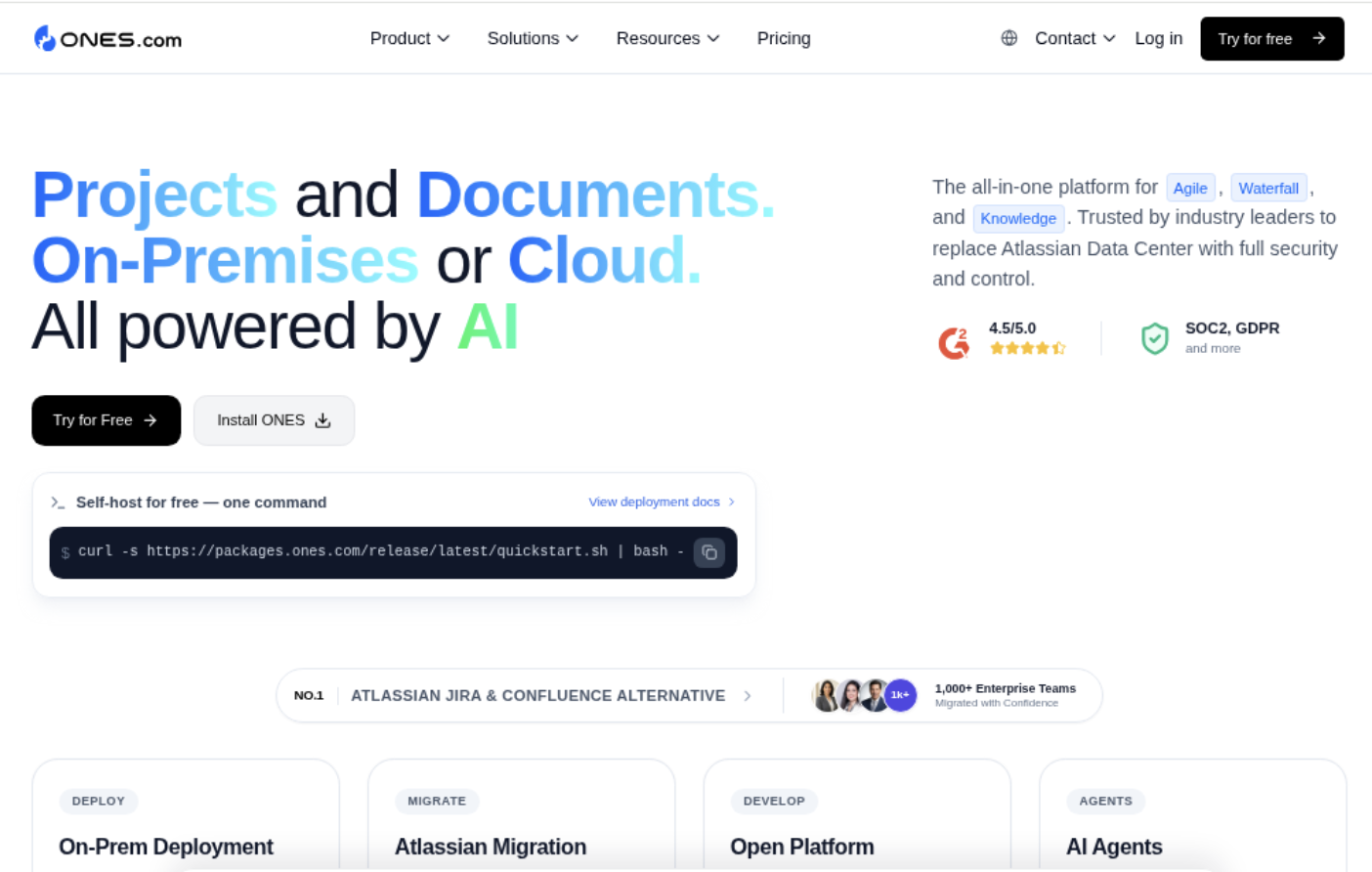
Value Proposition
ONES.com combines project management and knowledge management in one platform. ONES Project provides a Jira alternative, while ONES Wiki supports team knowledge management similar to Confluence.
You can purchase ONES Project and ONES Wiki separately. ONES.com offers cloud, on-premise, private cloud, and air-gapped deployments, with a free plan for up to 30 seats.
Core Capabilities
- Scattered project tracking → ONES Project centralizes planning, backlogs, tasks, and delivery views → Your team works from a shared project structure.
- Complex Jira migration concerns → Jira-compatible workflows help teams carry familiar delivery practices into a different platform → Adoption can require less process redesign.
- Limited reporting flexibility → Built-in reporting and configurable views help teams monitor progress, workload, and delivery trends → Managers spend less time assembling status updates.
- Rigid work structures → Custom workflows and fields let teams reflect different work types → Engineering, product, and operations teams can use suitable processes.
- Manual sprint administration → Sprint management supports planning, active delivery, and review activities → Scrum teams can maintain a repeatable cadence.
- Repetitive coordination → Automation handles selected routine transitions and notifications → Teams reduce manual updates for predictable events.
- Separate project and knowledge tools → ONES Project and ONES Wiki connect delivery work with team knowledge → People can find process guidance closer to project activity.
- Restricted hosting requirements → On-premise, private cloud, and air-gapped deployments support controlled environments → Organizations can align deployment with internal security policies.
- Plugin-heavy administration → Native capabilities cover common planning and reporting needs → Teams may reduce dependence on multiple extensions.
Application Scenarios
Growing software team: A 25-person engineering group can use sprint management, custom workflows, and reporting without building a large collection of extensions. The team can start with core delivery practices and expand governance as adoption grows.
Regulated organization: A company with restricted network requirements can evaluate an on-premise or air-gapped deployment. This approach may suit teams that need tighter control over their operating environment.
Product and operations collaboration: Product managers can manage delivery in ONES Project while teams maintain guidance in ONES Wiki. Separate products allow the organization to purchase the capabilities it actually needs.
Review current seat limits, deployment requirements, feature availability, and commercial terms before making a purchasing decision. The best option depends on your workflows, technical environment, and total operating cost.
Common Challenges When Planning Jira Costs
Challenge: confusing list price with total cost
Solution: Add apps, implementation, administration, training, and expected growth to your estimate. Present the subscription and operating costs as separate lines.
Challenge: paying for inactive accounts
Solution: Review access quarterly and compare licensed seats with regular activity. Keep exceptions for stakeholders who need visibility without daily contribution.
Challenge: selecting a higher tier for one feature
Solution: Identify the exact business requirement. Compare the higher tier with an app, a process change, or another platform before upgrading the entire team.
Challenge: underestimating administration
Solution: Assign a named owner and estimate weekly or monthly maintenance time. Include governance work in the annual technology budget.
Challenge: overlooking team growth
Solution: Build conservative, expected, and growth scenarios. Review the estimate whenever hiring, acquisitions, or department expansion changes the licensed population.
FAQs About Jira Costs in 2025
What Jira plan is best for a small team?
The Free plan may suit a small team with basic project tracking and limited administration needs. Standard may become more practical when the team needs additional collaboration capacity, broader controls, or more room to grow. Review the current seat limit, feature restrictions, and support requirements before choosing. A short pilot can reveal whether the team needs advanced planning or automation.
Is Jira cheaper when billed annually?
Annual billing may provide a lower effective rate or more predictable budgeting, but the exact benefit depends on the current commercial terms and region. Compare the annual commitment with your expected team changes. If your team may shrink, reorganize, or replace the platform soon, monthly flexibility may have greater value even when the rate is higher.
What hidden costs should I consider?
Consider marketplace apps, connected Atlassian products, implementation, migration, training, administration, security reviews, reporting, and infrastructure. Also estimate the time spent maintaining workflows, fields, permissions, and automation. These costs may not appear on the initial quote, but they influence the real annual ownership cost.
How can I reduce Jira licensing costs?
Review inactive accounts, remove duplicate applications, limit unnecessary customization, and match each person’s access to their actual responsibilities. Establish a quarterly license review and a clear approval process for new apps. You can also compare the cost of a higher tier against a simpler workflow or a platform with more built-in capabilities.
Should I compare Jira with another project management platform?
Yes, especially when your team relies on many extensions, needs self-hosting, or finds administration difficult. Compare workflow compatibility, reporting, automation, migration effort, security requirements, and three-year total cost. A platform with a lower license price may still require more customization, so evaluate the complete operating model.
Conclusion
Jira pricing in 2025 should be treated as a planning exercise, not a quick subscription lookup. Start with your active contributors, select the required edition, compare monthly and annual billing, and add apps, implementation, administration, and growth.
But here's the truth: a low headline price can become expensive when access is unmanaged and extensions multiply. A clear three-scenario estimate helps you avoid surprises.
If your requirements include simpler administration, native project capabilities, or controlled deployment options, compare Jira with alternatives such as ONES Project. The right choice is the platform that supports your workflow while keeping the full operating cost visible.