Jira Pricing Calculator: A Step-by-Step Cost Guide [2026]
Need an accurate Jira pricing calculator for 2026? Estimate users, plans, apps, taxes, and billing costs step by step. Click to calculate smarter.
Jira pricing can look simple until you add more users, multiple products, annual billing, apps, and taxes. A quick per-user estimate may feel accurate while missing the costs that shape your real monthly bill.
That creates a familiar problem: your team approves a tool, then discovers that premium features, Marketplace apps, extra products, or billing rules change the total. A small pricing mistake can become a large annual budget gap.
But here’s the solution. Use a Jira pricing calculator as a structured cost model, then verify every estimate against the current Atlassian checkout and pricing pages. This guide shows you exactly what to enter, what to include, and how to compare alternatives fairly.
How to Use a Jira Pricing Calculator
A Jira pricing calculator is a tool that estimates your Jira subscription cost by combining users, product plans, billing frequency, add-ons, and applicable charges. It gives you a planning figure before you start a trial or purchase.
The result is an estimate rather than a guaranteed invoice. Atlassian pricing can vary by product, user tier, billing cycle, region, taxes, discounts, and commercial terms.
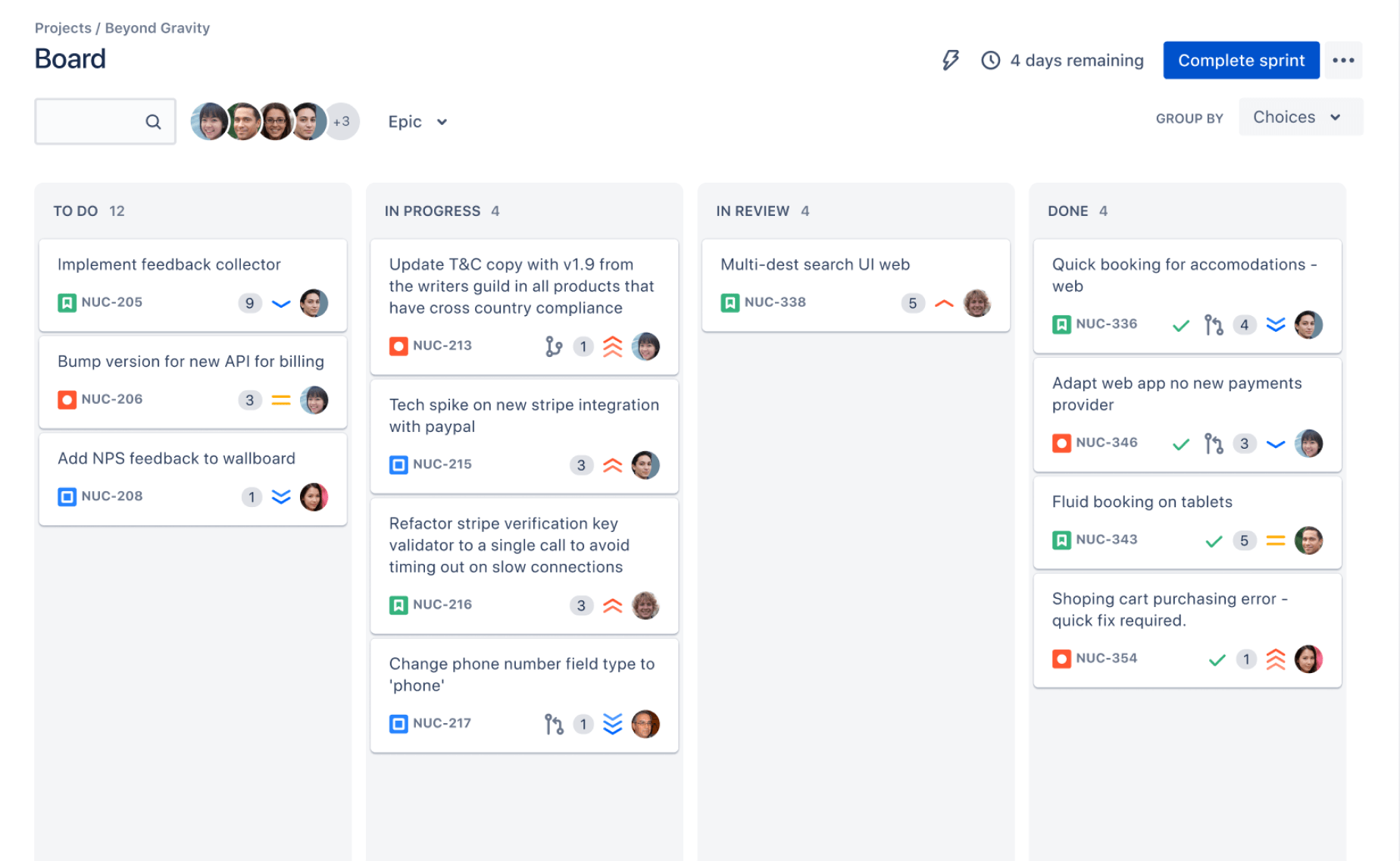
Step 1: Define the Jira products you need
Start by listing every Atlassian product your team may purchase. Jira Software, Jira Service Management, and Confluence can have separate pricing structures.
For example, a software team may need Jira for engineering work and Confluence for internal knowledge. A support team may also need Jira Service Management for requests and incident handling.
Do not calculate only the product your team mentions most often. A low Jira estimate can become misleading when the team adds a second product later.
Step 2: Count billable users carefully
Enter the number of people who need access to each product. Count users by product instead of assuming one shared seat total applies everywhere.
For example, 40 engineers may need Jira Software, while only 12 support agents need Jira Service Management. Those products may produce different totals.
Also consider contractors, managers, administrators, service agents, and occasional contributors. A user who needs access once a month can still affect your subscription tier.
Step 3: Select monthly or annual billing
Choose the billing cycle you expect to use. Monthly billing usually offers more flexibility when headcount changes, while annual billing can provide a clearer yearly commitment.
Compare both views:
- Estimated monthly cost
- Estimated annual cost
- Cost of adding users during the year
- Effect of removing users before renewal
- Cash-flow impact of paying annually
Here’s why: the lowest displayed monthly figure may not represent the lowest practical cost for your team. Hiring plans and renewal timing matter.
Step 4: Choose the plan level
Select the plan that matches your required capabilities, such as Free, Standard, Premium, or Enterprise where available.
Compare the features behind the plan rather than choosing only by price. A higher tier may include automation limits, advanced administration, reporting, security controls, or larger usage allowances.
For instance, a growing team may save money with a lower plan until it needs advanced controls. At that point, upgrading may cost less than assembling several separate workarounds.
Step 5: Add Marketplace apps and connected services
List every paid extension your team expects to use. Common examples include time tracking, roadmapping, test management, capacity planning, advanced reporting, and portfolio management.
Each app can have its own pricing rules. Some charge by user count, while others use a different licensing model.
Calculate the core subscription and app costs separately before combining them. This makes it easier to see whether a lower Jira tier still delivers a lower total.
Step 6: Include tax, discounts, and commercial terms
Add any applicable tax, currency conversion, regional charge, negotiated discount, or partner fee. These items may not appear in a simple public estimate.
For larger organizations, ask the sales team how user bands, annual commitments, and enterprise agreements affect the quote. Do not assume a public calculator captures every commercial condition.
Step 7: Run at least three scenarios
A single estimate rarely supports a strong buying decision. Run three scenarios:
- Current headcount and current requirements
- Expected headcount six to twelve months from now
- Higher-growth or higher-feature scenario
For example, a 50-person team may calculate totals for 50, 75, and 100 users. The comparison reveals whether growth changes the pricing tier or makes an alternative more attractive.
Step 8: Verify the result before budgeting
Review the estimate against Atlassian’s current pricing page, checkout flow, and any written quote. Confirm the currency, billing period, product scope, and user count.
Then record the assumptions behind the number. A finance reviewer should be able to understand how you reached the estimate without repeating the entire exercise.
What a Jira Cost Estimate Should Include
A useful estimate separates the predictable subscription charge from costs that may change during implementation. This is similar to planning a trip: the ticket is only one part of the total when transport, luggage, and accommodation also matter.
| Cost category |
What to check |
| Core product |
Jira product, plan level, and eligible user count |
| Billing cycle |
Monthly or annual commitment and renewal timing |
| Additional products |
Confluence, Jira Service Management, or other Atlassian services |
| Marketplace apps |
Time tracking, reporting, testing, planning, and security extensions |
| Implementation |
Migration, configuration, training, and consulting support |
| Administration |
Ongoing permission management, workflow maintenance, and governance |
| Tax and currency |
Regional tax treatment, exchange rates, and payment conditions |
Subscription cost
The subscription is the starting point. It reflects your selected product, plan, billing cycle, and user tier.
However, your team may not use every purchased seat equally. Review actual access needs before adding a large buffer for occasional contributors.
Implementation cost
Implementation can include project setup, workflow design, permission rules, dashboards, migration, training, and integrations.
For a small team, an administrator may handle much of this work. A regulated enterprise may need specialist help for security reviews, migration testing, and governance.
Operating cost
After launch, someone must maintain workflows, custom fields, automations, permissions, dashboards, and app configurations.
These hours rarely appear in a pricing calculator. Still, they affect total ownership cost. A cheaper subscription may require more administrative effort.
Growth cost
Headcount growth can change the effective rate or move your organization into a different pricing band. That is why a future-state scenario matters.
Try increasing the user count by 25% and 50%. If the annual total rises sharply, include that result in your budget discussion.
How to Calculate the Total Cost Manually
You can use a simple formula when a calculator does not show every category:
Total estimated cost = core subscription + additional products + Marketplace apps + implementation + administration + tax − discounts.
Keep one-time costs separate from recurring costs. Combining them into one monthly figure can hide the difference between launch spending and ongoing expenses.
Example: a growing software team
Imagine a software company with 60 engineers, 8 product managers, and 5 administrators. Everyone may not need the same product or permission level.
The team might model:
- 60 Jira Software users
- 8 Confluence contributors
- One time-tracking app
- One reporting app
- Annual billing
- A 20% headcount growth scenario
The team should then compare the current estimate with the 73-user scenario. This reveals whether expansion affects the plan tier, app pricing, or administrative workload.
Example: a support organization
Consider a support organization with 25 agents, 6 team leads, and 3 service administrators. Its requirements may center on Jira Service Management rather than Jira Software.
The estimate should include service agents, request volume, automation needs, reporting, integrations, and any connected knowledge platform.
Comparing this model with a software team’s setup prevents an easy mistake: assuming every Jira product follows the same cost pattern.
Estimate total cost of ownership
Subscription price answers one question: what might the license cost? Total cost of ownership answers a larger one: what will this system require over time?
Include staff hours for administration, training, migration, support, app management, and periodic workflow cleanup.
The best part? This broader view helps you compare platforms fairly. A lower license price may lose its advantage if it requires many paid extensions and manual maintenance.
Common Pricing Variables That Change the Result
A calculator is only as reliable as its assumptions. Small changes in the assumptions can produce a very different annual estimate.
User count and access patterns
Seat count is usually the most visible variable, but access patterns matter too. A team with 100 occasional contributors may have different needs from a team with 100 daily users.
Review who creates work, who updates it, who views reports, and who administers the environment. You may identify unused access or overlooked contributors.
Product mix
Jira Software, Jira Service Management, and Confluence support different workflows. Adding a second product can change the total more than adding a few users to the first one.
Map each department’s needs before choosing a bundle. A product that appears unnecessary at launch may become important when support, knowledge, or service operations join the environment.
Plan capabilities
Plan levels can differ in automation, reporting, administration, security, storage, collaboration, and support features. A lower plan may work for a small team but create limits as complexity increases.
Write down the capabilities your team cannot compromise on. Then calculate the lowest plan that satisfies those requirements.
Apps and integrations
Extensions can improve productivity, yet each one introduces another cost and administration requirement. A team that adds five apps should evaluate their combined annual charge.
For example, time tracking, test management, advanced roadmaps, and reporting can collectively become a significant part of the technology budget.
Currency, tax, and discounts
Public pricing may not match the final payment amount after taxes, currency conversion, or negotiated terms. These differences are especially important for international organizations.
Use the currency that finance will actually pay. Then confirm whether tax appears separately or is included in the displayed amount.
How to Compare Jira With Alternatives
Compare platforms by the work your team needs to complete, not by the first monthly number you see. A useful comparison includes licenses, apps, administration, security, migration, and growth.
| Comparison area |
Questions to ask |
| Project planning |
Can teams manage backlogs, sprints, dependencies, and roadmaps? |
| Customization |
Can administrators create workflows, fields, roles, and reports without excessive extensions? |
| Knowledge management |
Can teams maintain product, process, and support knowledge in the same environment? |
| Deployment |
Can the platform run in the cloud, on-premise, private cloud, or restricted networks? |
| Administration |
How much effort does permission, workflow, integration, and app maintenance require? |
| Growth |
Does pricing remain predictable as teams, projects, and contributors increase? |
You might be wondering: should you compare only the subscription price? No. Compare the cost of achieving the same result.
If one platform needs several extensions while another includes the required capabilities, the second platform may have a lower total cost even when its base price looks higher.
Jira Pricing Calculator: ONES.com as an Alternative
ONES.com combines project management and knowledge management in one platform. ONES Project provides project management capabilities as a Jira alternative, while ONES Wiki provides knowledge management as a Confluence alternative. They are sold separately.
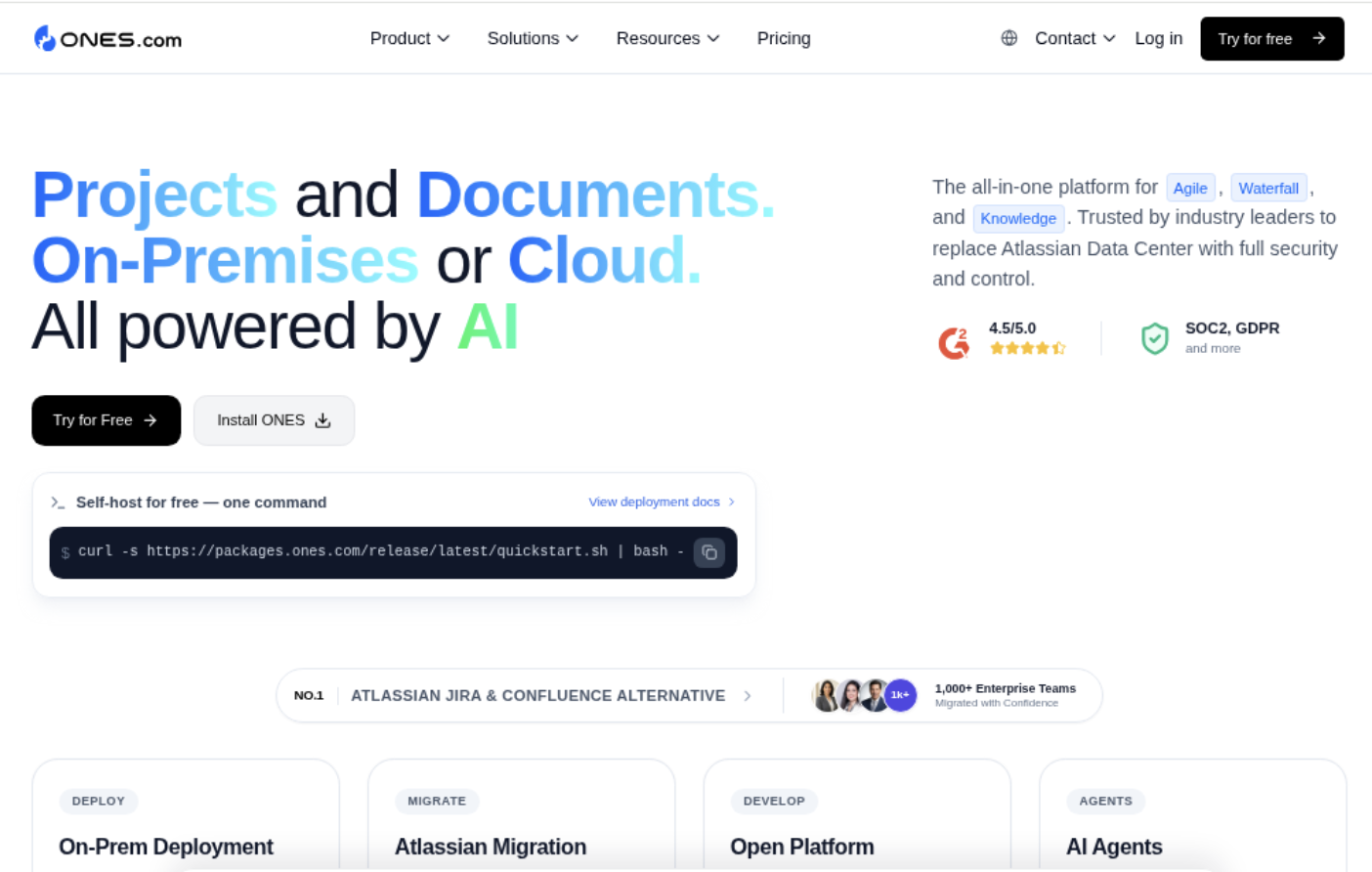
The practical value is easier cost comparison when your team wants project work and internal knowledge connected, while reducing dependence on multiple extensions.
Core capabilities
- Scattered project and knowledge work: ONES.com brings project management and knowledge management into one platform, helping teams connect delivery work with product and process knowledge.
- Jira migration concerns: ONES Project supports Jira-compatible workflows, making familiar planning and issue-management patterns easier to evaluate during a transition.
- Too many reporting extensions: Built-in reporting gives teams a direct way to review progress, workload, and delivery information without immediately adding another app.
- Rigid workflows: Custom workflows and custom fields let teams reflect their approval, development, testing, and release processes.
- Inconsistent sprint management: Sprint planning and related agile capabilities support teams that organize work in iterations.
- Repetitive administration: Automation can reduce manual updates and routine process steps.
- Plugin-heavy environments: Native feature parity between cloud and self-hosted versions can reduce the need to recreate core functionality across deployment models.
- Restricted hosting requirements: ONES.com supports Cloud, On-Premise, Private Cloud, and Air-gapped deployments.
- Budget uncertainty during evaluation: A free plan supports up to 30 seats, giving smaller teams a way to test the platform before planning a larger rollout.
Application scenarios
Scenario one: a product engineering team. A team can manage backlogs, sprints, custom workflows, and reports in ONES Project while keeping product decisions and operating guidance in ONES Wiki.
This setup can reduce the need to connect several separate tools. The team should still compare migration effort, user counts, integrations, and required governance.
Scenario two: a company with restricted networks. An organization that cannot place project information in a public cloud can evaluate the On-Premise, Private Cloud, or Air-gapped deployment options.
Scenario three: a growing small team. A team with up to 30 seats can begin with the free plan, test its workflows, and estimate future costs before expanding access.
ONES.com offers full feature parity between its cloud and self-hosted versions. That makes deployment choice a governance decision rather than an automatic loss of core capabilities.
Common Challenges When Estimating Jira Costs
Challenge 1: Using the wrong user count
Problem: Teams count only active contributors and forget administrators, reviewers, contractors, or occasional participants.
Solution: Create a role-by-role access list. Review it with engineering, product, support, finance, and security before finalizing the estimate.
Challenge 2: Ignoring paid apps
Problem: The core subscription looks affordable, but reporting, testing, time tracking, or planning apps raise the total.
Solution: List every required extension and calculate its annual cost separately. Then compare the combined total with platforms that include similar capabilities.
Challenge 3: Treating a monthly figure as the full budget
Problem: A monthly estimate leaves out migration, configuration, training, tax, and support work.
Solution: Divide spending into recurring subscription costs, one-time launch costs, and ongoing administration.
Challenge 4: Forgetting growth
Problem: The estimate works today but becomes inaccurate after hiring, acquisitions, or new departments joining.
Solution: Calculate current, expected, and high-growth scenarios. Include the result in the approval discussion.
Challenge 5: Comparing different capabilities
Problem: One platform appears cheaper because the comparison excludes knowledge management, automation, reporting, or deployment requirements.
Solution: Compare equivalent outcomes. Include the tools and staff effort required to reproduce the same workflow elsewhere.
FAQs About Jira Cost Calculators
Is a Jira pricing calculator accurate?
A calculator can provide a useful estimate when you enter accurate user counts, products, billing periods, and add-ons. It may not include negotiated discounts, taxes, regional charges, implementation work, or every Marketplace app. Treat the result as a planning figure, then verify the final amount through Atlassian’s current checkout or a written quote.
What should I enter into a Jira cost calculator?
Enter the Jira product, plan level, number of users, billing frequency, currency, and any additional products. Add required Marketplace apps, expected headcount growth, taxes, and discounts when the calculator supports them. If a field is unavailable, record that cost separately so it does not disappear from your budget.
Is annual Jira billing cheaper than monthly billing?
Annual billing may provide a different effective rate or commitment structure, but the best choice depends on your hiring plans and renewal flexibility. Compare the annual total with twelve months of estimated monthly charges. Also calculate what happens if you add or remove users during the year, because headcount changes can affect the practical cost.
Do Jira Marketplace apps affect the total price?
Yes. Marketplace apps can add recurring charges, and each app may calculate pricing differently. Time tracking, reporting, testing, planning, and capacity tools can materially increase the annual total. List every required app before comparing Jira with another platform. Otherwise, you may compare a complete alternative against only Jira’s base subscription.
Can a Jira alternative reduce total ownership cost?
It can, especially when your team needs project management, knowledge management, reporting, automation, or restricted deployment without many separate extensions. The result depends on migration effort, user counts, integrations, training, and administration. Evaluate the full workflow and five-year operating picture rather than relying on a lower starting price.
Does ONES.com offer self-hosted deployment?
Yes. ONES.com supports Cloud, On-Premise, Private Cloud, and Air-gapped deployments. Its cloud and self-hosted versions offer full feature parity. ONES Project serves as a Jira alternative for project management, while ONES Wiki serves as a Confluence alternative for knowledge management. They are sold separately, so calculate the products you actually need.
Conclusion
A Jira pricing calculator is most useful when you treat it as a planning framework rather than a final invoice. Start with products and users, choose the billing cycle, add apps, include taxes and implementation, then test growth scenarios.
But here’s the truth: the visible subscription price is only one part of your technology budget. Administration, extensions, migration, and future headcount can change the result substantially.
Use the same assumptions when comparing Jira with alternatives such as ONES.com. That gives you a clearer view of capability, deployment, operating effort, and long-term cost.