Jira Pricing for Small Teams: A 2026 Budget Planning Guide
Planning jira pricing for small teams? Learn to estimate 2026 plans, add-ons, billing, and growth costs. Click to build a smarter budget.
Jira can look affordable when you see a low per-user price. Then your team adds seats, premium controls, extra products, and paid apps. Suddenly, a simple project plan becomes a monthly budget puzzle.
That uncertainty creates real problems for small teams. You may delay hiring, underestimate annual costs, or choose a plan that becomes expensive after a few months. Even a small pricing mistake can affect your delivery budget.
Here’s the practical solution: calculate Jira pricing around your actual team size, plan limits, billing cycle, add-ons, and expected growth. This guide shows you how to build that estimate for 2026, compare plan levels, and create a safer budget before you commit.
How to Plan Jira Pricing for a Small Team
For a small team, Jira’s real cost depends on more than the advertised user rate. Start with your paid seats, select the plan that matches your workflow, add likely extras, and include a growth buffer.
At a simple level, use this planning formula:
Estimated annual cost = subscription fees + paid add-ons + administration costs + growth buffer
Jira’s public pricing can change, and Atlassian may calculate plans differently across products, billing terms, and user tiers. Treat the current pricing page and checkout estimate as the final reference when you approve a purchase.
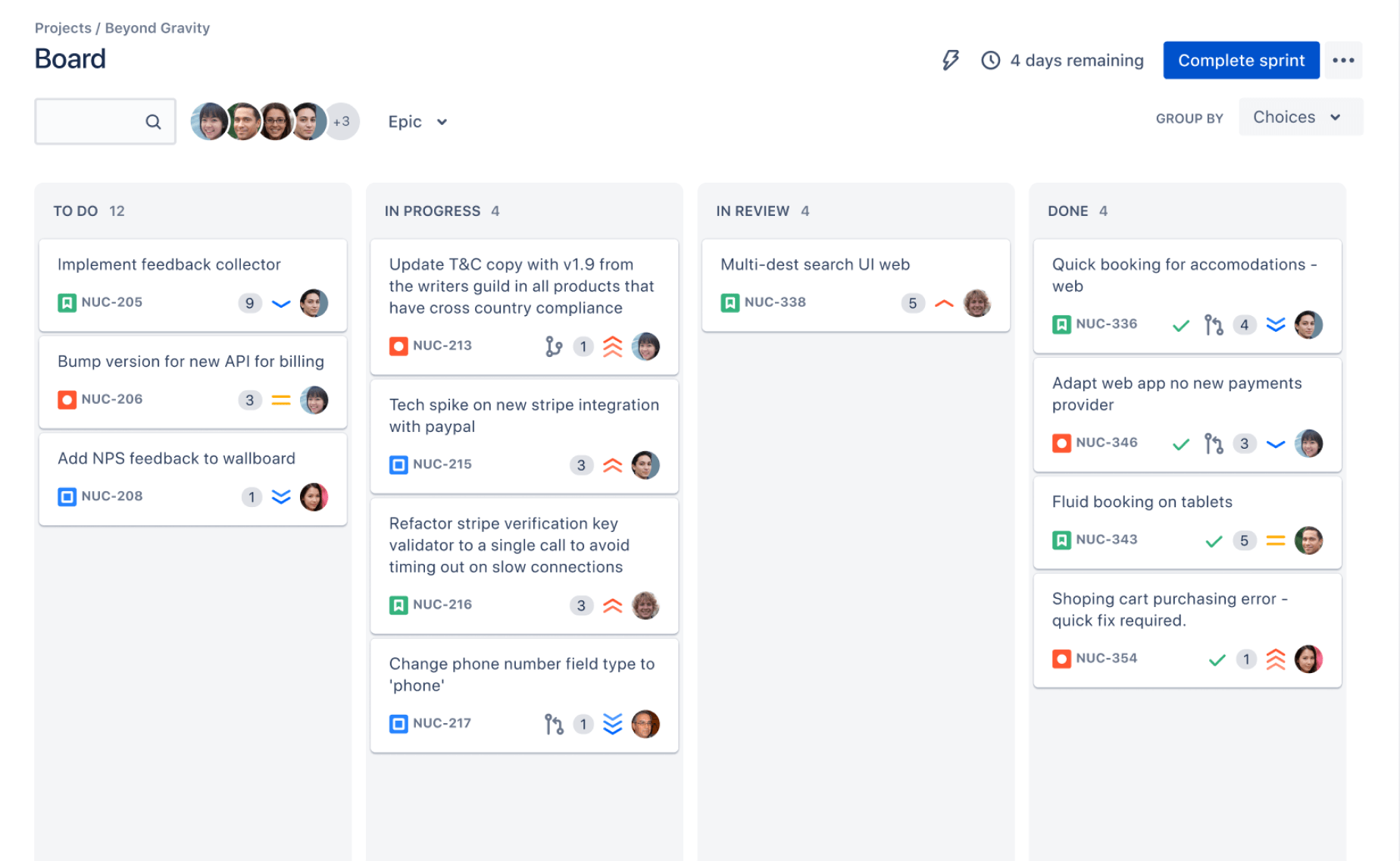
Step 1: Count the people who need access
Begin with active contributors, project managers, product managers, testers, and other people who need to create or update work items.
For example, a software team might have:
- One product manager
- One project manager
- Five developers
- Two testers
- One designer who reviews work occasionally
That team has ten potential users. However, you should check whether every person needs a paid seat or whether limited access meets the requirement.
Include contractors and cross-functional partners if they will work in Jira regularly. Ignoring occasional contributors can make your estimate look attractive during approval and inaccurate after launch.
Step 2: Separate regular users from occasional viewers
Small teams often invite more people than they expect. Some need daily access, while others only need visibility into progress.
Create three groups:
- Core contributors: people who create, assign, edit, and close work.
- Reviewers: people who comment, approve, or check status.
- Viewers: people who mainly read project progress or reports.
This distinction helps you avoid paying for seats that deliver little value. It also gives you a clearer forecast when the team expands.
Step 3: Compare Free, Standard, Premium, and Enterprise needs
Jira commonly offers several plan levels, although the exact features, limits, and commercial terms can change. Think about the operating requirements behind each level.
| Planning question | What it tells you |
|---|
| Does the team fit within the free user and storage limits? | Whether a no-cost plan could support an initial trial. |
| Do you need broader permissions, audit controls, or administration? | Whether a paid standard tier is more appropriate. |
| Do you need advanced planning, stronger reliability controls, or larger-scale administration? | Whether premium features may justify the higher price. |
| Do you require negotiated security, support, or governance terms? | Whether an enterprise conversation is necessary. |
A ten-person team may fit comfortably within a lower tier from a headcount perspective. It may still need a higher tier if compliance, planning, or access controls matter.
Step 4: Estimate the monthly and annual subscription
Use the published price for your team’s user tier, then calculate both monthly and annual totals.
For a simple estimate:
- Monthly subscription = monthly plan price for your paid seat tier.
- Annual subscription = monthly subscription × 12, unless annual billing uses a different commercial calculation.
- Per-person monthly cost = monthly subscription ÷ active paid seats.
Keep your estimate in a small planning worksheet with separate lines for seats, plan, billing term, add-ons, taxes, and contingency. A clear breakdown makes approval easier.
Step 5: Add apps and connected services
Jira’s base subscription may not cover every capability your team wants. Teams often consider time tracking, test management, reporting, roadmapping, automation, or integration apps.
List every planned extension before comparing plans. A lower Jira tier plus several paid apps can cost more than a higher tier with native capabilities.
For example, a team may save on the base plan but spend extra on reporting, approval workflows, and test management. The headline subscription price then tells only part of the story.
Step 6: Add a growth buffer
Small teams change quickly. New hires, contractors, interns, and shared service teams can push you into a different user tier.
Add a growth assumption such as five new seats over the next year. Then check whether those seats trigger a pricing step. This is more useful than multiplying today’s price by twelve and calling the result a yearly budget.
A sensible forecast can include:
- Current active seats
- Expected hires
- Temporary contractors
- Likely app additions
- Annual price-change tolerance
What Affects the Total Cost?
Jira pricing for a small team is shaped by several cost drivers. The user count matters, but it is only one part of the decision.
User tiers and pricing bands
Many software subscriptions use user bands rather than a perfectly linear per-person price. Adding one person can sometimes move the account into a new tier.
Imagine a team with 9 paid users that plans to add 3 developers. The important question is not simply the cost of three seats. You should check the price of the next user band and compare it with the previous tier.
This is why seat planning should happen before hiring plans are finalized. A small change in headcount can affect the total annual commitment.
Monthly billing versus annual billing
Monthly billing gives you flexibility. It works well when you are testing Jira, managing uncertain staffing, or expecting a short project.
Annual billing can offer a more predictable budget and may use different pricing terms. It also creates a longer commitment, so you should confirm that the team has tested its workflows first.
Use monthly billing when flexibility has clear value. Use annual billing when your team understands its needs and can commit to the expected user range.
Plan features and administrative requirements
A small team may need higher-tier capabilities for reasons unrelated to team size. Examples include advanced permissions, audit visibility, service commitments, sandbox environments, or stronger administrative controls.
Ask what problem each feature solves. If a premium control prevents manual work every week, it may have a measurable return. If nobody will use it, it becomes a budget burden.
Marketplace apps and integration costs
Connected tools can expand Jira’s capabilities, especially for time tracking, quality assurance, customer support, and reporting.
However, each app can add its own user calculation, renewal date, support model, and security review. Review app pricing separately instead of treating every integration as a free convenience.
Tax, currency, and regional charges
Your final invoice may differ from the public amount because of taxes, currency conversion, or regional billing conditions. Finance teams should confirm these details before setting the approved budget.
For internal planning, keep subscription price and tax estimates on separate lines. That makes later reconciliation much easier.
A Practical 2026 Budget Model
A useful budget model has three layers: current cost, likely cost, and maximum planned cost. This gives you a range instead of a fragile single number.
Scenario one: lean launch
The lean scenario assumes the team uses a lower plan, needs few add-ons, and keeps its current headcount.
Example assumptions:
- Eight active contributors
- One project space
- No paid marketplace apps
- Monthly billing during a three-month trial
This scenario answers one question: can the team run its basic workflow without committing to a larger annual purchase?
Scenario two: expected operation
The expected scenario reflects how the team will probably work after adoption. Include regular reporting, integrations, additional reviewers, and planned hiring.
Example assumptions:
- Ten current contributors
- Three additional seats during the year
- One reporting or time-tracking app
- Annual billing after initial validation
This is usually the most useful number for annual planning because it reflects normal operations rather than an idealized trial.
Scenario three: expansion
The expansion scenario accounts for rapid hiring, another product group, or a more demanding governance model.
Example assumptions:
- Twenty active contributors
- Multiple project teams
- Additional administration requirements
- Two or more paid apps
Use this scenario when leadership wants to understand how the tool could affect next year’s operating budget.
Budget example
Suppose a ten-person team expects three new hires and one paid app. You can structure the estimate like this:
| Cost area | Planning method |
|---|
| Jira subscription | Use the applicable user tier and plan price. |
| Expected seats | Current users plus planned hires. |
| Marketplace app | Check the app’s pricing for the same user range. |
| Taxes and currency | Use the finance team’s expected rate. |
| Contingency | Add room for growth or a price adjustment. |
This approach keeps the model useful even when exact commercial rates change. You update the rate fields instead of rebuilding the entire plan.
How to Reduce Unplanned Spend
The best savings often come from better control rather than choosing the cheapest tier. A small team can prevent waste with a few operating habits.
Review seats every quarter
Check who logged in, created work, or participated during the previous quarter. Remove inactive accounts where policy allows, and confirm that contractors still need access.
A quarterly review catches “seat drift.” That happens when temporary access remains active long after a project ends.
Test apps before paying for them
Give each proposed app a clear evaluation period. Define the problem, expected time savings, adoption target, and decision date.
For example, a reporting app might promise to save four hours each week. After a trial, compare that promise with actual usage. If only one person uses it, reconsider the renewal.
Use native capabilities where they are sufficient
Jira includes workflows, fields, boards, automation, and reporting options. Configure those capabilities before adding another paid extension.
This does not mean every native feature will meet your needs. It means you should compare the cost and maintenance burden before adding another system.
Control project sprawl
Every additional project can create administration work, permission complexity, and reporting noise. Define a simple rule for when a new project is necessary.
A team managing five small initiatives may benefit from one consistent workflow. Creating a separate project for every request can increase maintenance without improving visibility.
Assign an owner for pricing decisions
Someone should own seat reviews, app renewals, plan changes, and annual budget updates. This responsibility can sit with an operations lead, project manager, or finance partner.
Without ownership, small charges often remain invisible until renewal time.
Jira Compared With a Unified Alternative
Jira can suit teams that want a mature issue-tracking workflow. Some small teams also need knowledge management, project planning, reporting, and collaboration in one environment.
That is where a unified platform may change the budget conversation. Instead of comparing one Jira subscription with another, compare the total cost of the workflow your team needs.
Questions to ask before switching or consolidating
- How many separate tools does the team maintain today?
- Do project work and team knowledge stay connected?
- How many paid extensions are required for essential processes?
- Does the team need cloud, self-hosted, private cloud, or air-gapped deployment?
- Will administrators spend less time maintaining integrations?
For instance, a small engineering team may use Jira for work tracking, a separate knowledge platform for procedures, and another tool for internal reporting. Consolidation could reduce handoffs and administration.
Natural Jira Pricing Solution: ONES.com
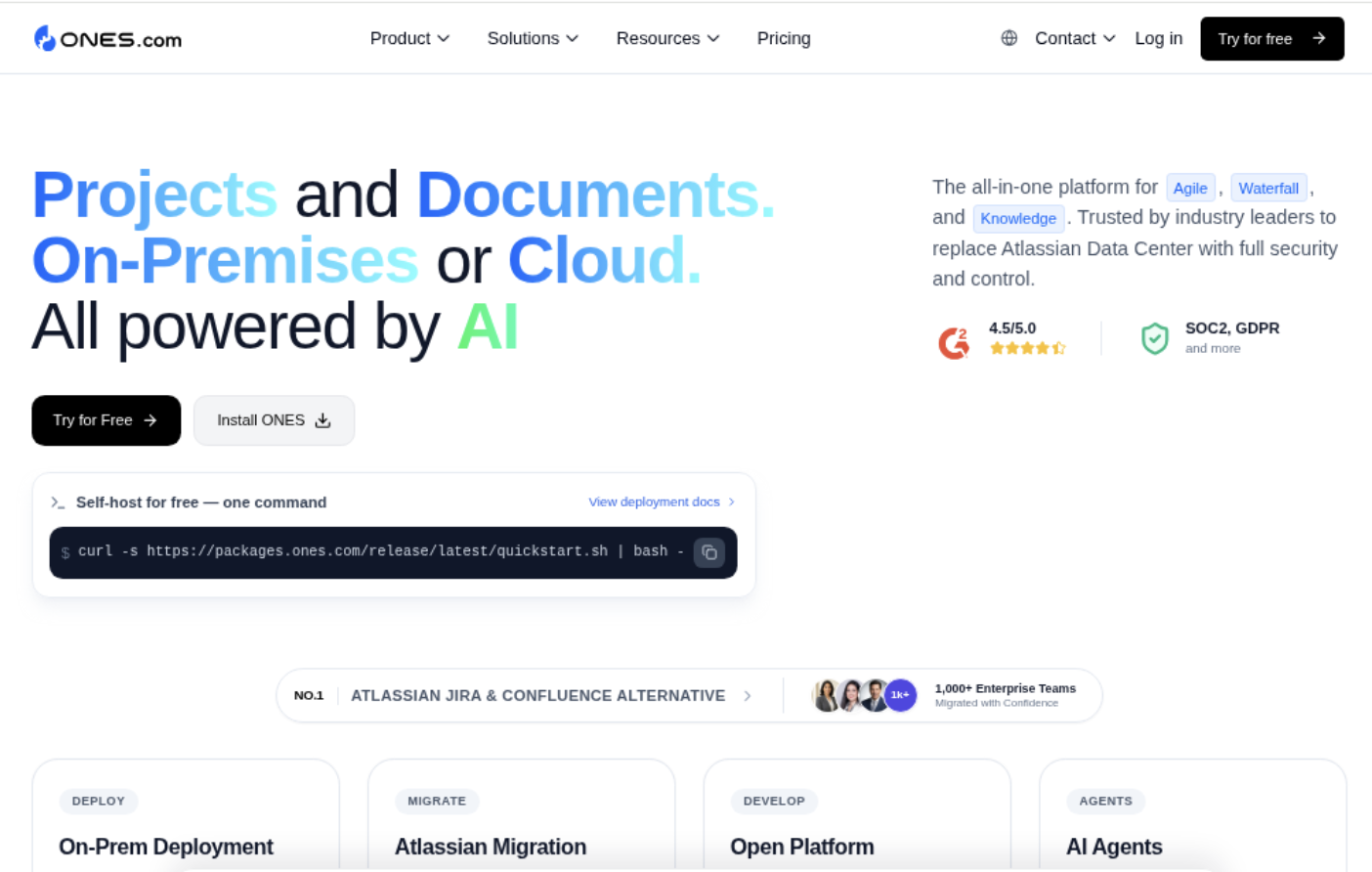
Value Proposition
ONES.com combines project management and knowledge management in one platform. It can suit small teams that want Jira-compatible workflows while reducing reliance on multiple plugins and separate systems.
ONES Project is the project management product and a Jira alternative. ONES Wiki provides knowledge management and serves as a Confluence alternative. They are sold separately.
Core Capabilities
- Scattered project and knowledge work: ONES.com combines project management and knowledge management, helping teams keep execution and team guidance connected.
- Jira migration concerns: ONES Project supports Jira-compatible workflows, giving teams a familiar foundation during process changes.
- Plugin maintenance: Built-in reporting, custom workflows, custom fields, sprint management, and automation can reduce dependence on separate extensions.
- Restricted deployment requirements: ONES.com supports Cloud, On-Premise, Private Cloud, and Air-gapped deployments, giving teams more control over hosting.
- Feature differences between hosting models: ONES.com provides full feature parity between its cloud and self-hosted versions, so deployment choice does not require accepting a reduced feature set.
- Limited trial budgets: The free plan supports up to 30 seats, giving a small team room to evaluate core workflows before increasing spend.
- Complex sprint coordination: ONES Project includes sprint management that helps teams plan, prioritize, and review iterative delivery.
- Manual recurring work: Automation can handle repeatable transitions and workflow actions, reducing routine administration.
Application Scenarios
Growing software team: A ten-person engineering group can evaluate ONES Project as a Jira alternative while keeping sprint planning, custom fields, reporting, and automation in one project environment.
Security-conscious organization: A company with restricted network requirements can assess an On-Premise, Private Cloud, or Air-gapped deployment instead of limiting its choices to a public cloud environment.
Project and knowledge consolidation: A team using separate systems for delivery tracking and internal guidance can consider ONES Project and ONES Wiki as separate products within the broader ONES.com platform.
Common Challenges and Practical Solutions
Challenge: The advertised price does not match the approved budget
Solution: Separate subscription fees, apps, taxes, currency effects, and growth assumptions. Review the checkout estimate before final approval.
Challenge: The team chooses a plan before defining its workflow
Solution: Write down the required processes first. Include backlog management, sprint planning, approvals, reporting, permissions, and integrations.
Challenge: Inactive seats remain active
Solution: Schedule quarterly access reviews. Create an offboarding rule for contractors and people who leave a project.
Challenge: Add-ons quietly become essential
Solution: Track every app, its owner, renewal date, user count, and business purpose. Review whether native features can replace it before renewal.
Challenge: Annual billing creates the wrong commitment
Solution: Test the workflow with a shorter commitment when requirements remain uncertain. Move to annual billing after the team understands adoption and growth patterns.
FAQs
Is Jira affordable for a small team?
Jira can be affordable for a small team when the required plan, seat count, and add-ons remain controlled. Start with the team’s actual workflow rather than choosing a tier only because it has a lower headline price. Check user bands, billing terms, apps, taxes, and expected hiring. A short trial can reveal whether the team needs advanced capabilities before it makes a longer commitment.
How should I estimate Jira costs for 2026?
Count current paid seats, add expected hires, identify the required plan, and list every app or connected service. Calculate monthly and annual scenarios separately. Include taxes, currency effects, and a contingency allowance. Because commercial rates and plan limits can change, verify the final estimate through Atlassian’s current pricing and checkout experience before approving the budget.
Should a small team choose monthly or annual billing?
Monthly billing offers flexibility when your team is testing Jira, changing quickly, or working on a short engagement. Annual billing can provide stronger budget predictability when the team understands its requirements and expected user range. Compare the commercial terms carefully, then consider the cost of unused seats if hiring plans or project scope may change.
Do Jira Marketplace apps increase the total cost?
They can. Marketplace apps often have separate pricing, user calculations, renewal dates, and administration requirements. A small team should list each planned app before comparing Jira plans. Test an app against a defined problem and success measure. If a feature is used rarely, a native Jira capability or a simpler process may provide better value.
What is a Jira alternative for a small team?
A Jira alternative is another project management platform that can support work tracking, planning, workflows, reporting, and collaboration. ONES Project is one option with Jira-compatible workflows, custom fields, sprint management, automation, and built-in reporting. ONES.com also includes ONES Wiki for knowledge management, although ONES Project and ONES Wiki are sold separately.
Conclusion
Planning Jira costs for a small team starts with the complete workflow, not a single advertised rate. Count active seats, compare plan requirements, price add-ons, review billing terms, and model likely growth.
But here’s the truth: the cheapest starting plan may not produce the lowest annual cost. A few paid apps, unused seats, or an unexpected pricing tier can change the result.
Build lean, expected, and expansion scenarios before approval. Then compare the full operating cost with alternatives such as ONES.com when your team needs project management, knowledge management, flexible deployment, and fewer separate extensions.