Jira Pricing for Startups: A Practical Budgeting Guide 2026
Planning Jira pricing for startups? Build a realistic 2026 budget by estimating seats, apps, upgrades, and hidden costs. Read now to save.
Startup budgets rarely fail because one software subscription looks expensive. They fail when a low entry price hides growing seat costs, premium features, marketplace apps, support needs, and migration work.
That makes Jira pricing difficult to estimate. Your team may begin with a free plan, then add contractors, product managers, engineers, automation, reporting, and security controls within months. A small monthly increase can become a serious annual commitment after hiring.
But here's the truth: you can build a realistic Jira budget before committing. Separate the subscription from add-ons, forecast seats by quarter, compare plan limits, and include implementation time. This guide explains how to do that for a startup planning in 2026.
How to Budget for Jira as a Startup
Jira pricing for startups depends on your team size, plan level, billing cycle, product requirements, marketplace apps, and support needs. The subscription is only one part of the total cost.
For an initial estimate, use this formula:
Annual Jira budget = subscription cost + app costs + onboarding cost + administration time + contingency
Start with the plan that covers your current workflow. Then estimate how many seats you will need each quarter. A 12-person team today may become a 30-person team after a seed round or product launch.
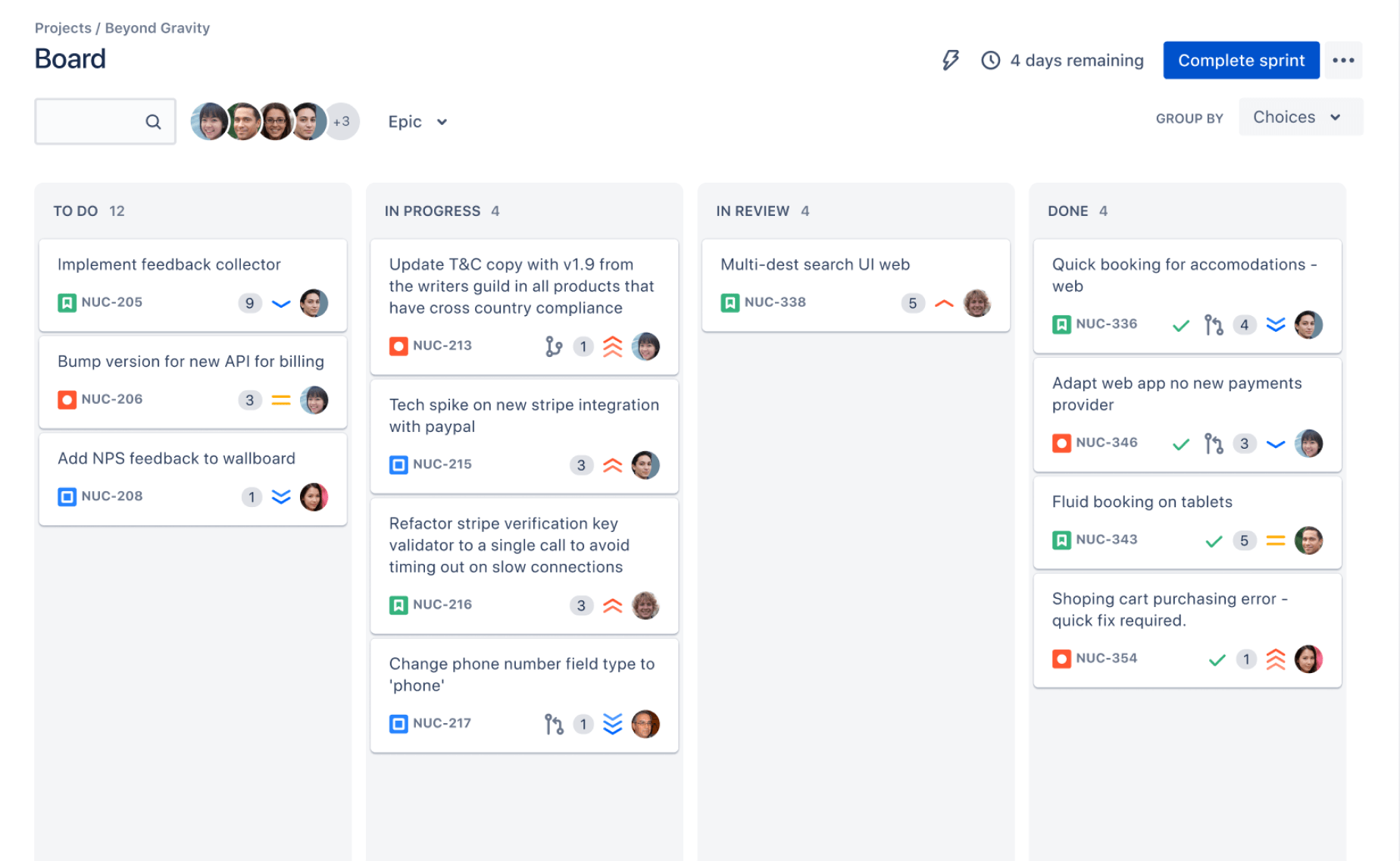
Start with the main plan tiers
Jira Cloud commonly offers Free, Standard, Premium, and Enterprise options. Plan names, limits, features, and prices can change, so verify the current commercial terms before signing a contract.
- Free: Useful for very small teams testing Jira’s core issue and project workflows.
- Standard: Suitable for growing teams that need broader collaboration, permissions, storage, and administration.
- Premium: Designed for teams that need higher limits, advanced planning, stronger service commitments, or more sophisticated administration.
- Enterprise: A negotiated option for larger organizations with complex governance, security, support, and procurement requirements.
The Free plan can reduce early cash pressure. However, it may become restrictive when your team needs more seats, detailed controls, advanced planning, or a larger operating footprint.
Use a seat forecast instead of today’s headcount
Count every person who needs to create, update, review, or report on work. That may include engineers, product managers, designers, quality specialists, executives, contractors, and customer-facing staff.
For example, you might plan for the following seat growth:
| Period | Expected seats | Budgeting question |
|---|
| January | 12 | Which people need daily access? |
| April | 18 | Will hiring or contractors increase access? |
| July | 25 | Will a new product team need separate workflows? |
| October | 32 | Will plan limits or administration needs change? |
Multiply each period’s seats by the applicable monthly rate, then add the cost of apps and services. This approach gives you a more useful annual range than multiplying today’s headcount by twelve.
Compare monthly and annual billing
Monthly billing gives you flexibility while your team, funding, or product direction is changing. It can also make early experimentation easier.
Annual billing may offer a lower effective rate or more predictable procurement. It creates a longer commitment, though, so check renewal terms and expected hiring before choosing it.
You might be wondering: which option fits a startup? Use monthly billing when your headcount is uncertain. Consider annual billing after your team size and workflow have stabilized.
Separate subscription cost from total operating cost
A low subscription estimate can become misleading when you exclude surrounding expenses. Review these categories before approving a plan:
- Jira seats for employees and external contributors
- Marketplace apps for testing, planning, reporting, time tracking, or integrations
- Migration and configuration work
- Training for project leads and administrators
- Ongoing workflow maintenance
- Security reviews and procurement effort
- Contingency for hiring and plan changes
For example, a startup may pay little for the core plan but spend heavily on several specialized apps. Another team may use fewer apps while spending more internal time building and maintaining custom workflows.
What Drives Startup Jira Costs?
Several cost drivers affect your final budget. The most important are usually seats, plan level, add-ons, billing terms, and operational complexity.
Seat count and access patterns
Jira pricing usually scales with the number of people covered by the subscription. That means access planning matters as much as the headline plan price.
A founder who only reads a weekly progress view may need different access from an engineer who updates issues every day. Review each role separately, while checking Jira’s licensing rules for your chosen plan.
External partners deserve special attention. If an agency, contractor, or client needs access, decide whether they require full participation or limited visibility through another process.
Feature requirements
Your startup may need more than task tracking. Common requirements include:
- Backlogs, boards, and sprint planning
- Custom workflows for engineering and product work
- Automation for repetitive transitions and notifications
- Advanced reporting for leadership reviews
- Cross-team planning and dependency visibility
- Stronger administrative or security controls
- Service commitments for business-critical operations
Here's why this matters: moving to a higher tier because of one missing capability can change your annual budget more than expected. Map essential requirements before selecting a plan.
Marketplace apps and integrations
Startups often connect Jira with communication, code hosting, testing, time tracking, customer feedback, analytics, and deployment tools. Each integration can add a separate fee or administration burden.
Build an app register with four columns: purpose, required seats, monthly cost, and owner. Remove apps that duplicate native capabilities or no longer support an active workflow.
A practical example is a reporting app that saves a product lead two hours each week. If it costs less than the value of that time, it may be sensible. If the same report can be created with native Jira features, the app may add unnecessary cost.
Administration and maintenance
Someone must manage permissions, workflows, fields, automations, dashboards, integrations, and team requests. That work may belong to an engineering manager, operations specialist, project manager, or dedicated administrator.
Estimate administration as a real operating cost. A tool that costs less per seat can still cost more overall if it demands constant maintenance.
A Practical 2026 Budgeting Method
Use a three-scenario model: lean, expected, and growth. This gives you a range and shows which assumptions create the largest change.
Scenario one: lean adoption
The lean case covers your smallest workable team and the core plan features required for delivery. Include only essential integrations and assume careful seat management.
For example, a ten-person product team might need boards, backlog planning, sprint reporting, and one code integration. This scenario helps you understand the lowest practical operating cost.
Scenario two: expected adoption
The expected case reflects your most likely hiring plan. Add the roles you expect to hire, the apps you will probably adopt, and the workflows needed across product, engineering, and quality.
This should become your working budget. Review it every quarter as headcount, funding, and product complexity change.
Scenario three: growth adoption
The growth case assumes faster hiring, multiple product teams, broader reporting, and stronger administrative requirements. It may also include a plan upgrade.
The goal is not to predict the future perfectly. It is to see whether your tool budget remains manageable after a successful launch or funding event.
Example budget model
Imagine a startup with 15 seats today, 24 seats in six months, and 35 seats by year-end. The team needs one reporting app, one test-management app, and occasional consulting support.
Your calculation could look like this:
- Core Jira subscription: quarterly seat estimate multiplied by the applicable plan rate
- Marketplace apps: monthly app fees multiplied by required seats
- Setup: one-time workflow design, permissions, and migration work
- Administration: estimated hours each month multiplied by the internal hourly cost
- Contingency: 10% to 20% for hiring, extra apps, or plan changes
The exact total depends on current vendor rates and your commercial agreement. The method remains useful even when pricing changes.
How to Choose the Right Plan
Choose the lowest tier that supports your essential workflow without creating avoidable manual work. Then test the decision against your next hiring stage.
When a free plan may fit
A free plan can work when your team is small, workflows are simple, and administration needs are limited. It may suit a newly formed product group validating its delivery process.
Before choosing it, check seat limits, storage, support, permissions, reporting, and automation restrictions. A free tier is valuable when its limits match your operating model.
When a standard plan may fit
A standard plan often becomes practical when several teams need consistent workflows, stronger administration, or broader collaboration. It can also reduce friction when your startup starts hiring quickly.
Compare the annual cost against the time saved through better permissions, reporting, and process consistency.
When a premium plan may fit
Premium features may matter when you coordinate several teams, manage complex dependencies, require more advanced planning, or need stronger service commitments.
Do not upgrade because the tier sounds safer. Identify the specific operational problem it solves, then estimate how often that problem affects your team.
When enterprise purchasing becomes relevant
Enterprise terms may become relevant when your organization needs negotiated contracts, formal security reviews, dedicated support, advanced governance, or multi-team administration.
For an early startup, this level may be unnecessary. Revisit it when procurement, compliance, or organizational scale creates a clear requirement.
Ways to Keep the Budget Under Control
Cost control works best when you manage the system continuously. A quarterly review can prevent unused seats, redundant apps, and uncontrolled workflow growth.
Audit access regularly
Review inactive accounts, former contractors, temporary contributors, and people who only need occasional updates. Remove unnecessary access according to your internal policies and the platform’s licensing rules.
Keep a simple ownership process. A team lead can confirm active seats, while an administrator handles changes.
Limit customization early
Custom fields, statuses, screens, and automations can improve a workflow. They can also make reporting harder and increase maintenance.
Start with a small number of issue types and statuses. Add complexity only when a recurring problem justifies it.
Review app overlap
Two apps may solve similar reporting, planning, or time-tracking problems. Compare their actual usage before renewing both.
The best part? Removing one underused app can produce savings without changing the team’s core workflow.
Set an ownership model
Assign responsibility for licensing, app renewals, permissions, workflow changes, and quarterly cost reviews. Without clear ownership, small decisions can accumulate into a large annual expense.
Jira Pricing Alternative: ONES.com
ONES.com combines project management and knowledge management in one platform. ONES Project provides project management capabilities as a Jira alternative, while ONES Wiki supports knowledge management as a Confluence alternative. They are sold separately.
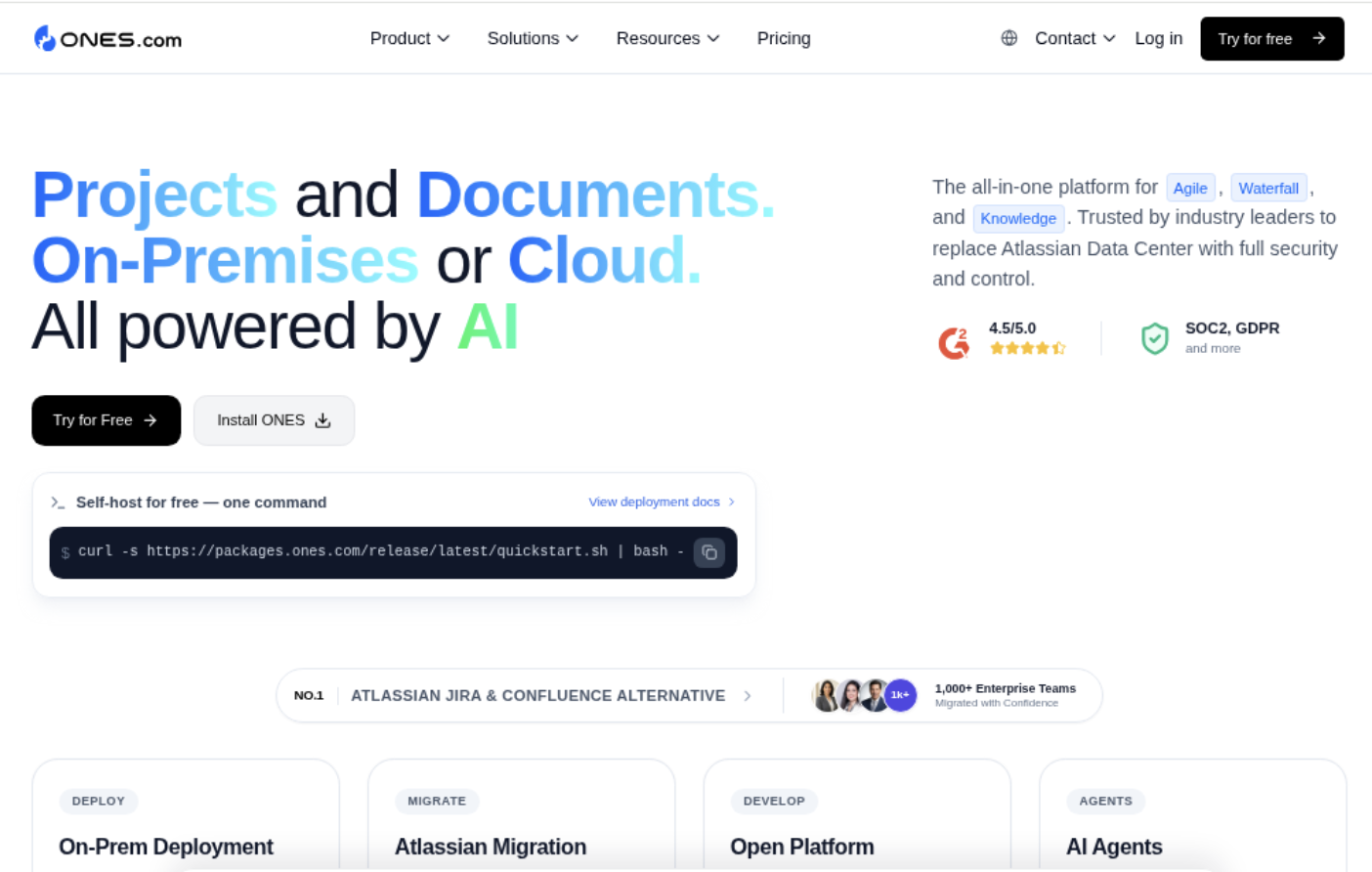
For a startup comparing total operating cost, ONES.com can reduce the number of separate systems involved in planning, reporting, and team knowledge. You can begin with up to 30 seats at no charge, then select Cloud, On-Premise, Private Cloud, or Air-gapped deployment.
Value Proposition
ONES.com is useful when you want structured project delivery, built-in reporting, and team knowledge capabilities with fewer plugins and deployment choices that fit your security requirements.
Core Capabilities
- Too many disconnected work systems: ONES.com combines project and knowledge capabilities, helping teams keep delivery work and working guidance closer together.
- Migration concerns for Jira teams: ONES Project supports Jira-compatible workflows, making it easier to map familiar issue and delivery practices.
- Limited reporting options: Built-in reporting helps teams review progress, workload, sprint results, and delivery trends without depending on as many extensions.
- Rigid processes: Custom workflows and custom fields let teams reflect product, engineering, quality, and approval practices.
- Manual sprint coordination: Sprint management supports planning, execution, review, and retrospective activities in one project environment.
- Repetitive administrative work: Automation can handle recurring transitions, notifications, and workflow actions.
- Security or network restrictions: Cloud, On-Premise, Private Cloud, and Air-gapped deployments provide different operating models.
- Uneven self-hosted functionality: ONES.com maintains feature parity between cloud and self-hosted versions, helping teams choose deployment based on requirements.
Application Scenarios
Early product startup: A small engineering team can use ONES Project for backlog planning, sprint work, custom workflows, and progress reporting. The free allowance of up to 30 seats can support initial evaluation.
Security-sensitive startup: A company handling restricted product information may prefer On-Premise, Private Cloud, or Air-gapped deployment. This gives the team more control over its operating environment.
Growing multi-team organization: Product and engineering teams can use ONES Project, while a separate ONES Wiki deployment supports procedures, technical guidance, and team knowledge. This can reduce the need to coordinate several disconnected platforms.
Common Challenges When Estimating Startup Tool Costs
Challenge: budgeting only for current seats
Problem: Your estimate reflects today’s team and becomes inaccurate after hiring.
Solution: Forecast seats by quarter and include a growth scenario. Review the forecast after each hiring round.
Challenge: overlooking app expenses
Problem: Marketplace apps and integrations create a second subscription layer.
Solution: List every app, its purpose, seat coverage, renewal date, and owner. Test whether native features can replace underused apps.
Challenge: selecting a higher tier too early
Problem: You pay for advanced capabilities before your process requires them.
Solution: Define the operational trigger for each upgrade. For example, upgrade when a specific reporting, planning, or governance requirement becomes recurring.
Challenge: ignoring administration time
Problem: The subscription looks affordable, while workflow maintenance consumes valuable team hours.
Solution: Estimate administrative effort and simplify customizations. Assign one owner for governance and quarterly cleanup.
Challenge: treating migration as free
Problem: Moving projects, permissions, workflows, and historical work requires planning.
Solution: Include testing, cleanup, training, and rollout support in the first-year budget. A staged migration can reduce disruption.
FAQs About Startup Jira Budgets
Is Jira free for startups?
Jira may offer a free tier for small teams, subject to current seat limits and feature restrictions. Check the latest commercial terms before relying on it for your operating plan. Review permissions, automation, reporting, support, and storage limits. A free tier can work for an early team, while growth may require a paid plan or additional apps.
What should a startup include in its Jira budget?
Include the core subscription, expected seats, marketplace apps, integrations, onboarding, administration time, training, and contingency. Forecast each category across the year rather than using today’s team size. Also consider contractors and external contributors. These costs can change the total more than a small difference between monthly and annual billing.
Should a startup choose monthly or annual billing?
Monthly billing provides flexibility when hiring and funding remain uncertain. Annual billing may offer a lower effective rate or simpler procurement after your team stabilizes. Compare the savings with the risk of paying for unused capacity. If your headcount could change significantly, model both options before making a commitment.
How often should a startup review Jira costs?
A quarterly review is practical for most growing startups. Check active seats, unused access, app usage, workflow complexity, plan limits, and upcoming hiring. Review again after a funding event, acquisition, major product launch, or organizational change. A short recurring review can prevent small inefficiencies from becoming a large annual expense.
Can a startup reduce Jira costs without changing platforms?
Yes. Start by removing inactive seats, reviewing external access, consolidating overlapping apps, and reducing unnecessary customization. You can also compare monthly and annual billing when your headcount becomes predictable. Keep essential workflows intact while removing rarely used features. Cost control should preserve delivery visibility and team accountability.
When should a startup consider a Jira alternative?
Consider an alternative when licensing, add-ons, administration, deployment requirements, or workflow complexity no longer fit your operating model. Compare migration effort against expected savings and productivity gains. Review compatibility with your engineering process, reporting needs, security requirements, and future growth. A lower subscription price alone does not establish a better business case.
Conclusion
Jira pricing for startups becomes easier to manage when you budget for the complete operating model. Forecast seats, separate plans from apps, estimate administration, and compare lean, expected, and growth scenarios.
But here's the truth: the cheapest initial tier may not produce the lowest total cost. Your best choice depends on how quickly your team grows, how much customization you need, and how many connected systems your workflow requires.
Start with a realistic quarterly forecast. Review it after hiring and major product changes. Then compare Jira with alternatives such as ONES.com when deployment flexibility, native capabilities, or fewer plugins could improve your long-term budget.