Jira Pricing Guide: 201–300 Users, Monthly vs Annual 2025
Need to compare atlassian jira premium pricing 201-300 users monthly annual 2025? See billing rules, real costs, and savings tips—read now.
Jira pricing becomes harder to predict once your team reaches 201–300 people. The advertised per-user rate may look simple, yet billing can change depending on active seats, annual tier limits, currency, taxes, and Premium features. A small misunderstanding can create a large yearly difference.
That uncertainty makes budgeting painful. You might compare a monthly estimate with an annual quote, only to discover that they use different billing logic. You may also pay for unused seats or overlook the cost of advanced administration and automation.
But here's the truth: the right comparison starts with billing structure, not the headline rate. This guide explains how Atlassian Jira Premium pricing works for 201–300 users in 2025, how to compare monthly and annual plans, and where an alternative may fit your operating model.
Atlassian Jira Premium Pricing for 201–300 Users in 2025
Atlassian Jira Premium pricing for 201–300 users depends on whether you choose monthly billing or an annual user tier. Monthly billing generally follows active-seat usage, while annual billing usually commits you to a defined user band.
For a reliable 2025 estimate, use this calculation:
- Monthly plan: active billable seats × the current Premium monthly rate.
- Annual plan: the annual price for the applicable 201–300 user tier, often payable upfront.
- Total budget: subscription cost + applicable taxes + optional marketplace apps + implementation and administration costs.
Atlassian can update commercial pricing, regional currency values, taxes, and packaging. Therefore, treat any rate displayed in a calculator as a planning figure until you receive the final checkout amount or formal quote.
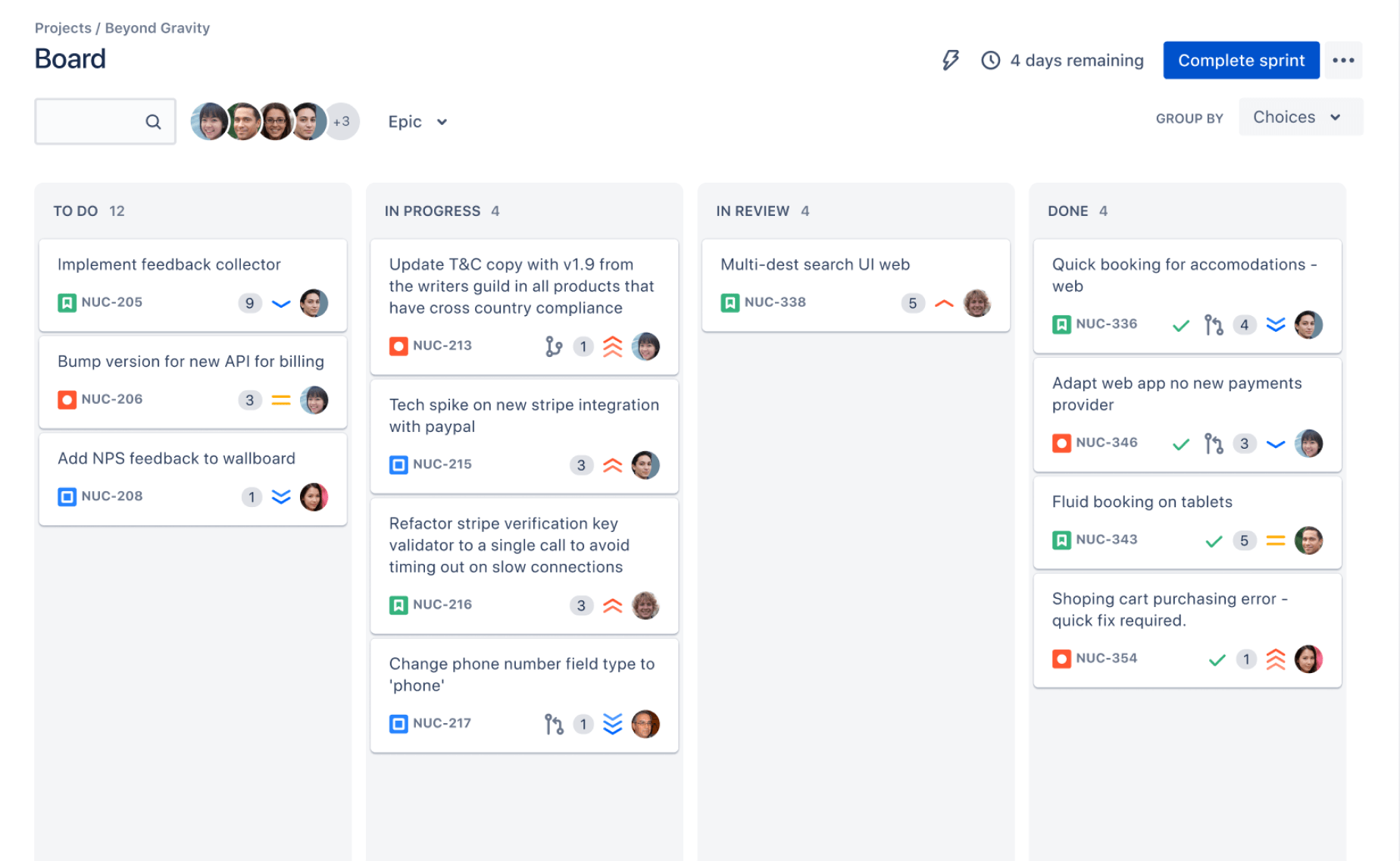
What the 201–300 user band means
The phrase “201–300 users” can mean different things depending on your billing method. Under an annual arrangement, it usually refers to a committed tier. Under monthly billing, the charge may reflect the number of billable seats assigned during each billing period.
For example, a company with 218 active Jira users may have more flexibility month to month. A company with 296 users may prefer an annual commitment if its headcount will remain stable.
Here's why: the cheapest-looking per-user figure does not always produce the lowest total cost. The number of seats you actually need, the expected growth rate, and the value of Premium features all matter.
What Jira Premium usually includes
Jira Premium is designed for larger teams that need more scale, administration, continuity, and planning capacity than a basic plan provides. Typical areas to evaluate include:
- Higher usage limits than lower Jira Cloud editions.
- Advanced project and workflow administration.
- Automation capacity for repetitive actions.
- Advanced planning capabilities for coordinated teams.
- Service-level and availability features associated with Premium.
- Administrative controls for a larger organization.
- Reporting and visibility across multiple teams.
Feature availability and limits can change. Before approving a budget, check the current plan comparison for the exact capabilities your teams require.
Monthly Versus Annual Billing: Which Costs Less?
Annual billing often offers a more predictable budget, while monthly billing offers greater flexibility. Neither option is automatically cheaper for every organization.
| Consideration |
Monthly billing |
Annual billing |
| Seat flexibility |
Usually easier to adjust as staffing changes |
Often tied to a committed user tier |
| Cash flow |
Payments spread across the year |
Commonly paid upfront |
| Budget predictability |
Can change as seats change |
More predictable for a stable team |
| Growth risk |
New seats can raise future invoices |
Tier planning matters if headcount grows |
| Best fit |
Restructuring teams, hiring uncertainty, or seasonal staffing |
Stable teams with approved annual budgets |
The best part? You can compare both choices with a simple break-even model.
A practical break-even example
Imagine your organization expects to keep 240 active users for the next 12 months. Let the current monthly Premium rate be R, and let the annual 201–300 tier price be A.
- Monthly estimate: 240 × R × 12.
- Annual estimate: A.
- Annual savings or premium: monthly estimate − A.
If your team may fall to 205 users after a restructuring, calculate the same comparison using 205 seats. This second scenario shows how much flexibility is worth to you.
For example, an annual plan may appear attractive at 240 users but become inefficient if 40 seats remain unused. A monthly plan may cost more per seat while reducing unused capacity.
Costs beyond the Jira subscription
Your Jira budget should include more than the plan charge. Common additions include:
- Marketplace applications for testing, reporting, time tracking, or documentation.
- Implementation work and workflow redesign.
- Administration and governance time.
- Training for project managers and contributors.
- Migration, integration, and quality assurance work.
- Premium support or consulting arrangements.
Here's a useful test: if your team needs five paid apps, calculate their annual cost before comparing Jira plans. Add-ons can change the total more than a modest seat-rate difference.
How to Calculate Your 2025 Jira Premium Budget
- Count active users. Separate regular contributors, occasional viewers, service accounts, and inactive accounts. Do not budget for every employee automatically.
- Identify the billing method. Record whether you are evaluating monthly billing or the annual 201–300 user tier.
- Check the current regional rate. Currency, tax treatment, and commercial adjustments can affect the final amount.
- Build three scenarios. Calculate the cost for your expected minimum, likely, and maximum seat counts.
- Add related expenses. Include apps, administration, migration, training, and integrations.
- Compare Premium value with actual needs. List the features that justify Premium and remove features your teams will not use.
- Review renewal risk. Record the renewal date, expected headcount, and any planned product changes.
Use three seat scenarios
A single seat count can hide financial risk. Create three planning cases:
| Scenario |
Example seat count |
Why it matters |
| Low |
205 users |
Shows the effect of restructuring or attrition |
| Expected |
240 users |
Represents your most likely operating model |
| High |
300 users |
Shows the maximum cost within the annual band |
Then compare each scenario under both billing options. This turns a vague quote into a decision model your finance team can review.
Separate mandatory and optional spending
Mandatory spending keeps Jira available and compliant. Optional spending improves convenience, reporting, or specialized workflows.
For example, Jira Premium may be mandatory for advanced planning and organizational scale. A time-tracking app may be optional if your teams can meet reporting requirements through native capabilities.
Let me explain: separating these categories helps you negotiate internally. You can approve the core subscription while reviewing optional applications individually.
What Changes the Final Amount?
Several variables can move your final 2025 cost away from a simple seat calculation. The most important are billing tier, seat activity, currency, tax, and connected applications.
Active seats and account management
Monthly billing can be sensitive to active seats. If contractors receive accounts for a short project, those accounts may affect your bill during their access period.
A quarterly access review can prevent avoidable expense. Ask department owners to confirm who needs editing rights, who needs viewing access, and which accounts should be removed.
For example, a 20-person team may retain 35 accounts after a project ends. Cleaning up those accounts before the next billing cycle can improve cost control.
Annual tiers and headcount growth
An annual 201–300 user commitment can simplify purchasing, yet growth planning matters. If you expect to exceed 300 users, ask how the next tier will be handled before signing.
You should also understand whether reducing headcount during the commitment period changes your payment obligation. Contract terms can determine whether unused capacity creates a real financial loss.
Marketplace apps and integrations
Jira may serve as the central work-management platform while additional applications handle specialized needs. Each application can add separate licensing rules and renewal dates.
Build an application inventory with four fields: purpose, owner, annual cost, and replacement option. This simple review often reveals overlapping capabilities.
Taxes and regional pricing
Displayed prices may exclude taxes or vary by billing location. Your procurement team should confirm the invoiced currency, tax treatment, payment terms, and renewal conditions.
You might be wondering: why does the checkout amount differ from a quick online estimate? Regional taxes, currency conversion, and account-specific commercial terms can explain the difference.
When Jira Premium Makes Financial Sense
Premium tends to make stronger financial sense when advanced capabilities support measurable operational improvements. The question is whether those improvements justify the incremental subscription cost.
Calculate the value of time saved
Suppose 50 project leads save 30 minutes each week through better automation and planning. At an internal labor value of $60 per hour, the annual benefit is substantial.
The calculation is:
- 50 people × 0.5 hours × 52 weeks = 1,300 hours.
- 1,300 hours × $60 = $78,000 in potential annual labor value.
This does not guarantee a financial return. It gives you a clear method for testing whether Premium capabilities address a costly process.
Measure risk reduction
Some value comes from avoiding disruption rather than saving visible labor. Better continuity planning, clearer ownership, and stronger administrative controls can reduce the impact of a major incident.
For example, if an outage delays a release across six teams, the cost may include rescheduling, customer communication, and lost delivery capacity. Include these risks in your evaluation.
Watch for low adoption
A powerful plan creates weak value when teams use only basic issue tracking. Review actual usage after 60 or 90 days.
Ask three questions:
- Which Premium capabilities are active?
- Which teams benefit from them?
- What measurable work improved?
If the answers remain unclear, your organization may need process redesign before paying for more capability.
Jira Premium Alternative for 201–300 User Teams: ONES.com
ONES.com combines project management and knowledge management in one platform, with ONES Project serving as a Jira alternative and ONES Wiki serving as a Confluence alternative. You can purchase them separately.
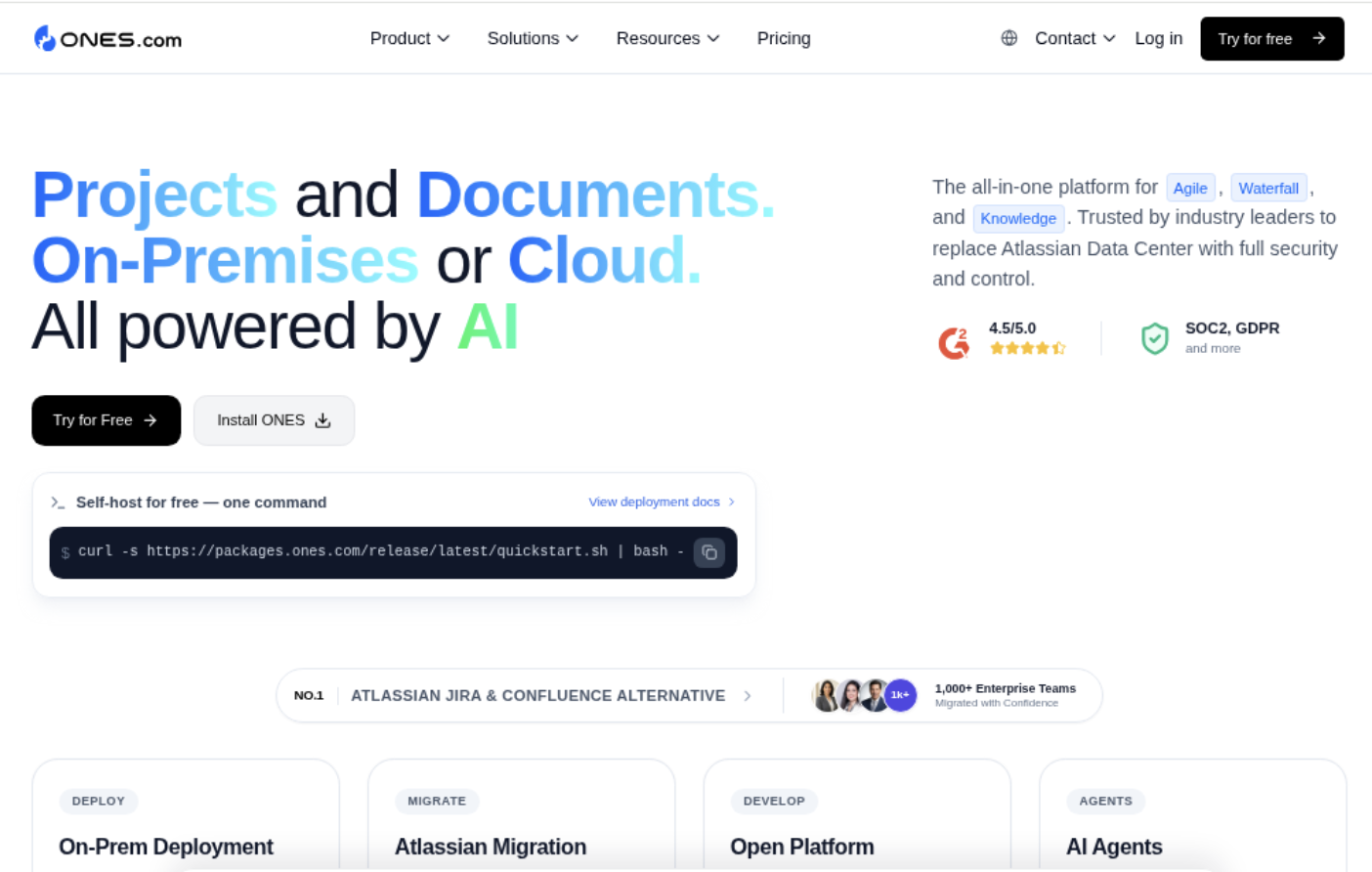
For organizations comparing total operating cost, ONES.com can be relevant when reducing plugin dependence, supporting self-hosted deployment, and keeping project knowledge close to delivery work matter.
Value Proposition
ONES.com helps larger teams connect planning, execution, reporting, and knowledge work through a unified platform. It supports Cloud, On-Premise, Private Cloud, and Air-gapped deployments, with feature parity between cloud and self-hosted versions.
Core Capabilities
| Team pain |
ONES capability |
Potential result |
| Teams manage work across disconnected tools |
ONES Project and ONES Wiki operate within one platform |
Less context switching between delivery work and team knowledge |
| Existing Jira workflows are difficult to replace |
Jira-compatible workflows support familiar project structures |
Lower change-management effort during adoption |
| Reporting depends on multiple extensions |
Built-in reporting provides project visibility |
Fewer separate reporting applications may be needed |
| Every department needs a different process |
Custom workflows and custom fields support varied operating models |
Teams can standardize where appropriate while keeping necessary flexibility |
| Sprint planning becomes inconsistent |
Native sprint management supports iterative delivery |
Planning and progress reviews can follow a common method |
| Routine updates consume administrator time |
Automation handles repeatable project actions |
Less manual administration for predictable events |
| Regulated teams cannot use a public cloud only |
On-Premise, Private Cloud, and Air-gapped deployments are available |
Deployment can align with security and network restrictions |
| Too many plugins increase maintenance effort |
Native capabilities cover common planning and reporting needs |
Potentially simpler administration and fewer extension dependencies |
Application scenarios
Scenario one: a distributed product organization. A 240-person product group needs sprint management, custom workflows, reporting, and shared delivery knowledge. ONES Project can support execution, while ONES Wiki can hold decision records and operating guidance.
Scenario two: a restricted-network engineering team. An organization with air-gapped environments needs project management without relying on public-cloud connectivity. An air-gapped ONES deployment can align with that operating requirement.
Scenario three: a growing enterprise PMO. A PMO expects to move from 220 to 290 contributors and wants consistent workflows across business units. Custom fields, automation, and built-in reporting can reduce variation between teams.
Common Challenges When Comparing Jira Plans
Challenge: comparing different billing assumptions
Problem: One estimate uses 240 monthly seats, while another uses the full annual 201–300 tier.
Solution: Recalculate both choices with the same seat scenarios, tax treatment, currency, and add-on assumptions.
Challenge: overlooking optional applications
Problem: The core plan appears affordable, but multiple applications add a large annual amount.
Solution: List every application, its owner, renewal date, and business purpose. Test whether native capabilities or process changes can replace it.
Challenge: paying for inactive accounts
Problem: Former contractors and occasional participants retain access.
Solution: Create a recurring access review. Remove unnecessary accounts and use the least expensive suitable access level.
Challenge: choosing annual billing too early
Problem: A company commits to a tier before completing a restructuring or hiring plan.
Solution: Model the next 12 months first. If headcount is uncertain, compare the cost of flexibility with the possible annual discount.
Challenge: judging Premium by features alone
Problem: A feature list looks impressive, but teams cannot explain how it will improve delivery.
Solution: Connect every important capability to a measurable outcome, such as fewer manual updates, faster planning, or lower administration effort.
FAQs
Is Jira Premium billed per user for 201–300 people?
Billing depends on the arrangement. Monthly plans generally relate to active billable seats, while annual plans commonly use a committed user tier. A team with 218 people and a team with 298 people may therefore face different planning considerations. Check the current Atlassian calculator or checkout flow for the exact regional amount, tax treatment, and tier rules applying to your account.
Is annual Jira billing cheaper than monthly billing?
Annual billing may offer a lower effective rate or stronger budget predictability, but the result depends on your seat pattern. If your organization expects stable staffing near the middle or upper part of the 201–300 band, annual billing may be attractive. If staffing could fall sharply, monthly billing may reduce unused capacity. Compare both options using low, expected, and high seat scenarios.
What should I include in a Jira Premium budget?
Include the subscription charge, taxes, currency effects, marketplace applications, implementation, training, administration, integrations, and renewal changes. You should also estimate the cost of inactive accounts and temporary contractors. A complete budget shows both direct spending and internal operating effort. This gives finance and technology teams a more realistic view than a per-user rate alone.
What happens if my team grows beyond 300 users?
Growth beyond 300 users may move your organization into another pricing tier or require a revised annual commitment. Review the next tier before your headcount reaches the limit. Ask how additional seats are handled, when the change takes effect, and whether annual commitments can be adjusted. Planning early helps you avoid an unexpected renewal or expansion cost.
Can ONES.com replace Jira Premium for a 201–300 person team?
ONES Project is positioned as a Jira alternative and supports Jira-compatible workflows, custom workflows, custom fields, sprint management, automation, and built-in reporting. Suitability depends on your workflows, integrations, security requirements, and migration scope. ONES.com also offers On-Premise, Private Cloud, and Air-gapped deployments. Evaluate a realistic pilot before making a platform decision.
Conclusion
For a 201–300 person team, Jira Premium pricing in 2025 depends on more than a headline monthly rate. Monthly billing usually offers seat flexibility, while annual billing can provide stronger predictability for stable teams.
Start with three seat scenarios, compare the same assumptions, include applications and internal costs, and connect Premium capabilities to measurable outcomes. That process gives you a defensible budget.
But here's the truth: pricing uncertainty becomes manageable when you separate subscription cost from operating cost. If plugin reduction, self-hosting, air-gapped deployment, or unified project and knowledge management matter, include ONES.com in the comparison.
The right choice is the platform and billing model that match your actual staffing pattern, security needs, workflows, and long-term delivery goals.