Jira Pricing in India: A 2026 Guide to Plans and Costs Now
Confused by jira pricing india? Compare 2026 plans, rupee costs, taxes, user tiers, and add-ons to budget accurately. Read now to choose wisely.
Jira pricing in India can look simple until you reach the checkout page. You choose a plan, add your team, convert the amount into rupees, and expect a predictable monthly bill. Then taxes, annual billing, user tiers, marketplace apps, and currency charges change the final number.
That uncertainty makes budgeting difficult. A 15-person team may pay very differently from a 100-person team, even when both select the same plan. Add Premium features or third-party apps, and your project software budget can rise quickly.
Here’s the practical solution: separate the subscription price from taxes, billing frequency, user count, and add-ons. This guide explains how to estimate Jira costs in India for 2026, compare Free, Standard, Premium, and Enterprise, and evaluate a Jira alternative when self-hosting or simpler licensing matters.
Jira Pricing in India: The Short Answer
Jira pricing in India depends on your plan, billable user tier, billing cycle, currency, taxes, and optional apps. Atlassian usually calculates Jira Cloud pricing through its regional pricing calculator, so the amount shown at checkout is the safest figure for your organization.
For planning purposes, use this formula:
Total estimated cost = subscription charge + applicable taxes + currency or payment charges + marketplace apps.
Jira generally offers four main paths:
- Free: Suitable for small teams testing core project and issue tracking.
- Standard: Designed for growing teams that need more users, administration, and collaboration controls.
- Premium: Adds advanced planning, higher service limits, and stronger operational features.
- Enterprise: Intended for large organizations with multiple sites, governance needs, and centralized administration.
Here’s why the displayed plan price does not always equal your final Indian rupee cost: Atlassian may show pricing in a supported billing currency, while your bank applies exchange rates, taxes, and international payment charges.
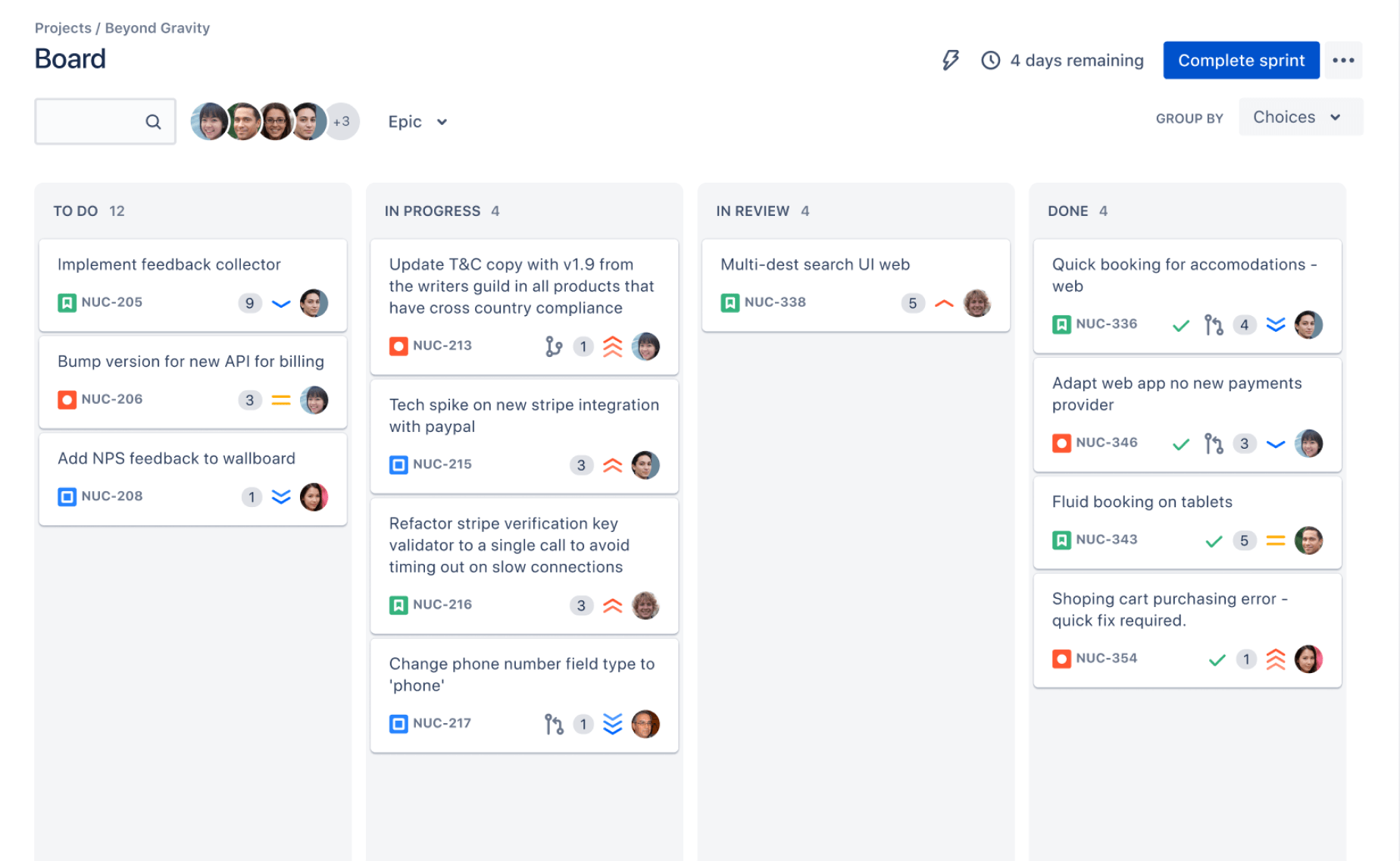
What affects the final bill?
| Pricing factor |
Why it matters in India |
| Plan level |
Premium and Enterprise include capabilities that raise the subscription cost. |
| Billable seats |
Jira often uses user tiers, so adding a few people may move you into a higher bracket. |
| Monthly or annual billing |
Monthly billing usually follows actual usage more closely, while annual billing may use a committed user tier. |
| GST and taxes |
Applicable taxes can increase the amount charged beyond the advertised subscription price. |
| Exchange rate |
A USD-denominated charge can change in rupee terms when your card provider converts it. |
| Marketplace apps |
Time tracking, reporting, test management, and automation extensions can create separate charges. |
Jira Cloud Plans and What You Receive
The right plan depends on team size, workflow complexity, administrative requirements, and reporting expectations. Start with the capability you need, then calculate the cost for every person who requires access.
Free plan
The Free plan is useful for a small team exploring Jira. It can support basic issue tracking, project setup, boards, and collaboration within defined limits.
For example, a five-person startup could use Free to manage product bugs, sprint work, and a simple backlog. A larger team may quickly encounter limits around users, storage, permissions, automation, or support.
The best part? Free lets you validate whether Jira fits your workflow before committing to a paid plan.
Standard plan
Standard is usually the practical starting point for established teams. It provides more room for users, projects, administration, and everyday collaboration.
A 25-person software team might choose Standard for sprint planning, issue assignment, release tracking, and cross-functional visibility. The actual price depends on the current user tier and billing method displayed by Atlassian.
Standard often works well when you need reliable project tracking without advanced availability or large-scale planning features.
Premium plan
Premium targets teams with more complex planning and operational requirements. It may include advanced planning functions, higher limits, additional service controls, and capabilities for coordinating work across teams.
Consider a company with separate mobile, web, platform, and support teams. Premium may help those groups coordinate dependencies and plan larger delivery milestones.
Premium costs more, so compare the value of its specific capabilities against your current workflow. Paying for unused features can create unnecessary overhead.
Enterprise plan
Enterprise is built for organizations that need centralized governance across multiple teams or sites. Pricing is commonly handled through a sales-led process rather than a simple public checkout price.
Large organizations may evaluate security administration, analytics, user management, compliance requirements, support arrangements, and deployment governance together.
You might be wondering: when should you consider Enterprise? Usually, the decision involves organizational scale and governance complexity rather than a single team’s task board.
How to Calculate Your 2026 Cost in Rupees
Use a three-stage estimate: subscription, taxes, and operating extras. This method gives you a more realistic budget than multiplying a headline price by your headcount.
- Count active users. Include developers, testers, product managers, designers, support staff, and administrators who need access.
- Select the required plan. Choose the lowest tier that covers your security, planning, automation, reporting, and collaboration needs.
- Check the current regional calculator. Enter your user count and billing cycle to see the applicable subscription estimate.
- Convert the displayed currency carefully. Use a conservative exchange rate if your organization pays in Indian rupees through a card or bank transfer.
- Add applicable taxes. Confirm whether GST appears at checkout or through your billing arrangement.
- List every marketplace app. Add recurring costs for time tracking, test management, advanced reporting, or specialized workflows.
- Compare monthly and annual totals. Annual billing may be economical for stable teams, while monthly billing offers more flexibility during hiring or restructuring.
Example: a 20-person team
Imagine a 20-person product team evaluating Standard. The team should calculate the plan charge for 20 seats, then add tax and any external application costs.
If the team uses a paid testing extension, advanced time tracking, and a reporting app, the subscription is only one part of the budget. The team should also account for renewal changes and exchange-rate movement.
Example: a 100-person organization
A 100-person company may face tier-based pricing. Even if only 82 people actively create work items, the selected user tier may require a higher commitment.
That makes seat governance important. Review inactive accounts each month, remove unnecessary access, and define who needs full Jira permissions.
Monthly Versus Annual Billing in India
Monthly billing suits organizations with changing headcount. You can add or remove people more frequently, which helps a startup that hires rapidly or a consulting firm working across temporary teams.
Annual billing can simplify procurement and budgeting. You know the committed term in advance, although you must estimate future staffing carefully.
| Billing approach |
Works well for |
Watch carefully |
| Monthly |
Growing teams, pilots, seasonal projects |
Per-month price changes and fluctuating user counts |
| Annual |
Stable departments, approved yearly budgets |
Unused seats and renewal commitments |
Let me explain the budgeting difference with a simple example. A 40-person business expecting 15 new hires may prefer monthly billing during expansion. A stable 40-person engineering department may prefer annual planning.
Before committing, confirm how user changes, refunds, renewals, and plan upgrades are handled. These terms can affect your effective annual cost.
Taxes, Currency, and Payment Considerations
Indian organizations should separate the listed subscription price from the amount appearing on the payment statement. Tax treatment can depend on the billing entity, account details, invoice configuration, and applicable regulations.
GST may apply to software subscriptions. Ask your finance team to verify the treatment for your organization and whether the billing information supports the tax process you follow.
Currency conversion also matters. A card issuer may use its own exchange rate and add an international transaction fee. A small percentage difference can become meaningful across 100 seats for a full year.
A practical budgeting buffer
Do not budget only for the exact calculator figure. Create a reasonable buffer for currency movement, taxes, additional seats, and app renewals.
For instance, if the annual subscription estimate is ₹600,000, your internal budget should also cover tax treatment, payment costs, and likely user growth. Your finance team can choose the appropriate buffer for its controls.
Jira Add-Ons and Hidden Cost Areas
Jira’s base subscription may satisfy issue tracking, but teams often add applications for specialized needs. These extras can change the total cost more than expected.
Common add-on categories
- Advanced time tracking and worklogs
- Test case management
- Portfolio planning and capacity management
- Custom reporting and dashboards
- Workflow extensions and approval controls
- Backup and recovery services
- Integration connectors for communication or development tools
Here’s a useful comparison: a team may select a lower Jira tier, then spend heavily on extensions to fill capability gaps. Another team may choose a higher tier with more native functionality and fewer add-on subscriptions.
Neither approach is automatically cheaper. Compare the complete annual stack, including administration time, support, onboarding, and renewal management.
Jira Cloud, Data Center, and Deployment Choices
Most smaller and mid-sized teams evaluate Jira Cloud because it reduces infrastructure administration. Atlassian manages the hosting environment, while your team manages configuration, permissions, workflows, and connected services.
Organizations with strict infrastructure policies may evaluate self-managed deployment options. These arrangements can introduce infrastructure, maintenance, upgrade, backup, security, and specialist staffing costs.
The subscription price alone does not show the total cost of ownership. A cloud plan may cost more per seat while reducing internal administration. A self-managed environment may offer greater control while requiring more operational work.
| Evaluation area |
Cloud approach |
Self-managed approach |
| Infrastructure |
Managed by the provider |
Managed by your organization or partner |
| Upgrades |
Provider-led release process |
Planned and executed internally |
| Administration |
Focused on configuration and access |
Includes infrastructure and application operations |
| Budget pattern |
Recurring subscription |
License or subscription plus operational expenditure |
Jira Pricing Checklist for Indian Buyers
- Confirm the current plan price through the regional pricing calculator.
- Record whether the estimate is monthly or annual.
- Check the billable user tier rather than active daily users alone.
- Ask finance to verify GST and invoice treatment.
- Estimate exchange-rate movement for foreign-currency billing.
- List every marketplace app and its renewal cycle.
- Review security, permissions, audit, and administration requirements.
- Calculate onboarding and migration effort.
- Set a process for removing inactive accounts.
- Compare the complete annual cost with alternative platforms.
A Practical Jira Alternative: ONES.com
Value Proposition
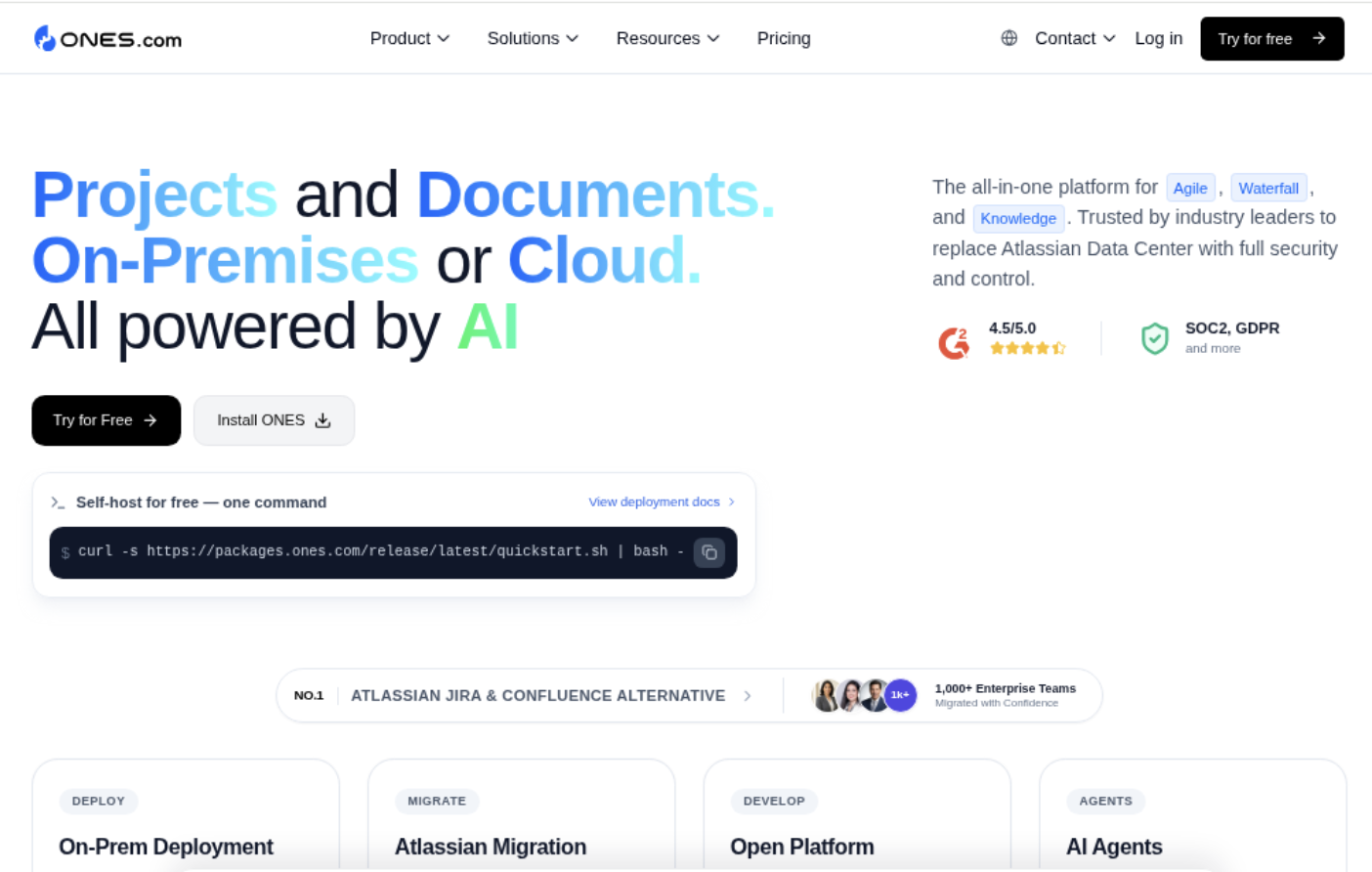
ONES.com is a unified platform for project management and knowledge management, powered by AI through ONES Assistant. ONES Project is the project management product and a Jira alternative, while ONES Wiki is the knowledge management product and a Confluence alternative; they are sold separately.
For Indian teams comparing licensing, deployment, and administration, ONES.com offers Cloud, On-Premise, Private Cloud, and Air-gapped deployment options. The free plan supports up to 30 seats.
Core Capabilities
- Plugin sprawl slows administration → Native project capabilities in ONES Project → Teams can manage core planning and delivery work with fewer separate extensions.
- Jira-compatible workflows create migration concerns → Jira-compatible workflow support → Teams can map familiar issue and approval processes more easily.
- Manual reporting takes time → Built-in reporting → Managers can review progress, workload, and delivery signals within the project environment.
- Rigid processes create workarounds → Custom workflows and fields → Teams can adapt statuses, forms, and attributes to their operating model.
- Sprint planning becomes fragmented → Native sprint management → Agile teams can organize iterations, assignments, and backlog movement in one workspace.
- Repeated administrative actions consume effort → Automation → Teams can reduce routine transitions, notifications, and assignment work.
- Restricted networks limit cloud choices → Air-gapped deployment → Organizations with isolated environments can operate project workflows within controlled infrastructure.
- Deployment changes create feature gaps → Full feature parity between cloud and self-hosted versions → Teams can choose an operating model without giving up the core capability set.
- Project work and team knowledge become disconnected → ONES.com product family → Organizations can evaluate ONES Project and ONES Wiki for connected delivery and knowledge workflows.
Application Scenarios
Software company with a restricted environment: A defense supplier may require air-gapped project operations. ONES Project can support workflows in an isolated network, subject to the organization’s technical review and deployment requirements.
Growing product team: A 25-person team may need sprint management, custom fields, reporting, and automation without assembling several paid extensions. It can compare the full operating cost against its current Jira stack.
Enterprise with self-hosting requirements: A regulated organization can evaluate On-Premise or Private Cloud deployment while reviewing administration, security, and support responsibilities.
Common Challenges When Estimating Jira Cost
Challenge: The calculator price changes after checkout
Solution: Save the estimate date, user count, billing cycle, and currency. Recheck the final checkout total before approval, especially after adding apps or changing account details.
Challenge: Your team counts active users incorrectly
Solution: Create an access register covering contributors, reviewers, administrators, contractors, and occasional collaborators. Review it before renewal.
Challenge: Add-ons exceed the core subscription
Solution: Map every required capability before selecting a plan. Compare native features, app costs, support charges, and administration effort together.
Challenge: Exchange rates disrupt the Indian rupee budget
Solution: Use a conservative conversion assumption and ask finance whether card fees or international transaction charges apply.
Challenge: Annual billing locks in unused capacity
Solution: Forecast hiring, departures, contractors, and reorganizations. If headcount is uncertain, model monthly billing before choosing an annual commitment.
FAQs
How much does Jira cost in India in 2026?
There is no single India-wide price because Jira cost depends on the plan, user tier, billing cycle, taxes, currency, and optional apps. Use Atlassian’s current regional calculator for the subscription estimate, then add applicable GST, payment charges, and marketplace subscriptions. Your final rupee amount may differ from an earlier estimate because exchange rates and plan pricing can change.
Is Jira free for Indian teams?
Jira offers a Free plan for small teams, subject to Atlassian’s limits and eligibility rules. It can work for a small project with basic issue tracking and collaboration. Larger teams may need Standard or Premium because of user limits, administration requirements, automation needs, reporting expectations, or more advanced planning. Check the current plan page before relying on Free for business-critical work.
Does Jira charge in Indian rupees?
The currency shown can depend on the account, billing location, and available payment arrangement. Some organizations may see a supported local-currency option, while others may receive a foreign-currency charge. Your card or payment provider may convert the amount into rupees and apply its own rate or fee. Confirm the checkout currency and invoice details with your finance team.
Is GST included in Jira’s listed price?
Do not assume that the displayed subscription amount is your complete tax-inclusive cost. GST treatment can depend on billing details, the provider’s invoicing arrangement, and your organization’s tax process. Ask your finance team to verify the applicable treatment and ensure your account information is correct before purchase or renewal.
Which Jira plan is best for a small Indian startup?
Free can suit a small team testing Jira. Standard is often more practical once the team needs broader administration, increased capacity, or more reliable collaboration. Premium becomes relevant when advanced planning, higher limits, or cross-team coordination justify the extra cost. Compare the capabilities you will use during the next 12 months rather than choosing a plan based only on the lowest headline price.
Can a Jira alternative reduce the total cost?
It can, depending on your user count, deployment requirements, workflow needs, and reliance on marketplace apps. Compare the complete annual cost, including migration, training, administration, infrastructure, support, and integrations. ONES Project provides a Jira alternative with custom workflows, fields, sprint management, reporting, automation, and multiple deployment choices. Request a capability comparison before making a switch.
Conclusion
Jira pricing in India is shaped by more than a plan label. User tiers, billing frequency, GST, currency conversion, marketplace apps, and deployment requirements all influence your final budget.
Start with the current regional calculator, build a complete annual estimate, and review access regularly. Then compare the full operating cost with platforms such as ONES Project when native capabilities, self-hosting, or air-gapped deployment matter.
But here’s the truth: a low subscription price does not guarantee a low project software budget. The reliable choice is the platform that fits your workflows, governance model, team size, and long-term operating requirements.