Jira Pricing: Is the Free Plan Enough for Your Team in 2026?
Is Jira pricing free enough for your team in 2026? Compare plan limits, features, and upgrade triggers. Click to discover the right fit.
Jira’s free plan can look perfect when your team is small. You get a capable project tracker without adding another line to the budget.
Then reality arrives. Your team grows, automation becomes important, permissions get more complex, and people start asking for reports, approvals, and better visibility. A plan that worked for five people can feel restrictive at ten.
Here’s the practical answer: Jira Free is usually enough for a small team with simple workflows and modest reporting needs. It becomes harder to justify when you need advanced administration, larger teams, stronger support, or more control over your environment.
This guide breaks down what the free tier can handle, where it creates friction, and how to decide before upgrading.
Jira Free Pricing: What You Get and Who It Fits
Jira Free is a no-cost cloud plan designed for small teams that need essential issue tracking, project planning, collaboration, and basic reporting. Atlassian commonly positions the plan for teams of up to 10 users, with usage limits that can change over time.
The plan typically includes core work management features such as Scrum and Kanban boards, backlog planning, issue tracking, project templates, basic workflows, and standard reporting. You can use it to plan work, assign tasks, track progress, and review delivery trends.
The central question is simple: does your team need basic coordination, or does it need advanced control?
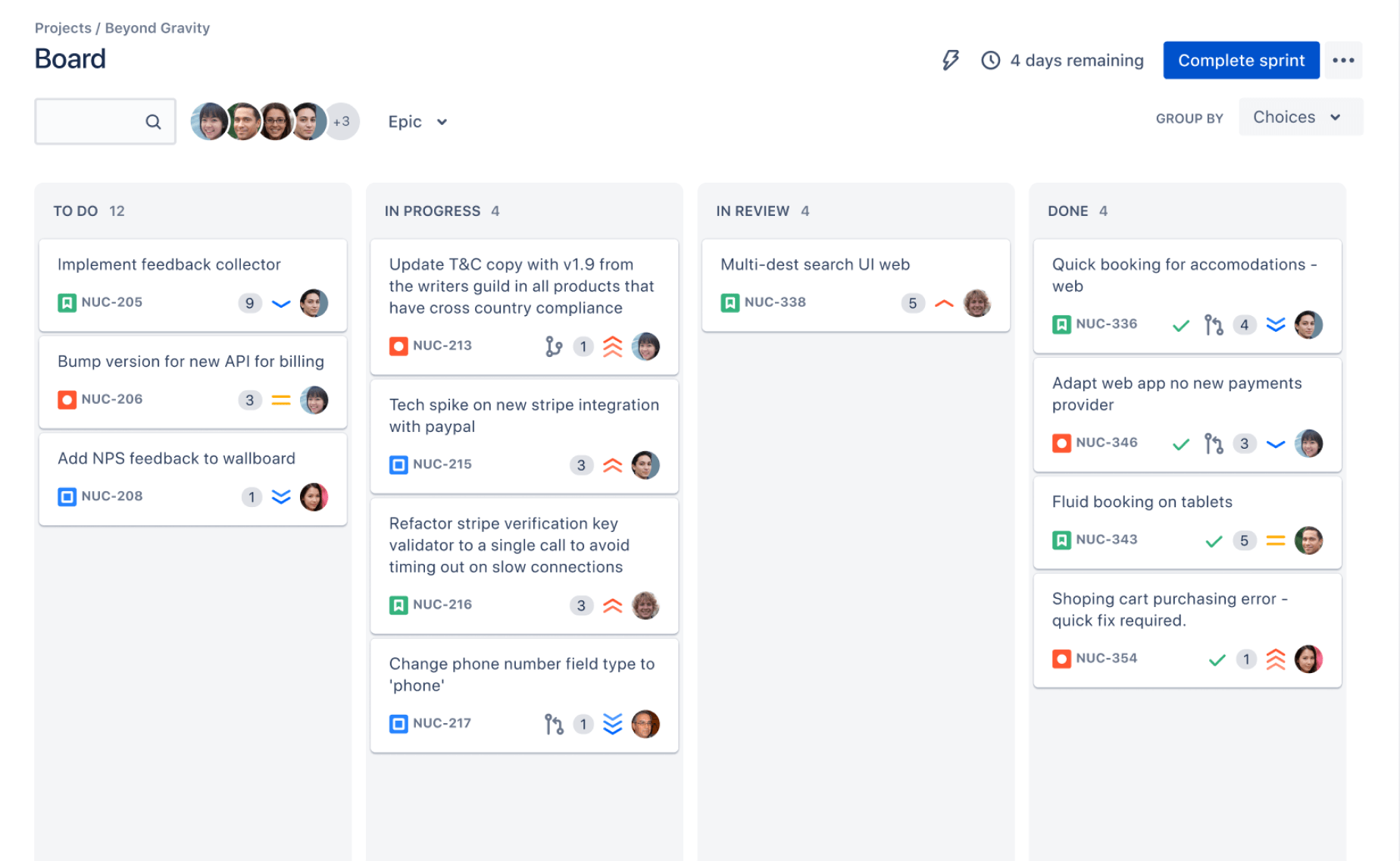
What the free tier is designed to handle
Jira Free works well when your team has a small number of active projects and a straightforward delivery process. For example, a six-person product team can manage a backlog, run two-week sprints, and track bugs without paying for a subscription.
You can usually expect access to:
- Scrum and Kanban boards
- Backlog and sprint planning
- Issue creation, assignment, and prioritization
- Basic project templates
- Standard dashboards and reports
- Team collaboration features
- Custom issue fields and workflow options within plan limits
- Cloud hosting and routine platform maintenance
The exact limits and included features may change. Check Atlassian’s current plan page before making a purchase decision, especially if your team depends on storage, automation, support, or administration controls.
Who is most likely to succeed with it?
Jira Free is a sensible starting point for a small software team, student project, early-stage company, or volunteer group. It is also useful when you want to test Jira before committing to a paid tier.
A typical good fit looks like this:
- Fewer than 10 active users
- One or a few related projects
- Simple Scrum or Kanban workflows
- Limited automation needs
- Comfort with community-based support
- No requirement for advanced governance
But here’s the truth: a free plan can be technically sufficient while still being operationally inconvenient. Your team may complete its work, yet spend extra time maintaining workarounds.
What the Free Plan Does Well
Jira’s strongest free-plan advantage is access to a mature issue-tracking model without an immediate subscription commitment. You can represent bugs, features, tasks, and improvement work in one organized workspace.
Backlog and sprint planning
If your team follows Scrum, the backlog and sprint tools provide a familiar way to prioritize work. You can rank items, estimate effort, assign ownership, and move selected work into a sprint.
For example, a development team might keep 40 product ideas in its backlog. Before a sprint begins, the product manager ranks those ideas, developers estimate them, and the team selects work that fits its capacity.
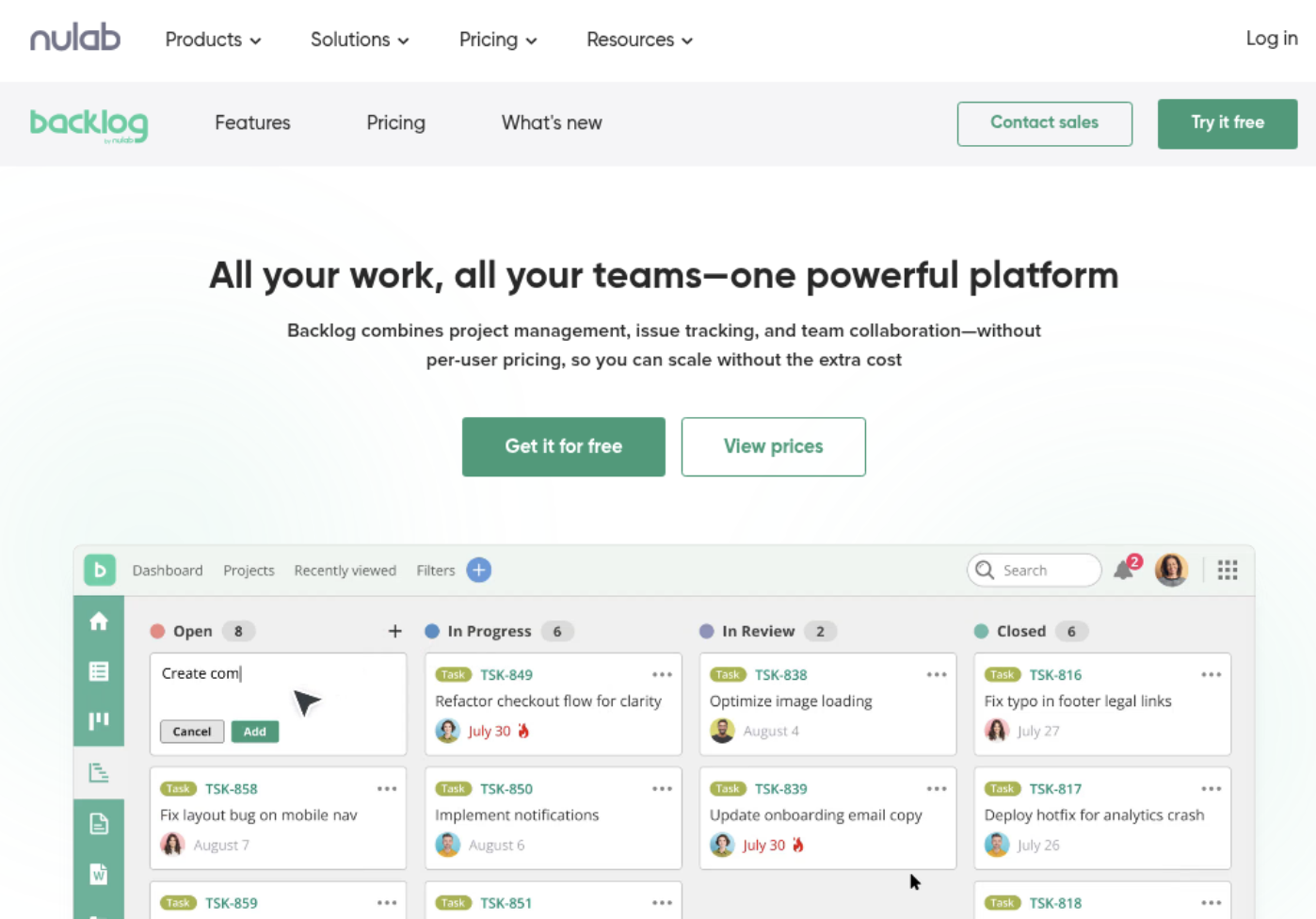
Kanban visibility
Kanban teams can use columns such as To Do, In Progress, Code Review, Testing, and Done. This gives everyone a quick view of work status without requiring a separate status meeting.
A support engineering team could use the same structure to expose bottlenecks. If 18 issues sit in Testing, the problem becomes visible before customers feel the full impact.
Basic reporting
Standard reports can help you review sprint progress, completed work, cycle trends, and workload. These views are useful for routine conversations about delivery.
However, basic reporting may not answer every management question. If you need highly customized metrics across several teams, you may eventually need more advanced configuration or another reporting approach.
Low financial risk
The free tier lets you test whether Jira fits your team’s habits. You can learn how people create issues, update statuses, plan sprints, and review progress before making a larger commitment.
That trial period has practical value. A team can discover whether Jira feels intuitive enough for daily use, rather than choosing a paid plan based only on a feature list.
Where Jira Free Starts to Feel Restrictive
The main limitations usually appear in team size, administration, automation, support, and scale. Each restriction may seem manageable alone. Together, they can create friction.
Team growth can change the economics
The free tier is generally aimed at small teams. Once your active user count approaches the plan limit, you have less room for contractors, managers, testers, or occasional collaborators.
Imagine a team with eight developers and one product manager. Adding a designer and two customer-support colleagues can push the workspace beyond its comfortable range. You then face a decision: remove access, pay for a higher tier, or redesign participation.
That choice becomes more complicated when several projects share the same Jira environment. A user who needs access to only one project may still affect the overall user count.
Automation limits can affect repetitive work
Automation saves time when work follows predictable patterns. Examples include assigning a new bug to a queue, notifying a reviewer, or updating a parent issue after a child task changes.
Free-plan automation limits can become noticeable when your team uses many rules. A busy engineering group may consume its allowance through routine transitions, notifications, and field updates.
When automation stops running, someone must perform those actions manually. That adds small delays repeatedly, which can become several hours over a month.
Administration needs grow with complexity
A small team can often manage permissions with simple project roles. Larger organizations may need more detailed control over who can create, edit, view, or approve work.
Consider a company with internal development work and external client projects. Different teams may require separate visibility rules, workflows, and approval paths. Basic administration becomes harder as exceptions multiply.
Support expectations matter
Free plans commonly provide community-oriented support rather than the response commitments available on paid tiers. That may be acceptable for a small team that can troubleshoot independently.
If a platform problem blocks a release, support access has a direct business impact. A team working on customer-critical systems may value predictable assistance more than the subscription savings.
How to Decide Whether Free Is Enough
You can make the decision with a short capacity check. Review your people, process, reporting, governance, and growth plans before comparing monthly prices.
- Count active users. Include developers, product managers, testers, contractors, and other people who need regular access.
- List essential workflows. Write down every recurring action, such as approvals, notifications, assignments, and status changes.
- Review automation demand. Estimate how many rules you need today and how many you expect to add within six months.
- Check reporting requirements. Identify whether standard sprint and workload reports answer your questions.
- Assess administration. Consider project visibility, permission levels, approval needs, and audit expectations.
- Test collaboration habits. Watch how quickly people create, update, and find work.
- Model growth. Add likely hires, contractors, and adjacent teams to your estimate.
- Assign a cost to friction. Record time spent on manual updates, reporting workarounds, and access management.
Here’s why this method works: the cheapest subscription is not always the lowest-cost choice. A free plan that creates four hours of manual work each month may cost more in staff time than a paid plan.
A simple decision example
Suppose a five-person startup runs one Kanban board, uses ten automation rules, and needs only basic progress reporting. Jira Free is likely a practical fit.
Now imagine the same startup grows to 18 people, adds three projects, requires approval workflows, and needs custom portfolio reporting. The free tier is no longer the right benchmark. You should compare paid Jira plans with alternatives that offer the required controls at a suitable total cost.
| Team situation |
Likely decision |
| Small team, simple board, limited automation |
Start with the free tier |
| Near the user limit, with planned hiring |
Review paid tiers and alternatives early |
| Several teams with different permissions |
Compare administration and governance features |
| High automation and reporting demand |
Check plan limits before migration or expansion |
| Strict hosting or deployment requirements |
Evaluate self-hosted and private deployment options |
Jira Free Compared With Paid Plans
Paid Jira tiers generally add room, administration, support, security, and advanced capabilities. The right upgrade depends on which limitation affects your work most.
When a paid Jira plan makes sense
A paid tier may be reasonable when you need more users, higher automation capacity, stronger support, advanced permissions, improved governance, or expanded reporting.
For example, a growing software company may accept the upgrade because every product, design, and engineering team relies on the same workflow. Centralized visibility can be worth more than the monthly subscription.
When an alternative deserves consideration
An alternative may be better when your priorities include deployment flexibility, simpler administration, fewer add-ons, or a combined project and knowledge workspace.
This is especially relevant when your team wants to reduce the number of separate systems. A project tool may track work well, while a knowledge tool stores procedures and technical guidance. Maintaining both can create duplicated effort.
Compare total operating cost
Subscription price is only one part of the calculation. Include configuration time, integrations, plugins, administration, training, migration, and reporting maintenance.
For instance, a low-cost plan may require several add-ons for time tracking, approval handling, and advanced dashboards. Another platform may include those capabilities natively, reducing maintenance even if its headline price looks different.
Common Mistakes When Choosing the Free Tier
Teams often focus on whether they can create tasks and boards. Those are important capabilities, but they rarely determine long-term fit by themselves.
Ignoring occasional users
Managers, clients, contractors, and specialists may need access only once or twice a week. They still affect collaboration design and, depending on the plan, user eligibility.
List every role that needs visibility before assuming your team fits comfortably within the free allowance.
Testing only the happy path
A short demo may show how to create an issue. It may not reveal what happens when a sprint changes, an approval is rejected, or a project needs restricted visibility.
Run a realistic test with a bug, a feature, a blocked task, a sprint change, and a management report. Friction appears faster in real scenarios.
Underestimating governance
A five-person team may rely on informal agreements. As the team grows, those agreements become inconsistent. People use different labels, statuses, and priority meanings.
Define workflow ownership early. A clear operating model prevents the workspace from becoming difficult to interpret.
Waiting until the limit is urgent
Migration and plan changes are easier when you have time to evaluate options. Waiting until a hiring wave or major release creates pressure.
Review your plan every quarter. Track user growth, automation usage, reporting requests, and administrative workload.
Jira Free Plan Alternative: ONES.com
ONES.com gives teams a unified environment for project management and knowledge management, with ONES Project serving as a Jira alternative and ONES Wiki serving as a Confluence alternative. You can buy them separately and choose cloud or self-hosted deployment options.
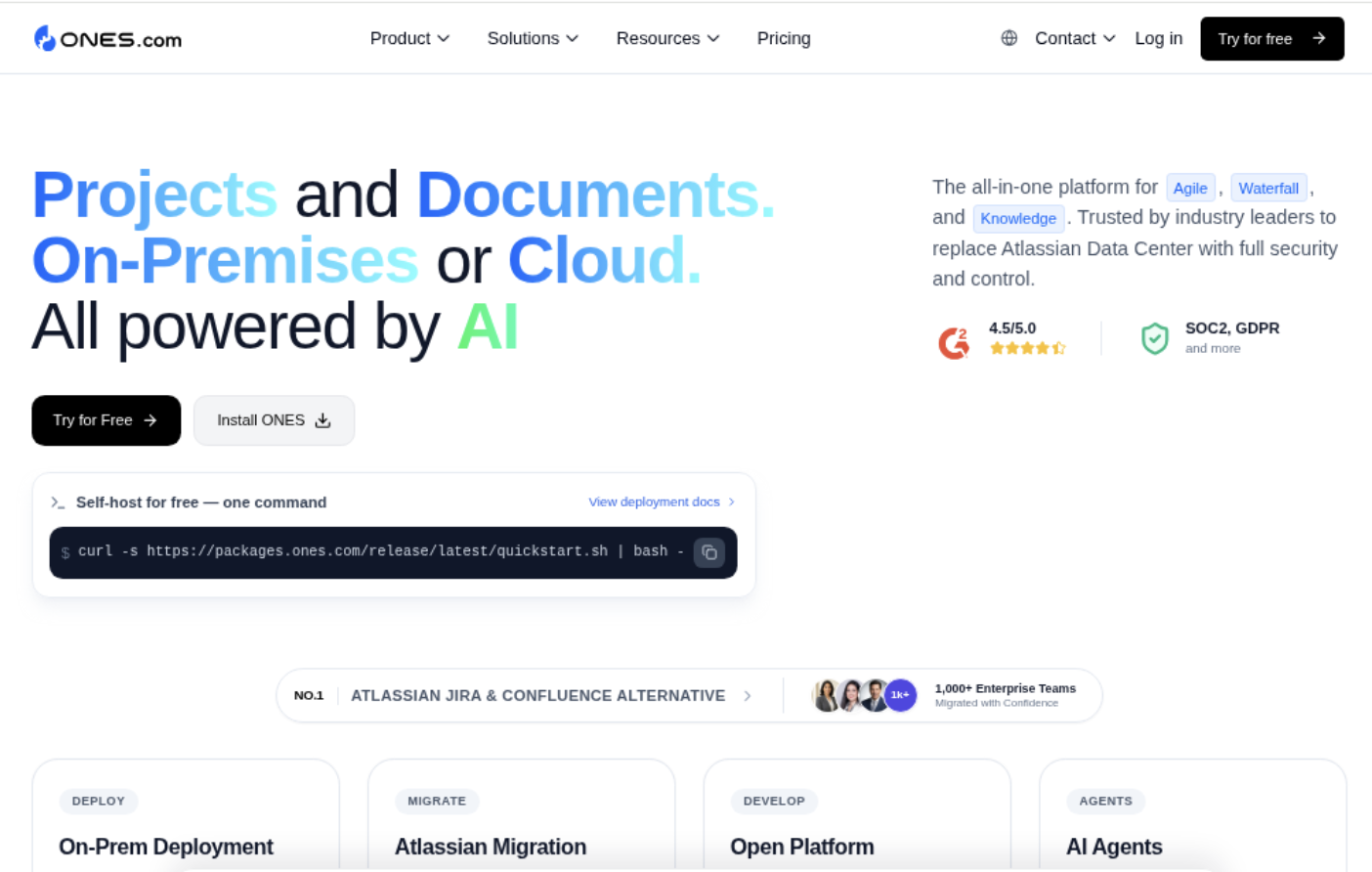
Value Proposition
ONES.com is useful when you want structured project delivery, team knowledge, and flexible deployment without assembling every capability through separate plugins.
It offers a free plan for up to 30 seats and supports Cloud, On-Premise, Private Cloud, and Air-gapped deployments. The self-hosted versions provide feature parity with the cloud version.
Core Capabilities
1. Growing team access
Pain: A small free tier can leave little room for new hires or occasional collaborators.
ONES capability: ONES.com’s free plan supports up to 30 seats.
Result: A growing team gets more room to test structured project management before reviewing paid expansion.
2. Jira-compatible workflows
Pain: Moving away from Jira can feel risky when your team already understands boards, issues, sprints, and workflow states.
ONES capability: ONES Project supports Jira-compatible workflows, including familiar issue-based planning and delivery patterns.
Result: Your team can evaluate an alternative without abandoning every established project habit.
3. Manual reporting work
Pain: Teams lose time assembling progress views across separate reports and tools.
ONES capability: ONES Project includes built-in reporting for routine delivery visibility.
Result: Managers can review progress, workload, and project health in the same project environment.
4. Rigid workflow design
Pain: Different teams often need different statuses, fields, and approval steps.
ONES capability: Custom workflows and custom fields let teams reflect their actual operating process.
Result: You can represent product development, service delivery, quality assurance, or internal operations with less process distortion.
5. Sprint planning friction
Pain: Sprint teams need a clear way to plan scope, monitor progress, and review completed work.
ONES capability: ONES Project includes sprint management alongside backlog and issue planning.
Result: Scrum teams can keep planning and execution connected in one workspace.
6. Repetitive coordination
Pain: Manual assignments, reminders, and status changes create avoidable delays.
ONES capability: Automation supports recurring project actions and workflow events.
Result: Your team can reduce routine coordination and keep work moving with fewer manual updates.
7. Plugin maintenance
Pain: Adding multiple plugins can increase configuration effort, compatibility risk, and administrative overhead.
ONES capability: Core project management capabilities are available within ONES Project, with knowledge management available through ONES Wiki.
Result: You can reduce dependence on a large collection of separate extensions.
8. Hosting restrictions
Pain: Some organizations cannot place project information in a standard public-cloud environment.
ONES capability: ONES.com supports Cloud, On-Premise, Private Cloud, and Air-gapped deployment models.
Result: Security-sensitive teams can evaluate a deployment approach that matches their network requirements.
Application Scenarios
Small product teams moving beyond the free tier
A 15-person product group may need more seats than Jira Free provides while still wanting familiar boards, sprints, custom fields, and reporting.
ONES Project gives the team a Jira alternative to evaluate, with room for more participants and native project capabilities.
Organizations combining delivery and knowledge
An engineering department may track work in one platform and keep playbooks, release guidance, and technical knowledge somewhere else.
Using ONES Project with ONES Wiki can connect delivery work with the knowledge people need to complete it. They are sold separately, so you can adopt the part that matches your immediate need.
Restricted-network environments
A regulated engineering group may require an air-gapped environment for sensitive work. Public-cloud-only tools may not satisfy that requirement.
ONES.com supports air-gapped deployment and maintains feature parity between cloud and self-hosted versions, giving the team a more flexible evaluation path.
Common Challenges and Practical Solutions
Challenge: Your team is close to the user limit
Solution: Count active participants by project and identify people who need regular access. Then compare the cost of upgrading with the cost of moving to a platform that offers more room at your current scale.
Challenge: Automation stops before work is complete
Solution: Audit every rule and remove low-value notifications first. Combine similar actions where possible, then test whether a higher plan or an alternative provides a better long-term fit.
Challenge: Reports require manual preparation
Solution: Start with a short list of management questions. For example, ask which work is blocked, how long items remain active, and whether sprint commitments are realistic. Choose a reporting setup that answers those questions directly.
Challenge: Permissions become difficult to manage
Solution: Create clear role definitions before adding more exceptions. Separate project access, editing rights, approval authority, and sensitive visibility requirements.
Challenge: Your team wants controlled hosting
Solution: Add deployment requirements to the evaluation at the beginning. If you need on-premise, private-cloud, or air-gapped operation, eliminate unsuitable options before comparing feature details.
FAQs About Jira Free Pricing
Is Jira Free really free for a small team?
Jira Free is generally available at no subscription cost for small teams within Atlassian’s current eligibility limits. The plan usually targets up to 10 users, but limits and included capabilities can change. Review the current Atlassian plan page before relying on specific user, storage, automation, or support allowances.
How long can I use the free Jira plan?
The free tier is intended for ongoing use while your team remains within its limits and follows the plan’s terms. You should still review your account periodically because team size, automation needs, storage, and available features may change. A quarterly review helps you avoid an unexpected upgrade decision during a release.
Is Jira Free enough for a software development team?
It can be enough for a small software team using a straightforward Scrum or Kanban process. You can manage bugs, features, tasks, sprints, and basic reports. The plan may become restrictive when the team grows, requires complex permissions, depends heavily on automation, or needs advanced reporting and support.
What should I check before choosing Jira Free?
Check your active user count, expected hiring, automation volume, storage needs, reporting requirements, support expectations, and permission model. Also test a realistic workflow instead of only creating sample tasks. Include designers, testers, managers, and contractors if they need regular visibility.
Should I upgrade Jira or consider an alternative?
Upgrade when Jira already fits your team and the missing capabilities are available at a reasonable total cost. Consider an alternative when you need different deployment options, fewer plugins, simpler administration, or combined project and knowledge management. Compare migration effort and ongoing maintenance, rather than looking only at the monthly subscription.
Conclusion
Jira Free is usually enough for a small team with fewer than 10 active users, simple workflows, limited automation, and basic reporting needs. It offers a practical way to organize delivery without an immediate subscription cost.
But here’s the truth: team growth changes the answer. More users, stricter permissions, heavier automation, advanced reporting, and support expectations can turn a comfortable free workspace into a source of operational friction.
Start with the free tier if your needs are modest. Track the limits that matter, review your workload each quarter, and compare paid Jira plans with alternatives before the decision becomes urgent.