Jira Pricing Structure: A Practical Guide for Teams in 2026
How does the Jira pricing structure affect your team? Compare 2026 plans, seats, add-ons, and hidden costs. Click to choose wisely.
Jira pricing can look simple until you compare plans, team size, billing terms, product add-ons, and administration costs. A plan that fits a five-person team may become expensive when your engineering department doubles.
The confusion grows when you calculate only the subscription price. Storage, premium capabilities, service limits, marketplace apps, migration work, and administration time can change the real cost.
But here's the truth: you can evaluate Jira pricing clearly with a repeatable method. Start with the plan structure, estimate active seats, separate required features from optional extras, and calculate the total annual commitment.
This guide explains how Jira’s pricing model works, what affects your bill, and how to compare alternatives without relying on a headline price.
How the Jira Pricing Structure Works
Jira pricing usually follows a tiered subscription model. You select a product plan, estimate the number of people who need access, choose a hosting option, and then review optional services or applications.
The final cost depends on more than the plan name. Your team size, billing cycle, feature requirements, hosting preference, support expectations, and connected tools all affect the decision.
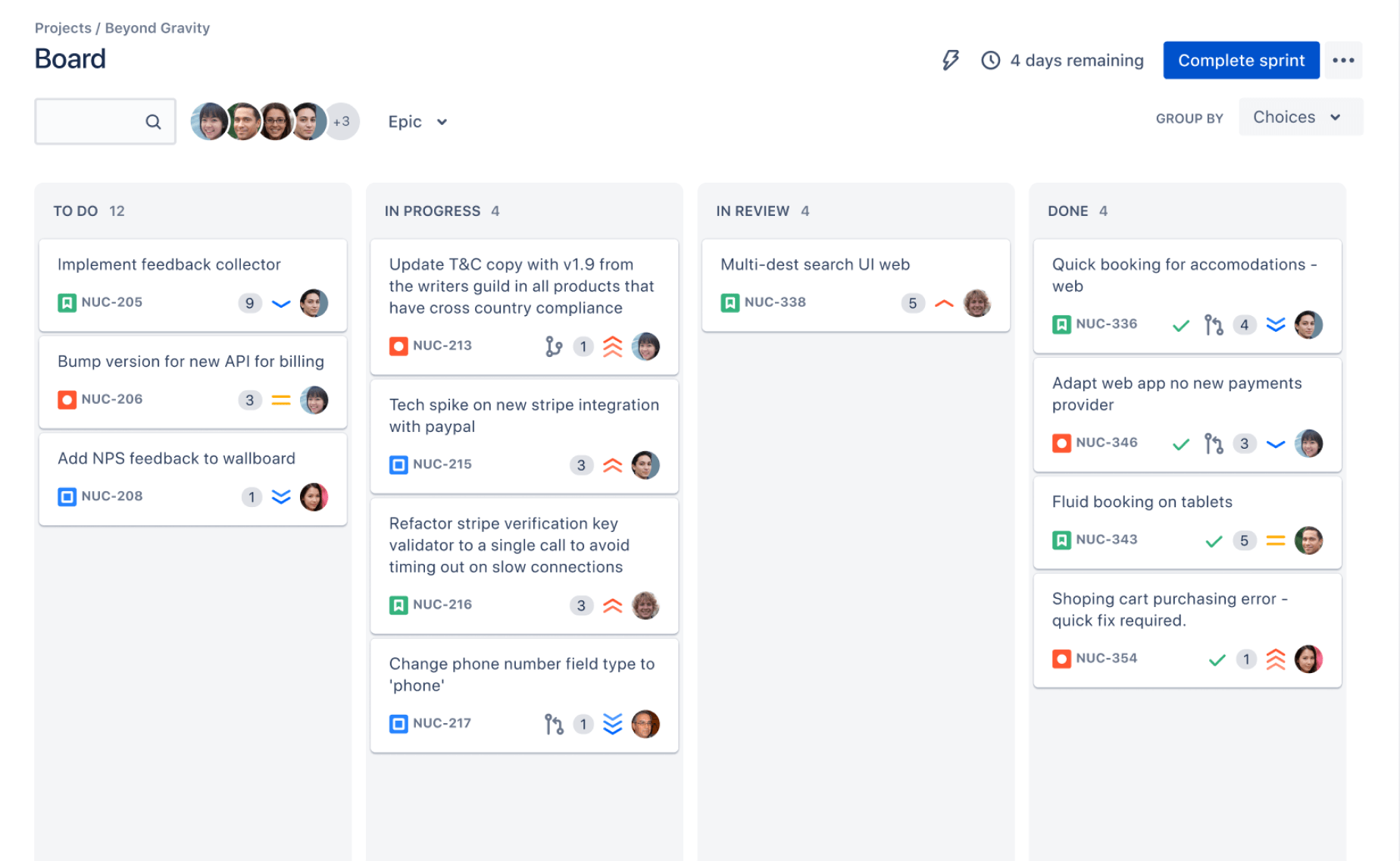
The main pricing variables
- Plan level: Free, Standard, Premium, or Enterprise-style options may provide different limits, controls, and support levels.
- Billable seats: Pricing often increases as more people require access.
- Billing term: Monthly billing offers flexibility, while annual billing may suit teams planning stable usage.
- Hosting model: Cloud, self-managed, or specialized deployment options can involve different commercial terms.
- Feature requirements: Advanced planning, automation, reporting, security, and administration controls may require a higher tier.
- Connected products: Service management, knowledge management, development tools, and marketplace applications may add separate costs.
A practical calculation method
Use this formula before comparing plans:
Estimated annual cost = subscription fees + connected product costs + app costs + migration costs + administration effort
For example, imagine a 40-person product team. Twenty-five people actively manage work, ten contribute occasionally, and five need reporting access.
You should check how each person is classified for billing. A plan may charge differently for full access, limited access, guest access, or occasional participation.
Then estimate the annual subscription and add likely expenses. If your team needs three paid applications, include them before making a decision.
What Each Jira Plan Usually Means
Plan names can change over time, so treat each tier as a capability category rather than a permanent list of promises. Always confirm current limits before signing an agreement.
Free plans
A free plan can work for a small team testing issue tracking, simple project boards, and basic collaboration.
For example, a six-person startup may use a free workspace to manage product bugs and weekly tasks. The plan may become restrictive when the team needs detailed permissions, larger automation volumes, or advanced reporting.
Free tiers also tend to include limits around storage, support, automation, audit controls, or the number of connected services. These limits may be acceptable during early experimentation.
Standard plans
A standard plan generally suits teams that need dependable project management with broader collaboration and administration capabilities.
You may receive higher limits, more controls, and stronger support than a free tier. This level often becomes the practical starting point for growing teams.
Before choosing it, check whether your most important workflows are included. A lower plan may appear affordable until a critical control requires an upgrade.
Premium plans
Premium plans typically target teams that need advanced planning, automation, reporting, capacity management, or operational controls.
A distributed product organization may choose this level when several squads share dependencies. Advanced planning can help leaders see cross-team timing and delivery risks.
The additional price makes sense when those capabilities replace manual coordination. It may be harder to justify when your team only needs boards, tasks, comments, and basic reports.
Enterprise arrangements
Large organizations often evaluate enterprise arrangements for governance, security, support, identity management, and commercial flexibility.
The decision may involve procurement, legal review, security assessment, and internal administration. A larger contract can also require a more accurate seat forecast.
Estimate growth carefully. A small difference between expected and actual participation can affect the annual commitment substantially.
How Team Size Changes the Real Price
Seat count is one of the clearest pricing drivers, but it is not always as simple as counting employees.
Start by separating people into access groups:
| Access group |
Typical need |
| Core contributors |
Create, assign, update, and manage work regularly. |
| Occasional contributors |
Review tasks, add comments, or provide approvals periodically. |
| Stakeholders |
View progress, review reports, and monitor milestones. |
| Administrators |
Manage permissions, workflows, integrations, and governance. |
Here's why: two companies with 100 employees may have very different licensing needs. One may require access for 20 people, while the other may need access for nearly everyone.
Count people who need practical access, not just people who belong to the department. A finance partner approving a project may need a different access path than an engineer managing daily work.
Watch for growth thresholds
Pricing tiers may use seat bands or usage thresholds. Adding one person can sometimes move your team into a higher bracket.
Run three scenarios before buying:
- Current state: The number of people who need access today.
- Expected state: The number of people you expect within 12 months.
- Expansion state: The number required if another department joins.
For example, a team with 48 active participants should compare pricing at 48, 60, and 75 seats. This reveals whether a small hiring plan changes the annual total.
Costs Beyond the Subscription
The listed plan price is only one part of your technology budget. Several supporting costs can affect the final decision.
Marketplace applications
Teams often add applications for time tracking, test management, portfolio planning, diagrams, reporting, or specialized workflow controls.
Each application may have its own pricing model and seat calculation. Some charge by total workspace size, while others use active participants or a fixed subscription.
Review every application before approval. A low-cost core plan can become expensive when three or four essential extensions are added.
Migration and setup
Moving projects, workflows, permissions, dashboards, and historical activity takes planning. Internal staff may spend weeks preparing the transition.
A simple migration may require configuration work only. A complex migration may require consulting support, testing, training, and phased rollout.
Include those hours in your comparison. Time spent by a senior administrator has a real economic cost, even when no external invoice appears.
Administration and governance
Someone must manage access requests, permission reviews, workflow changes, automation rules, and integration failures.
A platform with more customization can support complex operations. It can also require stronger governance to prevent inconsistent project practices.
The best choice reduces unnecessary maintenance while preserving the controls your teams genuinely need.
Storage, support, and compliance
Storage limits, support response expectations, audit capabilities, identity controls, and regional hosting requirements may affect the plan you need.
A regulated organization should evaluate these requirements before comparing prices. Choosing a cheaper tier first may create a costly upgrade later.
A Step-by-Step Way to Compare Jira Costs
You can compare pricing in less than an hour if you use the same assumptions for every option.
- List the workflows. Write down your essential processes, such as sprint planning, bug tracking, approvals, release management, and reporting.
- Count access types. Separate core contributors, occasional participants, stakeholders, and administrators.
- Mark required capabilities. Identify permissions, automation, reporting, integrations, security controls, and hosting needs.
- Calculate the annual subscription. Use the expected seat count and billing cycle instead of the smallest possible team.
- Add connected products. Include service management, knowledge management, testing, time tracking, and other required applications.
- Estimate implementation effort. Add migration, configuration, training, and administration time.
- Test growth scenarios. Compare the current team with likely hiring and department expansion.
- Review the renewal risk. Check how plan changes, seat increases, and commercial terms could affect the next year.
The best part? This method compares total operating cost rather than a promotional starting price.
For example, Plan A may cost less each month but require several paid applications. Plan B may cost more initially while covering reporting and workflow controls natively.
Cloud, Self-Managed, and Deployment Considerations
Hosting changes more than where the platform runs. It affects administration, upgrades, security responsibilities, availability planning, and internal skills.
Cloud deployment
Cloud hosting usually reduces infrastructure work. The provider handles much of the platform maintenance, while your team manages configuration and access.
This model can suit teams that want quick rollout and predictable operational responsibilities. You should still evaluate identity integration, regional requirements, backup expectations, and service limits.
Self-managed deployment
Self-managed deployment can provide greater control over infrastructure and internal policies. It also shifts more responsibility to your organization.
Your team may need to plan upgrades, monitor performance, protect backups, manage availability, and maintain specialist knowledge.
For example, a company with strict network controls may prefer self-managed deployment. The additional operational effort should appear in the cost comparison.
Air-gapped or restricted environments
Some organizations operate in restricted networks where external connectivity is limited. These environments can change the requirements for installation, updates, integrations, and support.
Ask whether your preferred platform supports the required deployment model. Also verify feature parity, administration processes, and upgrade procedures.
Jira Pricing Alternatives: ONES.com
ONES.com is a unified platform for project management and knowledge management. ONES Project provides project management capabilities and can serve as a Jira alternative.
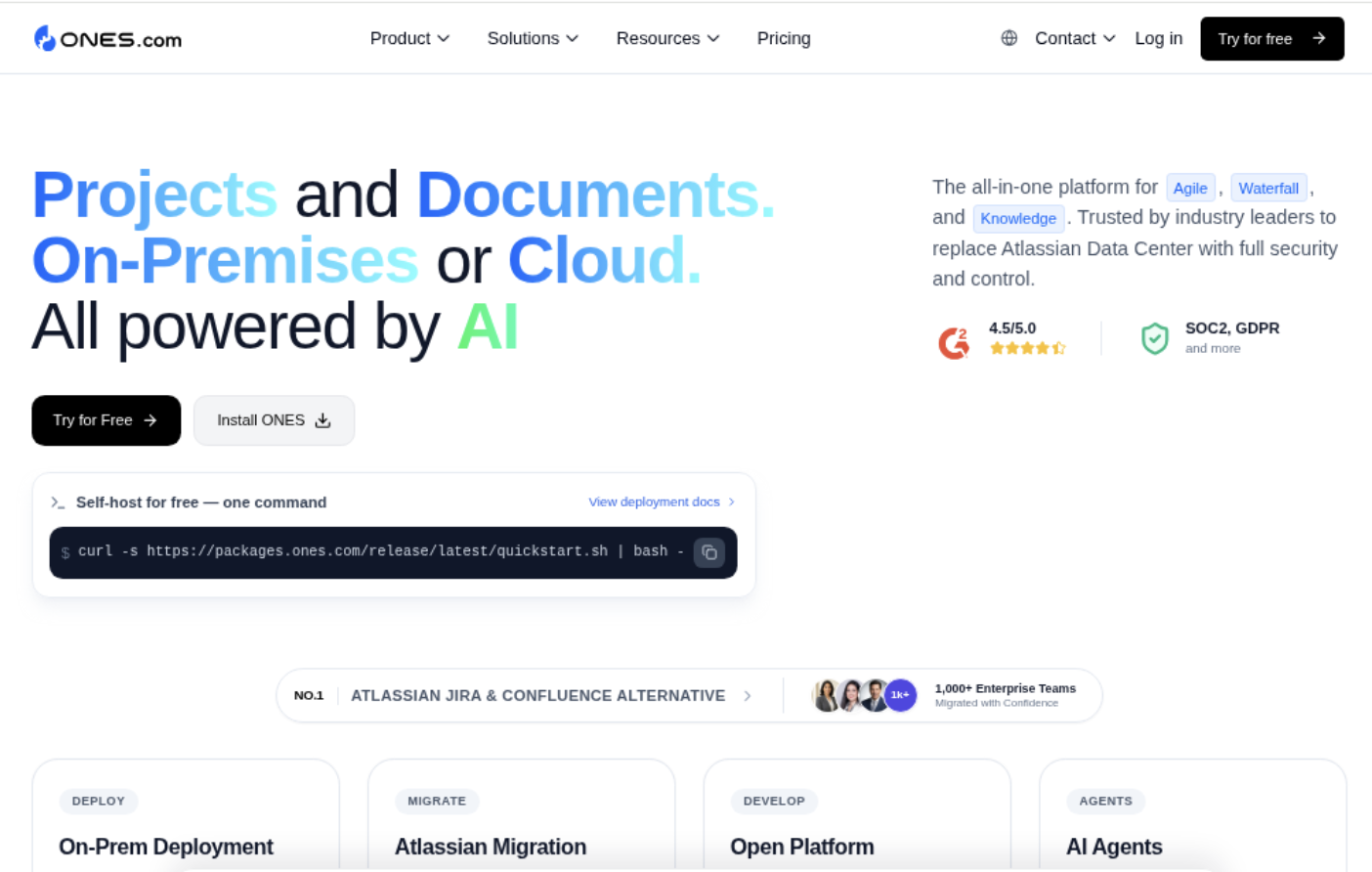
It is sold separately from ONES Wiki, which provides knowledge management capabilities and can serve as a Confluence alternative. You can evaluate either product according to your team’s requirements.
Value Proposition
ONES.com can help teams compare platform cost through native project capabilities, deployment flexibility, and fewer required plugins. It supports cloud and self-hosted environments, including air-gapped deployment.
Core Capabilities
Complex workflows are difficult to maintain
ONES capability: ONES Project supports custom workflows and custom fields for different project types.
Result: Product, engineering, and operations teams can adapt work states without building separate processes around several extensions.
Teams need familiar issue-tracking practices
ONES capability: Jira-compatible workflows help teams preserve familiar planning and issue-management patterns.
Result: Experienced project teams can reduce the learning curve during a platform evaluation or migration.
Sprint planning becomes disconnected from daily execution
ONES capability: ONES Project includes sprint management for organizing planned work and monitoring progress.
Result: Teams can connect sprint goals, assigned work, and delivery tracking in one project environment.
Manual repetitive work consumes administrator time
ONES capability: Automation supports repeatable actions across project workflows.
Result: Administrators can reduce routine updates and spend more time improving delivery processes.
Leaders lack consistent project visibility
ONES capability: Built-in reporting helps teams review progress, workload, and project status.
Result: Managers can use shared reporting views instead of assembling status updates manually.
Plugin dependence increases cost and maintenance
ONES capability: Core project features are available within ONES Project, with native workflow, field, sprint, automation, and reporting capabilities.
Result: Teams may reduce the number of extensions needed for everyday project management.
Deployment restrictions limit platform choices
ONES capability: ONES.com supports Cloud, On-Premise, Private Cloud, and Air-gapped deployments.
Result: Organizations can match the deployment model to security, network, and operational requirements.
Teams worry about feature differences between hosting models
ONES capability: ONES.com provides full feature parity between its cloud and self-hosted versions.
Result: A team can compare hosting models without assuming that self-hosting requires a reduced feature set.
Application Scenarios
Growing software company: A 60-person engineering organization can use custom workflows, sprint planning, automation, and reporting while limiting reliance on multiple plugins.
Regulated enterprise: A company with strict network controls can evaluate On-Premise, Private Cloud, or Air-gapped deployment according to its security requirements.
Distributed product organization: Product managers, developers, and operations teams can use shared project workflows and reporting across several delivery groups.
ONES.com offers a free plan for up to 30 seats. Review current commercial terms and deployment requirements before making a final comparison.
Common Challenges When Evaluating Project Management Pricing
Challenge: Comparing different seat definitions
Solution: Create a role-based access list and check how each plan bills contributors, viewers, guests, and administrators.
This prevents a misleading comparison where one platform counts every participant and another counts only active contributors.
Challenge: Choosing a plan before defining workflows
Solution: List your required processes first. Then map each process to the capabilities included in every plan.
For example, decide whether your team needs approval gates, release tracking, advanced reporting, or simple task movement.
Challenge: Underestimating connected applications
Solution: Inventory every extension your team considers essential. Add each recurring charge to the annual comparison.
Also consider the administrative time required to maintain integrations and resolve failures.
Challenge: Ignoring growth
Solution: Model current, expected, and expansion seat counts. Review the pricing impact at each stage.
This helps you avoid selecting a plan that becomes difficult to afford after normal hiring.
Challenge: Treating migration as a minor task
Solution: Estimate configuration, testing, training, permission design, and rollout support before approving a change.
A realistic transition plan protects productivity and gives decision-makers a clearer total cost.
FAQs About Jira Costs and Plan Selection
Is Jira free for small teams?
Jira may offer a free tier for smaller teams, but free access usually comes with limits. Check the current participant cap, storage allowance, automation capacity, support level, and administration controls.
A small team can often start with a free plan for basic task tracking. You may need a paid tier when reporting, permissions, integrations, or advanced planning become important.
What is the biggest factor in Jira pricing?
Seat count is often one of the largest factors, but it is not the only one. Plan level, billing term, connected products, marketplace applications, hosting, and support requirements can change the total.
Count access by role and model expected growth. This gives you a more realistic estimate than multiplying a public starting price by your current headcount.
Should I choose monthly or annual billing?
Monthly billing can suit teams with uncertain growth, temporary projects, or changing requirements. Annual billing may suit organizations with stable participation and predictable planning.
Compare the flexibility of monthly billing with the potential savings or commitment involved in annual billing. Include expected hiring and department expansion before choosing a term.
Do Jira marketplace applications cost extra?
Many marketplace applications have separate commercial terms. Their charges may depend on seat count, product tier, usage volume, or a fixed subscription.
List every extension your team relies on, then calculate its annual cost. Also include administration time and the risk of replacing an application later.
How should I compare Jira with an alternative?
Start with your workflows and required outcomes. Compare sprint planning, custom fields, automation, reporting, permissions, integrations, deployment options, migration effort, and support.
Then calculate the total annual operating cost. A platform with a different headline price may become more attractive when it includes capabilities that would otherwise require extra applications.
Conclusion
Jira pricing structure is easiest to understand when you separate plan fees from the full cost of operating the platform.
Count access by role, compare required capabilities, include connected applications, model team growth, and account for migration and administration effort.
But here's the truth: the cheapest starting plan is not always the lowest-cost choice over a full year.
Choose the option that supports your essential workflows with manageable administration and predictable growth. If you are comparing Jira alternatives, evaluate ONES Project and ONES.com alongside the same practical criteria.