Jira Pricing Tiers: A 2026 Guide to Plans, Costs, and Fit
Unsure which jira pricing tiers fit your team? Compare 2026 plans, costs, features, and deployment needs to choose confidently. Click to discover!
Jira pricing tiers can look simple until you compare user counts, billing terms, feature limits, and deployment needs. A plan that fits a five-person team may become expensive or restrictive when your organization reaches 50 or 500 users.
That uncertainty creates practical problems. You may pay for advanced controls nobody uses, discover a critical feature sits behind a higher tier, or choose a plan that cannot support your security requirements. Switching later can also disrupt workflows, permissions, and reporting.
Here’s the solution: compare each Jira plan by cost structure, capabilities, team size, and operating requirements. This guide explains how the tiers generally work in 2026, what each plan suits, and how to evaluate alternatives before committing.
Understanding Jira Pricing Tiers in 2026
Jira pricing tiers are the subscription levels Jira offers for different team sizes, feature requirements, support expectations, and deployment models. The main tiers commonly include Free, Standard, Premium, and Enterprise, although exact prices and limits can change.
Each tier usually adds capabilities as you move upward. These can include larger user limits, advanced administration, stronger security controls, higher automation allowances, broader reporting, premium support, and enterprise governance.
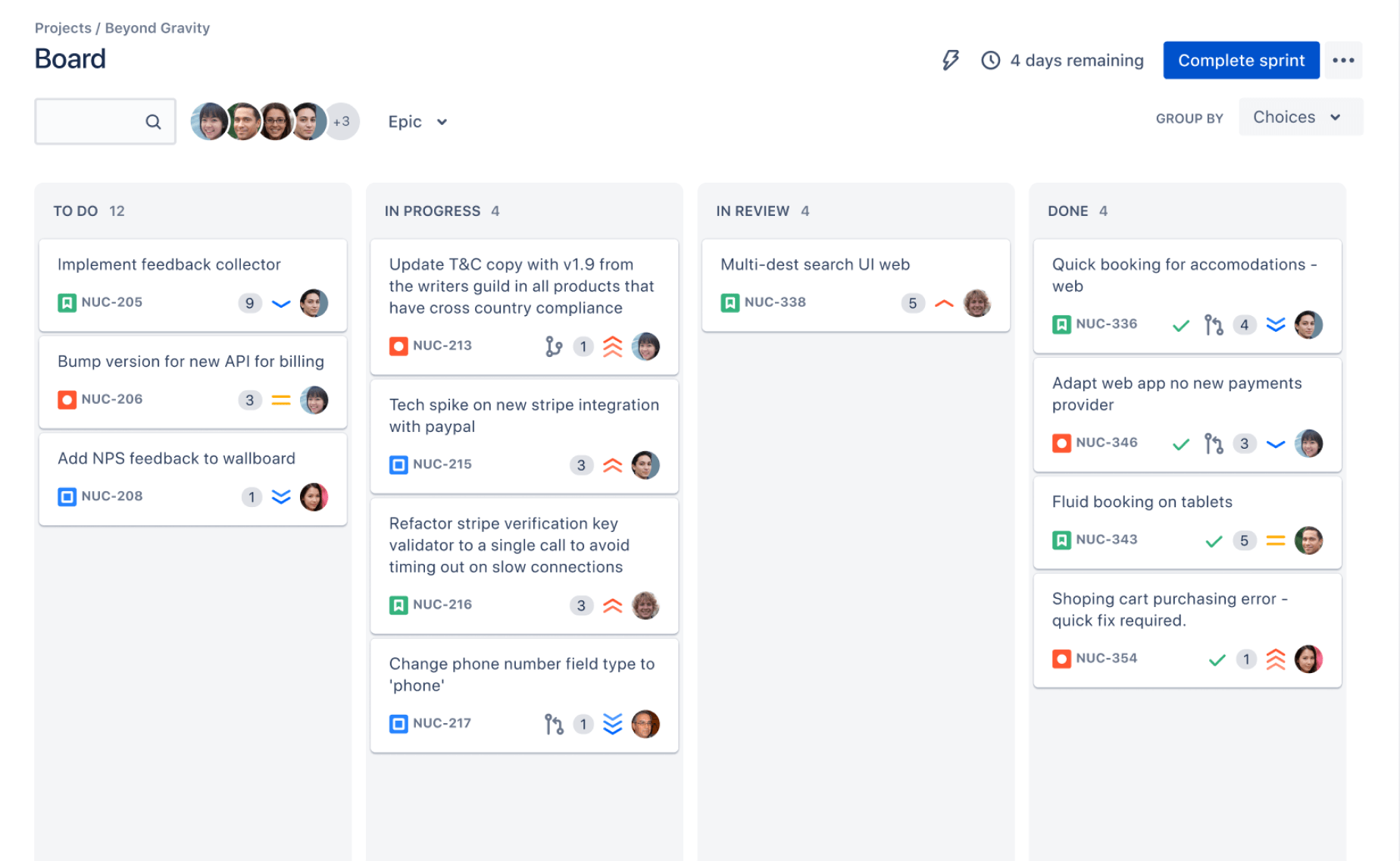
The main Jira plans at a glance
| Plan |
Best suited to |
Typical strengths |
Common limitations |
| Free |
Small teams testing Jira |
Basic project tracking, issue management, and collaboration |
User caps, limited administration, and tighter automation or storage allowances |
| Standard |
Growing teams running regular delivery work |
More users, broader controls, increased automation, and practical team administration |
Some advanced security, planning, and governance features remain unavailable |
| Premium |
Large or complex teams |
Advanced planning, cross-team coordination, higher limits, and stronger operational controls |
Higher per-user cost and possible feature overlap with other systems |
| Enterprise |
Organizations with complex governance requirements |
Central administration, enterprise support, security controls, and organization-wide management |
Usually requires a tailored quote and a formal procurement process |
Why the displayed price may differ from your final cost
Jira pricing can depend on the number of seats, billing frequency, region, currency, product combination, and promotional terms. Monthly billing often provides more flexibility, while annual billing may suit organizations with stable headcount.
Your total cost may also include related products, migration work, consulting, marketplace extensions, training, and administration. A plan that appears affordable per user can become much more expensive after you add several extensions.
But here’s the truth: the cheapest tier is rarely the most important comparison. Your real question is whether the plan supports your workflow without creating costly workarounds.
How to Compare the Plans Step by Step
- Count active users carefully. Include people who create, assign, review, or report on work. A larger seat count can move your team into a different pricing band.
- List essential capabilities. Separate must-have functions from useful extras. For example, sprint planning may be essential, while advanced portfolio views may be optional.
- Check automation and usage limits. A plan can meet your feature checklist while restricting how often rules run. Estimate recurring actions such as notifications, status updates, and integrations.
- Review security and administration needs. Examine single sign-on, user provisioning, audit controls, permission depth, and organization-wide management.
- Map your deployment requirements. Decide whether a cloud service meets your requirements or whether you need a self-managed environment with greater infrastructure control.
- Calculate the total operating cost. Add subscriptions, extensions, administration time, training, migration, and integration maintenance.
- Test a realistic workflow. Recreate a sprint, approval flow, service request, or release process. Testing reveals friction that a feature list can hide.
- Recheck the decision against expected growth. A suitable plan should support your next stage of growth without forcing an urgent migration.
Start with the workflow, then match the tier
Imagine a 12-person product team. It needs backlog management, sprint boards, custom fields, reports, and basic automation. A lower paid tier may cover those needs comfortably.
Now consider a 300-person organization with multiple departments, strict access policies, and cross-team planning. The same tier may create administrative bottlenecks, even if the core issue-tracking features remain sufficient.
Separate feature access from usage capacity
Feature access tells you whether a capability exists. Usage capacity tells you how much work the plan can handle.
For example, a plan may include automation while limiting the number of rule runs. If your team triggers 20,000 actions each month, that limit matters more than the presence of automation itself.
What You Get at Each Jira Plan Level
Free: useful for small teams and early evaluation
The Free tier is generally designed for small teams exploring Jira or managing straightforward work. You can usually create projects, track issues, assign owners, and organize work with standard boards.
It can work well for a five-person development team building an internal application. Everyone may understand the workflow, the project count may remain low, and administration may be simple.
Limits become more important as the team grows. User caps, reduced administration, restricted automation, and lighter reporting can affect a team that depends on repeatable processes.
Standard: the practical tier for growing teams
Standard typically suits teams that have moved beyond basic tracking. It generally provides more seats, increased usage allowances, broader project controls, and better support for routine collaboration.
A 40-person software team may choose this level for sprint planning, defect tracking, release coordination, and recurring automation. It often represents the point where Jira becomes an operational system rather than a small-team task board.
Before choosing it, check which security and administration features remain limited. Those gaps can matter when contractors, multiple departments, or external collaborators enter the environment.
Premium: designed for complexity and scale
Premium usually targets organizations that need more advanced planning, larger operating capacity, stronger coordination, or additional safeguards.
Consider a company with six delivery teams sharing a release schedule. Cross-team dependencies, planned capacity, and service reliability may justify a higher tier because coordination errors carry a larger cost.
Premium pricing needs a careful value test. If your team uses only boards and basic reports, advanced capabilities may sit unused while increasing your recurring spend.
Enterprise: built around governance
Enterprise plans generally address organization-wide administration, security, compliance, support, and centralized management. Exact terms often depend on a negotiated arrangement.
This level may suit a global organization with regional teams, formal identity management, procurement controls, and strict access policies.
Enterprise evaluation should include legal, security, finance, and operations stakeholders. A team-level trial cannot fully measure organization-wide governance requirements.
Jira Cloud Costs Versus Self-Managed Deployment
Cloud pricing is usually easier to start with because the provider handles infrastructure, upgrades, availability, and much of the maintenance. You pay a recurring subscription based largely on seats and plan level.
Self-managed deployment can provide greater control over hosting, network access, upgrades, and internal policies. It can also require infrastructure, technical administration, backup planning, monitoring, and upgrade testing.
A simple cost comparison
| Cost area |
Cloud subscription |
Self-managed environment |
| Software access |
Recurring plan fee |
License or subscription terms may vary |
| Infrastructure |
Usually included in the service model |
Managed by your organization or hosting partner |
| Maintenance |
Mostly handled by the provider |
Requires internal planning and technical ownership |
| Customization |
Constrained by service capabilities and extensions |
May offer greater environmental control |
| Security management |
Shared responsibility with provider controls |
More direct control, alongside more responsibility |
Here’s why this distinction matters: a lower subscription price does not automatically mean a lower operating cost. If your team spends 20 hours each month maintaining a self-managed environment, that labor belongs in the comparison.
How Team Size Changes the Value Calculation
Per-user pricing becomes more significant as headcount increases. A difference of a few dollars per seat may be minor for 10 people, yet substantial for 800 people over a year.
Use a simple annual estimate: seats multiplied by the monthly rate, multiplied by 12. Then add extensions, implementation, training, administration, and expected growth.
Example: a small product team
A 15-person team may care most about backlog management, sprint boards, dashboards, and basic automation. Paying for enterprise controls may offer little practical return.
Example: a growing product organization
A 120-person organization may need multiple projects, shared workflows, permission rules, release planning, and consistent reporting. Administrative efficiency can matter as much as the subscription amount.
Example: a large regulated business
A 1,000-person company may evaluate identity management, audit visibility, regional administration, support response, and policy enforcement. The purchasing decision involves risk reduction as well as feature access.
The best part? You can avoid overbuying by ranking requirements. Mark each capability as essential, valuable, or unnecessary. Then compare plans against that ranking.
Hidden Costs That Can Change the Decision
Subscription fees are only one part of the financial picture. The surrounding work can influence whether a tier remains affordable after adoption.
Extensions and integrations
Teams often add planning, time tracking, reporting, testing, documentation, or service management extensions. Each addition may bring its own subscription and administration requirements.
Migration and implementation
Moving projects, workflows, permissions, dashboards, and historical activity takes planning. Complex migrations may require specialist help or temporary parallel operation.
Administration time
Someone must maintain workflows, manage access, monitor automation, support new team members, and investigate reporting issues. A system that requires constant manual care can reduce the value of a low-priced plan.
Training and adoption
If each team creates its own workflow, naming pattern, and dashboard style, reporting becomes harder. Training and governance can prevent that fragmentation.
Upgrade pressure
Growth can trigger a move to a higher tier before the team has planned for it. Model your likely user count and usage levels for the next 12 to 24 months.
ONES.com is a unified platform for project management and knowledge management, powered by ONES Assistant. ONES Project is the project management product and can serve as a Jira alternative, while ONES Wiki supports knowledge management as a Confluence alternative. They are sold separately.
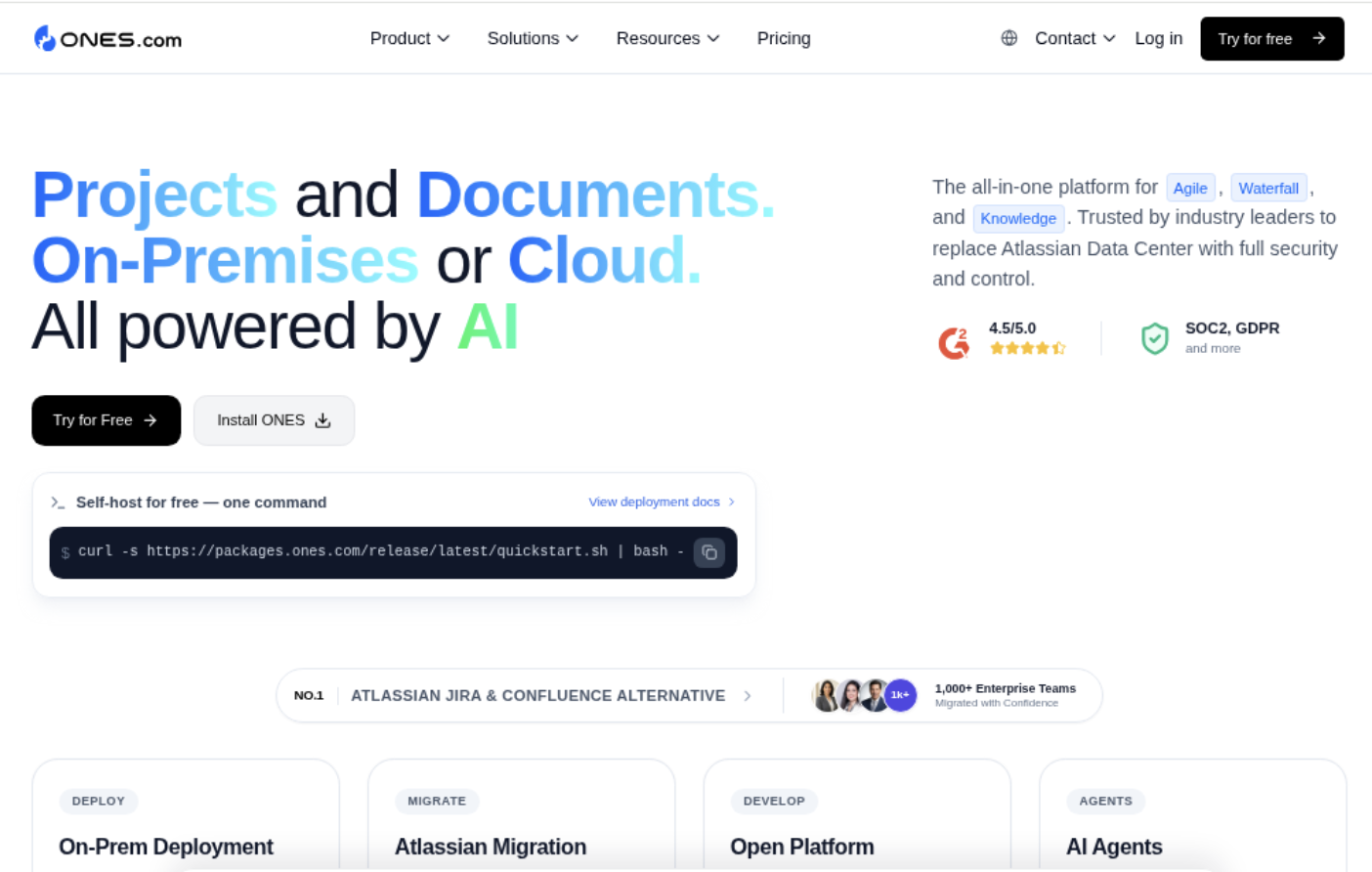
Core capabilities
Rising subscription complexity → Unified planning options → Fewer disconnected systems
When teams pay for several products to manage delivery and internal knowledge, ONES.com provides a broader platform approach. You can select ONES Project, ONES Wiki, or both according to your operating needs.
Jira migration concerns → Jira-compatible workflows → Easier process transition
Teams familiar with Jira-style issue tracking can continue using comparable project workflows. That reduces the disruption of changing terminology and delivery habits.
Plugin dependence → Native project features → Lower extension overhead
ONES Project includes sprint management, custom workflows, custom fields, built-in reporting, and automation. Native capabilities can reduce the number of plugins required for everyday delivery work.
Limited deployment choice → Four deployment models → Better environment fit
ONES.com supports Cloud, On-Premise, Private Cloud, and Air-gapped deployments. This gives teams more flexibility when network isolation or internal hosting requirements affect the buying decision.
Cloud and self-hosted feature gaps → Feature parity → Consistent team experience
ONES.com maintains full feature parity between its cloud and self-hosted versions. Teams can evaluate deployment according to governance and infrastructure needs without accepting a reduced feature set.
Complex administration → Custom workflows and fields → More precise process control
Different teams can model approvals, defects, releases, or service requests with custom workflows and fields. That helps teams capture the information their processes actually require.
Weak visibility → Built-in reporting → Faster operational review
Built-in reporting helps managers review progress, workload, bottlenecks, and delivery trends without depending entirely on separate reporting extensions.
Budget pressure → Free access for up to 30 seats → Lower evaluation barrier
Teams can evaluate the platform with up to 30 seats at no cost. That creates room to test workflows before making a larger purchasing decision.
Application scenarios
Software delivery: A 20-person engineering group can manage a backlog, run sprints, automate status changes, and review delivery reports in ONES Project.
Restricted environments: A security-sensitive organization can evaluate an air-gapped or on-premise deployment while retaining the same core feature set available in the cloud version.
Cross-functional operations: Product, engineering, and operations teams can use structured workflows for requests, approvals, defects, and releases. ONES Wiki can be added separately when shared knowledge management is also required.
Common Challenges When Selecting a Plan
Challenge: Comparing headline prices only
Solution: Calculate total ownership cost. Include seats, extensions, administration, training, migration, and expected growth before comparing plans.
Challenge: Choosing a higher tier for one occasional feature
Solution: Measure how often the feature will be used. If only one team needs it twice a year, a separate process may cost less than upgrading the entire organization.
Challenge: Ignoring usage limits
Solution: Estimate automation actions, storage, project counts, service requests, and reporting activity. Capacity constraints can create more friction than missing features.
Challenge: Underestimating governance
Solution: Involve security, IT, finance, and operations early. Their requirements may change the preferred plan or deployment model.
Challenge: Treating migration as a technical task only
Solution: Include workflow design, permissions, training, reporting, and adoption planning. A technically successful move can still fail if teams cannot work comfortably afterward.
FAQs About Jira Plan Pricing
Which Jira plan is best for a small team?
The Free plan can suit a small team with straightforward project tracking and modest usage. Standard may be more appropriate when you need additional seats, automation, administration, or reporting capacity. Test your actual workflow before choosing. Pay particular attention to user limits and recurring automation, since those restrictions can appear quickly as the team grows.
Does Jira charge per user?
Jira plans generally use seat-based pricing, though the final structure can depend on the product, billing term, region, and plan. Check whether occasional collaborators count toward your licensed seats. Also review whether related products use separate pricing, because adding service management or knowledge capabilities can change the total subscription.
Is annual billing cheaper than monthly billing?
Annual billing may offer better value or more predictable budgeting, while monthly billing provides flexibility when headcount changes often. The right choice depends on hiring plans, project duration, and procurement rules. Compare the full annual commitment with the cost of monthly flexibility, including any expected seat changes during the year.
When should a team move from Standard to Premium?
Consider Premium when advanced planning, cross-team coordination, higher usage limits, or stronger operational controls solve a recurring business problem. A team should identify the specific bottleneck first. If the upgrade only adds features that nobody plans to use, the additional cost may not create meaningful value.
Can a Jira alternative reduce total project management cost?
It can, depending on the platform, migration effort, feature coverage, deployment needs, and extension requirements. Compare the full operating model rather than the subscription alone. ONES Project, for example, includes Jira-compatible workflows, reporting, custom fields, sprint management, and automation, with cloud and self-hosted deployment choices.
What should an enterprise check before signing?
Review identity management, permissions, audit controls, support terms, data handling, deployment options, migration responsibilities, and renewal conditions. Ask how the plan handles growth and whether different environments maintain comparable capabilities. A short technical trial should be combined with security and procurement reviews.
Conclusion
Jira pricing tiers become easier to evaluate when you look beyond the advertised subscription. Start with your team size, essential workflows, usage levels, deployment requirements, and expected growth.
Then calculate the full operating cost, including extensions, administration, migration, and training. A Free plan may fit a small team, Standard often suits growing delivery groups, Premium supports greater complexity, and Enterprise focuses on organization-wide governance.
But here’s the practical takeaway: choose the tier that removes your biggest operational constraint. If the cost or deployment model still feels mismatched, compare a Jira alternative such as ONES Project and test it against a real workflow.
You can reduce uncertainty by running a focused trial, measuring adoption, and confirming the plan’s limits before signing. That process turns pricing research into a practical technology decision.