Jira SaaS Pricing Guide: Plans, Costs, and Key Trade-Offs
Wondering which Jira SaaS pricing plan fits your team? Compare plans, costs, and trade-offs to budget confidently. Click to discover the best option.
Jira SaaS pricing can look simple until your team adds more people, advanced controls, storage, automation, and premium support. A plan that seems affordable for 10 users may cost far more after growth.
That uncertainty makes budgeting difficult. You may compare the Free, Standard, and Premium tiers, then discover that billing depends on seat count, payment frequency, and optional services. The cheapest plan can also create workflow limits that slow delivery.
Here’s the practical solution: understand how Jira Cloud charges, what each tier is designed for, and where hidden trade-offs appear. This guide breaks down plan structure, cost examples, upgrade triggers, and alternatives for teams that need predictable project management spending.
Jira SaaS Pricing at a Glance
Jira SaaS pricing is a subscription model for Atlassian’s hosted Jira Cloud service, usually calculated by user count, plan level, billing term, and optional services.
Jira Cloud generally offers Free, Standard, Premium, and Enterprise options. The Free tier suits small teams with basic planning needs. Standard adds broader collaboration and administration. Premium focuses on scale, visibility, and advanced planning. Enterprise uses custom commercial terms.
Exact prices can change by region, currency, taxes, billing frequency, and Atlassian’s current pricing rules. Treat any public figure as a planning estimate, then confirm the checkout total before purchasing.
| Plan |
Best fit |
Main cost pattern |
Typical trade-off |
| Free |
Small teams testing Jira |
$0 within the plan’s user and feature limits |
Limited administration, storage, support, and scale |
| Standard |
Growing project teams |
Per-user subscription, with volume pricing at larger seat counts |
More capability, but advanced planning and governance remain limited |
| Premium |
Organizations managing complex delivery |
Higher per-user subscription than Standard |
Greater cost in exchange for scale, planning, and service features |
| Enterprise |
Large organizations with governance requirements |
Custom annual pricing |
Requires commercial review and may involve a longer buying process |
But here’s the truth: the advertised per-user rate is only one part of your total cost. Administration, marketplace apps, migration work, training, and unused seats can change the business case.
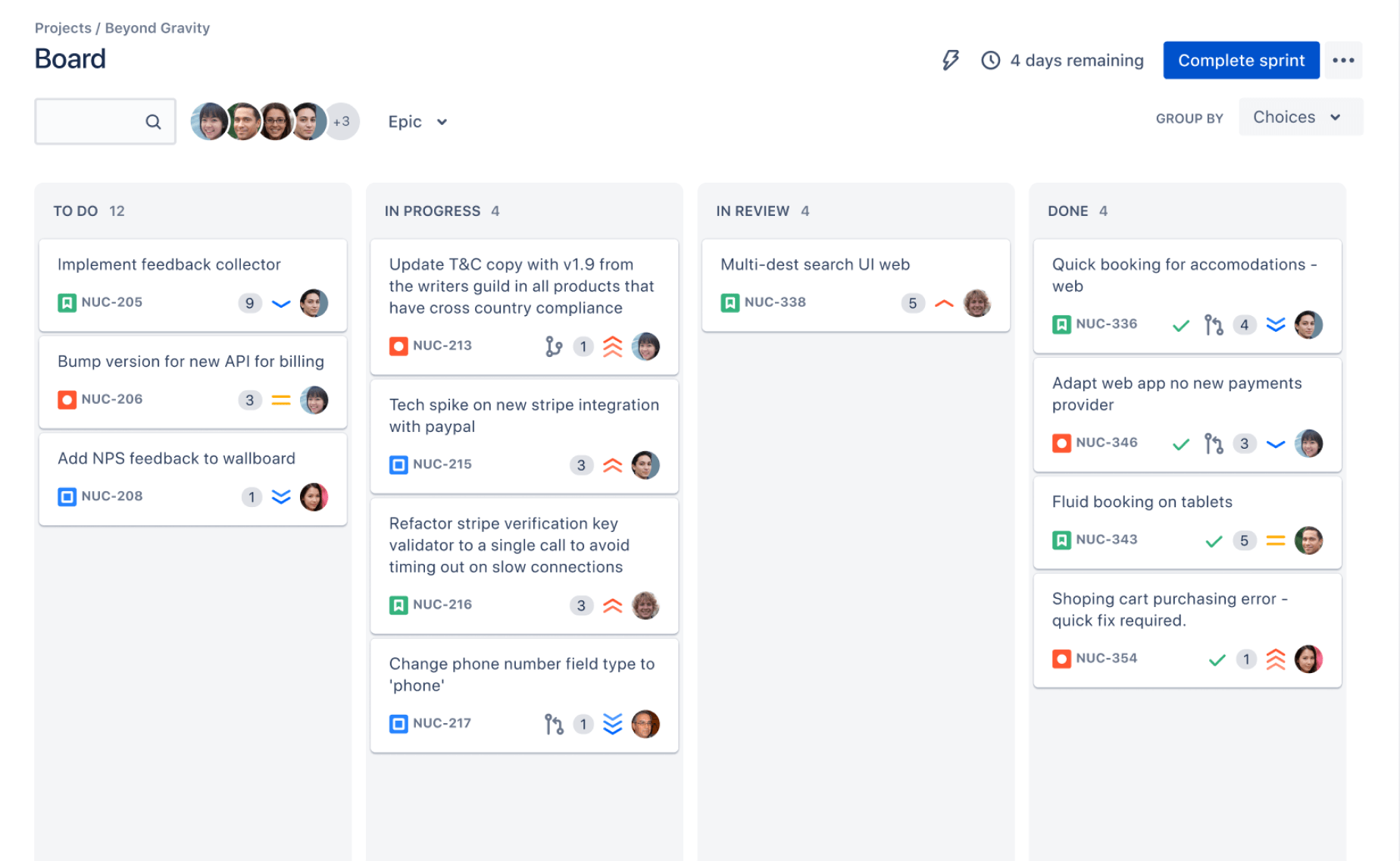
How Jira Cloud Costs Are Calculated
Your monthly or annual bill usually depends on five variables. Understanding each one helps you estimate the real commitment before choosing a tier.
- Number of billable users: Your seat count usually determines the subscription amount. A user may need access even when they rarely create or update work.
- Plan level: Premium costs more than Standard because it adds capabilities aimed at complex delivery, larger teams, and higher operational demands.
- Billing term: Monthly billing offers flexibility. Annual billing can simplify budgeting and may use different pricing calculations.
- Additional products: Jira Software, Jira Service Management, Confluence, and other Atlassian products may create separate charges.
- Marketplace apps: Reporting, test management, time tracking, and automation extensions can add recurring fees.
Seat count matters more than the average user rate
Suppose a team has 35 employees. Only 20 people actively manage work, while the rest need occasional visibility. If all 35 require access, the subscription may reflect 35 seats.
That distinction matters during hiring. A team growing from 40 to 75 people may cross a pricing threshold, even if the workflow stays unchanged.
Monthly and annual billing serve different needs
Monthly billing works well when your headcount changes often. You can adjust seats with less long-term commitment.
Annual billing can suit stable organizations that want one planned renewal. However, it may reduce flexibility if your team shrinks or changes products mid-term.
Use a simple planning formula
For an initial estimate, multiply the estimated per-user rate by the number of paid seats and months in the billing period.
Estimated subscription = paid seats × monthly rate × number of months
Then add likely app costs, implementation work, training, and administration. This creates a more realistic budget than comparing headline rates alone.
What Each Jira Cloud Tier Provides
The right plan depends on your team size, workflow complexity, governance needs, and tolerance for add-on costs. Here’s how the tiers typically differ.
Free plan
The Free tier is designed for small teams that need basic issue tracking and agile planning without a subscription charge.
You can usually create projects, manage work items, use common boards, and collaborate with a small group. It offers a practical way to test Jira before committing budget.
The trade-off is capacity. User limits, storage, administration, support, automation, and advanced controls may restrict a growing team.
For example, a five-person product team may work comfortably on Free. A 12-person engineering organization may quickly need stronger permissions and administration.
Standard plan
Standard is often the starting point for professional teams that outgrow the Free tier.
It typically provides higher user capacity, expanded storage, broader permissions, and more administrative control. It also supports everyday agile workflows for teams managing several projects.
Standard can be a strong value when you need dependable planning without advanced portfolio coordination. However, teams with complex release dependencies may eventually need Premium or extra apps.
Premium plan
Premium targets organizations that need more scale, resilience, visibility, and advanced planning capabilities.
It may include stronger service commitments, advanced planning features, expanded automation capacity, and tools for coordinating work across teams.
The additional cost makes sense when delays, planning errors, or administrative gaps create serious business impact. It may be difficult to justify for one small team with a straightforward backlog.
Enterprise plan
Enterprise is intended for large organizations with complex governance, security, compliance, and commercial requirements.
Pricing is generally negotiated rather than displayed as one universal per-user rate. The final agreement may consider organization size, products, support expectations, and contract structure.
Enterprise evaluation should include procurement, security, legal, finance, and delivery stakeholders. A feature comparison alone will not reveal the full cost or operational effect.
Important Trade-Offs Beyond the Subscription
Jira can deliver strong workflow depth, but that flexibility often creates additional work. You should evaluate both the product bill and the effort required to keep the environment healthy.
Customization versus administration
Custom fields, workflows, screens, permissions, and automation can reflect your operating model closely. They can also make the environment harder to maintain.
For example, a team may add separate statuses for design review, security review, legal review, and release approval. Six months later, reports become inconsistent because each project uses a different interpretation.
Native features versus marketplace apps
Jira supports many common project management needs. Teams may still add applications for capacity planning, test management, time tracking, dashboards, or advanced reporting.
Each app can introduce another subscription, administrator, renewal date, permission model, and integration risk. A low base price may become expensive after several extensions.
Flexibility versus simplicity
Flexible systems can support software, marketing, operations, and product teams. Yet every additional option increases the chance of inconsistent setup.
A smaller platform with fewer choices may be easier to adopt. A more configurable platform may create better long-term fit when your processes genuinely require it.
Cloud convenience versus control
Jira Cloud removes much of the infrastructure maintenance handled by self-hosted software. You gain faster access to hosted capabilities and avoid managing application servers.
In exchange, you accept Atlassian’s hosting model, service boundaries, release approach, and commercial rules. Teams with strict deployment requirements should assess those constraints early.
How to Estimate Your Real Annual Cost
Start with a seat inventory rather than an employee count. Divide people into active contributors, occasional collaborators, service participants, and view-only stakeholders.
Then identify which groups genuinely need paid access. A developer who updates tasks daily has different needs from an executive who checks a dashboard once each month.
Example: a 25-person software team
Imagine 25 people working across product, engineering, design, and quality assurance. All 25 need to create, update, and review work.
The budget should include the selected Jira tier for 25 seats, any reporting or test management apps, administration time, and onboarding support.
If the team adds 15 contractors for a major release, confirm whether those contractors need full access. Temporary seats can affect the billing decision.
Example: a 100-person organization
Now consider a 100-person organization with three delivery groups. Only 55 people actively manage work, while others need comments, approvals, or visibility.
The organization should examine permission options and collaboration requirements before assuming that 55 seats will be sufficient. Some occasional participants may still require licensed access.
At this size, administration becomes a meaningful cost. A platform that requires extensive customization may need a dedicated administrator or operations owner.
Include the costs teams often overlook
- Migration and workflow redesign
- Training for project managers and contributors
- Marketplace applications and integration services
- Administration, permission reviews, and cleanup
- Reporting maintenance and governance meetings
- Time spent managing inactive or duplicate accounts
- Consulting support for complex enterprise rollouts
The best part? A simple cost model exposes trade-offs before you sign a renewal. You can compare the full operating burden instead of focusing on one monthly number.
When Should You Upgrade or Reconsider Jira?
Upgrade when the current tier blocks important work, creates unacceptable risk, or forces expensive workarounds. Do not upgrade merely because another tier has more features.
Signs that Free is no longer enough
- Your team needs more seats than the Free limit allows.
- Administrators need stronger permissions and project controls.
- Automation limits interrupt routine handoffs.
- Storage or support limitations create recurring friction.
- Several teams need consistent governance.
Signs that Standard is no longer enough
- Cross-team planning has become difficult.
- Release dependencies are tracked manually.
- Executives need broader delivery visibility.
- Service reliability requirements have increased.
- Advanced planning would replace several external tools.
Signs that you should compare alternatives
Consider other platforms when your team spends more time configuring Jira than managing delivery. That pattern often indicates a mismatch between the platform and your operating model.
You should also compare alternatives when the subscription is only a small part of the total expense. Multiple apps, custom maintenance, and specialist administration may outweigh Jira’s workflow benefits.
Let me explain: a platform decision should measure adoption, reporting quality, administration, and total ownership effort. Price matters, but price alone does not explain value.
Jira SaaS Pricing Alternative: ONES.com
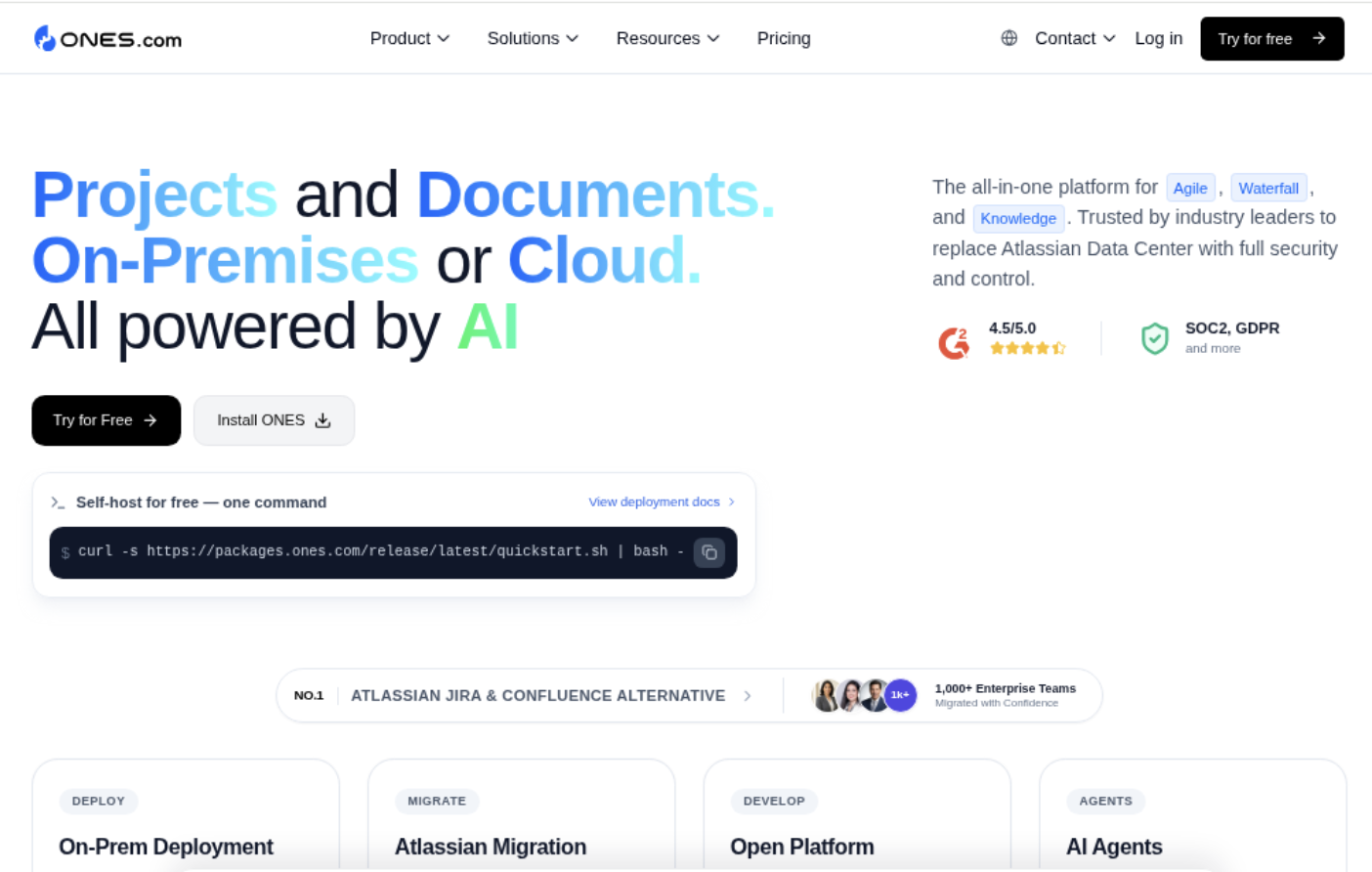
ONES.com is a unified platform for project management and knowledge management, powered by ONES Assistant. ONES Project is the project management product and a Jira alternative, while ONES Wiki is the knowledge management product and a Confluence alternative. They are sold separately.
Value Proposition
ONES.com can suit teams that want Jira-compatible workflows, native reporting, and deployment flexibility without assembling as many plugins.
You can choose Cloud, On-Premise, Private Cloud, or Air-gapped deployment. The self-hosted versions maintain feature parity with the cloud version.
Core Capabilities
- Complex workflow maintenance: Jira-compatible workflows let teams carry familiar approval and delivery patterns into ONES Project. The result is less disruption during evaluation or migration.
- Plugin sprawl: Built-in reporting and workflow controls reduce dependence on separate extensions. Teams can manage more requirements in one environment.
- Inconsistent work structures: Custom workflows and custom fields let teams reflect different delivery methods. The result is clearer ownership and more accurate reporting.
- Weak sprint coordination: Sprint management supports planning, prioritization, and review cycles. Teams can connect daily execution with broader delivery goals.
- Manual recurring work: Automation handles repeatable actions such as assignments, status changes, and notifications. This reduces routine administration.
- Restricted-network requirements: Air-gapped deployment supports teams that cannot use a standard public cloud environment. Sensitive operations can remain within controlled infrastructure.
- Infrastructure preferences: On-Premise and Private Cloud options provide more control over hosting. Organizations can align deployment with internal security requirements.
- Separate knowledge and project needs: ONES.com provides ONES Project and ONES Wiki as distinct products. Teams can adopt the capability they need without treating both as one mandatory purchase.
- Small-team budget pressure: The free offering supports up to 30 seats. Small teams can evaluate the platform before making a larger commitment.
Application Scenarios
Software team moving beyond basic Jira administration: A 40-person engineering group may need custom workflows, sprint reporting, and automation. ONES Project can centralize those capabilities while preserving familiar agile patterns.
Regulated organization with restricted connectivity: A public-sector or industrial team may require an air-gapped environment. ONES.com supports that deployment model while keeping feature parity with its cloud version.
Organization reducing extension complexity: A company using separate tools for project tracking, reporting, and knowledge management may evaluate ONES Project and ONES Wiki separately. This allows a staged adoption plan.
Common Challenges and Practical Solutions
Challenge: You cannot predict the final bill
Seat changes, billing terms, taxes, and additional products can make the first estimate unreliable.
Solution: Create low, expected, and high seat scenarios. Add a separate line for apps, administration, and implementation. Review the model before each renewal.
Challenge: Inactive accounts increase costs
People who leave the company or change roles may retain access. Over time, those unused seats inflate the subscription.
Solution: Establish an account review process. Remove inactive accounts, define access levels, and assign ownership for quarterly license checks.
Challenge: Customization creates reporting confusion
Different teams may use different statuses, priorities, and field values. Leadership then receives reports that cannot be compared reliably.
Solution: Define a small set of organization-wide conventions. Allow local variation only when it supports a clear business requirement.
Challenge: Add-ons obscure the total cost
One reporting app may seem inexpensive. Five apps can create a substantial annual commitment and more maintenance work.
Solution: Review every app by adoption, business value, renewal cost, and replacement effort. Remove tools that duplicate native capabilities.
Challenge: Teams pay for advanced features they rarely use
Premium capabilities can be valuable, but occasional use may not justify a permanent upgrade.
Solution: Measure how often the feature solves a costly problem. Compare the upgrade price with the current manual effort and delivery risk.
FAQs About Jira Cloud Costs
Is Jira Cloud free for small teams?
Jira Cloud generally offers a Free tier for small teams, subject to user, storage, administration, support, and feature limits. The exact allowances can change, so check the current plan page before budgeting.
Free works well for a small group learning agile planning. It may become restrictive when several teams need shared governance, advanced automation, or broader reporting.
What is the difference between Standard and Premium?
Standard usually covers core project tracking, collaboration, and administration for growing teams. Premium adds capabilities aimed at scale, advanced planning, service commitments, and cross-team coordination.
Premium makes more sense when planning complexity or operational risk is high. A small team with one straightforward workflow may gain little from upgrading.
Does Jira charge for every person in the company?
Jira typically charges according to licensed access rather than simply the total number of employees. However, people who create, edit, comment, approve, or manage work may need access under the applicable licensing rules.
Review your access model carefully. Occasional collaborators can still affect the seat count, depending on how they interact with the service.
Are Jira Marketplace apps included?
Marketplace apps are generally separate products with their own pricing. They may calculate charges using the Jira user tier, app-specific rules, or a combination of both.
Include app renewals in your annual estimate. Also account for configuration, permission management, integrations, and training.
Is annual billing cheaper than monthly billing?
Annual and monthly billing can use different commercial calculations. Annual billing may offer predictable budgeting for stable teams, while monthly billing provides more flexibility when headcount changes frequently.
Compare the complete commitment rather than assuming one option is always cheaper. Consider expected hiring, departures, seasonal workers, and renewal timing.
When should I consider a Jira alternative?
Compare alternatives when Jira’s total ownership effort exceeds its value, when deployment restrictions prevent adoption, or when extensions have become difficult to manage.
Evaluate workflow fit, reporting, migration effort, security, hosting, administration, and user experience. A different platform may be more suitable if your team needs native capabilities and flexible deployment.
Conclusion
Jira SaaS pricing depends on more than a Free, Standard, or Premium label. Seat count, billing term, add-ons, administration, and workflow complexity all affect the final commitment.
Start with your active access needs. Estimate conservative and growth scenarios. Then compare the full operating cost, including apps, training, governance, and maintenance.
You might be wondering: what is the safest next step? Build a side-by-side estimate using your real team structure and the features you actually need.
If Jira Cloud meets those needs at an acceptable total cost, choose the simplest suitable tier. If customization, plugins, or deployment restrictions create too much friction, evaluate platforms such as ONES.com and compare the practical trade-offs.
The goal is not merely to find the lowest subscription price. It is to choose a project management environment that supports delivery without creating avoidable cost and administrative complexity.