Jira Salesforce Integration: A Practical Setup Guide [2026]
Need to connect sales and engineering? This jira salesforce integration guide shows how to set up reliable workflows and avoid sync errors. Read now!
Sales and engineering teams often lose hours moving information between Salesforce and Jira. A new opportunity may need a delivery task, while a production issue may require an update for the account team. Without a clear connection, details get copied manually, ownership becomes unclear, and important changes arrive late.
The problem grows as teams add custom fields, multiple projects, approval stages, and different permission rules. A simple one-way connection can also create duplicate issues or endless update loops.
Here's the solution: plan the business events first, choose the right integration method, map fields carefully, and test every direction of synchronization before launch. This guide shows you how to connect Salesforce and Jira in 2026, with practical setup steps, examples, testing advice, and alternatives for teams that need a more unified workflow.
How to Set Up Jira Salesforce Integration
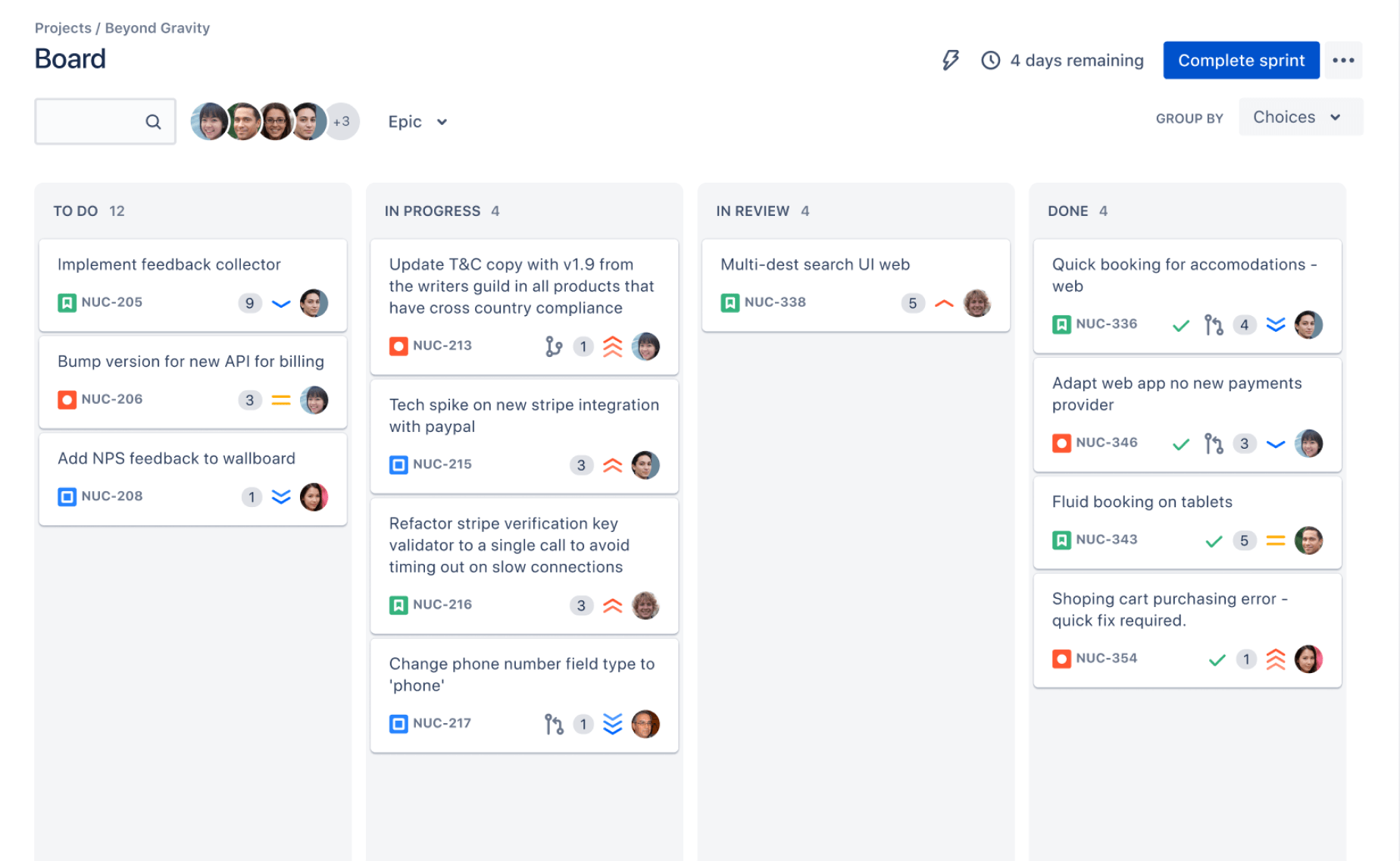
Jira Salesforce integration connects customer, sales, and delivery workflows so selected Salesforce records and Jira issues can trigger updates across both platforms. A good setup usually connects Salesforce opportunities, accounts, or cases with Jira projects, issues, and status changes.
The safest approach is to begin with one clear workflow. For example, when an opportunity reaches “Closed Won,” Salesforce can create a Jira implementation epic with the account name, expected launch date, owner, and required services.
1. Define the business workflow
Start by describing the event that should begin the handoff. Avoid configuring every possible object and field at once. A narrow first workflow makes testing easier and gives your team a reliable pattern to expand.
Write down four details:
- Which Salesforce event starts the workflow?
- Which Jira project and issue type should receive the information?
- Which fields must move between the platforms?
- Which later changes should sync back?
For example, your first workflow might look like this:
- Salesforce opportunity changes to “Closed Won.”
- Jira creates an implementation epic.
- The epic receives the account, contract value, launch date, and Salesforce record link.
- Jira status changes send progress updates to Salesforce.
- Salesforce users can open the linked Jira work without searching manually.
2. Confirm access and integration requirements
Check permissions in both applications before building anything. The connection may need permission to create Jira issues, update Salesforce records, read selected fields, and follow links between records.
Use a dedicated integration identity where possible. This makes ownership clearer when a workflow creates or updates an item. It also prevents a departing employee’s account from breaking an automation.
Confirm these requirements:
- Jira project administration access.
- Salesforce access to the relevant objects and fields.
- Permission to create, edit, and link records.
- Access to automation, webhooks, or an integration platform.
- Agreement on who owns failed syncs.
- A safe testing environment or restricted pilot project.
3. Choose the connection method
You generally have three practical options: a prebuilt connector, an automation platform, or a custom integration using APIs and webhooks.
| Method |
Best fit |
Main trade-off |
| Prebuilt connector |
Common workflows with standard objects and fields |
Less flexibility for unusual business rules |
| Automation platform |
Teams that need several apps connected quickly |
Usage limits, subscription costs, and extra administration |
| Custom API integration |
Complex logic, high volume, or strict control |
Requires development, monitoring, and long-term maintenance |
Here's why the choice matters: the integration method controls how much flexibility you have when handling errors, custom objects, permissions, and duplicate prevention.
4. Map objects, issues, and fields
Decide which Salesforce objects correspond to Jira work items. A Salesforce opportunity might create a Jira epic, while a Salesforce case might create a Jira task or bug.
A practical mapping may look like this:
| Salesforce field |
Jira destination |
Example value |
| Opportunity name |
Epic summary |
Acme onboarding |
| Account name |
Custom account field |
Acme Corporation |
| Close date |
Target date |
June 30, 2026 |
| Salesforce owner |
Jira assignee or coordinator |
Account executive |
| Opportunity stage |
Jira status or label |
Closed Won |
| Jira issue key |
Salesforce link field |
PROJ-184 |
Keep the first mapping small. Every extra field creates another permission, format, validation, and maintenance concern.
5. Configure the trigger and action
Configure the event that starts the workflow, then define the action that should follow. The trigger could be a Salesforce stage change, a new case, or a selected checkbox. The action could create an issue, update a status, add a comment, or attach a link.
Use conditions to prevent accidental creation. For example, create a Jira epic only when the opportunity stage equals “Closed Won” and the “Jira project created” checkbox is empty.
After successful creation, write the Jira issue key back to Salesforce. That value becomes the connection between the records and helps prevent duplicates during later updates.
6. Add two-way synchronization carefully
Two-way sync can save time, though it requires clear ownership. Decide which application controls each field.
| Field |
System of control |
Sync direction |
| Opportunity stage |
Salesforce |
Salesforce to Jira |
| Implementation status |
Jira |
Jira to Salesforce |
| Launch date |
Shared ownership |
Sync only after defined approval |
| Internal engineering notes |
Jira |
No sync to Salesforce |
Without ownership rules, one update can overwrite another. A sales representative may adjust a launch date while a delivery manager changes the same field in Jira.
7. Prevent duplicate issues and sync loops
Duplicate prevention should be part of the first configuration. Store a stable identifier in both systems, such as the Salesforce record ID and Jira issue key.
Use conditions such as:
- Create a Jira issue only when the Salesforce Jira key field is empty.
- Update the existing Jira issue when that key is already present.
- Ignore updates made by the integration identity when necessary.
- Apply a status-change rule only when the new value differs.
- Record an event identifier for workflows that may retry.
A retry can happen after a temporary connection failure. Without an idempotency check, the same opportunity might create two identical Jira epics.
8. Test with realistic scenarios
Run tests with a small group of records that represent real conditions. Include a straightforward success, a missing value, a permission failure, a duplicate attempt, and a later update.
Test at least these scenarios:
- Create a new qualifying Salesforce opportunity.
- Change an opportunity that should not create Jira work.
- Update the opportunity after the Jira epic exists.
- Change Jira progress and verify the Salesforce update.
- Remove or restrict a required field.
- Force a temporary connection error and observe the retry behavior.
- Attempt the same trigger twice.
9. Launch gradually and monitor the workflow
Start with one Salesforce team and one Jira project. Monitor results for several business cycles before expanding to other teams.
Create an operating routine for failed events. Someone should review errors, correct the underlying problem, and replay the event when appropriate.
The best part? A small pilot reveals practical issues that configuration screens rarely show, such as unexpected status names, incomplete account details, or unclear ownership.
Plan the Right Salesforce-to-Jira Workflow
An integration works best when it follows a real handoff between teams. Start with the moment when information changes hands, rather than starting with a list of available fields.
For example, sales may own the opportunity until a contract is signed. Delivery then owns implementation planning in Jira. That boundary gives you a natural trigger and a clear direction for updates.
Use a simple workflow brief before configuration:
- Business event: What happened in Salesforce?
- Jira action: What should appear for the delivery team?
- Required context: What information is needed to begin work?
- Return update: What should sales see later?
- Exception owner: Who handles a failed event?
Suppose a consulting firm closes a deal for a six-week rollout. The integration can create a Jira epic with an onboarding checklist, while Salesforce displays implementation progress. The sales team gets visibility without editing engineering work.
Choose What to Synchronize
More synchronization does not automatically create better visibility. It can increase noise, permissions work, and conflict risk.
Start with information that supports action. Account name, opportunity stage, planned launch date, priority, owner, and links usually provide more value than every Salesforce field.
Use a field ownership model
Assign one owner to each synchronized field. A field can still appear in both applications, but one system should control its official value.
For example, Salesforce may control the commercial stage, while Jira controls technical progress. A shared launch date may require a special approval rule instead of unrestricted two-way editing.
Separate customer-facing and internal information
Salesforce often contains commercial context, while Jira contains implementation details. Decide which information belongs in each audience’s workspace.
Keep technical investigation notes in Jira unless sales genuinely needs them. Send a concise delivery status to Salesforce instead of exposing every internal comment.
Here's why: selective synchronization improves clarity. A sales representative can see “Testing in progress” without reading a long engineering discussion.
Configure Authentication, Permissions, and Security
Authentication determines how the platforms trust each other. Permissions determine what the connection can actually read or change.
Give the integration identity only the access needed for its workflows. If it creates Jira issues in one project, it should not automatically administer every project.
Review access by action
| Action |
Access to review |
| Create Jira issue |
Project permission and issue-type permission |
| Update Salesforce opportunity |
Object access, field access, and record access |
| Read account details |
Visibility rules and required field permissions |
| Write a link back to Salesforce |
Permission for the selected custom field |
Use separate test and production credentials when possible. Rotate credentials through a planned process, and record who owns the connection.
Protect sensitive customer information
Do not copy every Salesforce field into Jira simply because the connector makes it available. Review personal, financial, contractual, and restricted information before enabling synchronization.
A useful rule is to send the minimum context needed for the next team to act. Link back to Salesforce for additional details when appropriate.
Monitor Errors, Delays, and Duplicate Records
A connection is not finished when the first test succeeds. You need a way to see failed events, delayed updates, rejected fields, and duplicate prevention results.
Track a few practical measures:
- Number of successful events.
- Number of failed events.
- Average time between the trigger and the update.
- Duplicate attempts prevented.
- Records requiring manual correction.
- Most common validation or permission errors.
For example, if 8% of new implementation requests fail because the Salesforce launch date is empty, the process needs a required-field rule or a better exception path.
Let me explain: monitoring turns integration work from guesswork into an operational process. You can identify whether a failure comes from permissions, field formatting, rate limits, or an incorrect business condition.
Jira Salesforce Integration Alternatives: ONES.com
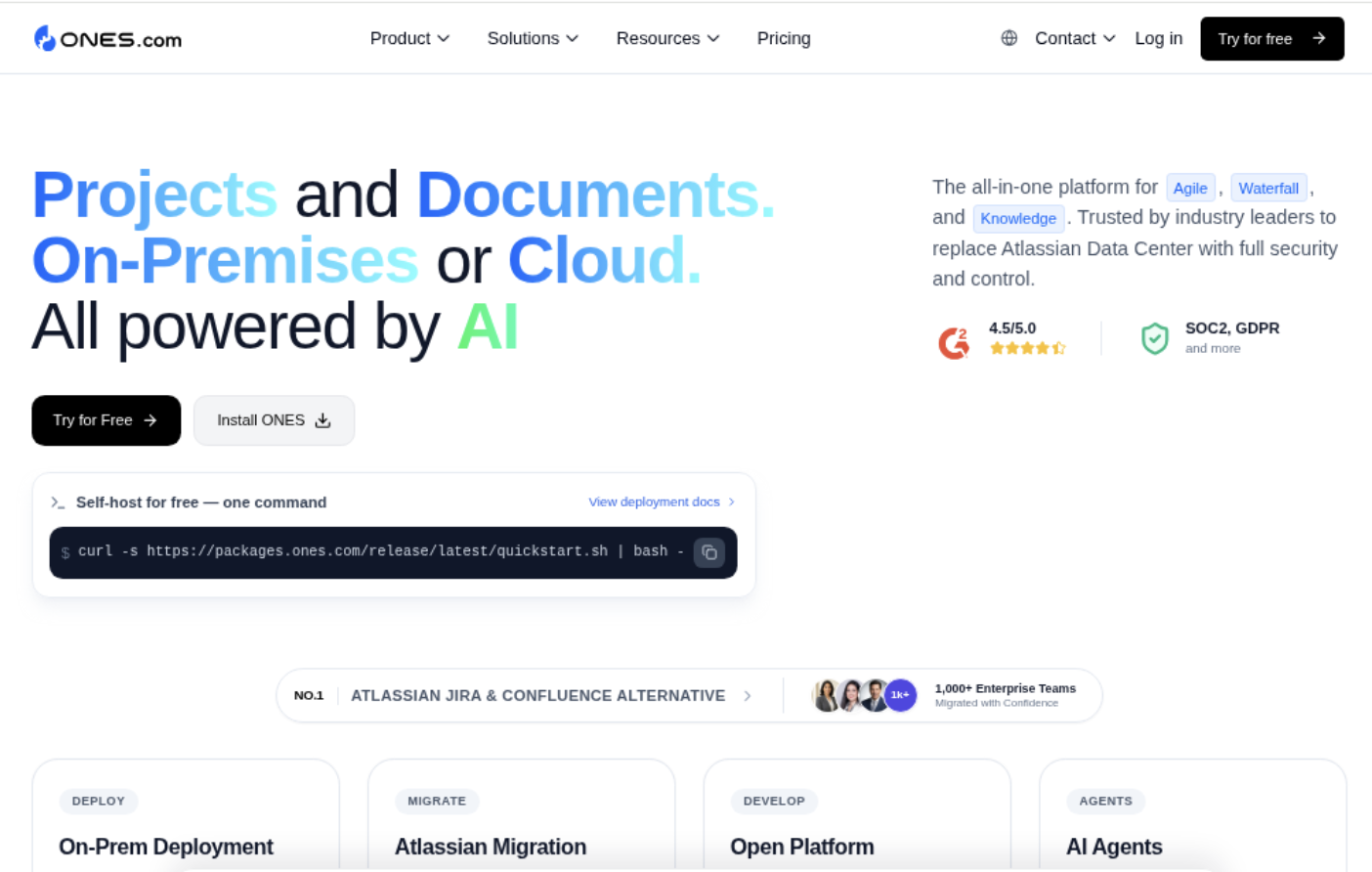
ONES.com brings project management and knowledge management into one platform, with ONES Project for Jira-style delivery workflows and ONES Wiki for organized team knowledge. It can suit teams that want to reduce the number of disconnected workspaces around sales handoffs, implementation planning, and internal collaboration.
Value Proposition
If your Salesforce-to-Jira connection mainly exists to bridge fragmented planning and knowledge work, ONES.com gives you a unified environment to evaluate. ONES Project is sold separately from ONES Wiki, so you can choose the product that matches your immediate need.
Core Capabilities
- Scattered project tracking → ONES Project: Use Jira-compatible workflows, sprint management, custom fields, and built-in reporting in one project workspace. The result is a familiar delivery model with fewer disconnected add-ons.
- Complex approval paths → Custom workflows: Build stages that reflect sales handoffs, implementation reviews, or release approvals. The result is clearer ownership at each transition.
- Manual status reporting → Built-in reporting: Give managers visibility into progress, workload, and delivery status without assembling updates across several tools.
- Too many plugins → Native capabilities: Use automation, custom workflows, custom fields, and reporting as core platform features. The result can be simpler administration when your team needs common Jira-style functions.
- Restricted hosting requirements → Self-hosted deployment: Choose Cloud, On-Premise, Private Cloud, or Air-gapped deployment. This helps teams align the platform with network, compliance, or operational requirements.
- Different cloud and self-hosted experiences → Feature parity: ONES.com provides full feature parity between its cloud and self-hosted versions, making deployment choice less disruptive.
- Project plans separated from team knowledge → ONES Wiki: Store procedures, handoff guidance, and internal knowledge beside project work when you need a Confluence alternative.
- Limited initial rollout budget → Free plan: The free plan supports up to 30 seats, giving a small team room to evaluate the workflow before a larger rollout.
Application Scenarios
Professional services onboarding: A consulting team can manage implementation epics, sprint work, approval stages, and reporting in ONES Project. Sales can use a consistent handoff checklist, while delivery teams track execution in a Jira-compatible workflow.
Air-gapped product development: A restricted-network engineering group can use ONES.com in an air-gapped deployment. Project planning, custom fields, sprint management, and reporting remain available without relying on a public cloud connection.
Knowledge-led support operations: A support or operations team can pair ONES Project with ONES Wiki. Issues, procedures, release notes, and troubleshooting guidance become easier to connect during recurring customer work.
ONES.com does not replace every Salesforce use case. Salesforce can remain the system for customer relationship management, while ONES.com can provide an alternative workspace for delivery, knowledge, and internal execution.
Common Challenges and Practical Fixes
Challenge: Duplicate Jira issues appear
Cause: The workflow triggers again before the first update writes the Jira key back to Salesforce.
Solution: Add a stable record identifier, check whether a linked Jira issue already exists, and make the create action safe to retry.
Challenge: Status values do not match
Cause: Salesforce may use “Closed Won,” while Jira uses “Ready for Delivery” or “In Progress.”
Solution: Create an explicit status map. Avoid assuming that similarly named statuses have the same meaning.
Challenge: Updates fail because fields are required
Cause: Jira or Salesforce requires a value that the other platform does not provide.
Solution: Add a default only when it is logically safe. Otherwise, route the event to an exception queue and ask the responsible team to complete the missing information.
Challenge: Two-way updates overwrite each other
Cause: Both platforms allow unrestricted edits to the same field.
Solution: assign a system of control for every synchronized field. Use approval rules for shared fields such as launch dates.
Challenge: The integration works in testing but fails after launch
Cause: Production permissions, record visibility, custom fields, or volume differ from the pilot environment.
Solution: Compare production access with the tested configuration. Launch in stages and monitor the first real events closely.
FAQs
What is the simplest way to connect Salesforce and Jira?
A prebuilt connector is usually the simplest starting point when your workflow uses standard Salesforce objects and Jira issue types. Define one trigger, such as “opportunity becomes Closed Won,” then create one Jira epic and write its key back to Salesforce. Test permissions, required fields, duplicate prevention, and later updates before expanding the connection.
Can Salesforce create Jira issues automatically?
Yes. A Salesforce event can create a Jira issue when the connection has the required permissions and conditions. Common triggers include a new case, an opportunity reaching a specific stage, or a checkbox being selected. Add a condition that checks whether a Jira key already exists, or repeated events may create duplicate issues.
Should the integration be one-way or two-way?
One-way synchronization is easier to control and often works well for the first release. Two-way synchronization helps when sales needs delivery status or delivery teams need approved commercial changes. Before enabling it, assign ownership for every shared field and define what happens when both platforms change close together.
Which Salesforce information should appear in Jira?
Send the context needed to begin and manage the work. Account name, opportunity link, owner, priority, launch date, scope summary, and commercial stage may be useful. Avoid copying sensitive or irrelevant details. A direct link back to Salesforce can provide additional context without filling Jira with information that delivery teams rarely use.
How do you stop integration loops?
Use an integration identity, event conditions, and a stable identifier for each connected record. Ignore updates that were created by the integration when appropriate. Also compare old and new values before sending an update. These controls prevent a Jira status update from triggering Salesforce, which then triggers Jira again.
Is ONES.com a replacement for this connection?
ONES.com can be an alternative project and knowledge management platform for teams that want Jira-compatible workflows, reporting, automation, and self-hosted deployment options. Salesforce can continue handling customer relationship management while ONES Project supports delivery work. Evaluate the platform against your required Salesforce handoffs, permissions, hosting model, and reporting needs.
Conclusion
A successful Salesforce and Jira connection begins with a clear business handoff. Choose one trigger, map only useful fields, assign ownership, prevent duplicates, and test realistic failure cases.
Keep monitoring after launch. Permission changes, new custom fields, revised statuses, and higher event volume can affect a workflow that once worked well.
But here's the truth: integration technology cannot repair an unclear process. When sales, delivery, and engineering agree on ownership and timing, the connection becomes far easier to maintain.
If your current setup creates too many handoffs, evaluate whether a unified project and knowledge platform would simplify the operating model. ONES.com, including ONES Project and ONES Wiki, offers another path for teams that need structured delivery work, reporting, automation, and flexible deployment options.