Jira Server Pricing: A Practical Planning Guide for 2026
Still comparing jira pricing server in 2026? Learn the hidden costs of end-of-support, migration, and infrastructure—click to plan your budget wisely.
Planning around Jira Server pricing can feel deceptively simple. You may expect to compare a license fee, estimate support, and approve the budget.
Then the complications appear. Jira Server reached end of support on February 15, 2024, so an old quote may hide security exposure, migration work, marketplace compatibility issues, and infrastructure costs.
That makes a 2026 budget especially difficult. A low historical license price can create a high operational bill when your team must maintain aging systems without current vendor support.
Here’s the practical answer: treat Jira Server as a legacy environment, calculate its full remaining cost, and compare that figure with Jira Cloud, Data Center, or a supported Jira alternative.
Jira Server Pricing in 2026: The Short Answer
Jira Server pricing no longer represents a current purchase option in 2026. Atlassian stopped selling new Jira Server licenses on February 2, 2021, and ended technical support on February 15, 2024.
If you already run Jira Server, you may still have a perpetual license. However, perpetual ownership does not remove the cost of hosting, administration, security controls, upgrades, customizations, backups, and eventual migration.
Here’s why: the license fee is only one part of your planning equation. Your real annual cost includes every activity required to keep the environment reliable and defensible.
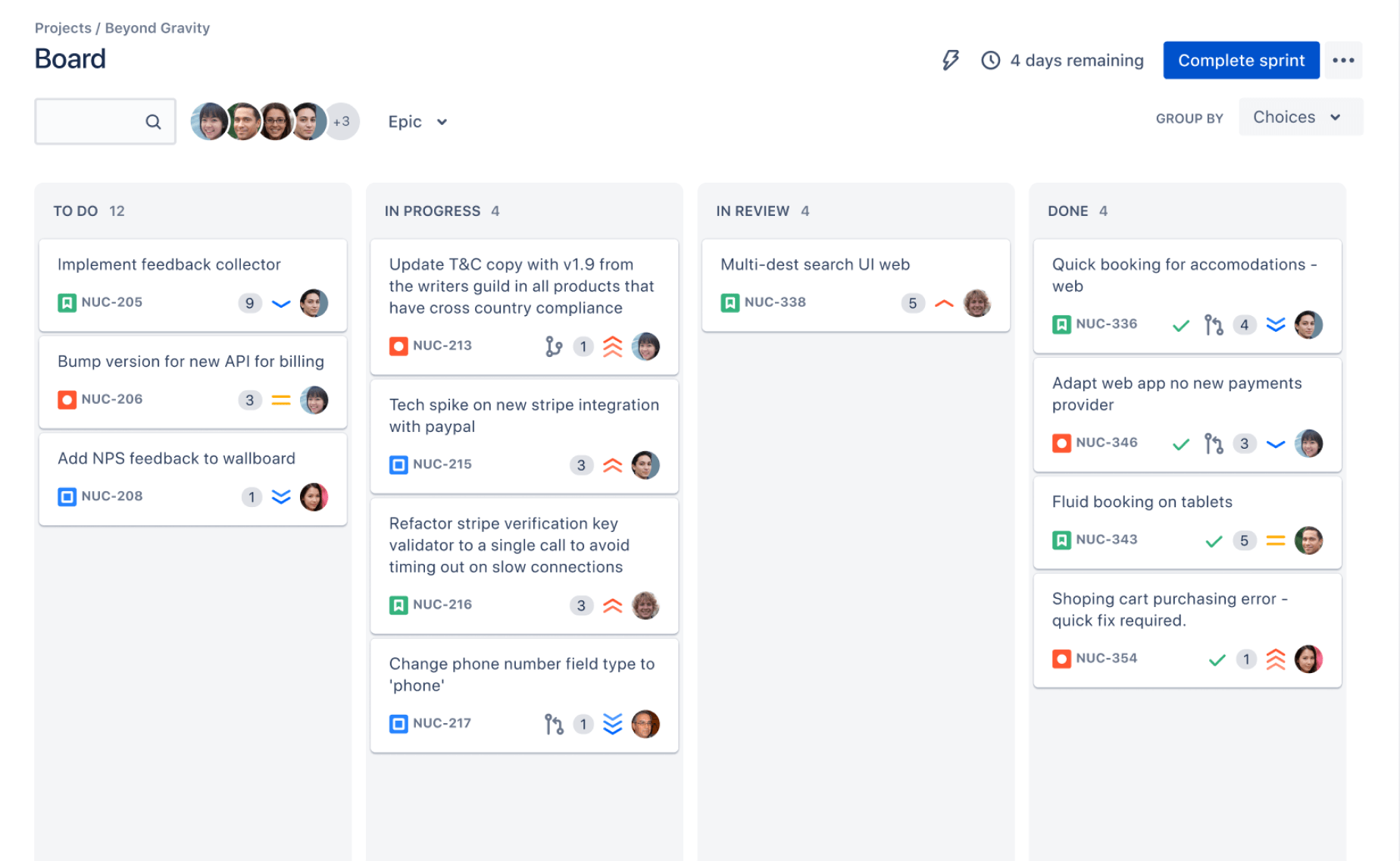
What happened to Jira Server?
Jira Server was Atlassian’s self-managed deployment option. You installed and operated it on your own infrastructure, controlling the environment, network access, upgrades, and maintenance schedule.
Atlassian later shifted its focus toward Jira Cloud and Jira Data Center. New Server licenses became unavailable, and official technical support ended in 2024.
Existing organizations may continue operating a Server instance under their license terms. Yet continuing to run it requires careful risk management because vendor fixes and regular support are no longer available.
Which costs should you include?
A realistic planning model should include these cost categories:
- Existing license or maintenance obligations
- Servers, storage, operating systems, and hosting
- Jira administration and specialist engineering time
- Backup, monitoring, disaster recovery, and security controls
- Marketplace applications and integration maintenance
- Custom workflow, reporting, and automation support
- Migration preparation and post-migration validation
- Training, process redesign, and temporary productivity loss
The best part? You can turn an uncertain pricing question into a clear comparison by calculating each category separately.
How to Build a Practical 2026 Cost Plan
-
Confirm your current licensing position
Start by identifying whether your organization owns a perpetual Jira Server license, pays for legacy maintenance, or relies on a third-party arrangement.
Record your licensed user tier, renewal history, active applications, and contractual restrictions. Keep this review factual because an old renewal invoice may not reflect your current operational exposure.
-
Separate license costs from operating costs
List your annual infrastructure spending separately from the Jira license. Include virtual machines, storage, backup capacity, monitoring, network controls, and disaster recovery environments.
For example, a team might report no new license payment while spending heavily on an administrator, a staging environment, and emergency maintenance.
-
Measure internal administration time
Estimate the hours spent on upgrades, permission reviews, workflow changes, performance troubleshooting, backups, integrations, and incident response.
Multiply those hours by a realistic internal labor rate. This reveals the hidden cost of keeping a self-managed platform operational.
-
Review application and integration dependencies
List every marketplace application, connector, script, reporting tool, and authentication service connected to Jira Server.
Check whether each dependency still receives maintenance and supports your planned migration route. One unsupported application can delay a broader platform decision.
-
Model the cost of staying
Calculate the expected cost of operating Jira Server for the next 12, 24, and 36 months. Add security work, staffing, infrastructure replacement, and contingency funds.
Use a risk-adjusted estimate for major incidents. A single failed integration or recovery event can change the economics quickly.
-
Compare supported alternatives
Compare your legacy operating cost with Jira Cloud, Jira Data Center, and suitable project management platforms.
Include migration labor, subscription fees, user growth, storage, compliance requirements, automation, and administration. The cheapest first-year option may differ from the lowest three-year cost.
Why Historical License Prices Can Mislead Your Budget
Older Jira Server pricing often focused on a one-time license purchase plus optional annual maintenance. That structure can make historical costs appear attractive compared with recurring cloud subscriptions.
However, the comparison changes when you add the surrounding work. A self-managed environment requires people and systems to operate it, even when the original license has already been paid.
| Cost area |
Questions to ask |
| License |
Do you still have valid perpetual rights, and what maintenance terms apply? |
| Infrastructure |
Who pays for hosting, storage, backup, monitoring, and recovery capacity? |
| People |
How many hours go toward administration, troubleshooting, and upgrades? |
| Applications |
Which add-ons and integrations require separate fees or replacement work? |
| Risk |
What financial impact could arise from unsupported software or downtime? |
| Migration |
What effort will be required to move projects, permissions, workflows, and history? |
Consider a 400-person engineering organization. Its legacy license may have no immediate renewal invoice, yet two administrators, annual infrastructure work, and integration repairs can exceed a modern subscription’s visible price.
Use the historical figure as context. Use total cost of ownership for the decision.
Jira Server, Cloud, and Data Center: Planning Differences
Your deployment model affects both pricing and responsibility. The right comparison depends on security requirements, scale, availability expectations, and how much platform administration you want to retain.
Jira Server
Jira Server gives you control over hosting and configuration. That control can support specialized network requirements, but it also leaves you responsible for operations and risk management.
In 2026, the central issue is support status. You should treat Server as a transition environment unless you have a documented reason to retain it temporarily.
Jira Cloud
Jira Cloud uses recurring subscription pricing, generally tied to the plan and number of users. Atlassian manages the core hosting, maintenance, and platform updates.
Cloud planning should include subscription growth, application subscriptions, identity management, storage, automation usage, and any compliance work required by your organization.
Jira Data Center
Jira Data Center is designed for organizations that need a supported self-managed or controlled deployment model. It typically requires more planning than a cloud subscription because you still manage infrastructure and operational processes.
Evaluate clustering, high availability, disaster recovery, infrastructure staffing, and licensing commitments. Data Center can suit regulated or large-scale environments, but it should not be treated as a simple continuation of Server.
A simple decision example
A small distributed team with limited administration capacity may favor Cloud because predictable recurring fees replace much of the infrastructure burden.
A regulated enterprise with strict network controls may examine Data Center or an air-gapped alternative. The deciding factor is the complete operating model, rather than the license line alone.
Migration Costs That Belong in Your 2026 Plan
Migration is often the largest cost overlooked in Jira Server planning. The work extends beyond transferring projects. You may need to redesign permissions, validate workflows, replace applications, and retrain teams.
Migration cost categories
- Discovery and dependency mapping
- Application compatibility assessment
- Workflow and field redesign
- Identity, access, and permission conversion
- Historical issue and attachment transfer
- Integration rebuilding and testing
- Performance and security testing
- Training and adoption support
- Parallel operation during cutover
- Post-migration cleanup and validation
For example, a custom release workflow may use scripts that depend on Server-specific behavior. Moving the project without reviewing those scripts can interrupt approvals or deployment reporting.
Plan at least one rehearsal for complex environments. A rehearsal gives you measurable timing, exposes missing dependencies, and creates a more credible cutover estimate.
How to reduce migration surprises
Begin with an application inventory and a project-by-project complexity review. Mark each project as simple, moderate, or complex according to workflow customization, integrations, history, and permission rules.
Then create a pilot group. Choose a project with representative complexity, rather than the easiest project in the organization.
Let me explain: an easy pilot can create false confidence. A representative pilot shows whether your chosen destination handles the conditions that matter most.
Security and Compliance Risks Behind Legacy Pricing
Unsupported software changes the budget conversation because the financial risk becomes less predictable. You may need compensating controls, additional monitoring, network isolation, or a faster exit plan.
Review how your organization handles vulnerability management, access reviews, audit evidence, backup testing, incident response, and third-party assessments.
Questions for a risk review
- Can you receive timely fixes for newly discovered vulnerabilities?
- Can your security team monitor the environment at the required depth?
- Can you demonstrate access control and recovery procedures during an audit?
- Do connected applications remain supported and secure?
- Can you recover the environment within your required recovery target?
A practical example helps. If your security policy requires supported infrastructure, the annual cost of Jira Server may include additional network controls and manual review work.
That expense may still be reasonable for a short transition period. It becomes harder to defend when there is no funded migration milestone.
ONES.com is a unified platform for project management and knowledge management, powered by ONES Assistant. ONES Project provides project management capabilities and can serve as a Jira alternative, while ONES Wiki provides knowledge management separately.
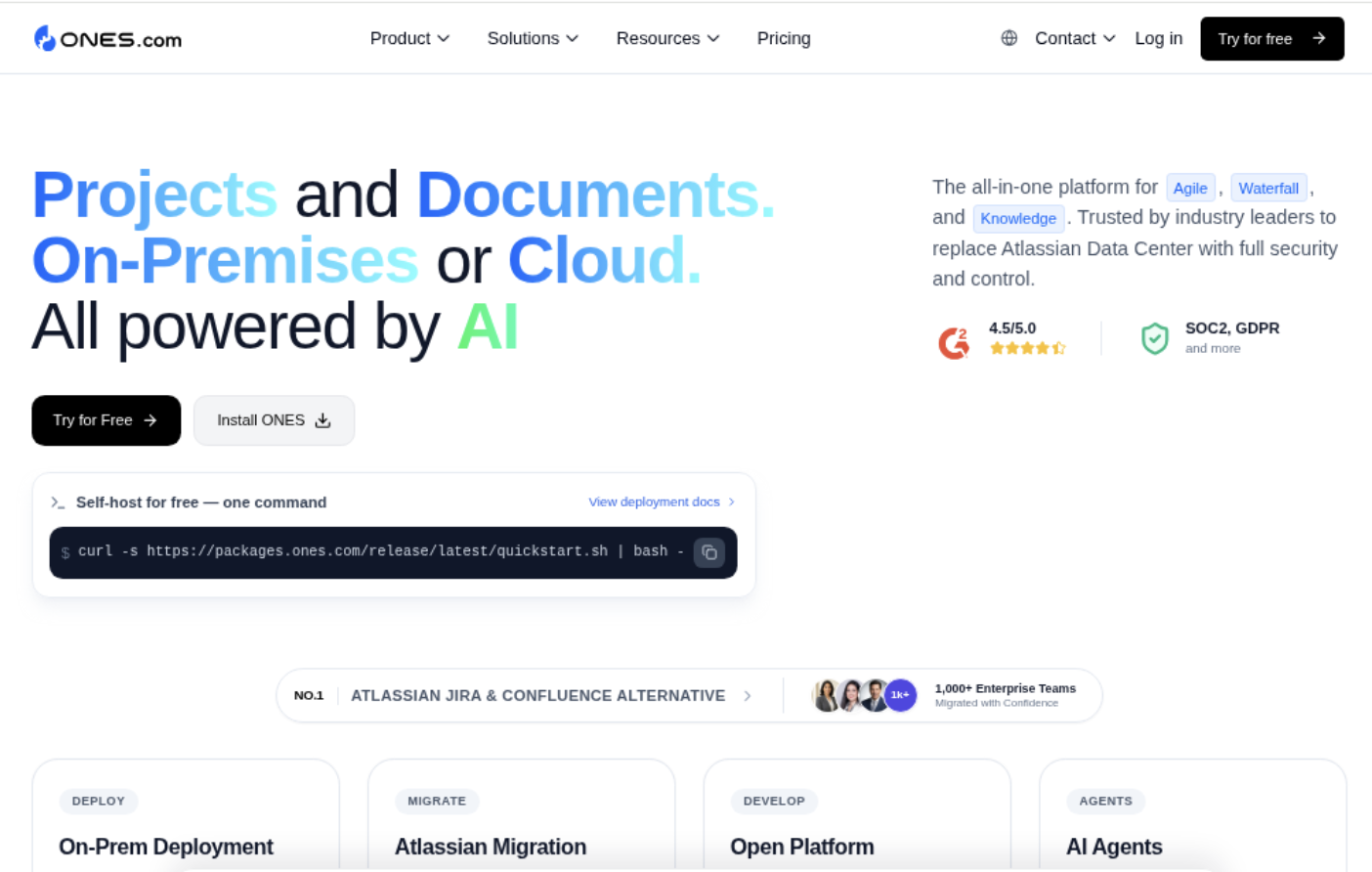
ONES Project and ONES Wiki are sold separately. You can choose the product that matches your planning needs instead of adopting both at once.
Value Proposition
For teams reviewing legacy Jira Server costs, ONES.com offers a supported platform approach with cloud and self-hosted deployment options, including air-gapped environments.
A free plan supports up to 30 seats, and the platform provides four deployment choices: Cloud, On-Premise, Private Cloud, and Air-gapped.
Core Capabilities
- Legacy platform risk → ONES Project provides a current Jira alternative with project planning, issue tracking, and team coordination. Result: you can plan a transition away from unsupported Server operations.
- Deployment restrictions → Cloud, On-Premise, Private Cloud, and Air-gapped options support different security and network conditions. Result: you can match deployment to operational requirements.
- Migration complexity → Jira-compatible workflows help teams map familiar processes into a new environment. Result: fewer workflow changes may be needed during transition planning.
- Rigid processes → Custom workflows and custom fields let you reflect team-specific approvals, statuses, and issue details. Result: departments can preserve important controls without copying every legacy customization.
- Manual reporting → Built-in reporting provides visibility into progress, workload, and delivery patterns. Result: managers can reduce dependence on separately maintained reporting arrangements.
- Sprint coordination → Sprint management supports backlog planning, iteration tracking, and review cycles. Result: agile teams can continue familiar delivery routines.
- Repetitive administration → Automation handles recurring actions and workflow transitions. Result: administrators can spend less time on predictable manual updates.
- Plugin sprawl → Native capabilities reduce the need to assemble every function through separate applications. Result: teams may simplify dependency reviews and ongoing maintenance.
- Self-hosting cost → ONES.com maintains feature parity between its cloud and self-hosted versions. Result: you can evaluate deployment flexibility without assuming that self-hosting means a reduced feature set.
Application Scenarios
Regulated engineering team: A team that cannot place project information in a public cloud can evaluate an On-Premise or Air-gapped deployment. It can preserve controlled network access while using custom workflows and reporting.
Growing software organization: A company with increasing application dependencies can review ONES Project as a Jira alternative. Native workflow, sprint, reporting, and automation features may reduce the number of separate extensions required.
Mixed project and knowledge teams: A company that needs both delivery tracking and structured knowledge can assess ONES Project and ONES Wiki separately. This allows the rollout to follow business priorities.
Common Challenges in Jira Server Cost Planning
Challenge: treating a perpetual license as a free platform
Solution: Add infrastructure, staffing, security, recovery, and integration expenses to the license calculation. A paid license can still require significant annual operation.
Challenge: comparing only visible subscription prices
Solution: Compare total cost over three years. Include migration, training, applications, administration, and expected user growth.
Challenge: overlooking custom workflows
Solution: Inventory statuses, validators, scripts, transitions, and approval rules before selecting a destination. Test the highest-risk process in a pilot.
Challenge: delaying migration because the system still works
Solution: Set a funded timeline with milestones for assessment, pilot, rehearsal, cutover, and retirement. Operational familiarity should not replace risk planning.
Challenge: assuming every self-hosted option has the same economics
Solution: Compare deployment requirements, feature coverage, staffing, support, and recovery responsibilities. Two self-hosted platforms can create very different long-term costs.
FAQs
Is Jira Server still available to buy in 2026?
No. Atlassian stopped selling new Jira Server licenses in 2021, and technical support ended on February 15, 2024. Organizations with existing perpetual licenses may continue operating their environments, subject to their license terms. You should treat any continued use as a managed transition or exceptional retention decision, with clear security and migration controls.
Does a perpetual Jira Server license mean there are no ongoing costs?
No. You may avoid a new license purchase, but ongoing costs can include hosting, storage, backups, monitoring, administration, security controls, application maintenance, and recovery testing. Internal labor often represents a substantial portion of the total. Calculate those costs over 12, 24, and 36 months before comparing the environment with Cloud, Data Center, or another platform.
Should I compare Jira Server pricing with Jira Cloud pricing?
Yes, but compare complete operating models. Jira Cloud introduces recurring subscription fees and may add application, automation, storage, or identity costs. Jira Server carries more infrastructure and administration responsibility. Include migration effort, staffing, compliance work, user growth, and downtime risk. A three-year comparison usually provides a clearer view than a single renewal or subscription figure.
When should a company consider Jira Data Center?
Consider Data Center when you need a supported controlled deployment and have the infrastructure, security, and administrative capacity to operate it. Review high availability, disaster recovery, network controls, scale, licensing commitments, and specialist staffing. Data Center can suit large or regulated environments, though Cloud may require less operational overhead for teams with fewer infrastructure constraints.
What should a Jira Server migration budget include?
Include discovery, application assessment, workflow redesign, permission conversion, integration rebuilding, testing, training, pilot operation, cutover support, and post-migration validation. Add contingency for custom scripts and unusual historical structures. A migration budget should also cover temporary parallel operation if your team cannot move every project at once.
Conclusion
Jira Server pricing is no longer a straightforward license comparison for 2026. The product is unsupported, and the meaningful question is how much it costs to keep operating, secure, and eventually replace.
Start with your license position. Then calculate infrastructure, administration, applications, risk controls, and migration work.
But here’s the truth: a low visible cost can hide a large operational commitment. Compare supported alternatives using total cost, deployment needs, security requirements, and team capacity.
With a clear 12-to-36-month plan, you can decide whether to maintain a short transition period, move to Jira Cloud or Data Center, or evaluate a Jira alternative such as ONES Project.