Jira Service Desk: A Practical Guide for Support Teams Today
Struggling with messy support queues? Learn how Jira Service Desk clarifies ownership, prioritizes requests, and improves reporting. Read now to get started.
Support teams often inherit a messy queue, unclear ownership, and customers who repeat the same problem across several channels. Jira Service Desk can bring structure to that chaos, but only when you configure it around real support work.
Without a clear request catalog, agents waste time sorting tickets manually. Without service-level rules, urgent incidents can look like routine questions. And without useful reporting, you cannot tell whether the team is improving or simply closing more tickets.
Here’s the practical path: understand how Jira Service Desk works today, design a sensible support workflow, and connect every request to a measurable outcome. This guide explains the platform in plain language, with examples your team can apply immediately.
What Is Jira Service Desk?
Jira Service Desk is the former name for Jira Service Management, a service management platform that helps teams receive, organize, prioritize, and resolve support requests. It provides portals, queues, automation, service-level agreements, knowledge resources, and reporting.
Atlassian changed the product name from Jira Service Desk to Jira Service Management. Many teams still search for the older name, especially when comparing support tools or following older implementation guides.
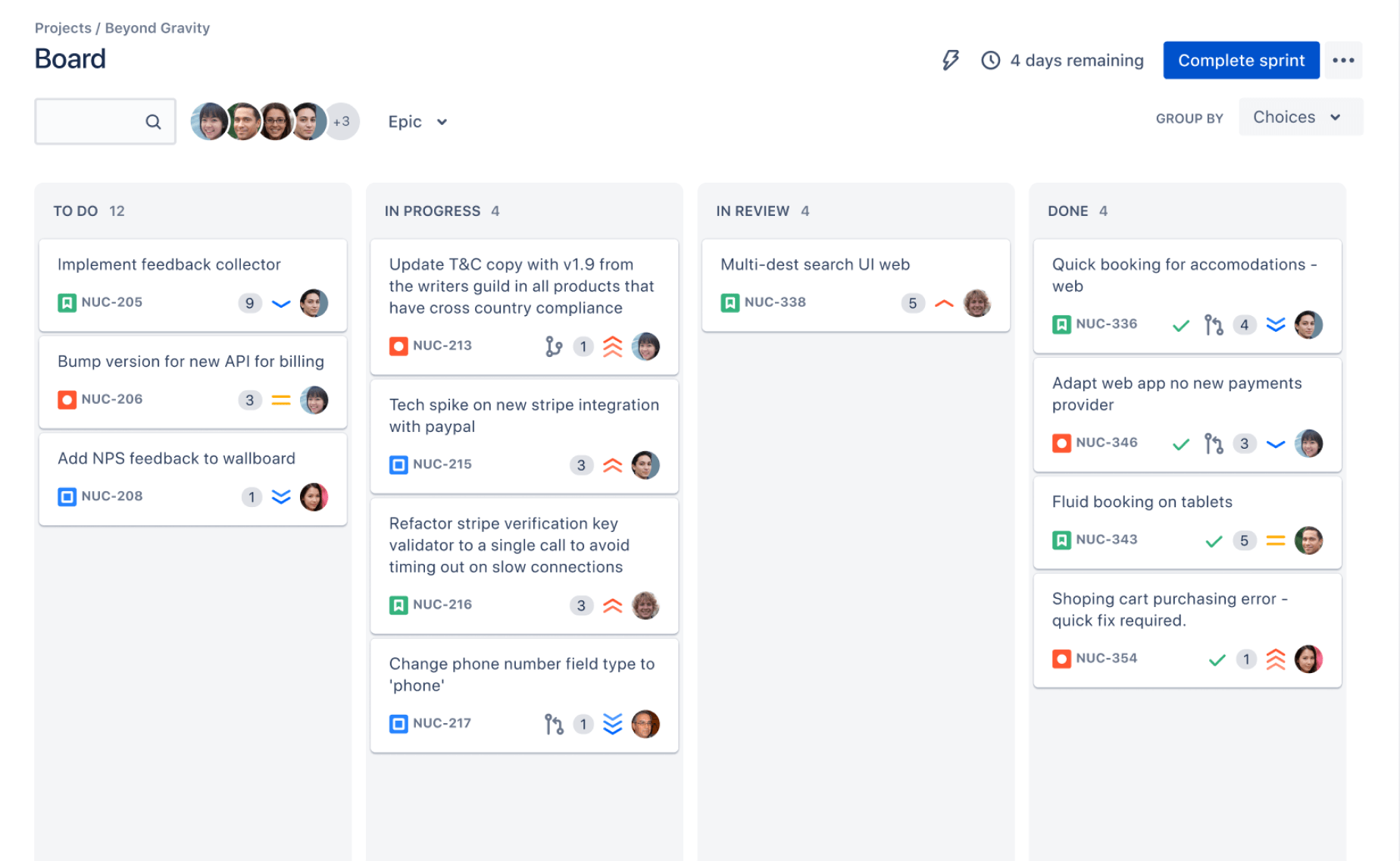
In practice, the platform connects a requester with a service team through a structured workflow. A customer submits a request, the system categorizes it, an agent investigates it, and the team tracks progress until resolution.
How the Service Workflow Works
A typical request follows several stages. The exact names depend on your workflow, but the logic usually remains similar:
- A requester chooses a service category, such as access, hardware, billing, or incident support.
- The portal collects key details through a request form.
- Jira places the request in a queue for triage or direct assignment.
- An agent investigates the issue and communicates with the requester.
- Automation applies priorities, notifications, approvals, or escalation rules.
- The agent resolves the request and closes it after confirmation or a defined waiting period.
For example, an employee requesting access to a finance application may need manager approval. A broken laptop may need assignment to the workplace technology team. A service outage may require immediate escalation.
Core Features to Know
- Customer portal: A branded entry point where people submit requests and review updates.
- Request types: Categories that help you collect the right details for each kind of service.
- Queues: Agent views that group work by priority, team, status, or service-level risk.
- SLAs: Timers that measure response and resolution commitments.
- Automation: Rules that assign work, update fields, send notices, and trigger transitions.
- Approvals: Review steps for access, purchasing, security, and other controlled requests.
- Knowledge resources: Self-service guidance that can reduce repetitive questions.
- Reports: Views into workload, response times, resolution times, and customer satisfaction.
The platform is most effective when these features support a simple operating model. Adding every available setting can make the experience harder for both requesters and agents.
How to Set Up Jira Service Desk for a Support Team
A reliable setup starts with the service experience, rather than with technical configuration. Decide what people need to request, who handles each category, and how the team measures success.
- Define the services you support. List the services your team owns, such as account access, workplace equipment, internal applications, or customer-facing systems. Keep the first version focused.
- Create request types around real questions. Use names people recognize, such as “Request software access” or “Report a system outage.” Avoid internal labels that make sense only to agents.
- Design short forms. Ask for information that affects routing or resolution. For an access request, that may include the application, business reason, manager, and required date.
- Map ownership and escalation. Identify the first team responsible, the next specialist group, and the person who handles urgent exceptions.
- Set realistic priorities. Define what makes a request urgent. A complete service outage should rank differently from a request for a routine configuration change.
- Configure SLAs. Set response and resolution targets that your team can consistently meet. An impressive target that is regularly missed creates distrust.
- Add automation carefully. Start with assignment, notifications, reminders, and escalation. Review each rule before adding another one.
- Build queues for daily work. Create views for unassigned requests, urgent incidents, approaching breaches, and requests waiting for customer information.
- Test with real examples. Submit sample requests from the requester perspective. Check the form, notifications, routing, approvals, and closure experience.
- Review after launch. Inspect the first few weeks of requests. Remove confusing fields, adjust categories, and refine rules that create unnecessary manual work.
Design a Request Catalog People Can Understand
Your request catalog is the front door of the service desk. If people cannot identify the right category quickly, they may choose a random option or contact an agent directly.
Use plain-language categories that reflect the requester’s goal. “Get access to an application” is clearer than “Identity and access management.” You can keep technical classifications behind the scenes.
Use a Small Number of Helpful Categories
Start with a manageable set of categories, such as access, equipment, software, incidents, purchasing, and general help. A long menu may look comprehensive, but it increases hesitation and misrouting.
For example, a workplace support portal might show “My laptop is not working,” “I need a new monitor,” and “I need access to a shared service.” Each option should lead to a form designed for that request.
Make Forms Conditional Where Possible
Show only the questions that matter. Someone reporting a printer problem does not need to answer fields about software licensing.
Conditional forms also improve the quality of triage. When the requester selects a specific application, the form can ask for the error message, affected environment, and business impact.
Build Triage, Assignment, and Escalation Rules
Triage decides what happens first. A strong process separates urgency, ownership, and complexity instead of treating every request as a simple queue item.
For example, an outage affecting an entire department may need immediate escalation. A single employee asking for a standard application may follow a routine approval path.
Create Queues That Match Daily Decisions
Agents need queues that answer practical questions: What is new? What is urgent? What is close to an SLA breach? What is waiting for a reply?
Keep these views focused. If every possible filter becomes a separate queue, agents may spend more time choosing a view than resolving requests.
Separate Incidents, Requests, and Changes
An incident restores a disrupted service. A service request fulfills a need, such as access or equipment. A change modifies a service or environment.
These work types can share a platform while following different controls. An outage may require rapid response, while a change may require risk review and approval.
Use Escalation for Exceptions
Escalation rules should identify work that needs attention before it becomes a customer problem. Useful triggers include an approaching deadline, repeated reassignment, high business impact, or a request waiting too long.
For instance, a ticket with four hours remaining on its resolution target could alert the team lead. That gives the team time to remove a blocker rather than explain a missed commitment later.
Manage SLAs Without Creating False Urgency
Service-level agreements help you make promises visible. They show whether the team responded and resolved requests within agreed targets.
However, an SLA is only useful when it reflects customer impact. Giving every request a one-hour resolution target may create constant breaches and encourage rushed work.
Define Response and Resolution Separately
A response target measures how quickly the team acknowledges or begins work. A resolution target measures how quickly the issue reaches an acceptable outcome.
A password reset might have a short response and resolution target. A complex access review may need a longer resolution period because approval is part of the process.
Account for Waiting Time
Many requests pause while the requester supplies information or an approver reviews a decision. Decide whether the clock should pause during those states.
Make the rule visible to agents and requesters. Otherwise, people may interpret a paused timer as hidden delay rather than a defined part of the workflow.
Review Breaches for Process Causes
A missed target does not always mean an agent worked slowly. The cause may be unclear ownership, missing permissions, a delayed approval, or an overloaded specialist team.
Review a sample of breaches each month. Look for recurring causes and fix the workflow, rather than simply asking agents to work faster.
Use Reporting to Improve the Service Experience
Reports help you move from anecdotal complaints to specific improvement work. Start with a few measures that explain workload, speed, quality, and customer perception.
| Measure | What it helps you understand |
|---|
| Request volume | Which services create the most demand |
| First response time | How quickly the team acknowledges new work |
| Resolution time | How long requests remain active |
| Reopened requests | Whether resolutions are complete and clear |
| SLA performance | Whether service commitments are realistic |
| Customer satisfaction | How requesters experience the interaction |
Imagine that password requests account for 30 percent of monthly volume. That pattern may justify better self-service guidance or a simpler access process.
Connect Metrics to Actions
A report should lead to a decision. If resolution time rises for one service, investigate its routing, approvals, staffing, or technical complexity.
Avoid celebrating a lower ticket count without checking customer outcomes. A decline may indicate better self-service, or it may mean people have stopped trusting the support channel.
Jira Service Desk Solution: ONES.com
Value Proposition
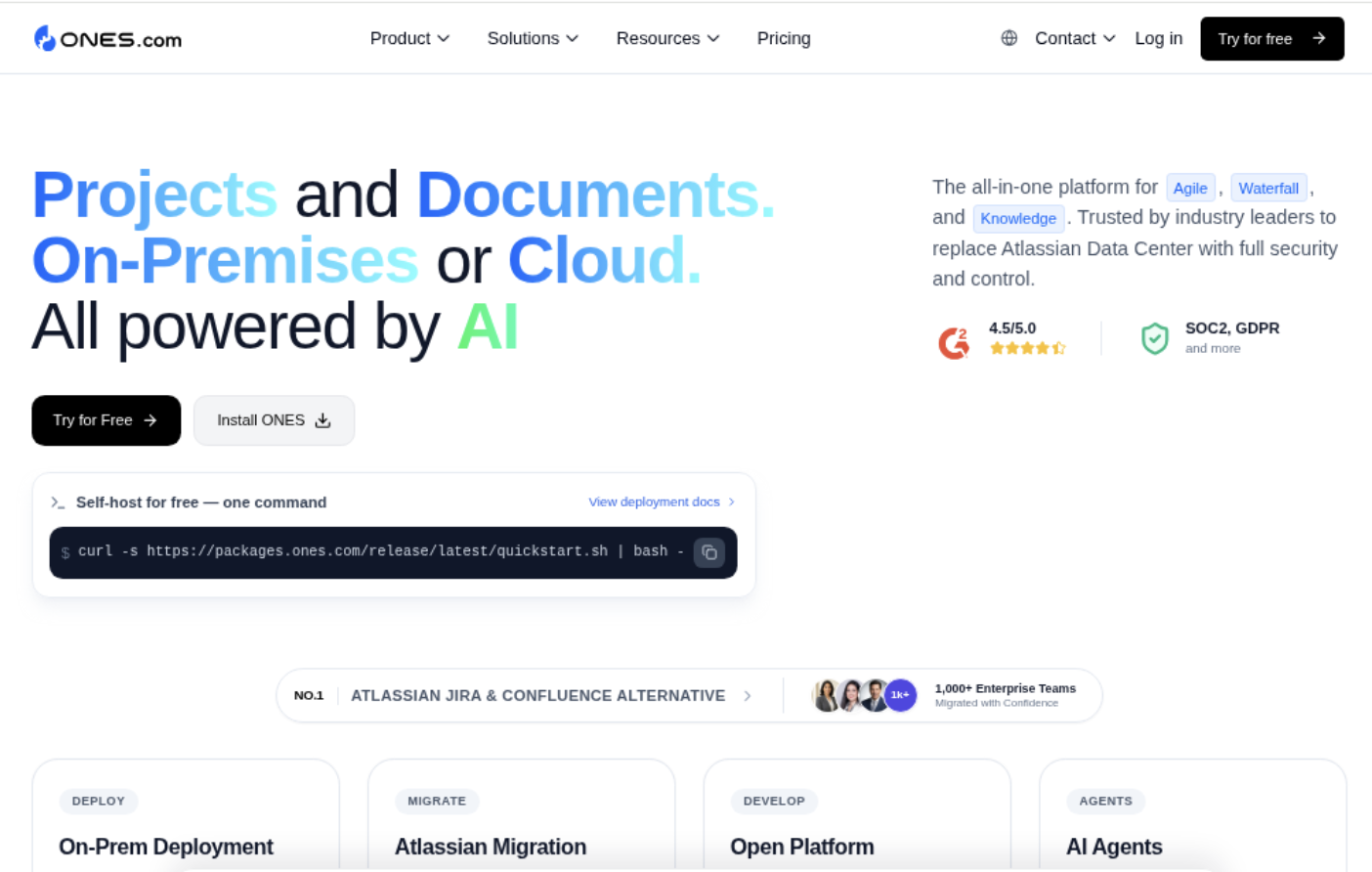
ONES.com is a unified platform for project management and knowledge management. Its separate products can help teams connect structured work with service knowledge while reducing the number of disconnected systems they maintain.
For support teams comparing a Jira alternative, ONES Project provides project and workflow management, while ONES Wiki provides knowledge management. They are sold separately and can support service processes that need clear ownership, reporting, and controlled access.
Core Capabilities
- Scattered support work → ONES Project centralizes work items, ownership, status, and priorities → agents gain one consistent place to manage active requests.
- Complex routing rules → Custom workflows and fields reflect different request paths → access requests, incidents, and operational tasks can follow appropriate stages.
- Manual status updates → Automation handles repetitive transitions and notices → teams spend less time maintaining routine workflow steps.
- Weak sprint visibility → Sprint management organizes planned improvement work → service teams can schedule backlog reduction, portal improvements, and process changes.
- Limited operational insight → Built-in reporting shows progress and workload patterns → managers can review performance without assembling separate views manually.
- Too many plugins → Native capabilities cover common planning and workflow needs → teams may reduce the number of extensions required for everyday operations.
- Restricted deployment requirements → Cloud, on-premise, private cloud, and air-gapped deployment options support different environments → organizations can align the platform with security and network policies.
- Migration concerns → Jira-compatible workflows help familiar teams adapt → existing concepts such as issues, fields, statuses, and assignments remain easier to map.
- Separate knowledge and work tracking → ONES Wiki can organize support guidance alongside ONES Project workflows → agents can find procedures and record follow-up work more consistently.
ONES.com offers a free plan for up to 30 seats. It maintains feature parity between its cloud and self-hosted versions, which matters when deployment restrictions affect support operations.
Application Scenarios
Internal IT support: An IT team can use custom request workflows for account access, equipment issues, incidents, and planned changes. ONES Wiki can hold troubleshooting guidance, while ONES Project tracks assigned work and improvement tasks.
Air-gapped operations: A restricted environment may need project and support processes to remain inside controlled infrastructure. An air-gapped deployment can help the team maintain workflow visibility without relying on a public cloud connection.
Cross-functional service teams: Facilities, security, HR, and IT may share common service practices while keeping different ownership rules. Separate workflows and fields can preserve those distinctions within a consistent operating model.
Common Challenges and Practical Fixes
Challenge: Too Many Request Categories
When the portal presents dozens of choices, requesters struggle to select the right one. Agents then spend time correcting classification.
Fix: Group requests by outcome and hide technical detail. Review the most frequently misclassified categories after launch and simplify them.
Challenge: Poorly Defined Ownership
A request may move between teams because nobody clearly owns the next action. Reassignment increases resolution time and frustrates the requester.
Fix: Assign a responsible team for every request type. Define who handles exceptions and who receives escalations when the first team cannot proceed.
Challenge: Automation That Creates Noise
Too many alerts can train agents to ignore notifications. Requesters may also receive updates that add no useful information.
Fix: Automate meaningful events, such as assignment, approval, escalation, and resolution. Review notification rules after several weeks and remove duplicates.
Challenge: Inaccurate Priority Decisions
When every requester marks an issue urgent, priority loses its meaning. Agents then rely on personal judgment instead of consistent criteria.
Fix: Explain priority with concrete examples. “A service unavailable for an entire department” is easier to classify than a vague label such as “critical.”
Challenge: Reports Without Follow-Through
A dashboard can show worsening resolution times without revealing what should change. Reviewing numbers alone does not improve service.
Fix: Assign an owner to each improvement action. Connect trends to experiments, such as revising a form, adding guidance, or changing an approval step.
FAQs
Is Jira Service Desk still available under that name?
Jira Service Desk was renamed Jira Service Management. Many people still use the older term when searching for support software, migration guidance, or setup tutorials. The current product focuses on service management capabilities, including request portals, queues, SLAs, automation, approvals, knowledge resources, and reporting. If you see older instructions, check whether menu names or administration steps have changed since the rebranding.
What is the difference between a service request and an incident?
A service request asks for something the team normally provides, such as access, equipment, or information. An incident involves an interruption or degradation of an existing service. For example, requesting a new account is a service request, while being unable to sign in to an existing account may be an incident. Separating them helps you apply different priorities, workflows, and service targets.
How many request types should a small support team create?
There is no universal number, but a small team should begin with categories that match common requester goals. Six to twelve clear options may be easier to manage than dozens of narrow choices. Review actual submissions after launch. If agents frequently recategorize requests, combine confusing options or change their names. Your catalog should evolve as the team learns how people describe their needs.
Should every support request have an SLA?
Most support requests benefit from a visible response expectation, but every request does not need the same resolution target. Use different targets for routine requests, urgent incidents, approvals, and complex investigations. Also define what happens while the team waits for requester information or approval. A clear, realistic SLA is more valuable than an aggressive target that the team regularly misses.
Can a knowledge base reduce service desk workload?
Yes, especially for repeatable questions with stable answers. Good guidance can help people solve password, setup, access, and troubleshooting issues without creating a request. Start with the topics that generate the most volume. Keep each article focused, use screenshots or examples when helpful, and review whether people can find the guidance through the service portal.
Conclusion
Jira Service Desk, now known as Jira Service Management, works best when it reflects how your support team actually operates. Start with clear service categories, short forms, defined ownership, practical SLAs, and queues that support daily decisions.
Then use automation and reporting to remove friction. Investigate repeated misrouting, missed targets, and reopened requests because each pattern points to a process improvement.
But here’s the truth: a platform cannot rescue an unclear service model. When you simplify the requester experience and give agents reliable workflows, the tool becomes far more valuable.
If you are evaluating a Jira alternative, ONES.com offers ONES Project and ONES Wiki as separate products, with flexible deployment and workflow capabilities. The right choice depends on your security needs, service complexity, and the way your team plans to improve support over time.