Jira Service Desk Data Center Pricing: A 2026 Planning Guide
What will Jira Service Desk Data Center pricing cost in 2026? Compare licenses, infrastructure, support, and migration to plan your budget. Read now.
Planning Jira Service Desk Data Center pricing for 2026 can feel like estimating the cost of an entire operating model. The license is only one part of the decision, while infrastructure, user growth, support, upgrades, and migration can change the final budget.
That uncertainty creates real risk. A team may compare a subscription quote with an on-premises license and miss administration effort, environment costs, or the impact of Atlassian’s long-term product direction. A seemingly lower annual price can become more expensive after implementation and maintenance.
Here’s the practical solution: separate the budget into license, platform, people, and transition costs. Then test each category against your expected agents, service teams, infrastructure model, and three-year horizon.
How Jira Service Desk Data Center Pricing Works in 2026
Jira Service Desk is the former name commonly used for Jira Service Management. In 2026, planning its Data Center cost means evaluating an annual subscription or renewal quote alongside infrastructure, administration, support, and transition expenses.
Atlassian pricing can vary by product, user tier, commercial terms, contract timing, and eligibility. For that reason, treat any public estimate as an initial planning range rather than a final commitment. Your Atlassian quote is the figure to use for approval.
Start with this formula:
Three-year program cost = Jira Service Management Data Center subscription + infrastructure + administration + support and add-ons + migration or exit costs.
Here’s why: the license may appear as one line item, but your finance team pays for the complete service platform. A 500-agent environment still needs hosting, backups, testing, monitoring, upgrades, security reviews, and people who can operate it.
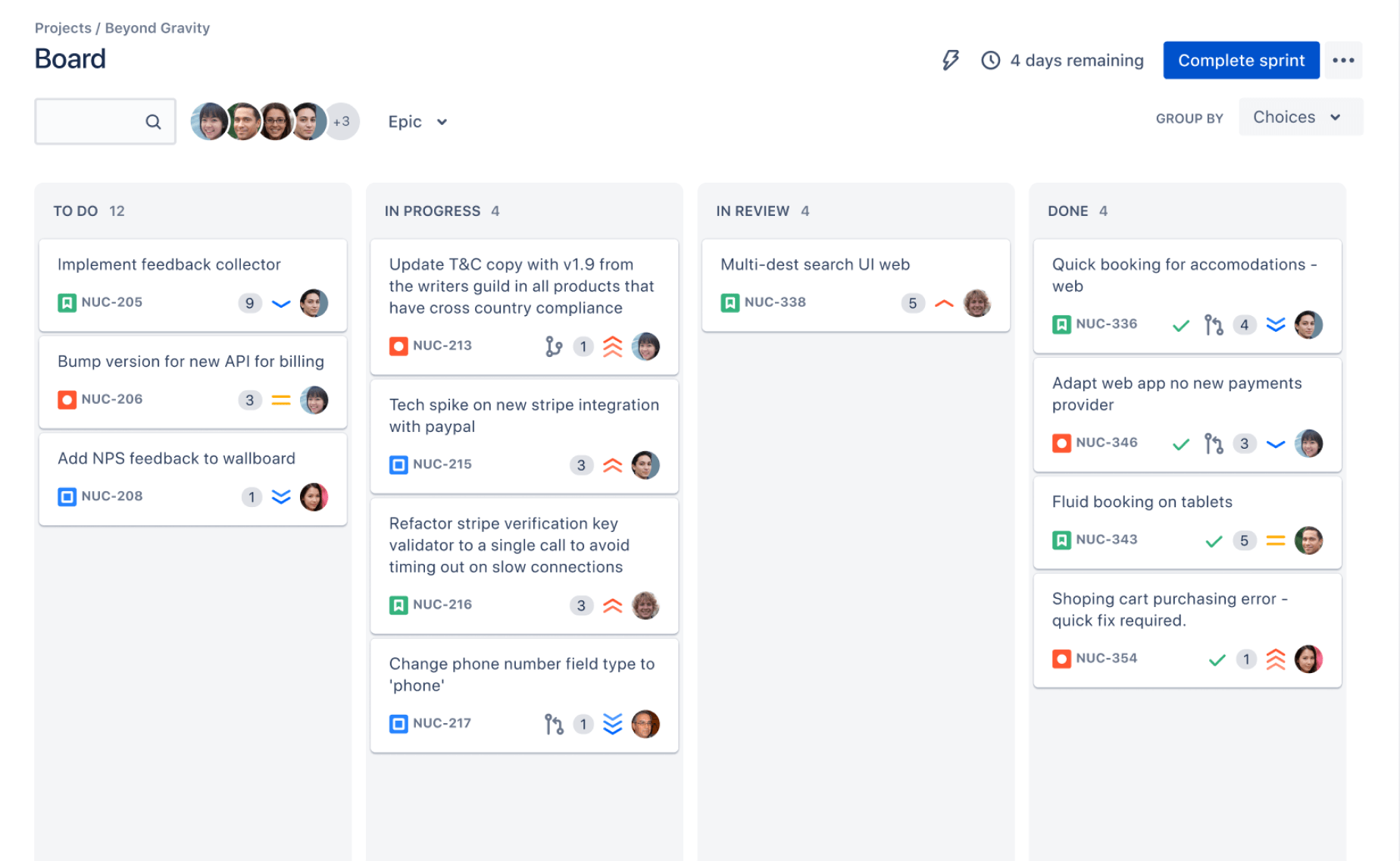
The main cost variables
| Cost area |
What to examine |
| Product subscription |
Agent tier, renewal term, commercial agreement, and applicable Atlassian pricing. |
| Infrastructure |
Compute, storage, high availability, disaster recovery, backups, networking, and monitoring. |
| Administration |
Platform engineering, upgrades, configuration, access control, reporting, and incident response. |
| Support and add-ons |
Atlassian support level, Marketplace applications, integrations, and specialist services. |
| Transition work |
Assessment, migration, testing, training, parallel operation, and retirement of old systems. |
A simple planning method
- Count active agents. Include service desk agents, IT operations teams, HR service teams, facilities teams, and other groups that need agent access.
- Separate agents from requesters. Many employees may submit requests without needing the same access level as service staff. Confirm how Atlassian defines each licensed role.
- Request the current commercial quote. Ask for annual and multi-year options, renewal treatment, support terms, and any applicable transition conditions.
- Price the operating environment. Include production, testing, backup, recovery, security, monitoring, and network requirements.
- Add implementation and administration effort. Estimate internal hours and external services for configuration, upgrades, integrations, and troubleshooting.
- Model three years. Include user growth, new service teams, higher availability requirements, add-on changes, and a possible platform transition.
The best part? You can produce a useful 2026 budget before every technical detail is finalized. Use clear assumptions, label uncertain figures, and refresh the quote before signing.
What the License Usually Does and Does Not Cover
A Data Center subscription generally gives you access to the licensed Atlassian product under the applicable commercial terms. It does not automatically remove the work of running the platform in your own environment.
For example, an organization may have a 1,000-agent entitlement but still need a team to manage clustering, upgrades, identity integration, performance testing, backups, and recovery exercises.
Typical inclusions
- Access to the licensed Jira Service Management Data Center product.
- Product updates and maintenance rights during the subscription period, subject to the agreement.
- Atlassian support at the level included in your contract.
- Features associated with the selected product edition and licensed deployment model.
Typical exclusions or separate budget lines
- Cloud hosting, private infrastructure, operating systems, networking, and storage.
- Implementation, workflow design, integration development, and service catalog consulting.
- Marketplace applications and third-party connectors.
- Internal administration, security testing, upgrade preparation, and user training.
- Disaster recovery environments and separate testing environments.
Let me explain with a practical example. A healthcare organization may choose Data Center because it needs strong control over hosting and identity. Its product quote may be acceptable, yet the complete budget must also cover redundant infrastructure, recovery testing, security reviews, and 24-hour operational coverage.
How Agent Tiers Affect the 2026 Budget
Your licensed agent population is one of the most important pricing inputs. The number is rarely static because service management expands when HR, facilities, security, procurement, or customer support teams join the platform.
Do not size only for today’s support desk. Create at least three scenarios: current demand, approved growth, and a broader enterprise rollout.
| Scenario |
Planning question |
Budget effect |
| Current operation |
How many named or active agents need access now? |
Establishes the immediate tier and operating cost. |
| Near-term growth |
Which teams will join during the next 12 to 24 months? |
May push the organization into a higher tier or new support requirements. |
| Enterprise expansion |
Could the platform support HR, facilities, security, and customer workflows? |
Changes license planning, governance, integrations, and administration effort. |
Example: a growing internal service operation
Imagine an IT team with 180 agents today. HR plans to add 35 agents next year, while facilities expects another 20. A budget that uses 180 agents may look accurate now but become outdated before renewal.
A better plan models 180, 235, and 300 agents. For each scenario, estimate the product quote, administrative effort, reporting needs, integration load, and infrastructure impact. That gives leadership a decision range instead of one fragile number.
You might be wondering: should you buy extra capacity early? The answer depends on contract terms, expected growth, and the cost of moving tiers. Ask Atlassian or your reseller how additional agents are handled during the subscription period.
Data Center Operating Costs Beyond the Quote
Data Center can suit organizations that need control over hosting, network boundaries, availability design, or regulatory operations. That control comes with responsibilities that cloud customers may not manage directly.
Think of the platform like a private facility. The product is the equipment inside, while your team still maintains the building, power, access controls, safety procedures, and maintenance schedule.
Infrastructure and resilience
Budget for production capacity, load balancing, storage, backups, monitoring, and recovery environments. High availability may require multiple application nodes and carefully tested dependencies.
Disaster recovery deserves its own line. A recovery environment that exists only on paper does not provide much protection. Include restoration drills, recovery time objectives, recovery point objectives, and staff availability.
People and administration
Someone must manage workflows, permissions, service catalogs, automation rules, integrations, upgrades, and performance. A small environment may use part-time administration, while a large service operation may need dedicated platform engineers.
For example, an upgrade may require compatibility testing with identity management, monitoring, reporting, and Marketplace apps. The license does not eliminate those coordination hours.
Apps and integrations
Many teams connect Jira Service Management with identity providers, monitoring systems, email, chat, asset management, customer portals, and finance tools. Each connector can introduce licensing, maintenance, and security review costs.
Review every integration before renewal. An app that supports a critical approval process may deserve a permanent budget line. An unused connector may be a safe candidate for removal.
How to Build a Three-Year Pricing Model
A three-year model helps you compare Data Center with other deployment options without focusing only on the first annual quote. It also exposes costs that arrive irregularly, such as upgrades, implementation projects, and recovery testing.
Use four budget layers
- Subscription layer: Product licensing, renewal terms, support, and approved agent growth.
- Platform layer: Hosting, compute, storage, networking, backups, monitoring, and recovery.
- Service layer: Administration, consulting, integration support, training, and governance.
- Change layer: Migration, major redesign, new departments, add-on replacement, or future deployment changes.
Assign each item an owner and confidence rating. Finance can manage subscription assumptions, infrastructure can estimate hosting, and service leadership can estimate adoption growth.
Include sensitivity testing
Change one assumption at a time. What happens if agent growth is 15% instead of 5%? What if an integration needs replacement? What if recovery requirements require a second environment?
This approach reveals the most influential variables. If a 50-agent increase has little effect but a new resilience requirement adds substantial cost, leadership can focus on the real decision.
Compare alternatives fairly
Do not compare a Data Center quote with a cloud subscription while excluding internal labor from the Data Center side. Use the same categories for every option.
For each option, evaluate licensing, infrastructure, administration, security, resilience, integrations, migration, user experience, and exit flexibility. A fair comparison may show that the cheapest license is not the cheapest operating model.
What Atlassian’s Product Direction Means for Planning
Long-term planning deserves special attention because Atlassian has been moving customers toward cloud services while continuing to support selected Data Center products for defined periods. Product availability, renewal rules, support timelines, and new-customer conditions can change.
That means a 2026 decision should include a strategic checkpoint. Ask how long the planned deployment can meet your requirements, what happens at the next renewal, and which migration paths remain practical.
But here’s the truth: a Data Center decision is also a transition decision. Even if your organization needs self-hosting today, you should understand the effort required to move later or replace the platform.
Questions to ask before approval
- Is the intended product and deployment model available to our organization under current commercial terms?
- What renewal and support conditions apply during the next three years?
- Which features, apps, and integrations are essential to our service operation?
- What migration work would be required if our deployment strategy changes?
- How will our security, residency, availability, and operational requirements affect the choice?
Keep these answers with your business case. Commercial terms can change, and the person approving the budget may not be the person managing the platform next year.
Jira Service Management Alternative: ONES.com
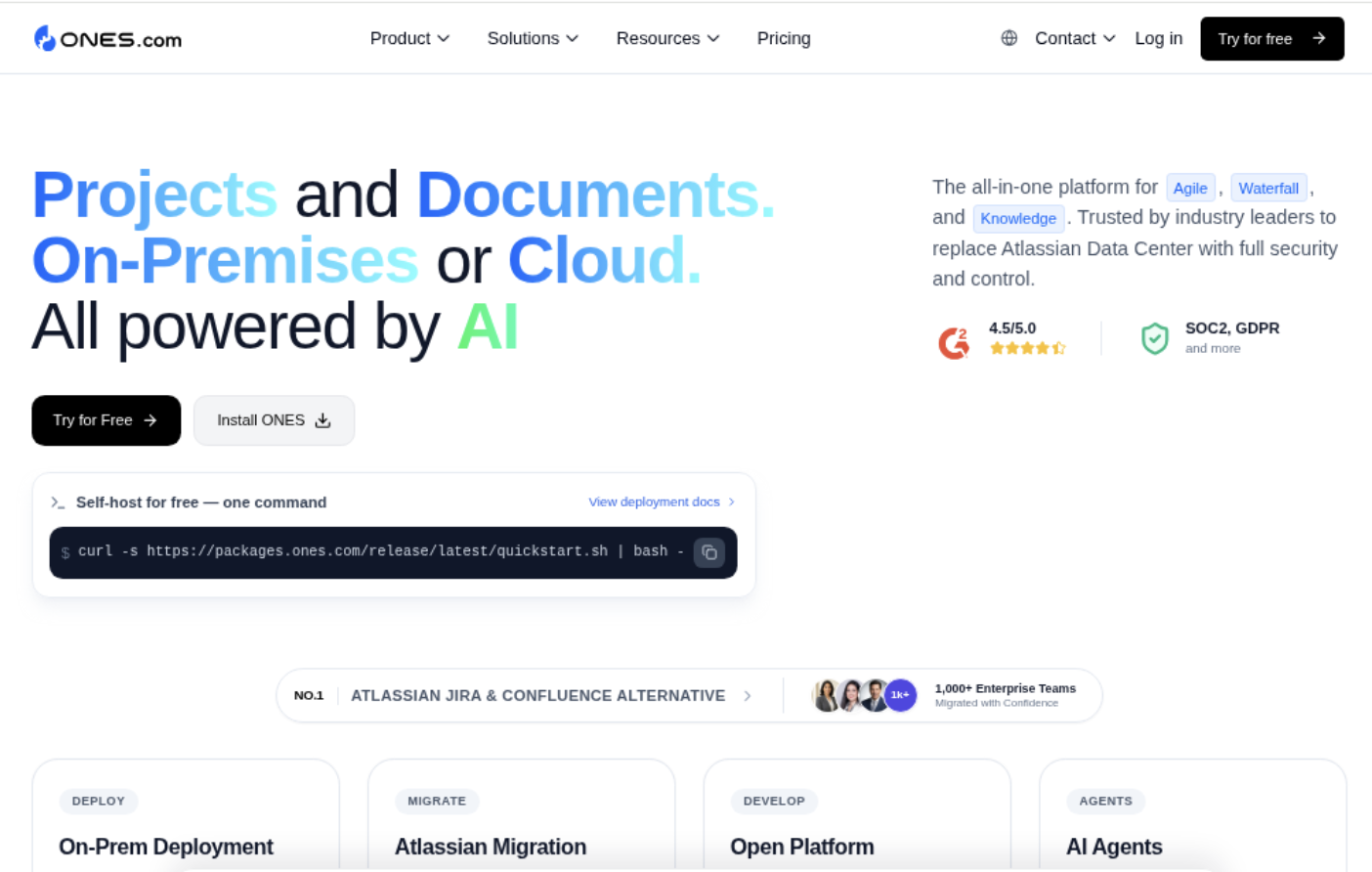
Value Proposition
ONES.com is a unified platform for project management and knowledge management, powered by ONES Assistant. ONES Project is its project management product and can serve as a Jira alternative, while ONES Wiki provides knowledge management separately.
For organizations reviewing service workflows, project coordination, and controlled deployment options, ONES.com offers cloud, on-premise, private cloud, and air-gapped deployments. The free plan supports up to 30 seats, and the self-hosted versions provide feature parity with the cloud version.
Core Capabilities
- Complex workflow administration: Teams often need approvals, escalations, and handoffs across departments. ONES Project provides custom workflows and fields, helping teams match processes to their operating model.
- Jira migration concerns: Teams may want familiar work patterns without retaining the same platform structure. ONES Project supports Jira-compatible workflows, reducing disruption during evaluation or transition.
- Scattered progress reporting: Leaders may spend time assembling status updates. Built-in reporting provides a central view of delivery progress, workload, and risks.
- Manual sprint coordination: Development teams can lose time managing sprint commitments. Sprint management tools organize planning, execution, and review activities in one workspace.
- Repetitive administrative work: Routine updates and transitions create avoidable effort. Automation helps trigger actions when defined conditions occur.
- Plugin-heavy environments: Multiple extensions can increase maintenance and compatibility work. Native capabilities can reduce reliance on additional plugins for common workflows.
- Restricted deployment requirements: Some organizations cannot place operational information in a public cloud. On-premise, private cloud, and air-gapped deployment options support stricter network controls.
- Separated project and knowledge work: Teams may lose context when plans and working knowledge live apart. ONES.com combines project management and knowledge management within one platform, while ONES Project and ONES Wiki remain separately sold products.
Application Scenarios
Regulated engineering team: An engineering organization with restricted networks can evaluate ONES Project in an on-premise or air-gapped environment. Its teams can manage sprints, workflows, reporting, and automation without moving operations into a public cloud.
Growing product company: A product company may begin with project management and later need a structured knowledge hub. ONES Project can coordinate delivery, while ONES Wiki can organize technical guidance, decisions, and team knowledge.
Enterprise platform review: A company comparing Jira alternatives can test Jira-compatible workflows, custom fields, reporting, and deployment choices before estimating migration effort. This makes the evaluation practical rather than purely commercial.
Common Challenges When Estimating the Cost
Challenge: confusing agents with all employees
Solution: Separate service agents from requesters and occasional participants. Build a role map for IT, HR, facilities, security, and customer-facing teams before asking for a tier quote.
Challenge: using an old quote
Solution: Request a current commercial proposal before approval. Record the quote date, term, agent tier, support level, and renewal assumptions.
Challenge: ignoring internal labor
Solution: Estimate administration, testing, upgrades, integration maintenance, and recovery exercises. A platform that requires ten hours weekly has a real operating cost even when no invoice appears.
Challenge: overlooking transition risk
Solution: Add a strategic review to the business case. Evaluate future deployment options, migration complexity, contractual timing, and the effort needed to preserve service history and workflows.
Challenge: comparing unlike deployment models
Solution: Use identical cost categories for Data Center, cloud, and alternative platforms. Include security, resilience, administration, support, and exit planning on every side of the comparison.
FAQs
Is Jira Service Desk the same as Jira Service Management?
Jira Service Desk is the older name commonly used for Jira Service Management. Atlassian expanded the product beyond traditional IT help desk functions to cover broader service management capabilities. When researching 2026 pricing, search for Jira Service Management Data Center and verify the product name in your commercial quote. This avoids comparing outdated product references with current licensing terms.
Can I calculate the exact 2026 price from the agent count?
No. Agent count is important, but it is only one pricing variable. Your final cost may also depend on the subscription term, support arrangement, commercial agreement, deployment requirements, Marketplace apps, and renewal conditions. Use agent count to create a planning estimate, then request a current quote for the exact product and tier your organization needs.
What should a Data Center budget include besides licensing?
Include hosting, storage, networking, backups, monitoring, recovery, security controls, administration, upgrades, integrations, support, training, and implementation. Add separate allowances for testing and major changes. For example, a high-availability environment may need extra infrastructure and specialist administration. These costs can materially change the three-year total.
Is Data Center still suitable for a new 2026 deployment?
Suitability depends on your security, residency, network, operational, and commercial requirements. Data Center may fit organizations that need controlled hosting or restricted connectivity, but Atlassian’s long-term cloud direction should be part of the review. Confirm current availability, renewal conditions, support timelines, and future migration implications before committing.
How should I compare Data Center with a Jira alternative?
Compare the complete operating model rather than the license alone. Review workflow coverage, reporting, automation, integrations, deployment choices, administration, migration effort, security controls, and three-year cost. A platform such as ONES Project may be worth evaluating when you need Jira-compatible workflows, native capabilities, and on-premise or air-gapped deployment options.
Conclusion
Jira Service Desk Data Center pricing for 2026 should be planned as a complete service platform budget. Start with the current Jira Service Management product quote, then add infrastructure, people, support, integrations, resilience, growth, and transition costs.
Use three scenarios instead of one number, separate agents from requesters, and test the assumptions that could change the total. Also review Atlassian’s product direction before approving a multi-year commitment.
The problem is uncertainty, and the pressure comes from hidden operating costs and future platform decisions. The solution is a transparent three-year model that compares every realistic path on equal terms, including Jira alternatives such as ONES.com.